thailand8217s transport minister

Thailand’s Transport Minister Orders Halt to All Elevated Road and Rail Projects

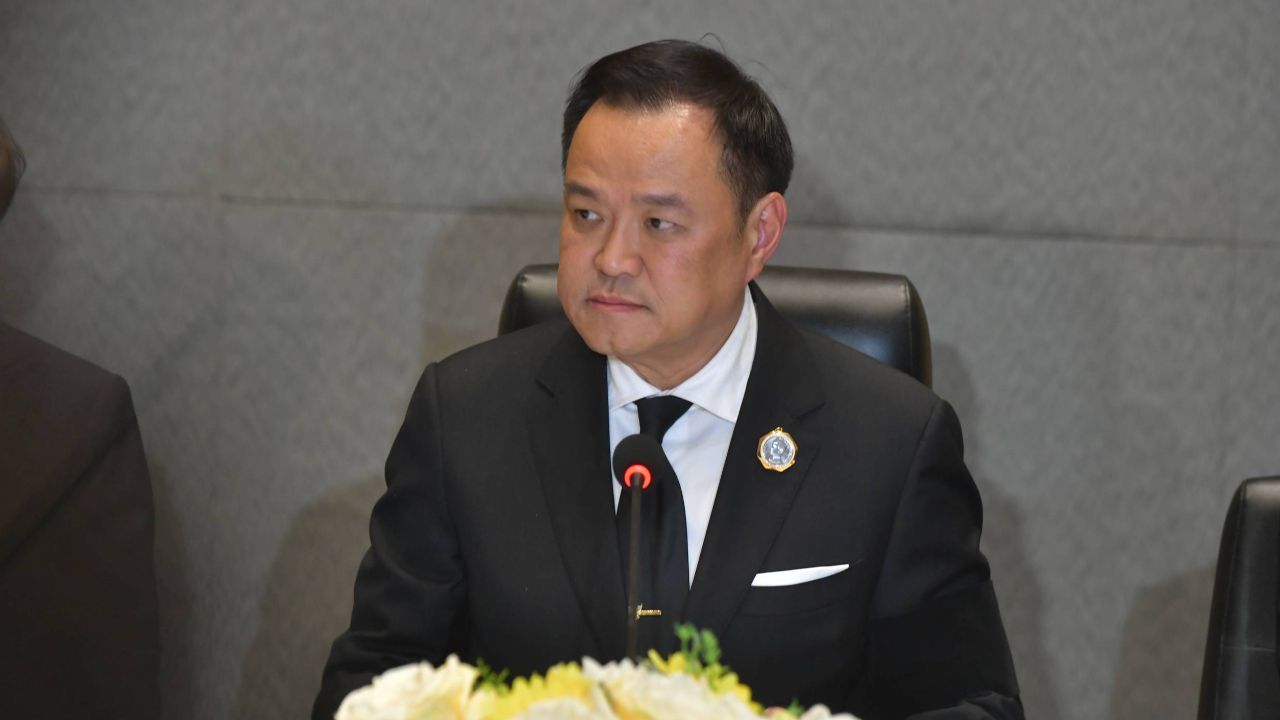
SAMUT SAKHON – Transport Minister Phiphat Ratchakitprakarn has ordered an immediate suspension of all elevated road and rail construction projects nationwide pending a comprehensive review of safety standards. The announcement came during a television interview on Friday, following the second fatal crane collapse in 24 hours.

Crane Collapse on Rama II Road in Bangkok, Kills Two

The latest incident occurred on the Rama II–Samut Sakhon elevated expressway project, where a construction crane operated by Italian-Thai Development Plc collapsed onto cars in front of the Paris Hotel in Samut Sakhon around 9 a.m., killing two people.

Minister Phiphat stated he has called a meeting with all contractors involved in elevated road and rail projects to discuss urgent safety improvements. “We must ensure such accidents do not happen again,” he emphasized.

Prime Minister Anutin Charnvirakul also responded strongly, expressing frustration over repeated construction safety failures and hinting at legal reforms. “I have received the report, but I need a full briefing on the details,” Anutin told reporters. “Agencies are pointing fingers at each other, claiming they lack the authority to act. If that is the case, we will have to change the law.”

Train Collides with Collapsed Crane in Korat, Killing at Least 32

This accident follows a similar crane collapse involving the same contractor at a high-speed rail construction site in Nakhon Ratchasima earlier this week. The government is now considering a temporary halt to all of the contractor’s active sites for safety audits.

-Thailand News (TN)

Similar Posts

  • Thailand Halves Visa-free Stay To 30 Days

    BANGKOK, Thailand — The Thai cabinet has approved a comprehensive overhaul of the nation’s tourist visa policies, halving the visa-free stay period to 30 days for most eligible nations and removing several countries from the scheme. Simultaneously, the government has granted new, extended entry privileges to specific nationalities, including India, in a strategic move to […]

  • |

    PCB announces domestic season 2026-27 with New One…

    The Pakistan Cricket Board has announced the comprehensive schedule for the men’s domestic season 2026-27, introducing a new One-Day tournament to help prepare players for the 2027 ODI World Cup. The season will commence on August 11 in Multan with a week-long four-team National Champions Cup, a 50-over tournament designed to strengthen Pakistan’s one-day preparations and assess the country’s ODI talent. The teams will be selected by the National Selection Committee. The domestic season will also include one List A tournament, three first-class competitions, two non-first-class three-day tournaments, two T20 tournaments, and age-group events for U19, U17, and U15 players. After the National Champions Cup, the President’s Cup for departmental teams will begin. The Quaid-e-Azam Trophy and the National T20 Cup will now feature 20 teams after the addition of teams from Sialkot and Peshawar, with Lahore and Karachi fielding four teams each. The Quaid-e-Azam Trophy will begin on November 1 and will be split into Gold and Silver divisions, with both running simultaneously. The Gold division will have eight teams, while the Silver Division will feature 12 teams, including the new sides from Sialkot and Peshawar. The format of Pakistan’s premier first-class tournament has changed again, with last season featuring 10 teams and 18 teams competing in the 2024-25 season. The Hanif Mohammad Trophy, a non-first-class three-day tournament introduced in 2023-24 for lower-ranked regional teams, has been discontinued. Before the Quaid-e-Azam Trophy commences, the President’s Trophy first-class tournament for eight departmental teams and the non-first-class President’s Trophy will be played concurrently from September 12. The domestic season will conclude with the National T20 Cup, played in February and March, with its Silver division featuring 12 teams preceding the Gold division, which will run from February 23 until March 6. The introduction of the National Champions Cup reflects the PCB’s commitment to strengthening Pakistan’s ODI talent pool ahead of the 2027 World Cup. The tournament will provide players with valuable 50-over experience, which is crucial for the success of the national team in the global tournament. The addition of teams from Sialkot and Peshawar to the Quaid-e-Azam Trophy and National T20 Cup is expected to increase competition and broaden the talent base across the country. The PCB’s focus on both first-class and limited-overs competitions highlights its efforts to develop a well-rounded domestic structure that can produce players capable of performing at the highest level. As the season approaches, teams and players will be gearing up for a busy and competitive schedule, with the hope of contributing to Pakistan’s success on the international stage. The domestic season is set to be an exciting one, with plenty of opportunities for players to showcase their skills and earn selection for the national team. The PCB’s proactive approach to scheduling and format changes underscores its commitment to the long-term development of cricket in Pakistan, ensuring that the country remains competitive in all formats of the game.

  • |

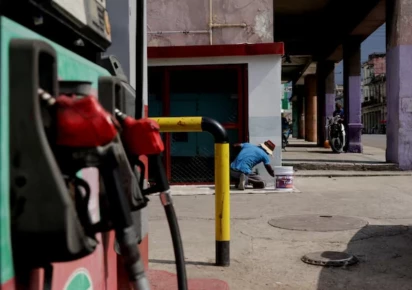
    US fuel opens a capitalist crack in Cuba

    HAVANA: Gasoline selling for as much as $38 a gallon, diesel advertised on social media and fuel stored inside cramped apartments are offering an unusual glimpse of private enterprise in communist Cuba, where the energy sector has long remained firmly under state control. A US policy allowing American companies to export fuel to private Cuban businesses has triggered an unexpected transformation. As Cuba struggles with shortages, blackouts and a weakened public transport system, imported fuel is creating a growing private market — while also exposing a sharp divide between those who can afford it and millions who cannot. The change follows the collapse of Cuba’s traditional fuel supplies from Venezuela and Mexico after the United States removed Venezuelan President Nicolas Maduro in January. With sanctions discouraging tankers from sailing toward the island, fuel shortages have increasingly affected transport, hospitals, schools and other essential services. Under an exception to Washington’s oil restrictions, however, private Cuban restaurants, retailers, taxi operators and other businesses have been allowed to import fuel. The impact has been striking. Between February and May, around 900,000 barrels of US fuel entered Cuba — enough to meet only about nine days of the country’s energy requirements. Yet those relatively small shipments have helped create a new network of legal wholesalers, private buyers and illegal resellers. Gasoline becomes a luxury For ordinary Cubans, the new fuel market has often brought frustration rather than relief. On a July afternoon in Havana, 53-year-old Amarilis Sanchez waited for hours at a bus stop after attending her daughter’s birthday celebration. Public buses, which normally cost only two pesos, were unreliable. Nearby, taxi drivers offered rides in vintage cars, but one driver quoted Sanchez 1,000 pesos for the journey — roughly 500 times the price of a bus ride. Unable to afford it, Sanchez considered spending the night at her daughter’s home and trying again for a bus the following day. Her experience illustrates how Cuba’s fuel crisis is creating two very different realities: one for people with access to private vehicles and imported fuel, and another for those dependent on the country’s struggling public transport network. Black-market gasoline prices reportedly reached $10 per litre, or about $38 per gallon, during the spring before falling as imports increased. Social media fuels a new market The emerging trade is increasingly visible online. WhatsApp groups and Facebook pages advertise gasoline and diesel, while some sellers store fuel in apartments and small shops despite the dangers posed by fire, explosions and toxic fumes. At one Havana convenience store, a shopkeeper reportedly kept around a dozen 20-litre fuel containers in a backroom, selling gasoline for approximately $5 per litre. Private companies are also moving into the newly emerging legal wholesale market. By late July, almost 200 Cuban businesses had received permission to distribute fuel wholesale to other private companies. One company, A Granel, advertises diesel through social media and charges $2.50 per litre for a 940-litre tank. The promotion reportedly features a model walking through a warehouse of diesel containers while Daddy Yankee’s famous song Gasolina plays in the background — an unusually flashy image for a country where the energy industry has historically been dominated by the state. Are Cuban gas stations next? The transformation could go further. Cuban lawmakers approved a broad package of economic reforms in June aimed at opening the energy sector to private and foreign investment. Prime Minister Manuel Marrero Cruz later announced that Cuba had approved its first foreign investment project focused on importing and selling fuel, although he did not name the company. The reforms have raised the possibility that private operators could eventually take control of some of Cuba’s familiar state-run Cupet petrol stations. For now, however, retail fuel sales remain largely under state control. Some state-owned stations are storing imported fuel but can distribute it only to vehicles belonging to authorised private businesses. Cuban authorities have defended the reforms while rejecting the idea that they represent a move toward large-scale privatisation. President Miguel Diaz-Canel has accused Washington of imposing a “genocidal siege” on Cuba and said economic changes were not being introduced to satisfy the United States. A lifeline with a heavy price The new fuel market has helped prevent some businesses from shutting down completely. During recent power outages, restaurants and shops with generators powered by imported fuel remained illuminated while much of Havana was plunged into darkness. But experts warn that the emerging system could deepen inequality. With the average government salary reportedly around $10 a month, imported gasoline remains unaffordable for most of Cuba’s roughly nine million residents. Cuban sociologist Mayra Espina said the limited fuel supplies had helped prevent “complete paralysis” but warned that the benefits were overwhelmingly concentrated among those able to pay. The result is an extraordinary contradiction: a small opening toward private enterprise is helping Cuba keep parts of its economy running, while simultaneously making access to basic mobility and energy increasingly dependent on wealth. For a country that has spent decades keeping fuel firmly within the state system, Cuba’s new gasoline economy may therefore prove to be more than a temporary response to shortage. It could become an early test of how far Havana is prepared to let capitalism into one of its most tightly controlled sectors.

  • |

    Karachi receives second day of monsoon rain with l…

    Karachi experienced light to moderate rainfall accompanied by high winds on Saturday evening, marking the second consecutive day of rain in the current monsoon spell. Rain was reported in multiple areas across the metropolis, including Scheme 33, Gulshan-i-Maymar, and adjoining areas, while a light drizzle fell in Hassan Square. Heavy rain was reported in Gulistan-i-Jauhar, and video footage showed commuters travelling through 4K Chowrangi in Surjani Town amid heavy rainfall. Light rainfall was also reported in Saddar, multiple blocks of Clifton, and the Defence Housing Authority. Earlier today, the provincial chief secretary directed provincial and district authorities to activate the Provincial Disaster Management Authority and district control rooms immediately, while ordering the submission of 24-hour situation reports every morning throughout the monsoon season for continuous monitoring. Chairing a meeting on monsoon preparedness, the chief secretary stressed that contingency plans must include the identification of relief camp sites, availability of rescue boats, dewatering pumps, water bowsers, and emergency mechanisms for food and drinking water, as well as adequate stocks of medicines for health and livestock departments. He instructed municipal authorities to remove bottlenecks, complete the cleaning of storm-water drains, and ensure uninterrupted drainage arrangements ahead of heavy rains. The meeting was informed that, according to the Pakistan Meteorological Department, moderate to isolated heavy rainfall was expected until July 27 in several districts, including Tharparkar, Umerkot, Mirpurkhas, Badin, Sanghar, Tando Muhammad Khan, Tando Allahyar, Hyderabad, Matiari, Jamshoro, and Shaheed Benazirabad. Light to moderate rainfall was also forecast for districts including Ghotki, Kashmore, Jacobabad, Shikarpur, Sukkur, Kambar Shahdadkot, Larkana, Khairpur, Naushahro Feroze, and Thatta, while Karachi was likely to experience mostly cloudy weather with chances of light rain and drizzle. Yesterday, the metropolis received this season’s first spell of rain after multiple localities reported light to moderate showers. Earlier this week, on the directives of Sindh Chief Minister Syed Murad Ali Shah, the PDMA placed district administrations across Sindh on high alert and directed all relevant departments to take precautionary and emergency response measures as strong monsoon currents from the Arabian Sea continue to affect the province. The CM directed all deputy commissioners, district administrations, municipal authorities, irrigation officials, health services, rescue agencies, and local government institutions to remain fully vigilant, ensure the preparedness of emergency response teams, maintain drainage systems, and take all necessary steps to protect lives and property. The rain has brought relief to residents after a prolonged dry spell, but authorities remain on high alert to address any potential flooding or rain-related emergencies. The public has been advised to stay updated with weather forecasts and follow official directives to ensure their safety during the monsoon season.

  • Pakistani National Detained After Fatal Hit-and-Run of Elderly Woman in Bangkok

    BANGKOK – A tragic incident at a zebra crossing in Bangkok’s Rat Burana district has resulted in the death of an 80-year-old Thai woman after she was struck by a motorcycle ridden by a Pakistani national on November 26. The collision took place on Pracha Uthit Road, near Soi Pracha Uthit 4, when the motorcyclist, […]

  • | |

    Nicole Kidman feels ‘very fearful’ after Keith…

    Nicole Kidman has opened up about the emotional uncertainty she has faced since her divorce from Keith Urban, admitting that her future now feels completely different from the life she once imagined. In a candid interview with British Vogue, the Oscar-winning actress reflected on the end of her nearly 20-year marriage and described the experience as a major adjustment. Kidman said there was a time when she felt “very fearful and deeply vulnerable” as she faced an unfamiliar chapter of her life. (RTE⁠) The actress explained that before her split from Urban, she had a clear idea of what her life would look like. Now, that certainty has disappeared. “I had a very different view of what my life was going to be,” Kidman said, according to reports from the interview. She added that her future currently feels “completely unknown,” leaving her to adjust to circumstances she never expected. (People.com⁠) Kidman and Urban married in June 2006 after meeting the previous year. During their 19-year marriage, they welcomed two daughters, Sunday Rose and Faith Margaret. Their relationship became one of Hollywood and country music’s best-known celebrity marriages. However, Kidman filed for divorce in Nashville on September 30, 2025, citing irreconcilable differences. The couple’s divorce was finalized on January 6, 2026. Their settlement included a parenting plan for their daughters, while both agreed to waive spousal and child support. (People.com⁠) For Kidman, starting over has meant accepting that life does not always follow the plan a person creates. Rather than trying to predict every step ahead, she appears to be learning to trust herself and remain open to whatever comes next. The actress also described herself as someone who tends to lead with her feelings. That emotional approach has helped her deal with difficult moments and continue moving forward instead of becoming consumed by uncertainty. (InStyle⁠) Despite the pain surrounding the end of her marriage, Kidman is not allowing the experience to define the rest of her life. She continues to focus on her family and her successful acting career, with several projects keeping her busy. Her upcoming work includes Practical Magic 2, alongside Sandra Bullock, as well as other film and television projects. (People.com⁠) Kidman’s latest comments offer a rare look at the woman behind the glamorous Hollywood image. After nearly two decades of marriage, she is facing a future she never expected—but she is choosing to meet it with honesty, resilience and an openness to new possibilities. For someone who once felt certain about where life was heading, Kidman now appears ready to embrace the uncertainty rather than fear it.

Leave a Reply

Your email address will not be published. Required fields are marked *