ajk police accuse
| |

AJK police accuse banned JAAC of armed violence, b…

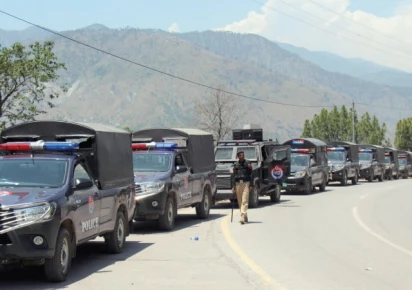
MUZAFFARABAD: Azad Jammu and Kashmir (AJK) Police have alleged that the banned Joint Awami Action Committee (JAAC) is pursuing a coordinated agenda to disrupt peace and destabilise the region, claiming recent clashes with security forces demonstrate that the group has transformed into an armed organisation.

Addressing a press conference in Rawalakot, AJK Police spokesperson Senior Superintendent of Police (SSP) Khawar Ali Shaukat said the violence of the past two days contradicted claims circulating on social media that the movement was peaceful. He alleged that armed individuals occupied buildings, established fortified positions and opened fire on police and security personnel using automatic and sophisticated weapons.

According to the police, law enforcement personnel had been deployed across various parts of Rawalakot to maintain public order when they came under attack. Shaukat said authorities had exercised restraint throughout the situation but were compelled to respond in accordance with the law after security forces were targeted.

The police spokesperson maintained that the nature of the weapons used and the organised tactics adopted during the clashes suggested the involvement of more than an ordinary protest movement. He further claimed that the group’s activities were intended to damage social harmony, weaken the atmosphere of brotherhood in AJK and create instability in the region.

Officials said the confrontation claimed the life of a Rangers official, while around 15 police officers and other law enforcement personnel were injured during the exchanges.

Police have reiterated that operations are being carried out under the law to restore order, while investigations into the incidents and the alleged network behind the violence remain ongoing.

Similar Posts

  • | |

    Pakistan seeks $10b in US backstop facility

    Pakistan has formally requested a 10 billion dollar exchange stabilisation facility from the United States to boost its foreign exchange reserves and stabilise its economy, according to a source familiar with the development. The request, addressed to US Treasury Secretary Scott Bessent, seeks a Bilateral Exchange Stabilisation Support Facility with a maturity period of up to five years. This move follows Pakistan’s involvement in facilitating negotiations regarding the Iran war, an effort that elevated the country’s diplomatic standing and fueled expectations of economic support from Washington and international partners. If approved, the 10 billion dollar facility would help replenish Pakistan’s central bank reserves, reduce downward pressure on the rupee, and decrease dependency on multilateral lenders. It would also provide financial flexibility as Islamabad continues implementing strict fiscal and monetary measures mandated under its 7 billion dollar International Monetary Fund programme. These IMF-guided measures have required politically challenging tax hikes, spending cuts, and structural reforms to ensure fiscal discipline. Neither the Pakistani Ministry of Finance nor the US Treasury immediately responded to requests for comment regarding the proposal. US Exchange Stabilisation Facilities, typically administered through the Exchange Stabilisation Fund, are rare financial mechanisms that provide foreign governments with dollars, currency swaps, or guarantees. These backstops differ from the Federal Reserve’s permanent standing swap lines with major foreign central banks. A 2025 financial package provided to Argentina represented the first new exchange stabilisation facility granted to a foreign government since Uruguay in 2002, alongside Mexico’s long-standing swap agreement dating back to the 1940s. Pakistan narrowly avoided a debt default in 2023 by securing a 3 billion dollar IMF standby arrangement, which was later succeeded by the current 7 billion dollar Extended Fund Facility. However, its foreign reserves remain heavily dependent on official loans, debt rollovers, and financial deposits from bilateral partners like Saudi Arabia and China. This reliance leaves the country vulnerable to delays in IMF disbursements and shifts in bilateral support, as demonstrated in April when Pakistan repaid approximately 3.5 billion dollars to the United Arab Emirates, representing a fifth of its reserves, while receiving 3 billion dollars in fresh backing from Saudi Arabia. Despite these vulnerabilities, Pakistan’s central bank projected in January that its foreign exchange reserves could approach their 2021 historical high, reaching 20 billion dollars by the close of 2026. In April, rating agency Fitch noted that compliance with the IMF programme has enhanced Pakistan’s funding capacity, while rebuilt foreign exchange buffers offer a cushion against economic shocks stemming from Middle East instability. However, Fitch cautioned that escalating global energy costs and potential supply disruptions could rapidly erode these reserve buffers. Furthermore, foreign direct investment in Pakistan remains constrained due to recurring external account crises, policy shifts, security concerns, historical restrictions on profit repatriation, and a narrow export base. The nation’s credit rating remains firmly in speculative-grade territory, limiting access to international capital markets and keeping borrowing costs high. To navigate these economic pressures, Islamabad has sought deeper engagement with the Trump administration through various commercial and investment initiatives. These efforts include signing a stablecoin agreement for cross-border transactions with an affiliate of World Liberty Financial, advancing a memorandum of understanding to redevelop the Pakistan International Airlines-owned Roosevelt Hotel in New York with the US government, and encouraging US investment in the domestic mining sector, where the US Export-Import Bank announced 1.2 billion dollars in financing for the Reko Diq project.

  • | | |

    AJK officials allege militants among JAAC proteste…

    Authorities in Azad Jammu and Kashmir (AJK) have alleged that militants linked to the banned Tehreek-i-Taliban Pakistan (TTP) were present among protesters associated with the Joint Awami Action Committee (JAAC), amid heightened tensions in the region. AJK Information Secretary Muhammad Rashid Hanif said on Tuesday that the presence of armed individuals and suspected militants had raised serious security concerns as the region prepared for the next phases of its electoral process. Hanif said the government’s primary responsibility was to preserve law and order while ensuring the continuation of the democratic process. He claimed that some individuals involved in the demonstrations were not ordinary protesters but had links with militant groups. During his briefing, the official presented footage showing masked and armed men positioned on the roof of a building. He alleged that militant elements were attempting to exploit ordinary citizens and urged residents to keep away from individuals involved in violence. Hanif further claimed that women and children were being used as human shields. He also rejected social media claims portraying the protests as solely a human rights movement, saying state institutions had information about the alleged presence of militants and other armed groups. AJK police spokesperson and Deputy Inspector General Irfan Kashfi said law enforcement agencies would respond to armed individuals as they would to other militant threats. According to Kashfi, the suspects were carrying sophisticated weapons, including automatic firearms, M-4 rifles, submachine guns and AK-47s. He said initial information also suggested that snipers had been involved in attacks on security personnel. The police official said one police officer had been killed while five others sustained injuries during clashes. He added that authorities had arrested a suspected individual in Rawalakot and recovered a military-grade weapon from his possession. Initial information suggested that the suspect was a foreign national and had allegedly been operating as a sniper. Kashfi maintained that security personnel were responding in self-defence and to protect civilians. Authorities were also investigating individuals suspected of facilitating the alleged militants. AJK Prime Minister Faisal Mumtaz Rathore separately accused armed protesters of deliberately creating unrest and said security personnel had been targeted from strategic positions. He urged residents to avoid the demonstrations, alleging that the unrest was intended to provoke a wider confrontation during the election period. Tensions between the AJK administration and the JAAC have intensified over the past month. The committee has raised several demands, including a proposal to abolish 12 seats in the AJK Legislative Assembly.

  • | |

    Pakistan continues repatriation of undocumented Af…

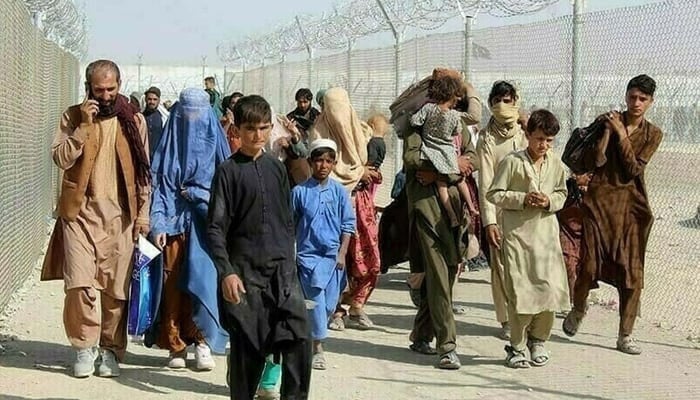
    Punjab authorities have stepped up action against Afghan nationals living in the province without valid documents. The Foreign National Security Cell of the Punjab Home Department is carrying out checks across the province. Officials are identifying Afghan nationals who are staying without acceptable visas. Those found to be residing illegally are being detained. They are then moved to designated holding centres before being repatriated to Afghanistan. A spokesperson for the Punjab Home Department said 2,689,295 Afghan nationals have so far been repatriated from Pakistan. The spokesperson said 140,468 undocumented Afghan nationals have been sent back from Punjab alone. Officials said the action is being carried out under the government’s existing policy. Under the policy, Afghan nationals without valid and acceptable visas are considered to be staying illegally in Pakistan. The crackdown is not limited to one area. Officials are conducting checks in residential neighbourhoods and commercial markets across Punjab. The authorities are also monitoring places where foreign nationals may be living or working. The purpose is to identify people who do not have the required legal documents. The department said detained Afghan nationals are transferred to holding centres. These facilities are being used to manage the repatriation process. There are currently 39 active holding centres across Punjab. According to the department, 188 Afghan nationals are currently staying in these centres. The provincial authorities have also directed action against people who rent properties to undocumented foreign nationals. Cases can be registered against property owners found violating the relevant rules. Officials said the enforcement drive will continue across the province. Authorities are maintaining checks in different areas as part of efforts to enforce immigration regulations.

  • | |

    Federal government freezes ad hoc relief allowance…

    The federal government has decided to keep the 2023 and 2024 ad hoc relief allowances unchanged for its employees, maintaining the existing rates while also outlining the allowance structure for newly appointed staff. According to a notification issued by the Ministry of Finance, the Ad Hoc Relief Allowance-2023 will remain frozen at the level applicable on June 30, 2023, and will not be revised until further instructions are issued. Under the current arrangement, employees in Grades 1 to 16 will continue to receive an allowance equal to 35% of their basic pay, while officers in Grades 17 to 22 will receive 30% of their basic pay under the 2023 relief allowance. The ministry has also announced that the Ad Hoc Relief Allowance-2024 will remain frozen at the rates applicable on June 30, 2026. Employees in Grades 1 to 16 will continue to receive 25% of their basic pay, whereas those in Grades 17 to 22 will receive 20% of their basic pay. The decision means there will be no increase in these allowances until further notice, although eligible employees will continue receiving them at the existing rates. The notification also provides guidance on the applicable allowance rates for newly recruited federal government employees, ensuring uniform implementation across government departments. The Finance Ministry said the revised pay and allowance framework will remain effective unless amended through a future government notification.

  • | |

    Motorway police must avoid unlawful challans

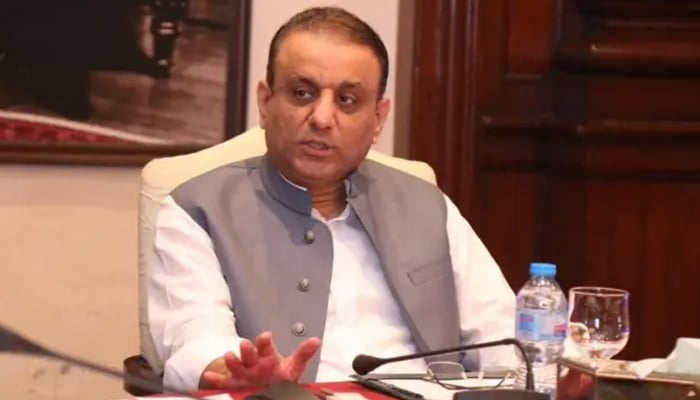
    Federal Minister for Communications Abdul Aleem Khan has assured goods transporters that he will not allow the motorway police to issue a single unjustified or unlawful traffic challan, stressing that the government will honour all commitments made to the transport sector. The minister made the remarks at a reception hosted in his honour by goods transporters following the successful conclusion of negotiations between transporters and the government. Addressing the gathering, Abdul Aleem Khan urged transporters to comply with the axle-load policy, saying the regulation serves their own interests. He explained that carrying excessive weight puts additional pressure on vehicles and causes significant damage to roads and other transport infrastructure. The federal minister acknowledged the vital role of the transport industry in keeping the country’s economy moving. He said the government needs the cooperation of transporters to support economic growth and improve the overall transportation system. Abdul Aleem Khan also assured the transport community that he would personally monitor their concerns if necessary. “If required, I will stand on the roads myself to observe the problems faced by transporters,” he said, underlining his commitment to resolving issues through direct engagement. The development follows high-level talks chaired by Sindh Governor Syed Muhammad Nehal Hashmi, during which representatives of the Pakistan Goods Transport Association held negotiations with federal and provincial government officials. The talks ended successfully, prompting goods transporters to suspend their nationwide strike, which had continued for nine days. The transporters have agreed to postpone the strike for 40 days and resume the movement of goods across the country. The agreement has temporarily eased tensions between the government and the transport sector, while both sides are expected to use the 40-day period to address outstanding concerns and work toward a longer-term resolution.

  • | |

    Punjab seeks Rs12.5bn for local polls

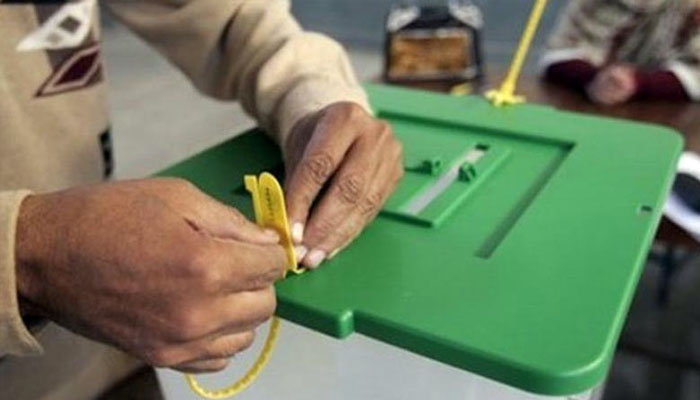
    The Punjab government is expected to consider a request for Rs12.5 billion to finance the upcoming local government elections in the province. According to official sources, the Punjab Local Government Department has formally sought the funds from the provincial government to meet the financial requirements for conducting the elections. The requested amount is intended to cover the expenses associated with organising the electoral process, including administrative arrangements, polling operations, election staff, logistics and other necessary preparations. Sources said the proposal for the release of funds will be presented before the Punjab Cabinet for approval. The cabinet will review the request and decide whether to allocate the required amount for the elections. An important meeting of the Punjab Cabinet has been convened for today. The meeting is expected to discuss several major policy and administrative matters, with the funding proposal for local government elections among the key agenda items. If the cabinet approves the request, the release of funds will pave the way for the Election Commission and the provincial authorities to begin practical preparations for the long-awaited local government elections. The financial allocation is considered a key step toward ensuring that the electoral process is conducted smoothly and that all logistical and administrative requirements are met on time. Officials believe that timely approval of the funds will help avoid delays in election preparations and support the successful organisation of local government polls across Punjab.

Leave a Reply

Your email address will not be published. Required fields are marked *