anthropic ipo mint
| | |

Anthropic IPO to mint thousands of millionaires

NEW YORK, USA – Anthropic‘s initial public offering is poised to create thousands of paper millionaires among current and former employees, in what could rank among the largest employee wealth windfalls in Silicon Valley history.

The offering is expected to unleash a wave of new wealth across the AI sector, rewarding everyone from early researchers and engineers to administrative staff who received stock grants as the Claude maker raced from startup to one of the world’s most valuable companies.

The IPO filing shows the amount of wealth embedded in employee stock awards, but not how that wealth is distributed among workers. As a result, outside estimates vary widely.

Hill, a San Francisco marketplace for private-company shares, estimates 598 non-founder employees will hold at least $100 million in equity after the initial public offering, which is slated to open on the Nasdaq on Thursday at $83 a share, above its initial target range that would value the company at up to $1.4 trillion, according to a person familiar with the information.

Private-markets research firm Sacra estimates that roughly 2,800 current and former Anthropic employees could hold at least $1 million of pretax vested equity at a $1.35 trillion valuation, the middle of the price range.

The firms say their estimates are model-based and use public information. Reuters could not independently verify the estimates, which reflect factors including vesting periods, exercises, tender transactions, option awards, restricted stock units, award timing, headcount and employee retention rates. The filing does not disclose sums due individuals.

But the wealth potentially shared by employees is vast. Anthropic option holders were sitting on $119 billion of paper gains as of September 30, at a weighted average exercise price of $2.91 per share, the company disclosed. About $73 billion of that amount had vested through service and could be exercised immediately.

Anthropic did not respond to a comment request on the estimates.

“The idea of equity appreciating to an amount that is life-changing is something that people strive for,” Hill CEO Andrew Benson said. “It doesn’t get better than this.”

Equity at entry level

Workers who joined the firm when it started five years ago — even in administrative positions and entry-level jobs — could be sitting on life-changing wealth, reflecting their holdings of stock options that carry exercise prices of less than $1.

Options granted through 2023 and still outstanding at the end of that year carried an average exercise price of 52 cents, the filing shows.

At SpaceX, which was founded in 2002 and went public in June in a record-busting IPO, many of the employees who became millionaires had worked there for more than a decade.

“Early employees who started in a very junior role should have actually a better financial outcome than somebody who joined in a very senior role right before the IPO,” Benson said, referring to Anthropic.

Non-founder Anthropic employees can sell up to 10% of their holdings on the first trading day, and up to another 35% after fiscal 2026 earnings.

Early hires reap rewards

Founded in 2021, the Claude maker expanded its workforce rapidly alongside the AI boom, growing to about 5,300 employees as of September 30 from roughly 940 at the end of 2024. As it hired aggressively, the company used stock-based compensation as a key recruiting tool.

A May 2024 job posting for an administrative business partner role shows how the benefits of Anthropic’s stock awards extended beyond AI researchers and engineers.

The position, which involved scheduling and managing calendars for company leaders, coordinating conference logistics and handling expense claims and reimbursements, paid an annual salary of $140,000 to $190,000.

The posting added that equity would be “a major component of the total compensation” beyond the salary, indicating that administrative and support staff were also eligible for stock awards alongside cash pay.

That year, Anthropic said it granted employees options at an average exercise price of $1.30 per share.

“And as we know from several anecdotes after the SpaceX IPO, this is often enough to help people down the organization chart do quite well in IPO,” said Marcelo Ballve, head of research at Sacra.

Anthropic granted CFO Krishna Rao 14 million stock options in 2024, also with a $1.30 exercise price, according to the filing. At the IPO price range, those options would carry roughly $1 billion in gross intrinsic value, before exercise costs and taxes.

Ballve said that equity awards for administrative, support and entry-level roles are not uncommon at venture capital-backed companies. Historically, though, many companies phased out equity grants at hiring for these roles as they scaled up and salaries became more competitive, moving to performance- and tenure-based grants instead.

After Anthropic goes public, the company will likely reserve upfront equity grants solely for recruiting top talent, he said. – Rappler.com


Similar Posts

  • | | |

    UAE visa restrictions threaten Pakistan’s Gulfoo…

    Pakistani business leaders have raised concerns over reported difficulties in obtaining UAE visas, warning that the situation is disrupting trade, business travel and export activities. The restrictions are causing uncertainty among Pakistani exporters and traders who regularly travel to the UAE for commercial meetings, exhibitions and other business activities. Ismail Suttar, Founder and Chairman of the Salt Manufacturers Association of Pakistan, said Pakistani citizens were facing serious difficulties in obtaining UAE visas. He said the reasons for the reported restrictions had not been clearly communicated. Business representatives said the issue was particularly worrying for companies with established operations in Dubai. Several Pakistani businessmen have offices and long-standing commercial interests in the UAE. Some business owners have also reportedly faced difficulties travelling to the UAE to visit their families. Representatives of the business community said repeated visa rejections had created considerable uncertainty. A member of the Karachi Chamber of Commerce and Industry said the matter had been formally raised with UAE authorities. A letter was sent to the UAE consul general on June 11, followed by another communication on July 7. The business community says the visa situation could also affect Pakistan’s participation in major international exhibitions. Gulfood, one of the major food and beverage exhibitions held in Dubai, is a particular concern. Pakistani food companies are preparing for the upcoming event, but exporters fear that their sales teams may not receive visas. Business leaders say participation in such exhibitions is important for finding international buyers and expanding exports. Without visas, company representatives cannot display products, hold meetings or negotiate new deals. They warned that prolonged travel restrictions could affect Pakistan’s efforts to increase exports and strengthen commercial ties with international markets. Former Federation of Pakistan Chambers of Commerce and Industry Secretary General Shahid Anwar said visa conditions for Pakistanis differed across Gulf countries. He noted that some Gulf states had introduced measures that made travel easier for Pakistani citizens. Saudi Arabia has included Pakistan in a package-based tourist visa programme, while Kuwait has restored several visa categories for Pakistani nationals. According to Anwar, these developments indicate improving engagement in some bilateral relationships. The situation with the UAE, however, remains unclear. UAE authorities have maintained that there is no general visa ban on Pakistanis and that applications across different categories continue to be processed. Business representatives, however, say their experiences do not always match the official position. Rawalpindi Chamber of Commerce and Industry President Usman Shaukat said several chamber members with established businesses in the UAE were facing visa problems. Some businessmen have long-standing commercial links and property interests in the UAE. Despite this, they have reportedly struggled to obtain visas. The difficulties have resulted in cancelled meetings and missed international exhibitions, according to business representatives. They said the impact was being felt not only in Rawalpindi but also among business communities in Karachi, Lahore and other major commercial centres. Travel industry representatives have also reported a significant decline in movement between Pakistan and the UAE. Aviation consultant Wahid Mukhtar said travel to the UAE had been badly affected by visa difficulties. He said family and visit visa applications were also facing high rejection rates. He added that labour visa holders continued to travel, while holidaymakers were increasingly choosing destinations such as Azerbaijan and Tashkent. Qatar has also changed its visa arrangements for Pakistani travellers, according to travel industry representatives. The reported restrictions are also affecting Pakistanis travelling for medical and health-related activities. Masood Ahmed said some applicants below the age of 40 were facing difficulties in obtaining Dubai visas, even when they had supporting letters. He said older applicants were experiencing comparatively fewer problems. Some younger applicants had previously been approved when travelling with family during major health exhibitions. Business leaders have urged the Pakistani government to intervene diplomatically. They want Islamabad to engage with UAE authorities and seek clarity on the visa situation.

  • | |

    Could Lionel Messi be Argentina’s next President…

    BUENOS AIRES: Football icon Lionel Messi has become the subject of an unexpected political prediction after a Chinese academic claimed the Argentine superstar could become the country’s president within the next five years, a suggestion that has quickly gone viral across social media. The prediction was made by Chinese analyst and academic Jiang Xueqin during an interview on controversial online content creator Sneako’s Kick streaming platform. During the discussion, Jiang argued that Messi’s immense popularity could propel him into Argentina’s highest political office if he ever decided to enter public life. According to Jiang, the eight-time Ballon d’Or winner would not only win a presidential election comfortably but could also remain in office for as long as two decades because of the extraordinary public affection he enjoys. “He is so admired that people would continue to support him even if he made mistakes,” Jiang suggested during the interview, a remark that quickly drew mixed reactions from football fans and political observers alike. The prediction comes at a time when Messi continues to cement his legendary status in world football. At the age of 39, he recently captained Argentina to a second consecutive FIFA World Cup final, extending one of the most remarkable international careers in football history. Although Argentina fell to Spain in the 2026 World Cup final, Messi’s performances throughout the tournament once again earned widespread praise. Many supporters believe his influence on Argentine football remains unmatched, despite the disappointing result in the championship match. The speculation has fueled lively discussions online, with some fans embracing the idea as an interesting possibility while others dismissed it as little more than a fanciful prediction. Social media platforms have been flooded with humorous posts imagining Messi exchanging football boots for political office. However, there is currently no indication that Messi intends to enter politics. The football legend has never announced plans to run for public office or participate in Argentina’s presidential elections. Political analysts also caution against treating the prediction as anything more than personal opinion. Jiang’s remarks have not been independently verified and do not reflect any official political development involving the Argentine captain. Messi has largely kept his public image focused on football, charity work and family life throughout his career, rarely commenting on domestic politics. While the idea of the World Cup-winning captain one day leading Argentina has captured public imagination, it remains entirely speculative. For now, Messi’s future continues to be linked with football rather than politics, leaving fans to debate whether the viral prediction is pure fantasy or an intriguing “what if” scenario.

  • | | | | |

    Iran rejects US ceasefire proposal sent through Ir…

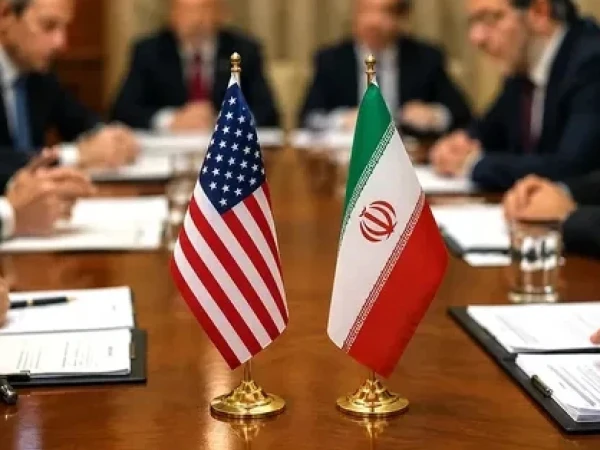
    TEHRAN/WASHINGTON: Iran has reportedly rejected a US-backed ceasefire proposal delivered through Iraq, insisting that any agreement must address the underlying causes of the conflict rather than offer only a temporary halt in fighting, according to a report published by The New York Times. The report said the proposal was conveyed during Iraqi Prime Minister Ali Al-Zaidi’s visit to Tehran after meetings with US officials in Washington. Acting as an intermediary, the Iraqi leader is said to have relayed Washington’s message in an effort to ease rising military tensions between Iran and the United States. According to the report, Iranian officials made it clear that a short-term ceasefire would not be acceptable unless it included concrete solutions to the broader disputes driving the conflict, particularly issues surrounding the Strait of Hormuz, one of the world’s most strategically important maritime routes. While the full details of the reported US proposal were not disclosed, Iranian officials were quoted as saying that a temporary pause in hostilities would do little to resolve the crisis without addressing Tehran’s core strategic concerns. Iranian Foreign Minister Abbas Araghchi confirmed that the Iraqi prime minister had briefed Tehran on his discussions in Washington and shared his observations from the visit. However, Araghchi emphasized that communication channels between Iran and the United States already exist through several regional mediators. “The issue is not the delivery of messages,” Araghchi said, according to Iranian media. “The real problem is Washington’s approach.” He accused the United States of pursuing what he described as an “unreasonable, greedy and controlling” policy that has fueled the current crisis. The report added that Tehran remains committed to its long-standing strategic demands and is unwilling to accept any agreement that it believes undermines Iran’s national interests or regional position. As of the time of publication, the US government had not issued an official response to the New York Times report or to the statements attributed to Iranian officials. The details of the alleged proposal have also not been independently verified. Diplomatic efforts involving Iraq, Qatar, Pakistan, and other regional countries are continuing behind the scenes in an attempt to reduce tensions and prevent a wider regional conflict. However, political analysts say deep disagreements between Tehran and Washington continue to limit the prospects for a breakthrough. The reported rejection underscores the significant obstacles facing mediation efforts, particularly as disputes over regional security, sanctions, and freedom of navigation in the Strait of Hormuz remain unresolved. With military tensions still high and both sides maintaining firm public positions, observers believe a comprehensive diplomatic solution remains difficult despite ongoing regional mediation initiatives.

  • |

    Oil prices rise as US-Iran uncertainty and shipping attacks raise supply concerns

    BEIJING: Global oil prices advanced on Wednesday as uncertainty surrounding a potential peace agreement between the United States and Iran, coupled with attacks on commercial shipping in key Middle Eastern waterways, heightened concerns about disruptions to crude supplies. At 0553 GMT, Brent crude futures had gained 75 cents, or 0.84%, to reach $89.66 per barrel. US West Texas Intermediate (WTI) crude rose 72 cents, or 0.87%, to $83.92 a barrel. Both benchmarks had climbed by more than $1 earlier in the session. The latest gains followed a strong rally on Tuesday, when both Brent and WTI settled more than $1 higher, reaching their highest closing levels since July 31. Oil prices had already surged around 5% on Monday as market participants became increasingly sceptical about the prospects of a US-Iran agreement to end the conflict. Concerns intensified after US President Donald Trump issued a fresh demand that Iran compensate people killed in wars, attacks and protests. Market analysts said the latest developments have left energy markets highly sensitive to changes in the US-Iran narrative. “The Middle East is increasingly becoming a seesaw between ‘deal’ and ‘war’,” said Priyanka Sachdeva, head of market insights at Phillip Nova in Singapore, describing the resulting price swings as a pendulum moving between roughly $70 and $90 a barrel. Shipping Disruptions Add to Market Pressure Concerns over the safety of crude shipments were also reinforced after the United States and Yemen’s Iran-aligned Houthis reported separate attacks involving shipping in the Strait of Hormuz and the Bab el-Mandeb Strait. The Strait of Hormuz is one of the world’s most important energy transit routes, making any prolonged disruption there a major concern for global oil markets. Iranian security official Mohsen Rezaei said the strategic waterway would remain closed unless Washington accepted Tehran’s conditions for ending the conflict. Those demands reportedly include the release of frozen Iranian assets and an end to other regional conflicts. Trump, meanwhile, has continued to send mixed signals about the US response, alternating between warnings of a tougher military approach and suggestions that an agreement could still be reached. The uncertainty has contributed to sharp swings in crude prices as traders attempt to assess whether the conflict will escalate or move towards negotiations. Sachdeva said markets could increasingly become accustomed to the frequent changes in the geopolitical narrative, creating a highly volatile environment for short-term traders and speculators. Hormuz Traffic Falls Sharply Shipping data highlighted the scale of the disruption. The number of vessels passing through the Strait of Hormuz fell to only eight on Tuesday, according to shipping data cited in market reports. That compares with an estimated 125 to 140 vessels a day before the conflict, underscoring the extent to which security concerns have affected maritime traffic through the strategic waterway. A sustained reduction in shipping through Hormuz could have significant implications for global energy markets because the route handles a substantial share of international oil shipments. US Crude Inventories in Focus Despite geopolitical concerns, developments in the United States provided a counterweight to the bullish sentiment. A Reuters poll released on Tuesday had indicated that US crude and fuel inventories were expected to decline during the week ended August 7. However, market sources citing data from the American Petroleum Institute (API) reported a substantial increase in US crude stocks. According to the sources, US crude inventories increased by approximately 9.1 million barrels last week. Gasoline stocks declined by around 1.5 million barrels, while distillate inventories fell by approximately 596,000 barrels. The reported crude build was considerably larger than market expectations. If confirmed by official figures, the increase could ease concerns over tightness in the US oil market and potentially limit further price gains. Haitong Futures said in a market note that the unexpectedly large increase in crude inventories could reduce some of the supply-related pressure currently supporting oil prices. EIA Data Awaited Investors are now awaiting official inventory figures from the US Energy Information Administration (EIA), the statistical arm of the US Department of Energy. The EIA’s weekly petroleum report is scheduled for release at 10:30 a.m. Eastern Time (1430 GMT) on Wednesday. Market participants will closely examine the data for signs of changes in crude production, refinery activity, gasoline demand and commercial inventories. Any significant deviation from the API figures could trigger additional volatility in oil prices. Longer-Term Supply Risks Remain Beyond the immediate market reaction, longer-term concerns over Middle Eastern supply disruptions continue to provide support to crude prices. The EIA has estimated that disruptions to Middle Eastern crude supplies could amount to approximately 600,000 barrels per day and persist through the end of 2027. With geopolitical tensions still unresolved and shipping activity through major regional waterways significantly reduced, traders are expected to remain highly sensitive to developments involving the United States, Iran and regional armed groups.

  • |

    Indonesia hit by powerful 7.7 earthquake, Tsunami …

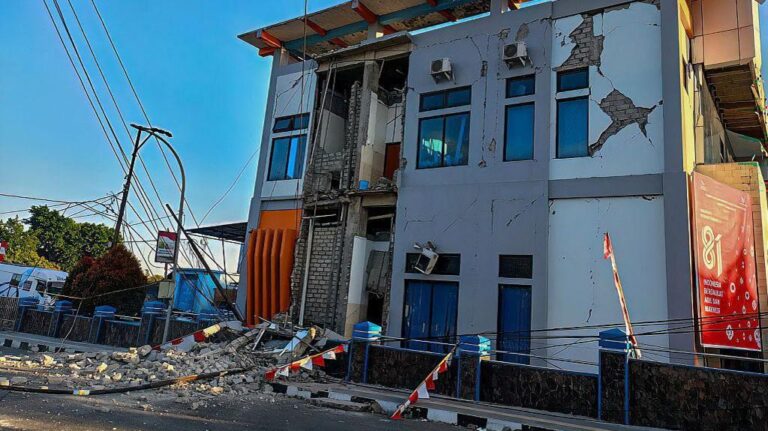
    A powerful 7.7-magnitude earthquake struck off Indonesia’s Flores region early Saturday, August 15, 2026, sending strong tremors across parts of eastern Indonesia and prompting authorities to issue a tsunami warning for vulnerable coastal areas. The earthquake struck at around 5:58am local time, with the epicentre near Nagekeo in East Nusa Tenggara. The relatively shallow quake was followed by several aftershocks, intensifying fears among residents living near the coast. Indonesia’s Meteorology, Climatology and Geophysics Agency (BMKG) issued a tsunami warning shortly after the earthquake and urged people in exposed coastal areas to move to higher ground as a precaution. Minor tsunami waves were subsequently recorded in some locations. The powerful shaking caused damage to buildings and other infrastructure in parts of East Nusa Tenggara. Residents rushed outdoors as buildings shook, while emergency teams began assessing the extent of the destruction. At least several people were reported killed or injured, although casualty figures remained subject to change as rescue teams reached affected areas. In some locations, hospitals moved patients outdoors amid concerns over building safety. The earthquake also triggered evacuations, with thousands of residents moving away from coastal areas after the tsunami alert. Authorities continued monitoring sea levels and aftershocks as emergency operations got underway. The tsunami warning was later lifted after officials found no continuing threat of major waves. Australia’s tsunami warning authorities also said the earthquake posed no tsunami threat to mainland Australia, its islands or territories. Indonesia lies along the seismically active Pacific Ring of Fire, making the country particularly vulnerable to powerful earthquakes and volcanic activity. Authorities have urged residents in affected areas to remain alert, follow official instructions and avoid damaged structures while inspections and rescue operations continue.

Leave a Reply

Your email address will not be published. Required fields are marked *