anutin urges fresh

Anutin Urges Fresh Start in Thailand-Cambodia Relations Following Cebu Summit

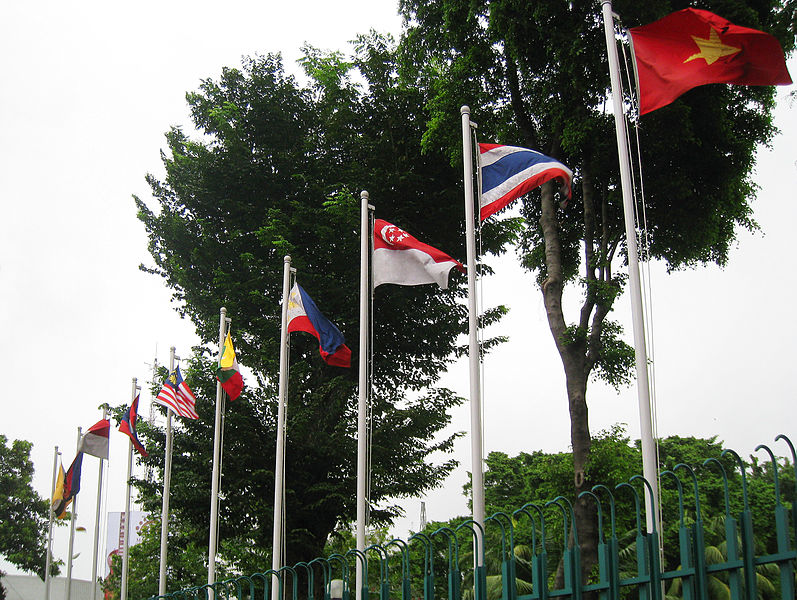
BANGKOK — It is time for Thailand and Cambodia to look ahead and open a new chapter in bilateral relations based on sincerity, goodwill and a shared determination to overcome challenges, Thai Prime Minister Anutin Charnvirakul said on Thursday following trilateral talks on the sidelines of the ASEAN Summit in Cebu.

Cambodia Threatens UN Maritime Mechanism If Thailand Withdraws From 2001 Border Agreement

Speaking after a meeting with his Cambodian counterpart, Hun Manet, and Philippine President Ferdinand Marcos Jr., Anutin said that as close neighbours with deep historical, economic and cultural ties, both countries must move beyond conflict, which brings only loss and hardship to both sides.
The meeting was initiated by Marcos in his capacity as ASEAN chair and focused specifically on the situation between Thailand and Cambodia, whose relations have been strained in recent months over overlapping maritime claims and the fate of a 2001 memorandum of understanding that Thailand’s government has since scrapped.

Following the talks, the three leaders held a joint press briefing in alphabetical order, beginning with Marcos as ASEAN chair, followed by Hun Manet and then Anutin. The fact that the meeting took place at all was seen as a positive step, given the tensions that had led Cambodia to initiate compulsory conciliation under the United Nations Convention on the Law of the Sea after Thailand’s unilateral withdrawal from the 2001 MoU.

Anutin said both countries had assigned their foreign ministers to work together on practical confidence-building measures, starting with areas of common ground that can be implemented immediately. Such steps, he said, would be crucial in rebuilding trust and gradually restoring strong bilateral relations. Thai government spokesperson Rachada Dhnadirek described the meeting as constructive, candid and forward-looking.

The Thai leader added that both sides should proceed step by step in the same direction, with greater direct communication at all levels to reduce misunderstandings and expand cooperation in mutually beneficial areas. On land and maritime boundary issues, Anutin proposed continued discussions based on good neighbourly relations, aimed at finding peaceful and lasting solutions. He said the meeting marked an important step toward creating an environment conducive to peace and regional cooperation, reaffirming Thailand’s readiness to work constructively with all parties based on mutual understanding, respect and shared interests.

For his part, Hun Manet said his discussions with Anutin focused on de-escalation and trust-building measures aimed at restoring and consolidating a functioning framework for lasting peace and normalised relations. Both sides also discussed resuming existing bilateral mechanisms, including the Joint Boundary Commission, the General Border Committee and the Regional Border Committee, now that Thailand’s new government has assumed full functionality.

On overlapping maritime claims, Hun Manet said future approaches were also discussed, reaffirming Cambodia’s decision to initiate compulsory conciliation under UNCLOS following Thailand’s move to scrap the 2001 Memorandum of Understanding. “Cambodia believes this is a peaceful path toward a fair solution for both parties,” he said.

8.2 Billion Baht Asset Haul Linked to Cambodian Scam Ring

The Cebu meeting did not resolve all differences, but it may have prevented them from escalating further. A new chapter, as Anutin called for, requires both sides to turn the page. Whether Thailand and Cambodia can do so remains to be seen, but for a few hours in Cebu, they sat at the same table, spoke to the same microphones and said the same words: peace, trust and cooperation. The next chapter has been opened. The writing of it begins now.

-Thailand News (TN)
Similar Posts

  • | |

    NCCIA crackdown: 14 suspects arrested in Lahore, M…

    The National Cyber Crime Investigation Agency (NCCIA) Punjab has launched a major crackdown against networks allegedly involved in online financial fraud, identity theft and social media scams, arresting 14 suspects in Lahore and Multan. The operation was carried out under the direction and supervision of NCCIA Punjab Director Muhammad Ali Waseem. Officials said the suspects allegedly defrauded citizens of millions of rupees through various online schemes. In Lahore, the NCCIA arrested four suspects in three separate cases. They were identified as Muhammad Amir, Muhammad Ashfaq, Muhammad Qamar and Ameer Karim. According to initial investigations, the suspects allegedly posed as marriage bureau representatives or close friends to gain victims’ trust. They then allegedly deceived citizens into transferring money. Investigators recovered mobile phones from the suspects and found evidence indicating that victims had been defrauded of significant amounts. In Multan, the NCCIA carried out three separate operations and arrested 10 suspects. They were identified as Muhammad Asghar, Amir Shehzad, Muhammad Kamran, Rizwan Talib, Saqib Ali, Kamran Talib, Iftikhar Manzoor, Muhammad Adnan, Muhammad Sultan and Muhammad Naeem. Investigators said the suspects allegedly used social media platforms and WhatsApp to impersonate officials from customs, police, banks and other government institutions. The suspects allegedly contacted citizens using false claims involving prizes, gifts, donations, bank verification and parcel clearance. They then demanded money from victims under various pretexts. Investigators uncovered one case in which a victim was allegedly defrauded of Rs1 million, while another involved the alleged theft of Rs588,000. The NCCIA said several mobile phones, SIM cards, fake WhatsApp accounts, social media profiles and other digital evidence were recovered during the operations. The seized devices and accounts are being subjected to forensic analysis. Cases have been registered against all 14 suspects under relevant provisions of the Prevention of Electronic Crimes Act (PECA) 2016, as amended in 2025, along with applicable sections of the Pakistan Penal Code.

  • | |

    China leans on AI forecasting tools as Typhoon Dol…

    China has ramped up investment in artificial intelligence powered weather forecasting as the country works to track a rising number of natural disasters and predict extreme weather events such as powerful typhoons, intense rainfall and prolonged heatwaves tied to climate change. The country has positioned itself as a leading force in data driven meteorology, increasingly running AI systems alongside traditional forecasting methods rather than replacing them outright. As meteorologists monitored Typhoon Dolphin’s approach toward China in recent days, a newer generation of AI weather models operated in parallel with conventional forecasting systems, underscoring China’s expanding role in the broader push to improve storm prediction. Unlike standard numerical weather models, which depend on powerful supercomputers to simulate the physics of the atmosphere, AI based systems instead learn from decades of historical weather data. That approach lets them generate forecasts within seconds or minutes while using only a small fraction of the computing power traditional methods require. According to a state affiliated newspaper, some of China’s most prominent AI forecasting tools include Fengwu, built by the Shanghai AI Laboratory, Huawei’s Pangu Weather system, and Fuxi, developed at Fudan University. These models are increasingly being put through real world testing during East Asia’s intense typhoon season, a period when even modest improvements in tracking a storm’s path can help authorities plan flood responses, coordinate evacuations and manage disruptions to transportation networks. Fengwu in particular has shown strong results in predicting storm trajectories, with researchers noting that AI based systems can produce forecasts far faster than conventional models while matching or, in some cases, surpassing them on certain accuracy measures. The rapid progress in AI driven weather forecasting has sparked growing competition among technology firms, research institutions and national meteorological agencies worldwide, with China establishing itself as one of the sector’s most active players. Even so, meteorologists caution that AI tools currently serve as a complement to physics based forecasting rather than a full replacement. These systems still struggle to accurately capture sudden shifts in storm intensity, and they remain largely untested when it comes to long term climate modeling. As a result, traditional forecasting methods are expected to remain a core part of weather prediction for the foreseeable future, even as AI tools continue to mature and take on a larger role alongside them. The push toward AI assisted forecasting fits into a broader global trend, as governments and research institutions increasingly explore machine learning as a tool for anticipating the growing frequency and intensity of extreme weather linked to a changing climate.

  • Thailand Implements Strict New Regulations For Carrying Power Banks On Commercial Flights

    BANGKOK, Thailand — The Civil Aviation Authority of Thailand (CAAT) has introduced stringent new regulations governing the transport of power banks and lithium-ion batteries on commercial aircraft. The updated guidelines are designed to significantly enhance aviation safety and bring Thai airspace regulations into full alignment with the standards established by the International Civil Aviation Organization […]

  • Thailand Confirms No Nipah Virus Cases, Urges Public Vigilance

    BANGKOK – The Department of Disease Control (DDC) has assured the public that there are no confirmed cases of Nipah virus in humans in Thailand, and that strict surveillance systems have long been in place under the “One Health” framework. Six dead as Nipah virus spreads in Kozhikode, India Dr. Jurai Wongsawat, a DDC spokesperson, […]

  • | |

    Trump imposes up to 100% tariff on Chinese drones

    WASHINGTON: US President Donald Trump has announced tariffs of up to 100 per cent on imported drones and certain drone components, escalating Washington’s efforts to reduce dependence on Chinese technology and strengthen America’s domestic unmanned aircraft industry. The White House said the new duties were introduced on national security grounds and would target specific unmanned aircraft systems considered particularly sensitive. The measures cover larger unmanned aerial systems weighing more than 25 kilograms at take-off. Drones equipped with technologies considered important to national security, including thermal imaging systems and drone docking stations, will also face the additional tariffs. Under the new policy, smaller drones will be subject to a 25pc tariff, while larger and more technologically sophisticated systems could face duties of up to 100pc. The structure means the final tariff will depend on a drone’s weight, size and capabilities. The decision comes as the United States seeks to reduce its reliance on Chinese-made drones and strengthen domestic supply chains for critical technologies. Chinese manufacturers have long held a significant position in the global and US drone market, particularly in consumer and commercial unmanned aircraft. The Trump administration argues that drones have become increasingly important to national security, surveillance and other sensitive operations. Officials therefore want to encourage greater production of drones and key components inside the United States. The tariffs could have an immediate impact on the prices of some imported drones, potentially making Chinese-made models significantly more expensive for American buyers. Businesses that rely on drones for commercial, industrial or specialised operations could also face higher costs. At the same time, Washington expects the policy to encourage US manufacturers to expand production and invest in domestic drone technology. The move marks another step in the broader US strategy of limiting dependence on China in strategically important technologies while promoting American manufacturing and supply-chain security.

  • | |

    Rain triggers flooding, power outages in twin citi…

    Heavy rain, strong winds and thunderstorms lashed Rawalpindi and Islamabad on Saturday. The downpour disrupted routine life in several parts of the two cities. Several areas of Islamabad faced waterlogging after the heavy rainfall. Underpasses in the G-6 sector were filled with rainwater. The accumulation of water caused difficulties for motorists and pedestrians. The situation was also reported to be severe in Chatta Bakhtawar. Roads and streets were submerged under rainwater. Several streets gave the appearance of ponds. Rainwater also entered residential houses in the area, creating problems for residents. The heavy rain also affected electricity supply in different parts of Rawalpindi and Islamabad. Several areas experienced power disruptions as the weather conditions deteriorated. Rawalpindi authorities declared a rain emergency following the heavy downpour. The Water and Sanitation Agency (WASA) activated its teams to deal with the situation. Staff members were deployed to affected areas. Heavy machinery was also moved to different locations. The equipment was being used to remove accumulated rainwater and keep major roads and routes clear. The Pakistan Meteorological Department has forecast more rain in several parts of the country. Islamabad, Punjab, Khyber Pakhtunkhwa, northeastern Balochistan, Gilgit-Baltistan and Kashmir are expected to receive rain. The Met Office has warned that some areas may receive heavy rainfall. The intense rain could increase the risk of flooding in streams and rain-fed waterways. Authorities have also been advised to remain alert in vulnerable areas. Urban flooding may cause further disruption if heavy rain continues. Meanwhile, the water situation in the Indus River has also become a concern. Medium-level flooding has been reported at Kalabagh. Water inflow at Kalabagh was recorded at around 397,000 cusecs. The rising water level has increased pressure on river management authorities. Low-level flooding has also been reported at several major water reservoirs and barrages. These include Tarbela Dam, Chashma Barrage, Taunsa, Guddu and Sukkur Barrage. Despite the flooding at these locations, the overall situation in the country’s other rivers remains normal. The Flood Forecasting Division in Lahore said there was no major flood situation in the remaining rivers.

Leave a Reply

Your email address will not be published. Required fields are marked *