aot confirms airports

AOT Confirms Airports Operating Normally as 134 Flights Affected by Middle East Unrest

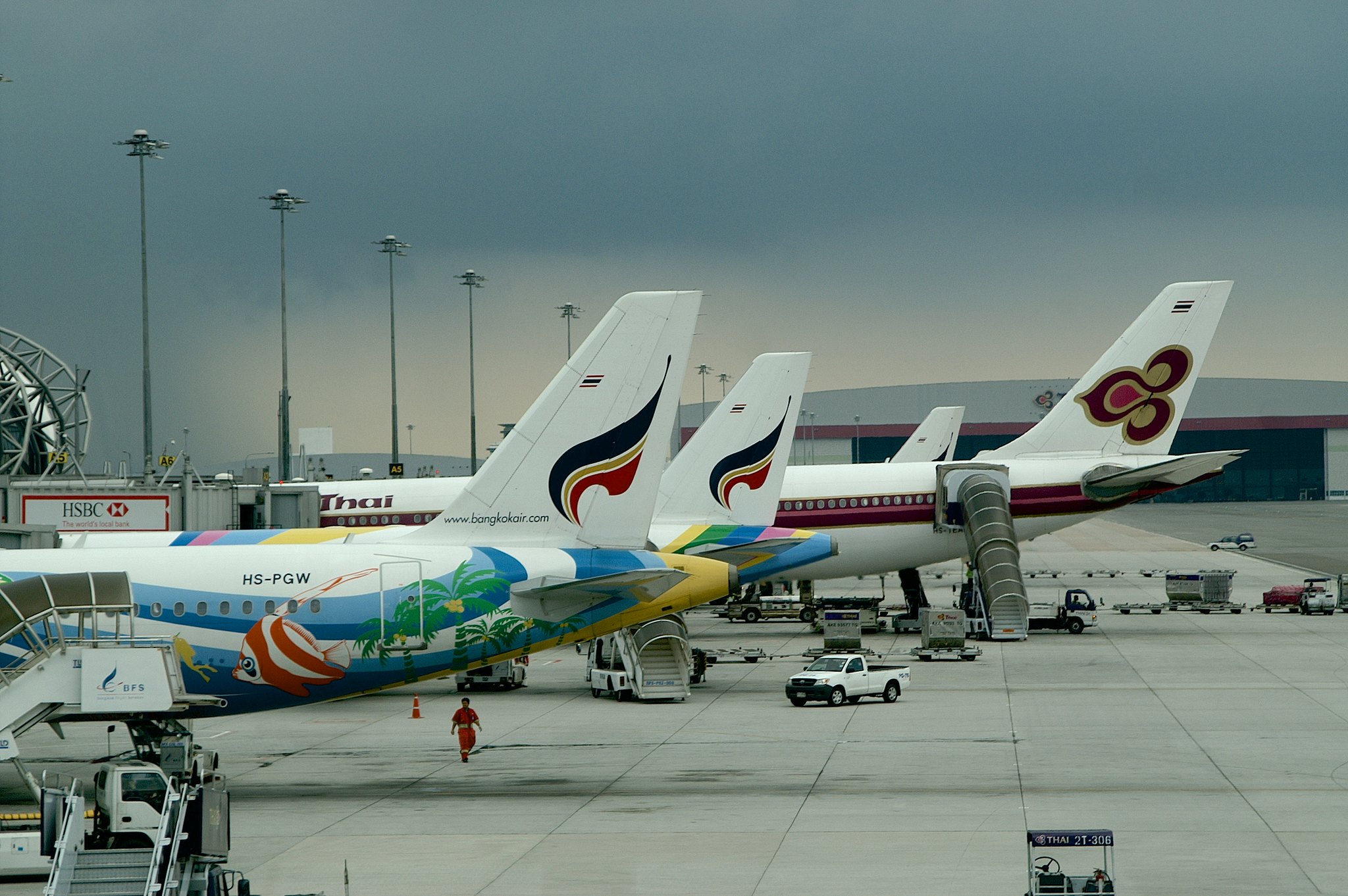
BANGKOK — Airports of Thailand Public Company Limited (AOT) reported that 134 flights were affected by escalating tensions in the Middle East between February 28 and March 1, 2026, though all six major airports under AOT management remain fully operational with no stranded passengers stranded at any facility.

Phuket-Middle East Flights Cancelled as Regional Conflict Escalates

AOT President Paweena Jariyathitipong stated that several carriers serving Middle Eastern routes or traversing affected airspace have adjusted their flight plans to ensure safety. Affected airlines include El Al Israel, Air Arabia, Emirates, Qatar Airways, Etihad, Gulf Air, World2fly, and Thai AirAsia X.

Airport-Specific Impacts

Suvarnabhumi Airport recorded the highest number of disruptions with 59 flight cancellations, followed by Phuket International Airport with 36 cancellations. Don Mueang and Chiang Mai airports each reported two affected flights, while Mae Fah Luang-Chiang Rai and Hat Yai International Airports were completely unaffected by the regional disruptions.

Passenger Support Measures

AOT has implemented comprehensive support measures at affected terminals, including dedicated information zones staffed by multilingual personnel, additional seating arrangements in public areas, and distribution of drinking water to passengers experiencing extended waits. Operations teams are managing aircraft parking efficiently to prevent delays to regular schedules and maintain overall airport functionality.

Through close coordination with airlines, most affected travelers have been successfully rerouted on alternative flights or connections, helping maintain orderly terminal operations despite the disruptions.

Ongoing Monitoring

AOT will continue to monitor the situation closely in coordination with aviation safety agencies and international partners. Passengers planning travel to the Middle East or on routes potentially affected by the situation should check flight status directly with their airlines and follow updates through airline channels and the AOT Official Facebook page.

Passengers to/from Thailand Urged to Check Flights as Middle East Airspace Closed

For more information, passengers may contact the AOT Contact Center at 1722, which remains available 24 hours a day for inquiries and assistance.

-Thailand News (TN)

Similar Posts

  • | | |

    Pakistan imposes new restrictions on foreign media

    Pakistani authorities have exposed regulatory measures governing foreign media operations in the country. The strategy has triggered an alarm among press freedom advocates, legal observers, and media personnel. Under the newly issued Foreign Media Facilitation Guidelines, journalists representing international organizations will no longer be permitted to travel or cover news events outside three major metropolitan hubs without explicit prior authorization from the government. The regulations come at a delicate juncture marked by escalating political instability, public demonstrations, and security crackdowns across key regions including recent demonstrations connected to heightened tensions in Kashmir and subsequent enforcement actions in urban centers like Lahore. Critics argue that by constraining the scope of international newsgathering precisely when accurate coverage is most vital, the state risks deepening information voids and exacerbating the spread of unverified claims. Key Requirements of the New Media Framework Administered through the External Publicity Wing of Pakistan’s Ministry of Information, the updated regulatory policy establishes procedural hurdles for international news agencies. Foreign correspondents, local staff, contributors, and freelance journalists working for international outlets must secure an official No Objection Certificate (NOC) before traveling to conduct reporting assignments outside Islamabad, Karachi, and Lahore. Regions requiring prior approval now explicitly cover all provincial territories, sensitive border zones, and Pakistan-administered Kashmir. The framework provides no defined processing timeframe for NOC applications, leaving reporting teams facing unpredictable delays and potential administrative holds. The Ministry reserves the authority to suspend or revoke official media accreditation if reporting is judged to run counter to the country’s national sovereignty, ideology, or public safety phrasing that legal analysts describe as intentionally open-ended. Backlash from Analysts and Rights Groups The enactment of these guidelines has drawn sharp rebuke from political commentators, civil society organizations, and international press watchdogs, who view the move as part of a systematic contraction of independent journalism within the country. Former senator and political commentator Mustafa Nawaz Khokhar highlighted the grave consequences of curtailing foreign news organizations, warning that restricting legitimate press operations ultimately undermines public trust. These guidelines are tantamount to choking international media in an increasingly shrinking space, Khokhar noted, emphasizing the vital role global news outlets play when local media environments face structural pressure. The public looks at the international media for independent reporting. Placing restrictions simply creates more room for disinformation and the spread of fake news.   Rights groups including the Pakistan Federal Union of Journalists (PFUJ) and international watchdogs have echoed these concerns. They’re pointing out that advance the requirement of government permission for routine reporting effectively grants authorities veto power over what news reaches the global audience. Broader Context of Press Freedom in Pakistan Pakistan’s media environment has historically operated in a complex space balancing constitutional guarantees of free speech against national security laws. However, media analysts note that state oversight of both traditional print/broadcast journalism and online digital spaces has tightened significantly in recent years. The introduction of the new foreign media guidelines coincides with broader legislative shifts aimed at regulating online speech and social media platforms. Observers express concern that administrative barriers, combined with strict digital laws, could leave remote or politically sensitive areas completely cut off from independent news coverage. By limiting foreign journalists’ mobility primarily to the capital and two largest economic centers, field reporting from rural regions, border zones, and conflict-affected territories will become exceptionally difficult to conduct legally. Implications for International Coverage As international newsrooms adapt to the new framework, news gathering strategies across South Asia are likely to face operational friction. Bureau chiefs and correspondents report that unpredictable NOC processing times make time-sensitive breaking news coverage outside major cities nearly impossible to guarantee.   Without direct on-the-ground access for independent journalists, global news consumers may increasingly have to rely on official statements or unverified social media updates during crises. For a country navigating complex domestic politics and delicate international relations, press freedom advocates warn that restricting the lens through which the world views Pakistan could backfire, isolating the nation’s political discourse and fostering an environment where misinformation thrives unchecked.

  • Rana Sanaullah predicts PML-N victory in AJK polls

    Adviser to Prime Minister Shehbaz Sharif on Political Affairs, Senator Rana Sanaullah, has said that Pakistan Peoples Party (PPP) Chairman Bilawal Bhutto Zardari knows very well that the elections in Azad Jammu and Kashmir (AJK) were conducted in a free and fair manner. Rana Sanaullah expressed confidence that the Pakistan Muslim League-Nawaz (PML-N) would perform strongly in the next phase of the AJK elections. He predicted that his party could win seven out of the 10 seats being contested in the upcoming stage. The PML-N leader also criticised the PPP’s election campaign, claiming that the party had entered the second phase of the electoral process while continuing what he described as a propaganda campaign. He expressed hope that after the completion of the third phase, the PPP would accept the election results. Rana Sanaullah attributed the PML-N’s electoral support in AJK to the development work carried out by the party’s government in Punjab. He said voters in AJK had taken note of Punjab’s progress and consequently supported the PML-N. He further stated that the PML-N does not intend to form a coalition government in AJK and instead aims to establish its own government. His remarks indicate that the party expects to secure enough seats to govern independently after the completion of all phases of the elections. Addressing the issue of creating new provinces, Rana Sanaullah rejected reports that the PML-N had reached a clear or formal position on the matter. He said no party meeting had taken place where members adopted a definitive stance on the creation of new provinces, adding that the issue does not currently form part of the party’s agenda. The senator also defended Pakistan’s parliamentary democratic system and the Constitution of 1973, arguing that neither suffers from any fundamental structural flaw. According to him, the same constitutional framework has kept the country united for nearly five decades despite political crises, military coups and periods of authoritarian rule. Rana Sanaullah maintained that the real problem lies not in the system itself but in the failure of political actors and institutions to follow the Constitution sincerely and consistently. He argued that if the country adheres to the constitutional framework and respects democratic principles, the existing system can effectively deliver results. He further said that repeatedly violating constitutional principles and keeping the democratic system under unnecessary pressure prevents it from functioning properly. Rana Sanaullah expressed confidence that the parliamentary system and the 1973 Constitution have demonstrated their resilience over the past half-century and can continue to serve the country successfully in the future if all stakeholders implement them in letter and spirit.

  • Bhumjaithai Projected as Leading Party

    BANGKOK — Polling stations across Thailand closed at 5:00 PM Sunday following a day of high turnout for the historic dual-track general election and constitutional referendum. As official vote counting commenced, a prominent pre-election survey projected a fragmented parliament with no clear single-party majority. Anti-Government Banners, Suspected Explosives Found in Narathiwat Ahead of Election The […]

  • | |

    Evergrande founder handed life sentence as court s…

    The founder of Evergrande, the Chinese property giant whose collapse triggered a nationwide housing market crisis, has been sentenced to life in prison and stripped of all personal property. Hui Ka Yan pleaded guilty in April to multiple charges, including embezzling assets and corporate bribery. The Shenzhen Intermediate People’s Court also imposed fines totaling 15.82 billion yuan, roughly £1.73 billion or $2.35 billion, on his former companies over a range of offenses that included falsifying financial records and concealing debt. The sentencing marks a major turning point in the fallout from Evergrande’s collapse, which shook China’s property sector and inflicted heavy losses on investors and domestic banks alike. The court said Hui and his businesses seriously disrupted the Chinese property market, causing significant economic damage. Other former Evergrande executives, including Hui’s two sons Xu Zhijian and Xu Tenghe, received jail terms ranging from 22 months to 18 years, according to Chinese state media. Once ranked as Asia’s richest man, Hui has watched his fortune and influence collapse alongside his company. Also known as Xu Jiayin, he grew up in rural China raised by his grandmother before entering the property industry and founding Evergrande in 1996. He guided the company through a period of rapid expansion fueled by heavy borrowing, eventually building Evergrande into China’s largest real estate developer with a stock market valuation exceeding $50 billion, roughly £36.7 billion. At his peak, Hui held the distinction of being Asia’s wealthiest individual. The company suffered a major setback when Beijing introduced new measures in 2020 aimed at curbing debt across the property sector. As Evergrande struggled to keep up with interest payments, it began selling properties at steep discounts to stay afloat before ultimately collapsing in 2021. Court proceedings in April revealed that the company had taken in millions of dollars in pre sale funds from prospective homebuyers that were never used for the construction they were intended to finance. Instead, that money was redirected toward new development projects, leaving hundreds of housing projects unfinished. In March 2024, Hui was separately fined $6.5 million and banned for life from China’s capital markets after regulators found the company had overstated its revenue by $78 billion. Evergrande’s stock market value shrank by 99 percent before the company’s shares were delisted from the Hong Kong exchange in August 2025, ending more than fifteen years of trading. The company’s implosion is widely seen as a key trigger for the broader downturn in China’s property market that continues to weigh on the country’s economy. At its peak, Evergrande stood as the largest firm in an industry that accounted for roughly a third of China’s gross domestic product, serving as both a major driver of economic growth and a critical revenue source for local governments. The sector’s ongoing troubles have continued to pressure the world’s second largest economy, with several other major developers facing their own financial distress in the years since Evergrande’s fall.

  • | |

    Islamiat tops Grade 9, 10 failure list

    The Board of Intermediate and Secondary Education (BISE) Peshawar has released the results of the 2026 annual examinations for Grades 9 and 10. The results show that Islamiat was the subject in which the highest number of students failed in both classes. According to the official statistics, a total of 97,950 students appeared in the Grade 9 annual examinations. Out of these, 57,847 students successfully passed and were promoted to Grade 10. The remaining students could not qualify for promotion after failing to meet the required passing criteria. The examination data also highlighted students’ performance across different subjects. Among all the subjects, Islamiat recorded the highest failure rate, making it the most challenging subject for students in both Grade 9 and Grade 10 this year. The results have drawn attention to the need for improved teaching methods and better academic support in the subject. Education experts believe schools, teachers, and parents should work together to identify the reasons behind the poor performance and help students strengthen their understanding of Islamiat before future examinations. The BISE Peshawar annual examination results provide an overview of students’ academic performance across the province and are expected to help education authorities assess areas where additional support and reforms may be required to improve overall learning outcomes.

  • Phuket Airport Debuts International Arrivals Autogates

    PHUKET, Thailand — Phuket International Airport has officially launched its first automated immigration gates for arriving international passengers, marking a significant technological upgrade aimed at streamlining the arrival process and reducing wait times. The new service, which began operation on Saturday, addresses persistent traveler complaints regarding long queues and processing delays at the busy tourist […]

Leave a Reply

Your email address will not be published. Required fields are marked *