renovation done now
| |

The renovation is done. Now Ayala is changing the shops inside its malls.

MANILA, Philippines – The construction dust may finally be settling at some of Ayala Land’s biggest malls, but the makeover isn’t quite over.

After spending the past two years renovating flagship properties such as Glorietta, Greenbelt, TriNoma, and Ayala Center Cebu, the scaffolding and temporary walls are finally coming down. Ayala Land is now moving into what it calls the “merchant replacement phase,” which involves changing the mix of shops, restaurants, and other concepts that customers will find inside.

“The physical works have been completed. So now it’s about ensuring that we can bring in the concepts to kind of match the new physical experience,” said Mariana Beatriz Zobel de Ayala, Ayala Land senior vice president and head of its leasing and hospitality group, during the company’s H1 2026 briefing on Monday, August 10. 

Glorietta has mostly finished its glow-up. The mall, last majorly renovated in 2012, has a new look to its cinemas and refreshed decors throughout. The biggest change is a new pedestrian park connecting the outside part of Glorietta 3, replacing what used to be the car mall entrance. Portions, such as the food court, remain under renovation.

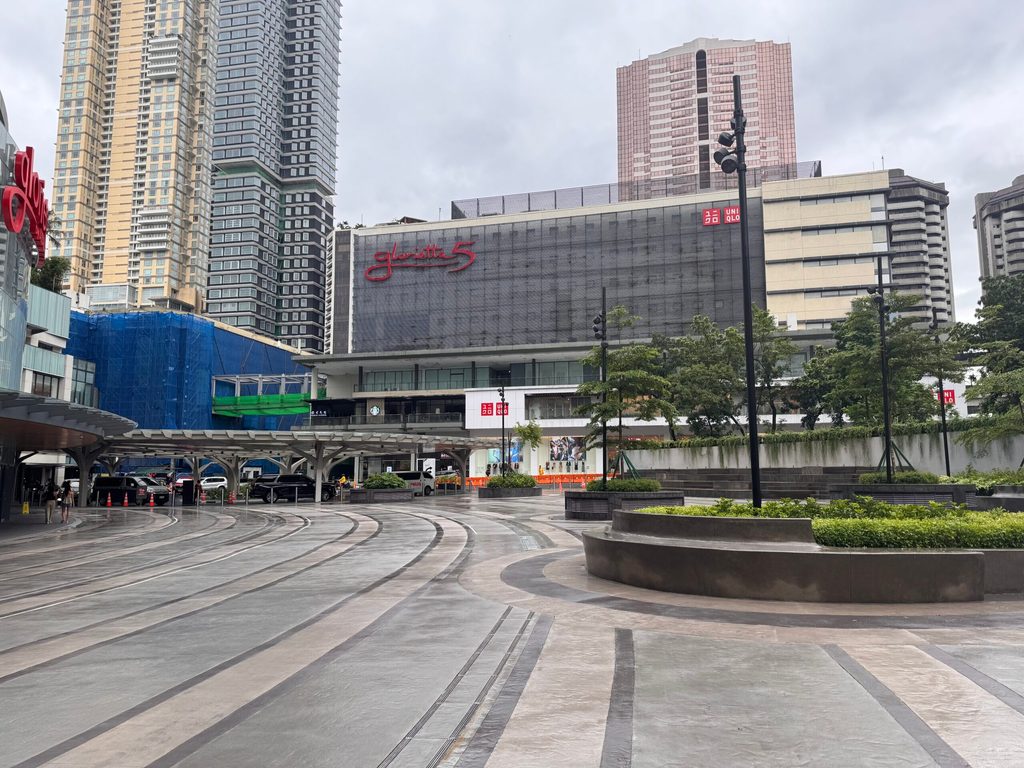
Zobel de Ayala had also previously said that after the renovations, the refreshed Glorietta and Greenbelt malls should have a more “intuitive wayfind and circulation.” If you’ve ever gotten lost in Glorietta’s maze-like interior, this should come as welcome news.

Where stores and concepts have already been replaced or refreshed, rental rates have risen by an average of 25%. (FIRST LOOK: How Glorietta, Greenbelt, TriNoma, Ayala Center Cebu will be redesigned)

Ayala Center Cebu, the most advanced of the four mall reinventions, is already seeing around 10% year-on-year rental-rate growth. Ayala Land president and CEO Anna Ma. Margarita Dy said the full benefits of the overhaul could still take another two to three years to materialize.

New look, new shops

For shoppers, some of that next phase is already becoming visible.

At Greenbelt, Ayala recently soft-opened about 3,000 square meters of Greenbelt 2. The former Greenbelt townhomes, meanwhile, are being repurposed into T:28, which management described as a nightlife concept. TriNoma is also getting additional retail space.

Then there is, of course, still Greenbelt 1. The decades-old mall was designed by National Artist for Architecture Leandro Locsin and first opened in 1982. It has since been demolished, but Ayala is expected to unveil its new look in 2028.

In its other spaces, Ayala is also bringing in brands both new and old to many Filipino shoppers as its retail footprint expands. Management highlighted Makro, the Thai wholesale-retail chain, at Ayala Malls Arca South; premium grocery chain Spinneys at Parklinks and San Antonio Plaza Arcade; and IKEA as an anchor at Gatewalk in Cebu.

Ayala Malls Arca South formally opened in 2026 as a mixed-format retail development, while the company is preparing another major mall opening in Nuvali in November. Gatewalk is targeted to open in December.

Ayala’s numbers suggest that customers are responding. Same-mall sales grew 7% in the first half of 2026, while foot traffic rose 5%. Traffic at premium malls increased 8%, compared with 3% at its core malls.

Must Read

Luxury condo resilience: Half of Ayala’s Laurean buyers staying despite pause


Luxury condo resilience: Half of Ayala’s Laurean buyers staying despite pause

Betting more on malls

The reinvention is becoming more important to Ayala Land at a time when its residential development business is facing a tougher market.

Shopping center revenues reached P12 billion in the first half, up 4% year-on-year. Strip out Alabang Town Center (ATC), which Ayala no longer owns, and mall revenues grew by about 9%. (READ: Refreshed Alabang Town Center? What shoppers can expect now that Rockwell has near-full control.)

Ayala Land sold its stake in Alabang Commercial Center Corporation, the company behind Alabang Town Center, to the Madrigal family for P13.5 billion in December 2025. ATC has since been acquired by the Lopez’s Rockwell Land. Ayala described the transaction as a way to unlock capital for new commercial developments.

The sale is part of a broader shift toward putting capital where Ayala sees more room to grow. In the first half, spending on malls surged 62% to P9.2 billion, even as residential capital expenditures fell 24%. – Rappler.com

Must Read

Condo shopping? Expect better payment terms in best buyer’s market in decades


Condo shopping? Expect better payment terms in best buyer’s market in decades

Similar Posts

  • |

    Pakistan launches virtual asset licensing regime

    Pakistan has formally introduced a licensing system for virtual asset service providers, requiring existing operators to apply for regulatory approval by September 5, 2026, or stop providing services. The Pakistan Virtual Assets Regulatory Authority (PVARA) has notified new licensing regulations and launched its online application portal under the Virtual Assets Act, 2026. The move establishes a formal regulatory structure for the country’s rapidly growing virtual asset sector. The new framework includes 10 licence categories covering major activities such as cryptocurrency exchanges, custody services, broker-dealer operations, advisory services, lending and borrowing, derivatives, asset management, transfer and settlement, asset issuance and mining-related services. Each category will be subject to specific rules covering business conduct, financial safeguards, technology standards and anti-money laundering and counter-terror financing requirements. Existing virtual asset service providers have been given a statutory deadline of September 5. Under Section 70 of the Virtual Assets Act, businesses that were already providing such services before the law came into force must submit an application for a No-Objection Certificate by the deadline. Those failing to submit an application will be required to cease operations, while continuing to operate without applying after the deadline will constitute an offence. PVARA Chairman and Minister of State Bilal Bin Saqib said the regulatory system was designed to bring an already active market into the formal economy. He said young Pakistanis had helped build the virtual asset market before the state had established a regulatory structure for it. The new system, he added, would provide legal protections for customers while creating opportunities for legitimate businesses. Under the regulations, licensed service providers will be required to keep customer assets separate from their own holdings. They will also be prohibited from lending or pledging customer assets without written consent and will face legal obligations regarding the protection of client holdings if a platform encounters financial difficulties. The licensing system follows a public consultation held between June 11 and July 2, 2026. The consultation also included a webinar for stakeholders to provide feedback on the proposed framework. The licensing process will operate in two stages for applicants planning to establish businesses in Pakistan. They can either enter a regulatory sandbox or obtain a No-Objection Certificate under Section 19 before incorporation and subsequently seek a full licence. Existing operators, however, must submit their NOC applications by September 5. The new framework also provides licensed virtual asset businesses with access to Pakistan’s formal banking system. The State Bank of Pakistan’s Circular No. 10 of 2026, issued on April 14, allows regulated financial institutions to open accounts for PVARA-licensed virtual asset service providers, including segregated client money accounts. This replaces the restrictions on banking services for virtual asset businesses that had remained in place since 2018. PVARA was established as a permanent statutory authority through an Act of Parliament in March 2026. Within months, the authority secured a formal banking framework for licensed operators and completed the licensing regulations following public consultation.

  • | | |

    PRL and SSGC face Senate anger over missing inform…

    Islamabad: State owned petroleum companies Pakistan Refinery Limited (PRL) and Sui Southern Gas Company (SSGC) faced serious criticism in the Senate after lawmakers expressed dissatisfaction over missing information, failure to follow committee directions and concerns about company management. The Senate Standing Committee on Petroleum questioned the performance and accountability of government owned petroleum companies and considered taking strict action against officials who failed to cooperate with parliamentary oversight. During the meeting chaired by Senator Umer Farooq, the committee reviewed the appointment criteria for chairpersons and managing directors of petroleum companies, the structure of their boards and progress on previous committee recommendations. The committee took serious notice of the absence of the Managing Director of Pakistan Refinery Limited during the meeting. Members expressed concern that PRL, despite being a state-owned company, did not provide the required information to the committee. The committee considered initiating a privilege motion against the Managing Director of PRL for failing to appear and provide necessary details. The Petroleum Division was directed to submit complete information about the boards of directors and senior management of all government owned petroleum companies. The committee said transparency in leadership appointments and company management is necessary because these organisations deal with matters directly linked to the national economy and public interest. The committee also expressed dissatisfaction over the performance of Sui Southern Gas Company and its failure to implement previous recommendations. Members said SSGC had not provided details of its board of directors despite earlier instructions. The committee also raised concerns over remarks made by SSGC that were considered discouraging toward the Senate Standing Committee’s role in discussing important matters. The committee considered moving a privilege motion against SSGC over non compliance with its directions. The Petroleum Division was further directed to review the tenure of board members who have remained in positions beyond the approved period and submit a detailed report. The committee also raised concerns over the absence of performance audits of oil rigs. Authorities were directed to provide the required audit report within seven days so that the committee could review the performance and efficiency of petroleum sector operations. Members said proper audits are necessary to identify problems, improve production and ensure better use of national resources. The committee also reviewed issues related to LPG quotas and licensing. The Oil and Gas Regulatory Authority was directed to hold consultations with all relevant stakeholders and submit a detailed report to the committee. Senators stressed that petroleum companies must improve governance, follow parliamentary instructions and ensure public institutions operate with transparency. The committee said accountability in state owned petroleum companies is essential to protect national interests and improve confidence in the energy sector.

  • |

    Pakistan, Belarus agree to expand agricultural trade through online B2B platforms

    ISLAMABAD: Pakistan and Belarus have agreed to strengthen agricultural and food-sector cooperation by facilitating online business-to-business (B2B) engagements between companies from the two countries. The understanding was reached during a meeting between Federal Minister for National Food Security and Research Rana Tanveer Hussain and Belarusian Deputy Minister of Agriculture and Food Yakovchits Aleksander. The discussions focused on expanding bilateral trade, improving business-to-business connectivity and creating new opportunities for cooperation in agriculture and food-related sectors. Under the proposed initiative, businesses and relevant organisations from Pakistan and Belarus will be encouraged to participate in online B2B meetings. The sessions are expected to connect exporters, importers and other industry stakeholders and help them explore potential commercial partnerships. The two countries identified a number of products with potential for increased bilateral trade, including seafood, citrus fruits, mangoes, fruit puree, potatoes, seeds and dairy products. Greater business connectivity in these areas could help companies explore new markets and diversify trade opportunities. Focus on Agricultural Exhibitions Pakistan and Belarus also agreed to encourage greater participation by businesses and agricultural stakeholders in food exhibitions, trade fairs and other industry events held in both countries. Such events will provide companies with opportunities to showcase their products, establish business contacts, develop partnerships and explore investment opportunities. The initiative is also expected to help strengthen direct commercial links between businesses operating in the agricultural and food sectors. The two sides further agreed to facilitate reciprocal visits by agricultural trade and business delegations. These exchanges are aimed at encouraging investment, sharing technical expertise and identifying areas where companies and institutions from both countries can work together. Cooperation in Fish Farming The meeting also discussed prospects for cooperation in fisheries, particularly fish farming and aquaculture. Both sides agreed to promote the exchange of knowledge, technology and best practices in the sector. Cooperation in this area could support the adoption of modern aquaculture techniques while providing opportunities for technical collaboration and investment. The initiative is expected to contribute to the development of more efficient fish-farming practices and strengthen cooperation between relevant institutions and businesses in Pakistan and Belarus. Proposal for Agricultural Machinery Testing Centre During the meeting, Rana Tanveer Hussain proposed the establishment of a universal agricultural machinery testing facility or centre at the Pakistan Agricultural Research Council (PARC), with financial and technical assistance from Belarus. The proposed centre would provide a platform for testing agricultural machinery and assessing its suitability for use in Pakistan’s farming sector. The Belarusian side took note of the proposal and agreed to examine the initiative further. As part of the process, the two sides agreed to conduct a detailed assessment of the proposed facility. This will include identifying the machinery and equipment required for the centre and evaluating locations suggested by Pakistan for establishing machinery testing stations. Pakistan and Belarus also agreed to facilitate exchange visits by highly qualified technical experts by the end of 2026. The visits are expected to help specialists assess technical requirements, exchange expertise and explore practical mechanisms for implementing the proposed cooperation. Pakistan Seeks Practical Outcomes Rana Tanveer Hussain emphasised the need to transform bilateral cooperation into practical commercial, technological and institutional results. He said Pakistan was interested in expanding its engagement with Belarus in emerging areas of agriculture and food security, while creating greater opportunities for farmers, businesses, investors and technical experts. The minister highlighted the importance of stronger institutional and private-sector linkages to ensure that agreements between the two countries translate into tangible economic benefits. Both sides expressed satisfaction with the growing cooperation between Pakistan and Belarus and reaffirmed their commitment to expanding collaboration in agriculture, food trade, fisheries, technology and agricultural machinery.

  • |

    Pakistan, New Zealand seek stronger trade, investment and education ties

    WELLINGTON: Pakistan and New Zealand have agreed to intensify bilateral economic and commercial cooperation, with agriculture, livestock, information technology, education and services identified as key areas offering greater potential for collaboration. The understanding was reached during a series of high-level meetings held in Wellington on August 6, where officials from both countries reviewed the state of bilateral relations and discussed measures to expand trade and investment ties. According to a statement issued by Pakistan’s Foreign Office on Saturday, the discussions placed particular emphasis on improving market access and developing practical avenues for cooperation in sustainable agriculture. The two sides also explored the possibility of technical collaboration in areas such as wool production and plant protection. The meetings included the 5th round of Pakistan-New Zealand Political Consultations and the 3rd meeting of the Pakistan-New Zealand Joint Trade Committee (JTC). The talks provided both sides with an opportunity to assess existing cooperation and identify new sectors for mutually beneficial economic engagement. The Pakistani delegation at the Joint Trade Committee meeting was headed by Commerce Secretary Jawad Paul Khawaja, while the New Zealand side was led by Grahame Morton. Officials also examined ways to strengthen institutional arrangements that could facilitate closer economic cooperation between the two countries. Improving trade relations and creating a stronger framework for investment were among the areas discussed during the engagement. The political consultations were co-chaired by Ambassador Dr Syed Ali Asad Gillani, Additional Foreign Secretary for Asia Pacific at Pakistan’s Ministry of Foreign Affairs, and Grahame Morton, Deputy Secretary of the Americas and Asia Group at New Zealand’s Ministry of Foreign Affairs and Trade. During the consultations, the two delegations conducted a broad review of Pakistan-New Zealand relations and discussed opportunities to expand cooperation in several fields. These included economic development, science and technology, education, counterterrorism, efforts against transnational crime, high-level exchanges and people-to-people contacts. The officials also discussed regional and global developments and agreed on the importance of maintaining closer coordination at multilateral forums. Pakistan briefed New Zealand on its position regarding developments in the Middle East, including Islamabad’s efforts to help reduce tensions and promote peace. The Pakistani delegation also shared its assessment of the regional situation in South Asia, including developments concerning Indian Illegally Occupied Jammu and Kashmir (IIOJK) and Pakistan’s concerns over India’s actions relating to the Indus Waters Treaty. According to the Foreign Office, Morton acknowledged Pakistan’s constructive contribution to efforts aimed at promoting peace in the Middle East. Education cooperation gains momentum One of the major outcomes of the engagement was the signing of an Education Cooperation Arrangement between Pakistan and New Zealand. The agreement is expected to provide a foundation for closer cooperation in education and create opportunities for greater institutional engagement between the two countries. Education was also discussed as an important component of broader people-to-people relations, alongside science, technology and skills development. The latest consultations come as both countries seek to build on existing bilateral ties and diversify areas of cooperation. Agriculture and livestock, in particular, offer opportunities for technical exchanges and knowledge sharing, while the growing importance of information technology and services could provide additional avenues for economic collaboration. The two sides also stressed the need to translate discussions into practical initiatives that can improve bilateral trade and investment flows. Officials described the meetings as an opportunity to take stock of progress in Pakistan-New Zealand relations, explore emerging areas of cooperation and strengthen institutional mechanisms for future engagement. The discussions concluded with a reaffirmation of the two countries’ commitment to developing a broader, forward-looking partnership based on mutual economic interests, diplomatic coordination and stronger people-to-people connections.

  • | | | |

    Pakistan repays $1.4bn China loan

    Pakistan has repaid a $1.4 billion commercial loan to China, with refinancing expected within the next few weeks, State Bank of Pakistan (SBP) Governor Jameel Ahmad said on Wednesday. Speaking to reporters after attending a meeting of the Senate Standing Committee on Finance at Parliament House, the SBP governor said the country had made external debt repayments worth $2.2 billion during July 2026. The repayments included the $1.4 billion commercial loan to Chinese banks, while the remaining $800 million was used to settle other external liabilities. Ahmad said the refinancing from Chinese banks had not yet been received but was expected shortly, adding that the funds would be made available to Pakistan after a brief delay. The central bank governor also revealed that the SBP had purchased $28 billion over the past three years to strengthen the country’s foreign exchange reserves. He said Pakistan’s external debt repayment requirement had declined from $26.5 billion to $21.5 billion, easing pressure on the country’s finances during the current fiscal year. According to Ahmad, around $3.5 billion of the remaining repayments will be used to service interest obligations. He said the government would continue its strategy of increasing foreign exchange reserves while maintaining external financial stability. The SBP governor further noted that Pakistan would require the rollover of nearly $12 billion in deposits from Saudi Arabia and China to support its external financing position. He expressed confidence that the country’s debt repayment burden would remain lower this year compared with previous years, helping improve Pakistan’s overall economic outlook.

  • |

    Oil prices rise as Hormuz tensions escalate

    Oil prices climbed on Monday as uncertainty over a possible diplomatic breakthrough between the United States and Iran increased, while a sharp slowdown in tanker movements through the Strait of Hormuz heightened concerns about disruptions to global crude supplies. Brent crude futures gained as much as 1% during early trading to reach $89.40 per barrel. The benchmark was later up 72 cents, or about 0.8%, at $89.20 a barrel by 0229 GMT. US West Texas Intermediate (WTI) crude also moved higher, rising 44 cents to $82.83 per barrel. Both international benchmarks posted gains of more than 5% last week after a series of attacks involving energy and shipping assets in and around the strategically important Strait of Hormuz. The incidents have intensified fears that further escalation could affect one of the world’s most important oil transit routes. Market sentiment was further affected by developments over the weekend, when Iranian Foreign Minister Abbas Araqchi said Tehran had yet to decide whether it would resume negotiations with Washington. US President Donald Trump, meanwhile, told Americans to prepare for somewhat higher gasoline prices as the conflict continues. Analysts said the renewed uncertainty had brought geopolitical risk back into crude markets after oil prices had previously come under pressure on expectations that diplomatic efforts could ease tensions. “Oil prices have now rebounded almost completely from the lows seen in early August, as hopes for a more permanent resolution between the US and Iran have faded and geopolitical risk premiums have returned to the market,” said Priyanka Sachdeva, head of market insights at Phillip Nova in Singapore. Sachdeva cautioned, however, that the rally could lose momentum unless there is evidence of a further deterioration in the situation. She said the market would need to see renewed aggression in the Strait of Hormuz, particularly significant damage to oil tankers or energy infrastructure, before prices were likely to move substantially higher. Hormuz shipping activity slows Concerns over physical supply disruptions increased after ship-tracking data showed a marked decline in vessel traffic through the Strait of Hormuz over the weekend. According to data from Kpler, only five commodity vessels crossed the strategic waterway on Saturday, while no such transits were recorded on Sunday. This compared with 31 commodity vessel crossings during the previous weekend. The slowdown is significant because the Strait of Hormuz is a critical route for international energy shipments. Any prolonged disruption could increase transportation risks, raise insurance costs and place additional upward pressure on crude prices. The United Arab Emirates also accused Iran of attacking another vessel operated by Abu Dhabi National Oil Company (ADNOC) while it was passing through the strait on Friday, according to the Emirati state news agency WAM. The UAE had earlier blamed Iran for two separate incidents involving ADNOC-operated vessels on Thursday evening. The latest incidents have added to concerns among traders that the conflict could increasingly affect commercial shipping and energy infrastructure, rather than remaining confined to military and diplomatic confrontation. Markets remain focused on escalation risks The Strait of Hormuz remains particularly important to global oil markets because a substantial volume of crude and petroleum products moves through the waterway. Any sustained interruption could therefore have consequences well beyond the region. For now, traders are closely monitoring developments involving US-Iran diplomatic contacts, attacks on shipping and the movement of tankers through the strait. While the latest price gains reflect a higher geopolitical risk premium, analysts remain cautious about predicting a prolonged rally. If shipping activity resumes and diplomatic channels reopen, some of the premium built into crude prices could quickly unwind. Conversely, additional attacks on tankers, oil facilities or other critical infrastructure could trigger a stronger market reaction and push prices higher as traders reassess the security of regional supplies.

Leave a Reply

Your email address will not be published. Required fields are marked *