cappadocia host annual
| |

Cappadocia to host annual hot air balloon festival

Türkiye’s famous UNESCO World Heritage region of Cappadocia is preparing to host the seventh annual Cappadocia Balloon Festival, featuring 30 special-shaped hot air balloons from 10 countries soaring above the region’s iconic fairy chimneys and rock formations.
Organized by Türkiye’s Culture and Tourism Ministry, the four-day event is scheduled to run from July 30 to August 2. International balloon pilots and crews from the United States, France, the United Kingdom, Belgium, the Netherlands, Brazil, Slovakia, Austria, Poland, and Türkiye have begun arriving in the country as final preparations wrap up.
The festival’s lineup includes balloons designed in unique figurative shapes, including the Turkish flag, an octopus, an owl, a clown, a chick, a wolf, a duck, a parrot, a rocket, a heart, and the Earth. The special-shaped balloons will ascend each morning at sunrise alongside the 156 standard commercial hot air balloons that operate daily in the region, returning in the evenings for illuminated “balloon glow” displays at the Pasabag Open-Air Museum.
Highlighting the event’s distinct appeal, festival coordinator Mehmet Halis Aydogan explained how Cappadocia’s natural geography and existing flight operations set it apart from other international ballooning venues:
“Balloon festivals are held in many parts of the world, including major events in the United States, France, Belgium, and Mexico. Cappadocia’s greatest advantage is its extraordinary landscape, where 156 balloons fly every day. It is a place where thousands of people come both to fly in hot air balloons and to watch them. When we decorate the skies with special-shaped balloons, it creates an incredible spectacle. That is what distinguishes us most from other festivals.”
A key highlight of this year’s gathering will be the debut of a whale-shaped balloon designed by sixth-grade student Bengi Serra Kaya. Her entry won first prize in the “My Dream Balloon Design Competition,” organized for primary and middle school students, and the specially manufactured balloon will take its inaugural flight during the festival.
Cappadocia remains one of the world’s premier hot air balloon destinations, drawing hundreds of thousands of international tourists annually. Organizers note that while global interest in the festival continues to rise, participation numbers are carefully managed to accommodate the region’s busy daily airspace safely.

Similar Posts

  • | |

    Trump faces awkward moment as Epstein letter repor…

    WASHINGTON: An uncomfortable chapter in the long-running controversy surrounding President Donald Trump and Jeffrey Epstein returned to the spotlight after journalists whose reporting brought an alleged birthday letter linked to the two men into public view were honored at the White House Correspondents’ Dinner. The moment came during the rescheduled annual dinner on July 24, where Trump was present as The Wall Street Journal received the inaugural Katharine Graham Award for Courage and Accountability for its investigative reporting on his past relationship with Epstein. The award recognized the Journal’s reporting on a controversial letter allegedly written by Trump for Epstein’s 50th birthday in 2003. Trump has denied writing the letter and has strongly disputed the newspaper’s account. The report nevertheless triggered renewed public attention on Trump’s past association with Epstein and contributed to wider scrutiny of documents connected to the late financier. What made the award particularly striking was Trump’s presence in the room. According to reports from the event, Trump briefly congratulated the journalists as they received the honor. His reaction attracted attention because he had previously threatened legal action against the Journal over its Epstein reporting. The dinner itself had already been surrounded by unusual circumstances. The original White House Correspondents’ Association gathering in April was disrupted by a shooting incident, forcing the event to be postponed. The rescheduled dinner took place in July under heightened security measures. Trump also used his speech to take several pointed shots at journalists and political opponents, continuing his frequently combative relationship with the American press. The event nevertheless maintained its traditional role of honoring journalists for investigative and public-interest reporting. The Epstein controversy remains politically sensitive in the United States. Epstein, who died in federal custody in 2019 while facing sex-trafficking charges, had social and professional connections with numerous prominent people. The release and examination of documents related to his activities have repeatedly generated political controversy. For Trump, the latest episode creates an unusual image: a president sitting in the audience as journalists he has publicly challenged receive an award for reporting on one of the most politically explosive stories surrounding his past. The development is likely to keep the Epstein controversy in the headlines, particularly as questions surrounding previously unreleased documents and Trump’s historical relationship with Epstein continue to attract intense public and political scrutiny.

  • |

    Karan Johar throws shade at rival reality shows during ‘Traitors 2’ launch

    The launch event for The Traitors India Season 2 was held in Mumbai. It was meant to introduce the new batch of contestants. But it was host Karan Johar’s remarks that ended up grabbing all the attention. Karan spoke about his role as host for this season. He hinted that his reputation would follow him into the show once again. He promised to be tougher on contestants than before. At the same time, he made it clear that entertainment would still remain the top priority. The Kuch Kuch Hota Hai director also explained the format of the show. According to him, the season is built around strategy, trust, and unexpected moves between contestants. These elements, he said, are what make the game so unpredictable. It was during this discussion that Karan made a subtle jab at other reality shows. He did not name any specific programme. However, he suggested that the eventual winner of this season would genuinely earn the win. This was seen as a contrast to how other competitions typically play out. Viewers quickly picked up on the comment. Many assumed it was aimed at rival reality formats currently on air. Karan did not stop there. He later made a lighter remark about Prime Video, the platform streaming the show. He spoke warmly about the partnership. He joked that being associated with the platform naturally comes with its own version of an alliance. The comment seemed to reference terms used by other popular reality shows. This only added more fuel to the online buzz. This season of The Traitors India brings together 21 new contestants. The show is scheduled to premiere on Prime Video starting August 13. That gives fans just under two weeks to prepare for its return. Beyond the contestant reveal, the event sparked plenty of conversation online. Between Karan’s sharper hosting style and his subtle digs at other shows, the launch managed to build strong buzz ahead of the premiere. With the countdown now on, attention shifts to how the new season will actually play out. Fans are curious to see whether Karan’s promise of a tougher, more strategic season holds up once the contestants settle in and the real alliances begin to form.

  • | |

    Only 170 officials and rising HIV cases push Sindh…

    Islamabad / Karachi: The Sindh Healthcare Commission came under intense scrutiny in the Senate after lawmakers questioned its ability to control illegal medical practices and respond effectively to the growing HIV situation in Sindh. Senators raised concerns over delayed action, staff shortages, and legal weaknesses that they said were limiting the Commission’s performance. The issue was discussed during a meeting of the Senate Standing Committee on National Health Services, Regulations and Coordination chaired by Senator Amir Waliuddin Chishti. The meeting was attended by Senator Syed Masroor Ahsan, Senator Samina Mumtaz Zehri, Senator Nadeem Ahmed Bhutto, Senator Nasir Mehmood Butt, Senator Anusha Rehman Ahmad Khan through Zoom, Federal Minister Syed Mustafa Kamal and Sindh Labour Minister Saeed Ghani along with senior federal and provincial health officials. Senator Nasir Mehmood Butt questioned why FIRs had still not been registered against those responsible in connection with the HIV situation, while Senator Syed Masroor Ahsan expressed dissatisfaction over delays in action and questioned the role of the Sindh Healthcare Commission in preventing the spread of the disease. Responding to the Committee, the Chief Executive Officer of the Sindh Healthcare Commission said the Commission had already registered several FIRs against medical quacks. However, he stated that weaknesses in the existing legal framework allowed many accused to obtain bail shortly after arrest. He informed the Committee that amendments to the law were being prepared to strengthen action against quackery. The CEO also disclosed that the Commission has only around 170 officials serving across the entire province, highlighting a serious shortage of human resources. Senator Samina Mumtaz Zehri questioned why the Commission remained understaffed and asked whether the issue had been formally raised with the Sindh Government. Federal Minister Syed Mustafa Kamal requested the Committee Chairman to issue directions so the matter could move forward. Senator Syed Masroor Ahsan stressed that the Government should acknowledge administrative shortcomings wherever they exist. He also asked how many times the Sindh Healthcare Commission had formally requested additional staff from the Provincial Government. The discussion also focused on the governance structure of the Commission. Members were informed that after the 18th Constitutional Amendment, the Sindh Health Department no longer exercises administrative control over the Sindh Healthcare Commission. Federal Minister Syed Mustafa Kamal suggested that legislative measures should be considered to address governance-related issues affecting provincial institutions. The Committee also examined the appointment process for members of the Sindh Healthcare Commission Board. The Secretary Health informed members that the Department did not have the authority to appoint or remove Board members. Senator Samina Mumtaz Zehri observed that such limitations weaken accountability, while Senator Nasir Mehmood Butt expressed concern that the Chief Executive Officer of the Commission was not administratively answerable to the Secretary Health. Earlier in the meeting, Sindh Labour Minister Saeed Ghani informed the Committee that two inquiries had been conducted into the Valika Hospital incident, during which 37 officials were identified for disciplinary action. He said the inquiry findings had not been made public due to security considerations but assured the Committee that strict action would be taken against those found responsible. He also informed members that the Sindh Government had established a social security fund to support families affected by HIV.

  • |

    Gold prices rise as weaker dollar, softer US data boost rate-cut hopes

    Gold prices moved higher on Monday as a weaker US dollar and subdued economic data strengthened expectations that the Federal Reserve may keep interest rates unchanged at its upcoming policy meeting. Spot gold gained 0.4% to $4,391.07 per ounce by 0248 GMT, extending its recent momentum after the precious metal reached a more than two-month high during the previous week. US gold futures for December delivery also advanced 0.3% to $4,448.10 per ounce. The dollar’s decline provided additional support to bullion. The US dollar index fell 0.1%, making gold and other dollar-denominated commodities relatively cheaper for buyers using other currencies. According to Tim Waterer, chief market analyst at KCM Trade, gold began the week with strong momentum as weaker inflation data put pressure on the dollar and created room for bullion to approach the $4,400 threshold. Waterer said a sustained rise beyond the $4,500-per-ounce level would likely require further weakness in the dollar or a clearer decline in energy prices. US economic data shape rate expectations Recent US economic indicators have played a major role in reshaping expectations for Federal Reserve policy. An unexpected contraction in US nonfarm payrolls in July, combined with relatively moderate consumer-price inflation, has reduced market expectations for an interest-rate increase at the Fed’s next meeting. Data from the CME FedWatch Tool showed that traders were assigning a roughly 30% probability to a September rate hike, down from about 47% a month earlier. Expectations surrounding interest rates are closely watched by gold investors because bullion does not generate interest or dividends. When borrowing costs and yields are lower, the opportunity cost of holding gold declines, potentially increasing demand for the precious metal. Market participants are therefore looking ahead to the minutes of the Federal Reserve’s July meeting, scheduled for release on Wednesday. Investors will examine the minutes for indications about policymakers’ views on inflation, employment and the future direction of monetary policy. Any indication that the central bank is becoming less inclined to raise rates could provide additional support to gold, while a more hawkish tone could strengthen the dollar and place pressure on bullion. Geopolitical tensions remain in focus Geopolitical developments also continued to influence financial markets. US President Donald Trump’s representatives met Egyptian, Qatari and Turkish mediators in Cairo on Sunday as diplomatic efforts continued to advance a proposed Gaza peace plan, according to a diplomatic source. The talks were taking place against the backdrop of continued Israeli military operations in Gaza. Ongoing tensions in the Middle East have kept investors alert to the possibility of further disruptions to energy markets and global trade. Gold traditionally attracts safe-haven demand during periods of geopolitical and economic uncertainty. Any escalation in regional tensions could therefore influence investor flows into precious metals. Other precious metals gain Other major precious metals also recorded gains during Monday’s session. Spot silver climbed 1.4% to $65.53 per ounce, extending its positive momentum. Silver tends to benefit from both investment demand and expectations surrounding industrial activity. Platinum advanced 0.3% to $1,752.36 per ounce, while palladium rose 1.6% to $1,333.35.

  • |

    Cameroonian President Paul Biya reshuffles military leadership amidst prolonged absence in Switzerland

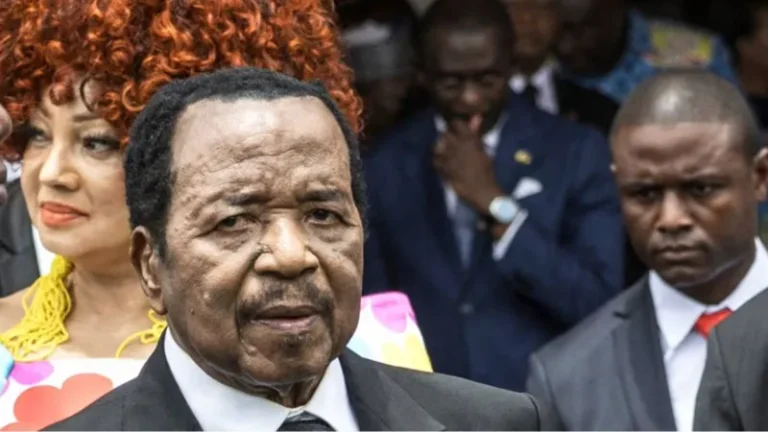
    Cameroon’s 93-year-old President, Paul Biya, the world’s oldest sitting head of state, has enacted a strategic reshuffle of the country’s military leadership from abroad, issuing decrees to promote senior officers and appoint new commanders while remaining in Geneva, Switzerland. Among the key appointments, Biya promoted five colonels to the rank of brigadier general. Notably, Brigadier General Raymond Jean Charles Beko’o Abondo was reappointed to lead the elite Presidential Guard, an essential security unit responsible for the president’s personal protection that he has commanded since 2013. The administrative shifts coincide with growing domestic anxiety regarding Biya’s absence from Cameroon, which has extended to nearly two months following his departure on 7 June for what officials termed a “brief private stay”. Opponents and civil society groups have voiced concern over an institutional vacuum, noting that a newly created vice-presidential seat remains vacant and a promised cabinet overhaul has yet to materialise. Government representatives, including Communication Minister René Emmanuel Sadi, dismissed claims of administrative paralysis or health crises, maintaining that the president remains fully operational and continues to sign official decrees and financial agreements from abroad.

  • | |

    Pakistan paid Rs6,405 billion to IPPs in capacity …

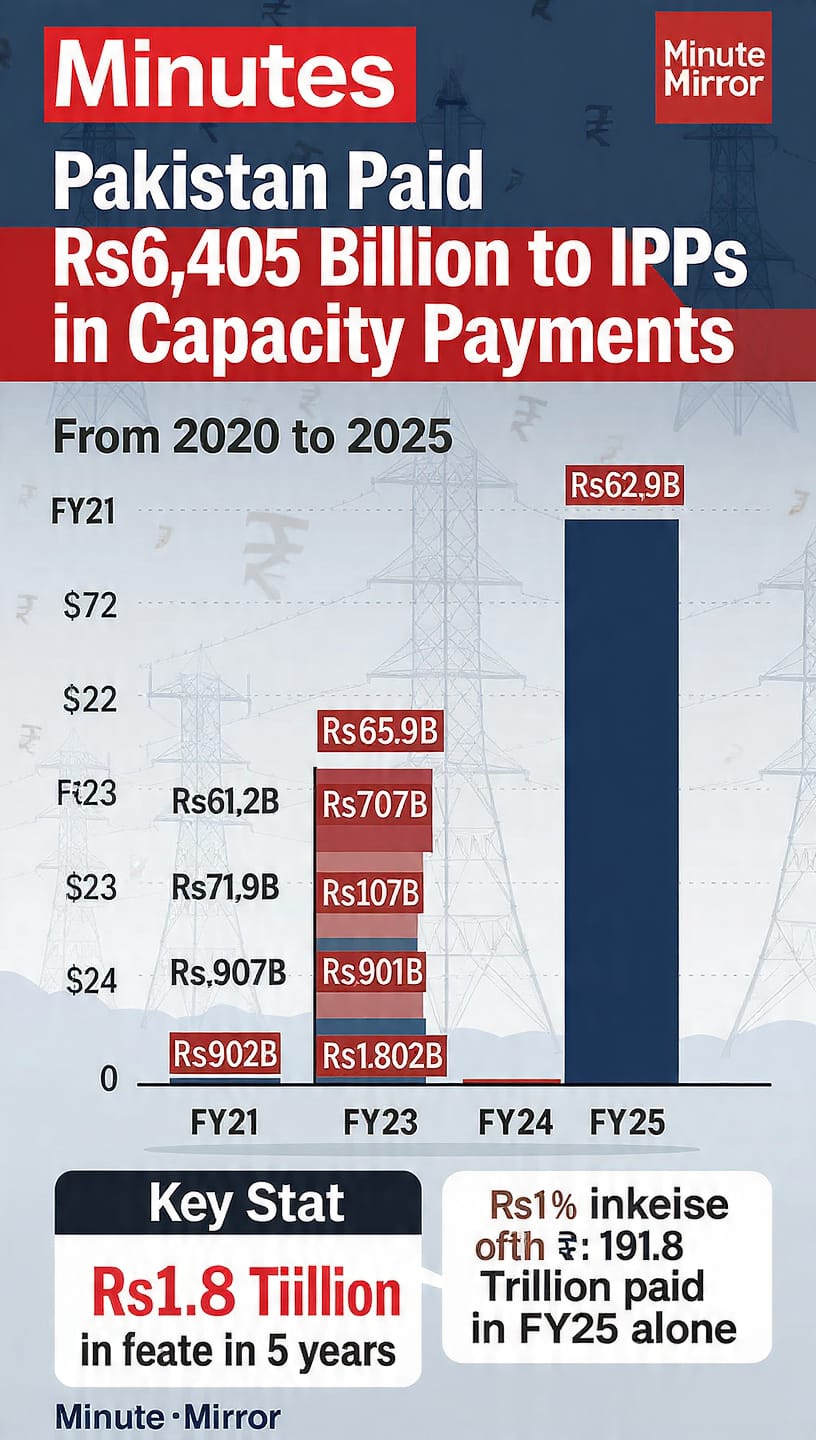
      ISLAMABAD: Pakistan’s federal government paid a total of Rs6,405 billion to Independent Power Producers (IPPs) in capacity payments between 2020 and 2025, the National Assembly has been informed, highlighting the growing financial burden associated with the country’s power sector. According to a written response submitted by Federal Minister for Energy Awais Ahmad Leghari, capacity payments increased significantly during the five-year period despite government efforts to renegotiate power purchase agreements and reduce electricity costs. The figures presented to the National Assembly show that capacity payments rose from Rs613.9 billion in FY2020-21 to Rs1,807 billion in FY2024-25. This represents an increase of approximately 194% over the period. The government paid Rs613.9 billion in capacity charges during FY2020-21. The amount increased to Rs775.9 billion in FY2021-22 before rising sharply to Rs1,307 billion in FY2022-23. Capacity payments reached their highest level during FY2023-24, when the government paid around Rs1.902 trillion to IPPs. Although the amount declined slightly in FY2024-25 to Rs1.807 trillion it remained almost three times higher than the amount paid in FY2020-21. Capacity payments are charges made to power producers for keeping their generating plants available to supply electricity, regardless of whether the full generation capacity is actually utilised. These payments are part of the contractual arrangements between the government and IPPs and have frequently been identified as one of the factors contributing to Pakistan’s expensive electricity system and growing circular debt. Responding to questions in the National Assembly, Energy Minister Awais Ahmad Leghari said the government has taken several measures to reduce the financial pressure created by existing power agreements. According to the minister, a government task force has terminated power purchase agreements with six IPPs, while agreements with several other producers have also been revised. The objective of these measures is to reduce electricity costs and limit the financial burden on the national power sector. The Ministry of Energy estimates that the changes made to the agreements could result in savings of approximately Rs4.3 trillion over the remaining life of the contracts. Leghari also clarified that payments made to power producers are based on tariffs determined by the National Electric Power Regulatory Authority (Nepra) and the terms agreed under the relevant power purchase agreements. He rejected the impression that generators were receiving payments outside the approved contractual and regulatory framework, stating that there were no additional payments beyond the applicable arrangements. Despite the government’s renegotiation efforts, the figures show that capacity payments continue to represent a major financial obligation for Pakistan. The Rs1.807 trillion paid in FY2024-25 alone demonstrates the scale of the challenge facing the country’s power sector. The government’s efforts to terminate and revise agreements are expected to provide substantial savings in the coming years. However, reducing capacity payments and addressing the broader issues of electricity pricing, power utilisation and circular debt remain critical challenges for Pakistan’s energy sector.

Leave a Reply

Your email address will not be published. Required fields are marked *