कारोबार

  • |

    Pakistan weekly inflation rises as 20 essential items get costlier

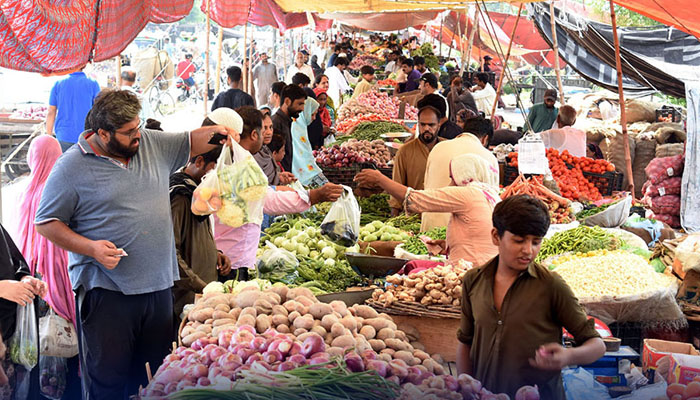
    Weekly inflation in the country has recorded a slight increase. According to the Pakistan Bureau of Statistics (PBS), weekly inflation increased by 0.28%. During the week, prices of 20 essential commodities increased while nine items became cheaper and the prices of 22 items remained stable. According to the PBS, onion prices increased by 10.1% and chicken by 9.19%. The prices of gram lentils rose by 2.4% while the prices of ghee, flour and several other commodities also increased. The PBS said that tomato prices decreased by 6.82%. LPG, sugar, eggs and potatoes also became cheaper. Meanwhile, the price of a 20-kilogram bag of flour increased by up to Rs100 in one week. According to the PBS, the maximum price of a 20kg flour bag in the country is Rs3,133. In Karachi, the price increased by up to Rs100 to reach Rs3,000. In Larkana, the price of a 20kg flour bag also increased by up to Rs100 during the week reaching Rs2,600 in Khuzdar and Larkana. In Sukkur, the price of a 20kg flour bag increased by Rs60 while in Bannu it increased by Rs50. Following the increase, the price of a 20kg flour bag reached Rs2,950 in Bannu and Rs2,560 in Sukkur. In Islamabad, the price of a 20kg flour bag reached Rs3,133 while it stood at Rs3,100 in Peshawar and Rs3,093 in Rawalpindi. According to the PBS, a 20kg flour bag was priced at Rs2,960 in Bahawalpur while it reached Rs2,800 in Hyderabad, Multan, Sialkot and Gujranwala. In Sargodha, the price of a 20kg flour bag reached Rs2,793. In Quetta, a 20kg flour bag was priced at Rs2,750 while the price stood at Rs2,300 in Lahore and Rs2,200 in Faisalabad.
  • |

    Senate pushes Rs617m gas project for 42 Ghotki villages

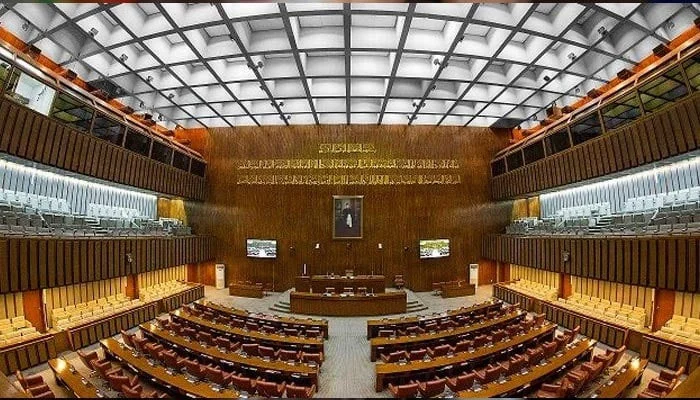
    Islamabad: After years of waiting, 42 villages located near the Badar Gas Field in District Ghotki are finally moving towards receiving natural gas as the Senate Petroleum Sub Committee pushed authorities to act on a long delayed promise linked to the Prime Minister’s Directive of 15 September 2003 and Supreme Court directions. The Sub Committee, convened by Senator Jam Saifullah Khan, expressed concern over the continued delay in providing gas facilities to villages located within five kilometres of gas producing fields. The Committee directed relevant departments and companies to ensure that previous commitments are converted into practical work without further delay. The meeting was attended by Senators Manzoor Ahmed Kakar and Haji Hidayatullah Khan along with senior officials from the Petroleum Division, Finance Division, Oil and Gas Regulatory Authority, Sui Southern Gas Company Limited, Sui Northern Gas Pipelines Limited, Oil and Gas Development Company Limited, Pakistan Petroleum Limited, Mari Energies and other stakeholders. During the meeting, the Sub Committee decided to give top priority to the gasification project for the remaining 42 villages near Badar Gas Field, District Ghotki. The estimated cost of the project is Rs617 million. The Special Secretary Petroleum Division, Finance Division officials and Chairman OGRA assured the Committee that Rs200 million would initially be released from the allocated Rs1 billion funds to start the project immediately. Managing Director Sui Southern Gas Company Limited informed the Committee that the company would provide its share of funding and begin technical planning, engineering work and procurement activities. It was decided that project activities would begin within ten days after the release of initial funds. The Committee was informed that remaining funds required for completing the project would be arranged without interruption. The Petroleum Division and Finance Division assured the Committee that financial issues would not become a reason for further delay. The Sub Committee also reviewed the wider issue of gas supply to villages located within five kilometres of gas producing fields across Pakistan. Officials informed the Committee that new policy guidelines are being prepared to implement the Prime Minister’s Directive and Supreme Court instructions regarding gasification of eligible villages. The Petroleum Division was directed to present a complete implementation plan in the next meeting. The plan will include details about funding arrangements, responsibilities of different organizations, district wise schedules and clear completion timelines for all remaining eligible villages across the country.

  • |

    Senate questions FBR over Rs1,120bn tax-exempt imports

    Islamabad: The Senate Sub Committee has raised serious questions over the Federal Board of Revenue’s failure to provide complete records related to Rs1120 billion worth of tax exempted imports in former FATA and PATA regions, while also seeking detailed tax information from major tobacco companies including Pakistan Tobacco Company and Philip Morris Pakistan Limited. The matter came up during a meeting of the Senate Sub Committee convened by Senator Saifullah Abro at Parliament House. The Committee was reviewing press freedom concerns, cigarette smuggling networks, tax evasion issues and possible misuse of duty exemption systems. At the beginning of the meeting, Pakistan Federal Union of Journalists President Afzal Butt raised concerns regarding remarks made about a private channel reporter during an earlier Committee meeting. Senator Saifullah Abro assured that the Committee respects every citizen and considers the media an important partner in highlighting national issues. He stated that the Committee would continue working on matters related to illegal tobacco trade and economic losses faced by the country. At the beginning of the meeting, Pakistan Federal Union of Journalists President Afzal Butt raised concerns regarding remarks made about a private channel reporter during an earlier Committee meeting. Senator Saifullah Abro assured that the Committee respects every citizen and considers the media an important partner in highlighting national issues. He stated that the Committee would continue working on matters related to illegal tobacco trade and economic losses faced by the country. The main focus of the meeting shifted towards the Federal Board of Revenue’s pending information regarding tax exempted areas. The Committee noted that raw materials worth Rs1120 billion entered tax exempt regions between 2018 and 2026 under exemption arrangements. Members expressed concern that manual tracking systems and a lack of automated verification could create risks of illegal movement of goods into taxable markets. The Committee once again directed FBR to provide complete details of consumption certificates issued against the Rs1120 billion imports and submit tax related information for the tobacco sector, especially regarding Pakistan Tobacco Company and Philip Morris Pakistan Limited. During the meeting, officials also discussed investigations into cigarette theft cases and illegal activities in the tobacco sector. The Federal Investigation Agency briefed the Committee about cigarette theft cases in Peshawar, Khyber Pakhtunkhwa. The Committee also reviewed the investigation regarding senior officials and a tax charge sheet issued against Deputy Commissioner Inland Revenue Fahim Rashid in connection with Paramount Tobacco Company. Another serious matter discussed was the theft of 2,828 cigarette cartons from an FBR warehouse. The cartons were reportedly valued at Rs25 crore. The Committee directed FBR to prepare clear Standard Operating Procedures for registering, handling and managing seized goods to prevent such incidents in the future. The Committee also examined concerns related to cigarette smuggling and tax losses, stressing that illegal trade not only affects government revenue but also creates unfair competition for legal businesses. The meeting also discussed government advertisement spending and tobacco industry media campaigns. The Committee reviewed information provided by the Press Information Department and Pakistan Electronic Media Regulatory Authority and stressed the need for greater transparency in advertisement payments and media related spending. The meeting was attended by Senators Umer Farooq, Muhammad Talha Mehmood and Dilawar Khan as well as senior officials from the Ministry of Interior and Narcotics Control, Ministry of Information and Broadcasting, Press Information Department, FBR Inland Revenue, Customs, FIA, National Cyber Crime Investigation Agency and other relevant departments. Senator Saifullah Abro directed all concerned institutions to provide the required information and continue cooperation with the Committee. The Committee made it clear that investigations into tax exemptions, tobacco sector irregularities and smuggling networks would continue until complete records and explanations were provided.

  • |

    Global food prices hit three-year high in July

    Global food prices reached their highest level in three years in July. The United Nations Food and Agriculture Organization (FAO) said global food prices rose significantly due to weather conditions and the Iran-US war reaching a three-year high. The FAO Food Price Index tracks monthly changes in international prices of major food commodities. According to the index, global food prices rose to 131.1 points in July compared with 130.3 points in June. This was the highest level recorded since January 2023. The FAO’s chief economist had told a news agency in recent days that the world was once again facing food price inflation due to the wars in Iran and Ukraine as well as the El Niño climate phenomenon which can affect crop production. El Niño is a climate pattern in which a large part of the Pacific Ocean becomes unusually warm contributing to an increase in global temperatures. According to the international organization, wheat prices increased by 5.8% resulting in an overall 3.4% increase in commodity prices. Wheat exports through the Black Sea were affected while rising temperatures disrupted crop production in major wheat-growing regions. The FAO Vegetable Oil Price Index increased by 2% reaching its highest level since June 2022. Vegetable oil prices rose due to the Iran war and increased demand for biodiesel. Sugar prices increased by 5.6% amid weather-related concerns in Europe and Asia. However, meat prices declined by 2.8%.

  • | | |

    PSX retreats as profit-taking, oil prices hit sent…

    The Pakistan Stock Exchange (PSX) came under pressure on Friday as investors opted to book profits after the market’s recent gains. The benchmark KSE-100 Index fell sharply during early trading, reflecting cautious investor sentiment amid rising global oil prices and uncertainty over developments surrounding the Strait of Hormuz. The index dropped 771.05 points, or 0.42%, to 181,005.54 by 9:39am. Selling was reported across several major sectors, putting pressure on the overall market. By noon, the KSE-100 had recovered some of its losses and was trading at 181,326.54 points, down 450.05 points, or 0.25%, from Thursday’s close of 181,776.59. During the session, the index moved between an intraday high of 181,647.27 and a low of 180,620.08 points. Trading activity remained moderate, with around 146.05 million shares changing hands. The total value of traded shares stood at approximately Rs10.06 billion. Selling was visible in several heavyweight sectors, including automobile assemblers, cement companies, commercial banks, fertiliser firms, oil and gas exploration companies and oil marketing companies. Market sentiment was also affected by the continued rise in international crude prices. Investors remained cautious over possible disruptions to energy supplies amid tensions surrounding the Strait of Hormuz. Analysts attributed the decline largely to profit-taking following the market’s recent strong performance. Investors appeared reluctant to make fresh aggressive positions while global oil prices and geopolitical risks remained elevated. Despite Friday’s decline, the KSE-100 remained above the 181,000-point level, indicating that the broader market continued to retain much of its recent gains.

  • Gas Shortages and High Prices Derail Southeast Asia’s Energy Plans

    BANGKOK – Southeast Asia is facing a harsh reality check when it comes to electricity powered by natural gas. The region originally had massive plans to power its booming economies with natural gas. However, soaring costs and global equipment shortages are forcing a sudden change in direction. Today, government officials are realizing that the old […]

  • Singapore Oil Stocks Bounce Back as Fuel Inventories See Major July Surge

    BANGKOK – Singapore is witnessing a welcome shift in its critical energy markets this month. Recent data reveals that fuel oil inventories in the Asian trading hub have finally bounced back. Following several months of steady declines, onshore stockpiles surged by an impressive nine percent during July. This much-needed rebound pushes the busy port’s total […]

  • Singapore’s Global Talent Push: ONE Pass Holders Double in Two Years

    BANGKOK – Singapore has significantly ramped up its push to attract the best minds in the world. The city-state has more than doubled the number of high-earning foreign professionals holding a special work visa since its launch. The number of Overseas Networks and Expertise (ONE) Pass holders jumped to 8,500 by December 2025. This is […]

  • | | | |

    25kW solar users exempt from Nepra approval

    The National Electric Power Regulatory Authority (NEPRA) has introduced a major relief for small-scale solar consumers by amending the Solar Regulations 2026. The new changes remove a key regulatory requirement for consumers installing solar systems of up to 25 kilowatts (kW). According to an official notification issued by NEPRA, consumers with solar power systems of up to 25kW will no longer need to obtain prior approval from the regulatory authority before installing or connecting their systems. Instead, the power to grant approvals has now been delegated to the relevant electricity distribution companies (DISCOs). Consumers will be able to complete the approval process directly through their local power utility, eliminating the need to seek separate permission from NEPRA. The amendment is expected to simplify the procedure for residential, commercial and small business consumers who want to switch to solar energy. By reducing regulatory hurdles, the revised framework aims to make the installation process faster, easier and more efficient. Energy experts believe the decision will encourage more consumers to invest in solar power by shortening approval times and reducing paperwork. The move is also expected to support Pakistan’s growing transition towards renewable energy and lessen dependence on conventional electricity sources. The revised regulations are intended to improve access to clean energy while giving electricity distribution companies greater authority to process applications and facilitate small-scale solar projects more quickly.

  • | | |

    Pakistan foreign exchange reserves rise in the fin…

      Pakistan’s foreign exchange reserves recorded a modest increase during the last business week of July, reflecting a slight improvement in the country’s external financial position. According to the latest figures released by the State Bank of Pakistan (SBP), the nation’s total foreign exchange reserves increased by approximately 32.5 million US dollars during the week ending 31 July. With this increase, Pakistan’s total foreign exchange reserves reached 22.47 billion US dollars. Although the weekly rise was relatively small, it is considered a positive development, as foreign exchange reserves play a vital role in maintaining economic stability, supporting international trade, and strengthening investor confidence. Higher reserves enable the country to meet its external debt obligations, finance imports, and manage fluctuations in the value of the Pakistani rupee. The SBP reported that its own foreign exchange reserves rose by 13.1 million US dollars taking the central bank’s holdings to 17.04 billion US dollars by the end of the reporting week. The increase indicates a gradual strengthening of the country’s official reserve position. Central bank reserves are particularly important because they are used to stabilize the foreign exchange market, ensure adequate liquidity for international transactions, and provide a financial cushion during periods of economic uncertainty. In addition to the improvement in the SBP’s reserves, the foreign exchange reserves held by Pakistan’s commercial banks also recorded an increase. According to the data, commercial banks’ reserves rose by 19.4 million US dollars bringing their total holdings to 5.43 billion US dollars. These reserves consist of foreign currency deposits and other external assets maintained by commercial banks to facilitate international trade, foreign currency transactions, and customer requirements. The combined increase in the reserves of both the State Bank and commercial banks contributed to the overall rise in the country’s foreign exchange holdings. While the increase may appear modest in comparison to the total volume of reserves, it demonstrates stability in Pakistan’s external financial sector during the reporting period. Foreign exchange reserves are closely monitored by investors, international financial institutions, and credit rating agencies because they provide an indication of a country’s ability to meet its international financial commitments. A healthy reserve position also supports economic confidence by reducing pressure on the exchange rate and helping the government manage external payment obligations more effectively. Pakistan’s foreign exchange reserves have experienced fluctuations over the past few years due to factors such as external debt repayments, import payments, remittance inflows, export earnings, and financial assistance from international partners. As a result, weekly changes in reserves are often influenced by routine external transactions, repayments, and foreign currency inflows. The latest increase in reserves suggests that Pakistan’s external account remained relatively stable during the final week of July. Economists note that sustaining and further improving reserve levels will depend on continued growth in exports, higher workers’ remittances, prudent fiscal and monetary policies, and the successful implementation of economic reforms. Maintaining adequate foreign exchange reserves remains essential for supporting macroeconomic stability, strengthening investor confidence, and ensuring the country’s ability to meet its international financial obligations in the months ahead.