कारोबार

  • Thailand’s Domestic Gas Production Remains Key to Long-Term Energy Security

    BANGKOK – Thailand still depends on natural gas as a primary feedstock for electricity generation, industry, and transport, including compressed natural gas (CNG), while aging offshore fields no longer produce enough to meet national demand. Domestic output has fallen from its earlier peak, leaving the country more dependent on LNG and pipeline gas from abroad, […]

  • Working in Singapore vs Thailand: A Cross-Border Guide to Salaries, Cost of Living, and Borrowing Smart

      BANGKOK – For the growing number of expats, digital nomads, and cross-border professionals moving between Thailand and Singapore, the financial comparison between the two isn’t as simple as “Singapore pays more.” It does, in most cases — but Thailand’s lower cost of living, different tax treatment, and more relaxed pace of life close that […]

  • Thailand Secures Oil Supply to Keeps Gas Prices Stable Amid Middle East Conflict

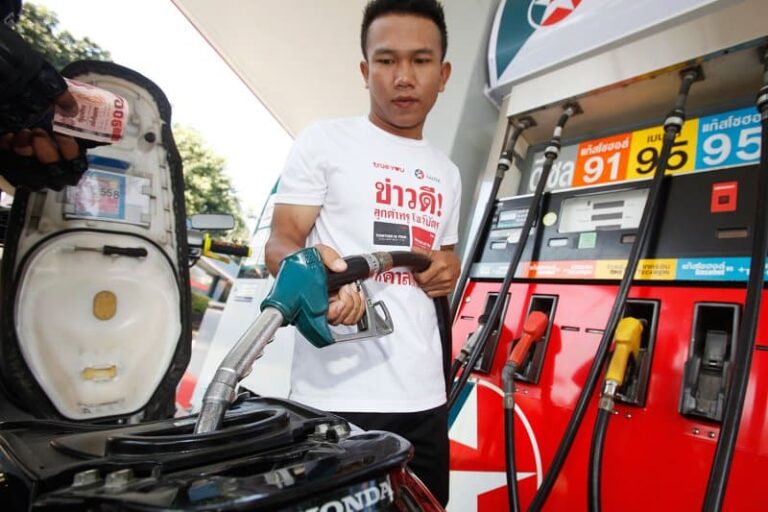
    BANGKOK – The Department of Energy Business confirms Thailand will avoid a crude oil shortage this August despite the Middle East war. All six domestic refineries have sufficient supply because the nation is actively purchasing crude oil from the United States. This smart shift keeps local gas prices stable and reduces heavy reliance on risky […]

  • Thailand’s Foreign Tourist Arrivals Drop 3.2% Year-on-Year

    BANGKOK – Thailand’s foreign tourist arrivals dropped by roughly 3.2% during the first eight months of 2026. Between January 1 and August 1, the country welcomed just over 18.5 million international visitors. This marks a noticeable shift for a country that relies heavily on global travel for income. Tourism remains a massive financial driver for […]

  • Thailand’s E-Commerce Vendors Push Back Against High Platform Fees  

    BANGKOK – The Thai E-Commerce Association recently held a major meeting with the Trade Competition Commission of Thailand (TCCT). Online vendors also joined the talks to express their deep frustration with the industry. They raised serious concerns over unfair business practices and skyrocketing commission fees charged by major e-commerce platforms. Many small business owners are struggling […]

  • | | |

    Private sector lending surges 15% in FY2025–26, …

    Pakistan’s private sector borrowing recorded its strongest growth in four years during the fiscal year 2025–26, signaling renewed business confidence and improving economic activity, according to Adviser to the Finance Minister Khurram Shahzad. Shahzad said private sector credit expanded by nearly 15 percent over the fiscal year, with total lending reaching Rs1.138 trillion. He described the increase as a positive indicator of strengthening economic momentum, driven by greater financial support for businesses and productive sectors. According to the adviser, around 89 percent of the new loans were directed toward key segments of the economy, including manufacturing, wholesale and retail trade, and agriculture. These sectors have played a central role in boosting production, expanding commercial activity, and encouraging private investment. The manufacturing sector emerged as the largest beneficiary, receiving Rs657 billion in fresh financing. Shahzad noted that the substantial flow of credit reflects increased industrial expansion, higher production capacity, and growing confidence among manufacturers. He added that improved access to financing for the trade and agriculture sectors has further strengthened business operations and supported economic growth across the country. Shahzad emphasized that the surge in private sector lending demonstrates rising investor confidence and reflects Pakistan’s continued progress toward greater economic stability, stronger industrial performance, and a more resilient business environment.

  • |

    PSX jumps 2,700 points on Trump-Iran talks news

    The first trading session of August brought renewed optimism to the Pakistan Stock Exchange (PSX), where investors returned with aggressive buying, driving the benchmark KSE-100 Index sharply higher. The bullish momentum followed US President Donald Trump’s announcement regarding the commencement of talks with Iran, a development that boosted investor confidence and eased concerns over escalating geopolitical tensions. During early trading, the KSE-100 Index surged by 2,708 points, climbing to 178,802 points as buying activity intensified across several major sectors. Market participants attributed the rally to improved global sentiment, with hopes that diplomatic engagement between Washington and Tehran could reduce regional tensions and support international financial markets. Analysts said investors responded positively to the possibility of a more stable geopolitical environment, which could help stabilize global energy prices and encourage foreign investment in emerging markets, including Pakistan. Strong buying interest was witnessed in leading banking, energy, cement, and fertilizer stocks, contributing to the market’s upward trajectory. Despite the robust performance of the PSX, Asian equity markets presented a mixed picture. Japan’s benchmark Nikkei Index declined by 1.5 percent amid continued investor caution, while South Korea’s Kospi recorded a steeper fall of 5.25 percent, reflecting selling pressure in major technology and export-oriented shares. In contrast, Hong Kong’s Hang Seng Index remained in positive territory, posting a modest gain of 0.1 percent as investors welcomed signs of easing geopolitical uncertainty.

  • |

    Oil prices fall over $4 after Trump halts planned Iran strikes

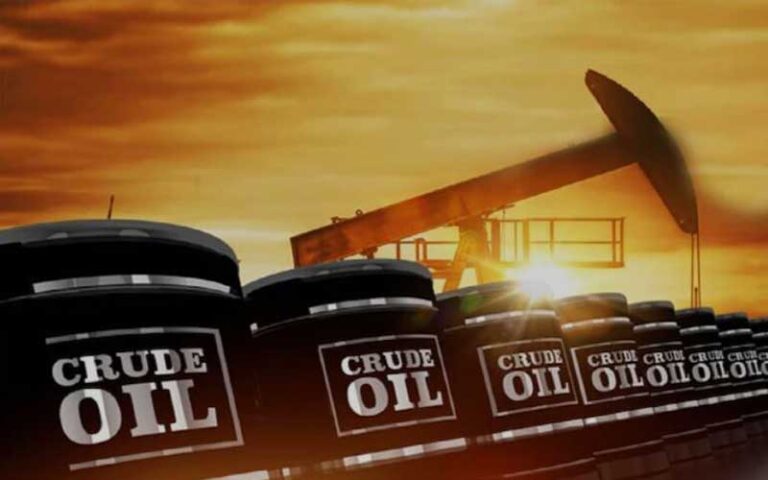
    Global oil prices recorded a significant decline after US President Donald Trump announced that the United States would halt its planned military strikes on Iran, easing concerns over a potential escalation in the Middle East and reducing fears of disruptions to global energy supplies. In international trading, crude oil prices fell by more than $4 per barrel as investors reacted positively to the announcement, leading to a broad sell-off in oil futures. Brent crude, the international benchmark for oil prices, dropped by $4.08 to settle at $83.85 per barrel. Meanwhile, US West Texas Intermediate (WTI) crude declined by $4.01, bringing its price down to $80.66 per barrel. Market analysts said the sharp decline reflected improving investor confidence after the reduction in geopolitical tensions between Washington and Tehran. The possibility of avoiding direct military confrontation eased concerns about supply disruptions from one of the world’s most strategically important oil-producing regions. The Middle East plays a critical role in global energy markets, and any signs of conflict involving Iran often trigger volatility in crude oil prices. Investors closely monitor developments in the region due to the importance of key shipping routes, including the Strait of Hormuz, through which a significant portion of the world’s oil exports passes. Last month, oil prices surged by more than 20 percent after renewed US military action against Iran and reports that Tehran-backed forces targeted several oil tankers near Oman. Those incidents heightened fears of supply interruptions, driving both Brent and WTI crude to their highest levels in months. With the latest announcement from President Trump, traders have shifted their focus toward the possibility of improved regional stability. However, energy market experts caution that oil prices are likely to remain volatile, as any renewed geopolitical tensions or disruptions to oil transportation routes could quickly reverse the recent decline.

  • |

    Government reviews splitting LESCO, MEPCO before privatisation

    The Ministry of Privatisation has established a high-level Technical Committee to examine the feasibility of dividing the Lahore Electric Supply Company (LESCO) and Multan Electric Power Company (MEPCO) into two or three smaller power distribution companies before their proposed privatisation, according to informed sources. The move is part of the government’s broader strategy to reform Pakistan’s power distribution sector and make state-owned electricity companies more attractive for private investment. LESCO and MEPCO currently serve the largest geographical areas and consumer bases among the country’s distribution companies (DISCOs), prompting officials to assess whether restructuring them into smaller entities could improve operational efficiency and facilitate the privatisation process. Technical Committee Constituted The committee is headed by Sajid Akram, Adviser (Power) at the Privatisation Commission. Other members include Ghulam Rasool, Joint Secretary at the Privatisation Commission; Imran Hafeez, Additional Director Tariff at the National Electric Power Regulatory Authority (NEPRA); and Abid Lodhi, Managing Director of the Power Planning and Monitoring Company (PPMC). The committee has been tasked with conducting a comprehensive review of the proposal and submitting recommendations to the government after evaluating its technical, operational and strategic implications. Weak Performance Raises Concerns Officials familiar with the matter said that both LESCO and MEPCO have consistently faced operational challenges, particularly in controlling electricity theft, reducing transmission and distribution losses, and improving bill recovery. These issues have affected their financial performance and have remained a major concern for policymakers pursuing reforms in the power sector. Recent audit reports for the fiscal year 2024-25 also highlighted unsatisfactory performance by both companies, reinforcing the need for structural reforms before moving ahead with the privatisation programme. MEPCO: Pakistan’s Largest Distribution Company MEPCO was incorporated in 1998 as a public sector company and operates under a permanent electricity distribution licence issued by NEPRA. The company is wholly owned by the Government of Pakistan through the Ministry of Energy. Serving nearly 8.76 million consumers across 13 districts of southern Punjab, MEPCO is the country’s largest electricity distribution company in terms of customer base. Its extensive network includes more than 82,000 kilometres of distribution lines and over 780 grid stations, supplying electricity across a vast region bordering three provinces. The company has initiated several modernisation projects, including the deployment of Advanced Metering Infrastructure (AMI), commonly known as smart metering, and digital billing systems aimed at improving transparency, reducing losses and enhancing customer services. LESCO Serving Over Seven Million Consumers LESCO also began operations in 1998 and supplies electricity to approximately 7.05 million consumers across Lahore, Kasur, Sheikhupura, Nankana Sahib and Okara. Its consumer base includes domestic, commercial, industrial, agricultural and bulk supply customers. The company’s operational network is divided into eight circles supervised by Superintending Engineers and 41 divisions managed by Executive Engineers to oversee field operations. In recent years, LESCO has accelerated efforts to modernise its infrastructure through the installation of smart meters, with plans to convert its entire consumer base to the Advanced Metering Infrastructure by 2029. However, the company continues to face significant operational hurdles, including shortages of transformers and electricity meters, resulting in delays in providing new connections and replacing faulty equipment. These issues have drawn criticism from regulators and consumers alike. Committee’s Terms of Reference According to the approved Terms of Reference (ToRs), the Technical Committee will: Assess the feasibility of splitting LESCO and MEPCO into two or three smaller distribution companies. Examine the potential advantages and disadvantages of such restructuring in line with the National Electricity Plan, the government’s Power Policy and the ongoing privatisation programme. Review whether similar committees were constituted in the past and analyse their findings, recommendations and implementation status. The committee’s recommendations are expected to play an important role in determining whether the government proceeds with restructuring the two major DISCOs before offering them for privatisation.

  • |

    Private sector gets record Rs1.138 trillion loans in FY2025-26

    Pakistan’s private sector secured bank financing worth Rs1.138 trillion during the fiscal year 2025-26, marking the highest level of private-sector credit in the last four years, according to Adviser to the Finance Minister Khurram Shahzad. In a statement, Shahzad said the sharp increase in lending reflects improving economic conditions, stronger business confidence, and the government’s efforts to encourage investment and industrial growth. He noted that private-sector credit expanded by approximately 15 percent during the fiscal year compared to the previous year. The adviser highlighted that greater access to financing has played a key role in supporting business expansion and productive economic activities across the country. He added that around 89 percent of the newly disbursed loans were directed toward major productive sectors, including manufacturing, wholesale and retail trade, and agriculture. According to Shahzad, the manufacturing sector alone received fresh financing of Rs657 billion, enabling industries to expand production capacity, modernize operations, and meet growing market demand. He said the significant flow of funds into manufacturing demonstrates renewed confidence in Pakistan’s industrial sector. He further stated that increased financial support for the trade and agriculture sectors has contributed to higher production, stronger commercial activity, and improved investment by private businesses. Enhanced credit availability, he said, is helping enterprises expand operations, create employment opportunities, and strengthen overall economic performance. Shahzad described the record lending as a positive indicator of the country’s economic recovery, saying that rising private-sector borrowing reflects improving investor sentiment and greater confidence in Pakistan’s financial system. He added that sustained access to bank financing would remain essential for maintaining economic momentum, boosting productivity, and supporting long-term, sustainable growth.