فیچرڈ

  • | |

    Punjab teachers union rejects pay hikes, demands b…

    LAHORE: The Punjab Teachers Union has rejected the recent increases in salaries and pensions announced by the provincial government, describing them as inadequate in the face of rising inflation and calling for the restoration of cutbacks in employee benefits. Central President of the Punjab Teachers Union Rana Anwar-ul-Haq, along with Yasin Warraich, Rana Liaquat and other office-bearers, said the government must end what they described as discriminatory economic treatment of public-sector employees. The union leaders said inflation had reached unprecedented levels, with prices now rising almost daily, making it increasingly difficult for government employees to meet their household expenses. They termed the announced 7 per cent salary increase and 3.5 per cent pension increase insufficient, arguing that the relief did not correspond with the rapidly rising cost of living. They demanded that Punjab employees receive salary increases at par with federal government employees. They also called for the restoration of cuts affecting leave encashment, pensions and gratuity. Yasin Warraich demanded a 45 per cent Disparity Reduction Allowance for Punjab government employees, arguing that denying them such an allowance while similar measures were being considered or implemented at the federal level would amount to unfair treatment. The union representatives also criticised the provincial government for failing to address the growing gap in compensation among public-sector employees. They said Punjab employees should not be deprived of financial benefits available to workers in other parts of the country. Rana Liaquat said employees affiliated with the All Government Employees Grand Alliance (AGEGA) Punjab remained united under the leadership of Chairman Khalid Javed Sangheera and expressed full confidence in the alliance’s leadership. The teachers’ representatives said they would honour the agreement reached between the two AGEGA groups at Masjid-e-Shuhada on June 16. They further announced that the Punjab Teachers Union would fully implement the protest schedule issued under the umbrella of AGEGA. The union leaders maintained that employees would continue their struggle for equitable salaries, pensions and service benefits until their demands were addressed.

  • | |

    Punjab repatriates over 140,000 undocumented Afgha…

    LAHORE: The Punjab government has intensified its province-wide campaign against Afghan nationals residing in Pakistan without valid legal documentation, with more than 140,000 people repatriated from Punjab so far, according to the Home Department. The department said its Foreign National Security Cell was continuing monitoring and enforcement operations across the province under the government’s national repatriation policy. Individuals found to be residing illegally are being detained and transferred to designated holding centres, where registration and other formalities are completed before their return to Afghanistan. According to official figures, a total of 2,689,295 Afghan nationals have been repatriated from Pakistan, including 140,468 from Punjab. The Home Department said 39 holding centres are currently operational across Punjab, with 188 Afghan nationals presently housed there. Temporary accommodation, registration and repatriation arrangements have been established at these facilities, while those cleared for return are handed over to Afghan authorities at the Torkham border. Officials said checks were being conducted in residential areas and markets across the province as part of the ongoing enforcement campaign. The department maintained that the action was specifically aimed at individuals staying in Pakistan without legal status. The Home Department urged citizens to report cases involving illegal residence, identity fraud or suspicious activities to Emergency Helpline 15, assuring that the identities of informants would be kept confidential. The Foreign National Security Cell is continuing province-wide coordination and monitoring to support the government’s repatriation programme, the department said.

  • | | |

    Free entry announced for national champions cup in…

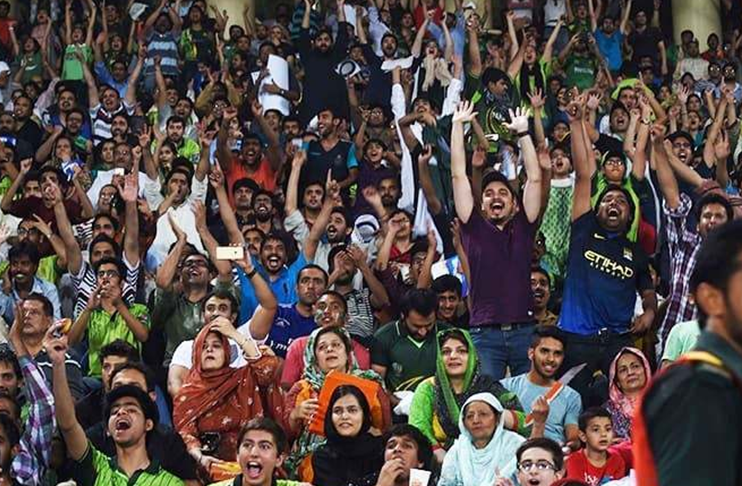
      MULTAN: The Pakistan Cricket Board (PCB) has announced free entry for cricket fans attending the upcoming National Champions Cup, which is scheduled to take place from 11 to 18 August at the Multan Cricket Stadium. The PCB confirmed the decision through an official promotional flyer shared on its social media platforms. The move is expected to encourage cricket supporters to attend the matches and watch some of the country’s leading domestic players in action. The tournament will feature seven matches all of which will be played under day-night conditions. According to the schedule, the matches are expected to begin at around 3 pm local time. The National Champions Cup is a new 50-over List-A domestic competition and will also officially mark the beginning of Pakistan’s 2026-27 domestic cricket season. Four teams will participate in the tournament: Pakistan Greens, Pakistan Whites, Pakistan Blues and Pakistan Gold. The competition will follow a single-league round-robin format meaning each team will compete against the other participating sides during the league stage. At the conclusion of the league matches, the two teams with the highest points will qualify for the final, where they will compete for the tournament title. The PCB has also finalised the playing XIs for all four teams. In addition, a 13-player reserve pool has been selected for the competition. The reserve players will remain with their respective teams during training sessions and match days. According to the PCB’s arrangements, reserve players can be included in the playing XI if a team faces an injury or concussion-related replacement requirement after announcing its original XI. This arrangement is intended to ensure that teams have adequate cover throughout the competition. The tournament will feature several prominent Pakistan players as captains. Shaheen Shah Afridi will lead Pakistan Gold, while Shadab Khan has been appointed captain of Pakistan Greens. Saim Ayub will captain Pakistan Whites, whereas Sahibzada Farhan will lead Pakistan Blues. The Champions Cup is particularly important as the PCB continues its preparations for the 2027 ICC Men’s Cricket World Cup. The board has selected a wider pool of 44 players along with reserve players, to provide opportunities for cricketers to demonstrate their abilities and strengthen their claims for future national selection. The domestic competition will therefore serve as an important platform for players seeking to establish themselves at the national level. Performances during the tournament could help the selectors assess the form, fitness and consistency of players ahead of future international assignments. With free admission, a strong line-up of players and the opening of the new domestic season, the National Champions Cup is expected to attract considerable interest from cricket fans in Multan and across Pakistan. The tournament will provide supporters with an opportunity to watch emerging and established players compete in a competitive 50-over format while the PCB continues its broader preparations for the next World Cup cycle.

  • | |

    DI Khan church still guards colonial memories

    There are some places we pass every day without realising how much history they hold. They remain untapped until some visitors put their eyes on them. During summer vacations, I travelled to Dera Ismail Khan, a district situated in southern Khyber Pakhtunkhwa. It takes six hours from Lahore to arrive in this historic city. During my stay there, I came across one such place that immediately captured my attention, and I thought to write about it. It was St Thomas Church, sacred place of worship for Christian community. A large cross standing at the entrance, old rusty walls, and an ambience of spiritualism. But the Church showcased more than that. Its walls contain historical accounts of colonial past, the military campaigns led by British soldiers in this area and a grave of one Lieutenant Governor of Punjab.   St Thomas Church was built in 1856 during British rule in the Indian subcontinent. It is one of the oldest churches in present-day Pakistan. It has survived political changes, the Partition of 1947, and the passing of time. Even today it stands as a symbol of the rich and diverse heritage of Dera Ismail Khan. The church is not only a place of worship but also a reminder that different faiths and communities have long been part of the history of this region. As we walked inside, we met the old priest and caretaker of the church named Chand. He welcomed us warmly and narrated the remarkable history of this place. There are memorials of British soldiers who lost their lives in this region during military campaigns. The priest stood in front of each tablet inscribed on the church wall and briefed about it. One memorial narrates the names, ranks and units of one hundred and 69 British military officers and other ranks who were killed or died due to injuries or disease in Waziristan military campaigns launched between 1919 to 1921.     Another memorial lists details of sixty-eight officers and other ranks who met a similar fate during the 1936-1938 Waziristan military campaigns. Similarly, one tablet erected by friends and fellow officers mourns the death of Herbert Walter Gee, ICS, deputy commissioner of Dera Ismail Khan, who died in 1901. There are other memorials as well, erected by colleagues in memory of the fallen officers. I thought that these names contain historical accounts year by year about what happened in this part of the world at that time. Every sentence of the Priest carried a new story, such as how the church has witnessed a lot of happenings through generations and that it still serves the small Christian community living in Dera Ismail Khan. As we stepped outside, believing our visit had come to an end, the priest said, “Wait. I have to show you one more thing.” He took me to the back of the building, where I saw a large white grave standing quietly among the dusty bushes. Here rests Lieutenant General Sir Henry Marion Durand (1812-1871). Durdand – a quite familiar name for the people of Pakistan and Afghanistan. Sir Durand was a career British military officer, diplomat, and administrator. He served in the East India Company Army, took part in several military campaigns, and later became the Lieutenant Governor of Punjab from 1870 to 1871. His son Sir Mortimer Durand is the one who drew the contours of the border between British India and Afghanistan in 1893. A man who once held such an important position now lies in silence behind an old church, while many people living nearby are unaware that his grave even exists. Henry Marion Durand died in 1871 at the age of 58 from a tragic accident. He was visiting Nawab of Tank Shahnawaz Khan along with his daughter when he fell from an elephant. The elephant was passing through the gateway by the town of Tank with the Nawab on the same elephant and an official (Chaprassy). The gate was too low to cross an elephant with howdah. The howdah struck the walls of crossing and the elephant got frightened resulting in the fall of Durand. He remained unconscious for a few days and never recovered. He was buried beside St. Thomas’ Church in Dera Ismail Khan. The British suspected some conspiracy into this incident. One of descendent of Nawab Shahnawaz Khan says that The British launched an enquiry into it. But the daughter of Durand gave testimony in favour of the Nawab that it was just an accident and there was no fault on his part. However, as a punishment, the British authorities stripped the powers of Nawab Shahnawaz Khan in 1875 and sent him to Lahore under strict watch. He passed away in 1881 while under surveillance. Standing beside the grave of Sir Henry Durand, I felt as if I had stepped into a forgotten chapter of history. The name engraved on the stone reminded me that many important events and personalities of the past remain connected to places that we often overlook. How easily history can fade from people’s memories, even when it is standing right in front of us. As I left St Thomas Church, I felt that I had walked through a chapter of history that few people ever get to read. Sir Henry Durand ruled Punjab from this soil, and his son later sat across a table in Kabul and drew the line that still separates Afghanistan and Pakistan today. That line appears in newspapers and political debates all the time. Yet the grave of the man whose name it carries lies quietly behind a church in Dera Ismail Khan.

  • | |

    Khanewal farmers protest delay in lease letters

      KHANEWAL: Eleven farmers selected under Punjab Chief Minister Maryam Nawaz Sharif’s “Apna Khet, Apna Rozgar” initiative have protested over the delay in receiving lease letters for approximately 950 kanals of agricultural land in Chak 63/10-R. The farmers allege that the transfer process is being delayed because of the influence of an influential local figure who, they claim, is supporting people occupying the land. The affected farmers recently held a demonstration outside the Revenue Department office at the District Complex in Khanewal. They demanded that the authorities issue their lease documents immediately and complete the process of handing over the land allotted to them through the government’s official balloting process. According to the protesting farmers, nearly 950 kanals of agricultural land in Chak 63/10-R was designated for lease to 11 deserving applicants who were selected through a formal draw under the provincial government’s scheme. However, they claimed that the land has remained in the possession of alleged illegal occupants for almost 40 years. The farmers said the occupants had earlier approached the Lahore High Court and obtained a stay order regarding the disputed property. They claimed that the relevant bench of the Lahore High Court dismissed the stay order on August 3, 2026, which, according to them, removed a major legal hurdle in the way of implementing the government’s allotment decision. Despite the dismissal of the stay, the protesting farmers alleged that the Punjab Revenue Department and the Khanewal district administration had not yet issued the required lease letters. They further alleged that the individuals occupying the land had the support of an influential political figure in the area. The farmers claimed that political pressure was contributing to the delay and preventing the concerned departments from completing the formalities required for the transfer of the land. The applicants also pointed out that their names and allotment information are already available on the Punjab government’s official online portal for the “Apna Khet, Apna Rozgar”scheme. They questioned why the authorities had not issued the lease documents despite their successful selection through balloting and the reported dismissal of the court stay. The Additional Deputy Commissioner (Revenue), Khanewal, was contacted to obtain the administration’s position on the matter, including the delay in issuing the lease letters, the current legal status of the disputed land and the allegations of political interference. However, an official response from the ADCR was not available at the time of filing the report. The administration’s version will be included once an official response is received. The affected farmers have appealed to Chief Minister Maryam Nawaz Sharif, Deputy Commissioner Khanewal Dr Hina Arshad Commissioner Multan Aamir Karim and the Senior Member Board of Revenue Punjab to take immediate notice of the issue. They demanded that the lease letters be issued without further delay and that possession of the allotted land be handed over to the successful applicants according to the balloting results, government policy and applicable legal procedures. The protesters also urged the provincial government to ensure transparent implementation of the “Apna Khet, Apna Rozgar” scheme and prevent any political or external influence from affecting the rights of successful applicants.

  • | |

    Qalb conference urges youth to explore, connect an…

      MANSEHRA: Young people were encouraged to expand their perspectives, develop stronger social networks and turn their ideas into practical actions at the ninth annual Qalb Conference, held on August 8 and 9 at Sirin Resort in Naran. The two-day event was organised by the District Youth Office Mansehra in partnership with the Qalb Welfare Foundation under the Directorate of Youth Affairs, Government of Khyber Pakhtunkhwa. The conference brought together young people, volunteers, social workers and tourism enthusiasts from different parts of Pakistan to discuss youth leadership, community participation, volunteerism and the role of young people in the country’s social development. The conference was held under the theme “Explore, Connect, Change,” which encouraged participants to discover new opportunities, establish meaningful connections and contribute towards positive change in their communities. Adviser to the Chief Minister of Khyber Pakhtunkhwa for Sports and Youth Affairs, Taj Muhammad Khan Tarand, attended the event as the chief guest. Chairman of the District Development Advisory Committee (D-DAC) Mansehra Ikramullah Ghazi, along with other officials and guests, also participated in the gathering. Speaking at the conference, Mr Tarand highlighted the importance of young people in the social and economic development of the province. He said youth represented a valuable part of Khyber Pakhtunkhwa’s social capital and needed greater opportunities to improve their skills, exchange ideas and participate in productive activities. He also stressed that young people should be actively involved in community-based initiatives. According to him, meaningful participation could help youth transform their abilities, creativity and ideas into practical contributions that benefit society. Director Youth Affairs Khyber Pakhtunkhwa Abbas Khan Afridi said the Directorate was working to provide young people with platforms where they could strengthen leadership abilities, meet people from different backgrounds and discuss challenges faced by their communities. He emphasised that youth development should not be limited to occasional conferences or events. Instead, young people should have continuous opportunities for learning, collaboration, skill development and practical involvement in social activities. The conference took place in the scenic surroundings of Naran, providing participants with an environment that combined learning and interaction with personal development. Various activities focused on teamwork, leadership, communication and learning. Participants also shared their experiences in areas including social welfare, voluntary blood donation and tourism promotion. The presence of participants from different regions of Pakistan added diversity to the discussions and allowed attendees to exchange experiences and perspectives. Speakers and participants highlighted the potential of Pakistani youth to contribute to community welfare, promote volunteerism and create a more positive image of the country. The organisers said the main purpose of the conference was not only to encourage discussion but also to motivate young people to take practical steps towards bringing positive change to their communities. The two-day conference concluded on August 9 with participants reaffirming the message of “Explore, Connect, Change.” The event emphasised the importance of discovering new possibilities, building meaningful networks and empowering young people to play an active role in shaping a better future for Pakistan.

  • | |

    Pakistan SMA symposium 2026 held in Islamabad, bri…

      Islamabad: The Pakistan SMA Symposium 2026, organised by STRIVE – Strive Eradication of Disability Foundation, was held at Serena Hotel Islamabad, bringing together leading doctors, professors, researchers, medical experts, academics, civil society representatives, volunteers and families affected by Spinal Muscular Atrophy (SMA). The symposium focused on raising awareness about SMA, promoting early diagnosis, discussing modern treatment options, genetic screening, medical research and the challenges faced by patients and their families. The gathering also provided an important platform for medical professionals and researchers to exchange views on the future of SMA care and research in Pakistan. Chief Health Sector Reforms Unit (HSRU) Khyber Pakhtunkhwa Dr Syed Ejaz Ali Shah, Chairman Zakat and Ushr Council Khyber Pakhtunkhwa Imtiaz Khan, and Chairman STRIVE Muhammad Yasir Khan were among the prominent participants. Doctors, medical specialists, researchers, representatives of civil society, SMA-affected families and people associated with different walks of life also attended the event. A notable feature of the symposium was the participation of professors, heads of departments and academic experts from various universities in Islamabad and Rawalpindi. The experts shared their views on SMA, genetic disorders, medical research, recent developments in treatment and the future direction of medical science. Researchers working on SMA at the international level also participated in the symposium. Experts and researchers from Poland, the United Kingdom and other European countries joined the gathering, giving the Pakistan SMA Symposium an international academic and research dimension. The participation of foreign researchers provided an opportunity to strengthen links between ongoing efforts in Pakistan and international research and developments in the field of SMA. Participants stressed the importance of greater cooperation between Pakistani institutions and international research communities to improve knowledge, diagnosis and care for people living with rare diseases. Addressing the gathering, Chief HSRU Khyber Pakhtunkhwa Dr Syed Ejaz Ali Shah paid tribute to parents and families of SMA patients for their continued struggle and resilience. He said the efforts of families working for the better lives and futures of their children deserved recognition and appreciation. Dr Shah emphasised that awareness about complex and rare diseases such as SMA must be accompanied by effective support for patients and their families. He highlighted the importance of collective efforts involving healthcare professionals, families, government institutions and other stakeholders. Chairman STRIVE Muhammad Yasir Khan said SMA was not merely a medical condition but had become a wider struggle requiring the combined efforts of patients, parents, doctors, researchers, government institutions, media, civil society and social organisations. He said STRIVE was working to take awareness about SMA to different parts of the country, promote early diagnosis, encourage research and help create better pathways for patients to access treatment and necessary healthcare facilities. Yasir Khan also announced that STRIVE would organise a major SMA Summit on October 30 and 31, 2026, at Tulip Marquee Islamabad. He said the proposed summit would be one of the largest gatherings of its kind in Pakistan and would bring patients, parents, doctors, medical specialists, national and international researchers, policymakers, universities, civil society organisations, volunteers and other relevant stakeholders together under one roof. During the symposium, speakers discussed the symptoms of Spinal Muscular Atrophy, the importance of timely diagnosis, genetic screening, modern treatment, patient care, research and future strategies for addressing SMA in Pakistan. Doctors and researchers emphasised that early diagnosis, proper medical guidance and access to modern treatment can play an important role in improving the quality of life of children and individuals affected by SMA. They also stressed the need for greater public awareness so that families can recognise the condition and seek appropriate medical advice at an early stage. Participants observed that Pakistan requires further efforts in public awareness, medical facilities, genetic diagnosis, research and policymaking related to SMA. Strengthening these areas, they said, could help provide better support to children living with the condition and their families. The symposium also highlighted the importance of building stronger cooperation between universities, healthcare institutions, researchers, policymakers and international organisations. Such collaboration, participants said, could help Pakistan benefit from global scientific developments while encouraging local research into rare diseases. At the conclusion of the event, participants expressed their commitment to expanding awareness, research and advocacy for the rights and needs of people affected by SMA. They stressed the importance of developing stronger links between government institutions, universities, the medical community, media, civil society, patients and their families. The organisers said the Pakistan SMA Symposium 2026 was more than a single event, describing it as an important step towards creating a collective voice and sustained movement for greater awareness, research, early diagnosis and improved support for SMA patients in Pakistan. The gathering also reflected growing efforts by medical professionals, researchers, families and civil society organisations to place rare diseases on the national health agenda and to promote a more informed, inclusive and supportive healthcare environment for affected individuals and their families.

  • | | |

    Ducky bhai questions parents’ role in children?…

    Pakistani YouTuber Ducky Bhai has questioned the growing criticism of YouTubers over their alleged negative influence on children, arguing that parents must also take responsibility for their children’s upbringing and online activities. In his recent remarks, Ducky Bhai rejected the idea that YouTubers alone are responsible when children are exposed to inappropriate or negative content. He questioned where parents are when children are spending significant amounts of time online and consuming digital content. According to Ducky Bhai, content creators should make an effort to keep their videos clean and appropriate. However, he stressed that YouTubers cannot be expected to act as parents for every child watching their content. He argued that parents have a key role in deciding what their children watch and how much time they spend online. Monitoring internet activity, setting boundaries and discussing appropriate content with children, he suggested, should be part of responsible parenting. Ducky Bhai also referred to his own childhood while explaining his perspective. He recalled that his father encouraged him to focus on his studies and used rewards, including the promise of a PlayStation for good performance, as motivation. He further revealed that his father had installed security measures on his computer that allowed him to monitor his activities. According to Ducky Bhai, this close supervision helped his parents remain aware of what he was doing online. His comments have renewed discussion about the responsibilities of parents and digital content creators in an age when children have easy access to YouTube and other online platforms. While creators can influence young audiences through the content they publish, Ducky Bhai believes parents cannot simply shift the entire responsibility onto YouTubers. Instead, he says families should actively monitor children’s digital activities and guide them toward appropriate content. The debate highlights a broader challenge for modern families: balancing children’s access to entertainment and technology with parental supervision. As online platforms continue to become an important part of children’s daily lives, both content creators and parents face increasing pressure to ensure that young viewers are exposed to safe and suitable material.

  • | | | |

    Roman-Era masterpiece found hidden beneath fields …

    Archaeologists have uncovered a stunning 4th-century Roman mosaic beneath farmland in England, offering new insight into life during the period when Britain was part of the Roman Empire. The remarkable mosaic was discovered at the remains of an ancient Roman villa in Devon. Made from thousands of colorful stones arranged into intricate floral patterns, the artwork is believed to date back to the fourth century AD. The discovery provides fresh evidence of the wealth, architecture and cultural influence that existed in Roman Britain. The Roman Empire controlled much of Britain from around AD 43 until around AD 410, leaving behind numerous settlements, villas, roads and other archaeological remains. Alongside the mosaic, archaeologists discovered a large and sophisticated Roman bathhouse near the site. The complex reportedly contained several small pools, walls decorated with colorful plaster and a range of other ancient artifacts. The excavation was carried out over a two-month period by archaeologists from the University of Exeter and Cotswold Archaeology. Volunteers also participated in the work, helping researchers investigate the agricultural land located between the Devon villages of Hill Barton and Sampford Peverell. The archaeological team already knew that the Roman villa and surrounding working areas were potentially important for understanding the spread of Roman culture across Devon. However, the latest findings have revealed that the site was considerably larger and more significant than previously understood. Project leader Dr Susan Greaney said the discoveries could help researchers better understand Roman cultural influence and its interaction with local communities in the region. The detailed mosaic is particularly significant because such decorative artwork can provide clues about the status and lifestyle of people who lived at Roman villas. Its elaborate design and the presence of a substantial bathhouse suggest that the site was an important settlement rather than a simple rural dwelling. Archaeologists will now continue studying the discoveries and artifacts recovered from the site. Researchers hope the evidence will shed more light on how people lived, worked and adopted Roman customs in southwest England nearly 2,000 years ago. The Roman mosaic discovered in Devon is another reminder of how much of Britain’s ancient history remains hidden beneath modern farmland. Further archaeological investigation could reveal even more about the communities that lived in the region during the final centuries of Roman rule.

  • | |

    Illegal cigarette factory busted in Chakwal, goods…

    CHAKWAL: Authorities have busted an illegal cigarette factory near Dhrabi village in Chakwal and seized goods, machinery and raw materials worth more than Rs250 million, according to officials. The raid was conducted jointly by the Intelligence and Investigation team of the Federal Board of Revenue (FBR) and other intelligence officials following a tip-off about an illegal cigarette manufacturing network operating in the area. According to FBR officials, the facility was a complete cigarette manufacturing unit that allegedly operated at night to evade Federal Excise Duty (FED) and General Sales Tax (GST). The factory was reportedly producing cigarettes under different brand names and supplying them to the market. Officials said the manufacturing unit was not registered with the FBR. The cigarette packets also allegedly lacked barcodes, which authorities said was part of the tax-evasion mechanism. The raid uncovered a substantial manufacturing operation. Eleven cigarette-making machines and three industrial generators were sealed during the operation. A large warehouse at the site contained significant quantities of finished cigarettes and raw materials. Authorities seized approximately 72,000 cigarette packets that were ready for sale, along with around 12,000 kilograms of raw tobacco. Other materials recovered from the premises included white paper rolls, silver and golden packaging rolls, aluminium foil rolls, polythene rolls and more than 107,000 empty cigarette packets. Officials also confiscated 30 cartons of filter rods, 14 cartons of filter paper, adhesive material and drums used in the manufacturing process. The initial assessment by FBR officials puts the combined value of the raw materials, finished products and seized machinery at more than Rs250 million. Authorities are also calculating the potential amount of tax allegedly evaded through the operation. The discovery highlights the scale of illegal cigarette manufacturing and the potential loss of government revenue through unregistered production and tax evasion. Authorities are continuing their investigation into the illegal cigarette network to determine the individuals and businesses involved in the manufacturing and distribution of the products. The illegal cigarette factory in Chakwal is among the latest targets of enforcement operations aimed at curbing illicit tobacco production and protecting government tax revenues.