Features

  • | |

    Waqar Zaka wins global trading competition

    Pakistani digital entrepreneur, television personality and cryptocurrency advocate Waqar Zaka has won the WEEX TradFi Masters, an international trading competition featuring more than 3,000 participants from around the world. The competition tested participants across multiple asset classes, including stocks, commodities, precious metals and cryptocurrencies, over a 20-day trading period. According to the organisers, Zaka recorded a 74 per cent return on an initial virtual trading capital of US$100,000, finishing ahead of competitors from South Korea and China, who secured second and third positions respectively. As part of the award, Zaka received a 2026 Mercedes-Benz G-Wagon at a prize ceremony held in Dubai. Waqar Zaka first rose to prominence as a television host before becoming one of Pakistan’s most recognised digital entrepreneurs and cryptocurrency advocates. Over the past several years, he has built a large online following through content focused on blockchain technology, digital assets and financial education. He has consistently campaigned for the legalisation and regulation of cryptocurrencies in Pakistan and has urged policymakers to embrace blockchain technology and the digital economy. His latest achievement has been welcomed by supporters as another milestone in his career and has drawn attention to the growing participation of Pakistani traders in international financial and digital asset markets.

  • | | | |

    Why Lahore sinks whenever it rains in the city? 

    The rain on July 22 almost sank most parts of Defence Housing Authority. Those low-lying areas of the city were also under water. And this happened as the city was lashed with 343 millimetres of rain for two days, according to the Provincial Disaster Management Authority (PDMA). That spell has gone and when you are reading these lines, the city is undergoing a second rain spell. Pakistan’s Meteorological Department has issued a fresh weather advisory, warning that another active monsoon spell is expected from July 29 to August 5 across much of the country. The department said rain, wind and thundershowers, along with scattered heavy to very heavy rainfall, may trigger urban flooding, flash floods and landslides in vulnerable areas. This will keep the residents of low-lying areas, mainly of Lahore’s south, and DHA on the toe. Reacting to this advisory, environmental activist Rafay Alam explained why cities like Lahore keep flooding every monsoon season, and what is really behind the crisis. He said the Met Department had already notified that rain would continue for two days and people were warned in advance that urban flooding would take place, not just in Lahore, but in several cities across Punjab, including Gujranwala and Sialkot. He then pointed to last year’s floods for comparison. “Those floods were caused by heavy rains in the northern areas of the country, which caused rivers to swell,” he said. On top of that, India had released water from the Pong Dam and Bhakra Dam. He said a gate at the Madhopur headworks also broke, causing water levels in the Ravi river to rise sharply. Alam said the situation today is different. The flooding happening now is not caused by river floods or dam releases. Instead, it is simply due to heavy rainfall occurring within Pakistan itself. He said that if people read the Met Department’s advisory carefully, the heaviest rain in the coming days is expected in the northern areas once again, not directly over Lahore. He advised people to check whether they live in low lying or high lying areas, since this makes a big difference during heavy rain. However, he said that the real issue lies in the sheer intensity of rainfall being recorded now. “Some areas have received around 150 millimetres of rain within just a few hours,” he said. He added that 20 or 30 years ago, when the drainage systems and infrastructure in these areas were built, climate change was never part of the planning. Nobody at that time imagined that such intense rainfall could happen within just a few hours. As a result, the old infrastructure simply cannot handle the kind of rain Pakistan is now experiencing. Dr Farid A Malik, a resident of Defence Phase 5, witnessed the entire flood attack first hand. He said that when he was growing up in the 1950s, 1960s and 1970s, rainwater never used to stand in Lahore. At that time, he said, the city was much smaller and the population was far lower, yet even then, the city did not face standing water after rainfall the way it does today. “Whenever the rain would stop, we children used to go out on our bicycles looking for standing water, just for fun. And there were really only two places where water would collect. One was near Shahdara, and another was near the Do Moriya Pul area close to the railway station. That area of Shahdara was a low lying area,” he said. He recalled that in the 1970s, when Zulfiqar Ali Bhutto’s government came into power, and the People’s Party had a lot of support from that area of Lahore at the time, the government promised that they would install pumps in Shahdara and set up a proper system to drain the water out. And they actually did this. Heavy duty pumps were installed in Shahdara, and they used to successfully drain the water out. Dr Farid said the sewerage system Lahore has today simply cannot handle rainwater, because the amount of water that comes with heavy rain is very large, and the system does not have the capacity to handle that much water. He explained there are two separate problems here. First, the underground sewerage system is not cleaned properly. The pipes, whether four feet wide or six feet wide, have become clogged with scaling inside them over time. So even though a pipe might be four or six feet in diameter, the actual open space left for water to pass through has shrunk down to just one or two feet, meaning the whole system does not flow properly. Second, even if the sewerage system was clean, it still cannot handle rainwater on top of regular sewage. For this reason, Lahore used to have separate storm drains, called nalas in Urdu, which carried rainwater away separately into the Ravi river. Because of this separate system, rainwater never used to accumulate in the city. He said this has changed because storm drains have been blocked, either through neglect or construction on top of them. “An entire market has been built on top of a storm drain along Hall Road,” he said, adding that similar encroachment has happened along the Ravi river itself. Last year, water that should have gone into the river ended up flowing into housing societies instead. Dr Farid also pointed out that when Lahore had open drains instead of an underground sewerage system, the drainage actually worked better. Since the city moved underground, cleaning has become irregular, flow has suffered, and pumping stations work only some of the time. He said Lahore’s expansion added to the problem, since new areas were given sewerage systems but no proper storm drain network for rainwater. DHA, he said, expanded in phases over the years without any master plan covering how sewage and rainwater would both be managed. Speaking about his own neighbourhood, Dr Farid said there is a pumping station near the Sui Gas Society area of Defence that pumps sewage water

  • | | | |

    PTI seeks immediate hospital transfer for Imran Kh…

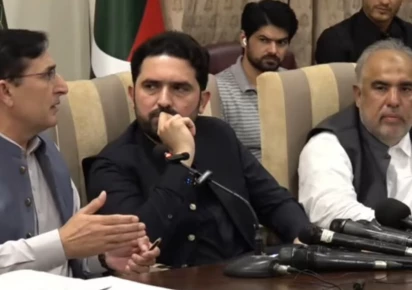
    The Pakistan Tehreek-e-Insaf (PTI) has demanded the immediate transfer of party founder Imran Khan to a hospital after a medical report highlighted concerns over his blood pressure and anxiety. The demand came after a report from Adiala Jail authorities was submitted to the Supreme Court. The report contains details of Imran Khan’s latest medical condition and recommendations for his care. PTI leaders held a press conference on Monday and expressed concern over the former prime minister’s health. They called for him to be moved to a hospital where he could receive specialised medical treatment. PTI Chairman Barrister Gohar Ali Khan said Imran Khan’s elevated blood pressure was a serious concern. He demanded that the former prime minister receive the best available medical care. Gohar said Imran Khan should also be given access to his personal doctors. He demanded that his family members and lawyers should be allowed to meet him. The PTI chairman said access to Imran Khan had remained restricted for months. He claimed that party representatives had repeatedly approached the courts seeking permission for meetings. According to Gohar, the PTI had approached the high court around 25 times and the Supreme Court around 15 times over the issue. He described meetings with family members, doctors and lawyers as Imran Khan’s fundamental legal right. He urged the judiciary to address the matter and ensure that the former prime minister received appropriate medical attention. Gohar said the party’s concerns would not end until Imran Khan was provided proper medical treatment and regular access to his family and legal team. He also criticised what he described as a prolonged dispute over access to the PTI founder. Gohar said the situation had continued since October and called for an end to what he termed a “cat and mouse game”. The PTI’s demands came shortly before the Supreme Court was scheduled to hear matters concerning Imran Khan. The jail report had recommended increasing family interaction to help manage his anxiety and blood pressure. It also contained details of his medical examinations and treatment. PTI leaders argued that the reported health concerns should be treated seriously and that hospitalisation would ensure closer medical supervision. The party has also continued to call for access to Imran Khan’s personal physicians, saying they should be allowed to assess his condition independently. The issue of Imran Khan’s health has become a major political and legal point of contention. PTI leaders have repeatedly raised concerns over his medical care and restrictions on meetings.

  • | |

    Pakistan standing tall: realising Jinnah’s visio…

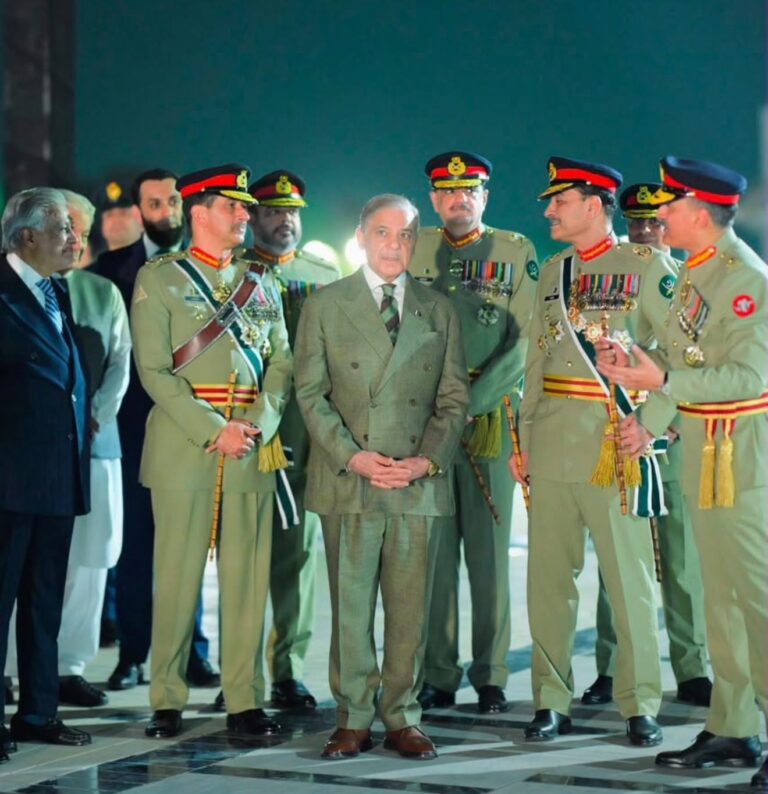
    Shehbaz Sharif and Asim Munir: Advancing the Vision of Quaid-e-Azam As Pakistan celebrates its 79th Independence Day, there is a growing sense that the country is witnessing a moment that would have deeply pleased its founding father, Quaid-e-Azam Muhammad Ali Jinnah. For decades, Pakistanis have carried Jinnah’s vision of a strong, sovereign and respected Pakistan in their hearts. Today, as Pakistan’s diplomatic and strategic importance continues to grow, that vision appears increasingly visible on the international stage. Prime Minister Muhammad Shehbaz Sharif and Field Marshal Syed Asim Munir are working together to translate that vision into reality. Their close coordination has provided Pakistan with a sense of direction, unity and confidence at a time when the world itself is undergoing profound geopolitical change. The Pakistan of today is increasingly being recognised as a country whose voice matters. Jinnah envisaged a Pakistan that would not merely exist on the world map, but would stand with dignity, sovereignty and confidence among the nations of the world. His vision was of a country capable of determining its own destiny and making a meaningful contribution to international affairs. There is a powerful resonance between that vision and the Pakistan we are witnessing today. Jinnah once spoke of a future in which the world’s decisions would be influenced by Pakistan. For many years, that aspiration seemed distant. But recent developments suggest that Pakistan is moving closer to that position. From facilitating dialogue between major powers to strengthening strategic partnerships with Türkiye, Saudi Arabia and China, Pakistan is demonstrating that it can engage with countries across different geopolitical blocs while protecting its own national interests. The country’s ability to host US-Iran talks is particularly significant. In an increasingly polarised world, being trusted to provide a platform for dialogue is itself an indication of diplomatic relevance. Pakistan’s relationship with China remains a cornerstone of its foreign policy, while ties with Türkiye and Saudi Arabia continue to deepen. At the same time, engagement with the United States has entered a phase in which Washington is once again recognising Pakistan’s strategic importance. The positive remarks by US President Donald Trump about Prime Minister Shehbaz Sharif and Field Marshal Asim Munir have also attracted international attention. Perhaps most importantly, Pakistan is projecting itself with greater confidence. The scenes in Islamabad surrounding the inauguration of Yadgar-e-Fateh, commemorating the sacrifices and achievements associated with Operation Bunyan-un-Marsoos, captured this changing mood. Political and military leaders standing together alongside the families of martyrs and veterans conveyed a powerful message that Pakistan’s strength lies in unity. As an overseas Pakistani who has lived in the West for more than two decades, this transformation is particularly striking. I have witnessed different phases of Pakistan’s image abroad. There were years when Pakistan was frequently discussed through the prism of instability, terrorism and political uncertainty. Today, the conversation is different. Pakistan is increasingly being discussed in terms of its strategic importance, diplomatic role, defence capabilities, regional influence and economic potential. This should make every Pakistani proud—but it should also make us more responsible. International recognition alone cannot build a prosperous Pakistan. The next challenge is to convert diplomatic and strategic gains into economic prosperity, stronger institutions, better education, employment opportunities and an improved quality of life for ordinary Pakistanis. That is where Jinnah’s vision must ultimately lead. At 79, Pakistan has every reason to celebrate. The country is standing taller on the world stage, and the partnership between Prime Minister Shehbaz Sharif and Field Marshal Asim Munir has helped project a message of unity and national purpose. But this is not the end of the journey. It is the beginning of a new chapter. Jinnah gave Pakistan a dream. The responsibility of this generation is to turn that dream into a lasting reality. Pakistan Zindabad.

  • | | | |

    Maryam hails Katcha’s historic security turnarou…

    Punjab Chief Minister Maryam Nawaz has said that the Katcha region has become a safer area after decades of insecurity. She made the remarks while addressing an Independence Day ceremony at the Safe City Authority. She said the government was taking steps to improve security and protect citizens across the province. Maryam said Safe City cameras have now been installed in 43 cities of Punjab. She said the expanded surveillance system would help improve monitoring and strengthen the security network. The chief minister said the government wants to provide a safer and better Pakistan to future generations. She stressed that public safety remains an important part of the government’s development agenda. Maryam rejected the impression that government attention was limited to Lahore. She said development cannot be considered meaningful if people living in other cities and regions are ignored. She said every citizen has the right to benefit from better public services and improved security. The government, she added, is working to ensure that development reaches different parts of the province. Referring specifically to the Katcha region, Maryam said the area had witnessed insecurity for decades. She claimed that the situation had now changed and the region had become a safer place for the people. She said modern security technology was playing an important role in improving law and order. The expansion of Safe City surveillance, she added, would help authorities monitor sensitive areas and respond more effectively to security concerns. The chief minister said the government would continue strengthening security infrastructure across Punjab. She also reiterated her commitment to creating safer cities and improving the quality of life for citizens.

  • | |

    Tanweer Ahmed urges AI skills, MicroCerts for yout…

    On International Youth Day 2026, American-Pakistani businessman and analyst Tanweer Ahmed called for greater investment in young people and highlighted ACT AI and MicroCerts as key initiatives for preparing Pakistan’s youth for an artificial intelligence-driven global economy. Addressing a Youth and AI Summit at the United Nations, Ahmed said artificial intelligence was transforming education, employment, entrepreneurship, healthcare, public services and almost every aspect of modern economies. He stressed that young people should not be treated merely as beneficiaries of development but as innovators, decision-makers, entrepreneurs and leaders capable of shaping the future. “Talent is everywhere. Opportunity is not,” Ahmed said, emphasising the need to close the gap between young people who have access to advanced technology and those who remain excluded from the digital economy. ACT AI initiative Ahmed placed particular emphasis on ACT AI — Awareness, Competency and Tools Training for Artificial Intelligence — describing it as an important effort to expand practical AI capabilities among Pakistani youth. He said the initiative, associated with the state-owned enterprise AXI, focuses on areas including generative AI, agentic AI systems, AI-powered productivity tools, automation and sector-specific applications. According to Ahmed, one of the initiative’s major strengths is accessibility. Young people from different academic backgrounds can develop AI-related capabilities without necessarily having prior programming or artificial intelligence experience. He said making AI education accessible and free of cost could help ensure that Pakistani students and young professionals are not left behind as the global economy rapidly adopts AI. Ahmed argued that young people should acquire the ability not only to use artificial intelligence but also to understand, question, develop and responsibly apply the technology. MicroCerts to strengthen youth credentials Ahmed also placed strong emphasis on MicroCerts, describing micro-certifications as an important complement to traditional university degrees. He said rapidly changing technology means education can no longer end when a student completes a conventional degree. Young people need flexible opportunities to continuously acquire and demonstrate new, market-relevant skills. According to Ahmed, MicroCerts can provide focused credentials that demonstrate specific competencies and potentially create pathways into employment, freelancing, entrepreneurship, higher education and lifelong learning. He highlighted the importance of making such credentials accessible to young people facing financial or geographical barriers. “The future should not belong only to those who can afford opportunity,” Ahmed said, stressing that skills and credentials should be available to talented young people regardless of where they live or their economic circumstances. From AI users to AI creators Ahmed called for a shift from preparing young people simply to consume AI tools toward enabling them to become AI creators, innovators and responsible leaders. He said technology must be combined with human judgment, ethics and responsibility, warning that artificial intelligence cannot replace compassion, character or the human responsibility to determine the kind of society people want to build. He also called for stronger international cooperation between governments, universities, businesses, technology companies and international organisations to expand AI education and establish credible skills and certification systems. Ahmed said Pakistan could contribute to this global effort through initiatives such as ACT AI and MicroCerts, which he described as mechanisms for developing practical AI capabilities and recognised skills among the country’s youth. He further stressed that the expansion of AI infrastructure must be accompanied by environmental responsibility because data centres, cloud computing and AI systems require significant energy and resources. Addressing young people around the world, Ahmed urged them to learn and question emerging technologies, use AI to solve real-world problems and build businesses and communities with a clear sense of purpose.

  • | | | |

    Russia, COMSTECH seek stronger cooperation in scie…

    Russia and the Organisation of Islamic Cooperation’s Standing Committee on Scientific and Technological Cooperation (COMSTECH) have discussed new opportunities to expand collaboration in science, technology and higher education. Russian Ambassador Albert P. Khorev received a COMSTECH delegation on August 12. The delegation was led by COMSTECH Coordinator General Professor Dr M. Iqbal Choudhary. The meeting focused on strengthening cooperation between Russia and COMSTECH, particularly in areas of scientific research and academic development. Russia participates in the OIC as an observer state. Professor Iqbal Choudhary highlighted existing cooperation between COMSTECH and Russian institutions. He specifically mentioned collaboration with Kazan Federal University and the Russian Association of Earthquake Engineering and Protection against Natural and Man-Made Hazards. The participants identified considerable potential for expanding academic links between the two sides. They discussed stronger partnerships between universities, increased scholarship opportunities and joint research projects in fundamental sciences. Both sides also stressed the need to speed up implementation of initiatives previously agreed upon under their bilateral working mechanism. These initiatives were discussed during the first meeting of the Working Group on Cooperation between COMSTECH and the Russian Federation in science, technology and higher education. The meeting was held in Kazan on May 13, 2026, on the sidelines of the international economic forum Russia–Islamic World: KazanForum. Ambassador Khorev reaffirmed Moscow’s interest in expanding its engagement with the OIC and Muslim-majority countries. He also highlighted the importance of cooperation with Pakistan. The participants noted that stronger scientific and academic links between Russia and COMSTECH could also contribute to closer Russia-Pakistan relations, particularly through education, research and technological cooperation. The two sides agreed to maintain regular communication and provide necessary support for implementing joint initiatives and projects.

  • | | | |

    Tanweer Ahmed champions human-centred AI at UN you…

    Tanweer Ahmed, a technology and artificial intelligence professional, has called for a human-centred approach to AI adoption, stressing that emerging technologies should support people rather than replace them. Speaking at the Youth and AI Summit at United Nations Headquarters in New York on International Youth Day, Ahmed delivered a presentation titled “Keeping Humanity in AI Adoption.” He focused particularly on how nonprofit organisations can use artificial intelligence responsibly while protecting human judgment and accountability. Ahmed said his professional background in technology consulting, data analytics and AI had given him experience in understanding the opportunities created by emerging technologies. However, he said his passion for the nonprofit sector was rooted in his earlier experiences working with communities and young people. He recalled working on a community farm and participating in cultural education activities in Cuba during 2007 and 2008. In 2010, he travelled to South Africa, where he taught mathematics to fifth-grade students. Ahmed said these experiences shaped his long-term desire to contribute to communities and help children around the world. He described his appearance at the UN event on International Youth Day as an honour and an opportunity to reconnect with those early aspirations. During his presentation, Ahmed discussed the rapid growth of artificial intelligence and its increasing use by individuals, businesses and nonprofit organisations. He explained that AI adoption should not simply mean occasionally using chatbots or other AI applications. Instead, organisations should strategically integrate AI into their daily workflows, operations and decision-making processes. Ahmed highlighted several areas where nonprofits can use AI, including internal productivity, communication, fundraising, grant writing and administrative tasks. He presented the Ugandan Water Project as an example of how AI can support a nonprofit organisation. The project works to improve access to clean water in Uganda and reduce the impact of waterborne diseases. According to Ahmed, the organisation uses AI to assist with grant applications and donor outreach. Previous grant applications and organisational information can be analysed to help prepare targeted applications for new funding opportunities. Ahmed stressed that AI-generated material is not simply submitted without human involvement. Staff review, edit and verify the content before applications are sent to funders. He said AI had also helped the organisation identify new grant opportunities and improve internal processes, including contract drafting and project-management workflows. Ahmed emphasised that the purpose of such technology should be to make employees more efficient rather than eliminate their jobs. He also discussed AI-powered voice-to-text technology used in social work and community services. Such systems can allow workers to record information while they are in the field and transfer it into required software, reducing the amount of time spent on administrative duties. Ahmed said reducing paperwork could give nonprofit workers more time to interact directly with the people and communities they serve. However, he warned that AI adoption also presents challenges. These include financial costs, limited access to technology, concerns over job losses, inaccurate information, privacy issues, bias and difficulties in understanding cultural and linguistic nuances. He also highlighted concerns about the environmental impact of the infrastructure required to operate increasingly powerful AI systems. Ahmed urged organisations to develop responsible AI policies covering privacy, security, fairness, transparency, human oversight and accountability. He encouraged nonprofit organisations to learn from one another and share successful experiences with AI, saying organisations working for social causes can benefit from cooperation rather than competing over technological approaches. A key message of his presentation was that humans must remain responsible for AI-assisted decisions. Ahmed warned organisations against blindly accepting AI-generated content and urged them to review outputs carefully, correct errors and ensure that technology does not replace human judgment. Who is Tanweer Ahmed, the Pakistani-American philanthropist? Pakistani-American businessman and philanthropist Tanweer Ahmed has attracted renewed attention in Pakistan following his reported $9 million contribution to the National University of Sciences and Technology (NUST) and his recent appearance alongside senior Pakistani officials in the United States. Ahmed, who is based in Houston, has built a diverse business portfolio in the United States while also becoming involved in philanthropy, education, healthcare and cricket. His recent contribution to NUST is aimed at supporting talented students from financially disadvantaged backgrounds. The endowment is expected to provide scholarships to deserving students each year, with a particular focus on fields such as artificial intelligence, information technology, science and other emerging technologies. Ahmed has said his objective is to ensure that talented Pakistani students are not deprived of quality education because of financial difficulties. He has also expressed plans to expand similar scholarship initiatives to other educational institutions. The businessman has also supported infrastructure and technology-related initiatives at NUST, including the development of facilities intended to strengthen research and innovation. His philanthropic activities extend beyond education. Ahmed has been associated with healthcare initiatives in Pakistan and has supported efforts aimed at providing assistance to communities affected by natural disasters. He also drew attention for his role in relief efforts following the devastating floods that struck Pakistan in 2022. He has been credited with helping mobilise substantial humanitarian assistance for flood-affected communities. Ahmed’s business journey began after he moved to the United States as a student. According to accounts of his career, he initially worked in restaurants and at gas stations while trying to establish himself. He later moved through several positions in the American fast-food industry. His career accelerated after he joined Jack in the Box as a shift manager. His performance and business approach helped him move into senior management positions, eventually leading to opportunities in the Taco Bell franchise system. Ahmed later expanded into franchising and developed a large portfolio of food outlets across several US states. His business interests have also extended into insurance, energy, transportation and other sectors. Over the years, he has developed a reputation as an entrepreneur who combines commercial ventures with philanthropic activities. Ahmed is also closely associated with the development of cricket in the United States. A passionate cricket enthusiast, he established the Prairie View Cricket Complex near Houston after acquiring a large tract of

  • | | | |

    Gen Aamer Raza honoured with Nishan-i-Imtiaz

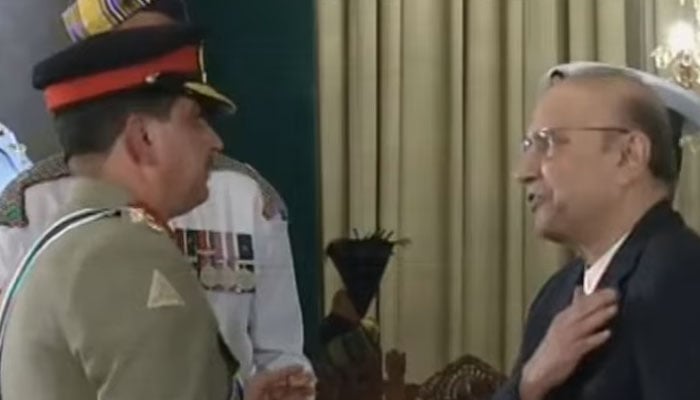
    Commander National Strategic Command General Syed Aamer Raza has been conferred the Nishan-i-Imtiaz (Military), one of Pakistan’s highest military honours. President Asif Ali Zardari conferred the prestigious award on General Syed Aamer Raza during a ceremony held at Aiwan-e-Sadr in Islamabad. President Zardari, Prime Minister Shehbaz Sharif, Field Marshal Syed Asim Munir and the chiefs of the armed services attended the ceremony. Deputy Prime Minister and Foreign Minister Ishaq Dar, the chairman of the Senate, federal ministers and other senior government officials were also present. The ceremony was held to recognise General Aamer Raza’s services and contributions in his capacity as Commander National Strategic Command. General Raza has previously received two major military honours, the Hilal-i-Imtiaz (Military) and the Sitara-i-Basalat. Before his latest appointment, he was serving as Chief of General Staff. The position is considered one of the Pakistan Army’s key operational assignments. During his tenure, he was involved in implementing organisational changes following the 27th Constitutional Amendment. He also oversaw restructuring within the military after last year’s conflict with India. The changes included the creation of the Army Rocket Force Command, as part of efforts to strengthen the army’s organisational and operational capabilities. General Raza began his military career as a cavalry officer. He trained at the Officers Training School and was commissioned into the 6th Lancers in 1988. Over the course of his career, he held several important command positions. These included command of an armoured regiment and an armoured brigade. He also commanded an infantry brigade in South Waziristan. Later, he served as the commander of an infantry division. His senior field appointments included command of Lahore-based IV Corps, one of the Pakistan Army’s major corps formations. General Raza has also held a number of important institutional and staff positions. He headed Heavy Industries Taxila, a major defence production organisation. He also served as Director General of Weapons and Equipment. In another senior assignment, he worked as Chief of Staff at II Corps. His professional background has largely focused on conventional military operations, command responsibilities and force development. Unlike some senior officers associated with Pakistan’s strategic institutions, General Raza has not served in the Strategic Plans Division or the Army Strategic Forces Command. He has also not held an appointment directly linked to the country’s strategic missile programme.