Health

  • | |

    UK approves new drug aficamten for thousands of patients

    A major breakthrough has been announced in the United Kingdom for thousands of people living with obstructive hypertrophic cardiomyopathy (HCM), a serious heart condition that can significantly affect quality of life. The UK’s Medicines and Healthcare products Regulatory Agency (MHRA) and the National Institute for Health and Care Excellence (NICE) have simultaneously approved and recommended a new treatment, Aficamten, marketed under the brand name MYQORZO. The decision marks an important milestone in the treatment of obstructive HCM and is expected to benefit around 6,600 patients in England. The coordinated approval process between MHRA and NICE enabled the medicine to become available more quickly than usual, ensuring that eligible patients gain faster access to this innovative therapy. Aficamten is a once-daily oral tablet designed to treat obstructive hypertrophic cardiomyopathy by reducing the excessive contraction of the heart muscle. In people with HCM, the heart muscle becomes abnormally thick, making it harder for the heart to pump blood effectively. This can lead to symptoms such as shortness of breath, chest pain, fatigue, dizziness, fainting, and irregular heart rhythms. By limiting the heart muscle’s excessive contraction, Aficamten improves blood flow from the heart, enhances overall cardiac function, and helps relieve these debilitating symptoms. Clinical trials have shown that Aficamten significantly improves patients’ ability to perform physical activities and reduces many of the common symptoms associated with the disease. Participants experienced better exercise capacity and reported less breathlessness, fatigue, chest discomfort, dizziness, and episodes of abnormal heartbeat. These findings indicate that the medication can substantially improve the quality of life for patients living with obstructive HCM. According to medical experts, the effectiveness of Aficamten is comparable to Mavacamten, another approved treatment for the condition. However, one potential advantage of Aficamten is that patients may require fewer echocardiograms, or heart ultrasound scans, during treatment. This could reduce the need for frequent hospital visits and ongoing monitoring, making treatment more convenient for both patients and healthcare providers. NICE stated that Aficamten was recommended after a comprehensive cost-effectiveness assessment showed that it represents good value for the National Health Service (NHS). The organization also highlighted that close collaboration with the MHRA helped accelerate the review and approval process without compromising safety or effectiveness. Helen Knight, Director of Medicines Evaluation at NICE, described the approval as an important advancement in the treatment of this complex heart disease. She said the new medicine offers fresh hope to patients and expands the range of available treatment options. Julian Beach, Executive Director at the MHRA, said the joint effort between the two organizations demonstrates the importance of collaboration in ensuring that safe and effective medicines reach patients as quickly as possible. The decision has also been welcomed by Cardiomyopathy UK. Chief Executive Katharine McIntosh said the availability of Aficamten would provide patients with more effective treatment options and help improve their overall quality of life. According to NHS England, the new medicine will be available to eligible patients within 30 days of NICE issuing its final guidance. The pharmaceutical company has also agreed to provide the medicine to the NHS at a discounted price, making the treatment more affordable and accessible. The approval represents a significant step forward in the management of obstructive hypertrophic cardiomyopathy and offers renewed hope for thousands of patients across England.

  • | | | |

    Upper Dir battles massive cholera outbreak as case…

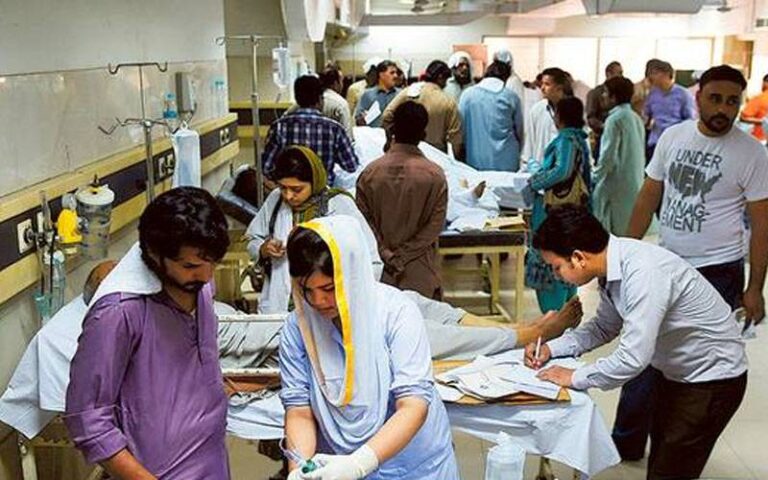
    PESHAWAR: A major cholera outbreak has struck several areas of Upper Dir in Pakistan’s Khyber Pakhtunkhwa province, infecting more than 3,000 people and placing severe pressure on local healthcare facilities, officials said on Saturday. The outbreak has affected multiple localities, including Ashirai Dara, Sharingal, Barawal and Dir Khas, where a large number of residents have reported symptoms associated with the waterborne disease. According to Dr. Sahibzada Imtiaz, Medical Superintendent of the District Headquarters Hospital in Upper Dir, the number of cholera patients has risen rapidly over the past few days. He said more than 3,000 people, including women and children, have been infected since the outbreak began. Hospital authorities revealed that 600 patients were admitted in a single day, highlighting the alarming pace at which the disease is spreading. The influx of patients has overwhelmed the District Headquarters Hospital, leaving medical staff under immense pressure. Doctors said several patients remain in critical condition and are being shifted to other healthcare facilities for specialized treatment because the main hospital has reached full capacity. In response to the health emergency, teams from the Khyber Pakhtunkhwa Health Department have been dispatched to the affected districts. Public health officials are conducting field inspections, monitoring the spread of the disease and working to improve access to safe drinking water. Authorities are also testing local water sources to identify possible contamination, as cholera is commonly spread through polluted water and poor sanitation. Health experts have urged residents to drink only boiled or purified water, maintain proper hygiene and seek immediate medical attention if they experience severe diarrhea, vomiting or dehydration. They stressed that early treatment can significantly reduce the risk of serious complications. The outbreak has raised concerns about public health infrastructure in remote areas, where limited access to clean water and medical services can accelerate the spread of infectious diseases. Officials say emergency response efforts will continue until the situation is brought under control and further infections are prevented.

  • | | |

    Pakistan faces critical shortage of warehouse faci…

    Pakistan’s healthcare system is facing a significant logistical challenge, as the country lacks a dedicated warehouse to store emergency medicines and medical kits supplied for disease outbreaks and public health emergencies, according to sources within the Ministry of National Health Services. The revelation has raised concerns about the country’s preparedness to manage essential medical supplies, particularly those intended for large-scale disease prevention and treatment programs. Health Ministry sources disclosed that Pakistan does not even have a designated warehouse for storing medicines purchased under the country’s Hepatitis C elimination initiative. The absence of proper storage facilities has forced health authorities to rely on temporary arrangements that fall short of standard warehousing requirements. According to officials, the District Health Office (DHO) in Islamabad has converted parking areas into makeshift storage rooms to accommodate the growing stockpile of medicines and medical supplies. Temporary structures and storage racks have been installed to protect the supplies until a permanent solution becomes available. While the emergency arrangement has helped address immediate storage needs, officials acknowledge that it is not a long-term replacement for a purpose-built medical warehouse designed to safely store pharmaceutical products and emergency health equipment. The shortage of storage space has become even more pressing following the arrival of hundreds of medical kits donated by the United Nations Population Fund (UNFPA). Ministry sources said the UN agency recently supplied 742 Emergency Obstetric and Newborn Care (EmONC) and Family Planning kits to support Pakistan’s maternal and reproductive healthcare services. However, authorities are struggling to find adequate space to safely store the newly received supplies, creating additional logistical challenges for the health sector. Officials also revealed that medicines for approximately 1.6 million patients have already been procured under the Prime Minister’s Hepatitis C Elimination Programme. The large-scale procurement is intended to strengthen Pakistan’s campaign against one of the country’s most widespread infectious diseases, but the lack of dedicated storage infrastructure threatens to complicate distribution and inventory management. Health Ministry sources explained that temporary storage rooms were established in 2023, when additional racks and shelving units were installed to accommodate the increasing volume of medicines. These facilities were developed as an interim solution until permanent warehouse infrastructure could be built. Despite these efforts, experts believe that the growing number of medical supplies and emergency response materials requires modern storage facilities equipped with appropriate environmental controls, inventory management systems, and security measures to ensure the quality and effectiveness of medicines. Responding to concerns, Islamabad District Health Officer Dr. Rashida said that the medicines currently being stored in the temporary facilities are not deteriorating or losing their effectiveness. She maintained that health officials are taking the necessary precautions to preserve the supplies under existing conditions. At the same time, Dr. Rashida acknowledged the urgent need for a dedicated warehouse and confirmed that letters have been sent to development partners requesting support for the establishment of proper storage infrastructure. The shortage highlights broader challenges within Pakistan’s public healthcare system, where expanding disease-control programmes and increasing international assistance have outpaced the development of essential logistics and storage capacity. Health officials hope that with support from development partners and international organizations, permanent warehouse facilities can be established to strengthen the country’s ability to respond to public health emergencies and ensure the safe storage and timely distribution of life-saving medicines and medical supplies.

  • | |

    Mayor of Takhian Tia Prioritizes Elderly Care with Vision Screening Drive: “See Clearly, Live Confidently”

    TAKHIAN TIA, Thailand – August 14th, 2026 – Mr. Mitchai Prakobtham, Mayor of Takhian Tia Subdistrict Municipality, presided over the official opening of the Eye Abnormality Screening and Vision Correction Project for the Elderly for Fiscal Year 2026. The event took place at the Takhian Tia Subdistrict Municipality Office Building. Attending the ceremony were Deputy […]

  • | |

    Sriracha Municipality Announces 3rd Health Festival Under Theme “Care for Your Health & Care for Your Life”

    SRIRACHA, Chonburi – Sriracha Municipality, along with multiple health agencies, held a press conference on August 14th, 2026, to announce the 3rd Sriracha Municipality Health Festival, themed “Care for Your Health & Care for Your Life” (ดูแลสุขภาพ คือ ดูแลชีวิต). The event took place at 1:00 p.m. on the activity court on the 4th floor of […]

  • | | |

    Ban Payup School Launches Herbal Health Promotion Project to Build Youth Resilience Against Drugs

    BAN BUENG, Chonburi – Ban Payup School (Boonkee Prachanukroh) held a health promotion project focused on the use of medicinal herbs on Friday, August 14th, 2026. Mr. Aphirak Phoncharoensombun, Chief Executive of the Nong Phai Kaeo Subdistrict Administrative Organization, presided over the opening ceremony at the school’s multipurpose building in the Nong Phai Kaeo Subdistrict. […]

  • | | | |

    Takhian Tia Mayor Inspects Waste Sorting Facility Amid Community Concerns, Stresses Strict Adherence to Legal Procedures

    TAKHIAN TIA, Thailand – August 14th, 2026 – Takhian Tia Subdistrict Municipality Mayor Mitchai Prakobtham, together with Deputy Mayor Wachira Suchoe, municipal council members, the Public Health and Environment Division, the mayor’s team, and relevant agencies, inspected a materials sorting facility in Village No. 3 of Takhian Tia Subdistrict on Thursday. The visit followed public […]

  • | |

    South Indian actress Shakeela undergoes neck surgery after excessive phone use

      South Indian actress Shakeela has revealed that her excessive use of mobile phones left her with a serious neck problem that eventually required surgery costing around Rs300,000 Indian rupees. The 53-year-old actress shared her experience in a video posted on her YouTube channel and urged people, especially parents, to limit unnecessary mobile phone use. Shakeela, who has worked in Malayalam, Tamil, Kannada and Telugu films, said her habit of playing games and watching videos on her phone for several hours caused significant damage to her neck. She explained that she would often lie on her side in bed for long periods while using her phone. “I used to play games on my phone continuously for four hours while lying on my side in bed,” Shakeela said. She added that she would only get up occasionally to have tea or coffee before returning to her phone. After playing games, she would spend hours watching reels on YouTube and Instagram. According to the actress, maintaining an incorrect posture while using her phone, combined with prolonged screen time, affected important blood vessels in her neck and eventually led to serious health complications. She underwent surgery in Chennai and said that a titanium screw was also used during the procedure. After returning home, doctors advised Shakeela to wear a neck collar until she recovered. She said that following the surgery, she has needed assistance even with basic activities such as getting out of bed and eating. Shakeela stressed that mobile phones are useful devices when used responsibly, but excessive use can have serious consequences. She advised people not to spend unnecessary hours watching videos or playing games, even if the content is entertaining. She also issued a warning to parents, urging them to avoid giving mobile phones to children unnecessarily. According to her, children should use phones only for essential activities and educational or useful content rather than spending long periods watching short videos and playing games. The actress said that people could end up paying a heavy financial and physical price for excessive phone use, adding that her own experience had cost her around Rs300,000 and caused considerable pain and difficulty. Shakeela Begum was born in Chennai. Her mother, Chand Bee, was from Andhra Pradesh, while her father, Chand Basha, was from Tamil Nadu. She began her acting career with a Tamil film in 1995. However, she gained widespread recognition after appearing in the Malayalam film Kinnarathumbikal, released in 2000. Over the years, Shakeela became a well-known name in South Indian cinema, particularly for her work in Malayalam films. Her latest health experience has now prompted her to use her public platform to raise awareness about responsible mobile phone use and the potential health risks associated with prolonged screen time and poor posture.

  • | |

    South Indian actress Shakeela undergoes neck surgery after excessive phone use

      South Indian actress Shakeela has revealed that her excessive use of mobile phones left her with a serious neck problem that eventually required surgery costing around Rs300,000 Indian rupees. The 53-year-old actress shared her experience in a video posted on her YouTube channel and urged people, especially parents, to limit unnecessary mobile phone use. Shakeela, who has worked in Malayalam, Tamil, Kannada and Telugu films, said her habit of playing games and watching videos on her phone for several hours caused significant damage to her neck. She explained that she would often lie on her side in bed for long periods while using her phone. “I used to play games on my phone continuously for four hours while lying on my side in bed,” Shakeela said. She added that she would only get up occasionally to have tea or coffee before returning to her phone. After playing games, she would spend hours watching reels on YouTube and Instagram. According to the actress, maintaining an incorrect posture while using her phone, combined with prolonged screen time, affected important blood vessels in her neck and eventually led to serious health complications. She underwent surgery in Chennai and said that a titanium screw was also used during the procedure. After returning home, doctors advised Shakeela to wear a neck collar until she recovered. She said that following the surgery, she has needed assistance even with basic activities such as getting out of bed and eating. Shakeela stressed that mobile phones are useful devices when used responsibly, but excessive use can have serious consequences. She advised people not to spend unnecessary hours watching videos or playing games, even if the content is entertaining. She also issued a warning to parents, urging them to avoid giving mobile phones to children unnecessarily. According to her, children should use phones only for essential activities and educational or useful content rather than spending long periods watching short videos and playing games. The actress said that people could end up paying a heavy financial and physical price for excessive phone use, adding that her own experience had cost her around Rs300,000 and caused considerable pain and difficulty. Shakeela Begum was born in Chennai. Her mother, Chand Bee, was from Andhra Pradesh, while her father, Chand Basha, was from Tamil Nadu. She began her acting career with a Tamil film in 1995. However, she gained widespread recognition after appearing in the Malayalam film Kinnarathumbikal, released in 2000. Over the years, Shakeela became a well-known name in South Indian cinema, particularly for her work in Malayalam films. Her latest health experience has now prompted her to use her public platform to raise awareness about responsible mobile phone use and the potential health risks associated with prolonged screen time and poor posture.

  • |

    Just minutes of intense exercise may offer greater health benefits

      A new study by American scientists has revealed that just a few minutes of extremely intense exercise may provide greater health benefits than spending hours doing light or moderate physical activity. The study examined how different levels of exercise affect proteins and biological processes in the human body. Researchers found that short bursts of high-intensity exercise produced significantly greater changes in health-related proteins in the blood compared with cycling at a normal pace. As part of the research, participants performed intense cycling on an exercise bike in 30-second bursts. Each high-speed cycling session was followed by a four-minute recovery period. Researchers observed positive changes in 714 proteins associated with health and bodily functions after the intense exercise. In comparison, cycling at a normal pace affected only seven proteins highlighting the potentially powerful biological response triggered by short periods of vigorous physical activity. One of the most interesting findings involved a molecule known as Lac-Phe, which has been linked to appetite regulation and metabolism. According to the researchers, intense exercise increases levels of Lac-Phe in the body. The molecule may help regulate hunger and appears to influence fat metabolism. The researchers also found that intense physical activity activated more than 1,600 genes in fat cells, potentially increasing the body’s ability to burn or process fat. These findings suggest that high-intensity exercise may trigger a much broader metabolic response than previously understood. To further examine the possible long-term health implications, the scientists analyzed data from more than 53,000 people. Their analysis showed that several of the proteins activated by intense exercise were associated with a lower risk of conditions such as cardiovascular disease, type 2 diabetes and obesity. The researchers also found connections between these biological changes and processes related to aging. This suggests that intense physical activity may potentially help slow some of the biological effects associated with aging, although further research is needed to fully understand these relationships. Dr. Paul Cohen, the lead researcher of the study, said the findings were particularly interesting because they demonstrated how the body can produce a powerful positive response after only a few minutes of intense exercise. He noted that the discovery could be particularly useful for people with busy lifestyles who struggle to find enough time for lengthy workouts. Instead of spending several hours exercising, short periods of high-intensity activity may provide substantial biological benefits. The findings add to growing scientific evidence that the intensity of exercise may be just as important as its duration. While regular physical activity remains essential for maintaining overall health, the study suggests that brief periods of vigorous exercise could be an efficient way to stimulate important metabolic and cardiovascular responses. However, intense exercise is not necessarily suitable for everyone. People who are new to exercise or have existing health concerns should consider their fitness level and consult a qualified healthcare professional before beginning high-intensity workouts. Overall, the study offers an encouraging message for people who find it difficult to dedicate long hours to exercise. A carefully structured routine involving short bursts of intense activity may potentially produce significant health benefits, making exercise more practical for people with demanding daily schedules.