International

  • | |

    71-year-old hero saves man from drowning in Anhui …

    A 71-year-old woman in China has been praised for her extraordinary courage after rescuing a drowning man who had jumped into a river during an apparent suicide attempt. The remarkable incident, which took place in Suixi County in Anhui Province, has attracted widespread attention after authorities identified the elderly rescuer through CCTV footage. According to local reports, the incident occurred on July 13, when a man in his 30s jumped from a bridge into the river after reportedly struggling with family-related problems. Witnesses nearby quickly realized someone had fallen into the water, creating panic among those gathered at the scene. Among the bystanders was Liu Defang, a 71-year-old retired woman who was talking with friends near the bridge. As soon as she heard people shouting that someone was in the river, she rushed toward the riverbank without hesitation. Grabbing a floating rescue aid, she immediately jumped into the water to reach the struggling man. Liu later explained that she initially believed the person in the water was a child. However, after swimming closer, she discovered it was an adult man. Despite trying to rescue him, the man resisted because he reportedly did not want to be saved. Even so, Liu held onto him firmly and refused to let go. The rescue proved extremely challenging. Battling strong currents and exhaustion, Liu spent nearly 20 minutes keeping the man afloat before managing to guide him toward the riverbank. Once they reached shallow water, two nearby individuals helped pull the man safely onto dry land. After ensuring the man was safe, Liu quietly left the area without seeking recognition or praise. She later said she did not consider her actions extraordinary and chose not to tell her family because she did not want them to worry about the risks she had taken. Police later searched the surrounding area using CCTV footage to identify the mystery rescuer. After the videos were shared online, Liu’s older brother recognized her and contacted authorities, bringing her inspiring story to public attention. Liu Defang learned swimming after retirement and regularly practices yoga to stay active. Her bravery and quick response have earned admiration across China, with many people describing her as a true hero whose selfless actions saved a life when every second mattered.

  • | | |

    Israel erupts over reported US-Saudi nuclear deal …

    Israel’s opposition leaders have sharply criticized Prime Minister Benjamin Netanyahu for remaining silent over reports of a proposed civil nuclear agreement between the United States and Saudi Arabia. The reported deal has sparked concerns among Israeli politicians, who argue it could have significant security implications for the Middle East. According to Israeli media, former Defense Minister Avigdor Lieberman described the proposed agreement as a strategic threat to Israel. He argued that civil nuclear programs can eventually pave the way for military nuclear capabilities, pointing to Iran as an example. Lieberman warned that allowing Saudi Arabia to enrich uranium on its own territory would cross a major security red line and could encourage a regional nuclear arms race. Lieberman also expressed concern that nuclear facilities in Saudi Arabia could become potential targets in any future conflict involving Iran. He urged the Israeli government to actively oppose the agreement and lobby members of the US Congress to reject it, even if doing so creates disagreements with US President Donald Trump. Former Israeli Prime Minister Ehud Barak also questioned the reported agreement, noting that it reportedly does not require Saudi Arabia to normalize diplomatic relations with Israel. According to Barak, the absence of such a condition could indicate reduced trust between Netanyahu and the US administration. Meanwhile, Democratic Party leader Yair Golan blamed Netanyahu’s policies for creating conditions that made such an agreement possible. He argued that if Saudi Arabia secures a favorable nuclear cooperation deal, other countries in the Middle East may seek similar agreements with Washington, potentially reshaping the region’s strategic balance. Reports in the Israeli newspaper Haaretz suggest that Israeli officials are particularly concerned about the possibility of Saudi Arabia being allowed to enrich uranium domestically. One Israeli source reportedly said such a provision would not be viewed positively in Israel, even if it were accompanied by future normalization between Saudi Arabia and Israel. The debate follows reports published by The Wall Street Journal, which claimed that President Donald Trump has approved a framework for a civil nuclear cooperation agreement with Saudi Arabia. According to the report, the proposed agreement could run for 30 years and involve investments worth several billion dollars. It would reportedly provide Saudi Arabia with access to civilian nuclear technology for energy production, while discussions continue over whether uranium enrichment would be permitted under the deal. Although negotiations over US-Saudi nuclear cooperation have continued for years, the reported agreement remains closely watched because of its potential impact on regional security, energy cooperation, and future diplomatic relations in the Middle East.

  • |

    Amnesty international condemns violence against youth in India

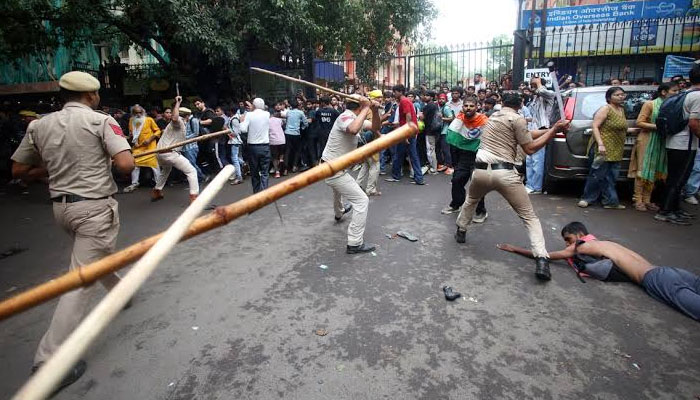
      Global human rights organization Amnesty International has strongly condemned the use of force against young people in India, expressing serious concern over reports of violence during recent demonstrations. The organization has urged Indian authorities, particularly the police, to immediately stop using excessive force against peaceful protesters and to uphold the fundamental rights guaranteed under international human rights law. In a statement, Amnesty International said it was deeply concerned about the suppression of peaceful dissent in India. According to the organization, young demonstrators exercising their right to express their opinions were met with unnecessary and excessive force by law enforcement agencies. Amnesty stressed that the right to peaceful assembly and freedom of expression are essential democratic freedoms that must be protected, not restricted. The human rights group further stated that authorities imposed several measures to prevent protesters from reaching the Parliament House, where many intended to demonstrate peacefully. Barricades were reportedly erected across key routes leading to the area, limiting public movement and restricting access to the protest site. Such actions, Amnesty argued, hindered citizens’ ability to exercise their democratic rights and raised concerns about the government’s handling of peaceful public gatherings. Amnesty International also criticized the suspension of public services during the protests. According to the organization, metro services were disrupted and mobile internet access was temporarily shut down in several areas. The group noted that internet shutdowns and transport restrictions not only affect demonstrators but also disrupt the daily lives of ordinary citizens, limiting communication, access to information, and emergency services. Amnesty has repeatedly argued that blanket internet restrictions are inconsistent with international human rights standards and should only be used under exceptional and legally justified circumstances. The organization emphasized that the use of batons (lathi charge), tear gas shelling, and other crowd-control measures should always comply with the principles of necessity, legality, and proportionality. It maintained that law enforcement officials should prioritize dialogue and de-escalation over the use of force, especially when dealing with peaceful assemblies.   Amnesty International has called on the Indian government to conduct an immediate, independent, and impartial investigation into allegations of excessive police force, including reports of baton charges and shelling against protesters. The organization said that any officials found responsible for violating human rights should be held accountable through transparent legal processes. The human rights body reiterated that governments have a responsibility to protect the rights of all citizens, including young people who participate in peaceful demonstrations. It urged Indian authorities to respect freedom of expression, freedom of assembly, and access to information while ensuring that policing practices remain consistent with international human rights obligations. Amnesty International concluded by emphasizing that safeguarding democratic freedoms is essential for maintaining public trust and strengthening the rule of law. The organization called on Indian authorities to take immediate steps to protect the rights of peaceful protesters, ensure accountability for any abuses, and prevent similar incidents from occurring in the future.

  • |

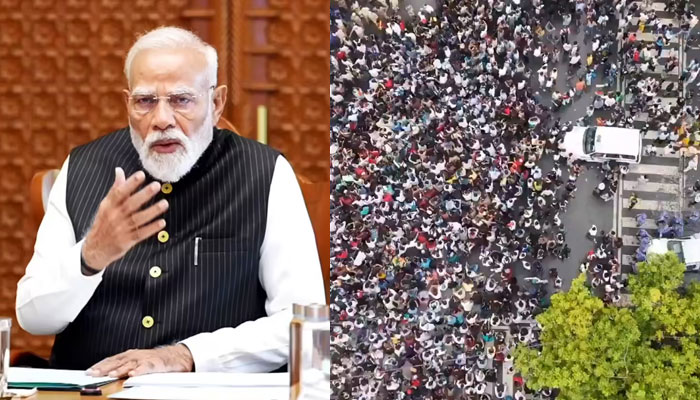
    Gen Z-led protest movement poses major challenge to Modi government in India

      India is witnessing a significant wave of youth-led protests that has intensified political pressure on Prime Minister Narendra Modi’s government during its third consecutive term. The growing movement, driven largely by Generation Z, has emerged as one of the most prominent public challenges to the current administration, reflecting widespread dissatisfaction over unemployment, alleged examination scandals, and concerns about the country’s education system. The protest movement has gained momentum through a platform known as the “Cockroach Janata Party,” which has become a symbolic outlet for the frustration of young Indians. Although the name began as a satirical expression on social media, it has rapidly evolved into a broader movement that has attracted thousands of participants across different regions. The campaign highlights the growing anger among students and young professionals who believe that the government has failed to address issues affecting their future. The movement received further attention following the hunger strike and reported forced removal of activist Sonam Wangchuk, developments that protesters say strengthened public support for the demonstrations. Many participants argue that such actions have reinforced concerns about the government’s response to peaceful dissent and have encouraged more young people to join the protests. According to a reports , the demonstrations are being viewed as the biggest wave of public pressure faced by Prime Minister Modi since the beginning of his third term in office. The protests are rooted in several long-standing grievances, including examination irregularities, rising unemployment among educated youth, and declining confidence in India’s education system. Protesters believe that these issues have seriously affected career opportunities and undermined trust in public institutions Tensions escalated during a protest march toward the Indian Parliament, where clashes broke out between demonstrators and security personnel. Authorities attempted to stop protesters from reaching the Parliament complex, leading to confrontations that further heightened the political atmosphere Official figures released after the clashes stated that at least 180 people were injured, including 118 police officers and 60 protesters. The remaining injured individuals were not immediately identified. In response to the unrest, authorities temporarily suspended mobile internet services in several sensitive areas of the city, citing security concerns. Such restrictions have drawn criticism from rights groups and civil society organizations, which argue that internet shutdowns limit communication and restrict access to information during times of public unrest. One of the protesters’ primary demands is the resignation of the country’s Education Minister. Demonstrators argue that accountability is necessary in light of the alleged examination controversies and the broader crisis facing the education sector. The movement continues to be led primarily by young people, and many observers describe it as the collective voice of Generation Z demanding greater transparency, fairness, and employment opportunities. According to Deutsche Welle (DW), the campaign initially began as a satirical online movement but quickly transformed into an organized nationwide protest. What started as digital criticism on social media has evolved into large-scale street demonstrations that reflect deep frustration among young Indians over limited job prospects, educational challenges, and uncertainty about their future. As the movement continues to expand, political analysts believe it represents a critical test for the Modi government. Whether the administration chooses dialogue, policy reforms, or stronger security measures in response to the protests could significantly influence public opinion and shape India’s political landscape in the months ahead.

  • | |

    Saudi Arabia arrests suspects in major corruption cases

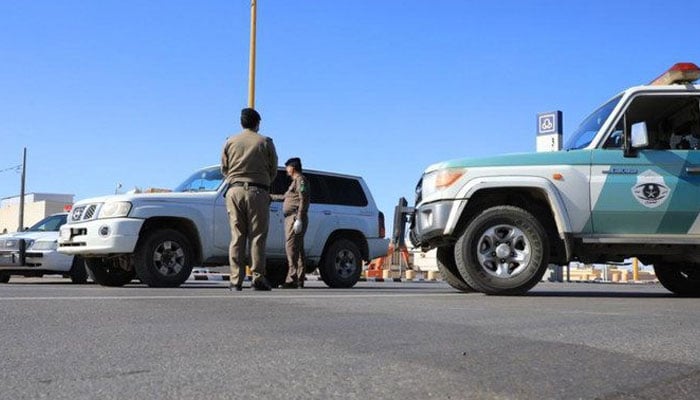
    Saudi Arabia’s Oversight and Anti-Corruption Authority, known as Nazaha, has launched a series of investigations into alleged bribery, abuse of authority, and other corruption-related offenses, leading to the arrest of several government employees, businesspeople, and foreign nationals. According to officials, authorities arrested a businessman who allegedly offered a bribe of **1.6 million Saudi riyals** to secure the illegal clearance of two containers. In a separate case, investigators arrested an employee accused of accepting **200,000 riyals** in exchange for favors. Nazaha also reported action against an employee of the **Ministry of Health**, who allegedly received **900,000 riyals** in return for illegally awarding government projects. Authorities also arrested a person linked to a **Ministry of Energy project** for allegedly accepting a 200,000-riyal bribe. The anti-corruption agency further said that authorities arrested a former passport official over allegations of receiving **60,500 riyals** in bribes. A customs employee also faced arrest after investigators accused the official of accepting **55,000 riyals** in exchange for facilitating unlawful activities. Nazaha said its investigations also covered employees working in municipal bodies and other government institutions, along with several individuals involved in suspected corruption schemes. The authority continues to investigate the cases and has stressed that it will take legal action against anyone found involved in bribery, misuse of public office, or violations of government regulations. The latest arrests reflect Saudi Arabia’s ongoing efforts to strengthen oversight, protect public funds, and hold officials and private individuals accountable for corruption.

  • | | |

    Iran warns tankers over Strait of Hormuz passage

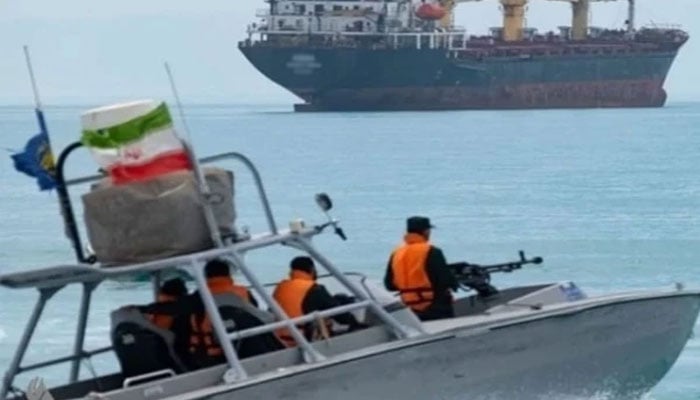
    Iran’s Islamic Revolutionary Guard Corps (IRGC) has claimed that one of three oil tankers caught fire after an explosion while attempting to navigate a route reportedly surrounded by naval mines south of the Strait of Hormuz. According to the IRGC, the other two tankers turned back and abandoned their attempt to continue through the area. The Iranian force said the incident occurred amid heightened tensions in the strategically important waterway, which serves as a major route for global energy shipments. The IRGC maintains that Iran controls the Strait of Hormuz and has closed the passage completely in response to what it describes as increased US military activity in the region. The IRGC also issued a warning to commercial vessels, saying that no tanker would receive permission to enter or pass through the strait without Iran’s approval. The statement signals a further escalation in tensions surrounding one of the world’s most important oil transit routes. The Strait of Hormuz connects the Persian Gulf with the Gulf of Oman and remains a crucial corridor for international energy supplies. Any disruption to shipping through the waterway could affect global oil markets and raise concerns over the security of maritime trade. The reported tanker incident and Iran’s warning come as regional tensions remain high, increasing uncertainty for shipping companies and energy markets operating in and around the Gulf.

  • | | |

    Iran warns of regional oil disruption

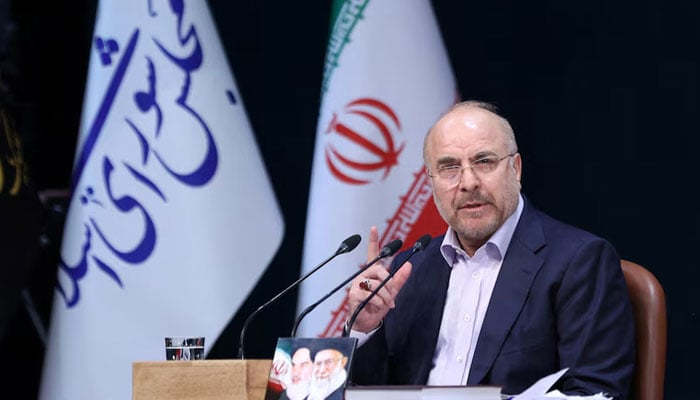
    Iranian Parliament Speaker and senior negotiator Mohammad Bagher Ghalibaf has issued a strong warning over the escalating tensions in the region, saying that if Iran cannot safely export its oil, no other country in the region should expect to continue selling oil without facing consequences. In a statement, Ghalibaf warned that regional security cannot remain selective. He said that unless Iran’s security and interests receive protection, critical infrastructure across the region could also face serious risks. Ghalibaf also argued that ensuring the security of the Strait of Hormuz requires the absence of U.S. military forces from the area. The strategically important waterway serves as a major route for global energy shipments, making any threat to its stability a matter of international concern. The warning comes amid heightened tensions between Iran and the United States. After U.S. President Donald Trump reportedly threatened to target Iranian power plants and bridges, Iranian officials responded with warnings that they could strike bridges and other critical infrastructure in countries across the region. A senior Iranian official also claimed that the United States should have learned from the recent 10-day conflict that Iran has the capability to launch attacks wherever it chooses. The remarks reflect Tehran’s increasingly forceful stance as tensions continue to rise and both sides exchange threats over military targets and regional security. The latest statements have raised further concerns about the potential for the conflict to spread beyond Iran and directly affect vital infrastructure and energy routes throughout the Middle East.

  • | |

    2,300 Israeli settlers storm Al-Aqsa

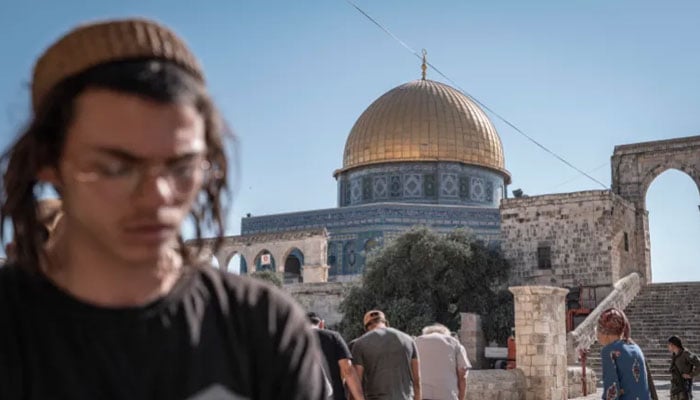
    Around 2,300 Israeli settlers entered the Al-Aqsa Mosque compound in occupied East Jerusalem on Wednesday morning, according to Palestinian officials and international media reports. Palestinian authorities described the mass entry as one of the largest such incursions this year. The incident took place as Jewish settlers marked Tisha B’Av, a religious day of mourning that commemorates the destruction of ancient Jewish temples, according to Jewish tradition. The site holds deep religious significance for both Muslims and Jews. Muslims refer to it as the Al-Aqsa Mosque compound, while Jews call the area the Temple Mount. Israel’s far-right National Security Minister Itamar Ben-Gvir also entered the compound under heavy police protection. His presence at the sensitive holy site has previously drawn strong criticism from Palestinians and sparked concerns over rising tensions in Jerusalem. The Jerusalem Governorate said the number of Israeli settlers entering the compound could increase further by sunset. Palestinian officials also reported that Israeli forces imposed tight security restrictions around the entrances to Al-Aqsa and across the Old City of Jerusalem. Large numbers of Israeli security personnel deployed throughout the area, while Palestinian worshippers faced restrictions on accessing the mosque. According to the governorate, only a limited number of Palestinians managed to reach Al-Aqsa for the dawn prayer. Palestinian officials further alleged that Israeli forces assaulted several worshippers and local residents during the heightened security measures. The latest incident comes amid continued tensions surrounding access to and control of the Al-Aqsa Mosque compound, one of the most sensitive religious and political flashpoints in the Israeli-Palestinian conflict.

  • |

    Texas cracks down on birth tourism

    DALLAS: Texas has launched one of its toughest crackdowns yet on birth tourism. Governor Greg Abbott signed Executive Order GA-57, directing state agencies to investigate hospitals, medical facilities and individuals suspected of helping foreign nationals travel to Texas to give birth and secure U.S. citizenship for their children. The order could affect hospitals, doctors and healthcare providers, as well as visitors from Pakistan, India, Bangladesh and other South Asian countries who travel to the United States on visit visas. Announcing the order, Abbott said, “American citizenship is not for sale,” and vowed that Texas would not tolerate activities that the state believes exploit the U.S. immigration system. The executive order directs six state agencies, including the Texas Department of State Health Services, the Health and Human Services Commission, the Texas Medical Board and the Texas Board of Nursing, to investigate suspected birth tourism-related activities within the healthcare sector. The agencies can also share information with federal authorities and recommend actions such as suspending or revoking professional licenses and removing healthcare providers from state contracts when necessary. The move follows Abbott’s earlier directive to the Health and Human Services Commission to investigate hospitals accused of advertising maternity packages specifically for foreign women. State officials later referred the cases of two Texas hospitals to the attorney general after reports emerged about advertisements in Mexico promoting maternity services for pregnant foreign women near the U.S.-Mexico border. The advertisements reportedly listed normal delivery packages at $3,950 and C-section procedures at $5,525.

  • | | |

    South Korean energy firm seeks PM Shehbaz’s …

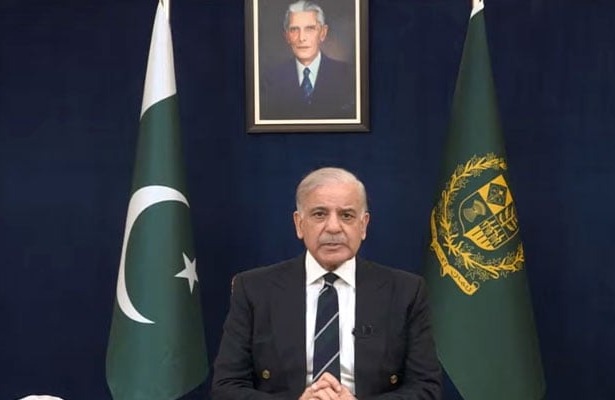
    A South Korean state-owned energy company has appealed directly to Prime Minister Shehbaz Sharif, claiming that prolonged regulatory delays have placed its planned $1 billion investment in Pakistan’s hydropower sector at serious risk. In a letter addressed to the prime minister, Korea South-East Power Co. Ltd. (KOEN) said it had spent nearly a decade developing two run-of-the-river hydropower projects on the Swat River in Khyber Pakhtunkhwa but remains unable to move forward because of unresolved regulatory approvals. The company, a subsidiary of Korea Electric Power Corporation (KEPCO), is developing the 229-megawatt Asrit Kedam and 238-megawatt Kalam Asrit hydropower projects. Together, the projects represent an investment of approximately $1 billion, with the company already investing around $25 million in feasibility studies, surveys, and other preparatory work. According to KOEN, the projects have met all major government requirements since development began in 2016. The company signed a memorandum of understanding with the Khyber Pakhtunkhwa government, obtained letters of intent from the Pakhtunkhwa Energy Development Organization (PEDO), completed feasibility studies, secured a power generation licence from the National Electric Power Regulatory Authority (Nepra), and maintained all required financial guarantees. Despite fulfilling these requirements, KOEN said the tariff determination for the projects has remained pending for nearly three years. The company noted that Nepra conducted a public hearing on its tariff petition in July 2023, but a final decision has yet to be issued. The company said it repeatedly approached Nepra and later appealed to the Nepra Appellate Tribunal, which directed the regulator to decide the tariff matter. However, KOEN claims that the tribunal’s order has still not been implemented. Adding to its concerns, the company said both hydropower projects have been excluded from the draft Indicative Generation Capacity Expansion Plan (IGCEP) 2025–35. KOEN warned that if the revised plan is approved without the projects, its proposed investment could remain stalled indefinitely. In its appeal, the company urged the prime minister to intervene and ensure a timely tariff determination while allowing the projects to continue under Pakistan’s Power Generation Policy 2015, the framework under which the investment was originally made. KOEN also stated that it understands Pakistan’s current surplus electricity generation and is willing to align the commercial operation of the projects with the country’s future energy requirements rather than adding unnecessary capacity. The issue comes as Pakistan and South Korea continue discussions aimed at strengthening bilateral trade and investment ties through a proposed Comprehensive Economic Partnership Agreement (CEPA). Analysts say resolving regulatory bottlenecks will be crucial for maintaining investor confidence and attracting future foreign direct investment into Pakistan’s energy sector.