International

  • | | |

    FIFA World Cup visitors in Canada file 175 Asylum …

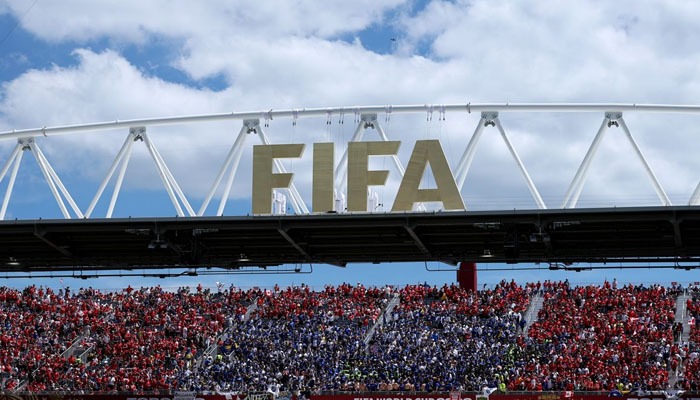
    Around 175 foreign nationals who traveled to Canada to attend FIFA World Cup matches have filed applications for political asylum, according to immigration authorities. Canada hosted several FIFA World Cup matches in the cities of Toronto and Vancouver, for which the country issued thousands of temporary visas to international visitors. Many fans from different countries applied for tourist visas to watch the tournament, although a significant number of applications were rejected. After arriving in Canada, 175 visitors submitted asylum claims that will now be reviewed under the country’s refugee protection laws. Immigration officials have not disclosed how many of those seeking asylum were athletes or members of sports delegations. According to available information, 25 individuals from Ghana have filed asylum applications, while 15 applicants each from Egypt and Colombia have also requested protection in Canada. Officials have indicated that the number of applications could increase further. Canadian authorities had previously warned foreign visitors that obtaining a visa for FIFA World Cup travel does not provide a pathway to remain in the country beyond the permitted period or automatically qualify them for asylum. The asylum claims will undergo a legal assessment, during which Canadian immigration authorities will determine whether applicants meet the requirements for refugee protection under the country’s immigration system. The development has drawn attention as Canada continues to manage increased international travel and immigration applications linked to major global events.

  • | | |

    Ishaq Dar arrives in Kyrgyzstan to lead Pakistan d…

    Deputy Prime Minister and Foreign Minister Ishaq Dar has departed for Cholpon-Ata, Kyrgyz Republic, to participate in the Shanghai Cooperation Organisation (SCO) Council of Foreign Ministers’ Meeting. The visit comes after the successful conclusion of his trip to Manila, where he expressed gratitude to the Philippine government and the ASEAN Regional Forum team for their hospitality and support during his stay. Ishaq Dar is leading Pakistan’s delegation at the two-day SCO Council of Foreign Ministers (SCO-CFM) meeting, which brings together foreign ministers from member countries to discuss key regional and international issues. Foreign ministers from SCO member states, including Pakistan, China, Belarus, India, Iran, Kazakhstan, Kyrgyzstan, Russia, Tajikistan, and Uzbekistan, are participating in the meeting. The SCO Council of Foreign Ministers is one of the organisation’s key forums and focuses on matters related to international relations, foreign policy coordination, and regional security cooperation. During his visit to Kyrgyzstan, Deputy Prime Minister Ishaq Dar is also expected to meet the President of the Kyrgyz Republic. He will hold bilateral discussions with counterparts from other SCO member states on the sidelines of the meeting. The SCO gathering provides an important platform for member countries to exchange views on regional cooperation, security challenges, economic partnerships, and diplomatic relations.

  • | | |

    Balochistan attack: sessions judge Abdul Hakeem Ka…

    District and Sessions Judge Abdul Hakeem Kakar and his security guard were killed in an armed attack while traveling toward Mastung from Quetta, officials confirmed on Thursday. According to officials, Judge Kakar was traveling with Additional Sessions Judge Tariq Lashari when unidentified armed men targeted their vehicles near Wali Khan crossing. The attack resulted in the deaths of Judge Kakar and his guard, while Judge Lashari and another person sustained injuries. Balochistan Home Department officials said the injured victims were shifted to a hospital in Mastung for medical treatment. Authorities have launched an investigation into the attack and are collecting evidence from the crime scene. Balochistan Chief Minister Sarfraz Bugti took notice of the incident and directed authorities to investigate all aspects of the attack. Officials said strict action would be taken if any negligence was found during security arrangements. The provincial government described the attack as a targeted assault against the judicial community. Officials said such incidents were aimed at creating fear and challenging the authority of state institutions. President Asif Ali Zardari strongly condemned the attack and expressed grief over the deaths of the judge and his guard. He said the sacrifices of those killed in such attacks would not go in vain and reaffirmed the country’s commitment to fighting terrorism. Interior Minister Mohsin Naqvi also condemned the incident, saying such acts could not weaken the nation’s determination against terrorism. PPP Chairman Bilawal Bhutto-Zardari expressed solidarity with the victims’ families and vowed that those responsible would be brought to justice. The attack comes amid heightened security concerns in Balochistan, where several violent incidents have recently taken place. Just a day earlier, three people were killed and several others injured in an attack on a passenger bus in Mastung, while a bridge on the national highway was damaged in a separate incident. Security forces have intensified operations across the province following a rise in militant activities. Authorities say counterterrorism efforts are continuing to restore peace and prevent further attacks. The investigation into the killing of Judge Abdul Hakeem Kakar and his guard remains ongoing, with security agencies working to identify and arrest those responsible.

  • | | |

    China’s Saindak copper mine in Pakistan faces su…

    China’s long-running copper mining project in Pakistan is facing growing operational challenges as repeated militant attacks in Balochistan disrupt supply routes connected to the mine. The Saindak copper and gold mine, located in Balochistan’s Chagai district, is considered one of China’s oldest mining investments in Pakistan and remains its only major copper interest in the country. Analysts say ongoing security issues have created difficulties for transporting materials and maintaining regular operations. The attacks along key routes have raised concerns about what some analysts describe as an “economic blockade,” potentially affecting the movement of supplies required for mining activities and the shipment of copper produced at the site. Copper is a strategically important commodity for China, which is the world’s largest consumer of the metal due to its extensive manufacturing, energy, and technology industries. Any disruption to supply sources can create concerns for industries dependent on stable copper availability. The Saindak project has long been viewed as an important symbol of Pakistan-China economic cooperation. The mine has contributed to Pakistan’s mineral sector while providing China with access to copper resources. However, security challenges in Balochistan have repeatedly affected development projects and infrastructure networks. The province has witnessed several militant attacks targeting government installations, security forces, and economic projects. Officials and security agencies have increased efforts to protect strategic assets and transportation routes, but continued instability remains a major challenge for investors operating in the region. Experts say maintaining security around mining operations is essential not only for the continuity of the Saindak project but also for attracting future foreign investment in Pakistan’s mineral resources. As global demand for critical minerals continues to rise, the stability of resource-rich regions like Balochistan will remain a key factor in determining the future of mining cooperation between Pakistan and international partners.

  • | |

    Iran claims drone strikes on US bases

    Iran’s military has claimed that it launched a fresh wave of drone attacks targeting US military facilities in Bahrain and Jordan, escalating tensions across the region. According to Iran’s Mehr News Agency, the Iranian military said its drones targeted Sheikh Isa Air Base in Bahrain. The statement claimed that the strikes hit fuel storage facilities, warehouses containing military equipment, and residential areas used by military personnel. The Iranian military also claimed that its forces carried out attacks on Muwaffaq Salti Air Base, also known as Al-Azraq Air Base, in Jordan. According to the statement, the strikes targeted aircraft hangars, maintenance facilities, and buildings used to house military personnel. Iranian authorities did not provide details about the scale of the alleged damage or report whether the attacks caused casualties. The claims also have not been independently verified. The Iranian military warned that any action against Iran’s interests could further destabilize the region and threaten economic security. The latest claims come amid heightened regional tensions and growing concerns that military confrontations could spread beyond existing conflict zones. The alleged attacks, if confirmed, would mark a significant escalation in Iran’s military actions against US-linked facilities in the region and could increase pressure on Washington and its regional allies.

  • |

    Student protests intensify over exam paper leaks in India

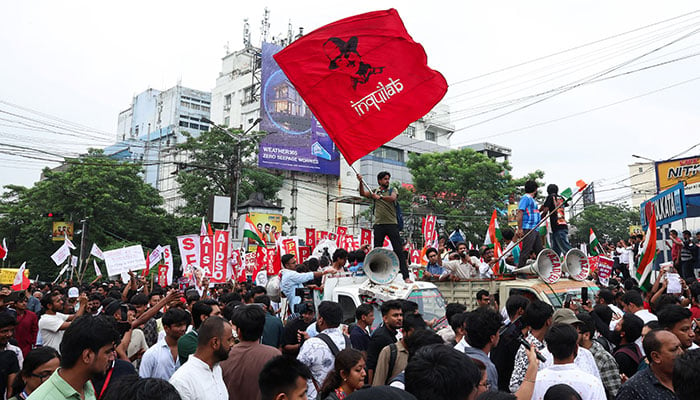
    Student protests against repeated examination paper leaks have intensified across India, with growing anger among young people and an increasingly active anti-government campaign on social media. Thousands of students marched toward Parliament in New Delhi on July 20, demanding the resignation of Education Minister Dharmendra Pradhan. The demonstration reportedly turned tense as police and protesters clashed, with reports claiming that more than 100 students suffered injuries during the unrest. Police officials have rejected allegations that officers used excessive force against the protesters. However, several videos recorded by students and shared widely on social media appear to show police personnel using batons and tear gas and dealing harshly with demonstrators. The footage has further fueled public anger and drawn attention to the growing student movement. The protests have since spread beyond the capital, with demonstrations reported in cities including Mumbai, Bengaluru, Patna, Lucknow and Aizawl. Student groups say they will continue their campaign until the authorities address their concerns and meet their demands. The Cockroach Janta Party (CJP), which is leading the student movement, has called for sustained protests over the issue. The group has demanded the resignation of Education Minister Dharmendra Pradhan, assurances that authorities will not file cases against students who took part in the demonstrations, and financial compensation for the families of students who allegedly died by suicide after examination papers leaked. The controversy has also gained significant momentum online. Young Indians have turned to memes, short videos and satirical posts to criticize the government and question its handling of examination leaks. Social media discussions have also included calls for the education minister to step down, with some posts targeting the ruling Bharatiya Janata Party (BJP) over the issue. The protests come amid wider concerns about the integrity of competitive examinations in India, where millions of students rely on national and state-level tests for admission to universities and access to government jobs. Repeated allegations of paper leaks have raised questions about examination security and fairness, while students have expressed frustration over the disruption to their academic and career plans. Prime Minister Narendra Modi has also responded to the growing protests. In a post on X, he addressed the issue for the first time and said that nothing matters more than the welfare and future of the country’s young people. The student movement continues to put pressure on the government, as protesters demand stronger measures to prevent examination paper leaks and greater accountability from officials. With demonstrations spreading to multiple cities and the issue gaining traction on social media, the controversy has emerged as a significant challenge for the Indian government.

  • |

    Indian government seeks time until tomorrow afternoon

      The Indian government has requested time until tomorrow afternoon to respond to the demands put forward by protesting youth,  Following a meeting with government representatives, the party rejected Prime Minister Narendra Modi’s position and announced that the protests would continue until the Minister of Education resigns. Speaking to the media after discussions with government officials, the CJP spokesperson said that the government had asked for additional time to formulate its response. However, the party made it clear that it had already informed the authorities that the resignation of the Education Minister remained its primary demand. The spokesperson warned that if the minister does not step down, the protests will intensify across the country. “The government has sought time until tomorrow afternoon to respond,” the spokesperson said. “We have clearly conveyed that unless the Education Minister resigns, the movement will continue to grow. If there is no resignation, we will have no option but to call for nationwide demonstrations.” The party specifically demanded the resignation of Education Minister Dharmendra Pradhan, holding him responsible for the issues that have fueled the youth-led protests. The spokesperson expressed hope that the government would take immediate action by dismissing the minister in order to ease public anger and restore confidence among students and young people. According to the spokesperson, government representatives also indicated their willingness to address some of the protesters’ other demands. These include providing financial compensation to the families of students who allegedly died by suicide and withdrawing First Information Reports (FIRs) registered against young protesters who participated in a march held on July 20. The announcement came as political tensions continued to rise in India. Opposition parties extended their support to the protesting youth and raised the issue in Parliament, criticizing the alleged use of force against demonstrators. Members of the opposition attempted to voice concerns over police action against students, but government lawmakers responded with loud protests and disruptions inside the House. The uproar eventually led to the suspension of parliamentary proceedings. Meanwhile, the Chief Justice of India came under criticism after declining to view videos that allegedly showed police violence against students. Responding to the controversy, the Chief Justice explained that no constitutional petition had been formally filed before the court regarding the matter. He stated that the judiciary had only received a letter from a lawyer and that the issue could not be taken up without following the proper legal process. In a separate development, the Indian government’s request for an urgent hearing into allegations of foreign funding behind the student protests was accepted the day after Justice Surya Kant declined to consider the videos of the alleged police action. The decision has added another dimension to the ongoing controversy, with critics questioning the differing levels of urgency applied to various aspects of the case. The protests continue to attract widespread public attention, with demonstrators insisting that accountability, justice, and meaningful reforms are necessary before they end their movement. As the government prepares its official response, all eyes remain on whether it will address the protesters’ key demands, particularly the call for the resignation of the Education Minister, or whether the demonstrations will expand into a larger nationwide movement.

  • | | | | |

    Trump drops major statement on Iran: what China an…

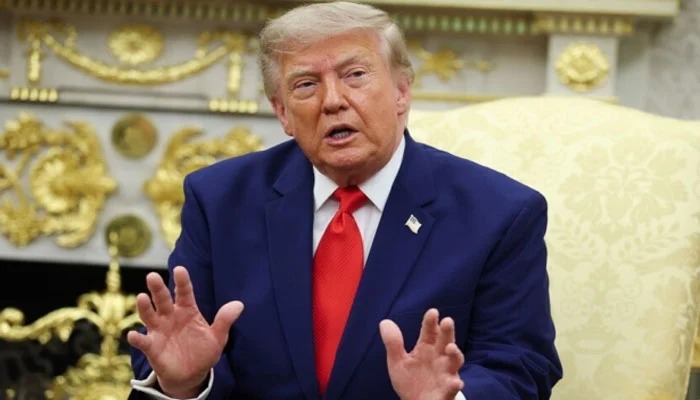
    Washington: U.S. President Donald Trump has said he does not believe that China or Russia are supplying weapons to Iran, citing assurances he received from the leaders of both countries. Speaking to reporters, Trump said Chinese President Xi Jinping had assured him that Beijing would not provide weapons to Iran under any circumstances. According to Trump, the Chinese leader also stated that the policy applies to Chinese companies, preventing them from supplying arms to Tehran. Trump said he trusts President Xi’s commitment in the context of U.S.-China relations and believes China is adhering to that position. The U.S. president also said Russian President Vladimir Putin had informed him that Moscow would not sell weapons to Iran. Trump’s remarks come amid continued international attention on Iran’s military capabilities and regional security. However, he did not provide additional details or evidence to support the statements, nor did he elaborate on whether the assurances were part of recent diplomatic discussions. The comments reflect Washington’s ongoing focus on limiting the transfer of advanced military equipment to Iran as regional tensions and global security concerns continue to evolve.

  • | |

    Joe Root likely to return as England test captain 

      England’s star batter Joe Root is reportedly set to make a return as captain of the England men’s Test cricket team. According to reports, the England and Wales Cricket Board (ECB) is considering handing Root the leadership role once again following the expected retirement of current Test captain Ben Stokes. The reports suggest that Root could officially take charge of the team ahead of England’s upcoming Test series against Pakistan. If appointed, he would lead the side during a crucial period as England prepares for a demanding international schedule, including the highly anticipated Ashes series next year. Joe Root is one of England’s most accomplished cricketers and previously served as the team’s Test captain from 2017 to 2022. During his tenure, he led England in a record number of Test matches and played a significant role in guiding the team through several memorable victories. Although his captaincy ended after a difficult run of results, Root continued to be one of the team’s most consistent performers with the bat and remains a key figure in England’s Test setup. Reports indicate that the England management views Root as the ideal candidate to provide stability and experience during this transitional phase. His extensive leadership background, calm temperament, and outstanding batting record make him a strong choice to guide the team until at least the Ashes series scheduled for next year. The reports add that he is expected to remain captain through that prestigious contest before the ECB considers a long-term leadership plan. Meanwhile, another significant change is also expected within England’s coaching staff. Former England opener Marcus Trescothick is likely to be appointed as the interim head coach of the Test team. According to the reports, Trescothick could assume coaching responsibilities during the upcoming Test series against Pakistan. Trescothick has already gained valuable coaching experience with the England national side and is regarded as a respected figure within English cricket. His appointment as interim head coach would ensure continuity and familiarity for the players during a period of transition. Working alongside an experienced leader such as Joe Root could help England maintain stability both on and off the field.   The potential appointments of Root and Trescothick come at a time when England is preparing for an important phase in the international cricket calendar. The Pakistan Test series is expected to provide an early opportunity for the new leadership group to establish its approach before attention turns to the Ashes, one of cricket’s most celebrated rivalries.   Neither the England and Wales Cricket Board nor the team management has officially confirmed these appointments. However, British media reports suggest that an announcement could be made in the near future if discussions proceed as expected. If confirmed, Joe Root’s return as Test captain would mark the beginning of a new chapter for England’s red-ball team. His experience, leadership qualities, and exceptional batting ability are expected to play a vital role in helping England navigate a period of change while aiming for success against Pakistan and in the Ashes series.

  • |

    Spain declares national emergency

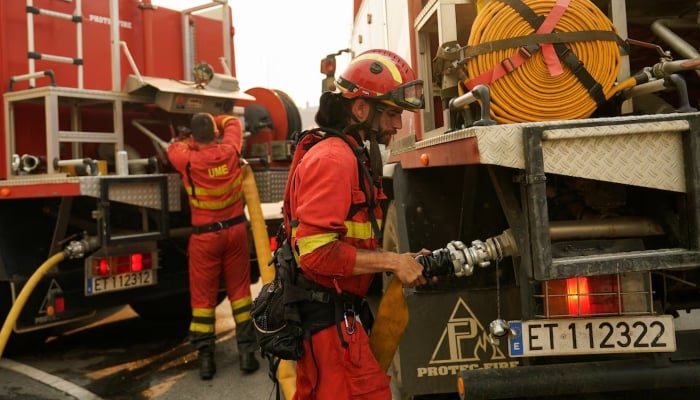
      MADRID: Spain has declared a national emergency after a series of fast-moving wildfires spread across areas near Madrid and the neighboring province of Ávila, forcing more than 10,000 residents to flee their homes. The fires, fueled by extreme heat and dry conditions, have overwhelmed emergency services and prompted one of the country’s largest wildfire responses in recent years. The Spanish Interior Ministry announced the emergency declaration late Thursday, citing the simultaneous outbreak of multiple wildfires, challenging weather conditions, and the need to coordinate large-scale resources from various government agencies. Officials said the combination of several active fire fronts had significantly complicated firefighting operations and civil protection efforts. Authorities explained that placing the situation under a national emergency allows the central government to take direct control of the response. Under Spain’s National Civil Protection System, the Interior Minister now oversees the coordination of firefighting teams, emergency services, and military support. Officials noted that this is the first time a wildfire has led to such a declaration under the current emergency framework. The regional government of Madrid described the situation as one of “extreme gravity” and requested immediate assistance from the national authorities. Officials warned that active wildfires burning in Villa del Prado, San Martín de Valdeiglesias, and Almorox, located in the neighboring region of Castilla-La Mancha, were spreading rapidly and could exceed the current firefighting capacity. Another major blaze in Burgohondo, in the province of Ávila, was also moving toward the Madrid region due to strong winds and unfavorable weather conditions. As a precaution, more than 10,000 people have been evacuated from several communities, including Villa del Prado, San Martín de Valdeiglesias, Pelayos de la Presa, and Aldea del Fresno. Emergency shelters have been established to accommodate displaced residents, while authorities continue to monitor the movement of the fires and issue evacuation orders where necessary. To combat the crisis, more than 270 emergency personnel and at least 40 ground firefighting units have been deployed across the affected regions. Specialized teams from Spain’s Military Emergency Unit (UME) have also joined the operation, providing additional manpower, equipment, and logistical support to local firefighters battling the flames. Spain, along with many other countries in southern Europe, has experienced increasingly severe wildfire seasons in recent years. Scientists attribute the growing intensity of these fires to climate change, which has contributed to prolonged heatwaves, drought conditions, and unpredictable weather patterns. Experts also note that unusually heavy rainfall during the spring encouraged abundant vegetation growth. As temperatures soared during the summer, this vegetation dried out, creating vast amounts of highly combustible fuel that has allowed fires to spread rapidly. The environmental impact has already been devastating. More than 100,000 hectares of land have burned across Spain so far this year, roughly matching the country’s average annual burned area over the past decade. The current wildfire season has also become one of the deadliest in recent history, with 13 people losing their lives. Authorities have urged residents in high-risk areas to follow evacuation orders and remain alert as firefighters continue working around the clock to contain the blazes. Weather conditions remain challenging, raising concerns that the fires could continue to spread in the coming days despite the large-scale emergency response.