تازہ ترین

  • |

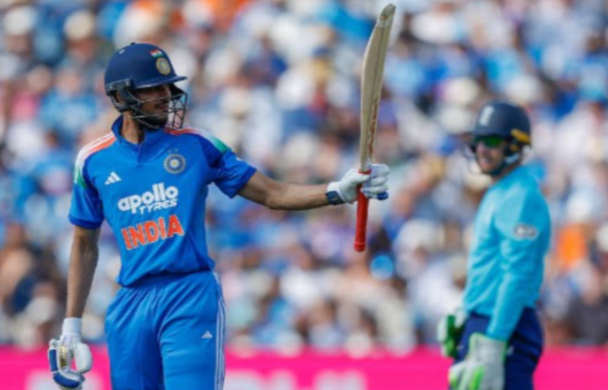
    Shubman Gill returns to No.1 in ICC ODI batting rankings

    India captain Shubman Gill has reclaimed the No.1 position in the ICC Men’s ODI batting rankings after an outstanding run of form in the recently concluded three-match ODI series against England. The right-handed opener produced another impressive performance with the bat, scoring a total of 188 runs across the series. His consistency at the top of the order helped him climb back to the summit of the rankings, marking the third time in his international career that he has occupied the top spot among ODI batters. Gill’s return to the top was also influenced by New Zealand batter Daryl Mitchell, who missed the final two matches of his team’s ODI series against the West Indies because of injury. Mitchell’s absence prevented him from adding to his ranking points, allowing Gill to move ahead in the latest ICC update. The latest rankings also featured significant movements in both the batting and bowling charts across ODI and T20I cricket. Namibia spinner Bernard Scholtz emerged as one of the biggest gainers in the ODI bowling rankings. The experienced left-arm spinner climbed five places to seventh after delivering a series of impressive performances during Namibia’s ICC Men’s Cricket World Cup League 2 tri-series campaign in Utrecht against Nepal and the Netherlands. His consistent wicket-taking ability played a crucial role in Namibia’s successful campaign and earned him a place among the world’s leading ODI bowlers. Meanwhile, India’s teenage batting sensation Vaibhav Sooryavanshi continued his remarkable rise on the international stage. The youngster was named Player of the Series after a brilliant display in India’s T20I series against Zimbabwe. He scored 151 runs in just three innings while maintaining a stunning strike rate of 196.10, underlining his aggressive approach at the crease. Having played only six T20 internationals so far, Sooryavanshi made one of the biggest jumps in the latest rankings, soaring 230 places to reach 48th in the ICC Men’s T20I batting rankings. His rapid progress highlights his growing reputation as one of India’s most exciting young talents. India also enjoyed success elsewhere in the T20I batting rankings. Tilak Varma moved up two places to sixth after continuing his consistent performances in the shortest format, while Shreyas Iyer climbed seven positions to reach 24th following a productive series. The bowling rankings also witnessed notable changes. Zimbabwe fast bowler Blessing Muzarabani gained 10 places to move into 26th position after delivering impactful performances with the new ball. India leg-spinner Ravi Bishnoi also registered one of the biggest improvements of the week, jumping 31 places to claim the 41st spot in the T20I bowling rankings. The latest ICC rankings reflect recent performances across international cricket, with several players making significant progress through consistent displays. While Gill’s return to the top of the ODI batting rankings remains the biggest headline, the rise of emerging talents such as Sooryavanshi and the continued progress of bowlers like Scholtz, Muzarabani and Bishnoi highlight the growing competition across all formats of the game.

  • |

    FIFA’s $20bn plan shakes football power balance

    FIFA’s plan to bring private equity investment into global football is opening a new chapter in its long-running struggle with Europe over the sport’s power, finances and commercial control. The world football governing body, led by President Gianni Infantino, is considering the creation of a subsidiary valued at around $20 billion. The proposed company would manage the World Cup and other major FIFA events. Under the plan, outside investors could acquire stakes of up to 20% in the new entity. The proposal has already triggered strong opposition from European football authorities. UEFA has criticised the idea and accused FIFA of putting the “soul” of football at risk by allowing private investors greater access to the sport’s most valuable competitions. Infantino has defended the proposal as an effort to make football’s financial system more inclusive. He has described the initiative as a form of “democratisation” that could allow more football nations to benefit from the sport’s growing commercial revenues. The plan could also provide financial incentives to FIFA’s 211 member associations. Under the proposal, each association could receive up to $20 million in immediate funding for special projects. Further grants of $20 million or more could be provided during subsequent four-year cycles. Such funding could prove particularly attractive to smaller and emerging football nations that depend heavily on FIFA for financial support. FIFA already generates billions of dollars through broadcasting rights, sponsorships and other commercial agreements. The organisation had set a revenue target of $13 billion for its previous four-year cycle, which included the latest World Cup and the Club World Cup. However, FIFA’s financial strength remains smaller than the overall commercial value of European football. UEFA reported that Europe’s top club competitions generated around €4.4 billion during the 2024-25 season alone. Football competitions across Europe generated more than €40 billion during the same period, according to Deloitte’s annual football finance review. The continent’s five major domestic leagues — the Premier League, Bundesliga, LaLiga, Serie A and Ligue 1 — accounted for more than half of that revenue. FIFA has spent decades trying to reduce Europe’s dominance over the global game. The organisation’s leadership has repeatedly sought to give greater influence to football associations in Africa, Asia and Latin America. Former FIFA president João Havelange was a major figure in that effort. He expanded the World Cup and built political support among smaller football nations, helping shift the balance of influence within FIFA. Successive FIFA presidents continued that approach. Infantino has expanded the World Cup from 32 teams to 48, increasing opportunities for countries outside Europe’s traditional football powers. The FIFA president has also suggested that a 64-team World Cup could be considered for the 2030 centenary tournament. The idea followed calls from South American football’s governing body CONMEBOL for an expanded competition. The proposal has faced criticism from European football officials. LaLiga president Javier Tebas has accused FIFA of damaging the sport. His criticism reflects wider concerns in Europe about the growing number of international competitions and the commercial expansion of FIFA. FIFA has previously attempted to attract external investment into its competitions. A proposed expansion of the Club World Cup backed by a consortium led by SoftBank in 2018 failed to materialise after strong resistance from UEFA. The latest private equity proposal could face a similar challenge. However, Infantino has a major advantage within FIFA’s political structure. The organisation’s decisions are determined by its global membership rather than European football alone. FIFA has 211 member associations, meaning support from Africa, Asia, Latin America and other regions could allow Infantino to advance the plan despite European opposition. Experts believe the financial incentives could make the proposal attractive to developing football nations. Eric Windholz, an associate professor at Monash University’s law faculty, said countries in the Global South could find the plan appealing because their domestic football competitions generate far less commercial income than major European leagues. The regional football authorities have also reacted cautiously

  • | |

    Japan PM’s market woes deepen as support slides

    Japanese Prime Minister Sanae Takaichi is facing mounting political and economic pressure as falling public support makes it harder for her government to balance tax cuts, economic stimulus and financial stability. Takaichi’s approval rating fell sharply in July, reaching its lowest level since she became prime minister last year. Rising inflation has increased pressure on households and weakened public confidence in the government. Higher import costs linked to a weaker yen have contributed to price increases. The impact of inflation is now becoming a major political challenge for Takaichi. The prime minister has continued to support higher government spending and large-scale investment. She has also criticised excessive monetary and fiscal tightening. However, investors are increasingly worried that the government’s expansionary policies could worsen Japan’s already difficult fiscal position. Those concerns have pushed Japanese government bond yields higher. Rising yields indicate that investors are demanding greater returns to hold Japanese debt. The market pressure has also complicated government efforts to support the yen. Officials have repeatedly warned currency traders against excessive speculation, but their comments have had limited impact. Government sources said the effectiveness of such verbal intervention was weakening as investors became more concerned about Japan’s fiscal outlook. One source warned that financial markets were gaining greater influence over fiscal management, creating a situation Japan had not experienced on this scale for decades. Takaichi is caught between two competing objectives. She wants to stimulate economic growth and reduce the burden of rising living costs. At the same time, she needs to convince investors that Japan remains committed to fiscal discipline. Her government’s spending plans have already contributed to market concerns. Japanese government bond yields climbed to their highest level in about three decades in July as investors assessed the potential impact of increased spending and borrowing. Takaichi has acknowledged the importance of rebuilding confidence among investors. She recently said that communication with financial markets would become increasingly important. However, she has shown little intention of abandoning her expansionary economic strategy. The prime minister has reiterated her goal of ending what she calls excessive fiscal tightening. She wants to promote growth through increased investment and tax reductions. That position has created a political dilemma. Reducing or delaying her planned measures could weaken her popularity. But continuing with them could further unsettle financial markets. The pressure could intensify in the coming months. Takaichi is expected to proceed with a proposal to reduce an 8% consumption tax on food for two years. Japanese media have reported that the government intends to move ahead despite reservations within the ruling party. The plan could provide relief to households struggling with higher prices. However, analysts say uncertainty over how the tax reduction would be financed could create additional pressure in the bond market. The government is also considering changes to its budget-making process. Under the proposed system, spending requests for key growth sectors would not be subject to strict ceilings. That could lead to higher government expenditure and increased debt issuance in the next fiscal year. Economists have warned that such measures may make it more difficult for the government to reassure investors about its commitment to fiscal responsibility. Japan’s currency is also facing significant pressure.

  • | |

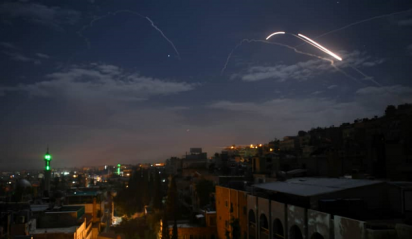
    Iran rejects Hormuz plan as US intercepts missiles

    WASHINGTON: Regional tensions intensified on Wednesday after Iran rejected Oman’s proposal for jointly managed shipping routes in the Strait of Hormuz, while the United States said it intercepted multiple Iranian ballistic missiles allegedly launched towards American forces in the Middle East. Iranian Deputy Foreign Minister Kazem Gharibabadi said Muscat had proposed dividing the Strait of Hormuz transit route equally between Iranian and Omani territorial waters. However, Tehran instead suggested that shipping passing through Iranian waters should remain under its control, while Oman would oversee only part of the route on its side. He warned that if Oman declined the proposal, the strategic waterway would remain closed. The Strait of Hormuz is one of the world’s busiest maritime corridors and a vital route for global energy exports, making any disruption a significant concern for international trade and regional security. Meanwhile, the US Central Command announced that its forces had intercepted several ballistic missiles launched by Iran in what Washington described as an attempted surprise attack on US military personnel stationed in the Middle East. Although the exact target was not disclosed, Iranian state media reported that the Islamic Revolutionary Guard Corps (IRGC) had fired missiles at a US military base and a Central Command facility in Jordan, claiming the strikes were retaliation for recent American actions against Iranian interests. US President Donald Trump said diplomatic contacts with Tehran had shown positive signs but warned that military action could resume if negotiations failed to produce results. Iran, however, denied reports suggesting it was preparing to restart direct talks with Washington. The conflict has also spilled into neighbouring countries. Jordan confirmed that its air defence systems intercepted five missiles entering its airspace early Wednesday, marking the third consecutive day of aerial threats against the kingdom. No casualties or property damage were reported. In response to the escalating crisis, Gulf nations intensified diplomatic coordination. Saudi Foreign Minister Prince Faisal bin Farhan held separate discussions with his counterparts from Qatar, Kuwait and Bahrain, with all sides stressing the importance of reducing regional tensions and ensuring freedom of navigation through the Strait of Hormuz and the Bab al-Mandeb Strait. The ministers also condemned attacks attributed to Iran and its allied armed groups. The Gulf Cooperation Council (GCC) strongly criticised repeated attacks on Saudi Arabia, describing them as a serious violation of the kingdom’s sovereignty and a threat to regional stability. GCC Secretary-General Jasem Mohamed AlBudaiwi reaffirmed the bloc’s full support for Saudi Arabia and urged stronger regional cooperation to prevent further escalation. The European Union also expressed concern over the deteriorating security situation. EU foreign policy chief Kaja Kallas discussed Gulf tensions with Iranian Foreign Minister Abbas Araghchi, calling for renewed diplomacy while also raising concerns over Iran’s military support for Russia and the temporary detention of two French diplomats in Tehran. China appealed for restraint, urging all parties to resolve disputes through dialogue while safeguarding freedom of navigation in international waterways. Beijing reiterated its support for peaceful solutions and respect for the sovereignty of regional states. Separately, Iran’s IRGC Navy announced that it had intercepted and halted three oil tankers in the Strait of Hormuz after the vessels allegedly ignored official warnings. Iranian authorities did not disclose the ships’ identities or provide further details regarding the alleged violations. Iran also rejected accusations linking it to projectiles fired at targets inside Saudi Arabia from other countries, insisting that attributing every attack on US interests in the region to Tehran was a serious miscalculation. The latest developments highlight growing instability across the Gulf, with military confrontations, diplomatic efforts and concerns over maritime security continuing to shape one of the world’s most sensitive geopolitical flashpoints.

  • | |

    Who bullied Syed Mohammad Ahmed? Name emerges

    Actor and writer Syed Mohammad Ahmed has previously spoken about what he described as a difficult experience involving a younger male actor during the filming of a drama. Ahmed did not publicly identify the actor at the time. He said the alleged mistreatment had left him humiliated and made it difficult for him to complete the project. The matter has now resurfaced after a report by FHM Pakistan identified actor Fahad Sheikh as the person allegedly involved. The publication shared a video discussing the claim. The allegation has attracted attention on social media and within Pakistan’s entertainment industry. However, the claims have not been independently verified. Actor Shamoon Abbasi had earlier expressed support for Ahmed. He said he knew the younger actor involved and suggested that an apology should be offered. Abbasi had also indicated that the actor’s identity could eventually become public if no apology was made. According to the report, Ahmed and Sheikh worked together on two television dramas between 2020 and 2022. The report alleges that tensions arose between the two actors during their professional association. However, the details of the alleged incident have not been independently confirmed, and Ahmed himself did not name Sheikh when he first discussed the matter publicly. The renewed discussion has generated reactions among viewers and entertainment industry followers. Many social media users are calling for greater clarity from those involved. Fahad Sheikh has not publicly responded to the allegations at the time of publication. The controversy comes amid broader discussions within Pakistan’s entertainment industry about workplace conduct, professional respect and the treatment of senior artists.

  • | |

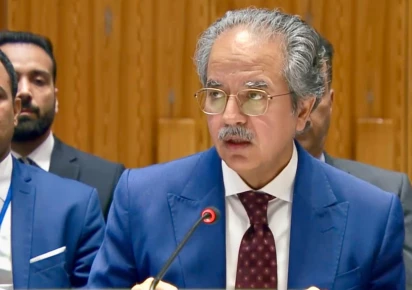
    Pakistan urges UN to enforce Gaza peace Plan

    UNITED NATIONS: Pakistan has called on the United Nations Security Council (UNSC) to ensure the immediate and complete implementation of the Gaza ceasefire and the UN-backed peace framework, warning that continued delays could jeopardise hopes for lasting peace and the creation of an independent Palestinian state. Speaking during a UN Security Council debate on the Middle East, Pakistan’s Permanent Representative to the UN, Ambassador Asim Iftikhar Ahmad, said the current situation presented a critical opportunity to advance peace but stressed that urgent action was needed to prevent further deterioration. He said the ceasefire and the internationally endorsed peace initiative offered a pathway to reduce humanitarian suffering and support Palestinian self-determination. However, he cautioned that failure to fully implement the agreement and Security Council Resolution 2803 would seriously undermine efforts to achieve a just and durable settlement. The Pakistani envoy voiced concern over developments in the occupied West Bank, accusing Israel of expanding settlements, establishing new outposts and allowing increased settler violence, which he said was changing the demographic and geographic landscape of the occupied territories. He also criticised the proposed “Crimson Thread” project, describing it as a network of military infrastructure that would isolate Palestinian communities, divide the Jordan Valley from the rest of the West Bank and weaken the prospects of a contiguous Palestinian state. Addressing the humanitarian crisis in Gaza, Ahmad said conditions remained extremely fragile despite the ceasefire. He noted that millions of Palestinians continued to face severe hardship, with widespread food insecurity, continued civilian casualties and large-scale displacement raising concerns over the full implementation of the peace plan. Pakistan urged the Security Council to take immediate action by ensuring the ceasefire agreement is fully enforced, demanding an end to Israeli settlement expansion, rejecting annexation and forced displacement, providing international protection for Palestinian civilians and ensuring the release of withheld Palestinian revenues to support essential public services. Reaffirming Islamabad’s longstanding position, Ahmad said the only sustainable solution remained the establishment of an independent, sovereign and viable Palestinian state based on the pre-1967 borders, with Al-Quds Al-Sharif (East Jerusalem) as its capital. The ambassador also expressed concern over wider instability across the Middle East, urging all parties to exercise restraint and pursue dialogue to prevent further escalation. He reaffirmed Pakistan’s support for the sovereignty and territorial integrity of regional states and backed diplomatic efforts aimed at restoring peace in Lebanon, Syria and Yemen. Highlighting concerns over attacks targeting Saudi Arabia and commercial shipping routes, Ahmad said such actions threatened regional stability and global trade, while reiterating Pakistan’s unwavering support for Saudi Arabia’s security and sovereignty. Concluding his address, the Pakistani envoy said lasting peace in the Middle East would remain impossible as long as occupation continued and the Palestinian people were denied their right to self-determination. He reaffirmed Pakistan’s commitment to supporting international efforts aimed at achieving a comprehensive and lasting peace based on UN resolutions and international law.

  • July’s buck moon peaks this week, and wildfire smoke may turn it orange

    This week brings July’s full moon, known as the buck moon, which reaches peak illumination at 10:36 a.m. ET on Wednesday, according to The Old Farmer’s Almanack. Even though the exact peak passes quickly, the moon will look full to the naked eye for about a day on either side of that moment, so there is no rush to catch it at the precise minute. Viewing conditions will differ depending on where you are. Those in the Northern Hemisphere will see the moon sitting relatively low in the sky, while Southern Hemisphere viewers get a higher vantage point, though still not as high as what June’s full moon offered, according to EarthSky. Astrologically, this year’s buck moon falls under Aquarius, though it is worth noting that the zodiac sign does not necessarily match the constellation the moon is actually passing through. Noah Petro, who heads the Planetary Geology, Geophysics and Geochemistry Lab at NASA’s Goddard Space Flight Center, said there is flexibility in how and where people view it, as long as they find a spot away from bright city lights with a clear line of sight to the sky. Viewers in the Northeast and Upper Midwest may notice something different this time around: the moon appearing more orange or red than usual. That’s being linked to smoke drifting down from wildfires burning in Canada, which has settled into the atmosphere as a haze. Pamela Gay, a senior scientist at the Planetary Science Institute, explained that the same smoky layer responsible for dimming daytime skies is also what’s tinting the moon’s color. As for the name itself, “buck moon” refers to the time of year when male deer begin growing new antlers. Other cultures have their own names for this particular full moon. The Dakota call it the moon of ripe chokecherries, while the Cree know it as the feather-moulting moon. Petro also drew a connection to NASA’s Artemis II mission, which sent four astronauts on a flight around the moon back in April, describing moments like this full moon as a reminder of humanity’s ongoing connection to what is happening on the moon itself. Looking ahead, five more full moons remain on the calendar for 2026, with November and December set to bring supermoons, when the moon reaches its closest approach to Earth.

  • | |

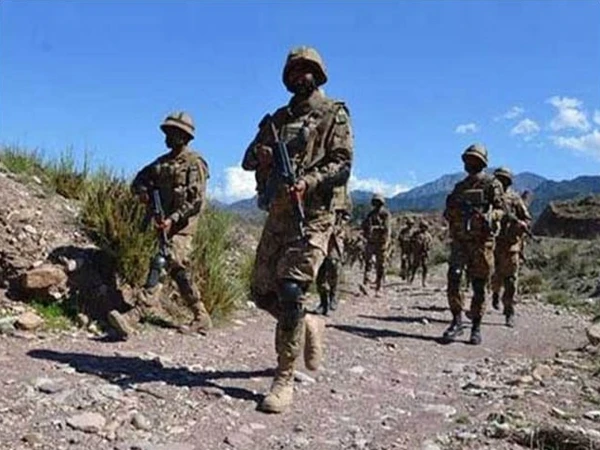
    Security forces eliminate 32 terrorists in counter…

    ISLAMABAD: Pakistan’s security forces killed 32 terrorists during two intelligence-based operations in Khyber Pakhtunkhwa and Balochistan over the past 24 hours, the military’s media wing said on Wednesday, describing the raids as part of an intensified campaign against militant groups operating in the country. According to the Inter-Services Public Relations (ISPR), 24 militants were killed during a series of targeted operations in Khyber district, while another eight were eliminated in separate operations in Nushki district of Balochistan. The operations were launched following recent terrorist attacks in both provinces and were carried out to dismantle militant networks and their support infrastructure. The military said security forces conducted multiple intelligence-driven raids in Khyber during the night of July 28–29, successfully engaging terrorist hideouts and neutralising militants identified as members of the banned Tehreek-e-Taliban Pakistan (TTP), referred to by the state as Fitna al-Khawarij. In Balochistan’s Nushki district, security personnel launched coordinated operations against militants linked to the banned Balochistan Liberation Army (BLA), referred to officially as Fitna al-Hindustan. After an intense exchange of fire, eight militants were killed, while weapons, ammunition and improvised explosive devices were recovered and destroyed. The ISPR said clearance operations were continuing in both regions to ensure that any remaining militants or facilitators were eliminated. It reaffirmed that Pakistan’s nationwide counterterrorism campaign under the Azm-e-Istehkam strategy would continue with full force to eradicate terrorism and restore lasting peace. Prime Minister Shehbaz Sharif praised the security forces for the successful operations, commending their professionalism and determination. He reiterated the government’s resolve to continue the fight against terrorism until the threat is completely eliminated, adding that the nation stands united with the armed forces in defending the country’s security. The operations come amid a renewed surge in terrorist violence, particularly in Khyber Pakhtunkhwa and Balochistan. Just a day earlier, separate attacks in Balochistan claimed the lives of a deputy superintendent of police and two others, while labourers were abducted and several vehicles were set ablaze. International reports have also highlighted the growing security challenge. Recent United Nations assessments noted an increase in attacks by the TTP and BLA, with concerns over improved coordination among militant groups and access to advanced weapons through cross-border networks. Pakistan has continued to intensify intelligence-based operations to curb the escalating threat and dismantle terrorist infrastructure across the country.

  • | |

    Iran denies role in Iraq-launched attacks on Saudi…

    TEHRAN: Iran has firmly denied any involvement in projectiles launched from Iraq towards Saudi Arabia, dismissing allegations that it was behind the recent attacks on the kingdom’s energy facilities amid escalating tensions across the Middle East. An Iranian military official, speaking to state broadcaster IRIB, rejected claims linking Tehran to the attacks, saying accusations that Iran was responsible for strikes against United States interests or Saudi Arabia reflected a misunderstanding of the regional situation. The official also insisted that projectiles fired from Iraqi territory towards Saudi targets had no connection with the Islamic Republic. The denial came after Saudi Arabia announced that its air defence systems had intercepted and destroyed several drones targeting petroleum facilities in the country’s Eastern Province. Riyadh alleged that the drones were launched from Iraqi territory by armed groups aligned with Iran. In response to the attacks, the United States Central Command (CENTCOM) said American and Saudi forces carried out coordinated precision airstrikes against targets belonging to Iran-aligned groups in Iraq. According to the US military, the operation targeted sites linked to attacks on American personnel and Saudi energy infrastructure. Saudi Arabia described the strikes as an act of self-defence under Article 51 of the United Nations Charter, warning that it would take further military action if similar attacks were carried out by Iran-backed groups. Meanwhile, Iraq’s Popular Mobilisation Forces (PMF) reported heavy casualties from the joint airstrikes, stating that at least 20 of its members were killed and 32 others injured. The group said its headquarters and military assets in several provinces, including Baghdad, Basra, Kirkuk, Karbala, Diyala, Wasit and Nineveh, sustained extensive damage. The exchange marks another sharp escalation in regional tensions, with diplomatic and military confrontations continuing to raise concerns about wider instability across the Middle East.

  • |

    West Indies spark debate with unusual strategy to stop Babar Azam

    West Indies have come under scrutiny after employing an unusual fielding tactic against Pakistan during the first Test, sparking widespread debate among cricket fans and experts. The incident occurred on the final delivery of an over when Pakistan batter Babar Azam played the ball into the field and attempted to take a single. Instead of collecting the ball immediately and throwing it back, West Indies fast bowler and fielder Shamar Joseph deliberately allowed it to continue rolling toward the boundary. Joseph waited until the ball reached the boundary rope, conceding four runs instead of preventing the boundary. The apparent objective was to ensure Babar remained at the non-striker’s end, preventing him from facing the first delivery of the next over. The move effectively sacrificed three additional runs in exchange for denying Pakistan’s star batter more time at the crease. At the time, Babar appeared to be batting confidently and had shown encouraging signs of returning to his best form, prompting the West Indies to adopt a tactical approach aimed at limiting his influence. The moment was captured on camera and quickly spread across social media, where it generated mixed reactions from fans and former players alike. Many questioned whether the decision reflected the spirit of the game, arguing that intentionally allowing a boundary to avoid bowling to a particular batter was against the traditions of Test cricket. Critics described the tactic as unsporting, saying teams should focus on dismissing batters through skill rather than manipulating the strike in such an unconventional manner. Some supporters of Pakistan also expressed frustration, claiming the strategy highlighted the respect and concern the West Indies had for Babar’s batting ability. However, others defended the decision, pointing out that Test cricket has always involved strategic planning and field placements designed to gain an advantage. They argued that if a team believes facing a certain batter poses a greater threat, using legal methods to keep that player off strike is simply part of the tactical battle that defines the longest format of the game. Supporters of the move also noted that the Laws of Cricket do not prohibit a fielder from allowing the ball to reach the boundary intentionally. As long as no law is breached, they believe captains and players are free to make calculated decisions that improve their chances of success. The incident has reignited discussions about the balance between gamesmanship and sportsmanship in modern cricket. While innovative tactics have become increasingly common across all formats, opinions remain divided over where teams should draw the line between strategic thinking and preserving the spirit of the game. Regardless of the differing viewpoints, the episode has become one of the most talked-about moments of the opening Test, with Babar Azam once again finding himself at the center of attention. Whether viewed as clever strategy or controversial gamesmanship, the West Indies’ decision has added another fascinating chapter to the ongoing contest between the two sides.