تازہ ترین

  • |

    Chinese warehouse robots reshape UK retail as automation gathers pace

    Chinese made robots are playing an increasingly important role in Britain’s retail industry as major companies turn to automation to improve efficiency, speed up online orders, and tackle ongoing labour shortages. From supermarkets to clothing retailers, robotic systems are becoming a common sight inside warehouses that process thousands of customer purchases every day. Many online orders in the UK now begin with small autonomous robots moving beneath storage shelves, lifting them, and transporting them to warehouse workers. These machines are produced by Chinese robotics company Geek+, which manufactures and tests its equipment at a factory in Hefei before exporting it to customers around the world. Several leading British retailers, including Tesco, Asda, and Next, have adopted the company’s technology. According to Geek+, the robots help businesses process orders faster, improve storage capacity, and reduce mistakes by automating repetitive tasks that would otherwise require significant manual labour. Unlike traditional warehouse automation systems that depend on fixed conveyor belts and expensive infrastructure, these mobile robots move independently using floor markers and safety barriers. This allows companies to introduce automation more quickly and with less disruption to existing warehouse operations. Geek+ has grown into the world’s largest supplier of autonomous mobile robots and expanded its international presence after listing on the Hong Kong stock exchange last year. Britain has become the company’s biggest European market, with its UK partner MotionTech deploying more than 2,000 robots across 10 warehouse sites. MotionTech says demand for automated warehouse technology continues to rise as businesses seek faster order processing while dealing with persistent labour shortages. Company representatives say customers want solutions that increase storage capacity, improve picking speeds, and reduce reliance on large workforces without sacrificing efficiency. The growing use of robotics comes as the United Kingdom continues to struggle with weak productivity growth. Economists have argued that wider adoption of automation will be necessary if businesses are to remain competitive in the years ahead. A recent report by the Organisation for Economic Co operation and Development found that Britain has been slower than many other advanced economies in adopting robotics, despite its long industrial history. While British companies have embraced many digital technologies, the report said automation and robotics remain underused across much of the economy. Labour organisations have urged businesses to introduce new technology responsibly. The Trades Union Congress has argued that automation should improve working conditions and productivity rather than simply reduce employment. It has called for workers to be involved in decisions about automation and for companies to provide retraining opportunities as technology changes the workplace. China’s rapid progress in robotics reflects a broader national strategy aimed at strengthening advanced manufacturing. President Xi Jinping has identified robotics as one of the country’s key future industries, with automation expected to offset the effects of a shrinking working age population and support long term economic growth. Analysts say China’s leadership in robotics has benefited from its success in electric vehicle manufacturing. Many of the same technologies used in electric cars, including batteries, motors, cameras, sensors, and semiconductors, are now being applied to robotic systems, creating a strong industrial network that accelerates development. Chinese electric vehicle manufacturer XPeng is among the companies expanding into robotics. The company has introduced a humanoid robot called Iron as part of its strategy to transform from a traditional carmaker into a broader technology company. Industry experts believe China’s robotics industry could follow a similar path to its electric vehicle sector by combining large scale manufacturing with rapid innovation. At the same time, competition in robotics has become increasingly tied to global politics. This week the United States announced restrictions on imports of new advanced foreign made robots, citing national security concerns. China criticised the decision, accusing Washington of using trade measures for political purposes. Looking ahead, Geek+ says it wants to move beyond transporting goods and eventually create fully automated warehouses where robots handle picking, moving, and packing products with minimal human involvement. While companies across China are investing heavily in humanoid robots capable of performing more complex tasks, experts believe these machines are still several years away from widespread commercial use. For now, wheeled warehouse robots remain the most practical solution for retailers. As British businesses continue searching for ways to improve productivity and overcome staffing shortages, warehouses across the country are becoming an important testing ground for China’s rapidly expanding robotics industry.


  • |

    Samsung chip profit soars 250-fold as AI supply deals pile up

    Samsung Electronics stunned markets on Thursday with news that its chip division’s profit had surged more than 250-fold. Alongside the results, the company revealed fresh multi-year supply agreements with major data center operators. It also warned that global chip shortages are likely to worsen and could persist well into 2028. That bold forecast, however, was not enough to calm investor nerves. Concerns remain high over the enormous sums tech firms are pouring into AI infrastructure. Samsung’s shares rose as much as 8.4 percent during trading before closing 0.7 percent lower. Even with that dip, the stock outperformed rival SK Hynix, which closed down a sharper 5.6 percent the same day. Kim Seok-hwan, a market analyst at Mirae Asset Securities, said sentiment around chipmakers has shifted. Investors, he noted, are increasingly unsure how long today’s unusually high profit margins can be maintained. This comes right after Samsung’s chip business posted a record-breaking 70 percent operating profit margin. Samsung revealed it has already struck supply agreements with the five biggest data center companies globally. The firm added that it is close to finalizing deals with five more major players, though it did not name them. Jaejune Kim, executive vice president of Samsung’s memory division, told analysts that nearly every client is now asking for long-term, multi-year contracts instead of short-term arrangements. According to Kim, Samsung wants roughly two-thirds of its memory output locked into long-term supply deals. This approach echoes similar moves by SK Hynix, both aiming to shield themselves from the industry’s usual boom-and-bust swings. These new contracts generally span at least five years and often include upfront payments along with guaranteed floor prices, helping companies manage the financial risk tied to heavy capital spending. This announcement follows several rough months for chip stocks, driven largely by investor unease over ballooning AI infrastructure costs and rising competitive pressure from Chinese chipmakers. Both factors have raised doubts about how sustainable current earnings levels really are. Adding to that unease, Meta Platforms disclosed a steep 91 percent drop in its second-quarter free cash flow on Wednesday. That followed an even more striking development from Alphabet the week before, which reported its first-ever quarter with negative cash flow. Together, these results have intensified questions across the industry about whether the current pace of AI spending can hold up much longer without straining company finances.

  • |

    Russia issues arrest request for Telegram founder Pavel Durov

    Russian authorities have announced that they are seeking the arrest of Telegram founder Pavel Durov, accusing him of allowing the messaging platform to be used for activities linked to terrorism. The move marks the latest escalation in Moscow’s long running dispute with the tech entrepreneur, who has repeatedly clashed with Russian officials over internet freedom and user privacy. Russia’s Federal Security Service, known as the FSB, said it had launched international search proceedings against Durov, alleging that Telegram was being used by Ukraine’s security services to recruit Russian citizens for sabotage and other attacks. The agency claimed that Durov failed to remove a dating bot that it says played a central role in these recruitment efforts. According to the FSB, an international wanted notice has been issued for Durov, who serves as Telegram’s chief executive. However, Russian authorities did not clarify the type of notice issued or whether foreign governments or international law enforcement agencies would recognise or act on the request. Durov’s legal representatives declined to comment on the allegations, while Telegram said the company would not make any public statement at this stage. The FSB alleged that a bot known as Leo Match Bot, which is banned in Russia, was used by individuals posing as young women to contact Russian teenagers and young adults. Authorities claimed these fake identities were created by Ukrainian intelligence agents to persuade users to attack police officers and carry out acts of sabotage against transport and energy infrastructure. Russian officials said that since July 2025, 46 people between the ages of 12 and 22 have been arrested in connection with attacks allegedly organised through the messaging bot. Ukraine has not publicly responded to these specific accusations. Since the beginning of the war, both Russia and Ukraine have accused each other of using online platforms and social media to recruit supporters and gather intelligence. The internet has become an increasingly important part of the conflict, with governments closely monitoring digital communication and online activity. Durov, who was born in Saint Petersburg, left Russia years ago and now holds French and United Arab Emirates citizenship. He first gained prominence after creating VKontakte, Russia’s largest social networking platform, before losing control of the company as government pressure increased. He later founded Telegram, which has grown into one of the world’s most widely used encrypted messaging services. Telegram has remained especially popular in Russia despite repeated attempts by the government to restrict access to the platform. Officials have long criticised the company for refusing to provide user data and have encouraged citizens to use state backed communication services instead. Durov also faced legal challenges in France last year, when he was arrested as part of an investigation into the distribution of illegal content through Telegram. He was later released on bail, and French authorities eventually lifted restrictions on his travel, allowing him to leave the country. The latest action by Russia comes as state controlled social media company VK continues promoting its government backed messaging application Max as an alternative to Telegram and WhatsApp. Russian authorities have increasingly supported domestic digital platforms as part of broader efforts to strengthen control over online communications. The announcement adds another chapter to the long standing conflict between the Russian government and Durov, whose commitment to encrypted communication and user privacy has repeatedly placed him at odds with Moscow’s efforts to regulate internet platforms. The outcome of Russia’s international arrest request remains uncertain, particularly given Durov’s residence outside the country and his foreign citizenship.

  • | | |

    Daily petrol prices trigger Senate debate over tra…

    Islamabad: Pakistan’s new daily petroleum pricing system came under serious discussion in the Senate as lawmakers questioned whether the mechanism is providing relief to consumers or creating new challenges for the public and fuel dealers. The Senate Standing Committee on Petroleum reviewed the daily petrol price determination system and demanded clarity over why the government replaced the previous fortnightly price revision system with daily changes. The committee questioned the reasons behind the new policy and asked whether frequent price adjustments were helping ordinary citizens or increasing uncertainty in the fuel market. Federal Minister for Petroleum informed the committee that the government had removed political influence from the petroleum pricing process by giving the responsibility of setting prices to the Oil and Gas Regulatory Authority (OGRA), an independent regulator. He said the new system was introduced to make petroleum price decisions more transparent and based on market conditions. OGRA Chairman informed the committee that petrol prices are calculated through a seven day average of international Platts benchmark prices. He explained that instead of directly passing sudden changes in international oil markets to consumers, the seven day average spreads the impact over time. According to OGRA, the system helps reduce sudden price shocks, especially during international tensions and market uncertainty. Officials said the daily pricing mechanism also aims to discourage people from creating artificial shortages or making unfair profits through speculation. However, senators raised concerns about the effect of frequent price changes on citizens and businesses. The committee expressed concern over the high tax burden on petroleum products and questioned how increasing fuel costs affect the daily lives of ordinary people. Representatives of the Petroleum Dealers Association informed the committee that frequent price revisions were creating operational difficulties for fuel dealers. They said continuous price changes make business planning more difficult and require better coordination between authorities and dealers. The committee directed OGRA to consult all stakeholders, including petroleum dealers, and prepare practical recommendations to address their concerns. Members also stressed the need for greater use of technology in the petroleum supply chain to prevent fuel smuggling, adulteration and illegal storage. The committee said a stronger digital monitoring system could improve transparency and ensure consumers receive better quality fuel. Senator Umer Farooq chaired the meeting of the Senate Standing Committee on Petroleum, where members reviewed the new pricing system and related petroleum sector issues. The committee emphasized that petroleum pricing directly affects every citizen because fuel costs influence transportation, business expenses and prices of daily goods. Members said the government and regulators must ensure that any pricing system protects consumers while maintaining stability in the petroleum market. The committee directed OGRA to continue reviewing the mechanism and ensure that the interests of consumers remain the top priority.

  • |

    Arshad Nadeem powers through to Commonwealth Games javelin final

    Arshad Nadeem, Pakistan’s reigning Olympic champion, has punched his ticket to the men’s javelin throw final at the 2026 Commonwealth Games. He came through a tricky qualification round in Glasgow on Thursday to get there. Strong winds made life hard for every thrower in the field. None of them managed to reach the automatic qualifying distance of 84 metres, which made the round unusually unpredictable. Arshad, seen by many as a top medal contender, got things going with a throw of 78.63 metres on his first attempt. His second try was ruled a foul. He then closed out the round with a throw of 75.65 metres. That mark was not enough to hit the automatic cutoff, but it easily secured his place among the twelve finalists heading into Friday. Sri Lanka’s Rumesh Pathirage led all qualifiers with a throw of 82.84 metres. Anderson Peters of Grenada, the current world champion, was next best at 81.29 metres. Only two other athletes crossed the 80-metre line, South Africa’s Douw Smit, who reached 80.64 metres, and England’s Benjamin East, who managed 80.38 metres. India’s Neeraj Chopra, who has long been Arshad’s fiercest competitor, also booked his spot in the final. He started with a throw of 76.28 metres, then pushed further to 79.61 metres on his second attempt to confirm qualification. India actually secured three finalists in total. Rohit Yadav joined Chopra after throwing a best of 78.37 metres, while Yashveer Singh kept improving across his attempts and eventually settled for 78.36 metres. It was not such good news for Pakistan’s other entrant, Muhammad Yasir Sultan. He fouled his first throw, then followed up with attempts of 71.42 and 74.36 metres. Unfortunately, that wasn’t enough to carry him into the final. Friday’s javelin final is scheduled for 7:45 PM Pakistan Standard Time. Pakistan has a long history at the Commonwealth Games, having first competed back in 1954. Since then, the country has amassed 82 medals overall, including 27 gold, 27 silver, and 28 bronze. Its most successful campaign in recent memory came at the 2022 Birmingham Games. A 68-member Pakistani contingent took part across 12 sports and ultimately finished 18th in the medal table with eight medals. That edition also marked one of Arshad’s finest moments. He won javelin gold with a Games record throw of 90.18 metres, delivering Pakistan’s first athletics gold at the Commonwealth Games since 1962.

  • | |

    AIOU recruitment process declared non transparent …

    Islamabad: A controversy has emerged over the recruitment process of Allama Iqbal Open University (AIOU) after the Wafaqi Mohtasib declared that the selection process for senior academic positions lacked transparency and directed the university to cancel appointments and repeat the process. The decision came after a complaint filed by a female complainant, who challenged her exclusion from the shortlist for Professor and Associate Professor positions despite claiming she met the required eligibility criteria. The Wafaqi Mohtasib, after reviewing documents and hearing both sides, concluded that maladministration was established and stated that serious questions were raised about the transparency of the selection process. The Ombudsman referred the matter to the Vice Chancellor of AIOU with directions to cancel the appointments and conduct the recruitment process again according to proper procedures. The controversy relates to faculty recruitment advertisements issued by AIOU for Professor and Associate Professor positions. According to the findings, AIOU advertised several academic positions on 15 September 2024, and received a large number of applications. Officials informed that 388 applications were received for 25 advertised Professor and Associate Professor positions. The university introduced an Internal Assessment Framework to shortlist candidates before sending applications for further evaluation. According to AIOU, the decision was taken because evaluating hundreds of academic files through experts would create major financial and administrative difficulties. Officials estimated that external evaluation of dossiers could cost around Rs26 million. Under the new system, eligible candidates were assessed through multiple stages including vision statement, leadership assessment, psychological assessment, teaching demonstration and screening interview. The assessment was conducted out of 50 marks, and 24 candidates were recommended for further selection stages. However, the female complainant was not recommended for any position. The female complainant challenged the process, arguing that the university changed recruitment procedures after the hiring process had already started. She claimed that according to the original recruitment rules, eligible candidates were required to appear before the Selection Board and that the introduction of an Internal Assessment as an elimination stage had no legal basis. She also argued that she was not properly informed about all stages of the assessment process. The complainant stated that she was informed about teaching demonstration and leadership assessment but was not informed about psychological assessment and screening interview. The complaint also raised concerns over fair hearing rights, claiming that she was excluded from the final process without written reasons or an opportunity to explain her position. Another serious issue raised was the timing of the Selection Board meeting. The complainant claimed that the Selection Board meeting took place on 10 April 2026, a public holiday, and that the approval process and appointment letters were completed unusually quickly on the same day. She questioned whether the process was properly transparent. She argued that recruitment rules and selection criteria should not be changed after the recruitment process has started. The Ombudsman examined the matter and found that the selection process did not appear transparent. The findings stated that several questions raised by the complainant required attention and that the recruitment process showed signs of maladministration. AIOU officials had defended the process, saying the Internal Assessment Framework was approved by the university’s Executive Council and applied to the advertised positions. They said the system was designed to identify the most competitive candidates while reducing time and financial burden. The case now requires AIOU to report compliance with the Ombudsman’s decision within the given period. The controversy has raised broader questions about transparency, fairness and recruitment procedures in public sector universities, where senior academic appointments directly affect the quality of education.

  • | |

    LHC grants protective bail to Noreen Niazi

    The Lahore High Court (LHC) on Thursday granted one-week protective bail to Noreen Niazi, the sister of Pakistan Tehreek-e-Insaf (PTI) founder Imran Khan, in a case registered under the Prevention of Electronic Crimes Act (PECA). The court also restrained the National Cyber Crime Investigation Agency (NCCIA) from arresting her during this period. The relief was granted after Noreen filed a petition seeking protection from arrest. She informed the court that she intended to approach the relevant court for pre-arrest bail but feared that investigators could detain her before she had the opportunity to seek legal remedy. After hearing the arguments, Justice Sardar Akbar Dogar directed the NCCIA not to arrest Noreen for one week. The court also instructed her to appear before the competent court within the given time to seek further legal relief in accordance with the law. The case against Noreen was registered after authorities accused her of sharing content that allegedly contained false, offensive and inflammatory statements on social media. Investigators claimed the material was intended to spread misleading narratives and damage the reputation of state institutions. The allegations are linked to remarks she made during a podcast interview. In the interview, she discussed national security issues and made comments regarding regional political developments. Short video clips from the interview later circulated widely on social media, prompting authorities to launch an investigation. Following the viral circulation of the clips, the NCCIA initiated an inquiry and registered a formal case against her. The agency invoked provisions of the Prevention of Electronic Crimes Act along with relevant sections of the Pakistan Penal Code related to public mischief and criminal intimidation. Earlier this month, the NCCIA issued a notice directing Noreen to appear before its Cyber Crime Reporting Centre in Islamabad to record her statement. The notice warned that failure to appear before investigators could result in further legal action under applicable laws. During the hearing, Noreen’s legal counsel argued that she had no intention of avoiding the investigation and was willing to cooperate with authorities. However, the defence maintained that immediate protection was necessary to ensure she could exercise her legal right to seek pre-arrest bail without facing detention. The court accepted these arguments and granted temporary relief, preventing her arrest for one week while allowing her to pursue legal remedies before the appropriate forum. The latest court order does not dispose of the case or determine the merits of the allegations. Instead, it provides temporary protection until Noreen appears before the relevant court to seek further relief.

  • | | |

    Naqvi tells tycoons: Stop funding politicians

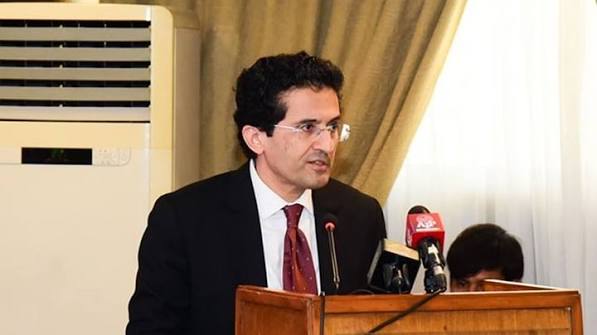
    Federal Minister Mohsin Naqvi has called for sweeping structural reforms, warning that Pakistan cannot overcome its long-standing economic and governance challenges without fundamental changes to the country’s political and administrative systems. Speaking at the First Pakistan Investment Summit in Islamabad, Naqvi said the existing governance structure has become outdated and is no longer capable of meeting the country’s growing economic needs. He cautioned that without meaningful reforms, Pakistan could still be facing the same problems a decade from now. Addressing business leaders and investors, the minister said responsibility for the current state of affairs does not rest solely with politicians. He argued that the business community also plays a significant role in sustaining the existing system by financing political campaigns. Naqvi urged business leaders to stop funding political parties during elections and instead push for greater transparency, accountability and institutional reforms. He said reducing financial dependence on wealthy donors could help strengthen democratic institutions and improve governance. The minister also stressed the need to reduce Pakistan’s reliance on foreign loans. He said the country must focus on generating domestic resources, expanding investment and building a stronger economic foundation through long-term planning. Calling for national unity, Naqvi urged political parties to set aside differences and work together on a comprehensive reform agenda. He said lasting economic stability can only be achieved through collective decision-making and institutional improvements. Other speakers at the summit also highlighted the need for major administrative reforms. They argued that changes in governance structures, including decentralisation and stronger regional administration, could improve service delivery and reduce governance challenges. Business leader S.M. Tanvir said structural weaknesses continue to slow economic progress and called for fresh leadership and institutional reforms to strengthen the country’s administrative framework. Participants also expressed concern over Pakistan’s social and economic indicators. They noted that a large segment of the population continues to live below the poverty line, while unemployment remains a major challenge, particularly among young people. Several speakers said temporary welfare measures alone cannot address the country’s long-term economic issues. They called for policies that create sustainable employment opportunities, promote merit-based recruitment and equip young people with the skills needed to participate in the economy

  • | |

    PM Shehbaz orders expansion of digital services fo…

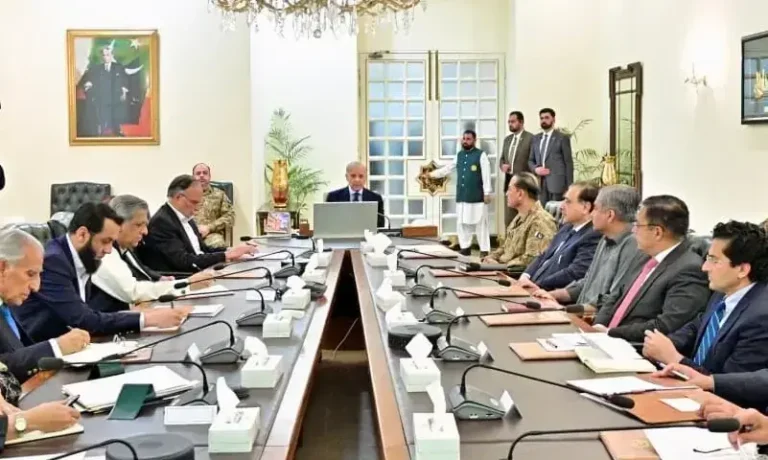
    Prime Minister Shehbaz Sharif has directed authorities to expand digital consular services for overseas Pakistanis, improve facilities at Pakistani missions abroad, simplify the complaints system and speed up the digitization of document attestation and official transactions. According to a statement from the Prime Minister’s Office, the directives came during a meeting chaired by the prime minister in which officials from the Ministry of Foreign Affairs, Pakistani ambassadors serving in various countries, and senior representatives from the Ministry of Interior, the Federal Investigation Agency, the Ministry of Information Technology and other relevant departments briefed him on ongoing reform efforts. Shehbaz said overseas Pakistanis represent a valuable asset for the country and that providing them with every possible facility remains a top government priority. Officials told the meeting that a QR code system has already been rolled out to simplify procedures for power of attorney, property transactions and document attestation for Pakistanis living abroad. The prime minister welcomed the initiative and directed authorities to prominently display the QR codes at Pakistani embassies and missions worldwide to improve access to the digital complaints registration system. Shehbaz also instructed the Ministry of Foreign Affairs to launch a dedicated awareness campaign encouraging overseas Pakistanis to use the QR code based system when filing complaints. The meeting was told that the ministry has recently introduced an evening shift at its Islamabad office to make services more accessible to citizens, and that document attestation services have also been launched at the Asaan Khidmat Centre in Islamabad. Officials further reported that the ministry has introduced courier based attestation services and linked its verification system with databases maintained by the Higher Education Commission, the Inter Boards Coordination Commission, the National Database and Registration Authority and the National Police Bureau, a step that has significantly cut processing times. The meeting also heard that the apostille system has reduced document attestation to a single step process. Officials said work is now underway to fully digitize the system, with the National Information Technology Board developing a mobile application that would allow digital verification of documents including birth and death certificates, marriage registration certificates and family registration certificates, among other official records. Deputy Prime Minister and Foreign Minister Ishaq Dar attended the meeting alongside federal ministers Ahsan Iqbal Cheema, Attaullah Tarar, Chaudhry Salik Hussain and Shaza Fatima Khawaja, Minister of State Awn Chaudhry, Special Assistant to the Prime Minister Tariq Bajwa and other senior officials. The push to digitize consular services reflects a broader effort by the government to modernize public sector delivery and reduce bureaucratic delays, an initiative that has gained momentum in recent years as authorities look to integrate various state databases and cut down on the paperwork burden faced by citizens both at home and abroad.

  • | |

    Petroleum minister defends daily fuel pricing mech…

    Petroleum Minister Ali Pervaiz Malik defended the government’s new daily fuel pricing system on Thursday, telling lawmakers it has ended a practice under the previous mechanism in which oil companies restricted petrol supplies ahead of expected price revisions. The federal government announced on July 17 that petroleum product prices would now be reviewed and notified daily rather than weekly, a shift introduced as renewed tensions between the United States and Iran continue to unsettle global oil markets and raise concerns about fuel supply security. The daily system followed an earlier move from fortnightly to weekly price revisions that had been introduced during the first phase of the US Iran conflict. The change has faced pushback from transporters, businesses and opposition lawmakers, who argue that frequent price adjustments create uncertainty, push up transport and freight costs, and make it harder for businesses and households to plan their spending. Petrol pump owners had threatened a nationwide strike over the issue before suspending their protest after receiving government assurances that their concerns would be addressed. Speaking at a meeting of the National Assembly Standing Committee on Petroleum, chaired by Umar Farooq, Malik said petrol and diesel prices still rely on a seven day rolling average of international market prices, even though the pricing is now updated daily instead of fortnightly. He said the government has delegated pricing authority to the Oil and Gas Regulatory Authority, which coordinates with stakeholders before finalizing prices, and noted that the pricing methodology and benchmark figures are published on the regulator’s website. He added that Prime Minister Shehbaz Sharif had instructed the regulator to also publish the formula in Urdu to improve transparency. Malik explained that international benchmark prices are drawn from Platts, with government taxes and oil company margins added afterward to determine domestic retail prices. He said the switch to daily pricing corrected a flaw in the earlier weekly system, under which companies could anticipate price movements from an emerging three day average and adjust supply accordingly. Under the new approach, he said, prices are set daily based on the seven day average, removing that predictability. Committee members pushed back sharply on the new mechanism. Senator Saifullah Abro described it as slow poison for consumers, saying the public has no way of knowing what today’s price is, let alone tomorrow’s. He questioned recent price increases, pointing out that international crude prices rose from 76 dollars a barrel on July 11 to 82 dollars on July 17, and asked how domestic fuel prices had climbed by 30 rupees over the same period. Malik responded that the comparison was misleading since domestic fuel prices track refined petroleum products rather than raw crude oil. The minister also defended the existing tax structure, saying the petroleum levy remains lower than the rate imposed during the height of the conflict period. He said reducing the levy further would be difficult without agreement from the International Monetary Fund, though he suggested an alternative revenue source could eventually make a reduction feasible. Ogra officials also addressed the committee in support of the new system. Acting Chairman Nabeel Ahmed Awan said daily prices remain based on the seven day average, meaning that both price declines and increases in the global market are passed on to consumers gradually over a week. He said the new mechanism removes opportunities for short term profiteering by preventing traders from creating false market impressions to turn a profit. Officials also told the committee that customs duty on petrol currently stands at 18.11 rupees per litre. The session grew tense at points, with committee members criticizing Ogra for failing to circulate a working paper ahead of the meeting. When the acting chairman asked what a working paper was, Abro rebuked him sharply, questioning his familiarity with basic regulatory procedure. Malik also told the committee that the process to appoint a permanent Ogra chairman had begun on schedule, but that interviews failed to produce a suitable candidate, prompting officials to restart the search. The government had reshuffled Ogra’s leadership in April, replacing then acting chairman Shahzad Iqbal with Nabeel Ahmed Awan, a senior Pakistan Administrative Service officer and secretary of the Establishment Division, who was appointed to a three month term as the search for a permanent chairman continues.