
تازہ ترین

  • | |

    Islamabad Court rules in favor of Ahsan Iqbal in d…

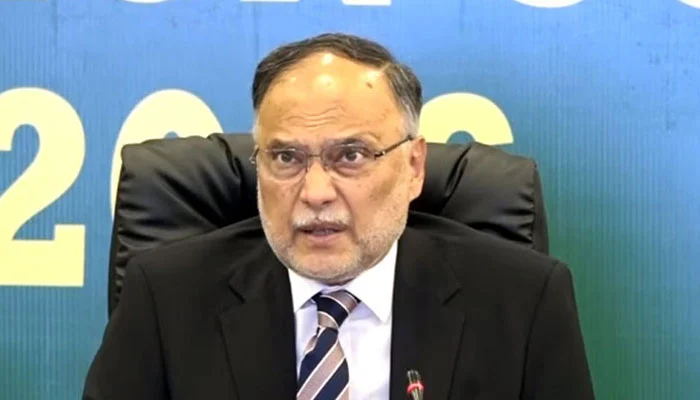
    A district and sessions court in Islamabad has ruled in favor of Federal Minister Ahsan Iqbal in a long-running defamation lawsuit, ordering former federal minister Murad Saeed to pay Rs2.5 million in damages for making corruption allegations that the court found to be unsubstantiated. The judgment was delivered by Additional Sessions Judge Hakim Khan, who concluded that the statements made by Murad Saeed had harmed Ahsan Iqbal’s reputation and amounted to defamation under the law. According to the court’s ruling, Murad Saeed failed to prove his public allegations that Ahsan Iqbal had been involved in corruption worth Rs70 billion. The court held that the accusations, which included claims of corruption, misuse of authority, and receiving illegal commissions, were not supported by evidence and therefore constituted defamatory statements. The case originated from remarks made by Murad Saeed in 2019, when he accused Ahsan Iqbal of financial irregularities in connection with the Multan–Sukkur Motorway Project, one of Pakistan’s major infrastructure developments. Ahsan Iqbal strongly denied the allegations and subsequently filed a defamation suit seeking Rs10 billion in damages. In its written judgment, the court acknowledged that Ahsan Iqbal had claimed Rs10 billion as compensation but determined that the amount sought was excessive in light of the evidence presented during the proceedings. Instead, the court awarded Rs2.5 million in damages, describing the sum as appropriate compensation for the reputational harm caused by the false allegations. The judgment stated that Murad Saeed’s controversial statements had damaged Ahsan Iqbal’s public image, honor, and dignity. It further observed that the allegations created a negative perception of the federal minister among members of the public, affecting his credibility and standing. According to the court, the accusations amounted to a direct attack on Ahsan Iqbal’s integrity, character, and professional reputation. Since the allegations involved serious claims of corruption and abuse of public office, the court found that they had the potential to undermine public confidence in him without any factual basis. The ruling also noted that Murad Saeed neither appeared before the court to defend his statements nor presented any evidence to substantiate the corruption allegations. His failure to support the claims played a significant role in the court’s decision to rule in favor of Ahsan Iqbal. The verdict reinforces the legal principle that individuals making public allegations of corruption must be prepared to provide credible evidence to support their claims. In the absence of such proof, the court held that the statements amounted to defamation and entitled the affected party to compensation. The decision marks the conclusion of a legal dispute that has remained pending since 2019 and highlights the growing use of defamation proceedings in Pakistan to address reputational damage arising from political statements. While the court reduced the amount of compensation sought by Ahsan Iqbal, it nevertheless concluded that Murad Saeed’s allegations were unfounded and had caused measurable harm to the minister’s reputation. As a result, the former federal minister has been directed to pay Rs2.5 million in damages in accordance with the court’s judgment.

  • | |

    HSA controversy: representation before president a…

    Islamabad: A representation submitted before the President of Pakistan has requested an early decision in a workplace harassment case involving Dr. Shahzad Ali Khan and Dr. Ayesha Khan, after the applicant claimed the matter remained pending despite the completion of hearings. The application was addressed to the President of the Islamic Republic of Pakistan through the Secretary to the President, seeking directions for an early decision on Representation No. 18/WO/2026 pending before the Consultant to the President. According to the application, the Federal Ombudsperson for Protection Against Harassment of Women at Workplace (FOSPAH) issued an order on 13 February 2026, dismissing Dr. Shahzad Ali Khan’s complaint and ordering his removal from service. The applicant later filed a representation under Section 9 of the Protection Against Harassment of Women at Workplace Act, 2010. The representation states that both parties appeared before the Consultant to the President and presented their arguments. After hearing the matter, the Consultant reserved the decision on 12 May 2026, but according to the application, the final decision has not yet been announced. The applicant argued that unnecessary delay in deciding the representation is increasing difficulties and hardship, requesting that the matter be decided without further delay according to legal principles of timely justice. The case relates to proceedings under the workplace harassment law involving Dr. Shahzad Ali Khan and Dr. Ayesha Khan. The President Secretariat had earlier issued hearing notices regarding the representation against the FOSPAH order dated 13 February 2026 in Complaint No. FOH HQR H/0341/2025. The President Secretariat scheduled hearings before Mr. Justice (Retired) Irfan Qadir, Consultant Legal Affairs to the President, first on 2 April 2026 and later refixed the matter for 12 May 2026. The notices stated that the matter would be decided on the basis of available record. The dispute has attracted attention because the representation challenges a previous order passed by FOSPAH, while the final decision on the pending matter remains awaited. The available record shows that filing a representation does not itself establish innocence or final relief. The matter remains subject to examination under the applicable legal process, and the final outcome depends on the decision of the competent authority.

  • |

    US-backed Venezuela talks set to begin as Machado stays out of negotiations

    Negotiations aimed at reshaping Venezuela’s political system are expected to begin in the coming days with support from the United States, but the country’s most influential opposition leader, Maria Corina Machado, will not take part in the discussions. The talks are intended to lay the foundation for future democratic elections and political reforms following major changes in the country’s leadership. The dialogue will bring together representatives of Venezuela’s interim government and a faction of the opposition. Jorge Rodriguez, president of the National Assembly and an experienced negotiator, will head the government delegation. The opposition team will be led by Dinorah Figuera, who heads the opposition controlled National Assembly elected in 2015. That legislature continues to be recognised by the United States as Venezuela’s last democratically elected parliament. Sources familiar with the process said Washington encouraged Figuera to lead the opposition delegation because of her position within the 2015 assembly. The United States has backed her group’s efforts to reform Venezuela’s electoral authority and judicial system in preparation for future elections that it says should be free and transparent. Machado’s absence has attracted significant attention because she remains the country’s most popular opposition figure. The Nobel Peace Prize winner has been living mostly outside Venezuela after spending months in hiding following the disputed 2024 presidential election. She recently announced plans to return to Venezuela to assist communities affected by the devastating earthquakes that struck the country in June, despite concerns expressed by some US officials about the timing of her return. Reports suggesting that the Trump administration discouraged Machado from returning have been rejected by US President Donald Trump. Since the removal of former president Nicolas Maduro earlier this year, Machado has largely remained outside the political process promoted by Washington. US officials have argued that broader political support is needed to lead the country’s transition. According to people familiar with the negotiations, Machado was either informed about the talks shortly before they were announced or was never invited to join the delegation because she is not a member of the 2015 National Assembly. Despite her exclusion, she has said she will not obstruct any effort that genuinely advances democracy. Machado has stated that she will judge the success of the negotiations by whether they restore democratic institutions, release political prisoners and establish a clear path toward credible elections. Political analysts believe the negotiators face pressure to deliver meaningful progress quickly. They say any agreement must convince Venezuelans that the process is capable of producing real political change while addressing concerns over Machado’s absence from the discussions. The interim government is expected to use the negotiations to seek the removal of remaining US sanctions. Washington has previously eased restrictions on Venezuela’s oil, gas and gold industries after agreements aimed at improving electoral conditions. Officials hope further progress could lead to additional sanctions relief as part of a broader political settlement. Although the talks were initially scheduled to begin on August 1, sources close to both the government and the opposition said they are now expected to start on Sunday or Monday after the opposition delegation arrives in Caracas. Previous negotiations between the opposition and the former Maduro administration produced limited results. An agreement before the 2024 election promised fair competition and full opposition participation, but Machado was later barred from running. International observers and the United States questioned the election outcome, arguing that opposition candidates received the majority of votes while state institutions declared Maduro the winner. Some experts believe excluding Machado’s political movement leaves an important section of Venezuelan society without direct representation. However, they also note that divisions within the opposition have existed for years, making further splits unlikely. US Secretary of State Marco Rubio has said the United States supports an inclusive political process and believes Machado represents a significant part of Venezuelan society. He stressed that Washington’s role is to facilitate negotiations rather than control them. Opposition figures also say US involvement provides reassurance because many political leaders have previously faced arrests and legal action that they describe as politically motivated. They believe continued international support will be essential if the negotiations are to produce lasting democratic reforms.

  • |

    Sri Lankan court sentences two former security chiefs to death over Easter bombings

    A special court in Sri Lanka has sentenced two former senior security officials to death after finding them guilty of failing to prevent the devastating Easter Sunday bombings that killed 279 people in 2019. The ruling marks one of the country’s most significant legal decisions related to the attacks, which also claimed the lives of 45 foreign nationals and injured more than 500 others. The three judge bench ruled by majority that former police chief Pujith Jayasundara and former defence ministry secretary Hemasiri Fernando neglected their responsibilities despite receiving advance warnings about the possibility of extremist attacks. The court concluded that their failure to act contributed directly to one of the deadliest terrorist incidents in Sri Lanka’s history. Jayasundara, 66, and Fernando, 76, were taken into judicial custody following the verdict. Although both have been sentenced to death, they have the right to challenge the ruling before Sri Lanka’s Supreme Court. They will remain in custody until they are granted bail during the appeals process. Despite the sentence, executions are unlikely to take place. Sri Lanka has not carried out a death sentence since 1976 and has maintained an unofficial moratorium on capital punishment for decades. Government figures presented to parliament earlier this year showed that around 800 prisoners are currently on death row, with most death sentences later reduced to life imprisonment. Friday’s ruling overturned an earlier decision that had cleared both men of criminal responsibility. In 2022, a lower court acquitted the former officials, but prosecutors appealed the verdict, leading to a fresh review of the case before the special fast track court. During the trial, prosecutors presented evidence showing that Indian intelligence agencies had warned Sri Lankan authorities on April 4, 2019 about the possibility of suicide attacks by extremist groups. The warning came more than two weeks before the coordinated bombings on April 21, yet the court found that adequate preventive measures were never taken. The Easter Sunday attacks targeted three churches during religious services and three luxury hotels across the country. The coordinated explosions shocked Sri Lanka and drew international condemnation, becoming one of the country’s worst terrorist attacks since the end of its civil war. Both Jayasundara and Fernando were arrested later in 2019 and spent four months in custody before being released on bail. In a separate civil case, they were ordered to pay 125 million Sri Lankan rupees in compensation to victims and survivors for failing to fulfil their duties. Prosecutors argued that the negligence of the two senior officials amounted to an extremely serious offence because they ignored credible intelligence that could have prevented the attacks. They initially sought murder convictions, claiming their failure to respond to the warnings resulted in hundreds of avoidable deaths. The court ultimately convicted both men of negligence leading to the deaths of 279 people. During earlier parliamentary investigations, Jayasundara and Fernando testified that then President Maithripala Sirisena had not followed established national security procedures before the attacks. They claimed weaknesses in communication and decision making at the highest levels of government contributed to the failure to respond effectively to the intelligence warnings. The verdict is expected to renew debate over accountability for the Easter Sunday bombings and the responsibilities of senior officials in protecting national security. Families of the victims have repeatedly demanded justice and greater transparency over the events leading up to the attacks, while the case remains one of the most closely watched legal proceedings in Sri Lanka’s recent history.

  • |

    US drops Reflecting Pool vandalism case after admi…

    US prosecutors have dropped vandalism charges against former Olympic canoeist David Hearn after concluding that damage to the Lincoln Memorial Reflecting Pool was caused by construction problems rather than deliberate acts. The decision marks a major reversal by the Trump administration, which had earlier blamed the damage on vandals and publicly accused several people of harming the landmark. Court documents filed on Friday stated that newly reviewed evidence showed the damage was most likely caused by a rushed and poorly executed installation carried out by contractors working on the renovation project. Prosecutors said the work was completed under pressure to finish before celebrations marking the United States’ 250th Independence anniversary. They also acknowledged they were not initially given complete information by the Department of the Interior about the condition of the pool. Hearn had been arrested last month after authorities accused him of damaging the pool by pulling away part of its newly applied blue coating. He had consistently denied the allegation, saying he only touched the surface while stopping near the memorial after a bicycle ride. If convicted, he could have faced up to ten years in prison. Following the dismissal of the case, Hearn’s lawyers criticised the government’s handling of the investigation. They said the charges should never have been filed and argued that their client had been wrongly accused despite having done nothing illegal. They also called on the administration to apologise for what they described as an abuse of government authority. Hearn declined to say whether he would pursue legal action over the case. The Reflecting Pool underwent a major restoration project earlier this year as part of President Donald Trump’s campaign to improve the appearance of Washington ahead of the national anniversary celebrations. The renovation included resealing and repainting the pool at a reported cost of around 16 million dollars. However, problems appeared soon after the work was completed as algae returned and sections of the new coating began peeling away. According to court records, Hearn was not the only person accused. At least three others were charged with vandalism and several more received citations after interacting with the pool. It is not yet clear whether all of those cases have also been dismissed. The court filing placed responsibility on the contractor and criticised officials from the Department of the Interior for failing to provide prosecutors with important information during the early stages of the investigation. Prosecutors said they were only made aware of the installation problems after reviewing additional documents. They acknowledged that if the department had shared the full details from the beginning, the case would never have been presented to a grand jury. The renovation project itself has also drawn scrutiny. Reports indicate the original budget was expected to be under two million dollars before costs rose significantly. The contract was reportedly awarded without the usual competitive bidding process, adding to criticism over how the project was managed. President Trump had previously described the damage as the work of “sick” and “deranged” vandals, claiming someone had cut a long gash into the surface of the pool. Prosecutors also initially argued that Hearn had intentionally damaged the memorial. Friday’s court filing directly contradicted those earlier claims, stating that the evidence now points to construction failures rather than criminal vandalism. The Reflecting Pool has since been drained for the second time in three months as repair work continues. The incident has raised fresh questions about oversight of the expensive renovation project and the government’s decision to pursue criminal charges before fully establishing the cause of the damage.

  • |

    Trump jokes about ICC as US steps up campaign against the court

    US President Donald Trump joked on Friday that he has not become a target of the International Criminal Court, making the remarks as his administration continues a diplomatic campaign against the Hague based institution and encourages member states to withdraw from it. Speaking during a cabinet meeting at the Camp David presidential retreat, Trump interrupted Secretary of State Marco Rubio while he was explaining the administration’s opposition to the court. Trump joked that there was no indication the ICC was pursuing him but added that it “could happen,” prompting laughter from those in attendance. The president then said Rubio was not trying to defend him but was instead supporting Israeli Prime Minister Benjamin Netanyahu, who is the subject of an arrest warrant issued by the ICC in 2024. Trump referred to the Israeli leader by his commonly used nickname, Bibi. The comments came as the United States continues to increase pressure on the International Criminal Court. In July, Washington launched a broad diplomatic effort aimed at weakening support for the institution. The campaign includes plans for additional sanctions against the court and calls on member countries to leave the organisation. Relations between the Trump administration and the ICC have remained tense. The United States has already imposed sanctions on several judges linked to the court, accusing it of overstepping its authority and threatening American interests. The International Criminal Court was established in 2002 to investigate and prosecute individuals accused of genocide, war crimes, crimes against humanity and other serious international offences when national legal systems are unwilling or unable to take action. Rubio repeated the administration’s criticism of the court during Friday’s meeting, describing it as an illegitimate international organisation. He said the United States had previously attempted to encourage reforms but claimed those efforts had failed. According to Rubio, the administration has now shifted its focus to reducing the court’s influence and encouraging more countries to reconsider their membership. He also said that five countries had either withdrawn from the ICC or announced plans to do so, adding that Washington hopes additional nations will follow the same path. Chad and Venezuela have recently declared their intention to leave the court. Neither the United States nor Israel is a member of the ICC. Both countries are not parties to the Rome Statute, the international treaty that created the court. Despite that, the ICC has continued to investigate cases involving several global conflicts, leading to repeated disagreements with governments that reject its jurisdiction. The latest remarks from Trump and Rubio underline the administration’s determination to challenge the authority of the International Criminal Court and strengthen its campaign against an institution it says exceeds its legal mandate.

  • |

    Israeli strikes kill two in Gaza as hospital medicine warehouses are destroyed

    Two Palestinians were killed in an Israeli air strike in Gaza on Saturday, while separate strikes destroyed warehouses storing medical supplies for Al Aqsa Martyrs Hospital, raising new concerns about access to healthcare in the territory as uncertainty continues over a possible agreement between Israel and Hamas. According to Palestinian health officials, the two people were killed in the Sheikh Radwan area of Gaza City. The Israeli military said the strike targeted Hamas fighters but did not provide further details about the operation or identify those killed. In another strike earlier the same day, two warehouses near Al Aqsa Martyrs Hospital in Deir al Balah were destroyed. Gaza’s Health Ministry said the buildings contained essential medicines and medical equipment used by the hospital to treat patients, including those receiving dialysis for kidney failure. Other supplies such as wound care materials and gauze were also stored there. The attack also damaged two additional medical storage facilities and the hospital’s outpatient clinic. Hospital officials said no injuries were reported among staff or patients during the incident, but they warned that the destruction of medical supplies would make it more difficult to provide treatment to those in need. Dr Khalil al Daqran, who works at the hospital, condemned the strike and said the destroyed warehouse contained critical medical resources needed for daily operations. He said the loss of the supplies would place further strain on healthcare services already struggling under difficult conditions. Witnesses said Israeli forces issued an evacuation warning before carrying out the strike. The Israeli military did not immediately comment on the attack targeting the warehouse complex. Under international humanitarian law, hospitals and civilian medical facilities are protected during armed conflict unless they are being used for military purposes. Israel has repeatedly accused Hamas and other armed groups of operating from within civilian infrastructure, including hospitals and surrounding buildings, an allegation Hamas has denied. Fatima Sharab, a displaced Palestinian staying in a nearby camp, said many families had chosen to shelter close to the hospital because they expected easier access to medical care if needed. She said the strike caused widespread destruction in the area and left many displaced people without shelter. The latest attacks come despite a ceasefire agreement reached last year through US mediation. Fighting and Israeli military operations have continued across Gaza in the months since. Palestinian health authorities say more than 1,200 people have been killed during that period, with many of the victims reported to be civilians, including women and children. Hamas has not regularly disclosed the number of its fighters killed. Attention is now focused on a possible breakthrough in negotiations to end the conflict. US President Donald Trump recently announced that Hamas had agreed to disarm as part of a broader peace initiative aimed at ending the war. However, Israeli Prime Minister Benjamin Netanyahu has not publicly confirmed whether Israel accepts the reported agreement. Israeli National Security Minister Itamar Ben Gvir has openly opposed the proposal, saying Israel should continue military operations and maintain its campaign against Hamas leaders. Meanwhile, Trump’s Board of Peace has released a roadmap outlining the final steps of its proposed plan, stating that Israel would halt military operations as part of the agreement if all parties move forward with its implementation.

  • |

    China holds military drills near disputed Scarborough Shoal

    China’s military carried out joint naval and air exercises around the disputed Scarborough Shoal in the South China Sea on Saturday, saying the operations were intended to strengthen combat readiness and protect what it considers its territorial and maritime rights. The People’s Liberation Army Southern Theater Command said the drills took place in the waters and airspace surrounding the shoal, which China refers to as Huangyan Dao. The area is also claimed by the Philippines, where it is known as Bajo de Masinloc, and has long been one of the region’s most contested maritime zones. In a statement, the Chinese military said the exercises were a necessary response to actions by what it described as “certain countries” that it claimed were disrupting peace and stability in the South China Sea. The statement did not identify any country by name, but the Scarborough Shoal has remained at the centre of ongoing tensions between China and the Philippines. The Philippine embassy in Beijing did not immediately comment on the military exercises or respond to requests for a statement. According to the Chinese military, the operation was designed to test the coordination and readiness of naval and air forces while improving their ability to respond to security challenges in the region. Officials said the exercises would help strengthen China’s capability to defend its territorial claims and safeguard its maritime interests. On the same day, Chinese authorities also announced new rules governing the Huangyan Island National Nature Reserve, which was established in September 2025. State news agency Xinhua reported that the updated policy bans unauthorised fishing, mining, coral collection, giant clam harvesting and other activities considered harmful to the protected marine environment. Chinese officials said anyone found violating the new regulations would face legal action under the country’s laws. The measures are intended to strengthen environmental protection while reinforcing China’s administrative control over the disputed area. The Scarborough Shoal has been a source of repeated diplomatic and maritime disputes for years. Both China and the Philippines claim sovereignty over the area, and encounters between their coast guards and fishing vessels have frequently heightened tensions in the South China Sea. The latest military exercises are expected to draw close attention from neighbouring countries and regional observers, as competing territorial claims continue to shape security concerns in one of the world’s busiest and most strategically important waterways.

  • |

    India expects weaker August monsoon raising concerns for crops

    India is likely to receive below average rainfall in August after recording near normal monsoon rains in July, according to the country’s weather department. The forecast has raised concerns about crop production and economic activity because millions of farmers depend on seasonal rainfall for agriculture. The India Meteorological Department said rainfall in August is expected to remain below 94 percent of the long period average. Director General Mrutyunjay Mohapatra said the combined rainfall for August and September, which make up the second half of the monsoon season, is also expected to stay below the long term average. The annual monsoon is vital for India’s economy, providing nearly 70 percent of the country’s yearly rainfall. It replenishes reservoirs, rivers and groundwater supplies while supporting agriculture in a country where almost half of all farmland relies entirely on rain instead of irrigation. Farming remains the primary source of income for about half of India’s population. Weather officials said moderate El Nino conditions are currently present in the Pacific Ocean and are expected to strengthen in the coming weeks. The phenomenon could become strong by September, increasing the likelihood of reduced rainfall across parts of India and other areas of Southeast Asia. El Nino is a recurring climate pattern caused by warmer than normal sea surface temperatures in the central and eastern Pacific Ocean. It often disrupts weather systems around the world and has historically been linked to weaker monsoon seasons in India. Previous El Nino years have brought drought conditions that damaged crops, reduced agricultural output and forced the government to restrict exports of certain food grains. Despite the weaker outlook for August, rainfall improved significantly during July. India received one percent more rain than the long period average during the month, helping reduce the overall seasonal rainfall deficit. Since the monsoon began on June 1, the deficit has narrowed to 12.6 percent after reaching 35.4 percent at the end of June. The stronger rainfall in July also helped farmers recover from delays in planting caused by a slow start to the season. Agricultural experts say the improved weather allowed growers to speed up sowing in many regions after an uncertain beginning. However, analysts warn that below normal rainfall during August could still affect the development of crops that have recently been planted. Adequate rainfall during this stage of the growing season is considered essential for healthy crop growth and stable harvests. Government data shows that summer crop planting was nearly 25 percent lower than the previous year at the end of June. Since then, the situation has improved considerably, with the shortfall shrinking to less than five percent as better rainfall encouraged farmers to increase sowing. The latest weather forecast has increased attention on the remainder of the monsoon season, as rainfall over the next two months will play a key role in determining agricultural output, food supplies and overall economic performance in one of the world’s largest farming economies.

  • |

    Strong earthquake shakes Naples area causing outages and transport disruption

    A magnitude 4.7 earthquake struck the Campi Flegrei area near the southern Italian city of Naples on Friday evening, causing power outages, disrupting public transport and damaging several buildings. Authorities said there were no immediate reports of serious injuries, but the tremor prompted widespread concern among residents. According to Italy’s National Institute of Geophysics and Volcanology, the earthquake occurred at 7.46 pm local time. The epicentre was located in the Campi Flegrei volcanic area west of Naples at a depth of around three kilometres, making the shaking strongly felt across nearby communities. The Italian fire service reported minor structural damage to buildings in and around Naples. Emergency crews carried out inspections following the earthquake but said they had not received urgent requests to rescue trapped residents or respond to major incidents. As a safety measure, local authorities temporarily suspended rail and metro services while infrastructure was inspected for possible damage. Power outages were also reported in several areas as utility crews worked to restore electricity. Italian media described the earthquake as one of the strongest recorded in the Campi Flegrei region in recent years. Many residents rushed outdoors after feeling the powerful tremors, with videos shared on social media showing people gathering in open spaces while officials assessed the situation. Campi Flegrei is a large volcanic caldera that covers much of western Naples and is home to hundreds of thousands of people. The area has experienced increasing seismic activity over the past few years, leading the Italian government to strengthen monitoring and emergency preparedness. Although smaller earthquakes occur regularly in the region, stronger tremors have raised fears of a repeat of the seismic crisis that affected Campi Flegrei in the early 1980s. During that period, continuous earthquakes forced thousands of residents to leave their homes and caused widespread disruption across the area. Italy is one of Europe’s most earthquake prone countries because of its location along major geological fault lines. The country has experienced several devastating earthquakes over the past decades, many of which caused heavy loss of life and widespread destruction. One of the most destructive disasters in recent history occurred in central Italy in 2016, when a series of powerful earthquakes struck parts of Lazio, Umbria and the Marche regions. Around 300 people were killed and many towns suffered severe damage. The deadliest earthquake in modern Italian history occurred in November 1980, when a magnitude 6.9 quake struck the Irpinia region in southern Italy. The disaster claimed about 2,700 lives and destroyed or severely damaged hundreds of towns and villages. Officials continue to monitor seismic activity around Campi Flegrei following Friday’s earthquake, while inspections of buildings and transport infrastructure remain underway to ensure public safety.