تازہ ترین

  • | |

    Karachi receives light rain as PMD forecasts more …

      Parts of Karachi experienced light rain and drizzle on Saturday afternoon, bringing a welcome drop in temperatures and creating pleasant weather across the city. The Pakistan Meteorological Department (PMD) has predicted that this spell of wet weather will continue over the next two days, with additional rain and thunderstorms expected in different parts of the metropolis. Light showers and drizzle were recorded in several neighborhoods, including Surjani Town, Gulshan-e-Maymar, and various suburban areas. Residents enjoyed cooler conditions after the rainfall, while cloudy skies covered much of the city. According to the PMD, Karachi is expected to remain mostly cloudy, with chances of light to moderate rainfall accompanied by thunderstorms during the coming 48 hours. Earlier forecasts had also warned of windstorms and thunderstorm activity, particularly during the afternoon and evening. Meteorological officials explained that the weather pattern is being influenced by a low-pressure system that had previously developed into a depression but has now weakened into a low-pressure area. The system is currently located over southeastern Rajasthan in India. Although it has weakened, it continues to draw moisture-laden monsoon winds from both the Arabian Sea and the Bay of Bengal, resulting in widespread rainfall across different regions. At the same time, a separate westerly weather system is affecting northern parts of the country, further contributing to unstable weather conditions. The PMD warned that these combined weather systems are likely to trigger thunderstorms, gusty winds, and rainfall in several districts of Sindh. Authorities also cautioned that heavy downpours in some areas could lead to urban flooding, especially in low-lying localities where drainage systems may become overwhelmed. The department stated that rain accompanied by strong winds, thunderstorms, and windstorms was expected over the next three to six hours in several districts, including Tharparkar, Mithi, Umerkot, Mirpurkhas, Badin, Thatta, Sanghar, Tando Muhammad Khan, Tando Allahyar, Hyderabad, Matiari, Jamshoro, Shaheed Benazirabad, Ghotki, Khairpur, Jacobabad, Dadu, Larkana, Sukkur, and nearby areas. Residents in these regions have been advised to remain cautious and stay updated with official weather advisories. In response to the forecast, the Sindh government has placed all relevant departments on high alert to ensure preparedness for any weather-related emergencies. Adviser to the Chief Minister on Rehabilitation, Gyan Chand Essrani, directed the Provincial Disaster Management Authority (PDMA), Rescue 1122 teams, and mobile health units to maintain round-the-clock vigilance. He instructed all emergency response agencies to continuously monitor the situation and respond promptly to any incidents caused by heavy rainfall or flooding. To strengthen emergency preparedness, PDMA Sindh has deployed 50 specially equipped response vehicles fitted with dewatering pumps across the province. These vehicles are intended to quickly remove accumulated rainwater from flooded roads and residential areas. Of the total fleet, 10 vehicles have been stationed in Karachi, while 25 have been allocated to Hyderabad and Mirpurkhas divisions. The remaining 15 vehicles have been deployed in Sukkur and Larkana divisions to support emergency operations. Authorities have urged citizens to exercise caution during heavy rain, avoid unnecessary travel, and cooperate with emergency services to ensure public safety throughout the ongoing monsoon spell.

  • | | |

    One missed bill enough for Lesco to pull the plug?…

    The month of July brings heat and humidity to Lahore. It also brings frequent power cuts, mainly from weather related issues. When it rains, and the atmosphere is muggy, power breakdown occurs and people expect that power will return soon after it goes. But there is a different kind of fear. This fear grows when a house sits dark while every other house on the street still has light. This means the power meter has been disconnected. Recent reports say that field staff of the Lahore Electric Supply Company (LESCO), have been harassing consumers. These reports say that officials are disconnecting power for people who have missed just one month of bill payment. This goes against the normal rule. Under the normal rule, a meter can only be disconnected after two months of non-payment. LESCO spokesperson Rabia Qadir has denied these reports. She said the company has not received any complaint about this issue. She said that rules made by the National Electric Power Regulatory Authority (Nepra), protect the rights and safety of consumers. Under these rules, a meter cannot be disconnected simply because one month of bill payment was missed. She also said that Lesco has not received any formal complaint against any sub-divisional officer, executive engineer, or lineman of any of its circle regarding such incidents. However, she said that some linemen may try to scare or pressure consumers. These linemen may threaten to disconnect a meter if the consumer does not pay the outstanding bill right away. She said this could happen in some cases and this was not the company’s policy. But she stressed that Lesco has a consumer complaint cell. All complaints are recorded there. She said that according to these records, no such complaint has come in. The situation on the ground appears more complicated. This reporter visited the consumer cell at the office of the Lesco chief officer. Several consumers were present there. Their complaints were about different issues. Some wanted correction of industrial bills. Others reported broken meters. When asked about the reports of meters being cut for a single month of default, one officer gave an important detail. They said this practice usually happens in June or July. They said the ministry gives instructions during these months to speed up bill recovery. The goal is to reduce financial losses. Staff at the office suggested that a proper response should come from Lesco Chief Executive Officer Ramzan Butt or his public relations office. However, the public relations office said that Ramzan Butt was in Islamabad for a meeting at the time. This problem is not limited to LESCO areas. Similar reports have come from areas covered by the Multan Electric Power Company. In Muzaffargarh, consumers who missed one month of payment received strict warnings from field staff. These staff members told consumers to avoid another default. If they defaulted again, they were told, their meters would be disconnected. According to the rules, a power connection cannot be cut through meter removal unless bills for both the current and the previous month remain unpaid. Yet for several months now, Lesco teams have continued cutting connections even when only one month of payment was missing. Other than power severe threats, the other main issue people face is take notice of a major problem in the new electricity bill format. The Pakistan Hosiery Manufacturers and Exporters Association in a letter to the prime minister said the revised bill has removed a lot of information that consumers used to see. He said this makes it hard for people to check their meter readings, units consumed, tariff calculations and other charges on their own. They say the changes seem to have been made without following the proper process set by the National Electric Power Regulatory Authority, known as NEPRA. No formal request for changing the bill format was filed with NEPRA and that consumers were never asked for their objections, nor were they given a chance to take part in a public hearing before the change was made. They say that bills are supposed to show the date when the connection or meter was installed, but this information is now missing. The removal of the meter reading snapshot is a serious problem, because consumers can no longer check if the reading used for their bill matches the actual reading at their home. Also, information about the meter reader, along with the date and time of the reading, has also disappeared. They say that when a meter is changed, the bill should show a snapshot of the final reading from the old meter, but distribution companies are not properly doing this. The new bills carry a QR code instead, but this cannot replace information that should be clearly printed on the bill itself. Many senior citizens, people living in rural areas, and low income households may not have smartphones or the internet access needed to scan a QR code. Economist and corporate lawyer Dr Ikramul Haq commented on this situation. He said that the conduct of power distribution companies is not simply a small technical mistake. He called it as a form of pressure against ordinary citizens. These citizens are already struggling with rising prices, high electricity rates, and falling purchasing power. He said that reports of field teams arriving at homes, treating consumers badly, and threatening immediate disconnection show the real human cost of this careless approach. He added that in some cases, meters were removed without any prior notice being given. Dr said explained that the legal position on this matter is very clear. Under the revised Consumer Service Manual issued by Nepra, electricity cannot be disconnected only because the bill for the current or previous month remains unpaid. A notice of seven days must be given along with the bill for the second month of default. Only after this notice period passes, and the default continues, can disconnection take place. He said that removing a meter involves even more safeguards under the rules. He

  • | |

    Iran issues fresh warnings as regional tensions es…

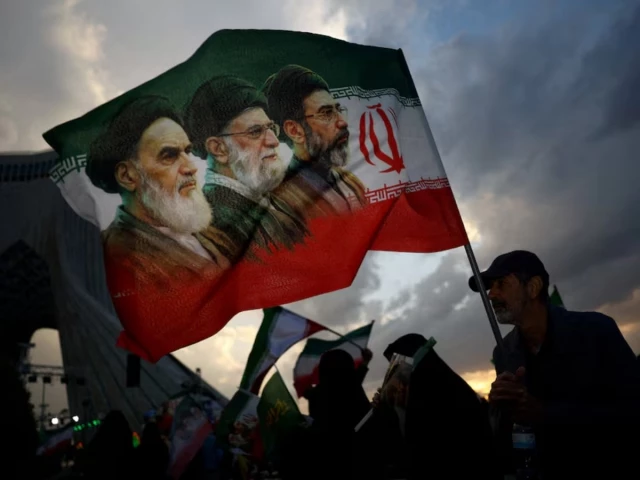
    Tensions across the Middle East intensified on Saturday as senior Iranian military and political officials issued strong warnings to the United States and its regional partners, while Kuwait reported intercepting drones it said were launched from Iran. Major General Abdollahi, commander of Iran’s Khatam al-Anbiya Central Headquarters, accused Washington of deliberately widening the regional conflict. In a statement shared on X and reported by Iranian state media, he alleged that the United States was pursuing a strategy aimed at expanding the war and increasing its influence across the Middle East. According to Abdollahi, the recent confrontation with Iran demonstrated that Washington was prepared to target the interests and resources of Muslim nations to achieve its objectives. He further claimed that the US was relying on the wealth, infrastructure, and strategic assets of regional countries to protect its military presence while reinforcing Israel’s security. The Iranian commander argued that the balance of power in the region had shifted in Iran’s favor, asserting that the United States and Israel failed to achieve their goals during the latest conflict. He also claimed they were now attempting to continue the confrontation through the territory of neighboring Muslim countries. Abdollahi urged regional governments to reconsider their cooperation with Washington, warning that nations acting as a “defensive shield” for the United States could eventually face the consequences of war. Separately, Iranian lawmaker Ebrahim Rezaei, a member of the parliament’s National Security Commission, warned that any future attack on Iran would have devastating consequences for the region. He claimed that such a conflict could reduce regional infrastructure to the “Stone Age” and cautioned against further military action. Meanwhile, Kuwait strongly condemned what it described as Iranian aggression after reporting drone attacks on key facilities. Kuwaiti authorities said their air defense systems detected and destroyed multiple hostile drones that entered the country’s airspace early Saturday. Officials stated that a government installation in northern Kuwait and civilian vehicles on Bubiyan Island sustained material damage from falling debris, although no casualties were reported. Kuwait’s Foreign Ministry described the attacks as a serious violation of the country’s sovereignty and said it reserved the right to take all necessary measures to protect its national security, interests, and critical infrastructure. Iran also warned that continued US maritime pressure could trigger broader consequences. Mohammad Bagher Zolghadr, secretary of Iran’s Supreme National Security Council, said ongoing American actions could ultimately lead to restrictions on the Strait of Hormuz and other strategic waterways, warning that such developments would have significant consequences for global energy markets and the wider economy. At the same time, Iranian Parliament Speaker Mohammad Bagher Ghalibaf declared that Iran had emerged victorious from the recent conflict but stressed that the country must strengthen its long-term stability and national resilience. He emphasized expanding the authority of Iran’s supreme leadership as a key step toward securing the country’s future. Elsewhere, maritime security concerns remained high. The UK Maritime Trade Operations (UKMTO) reported that a commercial tanker was struck by an unidentified projectile off the coast of Oman, damaging its engine room and leaving it temporarily unable to maneuver. Authorities are investigating the incident. In Yemen, the Houthi movement denied reports that it planned to charge commercial vessels for passage through the Bab al-Mandab Strait, insisting that its maritime transit services remain free. However, the group claimed that its blockade had already forced several Saudi oil tankers to reroute around Africa via the Cape of Good Hope, underscoring the continuing disruption to regional shipping routes.

  • | |

    Spain accuses EU allies of ‘selfish’ r…

    Spain has accused several European Union governments of a selfish and unlawful reaction after nearly 60,000 migrants crossed into the Spanish enclave of Ceuta from Morocco, triggering a wave of statements from EU member states calling for tighter border restrictions. Prime Minister Pedro Sanchez, in a letter addressed to European Commission President Ursula von der Leyen, described the response from unnamed member states as selfish, polarizing and unlawful. According to a report by the British broadcaster, Sanchez said Madrid had restored order within 48 hours, returning most of the migrants to Morocco and preventing them from reaching mainland Europe. The diplomatic dispute was triggered largely by Italy’s response, which included a temporary suspension of visa free travel with Spain under the Schengen arrangement, along with pointed criticism accusing Madrid of encouraging human trafficking by granting citizenship to more than 500,000 people who had entered the country irregularly. Italian Foreign Minister Antonio Tajani wrote on social media that he supports closing the Schengen area to Spain and expressed confidence in the actions of Italy’s interior minister, Matteo Piantedosi. He said uncontrolled and irregular immigration represents a threat to national security, and argued that the situation unfolding in Ceuta demonstrates how Spain’s decision to naturalize large numbers of irregular immigrants was fundamentally wrong and only encourages trafficking. Italy was not alone in calling for a tougher stance. Czech Prime Minister Andrej Babis went further, calling for Spain to be suspended immediately from the 29 member Schengen arrangement. Finland and Denmark also voiced support for stricter border controls in response to the crisis. Notably, Ceuta itself lies outside the Schengen zone, meaning the enclave is not directly governed by the same free movement rules at the center of the diplomatic dispute between Madrid and its European partners. The clash highlights long standing tensions within the European Union over how to handle migration pressure at its external borders, an issue that has repeatedly strained relations between member states with differing approaches to asylum policy, border enforcement and integration in recent years.  

  • | |

    Italy and Denmark rally 22 EU states behind push f…

    Italy and Denmark have secured the backing of 22 European Union member states for a joint push toward stronger border security, following a chaotic migrant surge into the Spanish enclave of Ceuta that left at least 19 people dead. Thousands of migrants attempted to reach Ceuta, located on Africa’s northern coast, on Thursday, with many swimming around breakwaters using inflatable devices while others scaled the high border fence separating Morocco from the Spanish territory. Official estimates put the total number of migrants who crossed into Ceuta from Morocco at around 60,000. The scale of the crossing prompted alarm among European leaders, with Italian Prime Minister Giorgia Meloni moving quickly to temporarily suspend Italy’s open border Schengen arrangement with Spain for one month, closing direct air and sea travel from Spain without passport checks. By Saturday, Italy had escalated its response further, joining Denmark in leading a coordinated diplomatic push. The two countries spearheaded a joint letter, signed by 22 EU member states, calling for urgent and coordinated European action on border security, deportations and human trafficking. Meloni wrote on social media that the scenes emerging from Ceuta underscored the urgency of a unified European response to illegal immigration. She said the letter, organized together with Denmark, calls for joint efforts to reinforce external borders, combat irregular immigration, target human traffickers, improve the effectiveness of deportations and remove any incentives that encourage further illegal crossings. She added that protecting the European Union’s external borders is not the concern of a single nation but a shared responsibility across the bloc. Spanish Prime Minister Pedro Sanchez pushed back against the growing pressure, accusing several EU countries of a selfish, polarizing and unlawful response to the crisis. In a letter sent to Brussels, Sanchez said some European states have chosen to target Spain and push for its temporary removal from the Schengen area, driven by what he described as prejudice, misinformation, ignorance or political motives. EU officials were scheduled to hold an emergency meeting Saturday afternoon to determine next steps in addressing the unfolding migration crisis in Ceuta. The dispute highlights a long running fault line within the European Union over migration policy, as border states facing the brunt of new arrivals often clash with governments pushing for stricter continent wide controls, a tension that has resurfaced repeatedly during major migration episodes over the past decade.

  • | | |

    Pakistan faces critical shortage of warehouse faci…

    Pakistan’s healthcare system is facing a significant logistical challenge, as the country lacks a dedicated warehouse to store emergency medicines and medical kits supplied for disease outbreaks and public health emergencies, according to sources within the Ministry of National Health Services. The revelation has raised concerns about the country’s preparedness to manage essential medical supplies, particularly those intended for large-scale disease prevention and treatment programs. Health Ministry sources disclosed that Pakistan does not even have a designated warehouse for storing medicines purchased under the country’s Hepatitis C elimination initiative. The absence of proper storage facilities has forced health authorities to rely on temporary arrangements that fall short of standard warehousing requirements. According to officials, the District Health Office (DHO) in Islamabad has converted parking areas into makeshift storage rooms to accommodate the growing stockpile of medicines and medical supplies. Temporary structures and storage racks have been installed to protect the supplies until a permanent solution becomes available. While the emergency arrangement has helped address immediate storage needs, officials acknowledge that it is not a long-term replacement for a purpose-built medical warehouse designed to safely store pharmaceutical products and emergency health equipment. The shortage of storage space has become even more pressing following the arrival of hundreds of medical kits donated by the United Nations Population Fund (UNFPA). Ministry sources said the UN agency recently supplied 742 Emergency Obstetric and Newborn Care (EmONC) and Family Planning kits to support Pakistan’s maternal and reproductive healthcare services. However, authorities are struggling to find adequate space to safely store the newly received supplies, creating additional logistical challenges for the health sector. Officials also revealed that medicines for approximately 1.6 million patients have already been procured under the Prime Minister’s Hepatitis C Elimination Programme. The large-scale procurement is intended to strengthen Pakistan’s campaign against one of the country’s most widespread infectious diseases, but the lack of dedicated storage infrastructure threatens to complicate distribution and inventory management. Health Ministry sources explained that temporary storage rooms were established in 2023, when additional racks and shelving units were installed to accommodate the increasing volume of medicines. These facilities were developed as an interim solution until permanent warehouse infrastructure could be built. Despite these efforts, experts believe that the growing number of medical supplies and emergency response materials requires modern storage facilities equipped with appropriate environmental controls, inventory management systems, and security measures to ensure the quality and effectiveness of medicines. Responding to concerns, Islamabad District Health Officer Dr. Rashida said that the medicines currently being stored in the temporary facilities are not deteriorating or losing their effectiveness. She maintained that health officials are taking the necessary precautions to preserve the supplies under existing conditions. At the same time, Dr. Rashida acknowledged the urgent need for a dedicated warehouse and confirmed that letters have been sent to development partners requesting support for the establishment of proper storage infrastructure. The shortage highlights broader challenges within Pakistan’s public healthcare system, where expanding disease-control programmes and increasing international assistance have outpaced the development of essential logistics and storage capacity. Health officials hope that with support from development partners and international organizations, permanent warehouse facilities can be established to strengthen the country’s ability to respond to public health emergencies and ensure the safe storage and timely distribution of life-saving medicines and medical supplies.

  • | |

    Greek police fast-track toxicology tests in probe …

    Greek investigators say they are prioritizing toxicology testing in hopes of determining within days how a Scottish woman died after her body was discovered inside a suitcase in Athens. Elisabeth-Jane Ross, 38, was found in an abandoned building in the Kypseli district of the Greek capital on July 18, reportedly by a homeless man who came across the body. Known to family as Lisa, she is believed to have traveled to Greece from Edinburgh in late June and was reported missing on July 15. Greek authorities are also working to locate American friends of Lisa’s who they say were staying in the same Kypseli area at the time she disappeared. Police have not yet determined whether her death is being treated as a homicide. A post mortem examination is currently underway, and investigators say toxicology results could help establish whether foul play was involved in her death. Such tests typically take anywhere from several weeks to a few months to complete, depending on case complexity and the workload of forensic laboratories. However, police spokesperson Konstantina Dimoglidou told a Scottish broadcaster on Saturday that authorities have made the case a priority and expect results within days, saying investigators need answers on how she died without further delay. According to police accounts, Lisa initially stayed in the Keratsini area, located roughly six miles west of central Athens, with Greek friends. She told them that on July 15 she planned to travel to Kypseli to meet American friends or acquaintances. Investigators are now trying to identify those individuals. Officials also noted that her mobile phone continued transmitting a signal and sending messages for several days after her death is believed to have occurred. The UK’s Foreign, Commonwealth and Development Office confirmed Wednesday that it is providing consular support to Lisa’s family and remains in contact with Greek authorities. Scotland’s First Minister John Swinney described the case as absolutely appalling and said the Scottish government and the FCDO would continue supporting her family. Police Scotland said it is also providing assistance to the family as the investigation continues.

  • | |

    Renowned mountaineer Nirmal Purja among 10 killed …

    British Nepali mountaineer Nirmal Purja has died along with nine other climbers in an avalanche on Broad Peak in Pakistan, according to his expedition company. Elite Expeditions confirmed the death of the 43 year old climber on social media, saying the news came with profound sadness and heartbreak following Thursday’s avalanche. Purja, who was born in Nepal and later served in the British army, had earned global recognition for climbing the world’s 14 highest peaks in just over six months in 2019. Pakistani officials had earlier reported the recovery of the bodies of three other climbers from the same expedition, identified as American Mallory Geis, Nadhira Ahmed Abdullah Al Harthy from Oman and Pur Bahadur Gurung from Nepal. Nepal’s Prime Minister Balendra Shah also confirmed Purja’s death, saying the loss of six Nepali climbers and four foreign climbers, including world record holder Purja, in Pakistan’s Karakoram range had shocked the nation. Shah said the climbers’ courage and contributions would continue to inspire others. Naila Kiani, a spokesperson for the Alpine Club of Pakistan, which is coordinating rescue operations, told a British broadcaster that Purja had led numerous expeditions she had personally taken part in and described him as an extremely experienced and fearless climber with strong leadership skills. Kiani said the Alpine Club would only formally confirm his death once his body has been recovered, though she acknowledged rescuers fear all members of the group have died. She said search teams have spotted some bodies but have not yet been able to reach them. Rescue teams in Pakistan have been searching for the missing climbers on the world’s 12th highest peak following the avalanche, which struck the 8,047 meter summit in the Karakoram mountain range. Purja was leading the multinational climbing group at the time. Also known as Nims, Purja rose to international fame in 2019 after climbing all 14 of the world’s peaks above 8,000 meters in 189 days, breaking the previous record by more than seven years. His achievement later became the subject of a Netflix documentary titled 14 Peaks: Nothing Is Impossible. At the time of his historic climb, he described the effort as grueling but humbling, and said he hoped to show that determination, self belief and positivity could make anything possible. Purja served in the British military for 16 years, including a decade in the special forces, and received an MBE from the late Queen in 2018 in recognition of his extreme high altitude mountaineering achievements. He lived in Hampshire in southern England with his wife and three year old daughter, and was also known as the first Gurkha soldier to climb Everest while still serving in the British military. In his final social media post, shared on Monday, Purja wrote that he had not originally planned to climb Broad Peak. He said his trip had initially been focused solely on Gasherbrum II, another peak in the Karakoram range, but that he realized shortly before departing for Pakistan that summiting Broad Peak as well would leave him needing just one more mountain to become the first person in history to climb all 14 peaks above 8,000 meters twice without supplemental oxygen. He described the added goal as something that emerged unexpectedly rather than as part of a plan, writing that opportunities tend to present themselves quietly to those already putting in the work. He added that he was asking Broad Peak for nothing more than safe passage up and back down, saying he never took any mountain for granted. Broad Peak is widely regarded as one of the more difficult peaks for climbers to summit. The mountain was first successfully climbed in 1957 by an Austrian expedition, and while many climbers have reached its summit since then, dozens have died attempting the ascent. One of its deadliest recorded years was 2013, when at least six climbers lost their lives on the mountain.

  • | | |

    Parliament should focus on Pakistan’s real c…

    Pakistan is an Islamic republic whose Constitution defines not only the structure of the state but also its ideological foundation. It explicitly states that the country should create an environment in which Muslims can live their lives in accordance with the teachings of the Quran and Sunnah. Against this constitutional backdrop, it is surprising that the issue of women wearing the abaya—or an Islamic financial institution including the abaya in its employee dress code—has become a matter of concern for a parliamentary committee. This naturally raises an important question: Who is setting the country’s priorities, and are these truly the issues that deserve Parliament’s attention? Pakistan continues to face pressing challenges, including rising inflation, unemployment, an unequal tax system, a struggling economy, and serious shortcomings in education and healthcare. These are the issues that directly affect the daily lives of millions of citizens. If a parliamentary standing committee, whose primary responsibility is financial oversight, chooses to focus instead on the dress code of Islamic banks, it is reasonable for the public to question whether legislative priorities are aligned with the country’s most urgent needs. The debate also raises questions about consistency. Critics have objected to the abaya as part of an institutional dress code, yet there is little discussion about uniforms in many government departments that follow Western styles of dress. Women serving in the police, the Federal Investigation Agency (FIA), and several other public institutions are commonly required to wear trousers and shirts as part of their official uniforms. If clothing is to become a matter of parliamentary debate, then similar standards should apply across the board. Selective criticism can create the perception of bias. Supporters of Islamic dress codes argue that the issue extends beyond clothing itself and reflects broader concerns about cultural and religious identity. From this perspective, the concern is not simply about the abaya but about a mindset that views visible expressions of religious identity as obstacles to modernization. They question whether institutions with an Islamic identity should be expected to abandon their traditions in the name of progress. This leads to a broader debate: Who defines what it means to be modern? Does modernization necessarily require reducing the public expression of religious values or adopting Western cultural norms? For institutions operating within Pakistan’s Islamic banking framework, supporters argue that their identity is rooted not only in financial principles but also in ethical and religious values. If such institutions adopt internal policies that comply with Pakistani law and reflect constitutional and religious principles, they contend that those choices should be respected. The discussion also draws comparisons with international examples. In countries such as France, restrictions on religious clothing have generated significant criticism from human rights advocates. Supporters of religious freedom argue that Pakistan, which was established with a distinct religious and cultural identity, should carefully consider whether adopting similar approaches is consistent with its own constitutional framework and historical foundations. Ultimately, the central argument is that Parliament should devote its time and resources to addressing issues that directly affect governance, economic stability, and public welfare. Matters of personal attire, religious belief, and institutional identity, many argue, should not become subjects of unnecessary official intervention when the country faces far more pressing social and economic challenges.

  • |

    West Bank village mourns lost harvest as violence halts annual fig festival

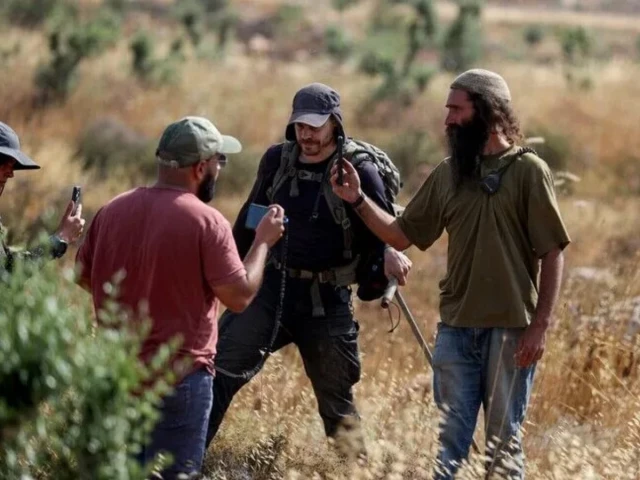
    The Palestinian village of Tel in the northern occupied West Bank should have been celebrating one of its busiest and most cherished times of the year. Residents had spent weeks preparing for the annual fig harvest and a festival expected to attract visitors from across the region. Instead, the village has been left grieving after a deadly confrontation forced organizers to cancel the event and replaced the festive atmosphere with mourning. The violence erupted after an attack involving Israeli settlers last week. The clashes that followed resulted in the deaths of four Palestinians and two Israeli settlers, leaving the community in shock. Black flags now hang where festival decorations were meant to be displayed, while many orchards remain out of reach because of an increased Israeli military presence and ongoing restrictions in the area. Tel village council head Walid Zaidan said the tragedy has deeply affected the community of around 7,000 people. According to him, the village has lost its usual energy and sense of joy after the deaths of four young residents in a single day. He said the emotional impact is visible throughout the village, where families continue to cope with grief and uncertainty. Zaidan said residents had not been seeking confrontation but were trying to protect their homes after repeated attacks by Israeli settlers. He recalled an earlier incident in which the home of a local resident, Sohaib Ramadan, was set on fire. The family managed to escape only moments before the house was completely destroyed. He said many villagers feared another similar attack and went out to defend their neighborhood when violence broke out again. The damage has extended beyond the loss of life. Zaidan said Israeli bulldozers entered farmland and cleared large sections of agricultural land. Initial estimates suggest that around 2,000 dunams, or roughly 500 acres, have been affected. Local officials have been unable to inspect the full extent of the destruction because access to the area remains restricted by Israeli forces and settlers. Residents also claim that a new settlement outpost is being established on the land. At the same time, Israeli forces have carried out arrests and questioned dozens of Palestinians in the village, adding to growing tensions. For the people of Tel, farming is more than an economic activity. Fig trees, olive groves and prickly pear plants have long been central to the village’s identity and way of life. Tel is known throughout the occupied West Bank for producing several varieties of figs, drawing visitors each harvest season to buy fresh fruit and locally made products. Plans for a three day festival featuring figs, dairy products, cheeses and other local goods were abandoned after the violence. Farmers who own nearby livestock and poultry farms have also struggled to reach their animals because roads remain blocked, raising concerns about the welfare of their livestock. Local resident Omar Ishtayeh said the village has depended on agriculture for generations, but increasing restrictions and repeated settler attacks have made farming more difficult. He said orchards that once represented prosperity now reflect the hardships facing local families. With the fig season already underway, many farmers fear the fruit will spoil before they are able to safely return to their land. Palestinian officials argue that the events in Tel are part of a wider rise in settler violence across the occupied West Bank. According to the Palestinian Colonisation and Wall Resistance Commission, thousands of attacks targeting Palestinians and their property were recorded during the first half of 2026. These incidents included assaults on civilians, arson attacks, damage to farmland, restrictions on access to agricultural areas and the expansion of settlement outposts. The United Nations considers Israeli settlements in the occupied Palestinian territories illegal under international law. Palestinians say the continued expansion of settlements is reducing hopes for the creation of an independent Palestinian state and making everyday life increasingly difficult for communities that rely on their land for survival.