تازہ ترین

  • |

    Google’s new AI satellite image tool raises fears over fake visuals

    Google has introduced a new artificial intelligence feature for Google Earth that allows users to create AI generated images using satellite, aerial and three dimensional mapping data. While the company says the tool is designed to support creative and practical uses, researchers and digital investigation experts have expressed concern that it could make it easier to produce convincing fake satellite images. The new feature, called Create Image, was launched on Thursday and uses Google’s Nano Banana 2 image generation technology. It enables users to zoom into locations on Google Earth and generate realistic visualisations within seconds using existing mapping data. Google said the tool is intended to help people visualise historical scenes, develop real estate plans and explore other creative projects. However, experts who specialise in verifying online content warn that the technology could be exploited to spread false information and manipulate public opinion. Open source intelligence researchers say Google Earth has long been considered one of the most trusted resources for checking locations, analysing events and verifying images. They fear that adding AI generated content to the platform could blur the line between authentic satellite imagery and fabricated visuals. Digital investigations expert Henk Van Ess criticised the update, arguing that Google spent years building public trust in its mapping service but has now introduced a feature capable of generating fictional scenes. He warned that even if an AI generated image is not perfect, it could still appear believable because it is linked to a platform widely regarded as reliable. Brady Africk, a research analyst at the American Enterprise Institute who specialises in satellite image analysis, also raised concerns about the technology. He said the update makes it easier to create realistic fake satellite images that could spread rapidly on social media and mislead the public. According to Africk, the growing availability of AI generated imagery could also weaken confidence in genuine satellite photographs. He warned that journalists, researchers and fact checkers may find it increasingly difficult to distinguish authentic images from manipulated ones, making investigations more challenging. In response to the criticism, Google said all images created through the new feature include its SynthID digital watermark technology. The invisible watermark is embedded into AI generated content to help identify that it was produced using Google’s artificial intelligence tools. The company also said users can ask its Gemini chatbot to check whether an image contains a SynthID watermark, providing an additional method for verifying AI generated content. The launch comes as technology companies continue expanding the use of generative artificial intelligence across their products. At the same time, governments, researchers and technology experts are calling for stronger safeguards to prevent AI tools from being used to create misleading content or spread disinformation.
  • |

    US makes visa bond programme permanent, raises limit to $20,000

    The United States has announced that its visa bond programme will become permanent, introducing stricter financial requirements for certain foreign travellers seeking business and tourist visas. Under the new policy, US consular officers will have the authority to require applicants from 50 countries to post a refundable bond of up to $20,000 before a visa is issued. The programme applies to B1 (business) and B2 (tourist) visas and is aimed at reducing the number of visitors who overstay their visas. According to a notice published in the Federal Register, the decision follows the completion of a pilot programme launched in 2025. Officials said the trial demonstrated that visa bonds could be an effective tool for improving compliance with US immigration rules. The new regulation will officially take effect on August 3. During the pilot phase, applicants could be asked to pay bonds of $5,000, $10,000, or $15,000. The updated rule removes the $5,000 option and increases the maximum bond amount to $20,000, giving consular officers greater discretion when assessing visa applications. The programme covers citizens of 50 countries, with 30 of those nations located in Africa. US authorities say the selection is based on factors such as visa overstay rates and immigration compliance. The move is part of President Donald Trump’s broader immigration agenda, which focuses on tightening border controls and strengthening enforcement of immigration laws. The administration argues that stricter visa policies are necessary to protect national security and discourage individuals from remaining in the United States beyond the period allowed by their visas. However, immigration advocates and civil rights organisations have criticised the decision, saying the higher financial burden could discourage legitimate travellers, including tourists and business visitors, from applying for US visas. They also argue that recent immigration measures have made legal entry into the United States increasingly difficult through higher fees, expanded social media screening, and stricter visa requirements.

  • | | |

    Khawaja Asif alleges money laundering network oper…

    Defence Minister Khawaja Asif has claimed that businesses established in Portugal by individuals linked to politics and the real estate sector are being used to facilitate money laundering from Pakistan. In a statement, the minister said that several people associated with political circles and the property business have set up commercial operations in Portugal. According to him, these businesses are allegedly providing services that enable money to be transferred out of Pakistan through illegal channels. Khawaja Asif further alleged that the same network is also involved in arranging documents for individuals seeking citizenship-related facilities in Portugal. He claimed that the businesses are being used not only for financial transactions but also to assist applicants in obtaining the paperwork required for immigration and citizenship purposes. The defence minister did not identify any individuals or organisations allegedly involved in the activities. He also did not present evidence to support the claims during his statement. His remarks come as authorities continue to focus on tackling financial crimes, including money laundering and the illegal movement of funds abroad. The allegations are expected to draw attention to the activities of overseas business networks and the use of foreign countries for financial transactions.

  • | |

    Court awards Ahsan Iqbal Rs2.5m in defamation case

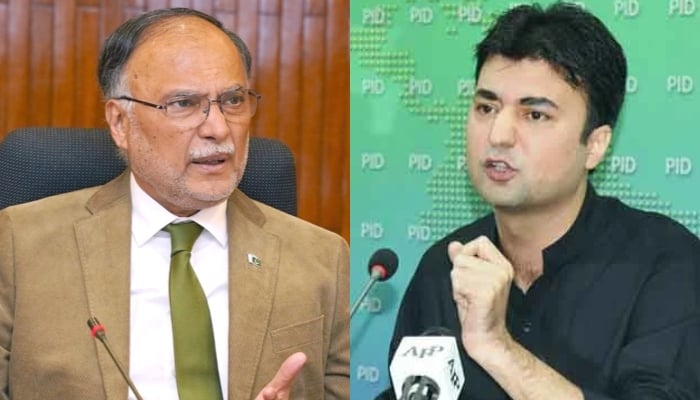
    An Islamabad District and Sessions Court has ruled in favour of Federal Minister Ahsan Iqbal in a long-running defamation case against PTI leader Murad Saeed. The court ordered Murad Saeed to pay Rs2.5 million in damages for making allegations that were not proven during the proceedings. Additional Sessions Judge Hakim Khan announced the verdict after hearing the case. The court held that Murad Saeed’s statements had damaged Ahsan Iqbal’s reputation and public image. It directed the PTI leader to compensate the federal minister with Rs2.5 million. According to the judgment, Murad Saeed accused Ahsan Iqbal of being involved in corruption worth Rs70 billion. However, the court found that he failed to provide any evidence to support the allegations. The court ruled that the accusations of corruption, misuse of authority, and receiving illegal commissions were defamatory because they remained unsubstantiated. The judgment stated that Ahsan Iqbal had initially sought Rs10 billion in damages for the alleged harm caused to his reputation. However, the court observed that the amount claimed was excessive in view of the evidence presented during the trial. It therefore awarded Rs2.5 million as reasonable compensation. The court further observed that Murad Saeed’s controversial statements had harmed Ahsan Iqbal’s reputation, dignity, and credibility. It said the allegations created a negative impression of the minister among the public and directly targeted his honesty, integrity, and professional standing. The judgment also noted that Murad Saeed neither appeared before the court during the proceedings nor submitted evidence to substantiate the corruption claims. The absence of supporting material, the court said, weakened his defence and left the allegations unproven. The case originated from statements made by Murad Saeed in 2019 regarding the Multan-Sukkur Motorway project. At the time, he alleged that Ahsan Iqbal had committed corruption in connection with the project. After reviewing the evidence and hearing the arguments, the court concluded that the accusations were not established and therefore amounted to defamation. The verdict marks the conclusion of the defamation proceedings, with the court reaffirming that public allegations of corruption must be backed by credible evidence.

  • | |

    Police record fiancée’s statement in Mir Ra…

    Police have made fresh progress in the investigation into the murder of 25-year-old Mir Raza, whose body was found in Karachi’s Gulistan-e-Jauhar area. Investigators have recorded the statement of his fiancée and uncovered new details about his movements before his death. According to the investigation, Mir Raza left his home at approximately 4:02am on July 28. Before leaving, he reportedly left behind several personal belongings, including his wallet, house keys, and smartwatch. Police said he also transferred some money to his parents’ bank account before departing. Investigators have obtained more than 100 CCTV recordings from different locations and are reviewing the footage to trace Mir Raza’s final movements and identify any suspects or suspicious activity. Police also recorded the statement of Mir Raza’s fiancée as part of the investigation. She told investigators that he had not shared any concerns, fears, or personal problems with her before leaving home. She added that she repeatedly tried to contact him by phone on the morning of July 28 but received no response. According to the post-mortem report, Mir Raza died after suffering a gunshot wound to the chest, with excessive blood loss identified as the cause of death. Police recently recovered Mir Raza’s mobile phone from a location near the crime scene. The device has been sent for forensic examination to help investigators retrieve digital evidence and establish the circumstances leading to the killing. The investigation remains underway, with police examining CCTV footage, forensic evidence, and witness statements as they continue efforts to determine the motive behind the murder and identify those responsible.

  • | |

    Bilawal begins consultations after JAAC backs reco…

    PPP Chairman Bilawal Bhutto Zardari has announced that he has received a response from the banned Joint Awami Action Committee (JAAC) regarding his proposal to establish a Truth and Reconciliation Commission to address the ongoing crisis in Azad Jammu and Kashmir (AJK). He said the response marked an important step towards finding a peaceful and institutional solution to the unrest. In a statement issued on Saturday, Bilawal said the committee had shown willingness to consider the proposed commission. He welcomed the response and said it reflected support for resolving the dispute through dialogue rather than confrontation. He added that the proposal had already been endorsed by the Azad Jammu and Kashmir Legislative Assembly. The PPP chairman said the loss of every life during the recent unrest was a national tragedy. He stressed that his foremost priority was to help restore peace, reduce tensions, and bring normal life back to the people of AJK as soon as possible. Bilawal said the next stage would involve consultations with AJK Prime Minister Faisal Mumtaz Rathore. He explained that the prime minister would hold discussions with the federal government and other relevant stakeholders to determine whether sufficient consensus exists to move forward with the proposed commission. According to Bilawal, these consultations are necessary before any final decision is taken. He expressed hope that all parties would work together to develop a mutually acceptable framework capable of addressing the concerns raised during the recent protests. The proposal comes after weeks of political tension between the AJK government and the Joint Awami Action Committee. The dispute intensified over the committee’s demand to abolish the 12 seats in the AJK Legislative Assembly reserved for refugees from Indian-administered Jammu and Kashmir who settled in Pakistan after 1947. The disagreement led to widespread demonstrations across the region and increased political uncertainty. Bilawal has repeatedly called for the establishment of an independent Truth and Reconciliation Commission over the past month. He believes such a body could impartially investigate the recent violence, determine the facts surrounding the unrest, and help create conditions for meaningful dialogue between the government and protesters. Speaking at a public gathering in Muzaffarabad earlier this week, Bilawal said maintaining peace, fairness, and transparency was essential during the election period. He argued that resolving the crisis should not be viewed as a political victory or defeat for any party but as a national responsibility aimed at protecting the future of Kashmir and safeguarding Pakistan’s position on the Kashmir issue.

  • | |

    Fake arms licence racket busted in KP, two arreste…

    Police have uncovered a fake arms licence racket in Khyber Pakhtunkhwa, exposing an illegal network that allegedly produced forged weapon licences from a house. Authorities believe the operation had been running through a well-organised system and involved both private individuals and a government employee. According to police, the suspects were preparing counterfeit arms licences using computer equipment and printing materials inside a residential property. Investigators said each fake licence was sold for amounts ranging from Rs80,000 to Rs250,000, depending on the type of licence and the customer’s requirements. Police said an employee of the Home Department’s Licence Branch has also been found involved in the case. His alleged role is being investigated to determine how official records or procedures may have been misused. A case has been registered, and two suspects have been arrested during the operation. Police carried out a raid and seized a large quantity of equipment allegedly used to manufacture the fake licences. The recovered items include a laptop, a printer, ink bottles, around 700 licence cards, and other materials believed to have been used for printing forged documents. Investigators are examining the seized equipment to identify additional suspects and uncover the full scale of the operation. Police have also written to the Home Department, requesting assistance in the investigation. Officials are expected to examine departmental records to determine whether more employees were involved or if official data was misused. Sources in the Home Department said a committee will be formed to conduct a detailed inquiry into the incident. The committee will investigate the role of all individuals linked to the case and recommend legal and departmental action where necessary. CCPO Dr Mian Saeed said the investigation is progressing and that authorities are determined to bring everyone involved to justice. He said strict action will be taken against all suspects, including any government officials found responsible. He added that no official involved in the fake arms licence racket would be given any leniency, and the investigation would continue until the entire network is exposed.

  • | |

    Shahid Khaqan Abbasi criticizes government over ec…

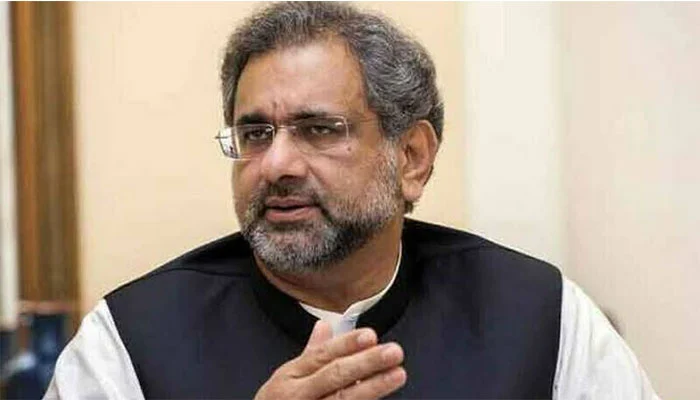
    The head of the Awam Pakistan Party, Shahid Khaqan Abbasi, has criticized the government over the country’s worsening economic and political situation, saying that even government representatives have now started raising concerns about the state of affairs in Pakistan. Speaking at a press conference in Islamabad, Abbasi said that the interior minister had realized after four to five years that the country was facing serious governance challenges, while ordinary Pakistanis had been expressing similar concerns for years. “The people of Pakistan have been saying the same thing for the past four to five years,” Abbasi stated, adding that government ministers should raise such issues directly during cabinet meetings instead of discussing them publicly. The former prime minister stressed that Pakistan urgently requires meaningful reforms and warned that temporary or superficial measures would not solve the country’s deep-rooted problems. He argued that the country has repeatedly experimented with short-term solutions every year, but what is needed is a fundamental change in the system. “We need to change the system and establish the rule of law,” Abbasi said, emphasizing that strong institutions and equal application of laws are necessary for long-term stability. Abbasi also criticized political divisions and the practice of using accountability cases against opponents. He called for an end to the cycle of imprisoning political rivals, questioning how the country could progress if every politician was accused of corruption. “If all politicians are corrupt, then who will run the country?” he asked. The Awam Pakistan Party leader claimed that two major stakeholders currently play a dominant role in running the country, but instead of working together, both sides continue to blame each other for national problems. Discussing the economic situation, Abbasi said that the income of Pakistani citizens has declined significantly over the past six years. He claimed that household purchasing power has fallen by approximately 14 percent, leaving many families struggling financially. “Every household in Pakistan has become poorer,” he said, adding that unemployment has reached its highest level in 21 years. Abbasi also highlighted the increasing tax burden on citizens, stating that the average Pakistani now pays around Rs60,000 in taxes annually. He said that taxes that were previously around Rs30,000 have doubled in recent years, while poverty continues to rise across the country. The former prime minister argued that Pakistan is struggling to attract investment because of inconsistent policies and uncertainty. He accused the government of relying heavily on taxation rather than creating conditions that encourage economic growth. “There is no certainty about when new taxes will be imposed,” Abbasi said, claiming that unpredictable policies discourage businesses and investors from operating in Pakistan. He also raised concerns about public health and food security, stating that thousands of children in Pakistan are affected by HIV and that the government has started importing wheat despite the country being an agricultural economy. “A country known for agriculture is now purchasing wheat from abroad,” he remarked. Abbasi further criticized rising costs of essential services, including electricity, gas, petrol, and diesel. He said that ordinary citizens are facing increasing financial pressure because of continuous price increases. According to Abbasi, Pakistan’s current situation reflects a broader governance failure, and without major reforms, improvements in economic conditions will remain difficult. He called for political cooperation, institutional reform, and policies focused on economic stability rather than short-term measures.

  • |

    Moroccan migrants return home after failed bid to reach Europe

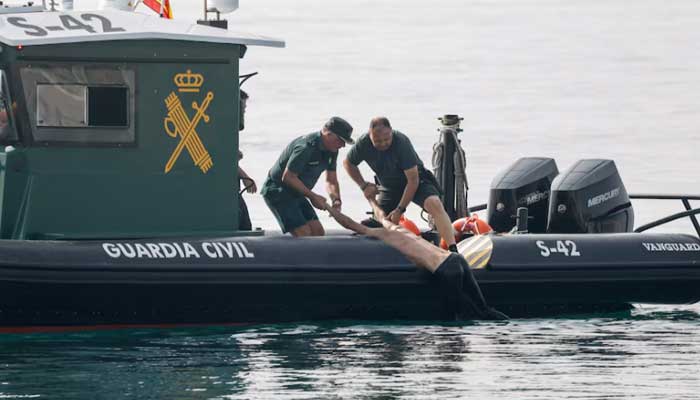
    Thousands of Moroccan migrants who entered Spain’s North African enclave of Ceuta this week have begun returning home after their hopes of reaching mainland Europe faded. Many said they were driven back by hunger, exhaustion and difficult living conditions, while others claimed they faced hostility after arriving in the Spanish territory. Several returnees said they had decided to cross into Ceuta after watching viral social media videos and receiving messages from friends claiming the heavily guarded border could be breached. Believing they had a chance to build a better future in Europe, many left their jobs and travelled to the border. However, after reaching Ceuta, migrants discovered there was no clear route to mainland Spain. Many said they became stranded in the enclave with limited access to food, water and shelter. One migrant said he survived for three days by drinking only water because he could not afford food. He described the cost of basic meals as extremely high and said life in Ceuta was far more difficult than he had expected. Returning migrants also claimed that many supermarkets and shops remained closed, making it difficult to buy essential supplies. Some spent days in wet clothes after swimming across the border and struggled to find safe places to rest. Several migrants alleged they were forced to leave certain neighbourhoods by local residents, although those claims could not be independently verified. Spanish authorities confirmed that two people suffered minor injuries in separate knife attacks and said one suspect had been arrested. Officials added that no deaths linked to the incidents had been reported. The large influx also affected businesses on both sides of the border. In the Moroccan border city of Fnideq, hotels and restaurants faced staff shortages after several workers crossed into Ceuta. Some employers have already begun looking for replacement workers as many employees remain missing. Meanwhile, daily life in Ceuta has gradually started returning to normal. Cafes have reopened in parts of the city, while police continue to maintain a strong security presence. Many businesses, however, remain closed as authorities monitor the situation. Aid workers said migrant reception facilities are operating at full capacity, with thousands of people still believed to be inside the enclave awaiting assistance or decisions on their future. Local residents expressed mixed emotions over the crisis. While many admitted the sudden arrival of thousands of migrants created fear and uncertainty, others said they sympathised with the young people, arguing they had been misled by false hopes of an easier route into Europe.

  • | |

    Iqra Aziz shares first photos of daughter Sophia

    Pakistani actor Iqra Aziz has delighted fans by revealing the face of her daughter, Sophia Hussain, for the first time through a heartwarming family photoshoot shared on social media. The actress posted a series of adorable pictures featuring her son, Kabir Hussain, and daughter Sophia. The siblings were dressed in matching white outfits, creating a charming and elegant look that quickly captured the attention of fans online. Iqra and her husband, actor and director Yasir Hussain, welcomed their daughter earlier this year. While announcing Sophia’s birth in January, the actress had shared the happy news with her followers but chose not to reveal the baby’s face at the time. The newly shared photographs mark Sophia’s first public appearance on Iqra’s social media accounts. Fans flooded the comments section with congratulatory messages, praising the children’s adorable bond and calling Sophia a striking resemblance to her mother. Known for her performances in several hit television dramas, Iqra Aziz has remained one of Pakistan’s most admired actors. Alongside her successful acting career, she often shares glimpses of her family life with fans, making her social media updates widely followed.