khawaja asif alleges
| | |

Khawaja Asif alleges money laundering network oper…

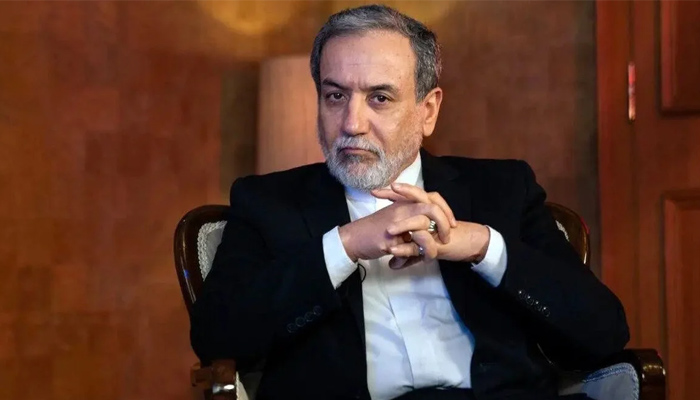
Defence Minister Khawaja Asif has claimed that businesses established in Portugal by individuals linked to politics and the real estate sector are being used to facilitate money laundering from Pakistan.

In a statement, the minister said that several people associated with political circles and the property business have set up commercial operations in Portugal. According to him, these businesses are allegedly providing services that enable money to be transferred out of Pakistan through illegal channels.

Khawaja Asif further alleged that the same network is also involved in arranging documents for individuals seeking citizenship-related facilities in Portugal. He claimed that the businesses are being used not only for financial transactions but also to assist applicants in obtaining the paperwork required for immigration and citizenship purposes.

The defence minister did not identify any individuals or organisations allegedly involved in the activities. He also did not present evidence to support the claims during his statement.

His remarks come as authorities continue to focus on tackling financial crimes, including money laundering and the illegal movement of funds abroad. The allegations are expected to draw attention to the activities of overseas business networks and the use of foreign countries for financial transactions.

Similar Posts

  • | |

    Indian activist Sonam Wangchuk says he remains ali…

    Indian activist Sonam Wangchuk says he has lost 11 kilograms during a 26 day hunger strike but remains alive, as his protest continues to fuel a wider youth movement demanding education reforms in India. Wangchuk, known widely as Sonam sir, has become the central figure in a youth led campaign organized by the Cockroach Janta Party, which is calling for sweeping education reforms and the resignation of Education Minister Dharmendra Pradhan. He was removed from the group’s protest site at Delhi’s Jantar Mantar on Saturday and taken to a hospital, where he has continued his fast. Despite his removal from the demonstration site, thousands of supporters have kept returning to Jantar Mantar, even after a heavy handed police response to a march toward parliament earlier in the week left numerous protesters and police officers injured. That crackdown has intensified public anger and energized opposition parties, creating a growing political challenge for Prime Minister Narendra Modi’s government. Modi has not addressed the protests directly or met with demonstrators, but he issued a statement on social media that many interpreted as an effort to connect with students angered by repeated leaks of exam papers. He wrote that the welfare of the country’s youth matters above all else and said the government would establish fast track courts to deliver swift punishment for those responsible for the leaks. A spokesperson for the Cockroach Janta Party, Ashutosh Ranka, responded that the government’s plan addressed the aftermath rather than the root cause, saying the movement wants to know why the leaks keep happening and who profits from them. He indicated in a video statement that protesters intend to continue their campaign until their demands are met. Even though Wangchuk is no longer physically present at the protest grounds, his fast has become a symbolic centerpiece of the movement, with demonstrators displaying placards and artwork referencing his hunger strike. Before he was hospitalized, he spent 21 days enduring intense summer heat while consuming only salt and water. Medanta Hospital in Gurugram said in a statement that Wangchuk was admitted to intensive care and is being monitored by a team of specialists. The hospital described his condition as stable and said his vital signs remain within normal ranges, adding that all treatment is being given with his consent. On Wednesday, senior figures including Cockroach Janta Party founder Abhijeet Dipke, along with opposition lawmakers, activists and public personalities, again urged Wangchuk to end his fast. Health Minister JP Nadda, who visited the hospital on Tuesday night, said he too had asked the activist to stop and rejoin efforts to guide young people, adding that the government remains willing to discuss the issues he has raised. Wangchuk has so far rejected these appeals. In a video statement recorded from his hospital bed on Wednesday night, he said he wants to end his fast because his work matters to him, but added that he would only do so once the government guarantees no force or retaliation will be used against students. He said he would end the strike immediately if that assurance comes, and would continue if it does not. He also praised the students involved in Monday’s confrontation with police, saying they showed remarkable composure even while being beaten with sticks, and said their restraint under pressure led him to keep going with his fast. Neither Wangchuk’s latest statement nor an earlier letter he sent to government ministers he met on Tuesday mentioned Pradhan’s resignation directly, though the Cockroach Janta Party maintains that the demand has not changed. Dipke told supporters that the protest at Jantar Mantar will continue until Pradhan steps down, and said the movement would not let Wangchuk’s sacrifice or the injuries suffered by students go without result. The standoff reflects a broader pattern seen in past protest movements across South Asia, where a single high profile figure’s personal sacrifice becomes a rallying point that sustains momentum long after the initial spark fades. Hunger strikes in particular have a long history in Indian political life as a tool for applying moral pressure on governments, dating back to independence era activism, and their effectiveness often depends on sustained public attention and the government’s willingness to negotiate before a health crisis forces the issue. As the standoff continues, the government faces mounting pressure to address both the immediate demand for accountability over exam paper leaks and the broader question of how education policy is managed, while doctors continue to monitor Wangchuk’s condition inside the hospital.

  • |

    Iran warns US: Any aggression will be met with a strong and decisive response

    Iranian Foreign Minister Abbas Araghchi has warned that any aggression against Iran or its vital infrastructure will trigger a “strong and decisive response”, emphasising that Tehran’s defense doctrine remains grounded in an “eye for an eye” policy. Writing on social media platform X, Araghchi made it clear that Iran will hit back against any strikes on its territory and cautioned that any third parties providing support to such actions will also be viewed as legitimate targets. The warning follows aggressive directives from US President Donald Trump, who ordered US Central Command (CENTCOM) to intensify strikes on Iranian positions and threatened that Iran would pay a steep price as military actions continue. An official from Iran’s Tasnim News Agency reinforced Araghchi’s statement, warning that if US forces target Iranian power plants or bridges, Iran will respond by targeting infrastructure, bridges, and energy assets associated with American interests throughout the region.

  • |

    Epstein Files , who is Gisele Attias Bonnouvrier?

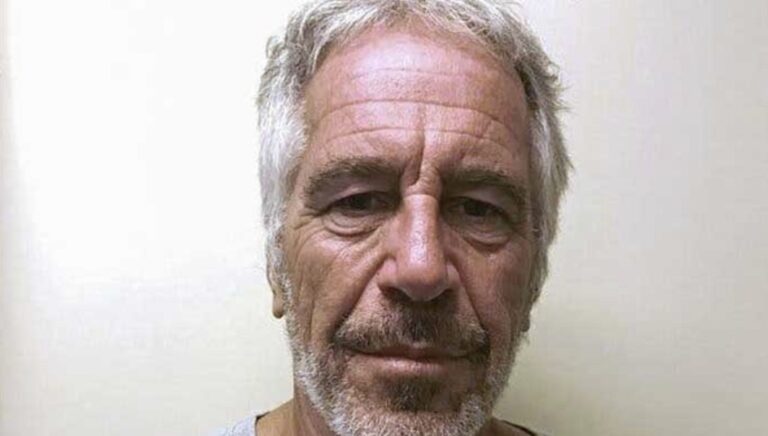
    The release of the Epstein files by the US Department of Justice has brought a French modelling agent’s name into the spotlight, raising questions about her connections to the disgraced financier. Gisele Attias Bonnouvrier, who ran the “Mill Valley Connection” agency, was identified in 2013 email exchanges with Jeffrey Epstein, according to documents reviewed by student journalists at California’s Redwood High School. The emails, which came to public attention as part of the broader release of Epstein-related files, outlined potential business proposals between Bonnouvrier and Epstein. These included casting fees for introducing models, image usage rights, sponsorship of events and modelling conventions, and acting as his Paris correspondent. One specific message referenced: “Regarding Hannah, my Austrian model, we can come and see you this evening if you are interested, and in that case let me know how I can get my fees.” The correspondence suggests a transactional relationship centered around the modelling industry, though the full extent of their interactions remains unclear. The investigation began as a school assignment for Ben Mueller, a student at California’s Redwood High School, who scoured the Epstein files for connections to his local Marin County. His findings, which highlighted “Mill Valley” in an Instagram slideshow, gained widespread attention online. The exposure prompted Bonnouvrier to email the school demanding the removal of her name from the coverage and threatening legal action. In her communication, Bonnouvrier denied providing women to Epstein, and there is no public record of her facing criminal charges in connection with the case. The Epstein files, released by the US Department of Justice, have been a subject of intense public interest, revealing the extensive network of associates connected to the late financier. Epstein, who died in 2019 while awaiting trial on sex trafficking charges, had a long history of connections to powerful figures in politics, business, and entertainment. The release of these documents has reignited debates about accountability and the extent of Epstein’s influence. Bonnouvrier’s name is among dozens that have surfaced in the files, though her role appears to be that of a business associate rather than a direct participant in Epstein’s criminal activities. Her denial of providing women to Epstein and the absence of charges against her suggest that her involvement may have been limited to professional interactions. However, the nature of her correspondence with Epstein has drawn scrutiny, particularly given the context of his well-documented history of exploiting young women. The role of student journalists in uncovering Bonnouvrier’s connection to Epstein highlights the power of investigative journalism, even at the high school level. Mueller’s work demonstrates how ordinary citizens can contribute to holding powerful figures accountable. As the public continues to sift through the Epstein files, more names and connections are likely to emerge, shedding further light on the network of individuals who enabled Epstein’s activities. For now, Bonnouvrier’s name stands as a reminder of the far-reaching web of associates that surrounded one of the most notorious figures in modern history.

  • Thailand Extends Permitted Alcohol Sales Hours To 11am–midnight In Regulatory Update

    BANGKOK, Thailand — Thailand’s Alcoholic Beverage Control Committee has officially extended permitted hours for alcohol sales to between 11:00 a.m. and midnight, according to an announcement published in the Royal Gazette on Thursday. Thailand Imposes Stiff Fines on Drinkers in Tightened Alcohol Laws The regulatory change, signed by Public Health Minister Pattana Promphat on May […]

  • | |

    Katy Perry condemns White House’s use of Firework

    Katy Perry has criticised the White House after it used her 2010 hit Firework in a social media video featuring footage of US military strikes during the Trump administration. The singer said she neither approved nor supported the use of her music, arguing that it completely contradicted the song’s original message of hope, healing and empowerment. The controversy began after the White House’s official TikTok account shared a video showing military strikes, accompanied by Firework and the caption, “Iran has been warned.” The footage quickly spread online, prompting criticism from fans and eventually drawing a public response from Perry herself. Responding on social media, Perry wrote, “I am deeply appalled and angry to see ‘Firework’ used on the White House TikTok account as a backing track for video footage of military strikes.” She added, “I did not approve this, I was not asked, and I absolutely do not condone it.” The singer explained that Firework was created as an anthem of hope, resilience and inner strength—not as a soundtrack for scenes of war. She described the video’s use of the song as “a complete violation” of everything the track represents and said its uplifting message had been distorted into something that celebrated violence rather than humanity. Perry’s statement quickly gained widespread support from fans and fellow artists, many of whom praised her for speaking out. Social media users argued that musicians should have greater control over how their work is used, particularly when it becomes associated with political messaging or military action. The incident is the latest in a series of disputes involving artists objecting to the use of their music by the Trump administration or the White House without permission. In recent months, musicians including Ariana Grande, Celine Dion, Kesha, Sabrina Carpenter and others have publicly criticised the unauthorised use of their songs in government videos and political content. The White House has not indicated that it sought Perry’s permission before using the song. The debate has reignited broader discussions about copyright, artistic consent and whether music intended to inspire hope should be repurposed to accompany images of armed conflict. Perry’s response has since gone viral, with many fans saying the meaning behind Firework should be respected rather than used to promote messages the artist does not support.

  • | |

    Evergrande founder handed life sentence as court s…

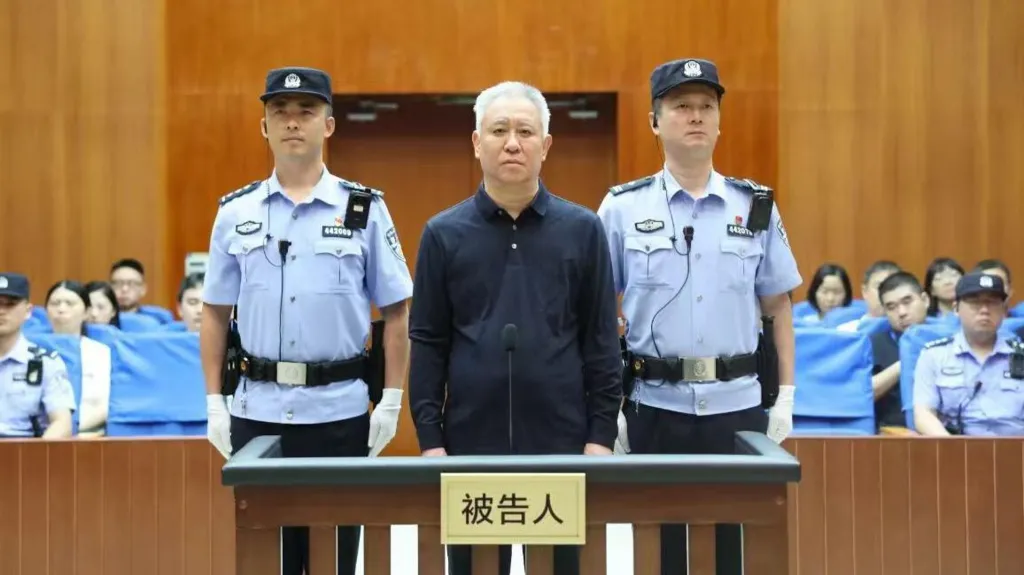
    The founder of Evergrande, the Chinese property giant whose collapse triggered a nationwide housing market crisis, has been sentenced to life in prison and stripped of all personal property. Hui Ka Yan pleaded guilty in April to multiple charges, including embezzling assets and corporate bribery. The Shenzhen Intermediate People’s Court also imposed fines totaling 15.82 billion yuan, roughly £1.73 billion or $2.35 billion, on his former companies over a range of offenses that included falsifying financial records and concealing debt. The sentencing marks a major turning point in the fallout from Evergrande’s collapse, which shook China’s property sector and inflicted heavy losses on investors and domestic banks alike. The court said Hui and his businesses seriously disrupted the Chinese property market, causing significant economic damage. Other former Evergrande executives, including Hui’s two sons Xu Zhijian and Xu Tenghe, received jail terms ranging from 22 months to 18 years, according to Chinese state media. Once ranked as Asia’s richest man, Hui has watched his fortune and influence collapse alongside his company. Also known as Xu Jiayin, he grew up in rural China raised by his grandmother before entering the property industry and founding Evergrande in 1996. He guided the company through a period of rapid expansion fueled by heavy borrowing, eventually building Evergrande into China’s largest real estate developer with a stock market valuation exceeding $50 billion, roughly £36.7 billion. At his peak, Hui held the distinction of being Asia’s wealthiest individual. The company suffered a major setback when Beijing introduced new measures in 2020 aimed at curbing debt across the property sector. As Evergrande struggled to keep up with interest payments, it began selling properties at steep discounts to stay afloat before ultimately collapsing in 2021. Court proceedings in April revealed that the company had taken in millions of dollars in pre sale funds from prospective homebuyers that were never used for the construction they were intended to finance. Instead, that money was redirected toward new development projects, leaving hundreds of housing projects unfinished. In March 2024, Hui was separately fined $6.5 million and banned for life from China’s capital markets after regulators found the company had overstated its revenue by $78 billion. Evergrande’s stock market value shrank by 99 percent before the company’s shares were delisted from the Hong Kong exchange in August 2025, ending more than fifteen years of trading. The company’s implosion is widely seen as a key trigger for the broader downturn in China’s property market that continues to weigh on the country’s economy. At its peak, Evergrande stood as the largest firm in an industry that accounted for roughly a third of China’s gross domestic product, serving as both a major driver of economic growth and a critical revenue source for local governments. The sector’s ongoing troubles have continued to pressure the world’s second largest economy, with several other major developers facing their own financial distress in the years since Evergrande’s fall.

Leave a Reply

Your email address will not be published. Required fields are marked *