تازہ ترین

  • | | |

    US General warns more warships are needed to defen…

    A senior US military commander has reportedly warned the Pentagon that without additional naval resources, the United States may be forced to prioritize its own national defense over the defense of Israel. The reported warning underscores the growing strain on American military capabilities amid the ongoing conflict involving Iran. According to a report by The Washington Post, General Alexus Grynkewich, the top US military commander in Europe, informed Pentagon officials this week that the number of US Navy destroyers currently available is insufficient to continue defending Israel against ballistic missile threats while maintaining broader US security commitments. The report states that General Grynkewich submitted a written assessment to senior Pentagon leaders, warning that unless another guided-missile destroyer is assigned to his command, he may have no choice but to give priority to defending the United States rather than supporting Israel’s missile defense. US defense officials quoted in the report said the message reflects a long-standing military practice in which commanders notify the Pentagon when operational demands begin to exceed available resources. Such assessments are intended to help civilian and military leaders make decisions about force allocation and strategic priorities. The reported warning comes as the conflict involving Iran has placed increasing pressure on US military assets over the past several months. Continuous naval operations, missile defense missions, and regional security responsibilities have stretched the availability of key warships and other defense resources. US Navy destroyers stationed in the eastern Mediterranean have played a significant role in supporting Israel’s defense by helping intercept ballistic missiles and other aerial threats. Equipped with advanced radar systems and missile defense capabilities, these vessels have also been used to counter attacks launched by Iran-backed Houthi forces operating from Yemen. The report noted that US European Command is responsible for coordinating military operations across Europe and the Mediterranean while also maintaining readiness to respond to potential security challenges involving NATO allies. Balancing these commitments with operations in the Middle East has become increasingly difficult as demand for naval assets continues to grow. Despite plans to expand the US naval presence in Europe with an additional destroyer later this year, officials reportedly remain concerned about maintenance requirements and operational fatigue affecting the existing fleet. The report also said additional US naval forces, including aircraft carriers and multiple destroyers, remain deployed in the Arabian Sea and the Red Sea to support regional operations and safeguard commercial shipping routes. The reported warning highlights the strategic challenges facing US defense planners as they seek to balance commitments to allies with broader national security priorities amid rising tensions in the Middle East

  • | |

    Khawaja Asif urges Mohsin Naqvi to start system re…

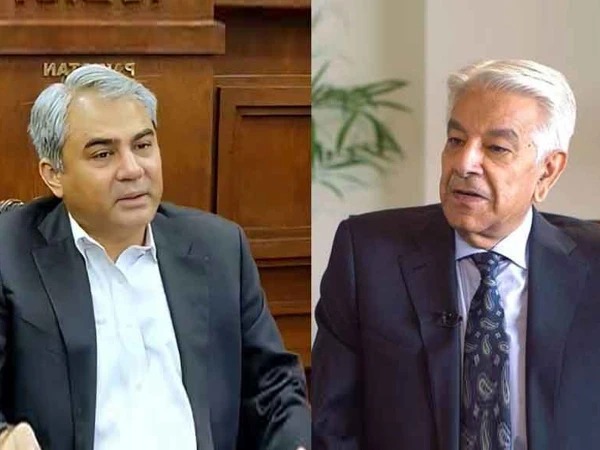
    Defence Minister Khawaja Asif has advised Interior Minister Mohsin Naqvi to begin efforts for changing the system by ensuring the implementation of the National Action Plan and improving performance within his own ministry. Reacting to Mohsin Naqvi’s recent remarks about weaknesses in the existing system, Khawaja Asif said he personally agrees to a large extent with the concerns raised by the interior minister. However, he emphasized that meaningful reforms should be pursued through constitutional and legal platforms, particularly Parliament and the cabinet. In a statement shared on social media, Khawaja Asif said that discussions about major reforms would produce better results if they were presented on parliamentary forums. He added that Parliament provides the appropriate platform for strengthening institutions and bringing sustainable changes through a constitutional process. The defence minister described Mohsin Naqvi as a powerful figure within the government and said that he should use his position to initiate practical reforms. He suggested that the process of system improvement should begin from the Interior Ministry and through the implementation of the National Action Plan. Khawaja Asif said that the evolution of the current system has been influenced by group and personal interests over several decades, and there is now a need to make institutions stronger and more independent. He stressed that reforms should not remain limited to statements but should be translated into practical measures. He further stated that important national issues should be discussed in constitutional forums such as Parliament and cabinet meetings. According to him, involving these institutions would strengthen the system, while discussions outside constitutional platforms may not have the same impact or acceptance. The defence minister also referred to the National Action Plan and said that out of the 13 points highlighted by the military leadership, the points related to the armed forces are being implemented through significant sacrifices. However, he claimed that several points under the responsibility of the Interior Ministry still require progress. Khawaja Asif urged Mohsin Naqvi to take the first step toward system reform by focusing on responsibilities already assigned to his ministry. He said that not only the business community but the entire nation would support genuine efforts aimed at improving governance and strengthening national institutions. He concluded that while discussions on reform are important, real change requires consistent action, institutional cooperation, and progress through established constitutional mechanisms.

  • | | |

    Azad Kashmir elections 2026: second phase polling …

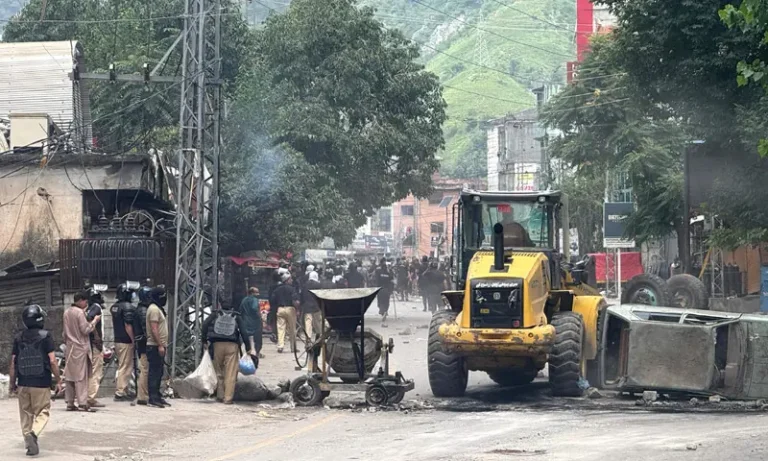
    The second phase of the Azad Kashmir Legislative Assembly Elections 2026 is being held today, with polling taking place in the Muzaffarabad Division and migrant constituencies. Voters in nine constituencies of Muzaffarabad Division and 12 migrant seats will exercise their right to vote as the electoral process moves forward. Election authorities completed preparations for the polling process, including the transportation of election materials and deployment of staff at polling stations. Voting will begin at 8:00 am and continue until 5:00 pm without interruption. The Muzaffarabad Division includes three districts — Muzaffarabad, Neelum, and Jhelum Valley. A total of 890,621 registered voters are eligible to cast their ballots across nine constituencies in the division. According to election officials, 1,483 polling stations have been established throughout Muzaffarabad Division to facilitate voters. A total of 208 candidates are contesting the nine seats, including nominees from major political parties such as the Pakistan Peoples Party, Pakistan Muslim League-Nawaz, Istehkam-e-Pakistan Party, other political groups, and independent candidates. In addition to the Muzaffarabad Division seats, polling is also being conducted for 12 seats reserved for Kashmiri migrants living in different parts of Pakistan. These include six seats from the Jammu region and six seats from the Valley region, where registered Kashmiri voters will participate in the election. The migrant constituencies include Jammu seats from LA-34 Jammu-1 to LA-39 Jammu-6, while Valley seats range from LA-40 Valley-1 to LA-45 Valley-6. Speaking to Geo News, Azad Jammu and Kashmir Chief Election Commissioner Justice (retd) Ghulam Mustafa Mughal said elections are conducted in phases due to security considerations. He stated that although uncertainty existed in Muzaffarabad earlier, the law and order situation has improved and is better than before. Authorities have made security arrangements to ensure a peaceful voting process and have urged citizens to participate responsibly. The Election Commission has emphasized that maintaining a secure environment and ensuring transparency remain key priorities during the polling process. The second phase of the Azad Kashmir Elections 2026 is expected to determine representatives for important constituencies and further shape the political landscape of the region.

  • | | |

    Thousands of migrants leave Spain’s Ceuta after …

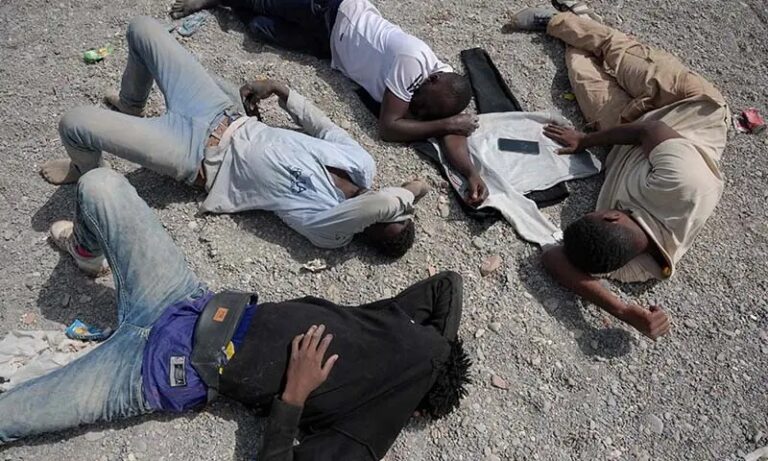
    Thousands of migrants have returned to Morocco after spending several days in Spain’s North African enclave of Ceuta following one of the largest attempted border crossings in the territory’s history. Many migrants said they left because of hunger, exhaustion, and disappointment after finding limited support and few opportunities in Ceuta. Spanish soldiers and Civil Guard officers guided groups of migrants back toward the Moroccan border crossing on Saturday. Many of those returning were young men who appeared physically exhausted after days of wandering through the city with little food or shelter. Some were barefoot, while others carried Red Cross blankets after receiving emergency assistance. Among those returning was 23-year-old Abdel Latif, who said he had hoped to find work and a better future in Europe. He explained that unemployment in Morocco pushed him to attempt the dangerous journey, but he decided to leave Ceuta after struggling to find food and support. The massive influx saw tens of thousands of migrants enter Ceuta over a period of two to three days. Local officials estimated that around 60,000 people reached the enclave, while Spain’s Interior Ministry reported a lower figure. The surge created a major humanitarian and political challenge for Spanish authorities. Many migrants attempted to reach Ceuta by swimming around border barriers in the Mediterranean Sea. Several people collapsed after completing the dangerous crossing, with Red Cross teams providing emergency treatment. At least dozens of migrants reportedly died while attempting to reach the Spanish territory. Spanish officials said that the majority of those who entered Ceuta had already returned to Morocco. Authorities have increased security measures along the maritime border, including the installation of floating barriers to prevent further crossings. Ceuta, home to around 84,000 residents, is one of only two European land borders located in Africa, along with Melilla. The territory has long been a major destination for migrants hoping to enter Europe in search of employment and improved living conditions.   Many migrants said their motivation was driven by economic hardship. Some described difficult working conditions and low wages in Morocco, saying they were searching for stability and better opportunities. Meanwhile, daily life in Ceuta has gradually returned to normal, with shops reopening and traffic resuming after the disruption caused by the migrant surge. However, some residents remain concerned about future migration pressures, while others say security improvements have restored a sense of stability. The latest events have once again highlighted the complex challenges facing Europe and North Africa in managing migration, border security, and humanitarian needs.

  • |

    Prince William and Kate attend Games with three children

    Prince William and Princess Kate made a rare public appearance with all three of their children as the family attended the 2026 Commonwealth Games in Glasgow, Scotland. The outing marked one of the few occasions the Prince and Princess of Wales have been seen together with Prince George, Princess Charlotte and Prince Louis at a major public sporting event. The 2026 Commonwealth Games officially began on July 23, welcoming athletes from 74 nations and territories. Competitors are taking part in 215 events across multiple sports, celebrating athletic excellence and strengthening the ties between Commonwealth nations through friendly competition. The royal family attended the netball semi-finals, joining thousands of spectators in the arena to watch the highly anticipated matches. Throughout the event, Prince William and Princess Kate appeared engaged and enthusiastic as they followed the action, while their children also enjoyed the lively atmosphere from the stands. Their appearance attracted significant attention from fans and photographers, with many noting how rarely all five members of the Wales family attend public engagements together. The visit highlighted the family’s continued support for major sporting events and the importance of the Commonwealth Games. For the occasion, the family opted for coordinated outfits that balanced elegance with a relaxed style. Princess Kate wore a classic striped top paired with a pleated skirt and a forest green blazer, creating a polished yet comfortable look suitable for the sporting event. Princess Charlotte complemented the occasion in a stylish polka-dot dress, while Prince George and Prince Louis both wore smart shirts with tailored trousers. Prince William completed the family’s coordinated appearance with a blazer and formal trousers. Royal watchers also noted how the three children appeared confident and comfortable during the visit. Prince George, the eldest of the siblings, closely followed the sporting action, while Princess Charlotte appeared cheerful as she interacted with her parents and younger brother. Prince Louis, known for his energetic personality during previous royal appearances, also enjoyed the event while taking in the atmosphere of the Games. The outing came just weeks after Prince William, Princess Kate, Prince George and Princess Charlotte attended the Wimbledon men’s singles final. Prince Louis did not accompany the family on that occasion, making the Commonwealth Games a special event where all three royal children appeared together with their parents. The visit also marked an important milestone for the young royals. It was the first time Prince George and Prince Louis attended the Commonwealth Games in an official capacity. Princess Charlotte, meanwhile, was returning to the event after previously attending the 2022 Commonwealth Games in Birmingham, where she joined her parents in supporting the athletes. The Prince and Princess of Wales have consistently shown their support for British and Commonwealth sport through regular appearances at major competitions. Their latest visit to Glasgow reflected that ongoing commitment while also offering the public a rare glimpse of the family together. As the Commonwealth Games continue, the royal family’s attendance added to the excitement surrounding the tournament and highlighted the significance of the event in bringing together athletes and spectators from across the Commonwealth.

  • |

    Suki Waterhouse reveals why she hasn’t watched Twilight yet

    Suki Waterhouse has surprised fans by revealing that she has never watched her partner Robert Pattinson’s iconic performance as Edward Cullen in the Twilight film series. Although the couple have been together for several years and share a young daughter, Waterhouse admitted that she has yet to sit down and watch the blockbuster franchise that launched Pattinson to worldwide fame. During a recent podcast appearance, the actress and singer was asked a fun question about whether she was “Team Edward” or “Team Jacob,” referring to the famous love triangle at the center of the Twilight saga. Waterhouse responded with an unexpected confession, saying she had never actually seen the films. She admitted that despite the franchise’s massive popularity, she still has not watched Pattinson’s breakout role. However, she made it clear that she plans to change that in the future. She also joked that even without seeing the movies, she knew she had to support Edward. Laughing at her own answer, Waterhouse said she quickly realized she couldn’t choose the wrong side when discussing the franchise connected so closely to her partner. The actress explained that she has been waiting for the right moment to finally watch the films. Rather than viewing them by herself, she wants the experience to be more entertaining and personal. Waterhouse said she would love to watch the Twilight movies with Pattinson by her side so he could provide behind-the-scenes commentary and share stories from the making of the films. She also joked that she would happily watch them with friends, as long as someone was there to offer commentary throughout the experience. Pattinson portrayed the mysterious vampire Edward Cullen in the hugely successful Twilight series, which became a global cultural phenomenon after the first film was released in 2008. The franchise turned him into one of Hollywood’s biggest stars and earned him a dedicated international fan base. While Pattinson has since built a career with a wide range of critically acclaimed performances, including independent films and major blockbusters, Twilight remains one of the defining chapters of his career. Waterhouse and Pattinson have kept their relationship largely out of the spotlight since they began dating. The pair rarely discuss their private lives publicly, choosing instead to focus attention on their respective careers. The couple welcomed their first child together in 2024 and have continued to maintain a low profile as parents. During the same conversation, Waterhouse also shared a glimpse into their supportive relationship. She revealed that Pattinson is always willing to help her prepare audition self-tapes, showing his encouragement for her acting career. Her comments offered fans a rare insight into their life together, highlighting not only their sense of humor but also the support they provide each other behind the scenes. While Waterhouse may not have seen Twilight yet, she made it clear that when she finally does, she wants the experience to be memorable—with Robert Pattinson offering commentary every step of the way.

  • |

    Tomi Adeyemi says film adaptation left her emotionally devastated

    Author Tomi Adeyemi has shared an emotional account of her experience with the upcoming Children of Blood and Bone film adaptation, alleging that the production process had a significant impact on her mental and physical well-being. The 33-year-old writer took to Instagram to speak candidly about what she described as an extremely difficult period while the highly anticipated adaptation of her bestselling fantasy novel was being made. In the video, Adeyemi revealed that one of the most painful moments came after visiting the film’s set. She said the experience left her overwhelmed with emotion, claiming she was “hyperventilating and sobbing” after leaving the production. According to the author, several people witnessed the incident, making it something she says was known to others involved. Reflecting on that time, Adeyemi explained that the emotional distress did not end once she left the set. She said she returned to the United States struggling with severe anxiety, including panic attacks and physical symptoms that she believes were brought on by intense stress. The author described the experience as one of the most difficult chapters of her professional career, saying it remains the hardest situation she has ever had to face. While she did not go into detail about the specific circumstances that led to her reaction, she suggested that events surrounding the adaptation deeply affected her. Adeyemi also explained why she chose to speak publicly now. She said that as promotional efforts for the film continue, including the release of its first trailer, she felt it was important to share her side of the story. According to the author, she continues to experience challenges behind the scenes and believes that people should be aware of what she says happened during the adaptation process. She stated that the ongoing promotion of the film, combined with what she described as continued antagonism, convinced her that remaining silent was no longer the right decision. Adeyemi said she wanted the public to understand the reality of her experience rather than assume everything had gone smoothly. Despite making the emotional statement, the novelist emphasized that she does not want to continue discussing the project indefinitely. Instead, she expressed a desire to move forward and focus on the future, suggesting she hopes to leave the difficult chapter behind her. Children of Blood and Bone, based on Adeyemi’s bestselling fantasy novel, has been one of the most anticipated literary adaptations in recent years. The book earned widespread acclaim following its release and developed a large global fan base, raising expectations for its transition to the big screen. Adeyemi’s comments have sparked widespread discussion online, with many readers and fans expressing concern over her account while awaiting further information. As of now, no additional details regarding the author’s allegations have been publicly addressed, and the film remains on track as promotional activities continue.

  • | | |

    Weak bureaucracy lies at heart of governance crisi…

    Recent remarks by Interior Minister Mohsin Naqvi, who said that Pakistan’s governance system has “collapsed,” have once again sparked debate over the country’s administrative failures. However, the real issue goes far beyond the number of provinces or administrative units and cannot be attributed solely to a lack of political will at the highest level. The core problem, according to the analysis, is the gradual weakening of Pakistan’s civil administrative structure, which has steadily lost its ability to govern effectively over the past several decades. Instead of identifying this institutional failure, the minister’s comments appear to focus on the symptoms of the crisis rather than its root causes. The repeated reliance on extraordinary measures, task forces, and parallel administrative structures itself reflects the inability of the regular civil bureaucracy to perform its responsibilities efficiently. Under the leadership of Army Staff Field Marshal Asim Munir,the military leadership has consistently emphasized economic revival, action against organized mafias, and restoring investor confidence. The establishment of the Special Investment Facilitation Council (SIFC) also emerged as a response to the inability of the civil bureaucracy to deliver timely economic solutions. However, such initiatives cannot permanently replace an efficient civilian administrative system. The governance crisis stems from the persistent decline in the effectiveness of Pakistan’s civil bureaucracy across the federation, provinces, divisions, and districts. Political interference, weak accountability, and poor human resource management have significantly undermined its performance. Punjab is often cited as a partial exception, where relatively limited political interference in routine administration has enabled the bureaucracy to function more effectively. This reinforces the argument that sustainable governance depends on institutional autonomy and merit-based administration rather than temporary or emergency arrangements. Governance experts have long advocated restoring the Establishment Division at the federal level and the Services and General Administration Departments (S&GADs) in the provinces to their original role as independent institutions responsible for managing human resources. Their objective is to ensure that appointments, promotions, and career planning remain protected from political influence and external pressure. The analysis further argues that Pakistan’s civil service should adopt a structured personnel management system similar to the military’s Military Secretary Branch at General Headquarters (GHQ), where recruitment, promotions, training, and career progression are managed through institutional discipline based on merit and performance rather than political considerations. The military’s internal human resource management system is often regarded as organized, merit-based, and largely insulated from political interference. In contrast, the civil Establishment Division is frequently viewed as a bureaucratic office where transfers and appointments are influenced by political lobbying, personal connections, and pressure from powerful groups instead of institutional needs. These practices have produced long-term consequences. Civil servants are often assigned to positions unrelated to their expertise, career planning remains weak or absent, and accountability mechanisms continue to be inconsistent and ineffective. As a result, governance across various sectors has suffered. The report notes that these shortcomings have been identified repeatedly over the years. More than 20 commissions and reform committees have reviewed Pakistan’s civil service structure during the country’s history. Between 1996 and 2008 alone, at least six major studies highlighted the same concerns, including politicization of the bureaucracy, the absence of merit-based appointments, and weak institutional management of human resources. Despite these findings, most recommendations were never implemented. Successive governments, whether civilian or military, have shown little willingness to reduce their influence over administrative appointments and transfers. Consequently, repeated attempts at civil service reform have failed to produce lasting institutional change. The analysis concludes that Pakistan’s governance crisis is not the result of a failure to identify the problem but rather a lack of political commitment to implementing meaningful institutional reforms. In this context, Mohsin Naqvi’s recent remarks do not fully address the deeper structural weaknesses within the state. The central issue is not merely that the system has collapsed, but that the country’s primary administrative engine—the civil bureaucracy—has been allowed to deteriorate without comprehensive reform. The proposed solution is not the creation of additional provinces but the rebuilding of the civil administrative system on the principles of merit, protection from political interference, and professional career management comparable to the military’s administrative framework.

  • | |

    PPP-PML-N row intensifies as AJK polls enter secon…

    Political tensions between the Pakistan Peoples Party (PPP) and the Pakistan Muslim League-Nawaz (PML-N) have deepened as Azad Jammu and Kashmir (AJK) entered the second phase of its elections. Despite several rounds of negotiations, the two coalition partners failed to resolve their dispute over the first phase of polling. The second phase of the elections is being held in nine constituencies of Muzaffarabad division and all 12 refugee constituencies. Authorities have made extensive security arrangements to ensure peaceful polling, while political uncertainty continues to dominate the electoral process. The disagreement began after the first phase of elections in Mirpur, where the PML-N secured key victories. The PPP questioned the election results and alleged irregularities in several constituencies. The PML-N rejected the allegations and insisted that the elections reflected the public mandate. The dispute has led to an exchange of sharp political statements between leaders of both parties. Senior PML-N leader Rana Sanaullah criticized PPP Chairman Bilawal Bhutto Zardari for repeatedly raising allegations of election rigging. He questioned the basis of such claims and also referred to the election of President Asif Ali Zardari while responding to the PPP’s criticism of the 2024 general elections. Rana Sanaullah also commented on Interior Minister Mohsin Naqvi’s recent remarks regarding the country’s governance system and the debate over creating new provinces. He criticized the minister’s statements and questioned his political rise. Meanwhile, PPP leader Saeed Ghani strongly defended his party during a press conference. He claimed that the PPP had never formed a government through election manipulation. He alleged that the PML-N had repeatedly benefited from controversial election outcomes and accused its leadership of making baseless allegations against the PPP. In an effort to reduce tensions, senior representatives from both parties held several meetings over the past few days. The discussions focused on finding a legal and political solution to the dispute over the election results. According to party sources, the PPP initially challenged the results in four constituencies. It later withdrew objections in two constituencies but continued to demand action regarding Charhoi and Nakyal, where its candidates were defeated by PML-N nominees. During the negotiations, PML-N representatives maintained that any irregularities were isolated incidents rather than evidence of systematic rigging. They argued that such incidents had occurred in previous elections and should not be used to question the overall electoral process. The talks, however, failed to produce a final agreement. As a result, political tensions remained high ahead of the second phase of voting. Separately, Prime Minister Shehbaz Sharif met PML-N President Nawaz Sharif at Jati Umra to review the evolving political situation. The meeting focused on the party’s strategy and the growing dispute with the PPP over the AJK elections. Punjab Chief Minister Maryam Nawaz and Deputy Prime Minister Ishaq Dar also attended the consultation. The participants reviewed the political challenges facing the ruling coalition and discussed possible steps to prevent further escalation between the two allied parties. In another development, PPP Chairman Bilawal Bhutto Zardari said he had received a positive response to his proposal for establishing a truth and reconciliation commission in Azad Kashmir. He described the response as encouraging and said the proposal had also received support from the AJK Legislative Assembly. Bilawal said he would carefully review the suggestions before consulting AJK Prime Minister Raja Faisal Mumtaz Rathore. He added that discussions would also be held with the federal government and other stakeholders to determine whether a consensus could be reached on the proposed commission.

  • | | |

    Second phase of AJK elections kicks off

    The second phase of the Azad Jammu and Kashmir (AJK) general elections began on Sunday with polling underway in Muzaffarabad division and all 12 refugee constituencies located across Pakistan. Polling started at 8am and will continue until 5pm without any break. Election officials opened polling stations early in the morning, while voters began arriving to cast their ballots. Security personnel were deployed across sensitive areas to ensure a peaceful voting process. This phase of the elections covers nine constituencies in Muzaffarabad division. These include five constituencies in Muzaffarabad district and two each in Neelum and Jhelum Valley districts. At the same time, polling is also being held for 12 refugee constituencies representing refugees from the Kashmir Valley and Jammu region. More than 340 candidates are contesting the elections in this phase. According to election authorities, 207 candidates are in the race for the nine seats in Muzaffarabad division, while another 137 candidates are contesting the refugee constituencies. More than 809,000 registered voters are eligible to vote in Muzaffarabad division. The refugee constituencies have over 438,000 registered voters. Thousands of election staff have been deployed to conduct polling and oversee the voting process. Authorities have established 1,483 polling stations across Muzaffarabad division. Among them, 533 have been declared highly sensitive, 741 sensitive and 209 normal. In addition, 1,057 polling stations have been set up for refugee constituencies in different provinces. The refugee constituencies are spread across Punjab, Khyber Pakhtunkhwa, Sindh, Balochistan and Islamabad. Polling arrangements have been completed in all regions where registered refugee voters are residing. In Rawalpindi and Islamabad, around 27,000 registered voters are casting their votes for three refugee seats. Election officials have established 175 polling stations, while enhanced security has been provided at sensitive locations. In Gujrat, Wazirabad and Mandi Bahauddin, nearly 2,000 police personnel have been deployed to maintain law and order during polling. More than 50,000 registered voters are expected to elect their representative in the constituency. Polling is also taking place in Karachi and several districts of Sindh for two refugee constituencies. Election officials have made arrangements to facilitate voters across the province. In Balochistan, polling stations have been established in Quetta, Pishin, Qila Saifullah, Hub, Loralai, Sibi, Mastung, Zhob and Barkhan for refugee voters. Similar arrangements have been made in Khyber Pakhtunkhwa, particularly in Swat and Mansehra, where polling is being held for another refugee seat. The second phase of the elections is taking place amid heightened political tensions between the Pakistan Peoples Party (PPP) and the Pakistan Muslim League-Nawaz (PML-N). Relations between the coalition partners have remained strained since the first phase of polling, with both parties accusing each other of electoral irregularities in several constituencies. Senior leaders from both sides held multiple meetings in recent days in an effort to resolve the dispute. However, the talks failed to produce an agreement before the second phase of voting. The PPP has demanded legal action and re-polling in selected constituencies, while the PML-N has rejected allegations of organized rigging and maintained that the election results reflect the will of the voters. Meanwhile, Prime Minister Shehbaz Sharif met PML-N President Nawaz Sharif to review the political situation and discuss developments related to the AJK elections. Senior party leaders also attended the meeting and discussed the coalition’s future strategy.