تازہ ترین

  • | |

    Fakhar Zaman urges patience over PSL performers

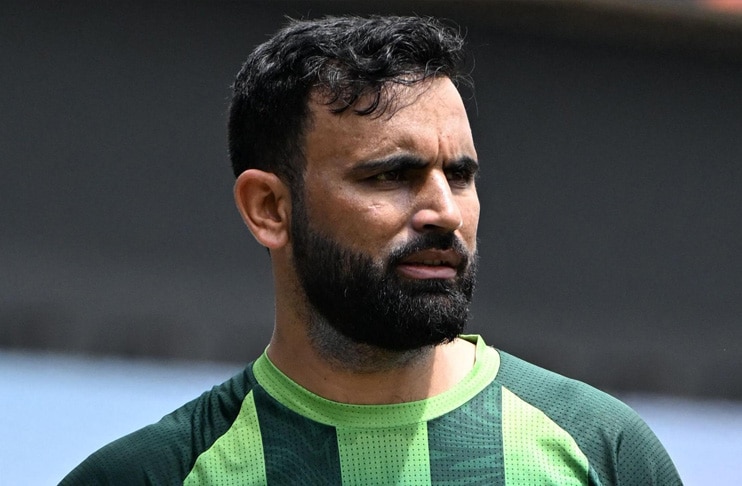
    Pakistan opener Fakhar Zaman has urged selectors and fans not to judge players solely on one or two impressive Pakistan Super League (PSL) performances, stressing that franchise cricket is very different from the demands of international cricket. Speaking during a media interaction in Lahore, the experienced batter said consistency should remain the key criterion for national team selection. The 35-year-old noted that several young cricketers earn Pakistan call-ups after performing in only a handful of PSL matches. While he welcomed healthy competition for places in the national side, he insisted that players must prove themselves over a longer period before being considered ready for international cricket. Fakhar said: “Many youngsters break into the national side after performing in just one or two Pakistan Super League matches. If a young player is good enough to take my place in the white-ball team, they are welcome to do so tomorrow. However, they must prove their quality, consistency, and form.” The left-handed opener explained that domestic and franchise cricket cannot be compared directly with the international game. According to him, many players realise the difference only after representing Pakistan, where the level of competition and pressure is much higher. He added: “When domestic performers step into international cricket, they realize the difference is significant. Development camps like these should be held regularly. A player should not be labeled extraordinary after just one or two good PSL matches because league cricket and international cricket are very different.” Fakhar also spoke about Pakistan’s batting order, revealing that discussions had taken place with the team management. However, he made it clear that certain decisions remain internal and cannot be discussed publicly. He said: “We have discussed the batting order with the management, but some matters cannot be shared publicly. I always think about what the team needs, and that remains my priority. Every player has personal preferences, but not everything can be discussed in the media. The important thing is that we are all on the same page.” The opener emphasised that team success always comes before individual preferences. While every batter has a preferred position in the lineup, he said professional players must be willing to adapt according to the team’s requirements. Looking ahead, Fakhar also expressed confidence about Pakistan’s future assignments in South Africa. He recalled enjoying success on South African pitches in the past and believes the conditions complement his style of batting. He concluded by saying: “I have many good memories of playing in South Africa. The bouncy pitches suit my technique, and I am preparing with the 2027 World Cup firmly in mind.” Fakhar’s remarks come as Pakistan continues to evaluate its white-ball squad ahead of major international tournaments. His comments highlight the importance of balancing opportunities for emerging players with the need for consistency and experience at the highest level. While welcoming competition, the veteran opener believes sustained performances—not just a brief run of form in the PSL—should determine who earns the honour of representing Pakistan on the international stage. 
  • | |

    Punjab CTD arrests 54 terror suspects

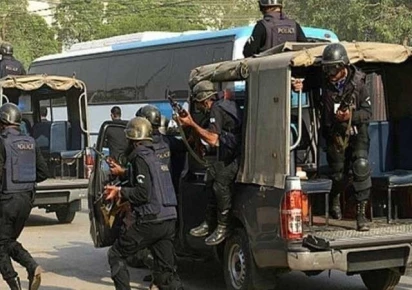
    The Punjab Counter Terrorism Department (CTD) has arrested 54 suspected terrorists, including five individuals alleged to have links with India’s intelligence agency, RAW, during a series of intelligence-based operations (IBOs) conducted across the province over the past two months. According to the CTD, a total of 419 intelligence-led operations were carried out in multiple districts to counter potential terrorist threats. During these operations, authorities questioned 422 individuals and detained 54 suspects believed to be associated with banned militant organisations. Officials said the five suspects accused of having links with RAW were identified as Waris Khan, Danish Ali, Roz Ali Khan, Wilayat Shah and Muhammad Aziz. The arrests were made in Lahore and Okara, while investigations into their alleged activities are continuing. The CTD stated that those taken into custody are suspected of having affiliations with several proscribed groups, including Fitna al-Khawarij, Daesh, Al-Qaeda in the Indian Subcontinent (AQIS), Lashkar-e-Jhangvi, Sipah-e-Sahaba and other outlawed organisations. The operations were conducted in several districts, including Lahore, Rawalpindi, Gujranwala, Faisalabad, Jhelum, Sargodha, Mianwali, Bhakkar, Sahiwal, Mandi Bahauddin, Pakpattan and Bahawalpur, as part of an ongoing campaign against terrorism. Authorities said a significant cache of weapons, explosives and other materials was recovered during the raids. The seized items included 7.9 kilograms of explosive material, 12 improvised explosive devices (IEDs), 50 detonators, safety fuse wire, pistols, rifles, ammunition, banned literature, pamphlets, flags, mobile phones and cash. The CTD also highlighted its wider security efforts, saying that during the past eight weeks it carried out more than 13,500 combing operations in coordination with local police and other law enforcement agencies. Nearly 495,000 people were screened during these operations, resulting in more than 1,100 arrests and over 1,000 registered cases.

  • | |

    Aima Baig dedicates debut album to late mother

    Singer Aima Baig has shared that her upcoming debut album, “Guriya,” is a heartfelt tribute to her late mother and reflects her personal journey through grief, healing and self-discovery. The singer said the album represents a significant milestone in her career and carries deep emotional value because it is inspired by the memory of her mother, who passed away in 2017. She revealed that “Guriya” was her mother’s nickname, making the title a lasting tribute to someone she continues to miss every day. Aima said losing her mother changed her life forever. She explained that grief evolves with time and becomes more meaningful as a person grows older. According to the singer, the absence of her mother remains one of the most difficult realities she continues to face despite achieving success in her career. She added that the album is not a response to criticism or public opinion but rather a reflection of her own experiences and emotions. She described the project as her story, told in her own voice and on her own terms. The singer also spoke about the emotional process of creating the album. She said working on the songs required her to revisit old memories and go through her mother’s belongings, making the experience both painful and therapeutic. She described the creative journey as emotionally intense but one that ultimately helped her heal. Aima revealed that several prominent musicians collaborated on the project, including Atif Aslam, Asim Azhar, Qasim Hasan, Raheel and Mubashir. She expressed appreciation for everyone who contributed to bringing the album to life. Discussing her personal life, Aima said spending time in London while working on new music gave her a much-needed break from the pressures of public life. She explained that the change of environment helped her overcome emotional stress, creative exhaustion and writer’s block, allowing her to focus fully on her music. The singer also addressed the controversy surrounding a viral video that allegedly showed her and singer Bilal Saeed intoxicated in London. She clarified that the footage was recorded during the filming of a project and said the situation had been widely misunderstood. According to Aima, people often form opinions without knowing the complete context behind such videos. She added that although the controversy attracted significant public attention, it unexpectedly increased interest in an unreleased song linked to the project. However, she stressed that she wants to be recognized for her music and artistic abilities rather than media controversies. Reflecting on her career, Aima said much of her youth has been lived in the public eye, with both her personal struggles and professional achievements closely followed by fans and the media. She acknowledged that many people have misconceptions about her based on headlines rather than her true personality.

  • |

    Modi says he forgives students over protest slogans

    Indian Prime Minister Narendra Modi has said he forgives students who shouted abusive slogans against him during last month’s nationwide demonstrations, describing them as “misled children” who should be guided instead of punished. Speaking in a video message, Modi said the protesters had used offensive language against him and his late mother during the demonstrations. Despite that, he said he did not want young people to face legal action or social persecution, stressing that they should be shown the “right path” rather than dragged into lengthy court proceedings. The protests emerged after controversy surrounding the National Eligibility cum Entrance Test (NEET), one of India’s largest competitive examinations. The movement gained momentum after the exam was cancelled because of a paper leak, forcing more than two million students to retake the test. What began as an online campaign for education reforms quickly developed into a nationwide protest movement, drawing thousands of students onto the streets. The demonstrations eventually ended after the Indian government accepted several key demands, including the resignation of the education minister. Authorities also announced that criminal cases against protesters would not be pursued. However, reports indicate that police in several states later registered cases against hundreds of demonstrators, particularly those accused of clashing with security personnel or participating in protests where anti-government slogans were raised. The development has sparked criticism from opposition parties and student groups, who argue that it contradicts the government’s earlier assurances. The protests were accompanied by clashes between demonstrators and security forces in several cities. In New Delhi, police used tear gas, baton charges and other crowd-control measures to stop protesters attempting to march towards parliament. Some student activists have also alleged that participants, particularly female protesters, became targets of online harassment and threats on social media following the demonstrations. Rights advocates have expressed concern over the growing hostility directed at student activists during the protest movement. The opposition has intensified pressure on the government, demanding accountability for the police response to the demonstrations. Critics have also questioned the continued registration of cases against protesters despite earlier commitments to withdraw legal action. Meanwhile, the Indian government has introduced legislation aimed at strengthening laws against examination fraud. The proposed bill seeks tougher penalties, including longer prison terms and heavier fines, for those involved in examination paper leaks.

  • |

    Houthis deny reports of Red Sea transit fees

    Yemen’s Houthi movement has rejected reports claiming it plans to charge commercial vessels for passing through the Red Sea, insisting that navigation through the strategic waterway remains free. In a statement issued by the Houthi-run Humanitarian Operations Coordination Center (HOCC), the group said its safe transit service for ships using the Bab al-Mandeb Strait is voluntary and does not involve any fees. It emphasized that no authorized Houthi body is collecting payments from shipping companies. The HOCC also warned shipping operators against making payments or sharing sensitive information with unauthorized individuals or organizations claiming to represent the group. It said any such demands are fraudulent and should not be recognized as official. The clarification came after recent reports suggested that the Houthis were considering introducing transit charges for vessels passing through the Bab al-Mandeb Strait. The reports claimed the proposal had been discussed during meetings with Iranian officials and that plans were being explored to establish a system for regulating such payments. The Bab al-Mandeb Strait is one of the world’s most important maritime routes, linking the Red Sea with the Gulf of Aden. Thousands of commercial vessels carrying oil, fuel and other goods use the passage every year, making it a vital corridor for global trade between Asia, Europe and the Middle East. Security concerns in the Red Sea have remained high since attacks on commercial shipping began in late 2023. The conflict significantly disrupted international shipping, forcing many companies to divert vessels to longer and more expensive routes around southern Africa. Although attacks temporarily declined following a ceasefire last year, commercial traffic through the region has yet to return to previous levels. Shipping companies continue to monitor the security situation closely before routing vessels through the area. The latest reports have also prompted regional efforts to strengthen maritime security. Saudi Arabia recently announced a multinational maritime coalition aimed at protecting freedom of navigation in the Bab al-Mandeb Strait, the Red Sea and the Gulf of Aden.

  • | | | |

    Why Lahore sinks whenever it rains in the city? 

    The rain on July 22 almost sank most parts of Defence Housing Authority. Those low-lying areas of the city were also under water. And this happened as the city was lashed with 343 millimetres of rain for two days, according to the Provincial Disaster Management Authority (PDMA). That spell has gone and when you are reading these lines, the city is undergoing a second rain spell. Pakistan’s Meteorological Department has issued a fresh weather advisory, warning that another active monsoon spell is expected from July 29 to August 5 across much of the country. The department said rain, wind and thundershowers, along with scattered heavy to very heavy rainfall, may trigger urban flooding, flash floods and landslides in vulnerable areas. This will keep the residents of low-lying areas, mainly of Lahore’s south, and DHA on the toe. Reacting to this advisory, environmental activist Rafay Alam explained why cities like Lahore keep flooding every monsoon season, and what is really behind the crisis. He said the Met Department had already notified that rain would continue for two days and people were warned in advance that urban flooding would take place, not just in Lahore, but in several cities across Punjab, including Gujranwala and Sialkot. He then pointed to last year’s floods for comparison. “Those floods were caused by heavy rains in the northern areas of the country, which caused rivers to swell,” he said. On top of that, India had released water from the Pong Dam and Bhakra Dam. He said a gate at the Madhopur headworks also broke, causing water levels in the Ravi river to rise sharply. Alam said the situation today is different. The flooding happening now is not caused by river floods or dam releases. Instead, it is simply due to heavy rainfall occurring within Pakistan itself. He said that if people read the Met Department’s advisory carefully, the heaviest rain in the coming days is expected in the northern areas once again, not directly over Lahore. He advised people to check whether they live in low lying or high lying areas, since this makes a big difference during heavy rain. However, he said that the real issue lies in the sheer intensity of rainfall being recorded now. “Some areas have received around 150 millimetres of rain within just a few hours,” he said. He added that 20 or 30 years ago, when the drainage systems and infrastructure in these areas were built, climate change was never part of the planning. Nobody at that time imagined that such intense rainfall could happen within just a few hours. As a result, the old infrastructure simply cannot handle the kind of rain Pakistan is now experiencing. Dr Farid A Malik, a resident of Defence Phase 5, witnessed the entire flood attack first hand. He said that when he was growing up in the 1950s, 1960s and 1970s, rainwater never used to stand in Lahore. At that time, he said, the city was much smaller and the population was far lower, yet even then, the city did not face standing water after rainfall the way it does today. “Whenever the rain would stop, we children used to go out on our bicycles looking for standing water, just for fun. And there were really only two places where water would collect. One was near Shahdara, and another was near the Do Moriya Pul area close to the railway station. That area of Shahdara was a low lying area,” he said. He recalled that in the 1970s, when Zulfiqar Ali Bhutto’s government came into power, and the People’s Party had a lot of support from that area of Lahore at the time, the government promised that they would install pumps in Shahdara and set up a proper system to drain the water out. And they actually did this. Heavy duty pumps were installed in Shahdara, and they used to successfully drain the water out. Dr Farid said the sewerage system Lahore has today simply cannot handle rainwater, because the amount of water that comes with heavy rain is very large, and the system does not have the capacity to handle that much water. He explained there are two separate problems here. First, the underground sewerage system is not cleaned properly. The pipes, whether four feet wide or six feet wide, have become clogged with scaling inside them over time. So even though a pipe might be four or six feet in diameter, the actual open space left for water to pass through has shrunk down to just one or two feet, meaning the whole system does not flow properly. Second, even if the sewerage system was clean, it still cannot handle rainwater on top of regular sewage. For this reason, Lahore used to have separate storm drains, called nalas in Urdu, which carried rainwater away separately into the Ravi river. Because of this separate system, rainwater never used to accumulate in the city. He said this has changed because storm drains have been blocked, either through neglect or construction on top of them. “An entire market has been built on top of a storm drain along Hall Road,” he said, adding that similar encroachment has happened along the Ravi river itself. Last year, water that should have gone into the river ended up flowing into housing societies instead. Dr Farid also pointed out that when Lahore had open drains instead of an underground sewerage system, the drainage actually worked better. Since the city moved underground, cleaning has become irregular, flow has suffered, and pumping stations work only some of the time. He said Lahore’s expansion added to the problem, since new areas were given sewerage systems but no proper storm drain network for rainwater. DHA, he said, expanded in phases over the years without any master plan covering how sewage and rainwater would both be managed. Speaking about his own neighbourhood, Dr Farid said there is a pumping station near the Sui Gas Society area of Defence that pumps sewage water

  • | |

    UEFA welcomes FIFA investment plan withdrawal

    UEFA has welcomed FIFA’s decision to abandon its controversial private investment proposal, calling the move “a victory for the whole game” while declaring that it has lost confidence in FIFA president Gianni Infantino’s leadership. The governing body for European football made the remarks after FIFA officially scrapped plans to sell stakes in its competitions following widespread opposition from football associations around the world. On August 1, FIFA president Gianni Infantino confirmed that the proposal to bring private investors into FIFA tournaments had been withdrawn after facing intense backlash and threats of a boycott. The plan had sparked strong criticism from UEFA, which argued that football’s global competitions should not be treated as commercial assets. Before the proposal was abandoned, UEFA had firmly opposed the idea, stating: “Football is not FIFA’s to sell.” Following FIFA’s decision to withdraw the proposal, UEFA issued another strongly worded statement welcoming the outcome while criticising Infantino’s leadership. The statement read: “The current FIFA leadership has not only lost UEFA’s confidence but also that of many other members of the football family.” UEFA also reminded members of the promises Infantino made when he first sought election as FIFA president in 2016. Quoting his campaign pledge, the organisation said: “When Gianni Infantino asked for the trust and the votes of FIFA’s member associations to elect him as their president in 2016, he said: ‘Of course we have to be transparent.’” The European governing body accused Infantino of failing to live up to that commitment, claiming he had handled FIFA’s finances without sufficient transparency and had treated the organisation’s money as though it belonged to him personally. The controversy began on July 29, when Infantino reportedly offered each of FIFA’s 211 member associations$40 million in exchange for supporting a proposal that would allow private investment in FIFA competitions, including the men’s and women’s World Cups. UEFA responded swiftly by announcing it would boycott future World Cups if the proposal moved forward. The Asian Football Confederation (AFC) also declared that it “stands in solidarity” with UEFA and Concacaf, adding further pressure on FIFA to reconsider the plan. The criticism did not stop there. FIFA chief operating officer Kevin Lamour reportedly admitted that the organisation’s own administration had been “deceived” about the investment project. Meanwhile, FIFA senior adviser on global strategy and governance Carlos Cordeiro resigned over the proposal, describing it as: “A bad deal for football” He also warned that it would: “Mortgage football’s future.” The episode has created fresh uncertainty around Infantino’s leadership ahead of FIFA’s next presidential election. Infantino, who was first elected FIFA president in 2016 after defeating AFC president Sheikh Salman al-Khalifa by 115 votes to 88, is expected to seek another term. FIFA’s next president will be confirmed at the organisation’s 77th Congress in Morocco next March, with candidates required to submit their nominations by November 18. 

  • | |

    KBO cancels games amid heatwave warning

    South Korea’s Korea Baseball Organisation (KBO) has cancelled two scheduled league games after authorities issued the highest level of heatwave warning for parts of the country. The decision was taken to protect the health and safety of players, spectators and match officials as temperatures were forecast to reach 39°C. According to the league, the severe heat warning has been in effect since Friday in the cities of Busan and Changwon, where Saturday’s games were due to be played. With dangerously high temperatures expected to continue, the KBO opted to postpone the fixtures rather than risk the well-being of everyone involved. The two affected matches are: • Samsung Lions vs Lotte Giants at Sajik Baseball Stadium in Busan. • KIA Tigers vs NC Dinos at Changwon NC Park in Changwon, South Gyeongsang. Confirming the decision, the KBO said: “Severe heatwave warnings have been in effect for the Changwon and Busan areas since yesterday.” The league further explained the reason behind the postponements, stating: “The decision was made with the safety and health of spectators and players as the top priority.” It also confirmed that both games will be rescheduled at a later date. Under KBO regulations, a heatwave warning may be declared when daily maximum temperatures of at least 35°C are forecast to continue for two consecutive days or longer. Once such conditions exist, the league is permitted to postpone games or introduce other safety measures to minimise the impact of extreme weather. Apart from outright cancellations, the KBO also has the option of delaying outdoor matches by up to one hour. Such decisions are made after consultations between the league’s game operations officials and each club’s game manager. The rule applies to all outdoor stadiums across the league. The only exception is Gocheok Sky Dome in western Seoul. Because it is a fully roofed stadium, games scheduled there can continue without being affected by extreme heat or other weather conditions. The Korea Baseball Organisation has increasingly focused on player and fan welfare in recent years, especially during periods of severe summer weather. South Korea has experienced unusually high temperatures this season, prompting authorities to issue multiple heat-related warnings and advise residents to avoid prolonged outdoor activities whenever possible. Founded in 1982, the KBO League is South Korea’s premier professional baseball competition and consists of 10 teams owned by major corporate groups. It remains the country’s most popular spectator sport, featuring a 144-game regular season that attracts millions of fans every year. Among its most successful clubs are the KIA Tigers, who have captured 12 championships, the highest total in league history. Despite the disruption caused by the heatwave, league officials have assured fans that the postponed fixtures will be added to the schedule later in the season, with safety continuing to remain the KBO’s highest priority as extreme weather conditions persist across parts of South Korea. 

  • | |

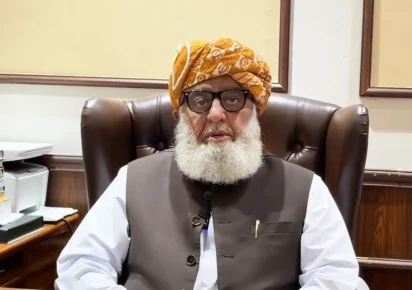
    Fazlur Rehman urges dialogue to end AJK crisis

      Jamiat Ulema-e-Islam-Fazl (JUI-F) chief Maulana Fazlur Rehman has urged the federal government to address the ongoing unrest in Azad Jammu and Kashmir (AJK) through dialogue, stressing that reconciliation is the only path to a lasting solution. In a video message shared on the party’s X account on Saturday, Fazlur Rehman called on the government and state institutions to recognise the seriousness of the situation instead of responding with force. He said authorities should work to restore peace and stability rather than allowing further bloodshed. “The government and state institutions must understand the gravity of the crisis. Instead of turning our homeland into a place of violence, they should focus on healing divisions through meaningful dialogue,” he said. His remarks came after violent clashes were reported in Rawalakot between law enforcement personnel and protesters affiliated with the banned Jammu and Kashmir Awami Action Committee (JAAC). Reports circulating on social media claimed multiple casualties and injuries, with both security officials and the JAAC alleging loss of lives. Fazlur Rehman said the JAAC’s sit-in had continued for more than two months. He recalled that after tensions intensified on June 5, the committee had formally requested him to mediate between the protesters and the government. According to him, he accepted the role and remained in contact with both sides through JUI-F AJK chief Maulana Saeed Yousaf Khan and Sardar Kamran Azam Khan. The JUI-F chief expressed concern over the situation faced by residents of AJK, saying people expect their government to protect them rather than leave them living in fear. He alleged that women, children and families had endured months of insecurity while the authorities failed to address their concerns. He further claimed that force had been used against unarmed protesters and alleged that, according to the information available to him, the death toll had reached around 80 people. However, no official confirmation has been issued regarding that figure. Despite the violence, Fazlur Rehman appealed to the JAAC leadership and protesters to remain peaceful and avoid any action that could worsen the situation. He urged them to allow more time for mediation efforts, expressing hope that a fair and lasting political settlement could still be achieved. He also criticised the government’s approach, claiming that although the protesters had shown confidence in his mediation efforts, the authorities had not taken the initiative seriously and had instead relied on force rather than negotiations. Warning of wider implications, Fazlur Rehman said the movement had gained support across Kashmir as well as among Pakistanis and the Kashmiri diaspora, particularly in Europe. The recent violence has drawn condemnation from political parties and human rights organisations. The Human Rights Commission of Pakistan (HRCP) expressed deep concern over reports of deaths and injuries, stressing that maintaining law and order should never come at the expense of the right to life or the freedoms of peaceful assembly and expression. The commission called for a prompt, impartial and independent investigation into the incidents. Opposition parties, including PTI, also demanded an independent judicial inquiry into the clashes, while other political groups criticised what they described as the excessive use of force against protesters. The current dispute is linked to long-standing demands by the JAAC, which has been seeking constitutional and governance reforms in AJK. Among its key demands are the abolition of 12 reserved seats in the AJK Legislative Assembly allocated to Kashmiri refugees and the removal of the existing quota system. Although the government and the JAAC reached an agreement after protests last year to establish a high-level committee to review the issue of refugee seats, negotiations have since stalled. The JAAC continues to insist on abolishing the reserved seats, while the government remains opposed to the proposal.

  • | | |

    Army major martyred, five terrorists killed

    A Pakistan Army major was martyred while leading an intelligence-based operation (IBO) against terrorists in the Razmak area of North Waziristan, the Inter-Services Public Relations (ISPR) said on Saturday. According to the military’s media wing, security forces launched the operation after receiving intelligence about the presence of terrorists in the area. During the exchange of fire, five terrorists affiliated with Fitna al Khawarij were killed. ISPR identified the martyred officer as Major Hafiz Ihsan Elahi, 34, a resident of Mianwali district. The military said the officer was leading his troops from the front and fought bravely during the operation before embracing martyrdom. The statement said the slain terrorists were actively involved in multiple attacks against security forces, law enforcement personnel and civilians. Security forces also recovered a cache of weapons, ammunition and other military equipment from the militants during the operation. Following the successful raid, sanitisation operations were launched in the surrounding areas to eliminate any remaining terrorists and ensure the area is fully cleared. The military said the operation forms part of Pakistan’s ongoing counterterrorism campaign under the Azm-i-Istehkam strategy approved by the Federal Apex Committee on the National Action Plan. The ISPR reiterated that Pakistan’s security forces remain committed to eliminating all forms of terrorism and will continue intelligence-driven operations against militants across the country. It added that the sacrifices of soldiers strengthen the nation’s resolve to safeguard peace and security. Pakistan has witnessed an increase in terrorist incidents since the banned Tehreek-i-Taliban Pakistan (TTP) ended its ceasefire with the government in late 2022. Since then, security forces have intensified intelligence-based operations in Khyber Pakhtunkhwa and Balochistan to dismantle militant networks.