تازہ ترین

  • | |

    Indian technology provided to Afghan Taliban repor…

      Security experts have claimed that technology allegedly provided by India to the Afghan Taliban for use against Pakistan has also failed to achieve its intended purpose. According to a report, the Tehreek-e-Taliban Pakistan (TTP) and the Balochistan Liberation Army (BLA) are receiving what the report describes as full support from the Afghan Taliban regime, along with financial assistance from India. The report further claims that the groups are being supported through various means as part of activities directed against Pakistan. The report stated that the Afghan Taliban regime claimed to have carried out a drone attack against Pakistan in June 2026. However, according to the report, the drone was intercepted and destroyed in the air by Pakistan’s air defence system before it could reach its intended target. Security experts cited in the report said the drones allegedly used in the attack were supplied by India. They described the drones as relatively low-grade in terms of technology, with limited operational capabilities. According to the assessment, the systems lack the sophistication required to effectively penetrate Pakistan’s modern air defence network. The reported incident has once again drawn attention to the growing use of unmanned aerial vehicles, or drones, in regional security and military operations. Drones have increasingly become an important tool for surveillance, reconnaissance and attacks because of their relatively low operating costs and ability to operate without putting pilots at direct risk. However, experts say the effectiveness of a drone depends heavily on its technological capabilities, including its range, navigation system, communication links, payload capacity, electronic protection and ability to avoid detection. Less sophisticated drones can be vulnerable to modern radar and counter-drone technologies, particularly when they are detected at an early stage. According to the report, Pakistan has developed and deployed defence mechanisms capable of detecting and neutralising such aerial threats. The country’s air defence network is equipped to identify incoming objects and take appropriate measures to prevent them from reaching sensitive targets. The report claims that the destruction of the drone demonstrates the limitations of the technology allegedly supplied by India and highlights the challenges faced by armed groups attempting to use relatively unsophisticated unmanned systems against a country with established air defence capabilities. Security experts further maintained that the incident demonstrates the importance of advanced detection and interception systems in countering the increasing drone threat. As unmanned systems become more widely available, countries across the region are investing in technologies designed to detect, track and neutralise hostile drones. The report also linked the alleged use of Indian-supplied drones to broader security concerns involving militant groups operating in and around the region. It claimed that the TTP and BLA have benefited from support from the Afghan Taliban and financial assistance from India. These claims, however, remain allegations and would require independent verification. The reported June 2026 incident is likely to remain a subject of discussion among security analysts as Pakistan continues to strengthen its air defence and counter-drone capabilities. The episode also highlights the technological competition surrounding unmanned aerial systems and the growing importance of electronic and aerial defence measures. According to the report, Pakistan’s ability to detect and neutralise the drone before it could cause damage demonstrates that its existing defence mechanisms can pose a significant challenge to low-capability unmanned aerial systems.

  • |

    7.4-magnitude quake strikes Colombia

    A powerful earthquake struck Colombia and several other parts of Latin America on Monday, causing injuries, damaging buildings and forcing evacuations in the capital, Bogota. The earthquake was recorded at different magnitudes by geological agencies. Colombia’s geological service measured it at 6.6, while the United States Geological Survey estimated its magnitude at 7.4. The epicentre was located in western Colombia at a depth of around 100 kilometres. Strong tremors were felt across large areas of the country. The shaking was also reported in neighbouring Ecuador and as far north as Panama. In Bogota, residents rushed out of buildings as emergency sirens sounded. Some people were seen gathering in the streets after leaving their homes and workplaces. Authorities ordered evacuations from a number of buildings as a precaution while emergency teams assessed possible structural damage. The situation was particularly serious in the western parts of Colombia. The governor of Choco province reported injuries and significant damage to buildings in Quibdo, the provincial capital. Cali, one of Colombia’s largest cities, also suffered substantial damage. Mayor Alejandro Eder said at least 20 buildings had collapsed and that people were believed to be trapped inside some of the structures. Rescue operations were launched in the affected areas. Cali authorities requested additional emergency teams from Bogota and Medellin to assist with search and rescue efforts. Images broadcast by local media showed buildings with damaged facades and sections of structures affected by the powerful tremors. Emergency authorities continued to assess the extent of the destruction as rescue teams searched damaged buildings for survivors. Officials have not yet released a complete account of casualties or property losses. The number of injured people is expected to change as assessments continue. The depth and strength of the earthquake allowed tremors to be felt across a wide area, including outside Colombia. Authorities urged residents to remain cautious and follow instructions from emergency services, particularly in buildings that may have suffered structural damage. The earthquake comes as parts of northern South America remain vulnerable to major seismic activity. In June, two powerful earthquakes struck Venezuela, with reported magnitudes of 7.2 and 7.5, causing widespread destruction and thousands of deaths.

  • | |

    Sindh IGP calls for proper investigation into Mir …

      Sindh Inspector General of Police (IGP) Javed Alam Odho has said that the death of Mir Raza is a tragic and deeply concerning incident, stressing that the case must be investigated and resolved properly  Speaking at a press conference in Sukkur, the Sindh police chief said that a committee had been formed to investigate the case and that a new investigation team would now carry out the inquiry. Commenting on the circumstances surrounding Mir Raza’s death, Odho said he believed that a communication gap or miscommunication had emerged in the case. He described the incident as unfortunate and said that the authorities were committed to ensuring that the matter was investigated in a proper and transparent manner. “We are not the policymakers; we are responsible for implementing the law,” the IGP said, adding that the investigation would eventually establish the facts surrounding the incident. Javed Alam Odho described the Mir Raza case as sensitive and said that both the police and the Sindh government wanted to ensure that it was handled appropriately. He said that much of the confusion surrounding the case had emerged because of the medical-legal report. According to him, an earlier report prepared by one doctor had presented in different findings, which contributed to uncertainty surrounding the case. The IGP said that a new committee had now been formed to investigate the matter and restore public confidence in the process. He explained that the previous committee had continued its work on the basis of the evidence that had been provided to it at the time. However, according to Odho, the evidence available to investigators had subsequently changed significantly. In light of the new evidence, he said, there was a need to restart the investigation using a different approach. The new investigation team has also been instructed to maintain open communication with the victim’s family and the media throughout the investigation, he added. Earlier, reports emerged that an attempt had allegedly been made to burn Mir Raza’s body with acid. According to forensic sources, traces of acid were reportedly found on his shirt, adding another dimension to the investigation. Meanwhile, the Sindh government had decided to have the Mir Raza case investigated through a judicial commission involving High Court judges. Sindh Law Minister Zia Lanjar said that a meeting had been held with the Chief Minister regarding the case. He said the government had decided to establish a judicial commission to investigate the circumstances surrounding Mir Raza’s death. Mir Raza Ali Khan went missing on July 28 from the Pakistan Employees Cooperative Housing Society (PECHS). According to reports, he left his home at around 4:09am in an online taxi. His body was recovered two days later from the Gulistan-e-Johar area. Police officials said that the body was found in a severely damaged condition and that Mir Raza had suffered a gunshot wound to the chest. Authorities also said that all of his social media accounts had been deactivated one day before his body was recovered, a development that investigators are expected to examine as part of the case. Mir Raza’s family has been seeking answers about the circumstances surrounding his death. His father previously said that Mir Raza was scheduled to get married on August 30 at Bait-ul-Mukarram Mosque in Gulshan-e-Iqbal. According to his father, Mir Raza had been extremely happy about starting a new chapter of his life and was looking forward to his upcoming marriage. The formation of a new investigation committee and the proposed judicial commission are expected to bring greater clarity to the case and address concerns raised by the victim’s family and the public.

  • |

    Infantino faces fresh challenge from three football confederations

    FIFA President Gianni Infantino is facing renewed criticism after three major football confederations jointly challenged his leadership and decision-making. UEFA, CONCACAF and the Asian Football Confederation (AFC) issued a strongly worded letter on Monday. They stressed that football is a collective institution and should not be controlled by any single individual. The latest criticism follows Infantino’s controversial proposal to allow private investment in FIFA competitions, including the World Cup. The plan was withdrawn only days after it was announced following strong opposition from several football bodies. The three confederations had previously criticised the proposal. Their latest statement indicates that tensions with FIFA’s leadership have not eased despite the withdrawal of the plan. The organisations argued that leadership in football should be based on responsibility, transparency and collective decision-making. They accused FIFA’s leadership of failing to meet those standards. The dispute could become particularly significant ahead of next year’s FIFA presidential election. Infantino is expected to seek a fourth and final term in office. The election is scheduled to take place in Rabat next March, while candidates must declare their intentions by November 18. CONCACAF President Victor Montagliani is considered a potential challenger to Infantino. Infantino had previously appeared likely to face little opposition after FIFA oversaw a successful 2026 World Cup in the United States, Mexico and Canada. However, the private investment controversy has changed the political landscape within world football. UEFA played a major role in forcing the proposal off the table. European football officials had warned that they could consider boycotting World Cups if the investment plan went ahead. Such a move could have seriously affected the tournament because it could have involved major football nations, including Spain, France and England. The three confederations said FIFA’s own explanation of the controversy had focused too heavily on communication problems. They argued that the issue was more serious and reflected what they described as a failure of judgment. They also questioned an emergency meeting in Morocco where senior FIFA officials expressed support for Infantino. According to the confederations, the meeting did not adequately address their concerns because only selected members of FIFA’s management leadership were involved. They argued that FIFA’s leadership should engage directly with its wider institutional structure and staff. Infantino still retains support in several parts of the football world. The Confederation of African Football has backed him, while South American football’s governing body CONMEBOL remains broadly supportive. Support for him also exists within CONCACAF and the AFC, although the confederations do not vote as unified blocs in the FIFA presidential election. The dispute comes after Infantino spent a decade at the helm of FIFA and oversaw major changes to the World Cup and the organisation’s distribution of financial resources. The three confederations acknowledged that football had experienced significant growth during the past decade. However, they stressed that these developments were achieved through cooperation between FIFA, continental confederations, national associations and thousands of people involved in the sport.

  • | | |

    Aurangzeb, Baker discuss stronger Pak-US economic …

    Federal Minister for Finance Muhammad Aurangzeb met US Chargé d’Affaires Natalie Baker on Monday to discuss ways to strengthen Pakistan-US economic relations, trade and investment cooperation. According to the Finance Ministry, Aurangzeb briefed the US diplomat on his recent visit to Washington and meetings with senior American officials, including the US Treasury secretary. He also shared details of discussions with officials from the International Monetary Fund (IMF), US International Development Finance Corporation (DFC) and US Export-Import Bank. The meeting focused on increasing US investment and financing for commercially viable projects in Pakistan. Both sides also discussed improving Pakistan’s access to US markets and expanding Pakistani exports. The two sides agreed to advance a framework aimed at increasing bilateral trade and investment. They also discussed Pakistan’s participation in international capital markets and efforts to diversify the country’s sources of financing. According to the ministry, discussions also covered measures to strengthen foreign exchange reserves and improve Pakistan’s credit profile. Opportunities for greater investment by US financial institutions in Pakistan were reviewed. Cooperation in key sectors, including ports, logistics, energy and telecommunications, also came under discussion. The two sides explored potential collaboration in digital technology and artificial intelligence. Aurangzeb said significant progress had been made in negotiations on a bilateral trade framework between Pakistan and the United States. He said the government was working to create a more favourable environment for private-sector investment. The finance minister welcomed the interest of US companies and investors in Pakistan. He said the government was continuing reforms aimed at improving the business and investment climate. Aurangzeb also briefed the US chargé d’affaires on Pakistan’s new system for daily adjustments in petroleum product prices. He explained that the mechanism was designed to align domestic prices more closely with developments in the international market. He said the government’s priorities included maintaining fiscal discipline, strengthening foreign exchange reserves and increasing exports. He added that reforms were underway to improve economic stability and attract investment. Natalie Baker appreciated Pakistan’s efforts to manage its economic situation during a period of regional tensions. She also praised the country for maintaining economic and financial stability despite rising energy prices.

  • | |

    Sohail Afridi fires warning over Imran Khan’s sa…

    PTI leader and Khyber Pakhtunkhwa Chief Minister Sohail Afridi has said that the party does not want any harm to befall its founder, Imran Khan. Speaking at a press conference alongside other PTI leaders, Afridi said there was no alternative to resisting what he described as a “fake government”. He warned that young people were increasingly frustrated about their future and would come out of their homes on September 27. Afridi said PTI leaders had repeatedly sought a meeting with Imran Khan but had received no positive response. He said Khan’s family members were non-political and that both his family and lawyers were willing to give assurances that no political press conference would be held after the meeting. The chief minister also expressed concern about Khan’s health. He said the party wanted him to receive proper medical treatment and warned that PTI workers would stage a sit-in outside the Supreme Court if they were not allowed to meet him. Afridi reiterated that the party did not want Imran Khan to suffer any harm. He said PTI’s political struggle was centred around its founder and that his supporters would continue to raise their concerns over his treatment. Speaking on the occasion, PTI leader Salman Akram Raja said Imran Khan’s health was currently the party’s most important concern. Raja said no further interference with Khan’s health would be tolerated. He also indicated that the political campaign being planned by the party would continue and would not be stopped. He criticised the government and alleged that PTI supporters were being treated unfairly. He said the party would continue its political struggle against what he called an imposed government.

  • |

    Shaheen Afridi gives cautious reply on Pakistan captaincy

    Pakistan ODI captain Shaheen Shah Afridi has avoided giving a long-term commitment about his leadership ahead of the 2027 ICC World Cup, saying that he remains captain “for now”. Speaking at a joint press conference with the captains of the teams participating in the National Champions Cup, Shaheen was asked whether he had received assurances that he would continue leading Pakistan until the World Cup. His response was brief. “For now, I am the captain,” he said. The left-arm fast bowler also stressed the importance of the Champions Cup in preparing Pakistan for the global tournament. He said the competition would help the national team build a wider pool of players and identify suitable replacements in case of injuries. Shaheen pointed out that injuries have frequently affected Pakistan’s World Cup campaigns. He said having additional players ready would make it easier for the team management to deal with any fitness concerns before the 2027 tournament. He added that the Champions Cup would allow players to perform in their preferred positions while competing against strong domestic opposition. According to Shaheen, the tournament will be important not only for individual players but also for assessing the overall strength and fitness of the national squad. He said the performances of players during the competition would help selectors identify those capable of contributing to Pakistan’s World Cup plans. “Our focus is on the World Cup,” Shaheen said, stressing that consistent performances and fitness would be key factors in selection. The National Champions Cup is scheduled to begin on Tuesday at Multan Cricket Stadium. Four teams will participate in the competition: Pakistan Greens, Pakistan Whites, Pakistan Blues and Pakistan Gold. Each team will face the others once during the league stage. The top two sides will qualify for the final, which is scheduled for August 18. The tournament’s trophy unveiling ceremony was held earlier, with the captains of all four teams attending the event. Shaheen Shah Afridi is leading Pakistan Gold, while Sahibzada Farhan is captaining Pakistan Blues and Saim Ayub is leading Pakistan Whites. Faheem Ashraf represented Pakistan Greens at the ceremony in place of their regular captain, Shadab Khan.

  • | |

    Ishaq Dar holds telephone conversation with Saudi …

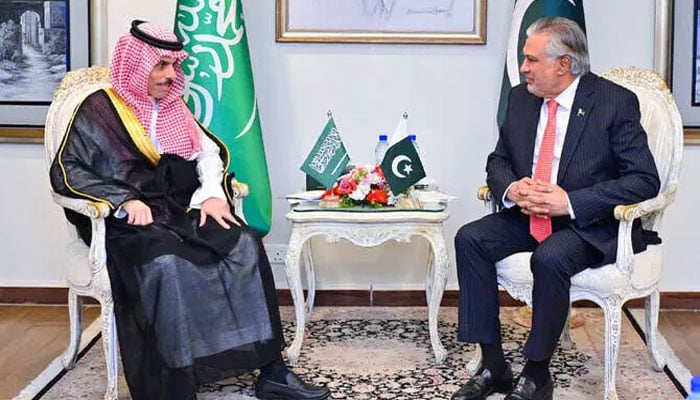
      Pakistan’s Deputy Prime Minister and Foreign Minister Ishaq Dar held a telephone conversation with Saudi Foreign Minister Prince Faisal bin Farhan, during which the two sides discussed matters of mutual interest as well as regional and international developments. According to a statement issued by the Foreign Office spokesperson, the two foreign ministers exchanged views on a range of issues of common interest during the telephone call. The conversation focused on strengthening bilateral relations between Pakistan and Saudi Arabia and maintaining close coordination on important regional and global matters. During the discussion, Ishaq Dar and his Saudi counterpart also reviewed the prevailing regional situation. The two ministers exchanged views on developments affecting peace and stability in the region and discussed the importance of continued diplomatic engagement and cooperation among countries. The foreign ministers also discussed multilateral cooperation and matters related to international forums. They emphasised the importance of maintaining coordination between Pakistan and Saudi Arabia on issues of common concern at both regional and international levels. According to the Foreign Office, Pakistan and Saudi Arabia reaffirmed their commitment to maintaining close contact and cooperation through bilateral and multilateral platforms. The telephone conversation comes as Pakistan and Saudi Arabia continue to maintain close and longstanding relations based on political, economic, diplomatic and people-to-people ties. Both countries regularly consult each other on regional developments and issues of mutual interest. Pakistan considers Saudi Arabia an important partner in the Middle East, while Saudi Arabia has maintained close relations with Pakistan over the years. High-level exchanges between officials from both countries have remained an important feature of their bilateral relationship. The discussion between Ishaq Dar and Prince Faisal bin Farhan also reflects the importance attached by both countries to regular diplomatic consultations. Such contacts provide an opportunity for the two sides to exchange assessments of emerging regional developments and coordinate their positions on matters discussed at international forums. Multilateral cooperation was another important aspect of the conversation. Pakistan and Saudi Arabia have worked together at various international platforms and have frequently supported closer coordination on issues affecting the Muslim world and the broader international community. The two ministers also reiterated the importance of continued engagement between their respective governments. By maintaining regular communication, both sides aim to strengthen their strategic partnership and enhance cooperation on matters of mutual interest. The telephone conversation is expected to contribute to ongoing diplomatic efforts to further deepen Pakistan-Saudi Arabia relations. Both countries have repeatedly expressed their desire to expand cooperation across multiple areas and maintain strong institutional and political contacts. The Foreign Office spokesperson did not provide further details about the specific regional issues discussed during the call. However, the reference to the regional situation and multilateral cooperation indicates that the conversation covered broader developments beyond bilateral relations. The reaffirmation of close coordination on bilateral and multilateral platforms demonstrates the continued importance of the relationship between Islamabad and Riyadh. Regular communication between senior officials remains a key mechanism for both countries to exchange views, coordinate diplomatic positions and respond to developments in the region. The latest telephone conversation between Ishaq Dar and Prince Faisal bin Farhan therefore underscores the two countries’ commitment to maintaining close diplomatic engagement and strengthening cooperation at both bilateral and international levels.

  • | |

    Jibran Nasir says No hope from Sindh government in…

      Jibran Nasir, lawyer for Raza Mir, the father of young businessman Mir Raza who was found dead in Karachi’s Gulistan-e-Johar area, has said that he has no expectations from the Sindh government led by the Pakistan Peoples Party (PPP), urging police officials to perform their duties and calling on the provincial government not to adopt a “double policy” in the case. Speaking to the media after the first meeting of the investigation committee formed to probe Mir Raza’s death, Nasir said the family had made a mistake by identifying an honest police officer who had tried to bring facts to light. “We made the mistake of finding an honest officer,” Nasir said, referring to an officer who had written a letter to the authorities on August 3, informing them about alleged mistakes made by officials working under him. The lawyer alleged that those attempting to bring the facts of the Mir Raza case before the public were being targeted. He said the medical board had been constituted on the orders of the court and criticised what he described as unfair criticism of officials who had performed their duties during the past 11 days. Nasir also defended Dr Samia, saying that targeting her with criticism was unjustified. He maintained that the Sindh government had corrected its earlier mistakes and had moved the investigation in the right direction. According to the lawyer, certain individuals had attempted to quickly portray the case as suicide. He said the government itself had not failed, but rather those who had adopted an incorrect position regarding the case had been proven wrong. Nasir said that after new facts emerged, evidence indicating that Mir Raza had been murdered was acknowledged. He added that those who had initially insisted that the death was a suicide had been proven wrong and that officers who helped move the investigation in the correct direction should be encouraged. Speaking on the occasion, Mir Raza’s father said that if these steps had been taken earlier, there would have been no need for the exhumation of his son’s body. He said the family had provided investigators with all the information they had and only wanted justice for their son. Earlier, Jibran Nasir had written to the Sindh government, stating that Mir Raza’s parents did not want a judicial inquiry. He said the family had complete confidence in the judiciary but believed that the government wanted to make the case controversial under the name of a judicial commission. He also maintained that, under the law, the police had the authority to conduct the investigation. Later, Sindh Home Minister Zia Lanjar said that the decision to establish a judicial commission had been postponed for the time being following a request from Mir Raza’s parents. Mir Raza’s body was recovered from Gulistan-e-Johar on July 29. Following the exhumation of his body, a second post-mortem examination was conducted on August 8. The examination reportedly revealed traces of acid in Mir Raza’s stomach. His lungs were also found to have been severely affected by acid, while signs of acid exposure were reportedly detected on his shirt, hands and feet. Police have sealed a guesthouse near the location where Mir Raza’s body was recovered. Six people working at the guesthouse have reportedly been taken into custody. So far, 21 people, including Mir Raza’s friends and business partners, have been detained for questioning, and their statements have been recorded. Meanwhile, a five-member investigation committee headed by DIG Crime Branch Amir Farooqi held a meeting to review the case. Authorities said Section 201 of the Pakistan Penal Code has also been added to the case, in addition to Sections 365 and 302. Section 201 relates to causing evidence of an offence to disappear or giving false information with the intention of screening an offender. The investigation is continuing as authorities examine the emerging evidence and statements from people connected to the case.

  • | |

    Mir Raza case deepens as guest house probe expands

    A major development has emerged in the investigation into the death of Karachi businessman Mir Raza Ali. Investigators have obtained further details about the guest house linked to the case. The premises is located near the place where Mir Raza’s body was recovered. According to investigation findings, the guest house was registered in the name of a man identified as Liaquat Ali. The property itself is reportedly owned by a woman. Police verification of the property was carried out on June 1, 2026. Investigators also found that the guest house was not registered on the Hotel Eye application. Police had made registration on the system mandatory for hotels and guest houses. After the discovery of Mir Raza’s body, police sealed the guest house. Six people working at the premises were taken into custody for questioning. Their statements are being recorded as investigators try to determine whether the guest house has any connection with the case. So far, police have detained 21 people in connection with the investigation. The detainees include Mir Raza’s friends and business partners. Investigators are examining their statements and movements. A five-member investigation committee also held a meeting under the leadership of DIG Crime Branch Amir Farooqi. The committee is reviewing the case in light of new medical and forensic evidence. Police have also expanded the charges in the case. Sections 365 and 302 were already included in the FIR. Section 201 has now been added. The provision relates to concealing, removing or destroying evidence connected to an offence. The development follows a second post-mortem conducted after Mir Raza’s grave was exhumed on August 8. The preliminary medical findings reportedly showed several injuries on his body. The report indicated a gunshot injury to the back. The entry wound was smaller, while the wound on the front side was larger. Medical findings suggest that the bullet entered from the rear and passed through the body. The examination also found fractured ribs. Several injuries were observed on Mir Raza’s head and face. A wound and fracture measuring about 12 centimetres were found on his right thigh. Blood marks were also detected in tissues in the lower part of his body. Further examination revealed a deep injury and fracture in his jaw. Injuries were also found on his nose and other parts of his face. Investigators collected 17 samples during the exhumation. Samples from Mir Raza’s parents were also obtained for DNA comparison. The samples are expected to be examined at the forensic laboratory of the University of Karachi. After the samples were collected, Mir Raza’s body was reburied on the same day. Mir Raza Ali Khan had gone missing from the PECHS area on July 28. Police said he left his home at around 4:09am in an online taxi. His body was found two days later in Gulistan-e-Johar. Police officials said the body was in a badly damaged condition. A gunshot wound was also found on his chest. Investigators also found that Mir Raza’s social media accounts had been deactivated a day before his body was recovered. His family has consistently maintained that he was murdered. His father said Mir Raza was preparing for his marriage and was excited about starting a new phase of his life. His nikah had been scheduled for August 30 at Baitul Mukarram Mosque in Gulshan-e-Iqbal. The latest investigation has brought renewed attention to the guest house and the people associated with it. Police are now examining medical evidence, forensic samples, CCTV footage, statements and other available material.