تازہ ترین

  • |

    7.4-magnitude quake hits Colombia, killing 26

    A powerful earthquake struck western Colombia on Monday, leaving at least 26 people dead and causing widespread damage across several cities. The United States Geological Survey recorded the earthquake at magnitude 7.4. It struck at around 7:34am local time, with its epicentre near San José del Palmar in the Chocó region at a depth of about 107 kilometres. The tremor was felt across much of Colombia and in neighbouring Venezuela, Ecuador and Panama. Authorities warned residents to remain alert as aftershocks were recorded following the main earthquake. Local officials reported deaths in several parts of the country. Three children were among those killed in Calima El Darién after a wall collapsed. Other fatalities were reported in Zarzal, Buenaventura, Manizales and Pereira. Pereira officials reported 18 deaths, while authorities in Manizales confirmed additional fatalities. Rescue teams continued assessing the situation as reports of casualties and damage were updated. Cali was among the worst-affected cities. Mayor Alejandro Eder said at least 20 buildings had collapsed, with people reportedly trapped under the rubble. He requested additional rescue personnel from Bogotá and Medellín to assist emergency teams. Residents were urged to leave buildings if they noticed major cracks or believed the structures were unsafe. Serious damage was also reported in Quibdó, the capital of Chocó. Regional authorities said several people were injured and buildings were damaged. Rescue workers were deployed to assess affected areas and search for people who may be trapped. Manizales also suffered significant structural damage. Images and videos showed part of the Cathedral Basilica’s clocktower leaning dangerously. A five-storey building was also seen collapsing as people evacuated nearby areas. The earthquake caused panic in Bogotá, where residents rushed out of homes and workplaces. Emergency sirens sounded across parts of the capital. People gathered in streets as buildings and traffic lights shook during the tremor. Bogotá authorities initially reported cracks in some structures but said there was no immediate indication of major infrastructure damage. The earthquake also disrupted air travel. Colombia’s civil aviation authority suspended operations at several airports after damage was reported at facilities in Pereira, Manizales, Quibdó, Armenia, Cartago and Buenaventura. Operations at Popayán airport were also suspended because of volcanic ash. Officials said the Colombian Geological Service recorded two aftershocks, measuring 2.8 and 4.8. The stronger aftershock was widely felt. Colombian authorities described the earthquake as the strongest recorded in the country in roughly a decade. Emergency agencies continued damage assessments while rescue operations remained underway. President Abelardo De La Espriella said he had taken direct charge of the emergency response. He ordered the creation of a unified command centre to coordinate rescue and relief efforts and said he would travel to Pereira to monitor the situation. The disaster comes less than two months after powerful earthquakes struck Venezuela on June 24. Those quakes killed more than 6,100 people and caused extensive destruction.
  • | |

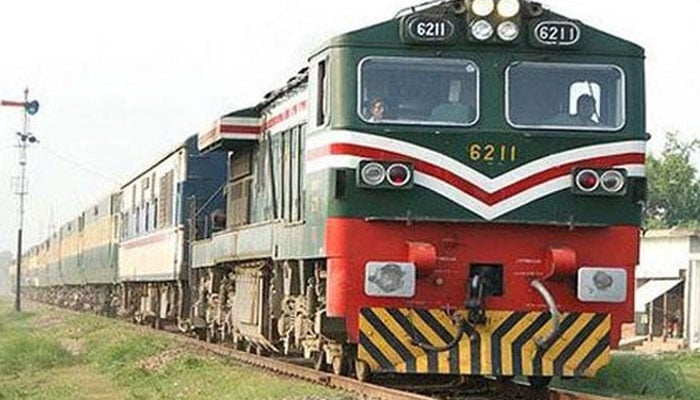
    Jaffar Express service suspended for one day

    The Jaffar Express operating from Quetta to Peshawar will remain suspended for one day due to railway track maintenance. Railway authorities in Quetta said the service would be suspended tomorrow to allow repair and maintenance work on the track. The authorities also said the Jaffar Express travelling from Peshawar towards Quetta would operate only up to Jacobabad instead of continuing to Quetta. Passengers have been advised to keep the temporary change in the train schedule in mind while planning their journeys. Railway officials said the suspension is a temporary measure linked to repair work. Normal train operations are expected to resume after the maintenance is completed.

  • |

    Wheat, flour prices surge in Hyderabad

    HYDERABAD: The prices of wheat and flour have witnessed a fresh increase in Hyderabad, putting additional pressure on household budgets and raising concerns among consumers already struggling with rising food costs. According to market sources, flour is currently being sold at prices ranging between Rs135 and Rs145 per kilogram in different parts of the city. The increase has triggered concern among citizens, particularly low- and middle-income families, who rely on flour as a staple food item. Flour mill owners said the price of a 10-kilogram flour bag has risen from Rs1,350 to Rs1,450, marking an increase of Rs100. They attributed the latest rise primarily to higher wheat prices in the open market. The price of wheat has also recorded a significant increase. According to grain market traders, the price of a 100-kilogram wheat sack has climbed from Rs10,800 to Rs11,800, reflecting an increase of around Rs1,000. Traders said fluctuations in wheat prices in the open market were directly affecting flour prices, leaving millers with little option but to revise their rates. Citizens have expressed frustration over the continued increase in the prices of essential food items. They urged the authorities to monitor wheat and flour markets and take effective measures to prevent unnecessary price hikes. Consumers also called for stronger market oversight and action against profiteering so that essential food commodities remain available at affordable prices.

  • |

    Ukrainian drone strike kills 13 in Russia

    At least 13 people, including a child, were killed after Ukrainian drones struck the Russian republic of Tatarstan, according to local officials. The overnight attack targeted areas around Nizhnekamsk, located more than 1,100 kilometres from Ukraine. Authorities said another 75 people were injured in the strikes. Ukraine’s Armed Forces said a major oil facility in the city was hit. The attack reportedly continued for several hours, with explosions, fires and thick smoke reported in the area. Images circulating online showed large columns of smoke rising over Nizhnekamsk as emergency sirens sounded. The authenticity of all footage and details could not be independently verified. The Uzbek consulate in Tatarstan said seven of those killed were Uzbek citizens. Russian media reported that many of the victims were staying at a hostel when the attack occurred. Russia’s Investigative Committee said civilians were present in the area where the drones struck. Russian officials condemned the attack and warned that those responsible would face severe punishment. Tatarstan leader Rustam Minnikhanov expressed condolences to the families of those killed. Nizhnekamsk Mayor Radmir Belayev described the loss of life as a major tragedy for the city. Ukraine has increasingly carried out long-range drone attacks against Russian energy and industrial facilities. Kyiv says such sites contribute to Russia’s military operations by supporting its economy, logistics and weapons production. Ukrainian officials said the facilities targeted in Nizhnekamsk are connected to Russia’s war effort. They argued that striking such infrastructure is intended to reduce Moscow’s ability to sustain its military campaign. Russia’s Defence Ministry said its air-defence forces intercepted or destroyed more than 450 Ukrainian drones overnight across several regions. Authorities also reported fires at an industrial facility in the Siberian Tyumen region after several drones were reportedly brought down nearby. The Nizhnekamsk facility had previously been targeted in a drone attack in June, highlighting the growing reach of Ukraine’s campaign against Russian energy infrastructure. The latest strike is among the deadliest reported attacks inside Russia since Moscow launched its full-scale invasion of Ukraine in 2022. Ukraine has intensified its use of long-range drones in recent months, frequently targeting oil refineries, warehouses and other facilities it considers strategically important. Russia has continued its own large-scale missile and drone attacks on Ukrainian cities. The escalation has increased concerns over civilian casualties on both sides. Last week, a combined Russian drone and missile attack on Kyiv reportedly killed 21 people.

  • |

    Sidharth Malhotra supports Kiara amid Toxic criticism

    Sidharth Malhotra has shown his support for Kiara Advani amid the criticism surrounding her upcoming film Toxic, which also stars South Indian superstar Yash in a leading role. The actress has recently found herself at the centre of online controversy following the release of the film’s final trailer. Several viewers criticised her for the bold and intimate scenes featured with Yash, with some social media users expressing their disappointment over her on-screen chemistry with the actor. Amid the growing criticism, Sidharth appeared to stand firmly by his wife and praised her hard work ahead of the film’s release. The actor took to Instagram to reshare the final trailer of Toxic, accompanying it with a heartfelt message for Kiara and the entire team. Highlighting the dedication and effort that went into making the highly anticipated project, Sidharth wrote that the hard work, passion and determination of the cast and crew would be visible on the big screen. He also expressed his excitement about Kiara’s performance, suggesting that the film could become one of her best projects. Sidharth further praised director Geetu Mohandas, Yash and the rest of the team for creating what he described as something magical. He concluded his message by extending his best wishes to the Toxic team and looking forward to the film’s release on August 26. His supportive message comes at a time when Kiara has been receiving considerable attention on social media because of her role in the action-packed film. The trailer has generated strong buzz among audiences, particularly because of the actress’s chemistry and intimate moments with Yash. While some viewers have criticised the scenes, the film’s team has continued to promote the project ahead of its theatrical release. Yash has also addressed the criticism surrounding Kiara and her role in Toxic. During the film’s recent trailer launch, the actor spoke highly of his co-star and praised her commitment as a performer. According to Yash, audiences have only witnessed a small glimpse of what Kiara has brought to the project. He described her as a dedicated actor and suggested that viewers should wait to experience her complete performance when the film arrives in cinemas. The actor also appeared to send a broader message to performers dealing with public criticism. He encouraged actors to remain committed to their beliefs and artistic choices instead of allowing outside opinions to influence their work. For now, the controversy has only added to the anticipation surrounding Toxic. With its star-studded cast, action-packed storyline and high-profile collaborations, the film is among the most awaited upcoming releases. As audiences prepare to watch Kiara and Yash on the big screen, Sidharth’s public show of support has made it clear that he is standing behind his wife and eagerly waiting to see her performance.

  • | |

    UK heatwave breaks 1995 record as fifth heatwave h…

    London: Britain is facing another spell of intense summer heat, with the country’s fifth heatwave of the year pushing the number of days above 30°C beyond a record set more than three decades ago. According to media reports, temperatures have exceeded 30°C across several parts of the UK, adding to growing concerns over the health and environmental impact of prolonged hot weather. The UK has now recorded 35 days with temperatures above 30°C this year, surpassing the 1995 total of 34 such days. The development highlights the unusual persistence of hot weather this summer. The Met Office is forecasting further rises in temperatures, with East Anglia and southeast England expected to experience particularly hot conditions on Thursday. Temperatures in some areas could climb to around 36°C. The prolonged heat has also prompted health authorities to issue warnings. The UK Health Security Agency has placed heat-health alerts across several regions, including London, the East Midlands, West Midlands, Yorkshire and the Humber, urging people to take precautions during the hottest periods. The heat is not the only concern. Britain is also dealing with increasingly dry conditions, putting additional pressure on water supplies, agriculture and natural habitats. Government assessments have previously warned that repeated heatwaves and low rainfall are increasing drought risks, while wildfires have affected several parts of the country. Dry grass, parched fields and shrinking water resources have become visible signs of the changing conditions. Authorities are urging residents to stay hydrated, avoid unnecessary exposure to extreme heat and remain cautious in areas vulnerable to fires. With another hot spell approaching, attention is now focused on how long the latest heatwave will last — and whether Britain is heading toward another summer of unprecedented weather extremes.

  • | |

    Quetta connectivity outage disrupts routine life

    QUETTA: A sudden suspension of mobile phone and internet services has disrupted daily activities across Quetta, leaving residents struggling to communicate, conduct business and access essential online services. The connectivity shutdown affected a wide range of people, including students, healthcare professionals, traders, delivery workers and journalists. Many residents were unable to make calls, send messages or use internet-based services. Students were among those facing major difficulties. Those relying on online classes and digital learning platforms could not access study material or communicate with teachers and classmates. The disruption also affected students preparing assignments and completing other academic tasks online. The outage created problems for healthcare workers as well. Doctors, medical staff and patients often depend on mobile phones and internet services for communication. The interruption made it harder to coordinate with colleagues, contact patients and exchange important medical information. Businesses and traders also faced disruptions. Many shops and small businesses now depend on digital payments, online orders and messaging applications. The suspension affected their ability to communicate with customers and manage routine transactions. Delivery riders were particularly affected because they rely heavily on mobile applications and phone calls to receive orders, locate customers and coordinate deliveries. The loss of connectivity made these routine tasks considerably more difficult. The shutdown also created challenges for journalists reporting from Quetta. Reporters faced difficulties contacting sources, verifying information and sending updates from the field. The lack of reliable communication can slow down coverage, particularly when events are developing quickly. For ordinary residents, the disruption meant difficulty staying in touch with family members, friends and colleagues. People who depend on mobile services for work and other essential activities were forced to deal with additional inconvenience.

  • | | |

    Rising fuel taxes add to motorists’ burden

    Consumers are facing a growing burden of taxes and other charges on petrol and high-speed diesel. Official documents show that the difference between the basic cost and retail price of petrol is Rs139.93 per litre. For high-speed diesel, the difference stands at Rs116.10 per litre. The documents show that the basic cost of one litre of petrol is Rs197.69. However, consumers are currently paying Rs327.62 per litre. Several taxes, levies and margins are included in the retail price. These charges significantly increase the amount paid by consumers at fuel stations. Petrol carries a petroleum levy of Rs80 per litre. A climate support levy of Rs5 is also imposed. The price also includes Rs21.24 in customs duty. An Inland Freight Equalisation Margin of Rs7.48 is charged per litre. Oil marketing companies receive a margin of Rs7.87 per litre. Dealers are paid a margin of Rs8.64 per litre. As a result, consumers pay Rs130.23 per litre in combined levies, taxes and margins on petrol. The situation is similar for high-speed diesel. Its basic cost is Rs264.76 per litre. However, its retail price has been fixed at Rs380.86 per litre. According to the documents, consumers pay around Rs116 per litre in levies, taxes and different margins on high-speed diesel. The petroleum levy on high-speed diesel is Rs74.28 per litre. The fuel also carries a climate support levy of Rs5 per litre. Customs duty accounts for another Rs15.68 per litre. The Inland Freight Equalisation Margin stands at Rs4.63. Oil marketing companies receive a margin of Rs7.87 per litre. Dealers receive Rs8.64 per litre as their margin. The figures show that taxes, levies and various margins form a significant portion of the final prices of both fuels. The additional charges directly affect motorists and consumers. They also increase transportation and operating costs for businesses that depend heavily on fuel. The rising cost of petrol and diesel can also put pressure on the prices of goods and services. Transport operators, traders and other businesses often pass higher fuel costs on to consumers.

  • |

    North Korean hackers develop AI tools for cyberattacks

    SEOUL: A North Korean-linked hacking group has reportedly expanded its use of artificial intelligence to strengthen cyberattacks, automate operations and analyse stolen data. The group, identified as Kimsuky, has developed and collected a range of AI-related tools that could help its operators conduct attacks more efficiently, according to a South Korean cybersecurity company. The company said it discovered infrastructure linked to Kimsuky containing several programs designed to run and manage artificial intelligence models locally. These included Ollama, GPT4All and Msty. The hackers also appeared to be using retrieval-augmented generation technology. The system can help AI models search and process large collections of documents. Researchers said the use of locally operated AI models could allow the group to analyse sensitive information without sending data to external AI services. This could give hackers greater control over stolen material and reduce their reliance on third-party platforms. The investigation also uncovered AI agent development frameworks, speech-to-text software and an AI-assisted coding tool called Cursor. According to the cybersecurity firm, the findings indicate that Kimsuky may be moving beyond the simple use of generative AI for creating phishing messages. The group could now be seeking to integrate existing AI models into different stages of its cyber operations. These may include malware development, stolen-data analysis and attack automation. Researchers also identified documents related to finance and cryptocurrency on the infrastructure. Some of the files appeared to have been generated using artificial intelligence. The documents were designed to look like legitimate investment reports and other professional workplace material. Such files could potentially be used as decoys or to make malicious campaigns appear more credible. The findings have not been independently verified. However, cybersecurity researchers and government agencies have repeatedly linked North Korean state-backed groups to international cyber operations. North Korean cyber units have been accused of conducting espionage campaigns, stealing money and targeting cryptocurrency-related assets. Authorities in the United States and South Korea have previously warned about the activities of such groups. Kimsuky has long been associated with cyber-espionage operations targeting governments, organisations and individuals. The group has also been accused of gathering intelligence to support North Korea’s strategic interests. The latest findings point to a growing role for artificial intelligence in cyber operations. Security researchers have warned that AI tools can make phishing campaigns more convincing and help attackers process information and develop malicious software more quickly.

  • | | |

    AJK polling enters third phase amid tight security

    MUZAFFARABAD: Voting in the third phase of the Azad Jammu and Kashmir general elections began on Monday in four constituencies of Bagh and Haveli districts. Polling started at 8am and will continue until 5pm. Security has been tightened across the constituencies due to concerns over possible clashes and disturbances. Authorities have declared most of the 803 polling stations sensitive or highly sensitive. A large security contingent has been deployed to maintain law and order. Around 10,300 additional security personnel have been sent to Bagh and Haveli. Officials said the deployment was aimed at providing a safe environment for voters and election staff. The third phase was originally planned for all 11 constituencies of Poonch Division. However, voting was restricted to Bagh and Haveli after authorities reviewed the security situation. The remaining seven constituencies are expected to be polled later this month. Election officials have indicated that voting could take place on August 20 or 21, depending on the security situation. The current phase has attracted considerable political attention. Several prominent leaders are contesting the four seats. AJK Prime Minister Faisal Mumtaz Rathore is seeking to retain his constituency. Two former prime ministers, Sardar Tanveer Ilyas and Sardar Attique Ahmed Khan, are also in the electoral race. A total of 460,371 voters are eligible to cast their ballots. They include 238,664 men and 221,707 women. The election is being held at 803 polling stations. These stations have 1,254 polling booths. As many as 82 candidates are competing in the four constituencies. LA-14 Dhirkot has the highest number of candidates. Thirty candidates are contesting the seat. LA-17 Haveli has nine candidates, the lowest number among the four constituencies. In LA-17 Haveli, Prime Minister Rathore is facing PML-N candidate Engineer Mohsin Aziz and independent contender Khawaja Tariq Saeed. Rathore and Saeed were previously political allies. They had reportedly agreed to contest the seat alternately. Their political relationship changed after Rathore became prime minister. Rathore sought Saeed’s withdrawal from the contest. Saeed refused to step aside. The two former allies are now competing against each other. Mohsin Aziz is also running an active campaign. His father, Chaudhry Mohammad Aziz, had won the constituency several times in the past. The PML-N candidate is expected to receive support from sections of the Gujjar community. Saeed is believed to have support among parts of the Kashmiri community and several smaller clans. Rathore has expressed confidence about retaining the seat. He has highlighted the performance of his government during his tenure. The constituency has also witnessed allegations of electoral irregularities. Claims circulated on social media about alleged manipulation by two presiding officers. Election officials rejected the allegations as presented on social media. However, they confirmed receiving complaints against the two officials. Both were subsequently removed from election duties. In LA-15 Wasti Bagh, former prime minister Sardar Tanveer Ilyas is facing several strong contenders. The candidates include PML-N nominee and former minister Mushtaq Ahmed Minhas. PPP candidate and sitting minister Sardar Ziaul Qamar is also contesting. Jamaat-i-Islami candidate retired Brigadier Dr Mohammad Khan is another key contender. Ilyas had initially announced a boycott of the third phase. He later reversed the decision and returned to the election campaign. He has described the contest as important for his political future. He has also linked his campaign to the possibility of securing a senior constitutional position after the election. Ilyas and Ziaul Qamar belong to the same Madiyal tribe. Brigadier Khan belongs to the Narma clan. He is backed by several influential Jamaat-i-Islami figures and local supporters. Mushtaq Minhas is benefiting from the PML-N’s position as the leading party in the elections held so far. The party has secured the largest number of seats in the previous phases and is expected to play a major role in forming the next government. In LA-16 Sharqi Bagh, former ministers Sardar Mir Akbar and Sardar Qamar Zaman are among the main contenders. Mir Akbar is contesting on the PML-N ticket. Qamar is representing the PPP. The LA-14 Dhirkot contest has also emerged as one of the closely watched races. Sardar Attique Ahmed Khan, head of the Muslim Conference, is seeking another victory from the constituency. He has represented the seat for several years and previously served as AJK prime minister. He is facing a strong challenge from Sajid Iqbal Abbasi of the Awam Dast-o-Bazu Party. Abbasi is a contractor and philanthropist. He has reportedly spent substantial personal resources on welfare and development projects in the constituency. His supporters believe his community work has helped him build a strong voter base. The contest has become more interesting because Attique and Abbasi belong to the same tribe. PML-N candidate Raja Faisal Azad and PPP nominee Raja Mubashar Ejaz are also contesting Dhirkot. However, the main competition is expected to remain between Attique and Abbasi. The results of the third phase could influence the political balance in AJK. The PML-N has already emerged as the strongest party in the earlier phases. The PPP and other political groups will now seek to strengthen their position in the remaining contests.