تازہ ترین

  • | |

    Pakistani climbers open historic new route on broa…

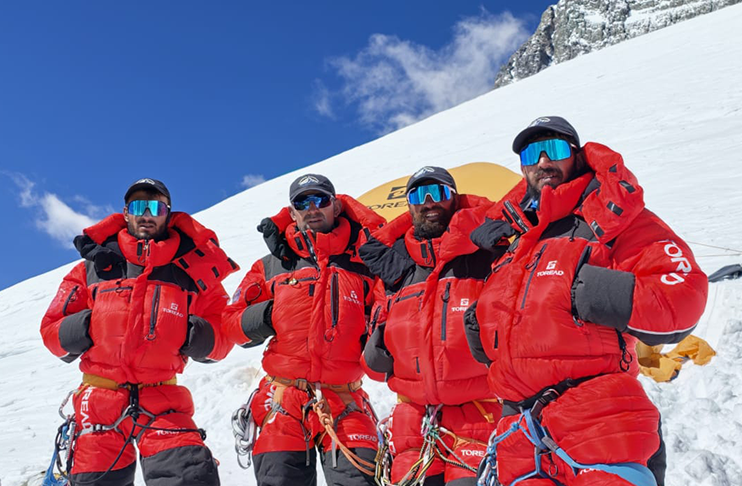
      Pakistani mountaineers have achieved a landmark feat by opening a brand-new climbing route on Broad Peak, one of the world’s highest mountains. The accomplishment is being hailed as a major milestone for Pakistan’s mountaineering community, showcasing the country’s growing expertise in high-altitude climbing and technical expedition planning. Broad Peak, standing at 8,051 metres (26,414 feet), is located in the Karakoram mountain range of Gilgit-Baltistan, approximately five miles from K2. Ranked as the world’s 12th-highest mountain, Broad Peak has long attracted climbers from around the globe because of its challenging terrain and unpredictable weather conditions. The newly established route, officially named the Mirza Ali Legacy Route, begins above Camp 3 and offers a fresh approach to the summit. The route was created after an intensive three-day effort that required climbers to navigate deep snow, steep rock faces, and mixed sections of snow and rock under extremely demanding conditions. The expedition was led by renowned Pakistani mountaineer Mirza Ali, founder of Karakorum Expeditions. Along with his team, he spent days fixing ropes and securing the mountain to make the route accessible for future expeditions. Their summit push began at 2:00 a.m. local time on July 19. Battling continuous snowfall, freezing temperatures, and severe weather, the climbers finally reached the summit at 9:55 p.m. after more than 24 hours of nonstop climbing. To establish the route, the team installed over 1,600 metres of fixed rope and placed permanent rock pitons at critical points to improve safety and stability. According to expedition organisers, the new line is shorter, more direct, and significantly safer than the traditional path, which passes through Broad Peak’s hazardous “V Section.” The redesigned route is expected to reduce climbers’ exposure to avalanches and falling rocks, two of the mountain’s most serious risks. Organisers estimate that under normal weather conditions, climbers using the new route should be able to reach the summit from Camp 3 within seven to eight hours and descend in approximately two to three hours, making the ascent both faster and more efficient. The route was unanimously named in honour of Mirza Ali to recognise his 16 years of dedication to Pakistan’s mountaineering sector. Throughout his career, he has trained aspiring climbers, organised national and international expeditions, and promoted Pakistan as a premier destination for adventure tourism. Reflecting on the achievement, Mirza Ali said the successful opening of the route demonstrates the technical capability, determination, and resilience of Pakistani climbers. He also stressed the importance of investing in mountaineering education, safety training, and adventure tourism, highlighting Gilgit-Baltistan’s enormous untapped potential within the mountain economy. International members of the expedition also praised the accomplishment. Argentine climber Juan Toro described the project as a historic milestone for Pakistani mountaineering, while Hungarian climber David Klein called the newly opened path an innovative and technically brilliant route that reflected the team’s exceptional skill and perseverance. The summit team included Mirza Ali, Ahmed Baig, Rizwan Dad, Waqar Ali, Nawaz Ali Khan, Zaman Karim, Juan Toro, and David Klein. To support future expeditions and improve emergency response, the team also recorded all major anchor locations using Garmin inReach GPS technology, ensuring the new route can be safely managed for climbers in the years ahead.

  • |

    Bangladesh MP defends controversial second marriage

    A controversy has erupted in Bangladesh after a member of parliament from Jamaat-e-Islami, Ghazi Nazrul Islam, became the center of public debate over his alleged second marriage following the circulation of a viral video on social media. According to Bangladeshi media reports, the video showed Ghazi Nazrul Islam with a young woman whom he later identified as his second wife. The footage quickly spread online, prompting widespread discussion and speculation. A fact-checking organization examined the video and stated that it found no evidence suggesting it had been generated using artificial intelligence or digitally manipulated. Following that assessment, public attention shifted from the authenticity of the video to the identity of the woman and the nature of her relationship with the lawmaker. In a statement, Ghazi Nazrul Islam confirmed that the woman is his second wife. He said the marriage took place on June 17 with the consent of both families and the approval of his first wife. The lawmaker alleged that the viral video had been secretly recorded and later released as part of an extortion attempt and a politically motivated campaign to damage his reputation. His first wife also released a video supporting his account. She confirmed that her husband had married Maryam Begum as his second wife and said the marriage had taken place with her knowledge and consent. Maryam Begum also appeared in a separate video, identifying herself as Ghazi Nazrul Islam’s wife. She said the marriage ceremony was held on June 17 in the presence of both families and the lawmaker’s first wife. Despite these public statements, Bangladeshi media reported that documents related to Maryam Begum later surfaced on social media. The authenticity of those documents has not been independently verified, and neither the lawmaker nor Maryam Begum or her family has publicly addressed the apparent inconsistencies contained in them. According to the documents, Maryam Begum’s marital status was listed as “unmarried.” The papers also reportedly included a recommendation signed by Ghazi Nazrul Islam on June 22—five days after the claimed marriage—in support of her application for a government job. Reports said Maryam Begum had applied for public sector employment and that the MP had endorsed her application. Ghazi Nazrul Islam rejected all allegations arising from the documents. He claimed that on July 13 he visited an office in Dhaka’s Moghbazar area, where both of his wives were present. He alleged that his driver, his second wife’s uncle and several unidentified individuals held him captive, extorted 100,000 taka, demanded additional money and secretly recorded a private video, which was later circulated on social media. Meanwhile, Jamaat-e-Islami Bangladesh said it is gathering information about the incident and will decide on any organizational action once all facts have been established. Assistant Secretary General Ehsanul Haque Mahbub Zubair said the party is reviewing media reports as well as statements from the member of parliament, his two wives and the woman’s father before reaching any conclusion.

  • | |

    Austria opens police station at house where Hitler…

    Austria has opened a police station inside the house in Braunau am Inn where Adolf Hitler was born, closing out years of debate over how to handle the building’s dark history. The 17th century structure once operated as an inn and served as the birthplace of the Nazi dictator in April 1889. Authorities have now completed a substantial renovation that changed the building’s facade, though managing the site has posed a persistent challenge for Austrian officials determined to prevent it from turning into a destination for neo Nazi pilgrimage. Hitler lived in the building, located at Salzburger Vorstadt 15, for only a few weeks before his family relocated to another address in Braunau. The family left the town permanently when Hitler was three years old. He briefly returned to Braunau in 1938 while traveling to Vienna after annexing Austria into Nazi Germany. Interior Minister Gerhard Karner attended the opening ceremony alongside other local officials, which featured police musicians performing on tuba and other brass instruments. Karner said Austria is taking responsibility for what he called the terrible legacy of the past, adding that although deciding the building’s fate proved difficult, he believes the new police station represents a fresh chapter for the site. He said the building will now stand as a place representing democracy, the rule of law, security, freedom and human dignity. A Catholic police chaplain then blessed two crosses that will hang inside the new station. For decades, Austria’s interior ministry rented the building from its former owner, a local woman named Gerlinde Pommer, paying her generous rent in an effort to keep the property from becoming a site for far right tourism. A local charity used the building for years as a day center and workshop for people with special needs, but the organization had to vacate in 2011 after Pommer blocked planned renovations. She also repeatedly declined to sell the property to the government, leaving the building empty for several years while she and authorities disputed terms. In 2016, Austria’s parliament passed legislation allowing the government to seize the property from Pommer, paying her compensation of 812,000 euros. She later challenged the amount in court, arguing it was too low, but ultimately lost the case. Wolfgang Sobotka, who served as interior minister at the time, suggested the building should be demolished and replaced with a new structure altogether, echoing an earlier proposal from a Russian lawmaker who had offered to purchase the house and destroy it. Both ideas drew significant criticism, with opponents arguing that tearing down the building would amount to denying Austria’s Nazi era history. In 2019, the government unveiled plans to convert the building into a police station and launched an EU wide competition inviting architects to submit design proposals. Officials subsequently spent millions of euros renovating the structure, transforming its appearance dramatically from its earlier state. The building, now painted white both inside and out, features extensive oak woodwork throughout, while an original winding staircase and arched entrance hall have been preserved from the earlier structure. The transformation marks a stark contrast to the building’s condition decades ago, when the Lebenshilfe charity operated a small shop in one of its front rooms. Police Chief Inspector Ludwig Heise said he feels fortunate to work in such a modern facility, noting the additional space compared to previous quarters, though he added that beyond its size, the station functions just like any other police facility in Austria. The reopening marks the culmination of a long and often contentious effort by Austrian authorities to neutralize the symbolic weight of Hitler’s birthplace, transforming a site once feared as a potential magnet for extremist sympathizers into a functioning symbol of the democratic institutions Austria has built in the decades since the Second World War.

  • | |

    Tokyo’s shorts policy for office workers spa…

    Japanese men are showing more leg at work than ever this summer, as the Tokyo Metropolitan Government continues pushing employees toward casual attire that includes shorts alongside t-shirts and trainers. Tokyo Governor Yuriko Koike introduced the initiative, known as Tokyo Cool Biz, in April, aiming to build on her signature cooling campaign that has become a recognized annual tradition across the city each summer. Nearly four months into the programme, the newly permitted office shorts have drawn a mixed reaction from workers and commentators alike. Some people have welcomed the more relaxed dress code, saying it allows them to work comfortably despite the intense summer heat. Others argue the policy creates an unequal standard for women, who remain expected to wear tights even when showing part of their legs, while men can now go bare legged in shorts. A number of women have also described discomfort at having to see male colleagues’ leg hair in the office, a phenomenon some online commentators have labeled leg hair harassment. Noboru Watanabe, an environmental official with the Tokyo Metropolitan Government, said the goal is to give people more clothing options during severe heat rather than dictate what they must wear, adding that there should be no issue as long as workplace attire does not offend anyone. Casual dress has grown more common among Japanese workers in recent years, particularly at startups and technology companies, but this year’s government recommendation has made the shift more broadly acceptable across traditional workplaces as well. Even so, some men have reported feeling self conscious about exposing their leg hair for the first time in a professional setting. Dr. Akifumi Funatsu, director of Gorilla Clinic, said he has noticed a rise in clients visiting the clinic not purely for cosmetic reasons but out of concern for what he described as social etiquette when wearing shorts, suggesting the policy shift has begun influencing personal grooming habits among Japanese men beyond the office itself. The debate reflects a broader tension in Japan between longstanding workplace dress norms and growing efforts to modernize corporate culture in response to increasingly severe summer heat, with officials balancing calls for greater comfort against concerns about fairness between male and female employees navigating different expectations around appropriate office attire.

  • | |

    Paris scout tied to Epstein network found dead

    A modelling scout with ties to the late convicted sex offender Jeffrey Epstein has been found dead at his home in France. Authorities discovered Daniel Siad, 69, on Monday in Colombes, a suburb northwest of Paris, according to confirmation from the Nanterre prosecutor’s office. The office said it opened an investigation Monday evening to determine the cause of death and confirmed that a post mortem examination would be conducted. Siad’s name appeared thousands of times across documents released by the US government related to Epstein. He had denied any awareness of the threat Epstein posed to the women and girls around him. His lawyer, Menya Arab Tigrine, stressed that Siad had faced several complaints in France, including allegations of rape, but had never been prosecuted. She said in a statement that he had died and that he was innocent. A woman identified only as Anya, an Epstein victim who spoke previously to reporters, said Siad had introduced her to Epstein and described the arrangement as a complete set up, calling Siad essentially a professional trafficker. In one email to Epstein released among the files, Siad wrote in broken English that in this business he sometimes catches fish quickly and other times catches none, a comment referencing his work finding models. Ahead of a recent investigative report examining the allegations, Arab Tigrine had said her client was unavailable for comment. However, in an earlier television interview, Siad said he had not known that women were being abused by Epstein, adding that he trusted Epstein and believed he was a professional person. The first complaints against Siad in France were filed in February. He denied any wrongdoing in multiple recent media appearances, telling one French broadcaster in May that he had never raped anyone in his life. Lawyers representing the former model who filed the first complaint against Siad said they were stunned by news of his death, saying they struggled to find words for the anger and sadness they felt, with alleged victims now denied the chance for a criminal trial. The lawyers expressed strong frustration toward the Paris prosecutor’s office, which had announced in February that it was opening an investigation into Epstein’s French associates. They accused the office of what they called scandalous inaction, arguing it reflected contempt from public authorities toward victims of sexual crimes connected to the trafficking network Epstein and his associates built. Another former model who gave a police deposition in June as part of the investigation into Siad told reporters that his death means any information he might have held about Epstein has now been lost. She said an important link in the chain had vanished before authorities had any chance to recover what he might have known, since he was never formally questioned. She said too much time had already been lost in the investigation and expressed hope that authorities would not wait years longer before searching his home, though she suggested it might already be too late. Anne Claire Le Jeune, a lawyer representing six women who filed complaints against Siad, said her clients had been denied justice. She said her clients found the strength to break a heavy silence surrounding Siad’s ties to Epstein and faced every stage of the legal process with remarkable courage. She called it deeply regrettable that the slow pace of the investigation allowed Siad to die before he could be questioned or detained, depriving the victims of a crucial step in their pursuit of truth and accountability. Another Epstein associate, French modelling agent Jean Luc Brunel, was found hanged in his Paris prison cell in 2022. Brunel, 76 at the time, had spent more than a year in custody while under investigation on suspicion of raping minors and trafficking minors for sexual exploitation, allegations he denied. Brunel founded the modelling agency MC2 Model Management with funding from Epstein and was suspected of helping transport and house young women and girls on Epstein’s behalf. Epstein, who was 66, died by suicide in a New York jail cell in 2019 while awaiting federal trial on sex trafficking charges. This account involves detailed allegations of serious sexual abuse and trafficking. If any of this touches on something you’re personally affected by, I’m glad to help you find appropriate support resources.

  • | |

    Iran claims US deployed all weapons reserved for World War III

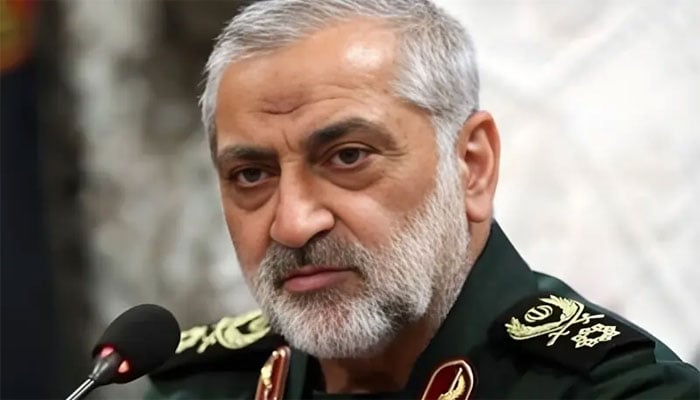
    Iran’s Armed Forces spokesperson Brig. Gen. Abolfazl Shekarchi has claimed that the United States has deployed every weapon it had reserved for a potential Third World War against Iran, describing the recent military confrontation as unprecedented. Speaking at a meeting in Tehran, Shekarchi said Iran continued developing its strategic missile program throughout the conflict and did not halt production during either the fighting or subsequent ceasefire periods. He said maintaining missile production remained a key element of Iran’s national defense strategy despite mounting international pressure. The military spokesman also claimed that foreign intelligence agencies have failed to locate Iran’s missile production facilities despite possessing extensive intelligence capabilities. He said the country’s missile infrastructure remains secure and operational, allowing Iran to preserve its strategic deterrence. Shekarchi further alleged that the United States suffered major strategic setbacks during the recent conflict. He claimed that decades of American investment in military bases across West Asia had been severely damaged during the fighting. His remarks come amid continuing tensions between Iran and the United States following recent regional hostilities, with both sides continuing to exchange sharp rhetoric over military capabilities and regional security. The United States has not publicly responded to Shekarchi’s latest claims.

  • | |

    Wildfires keep Spain and France on alert amid extr…

    Firefighters battling wildfires across Spain and France warned Wednesday that the risk of additional blazes remains very high in the coming days, even as a major fire in Spain’s central Guadalajara province eased enough to allow some residents to return home. Wildfires have already scorched more land across Europe this year than the continent’s average over the past two decades, according to available data, as the world’s fastest warming continent endures its third stifling heatwave in close succession this year. In France, where two firefighters died Tuesday after their truck became engulfed in flames in the southwestern Gironde region, authorities urged residents in areas affected by the heat to avoid using barbecues, stressing that nine out of ten wildfires start as a result of human activity, whether accidental or not. Meanwhile, in the Western Balkans, the nature of the threat has shifted from heat to hailstorms, with several people injured in North Macedonia and eastern Kosovo. Scientists say human driven climate change continues to intensify heatwaves, droughts and wildfires, while also creating conditions that can trigger sudden and destructive storms. Real time data from a climate monitoring tool showed the average high temperature across Western Europe is forecast to reach 26.6 degrees Celsius, about 3 degrees above the historical norm for July 22 based on the 1961 to 1990 reference period. Spain’s most severe wildfire so far this year has burned an estimated 32,000 hectares in the Guadalajara region. The fire began to stabilize Tuesday after forcing evacuations across 34 municipalities and confinement orders in 14 others. Castilla La Mancha’s regional fire service, INFOCAM, said residents of five villages have been allowed to return home, though other restrictions remain in place. Visiting the affected region Wednesday, Prime Minister Pedro Sanchez said Spain has already experienced 22 major wildfires this year. He said the country has already surpassed 100,000 hectares burned before even reaching the most critical period of the wildfire season, noting that figure matches Spain’s annual average over the past decade. He added that more action is needed to prevent future fires. Spain’s national weather agency, AEMET, said wildfire danger remains very high or extreme across most of mainland Spain and the Balearic Islands and is expected to climb further in the coming days. The agency urged extreme caution as the ongoing heatwave combines with dry thunderstorms and Saharan dust blowing into the region. While temperatures are expected to ease slightly in some areas Thursday, forecasters expect a dry westerly wind to drive a fresh surge of heat into Mediterranean regions, where highs of 42 to 44 degrees Celsius could be recorded in some locations. The back to back heatwaves and wildfires this summer add to a growing pattern of extreme weather events across southern Europe, with officials in both Spain and France continuing to stress prevention measures as the region moves deeper into what is traditionally its most dangerous period for wildfire activity.

  • |

    Anti-US protest greets Rubio at ASEAN Summit

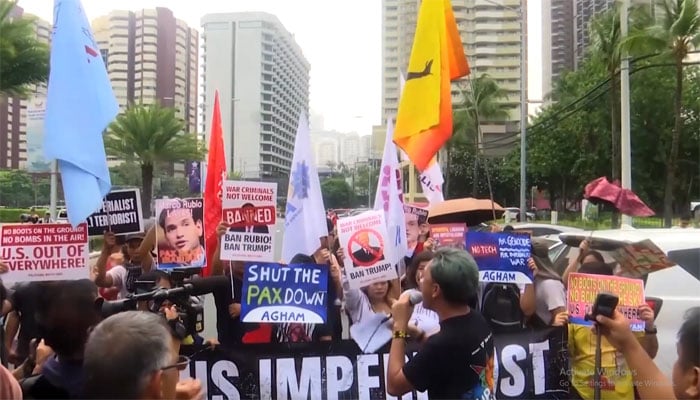
    Protesters demonstrated against US Secretary of State Marco Rubio during the ASEAN Foreign Ministers’ Meeting in the Philippines, calling for an end to what they described as America’s war against Iran. According to reports from Manila, the protest took place while Rubio was attending the regional diplomatic gathering. Demonstrators gathered near the venue carrying banners and chanting slogans criticizing US foreign policy and military actions. The protesters urged the United States to stop its military campaign against Iran and called for peace in the region. They also appealed to the Philippine government not to become involved in any US-led military conflict. Police set up barricades around the meeting venue and prevented demonstrators from approaching the site where ASEAN foreign ministers were holding discussions. Security remained tight throughout the event, and no major clashes were reported. The protest coincided with high-level regional meetings attended by foreign ministers from ASEAN member states and dialogue partners, where regional security and international issues were among the key topics of discussion.

  • | |

    Maduro set for new US court hearing in trafficking…

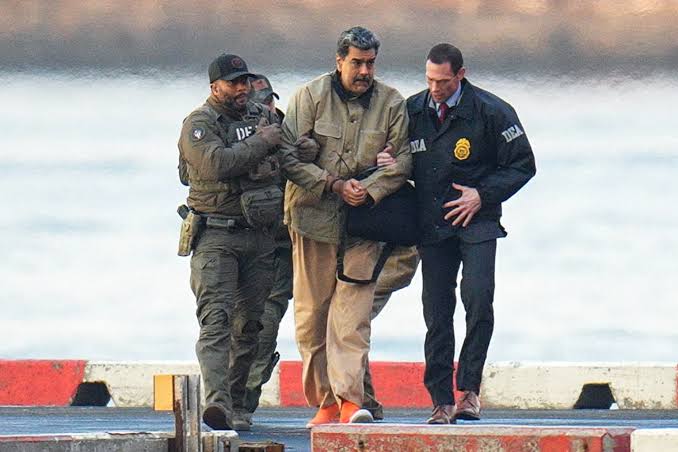
    Venezuela’s ousted President Nicolas Maduro and his wife Cilia Flores are scheduled to appear back in a US courtroom Wednesday for a hearing focused on the upcoming schedule in their drug trafficking case, including discussion of a possible trial start date in June 2027. The hearing before US District Judge Alvin Hellerstein is set to begin at noon Eastern time in Manhattan federal court and could offer insight into the next steps in what has become one of the most high profile and consequential criminal cases in recent US history. Lawyers for both sides indicated in a filing that Maduro’s first round of legal motions seeking to have the case dismissed would come due on September 2. Those motions are expected to include an argument that Maduro should be immune from prosecution based on his position as head of a sovereign state. During Maduro’s first court appearance on January 5, his defense attorney Barry Pollack suggested the defense could also challenge the indictment by arguing that Maduro’s capture may not have been carried out legally. Maduro, a socialist leader who maintained an antagonistic relationship with Washington throughout his time leading Venezuela from 2013 until his capture, referred to himself as a prisoner of war during that January appearance. He has long accused the United States of seeking to remove him from power in order to gain greater influence over Venezuela’s substantial oil reserves. The United States describes Maduro as a corrupt dictator whose economic mismanagement led to Venezuela’s economic collapse, and accuses him of rigging reelection victories in 2018 and 2024. Washington stopped recognizing him as Venezuela’s legitimate president in 2019. Ahead of the January operation that led to his capture, the Justice Department’s Office of Legal Counsel issued an advisory opinion stating that it would be lawful for Trump to authorize the operation unilaterally, arguing it served an important national interest without rising to the level of a war requiring congressional approval. According to Tuesday’s filing, lawyers for both sides said Maduro could submit a second round of legal motions by January 11, 2027, following the prosecution’s handover of any classified evidence for defense review. Maduro last appeared in court on March 26 for a hearing concerning a US government restriction that barred Venezuela’s government from covering his legal fees. That dispute was resolved about a month later, when Washington agreed to adjust its financial sanctions on Venezuela to permit the government to pay those fees. Venezuela has been governed since Maduro’s capture by his former vice president, Delcy Rodriguez, who has cultivated closer ties with the Trump administration. Washington has eased sanctions on Venezuela’s oil sector, and foreign companies have expanded oil and gas operations within the country. The US military has also provided relief assistance following two earthquakes that struck Venezuela’s coast last month, killing more than 5,000 people. The case continues to unfold against the backdrop of a broader thaw in relations between Washington and Caracas under Rodriguez’s leadership, even as Maduro’s legal team prepares to mount a defense built partly around questions of sovereign immunity and the legality of the operation that led to his capture.

  • | |

    Flood defences shield Gujrat from monsoon

    The Water and Sanitation Agency (WASA) has credited pre-monsoon flood protection measures with preventing urban flooding in Gujrat during the recent spell of heavy rains. Managing Director WASA, Kashan Hafeez, said the city remained safe from potential flooding because of advance planning and the timely completion of key drainage projects before the arrival of the monsoon season. He said a three-kilometre-long protective drain constructed along Mehsam Mor and Fatehpur Road proved highly effective in managing the flow of rainwater. According to him, the project successfully diverted excess water away from residential and commercial areas, significantly reducing the risk of flooding. Kashan Hafeez said rainwater was redirected toward the Halsey Nullah through the newly developed drainage network. By channeling water into natural waterways, authorities were able to prevent water from accumulating in densely populated neighborhoods and major roads. He added that the drainage system functioned as planned despite heavy rainfall, allowing rainwater to flow smoothly without causing widespread disruption to daily life or damage to infrastructure. The WASA chief said the protective drainage network was developed under a Rs2 billion infrastructure project aimed at strengthening Gujrat’s flood management system. As part of the initiative, four major protective drains were constructed to improve stormwater disposal and enhance the city’s resilience against seasonal flooding. He said the successful performance of the project demonstrates the importance of proactive planning and investment in urban infrastructure. According to WASA, the newly built drainage system will continue to play a vital role in protecting Gujrat from future monsoon-related flooding and ensuring the safety of residents during periods of heavy rainfall.