National

  • | |

    PTI rift deepens as Salman Akram Raja, Mashal Yous…

    ISLAMABAD: Differences within the Pakistan Tehreek-i-Insaf (PTI) have intensified as senior party figures Salman Akram Raja and Mashal Yousafzai exchanged allegations over party affairs and accusations related to the alleged sale of tickets. Salman Akram Raja criticised those who, according to him, were unable to pursue the matter through legal channels and had instead resorted to what he described as baseless allegations against Mashal Yousafzai over ticket-selling claims. Raja also said he did not know who had nominated Yousafzai as a senator, maintaining that the decision had been made on the instructions of PTI founder Imran Khan. He added that he did not have the authority to remove her from the Senate. In response, Mashal Yousafzai alleged that Raja had made his recent statements after apologising to the PTI founder. She challenged the party leadership to take action against Raja if it had the authority to remove him from the party. The dispute has also drawn comments from PTI leader Shandana Gulzar, who questioned Raja’s remarks concerning money. She raised questions over the whereabouts of millions of rupees allegedly received from the United States and said that those responsible would face serious consequences if the matter was investigated. The exchange has added to growing tensions within the opposition party, with allegations and counter-allegations emerging as its leadership continues to grapple with internal disagreements.

  • | |

    Mystery deepens over 2 girls’ deaths in Lahore p…

    LAHORE: The deaths of two young women in police custody have raised fresh questions after their autopsy reports revealed black spots on their lungs and blood clots in their hearts, while failing to find visible signs of physical assault or torture. The two women, identified as Amina and Anmol, died while in the custody of Lahore’s Township police. According to sources, their post-mortem examinations found no external injuries or marks suggesting physical violence. Samples of their blood and internal organs have now been sent for histopathological testing, which is expected to help establish the final cause of death. The autopsies were conducted two days after the deaths and the reports were finalised after the medical board reached a consensus. Doctors found the women’s livers, kidneys and stomachs to be in normal condition, while black spots were observed on both sets of lungs and clots were detected in their hearts. The findings have not yet provided a definitive explanation for the deaths. Authorities are waiting for the histopathology results before determining the final cause. The families of the deceased have meanwhile called for an independent and transparent investigation. Tajamul Hussain, the father of one of the women, rejected the police version that the deaths were linked to a medical condition. He questioned how both women could have suffered fatal heart problems while in custody and alleged that they were killed. Police have denied the allegations. SSP Investigation Naveed Ahmed said the women had previous criminal records and were arrested after a passerby contacted Police Emergency 15 and reported that they had allegedly snatched an earring. The officer also claimed that the women used drugs but firmly rejected allegations that they were tortured or mistreated during their detention. With the histopathology reports still awaited, the investigation is expected to focus on the women’s medical condition, their treatment while in custody and the circumstances leading up to their deaths.

  • | |

    Mustafa Kamal calls for new provinces, questions p…

    ISLAMABAD: Federal Minister for Health Mustafa Kamal has renewed his call for the creation of new provinces in Pakistan, arguing that the country’s existing administrative structure is no longer adequate to serve its rapidly growing population. Speaking at the Pakistan Pharma Healthcare Expo, Kamal said debates over provincial boundaries were often framed as matters of honour and pride, but questioned why the same concern was not shown when children lost their lives after falling into open sewerage drains. He argued that Pakistan’s four provinces cover vast territories and that smaller administrative units could improve governance and ensure that public funds reach local communities more effectively. Kamal said the federal government distributes Rs8,884 billion annually among the provinces, but questioned the lack of an effective mechanism to ensure that funds reach union councils and communities at the grassroots level. He noted that Punjab and Khyber Pakhtunkhwa are larger in area than many countries, while Sindh and Balochistan also cover territories exceeding those of numerous states around the world. According to him, Pakistan’s population has grown dramatically since the country had only around 37 million people, yet the number of provinces has remained unchanged. The minister cited countries such as Sri Lanka, Iran and India as examples of states with more administrative units, arguing that the creation of additional provinces would not weaken Pakistan but could instead strengthen the federation. Kamal also linked administrative shortcomings to growing security challenges in Khyber Pakhtunkhwa and Balochistan, where security personnel continue to lose their lives. He said Pakistan needed fundamental reforms to address the causes behind instability and improve governance. Turning to the issue of public infrastructure, the minister questioned the political focus on provincial identity when basic safety measures such as covering open sewer lines remain neglected. He said Prime Minister Shehbaz Sharif works long hours and has extensive experience in provincial administration, but added that the federal government alone could not solve every local governance problem. The priority, he said, should be to strengthen the system rather than rely on individual interventions for issues such as sewer covers. Kamal urged all political parties to sit together and find a constitutional solution to the country’s administrative and governance challenges, saying meaningful reforms were needed to ensure public resources translated into better services and safer communities.

  • Pakistan faces climate threats from glacier melt and plastic pollution

    Islamabad: Senator Sherry Rehman strongly criticised the weak enforcement of the plastic ban in Islamabad, saying Parliament could not be treated as a joke while prohibited plastic products continued to be widely used. At the same meeting, serious concerns were raised over melting glaciers, Glacial Lake Outburst Flood risks and whether government institutions were doing enough to protect vulnerable communities. The Senate Standing Committee on Climate Change expressed dissatisfaction over the continued widespread use of plastic in the federal capital despite legislation aimed at restricting plastic book covers and harmful plastic products. Sherry Rehman said plastic waste was still collecting across Islamabad and contributing to blocked drains. She questioned why prohibited plastic products continued to be used even after Parliament had passed legislation. She said compliance with the law must be mandatory. The committee also raised questions about products being sold or promoted as biodegradable or recyclable. Sherry Rehman said such claims should not simply be accepted without proper standards and verification. She noted that only around 9 percent of plastic is recycled globally, while large amounts eventually reach landfills, drains and the wider environment. The committee also discussed how a plastic ban could affect ordinary families. Sherry Rehman said many lower income households depend on plastic packaging for daily products including milk and yoghurt. She said the government could not simply impose restrictions without making affordable alternatives available to the public. She stressed that after banning harmful plastic products, authorities also needed to provide practical and affordable alternatives for poorer consumers. The committee was told that alternatives to traditional plastic already exist through some businesses and startups. However, members noted that these alternatives were still not available at the scale or price required for widespread public use. Sherry Rehman also questioned the availability of plastic collection and recycling centres. She asked where people could take plastic waste so it could be properly collected instead of being dumped in landfills, drains or waterways. The committee stated that successful environmental regulation requires both strict enforcement and practical support for businesses and consumers trying to move away from harmful materials. Another major concern was Pakistan’s growing glacier crisis. The committee received a briefing on Glacial Lake Outburst Floods and the dangers facing people living near glaciers and mountainous areas. A United Nations Development Programme official told the committee that Pakistan has more than 30,000 glaciers and that climate change is speeding up glacier melt. The committee was informed that 108 disaster events had been handled through early warning systems, including two Glacial Lake Outburst Flood events. Sherry Rehman expressed dissatisfaction with the briefing. She said the committee had received largely similar information before and questioned what had actually changed on the ground. She asked officials to explain what new steps had been taken to protect people living in vulnerable areas. She also questioned why the briefing failed to properly show the speed and scale of glacier melting. The committee discussed reports suggesting that around 16 percent of glaciers had melted. Sherry Rehman said officials needed to explain what Pakistan planned to do as the threat to glaciers continued to increase. She also said the glacier crisis could not be handled as a separate climate issue. She called for stronger coordination with the National Disaster Management Authority and the Pakistan Meteorological Department. Sherry Rehman said the Pakistan Meteorological Department is the main technical institution responsible for important information about weather, climate and glacier conditions. She said the National Disaster Management Authority also needed to be fully involved in disaster preparation, emergency response and risk management. The discussion showed that Pakistan faces two very different but connected environmental challenges. In the cities, plastic waste continues to pollute streets, block drains and create enforcement problems. In the mountains, rising temperatures and glacier melting are increasing the danger of floods and other disasters for vulnerable communities. The committee made clear that simply passing laws or presenting reports was not enough. Authorities were asked to show real enforcement, better planning, stronger coordination and practical solutions that ordinary people could actually use. The central question raised by the meeting was whether Pakistan’s environmental laws and climate plans are producing visible results on the ground.

  • Sindh CM highlights religious harmony and minority rights

    KARACHI: Sindh Chief Minister Syed Murad Ali Shah has said that religious harmony is deeply embedded in the culture of Sindh, flowing through the waters of the River Indus and rooted in the soil of the province, where people of all faiths have lived together with mutual respect for centuries. Addressing a conference held in connection with National Minorities Day at the Arts Council Karachi, the Chief Minister paid tribute to the vision of Quaid-e-Azam Mohammad Ali Jinnah, recalling his historic policy statement in which he had declared that Hindus would cease to be Hindus and Muslims would cease to be Muslims – not in the religious sense, but in the political sense – as equal citizens of the state. Murad Ali Shah said that while many parts of the world continue to struggle with ensuring equal rights and freedoms for religious minorities, Sindh takes pride in its long tradition of inclusivity, tolerance and respect for diversity. Highlighting the political empowerment of minorities in Sindh, he noted that prominent minority leaders, including MNA Dr Mahesh Kumar Malani, Gianchand Israni and Hari Ram Kishori Lal, had been directly elected to legislative bodies by the people, demonstrating public trust beyond religious identities. The Chief Minister observed that extremist and religiously fanatic elements had never found electoral acceptance in Sindh, reflecting the province’s moderate and pluralistic character. Sharing his personal experience, Murad Ali Shah said that members of minority communities had played a significant role in shaping his educational journey. He recalled receiving his early education at St. Bonaventure’s High School in Hyderabad, established by the Christian community, followed by St. Patrick’s High School in Karachi, also founded by Christians. He later studied at D.J. Science College, established by the Hindu community, and graduated from NED University, founded through the contributions of the Parsi community. “In this way, every minority community has contributed to my education and personal development,” he said, adding that the services rendered by minorities in the fields of education, healthcare, business and public service are an integral part of Pakistan’s progress. Referring to his government’s commitment to merit and equal opportunity, the Chief Minister recalled a recruitment process in the Sindh Police in Mirpurkhas where minority candidates selected on open merit were initially being counted against the minority quota. “I personally intervened and directed that those selected on merit be counted separately, ensuring that reserved quota seats remained available for other eligible minority candidates,” he said. Murad Ali Shah reiterated the Sindh government’s commitment to safeguarding the constitutional, social and economic rights of minorities and promoting an inclusive society where every citizen enjoys equal opportunities and protection under the law. At the conclusion of the event, a cake was cut to celebrate the birthday of Chief Minister Syed Murad Ali Shah, with participants extending their greetings and best wishes to him.

  • PAAM opposes DRAP’s proposed alternative medicine rules 2026

    LAHORE: A covert gambit by the Drug Regulatory Authority of Pakistan (DRAP) to impose arbitrary regulations on the alternative medicine sector has been laid bare, sparking widespread outrage across the pharmaceutical industry. ​The regulatory body is accused of using an upcoming ‘Pak Health Expo’, organized by an association at a local hotel in Islamabad on August 12–13, as a smokescreen to push through controversial policies. Reliable sources revealed that the final draft of the highly contentious “Alternative Medicines Rules 2026” has already been finalized behind closed doors, completely bypassing key industry stakeholders. According to these sources, the draft has already been forwarded to the Law and Justice Division for formal vetting. Against this backdrop, the industry has termed DRAP’s sudden announcement of a “consultative session” at the expo issued on a mere 48-hour notice as a farcical exercise in paperwork, designed solely to create a false record of stakeholder consensus. Insiders further alleged that top DRAP officials had been cold-calling homeopathic and Unani pharmaceutical firms over the past several days, pressuring them to purchase expensive stalls worth hundreds of thousands of rupees at the private event. Following a widespread boycott of the expo by established manufacturers, DRAP reportedly engineered the controversial regulatory session within the event to corner the industry into participation. Reacting strongly to the development, Kashif Aslam Malik, Chairman of the Pakistan Association of Alternative Medicine (PAAM), categorically rejected DRAP’s maneuvers, stating that the leadership had anticipated the bureaucratic trap. ​”When the final draft has already been sent to the Law and Justice Division for vetting, this sudden drama of a consultative session at a private venue is nothing but an absolute mockery,” Malik questioned while speaking to journalists. The PAAM chairman emphasized that leaning on private event platforms to legitimize sensitive, sector-defining legislation is clear evidence of regulatory bad faith. He maintained that if DRAP were genuinely sincere about consultation, it would have convened an official, independent roundtable with all veteran associations where the actual draft could be scrutinized transparently. The PAAM leadership has announced that any back-door attempt to benefit a favored private group or to bulldoze industry-hostile clauses under the guise of an expo crowd will be resisted tooth and nail. Kashif Aslam ​Malik reiterated that this persistent bureaucratic high-handedness and regulatory blackmail are precisely why PAAM continues to spearhead the movement for a dedicated, independent federal ministry for alternative medicine. The association demands that policies governing traditional and alternative health sciences be framed by domain experts who understand the discipline, rather than traditional regulators.

  • | | |

    Kot Addu canal tragedy leaves 12 dead, three missi…

    KOT ADDU: A devastating tragedy unfolded in Kot Addu after a loader rickshaw carrying members of a wedding procession fell into the Muzaffargarh Canal, leaving at least 12 people dead and three others missing. The incident has plunged several families into mourning. Children and women are among those who lost their lives in the accident. Rescue 1122 teams from Kot Addu and Muzaffargarh reached the site soon after receiving information about the incident. A search and rescue operation was launched in the canal. Rescuers used boats, scuba-diving equipment and other available resources to search for the victims. Several bodies were recovered during the operation, bringing the death toll to 12. Three people remain missing. Rescue officials said divers are continuing to search different sections of the canal. Rescue boats are also being used to cover wider areas. According to a list provided by Rescue 1122, those who died included 14-year-old Dalaur, seven-year-old Muneeb, 58-year-old Sakina Bibi, 15-year-old Sameera Bibi, nine-year-old Raju, seven-year-old Muhammad Sibtain, 11-year-old Zareef, 35-year-old Iqbal Bibi, 13-year-old Kaleemullah, 12-year-old Muhammad Jalal, five-year-old Muhammad Ali and Muhammad Saeem. The large number of children among the victims has added to the grief surrounding the tragedy. Families who had set out to attend a wedding were suddenly confronted with an unimaginable loss. Homes that were preparing for celebrations are now filled with mourning. The families of the three missing people are facing severe distress. Relatives have gathered near the site and are waiting for information about their loved ones. Minute Mirror observed that Bashir Mashori, an elderly uncle and relative of the affected family, was deeply grieved over the situation. As the senior family member, Mashori expressed profound sorrow and called for assistance for the victim’s family during this difficult time. Residents have expressed concern over the scale of the tragedy and called for a coordinated rescue effort involving all relevant departments. Local residents and affected families have urged the Punjab government to take immediate notice of the incident and ensure that every available resource is used to locate the missing people. They have called for additional divers, modern search equipment and more rescue resources to be sent to the site. Residents have also demanded the involvement of the police, district administration, irrigation authorities, Provincial Disaster Management Authority and other relevant departments in the search operation. They said a tragedy involving the loss of 12 lives requires a coordinated response beyond routine district-level efforts. The affected families have appealed to Punjab Chief Minister Maryam Nawaz and senior provincial officials to ensure that the search for the three missing people continues without interruption. They have also called for an investigation into the circumstances that led to the rickshaw falling into the canal. The families and residents said determining the cause of the accident is essential to prevent similar incidents in the future. Instead of helping the victims, some people were seen making videos and TikTok content at the scene. Such behaviour has drawn criticism and was described as deeply shameful and insensitive toward those affected. Rescue 1122 teams continue to search different sections of the Muzaffargarh Canal using divers, boats and other available equipment.

  • | |

    Sindh to introduce AI in public service recruitmen…

    KARACHI: The Sindh government has decided to introduce artificial intelligence (AI) and modern technology into the recruitment and examination system of the Sindh Public Service Commission (SPSC). The decision was taken during a high-level meeting chaired by Sindh Chief Secretary Asif Haider Shah on Tuesday. The chairman of the SPSC, the secretary of information technology and other senior officials attended the meeting. During the meeting, the chief secretary said AI and modern technology would be used to make the SPSC examination process more efficient and transparent. Officials discussed the use of technology in several stages of the examination process. This includes the preparation of question papers, assessment of candidates and management of examination-related data. The new system is also expected to reduce unnecessary human involvement in certain stages of the examination process. Officials believe greater use of technology could help improve efficiency and minimise administrative delays. The Sindh government also plans to establish technology-equipped workstations across the province. These facilities will provide candidates in different areas with access to modern examination services. The initiative is aimed at improving accessibility for applicants from various parts of Sindh. The government said the use of AI and digital tools would help modernise the recruitment process and improve the overall management of SPSC examinations.

  • | |

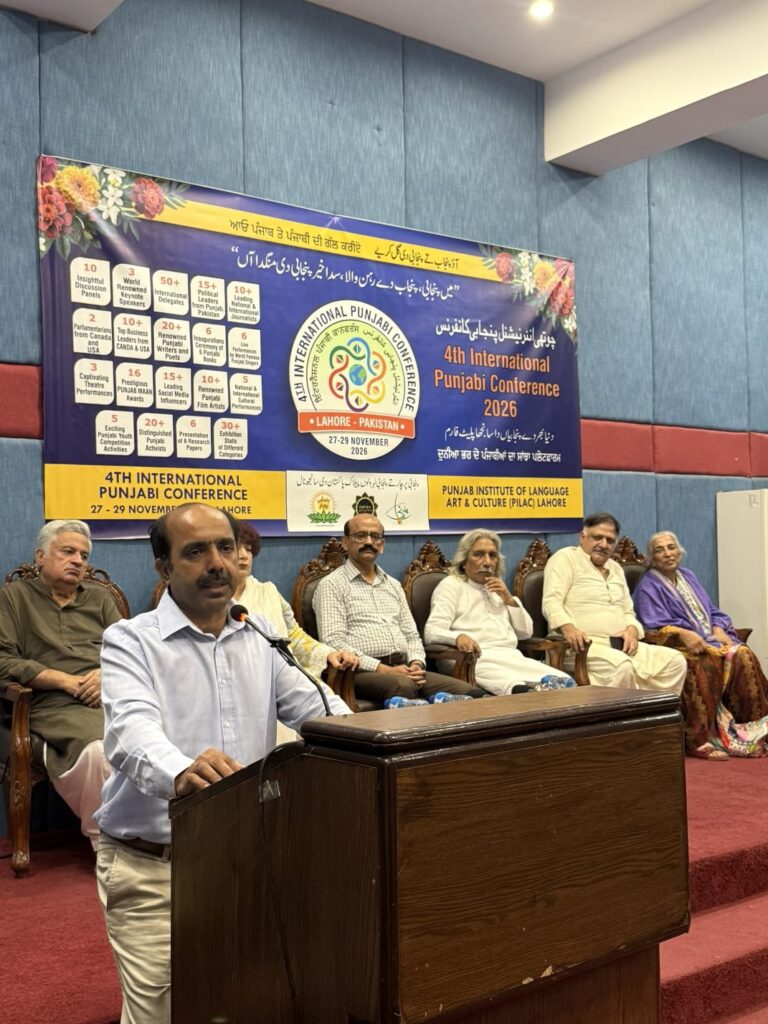
    Fourth International Punjabi Conference to be held…

    LAHORE: The fourth International Punjabi Conference will be held in Lahore from Nov 27 to 29, bringing together writers, academics, artists and other professionals from Pakistan and abroad, organisers announced at a press conference. The event is being organised by the Punjabi Parchar Organisation in collaboration with Punjabi Lehar and the Punjab Institute of Language, Art and Culture (PILAC), where the three-day conference will take place. Chief organiser Ahmed Raza Punjabi said the event would be held on a large scale, following the three previous editions of the conference. According to the organisers, thousands of participants from Pakistani Punjab and more than 50 foreign delegates from nine countries are expected to attend. The international participants will include writers, intellectuals, politicians, scientists, journalists, film artists, businesspeople and farmers. Mr Ahmed said the conference aimed to promote Punjabi language and literature while providing a platform to discuss issues facing Punjab and Punjabi communities around the world. He said prominent figures from Pakistani Punjab and successful members of the Punjabi diaspora would be invited to discuss those challenges and propose possible solutions. Conference focal person Dr Zaheer Wattoo said 10 panel discussions would be organised on Punjabi language and literature, the environment, agriculture, politics, sports, film and Punjabi nationalism. Academics from leading universities around the world would also present research papers during the three-day event, he added. Dr Wattoo said separate committees had been formed for different fields. These committees would select speakers from Pakistan and abroad for the panel discussions. The programme will also feature Punjabi cultural performances, live music and theatre. According to the organisers, nine Punjabi singers from different countries will perform during the conference. Several competitions aimed at connecting Punjabi with younger generations will also be held. These will cover public speaking, modern technology, short films, social media reels, singing, poetry and scientific innovation. Two Punjabi books will be launched on each day of the conference, including works by authors from Pakistan, the United States and Canada. On the final day, 16 awards across eight categories will be presented to individuals for their contributions to Punjab and Punjabi culture. Eight recipients will be from Pakistani Punjab, while the remaining awards will go to Punjabi personalities from the United States, Canada, Australia, the United Kingdom and New Zealand. A number of Punjabi literary and cultural figures from Lahore attended the announcement and presented suggestions regarding the conference programme.

  • |

    August 12 total solar eclipse, will it be visible in Pakistan?

    Islamabad – A rare total solar eclipse will occur on August 12, 2026 attracting the attention of astronomy enthusiasts around the world. However, will it be visible in Pakistan? The solar eclipse will not be visible in Pakistan as it will be nighttime in the country during the key phases of the eclipse. According to Pakistan Standard Time, the partial eclipse will begin at 8:34 PM on August 12 while the total eclipse will begin at 9:58 PM. The eclipse will reach its peak at 10:46 PM and the total eclipse will end at 11:34 PM. Where will solar eclipse be visible? On August 12, the Moon will pass between the Earth and the Sun causing a total solar eclipse to be visible in Greenland, Iceland, northern Russia and parts of Spain and Portugal. A partial solar eclipse will be visible across various parts of North America, Canada, most of Europe and northwestern Africa. According to NASA, the Sun will set during the eclipse in western parts of Europe and Africa creating a unique spectacle in which the solar eclipse will coincide with sunset. How can solar eclipse be watched live? NASA will also provide an online live broadcast of this astronomical event which can be watched online from Pakistan on the night of August 12. Astronomers have warned people in areas where the eclipse will be visible never to look directly at the Sun without specially designed solar-viewing glasses as doing so can cause severe damage to the eyes.