National

  • | | |

    Naqvi meets Araghchi in Tehran amid US-Iran mediat…

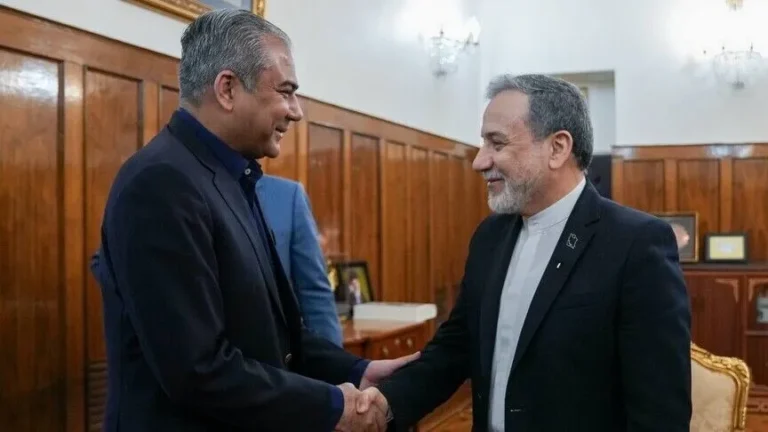
    Pakistan’s Interior Minister Mohsin Naqvi held talks with Iranian Foreign Minister Abbas Araghchi in Tehran on Tuesday as diplomatic efforts continue to ease tensions between Iran and the United States. The meeting focused on regional developments and matters of mutual interest. Iranian state media reported that the two ministers also discussed diplomatic and bilateral issues. The meeting took place against the backdrop of continuing efforts to find a diplomatic way forward in the US-Iran conflict. Pakistan has remained engaged with regional partners as part of efforts to support dialogue and reduce tensions. Iranian officials said Naqvi is expected to hold additional meetings with senior authorities during his visit to Tehran. Discussions are expected to cover bilateral relations, regional developments and issues affecting both countries. The visit also comes around a month after Iranian Interior Minister Eskandar Momeni visited Islamabad. During that visit, Pakistani and Iranian officials held discussions on bilateral cooperation and regional matters. Pakistan has maintained diplomatic contacts with both sides during the recent crisis. Islamabad has also sought to encourage dialogue as tensions between Tehran and Washington have increased. Pakistan, along with Qatar, previously played a role in diplomatic efforts aimed at bringing Iran and the United States closer to an understanding. These efforts contributed to a memorandum of understanding between the two sides in June. The latest meeting between Naqvi and Araghchi is therefore being viewed in the context of Islamabad’s broader diplomatic engagement with Tehran. Officials have not released detailed information about the specific issues discussed during Tuesday’s meeting. Further details are expected after Naqvi completes his scheduled engagements with Iranian officials.

  • | |

    Bushra Bibi meets daughter, sister-in-law at Adial…

    The daughter and sister-in-law of former prime minister Imran Khan’s wife, Bushra Bibi, met her at Adiala Jail in Rawalpindi on Tuesday. According to jail sources, Mehr-un-Nisa Maneka and Mehr-un-Nisa Ahmed visited the prison to meet Bushra Bibi. The meeting continued for around 45 minutes. The two family members spent time with Bushra Bibi during the scheduled meeting. Sources said the discussion focused on Bushra Bibi’s health and legal matters. They also exchanged views on issues related to her ongoing legal situation. The family members inquired about her well-being during the meeting. They also discussed developments concerning the cases involving her. The meeting took place at Adiala Jail amid continued legal proceedings involving Bushra Bibi and her husband, Imran Khan. Jail sources said the meeting concluded after approximately 45 minutes. No further details about the conversation were disclosed. After the meeting, Mehr-un-Nisa Maneka and Mehr-un-Nisa Ahmed left Adiala Jail. They departed from the prison premises after completing their visit. The latest meeting comes as legal proceedings involving Bushra Bibi and Imran Khan continue in different courts. Further details regarding their legal matters are expected as proceedings move forward.

  • | |

    Aleema Khan predicts PTI supporters may take stree…

    Aleema Khan, sister of Pakistan Tehreek-e-Insaf (PTI) founder Imran Khan, has said that people may take to the streets before September 27 as political developments continue to unfold. Speaking to the media along with Imran Khan’s sisters at the Factory Check Post near Adiala Jail in Rawalpindi, Aleema said the situation was changing rapidly. She said she believed people could come out before the September 27 date. She also claimed that she had heard the date of a planned protest had been changed to August 14. Aleema also raised concerns about reports regarding Imran Khan’s health. She said various reports were circulating about his condition but the family had not been provided with sufficient information. She questioned reports suggesting that Imran Khan had a blood pressure problem. Aleema said no one in their family had such an issue and questioned how a double dose of medication could have been administered to someone who did not suffer from the condition. She said the family had never discussed politics after meeting Imran Khan. Aleema added that they agreed with remarks by Sohail Afridi that family members should be allowed to meet him without turning the meetings into political discussions. According to Aleema, Imran Khan is their brother and his message is important to the family. She said mentioning the name of a government official should not automatically be considered political activity. Imran Khan’s sister Noreen Niazi also said that political matters should not be attached to the family’s meetings with him. She said the family would avoid naming officials during such meetings. Aleema said a three-member bench of the high court had already issued a decision regarding meetings with Imran Khan. She questioned why the family should submit a request to the jail superintendent when a court order was already in place. She also described PTI as a democratic political party. She said disagreements and differences within a political party were normal and should not necessarily be viewed as a major crisis. Family raises concerns over Imran Khan’s health Noreen Niazi said the September 27 date remained in place, while a separate call had been given for a gathering at D-Chowk on August 14. Aleema said she had no information about the alleged audio recording involving PTI leader Salman Akram Raja and Mashal Yousafzai. She said the decision to give a protest call was the responsibility of the party and that the party had issued the call. Aleema said the family had only one major demand regarding Imran Khan’s health. She called for him to be shifted to a hospital and treated by his personal doctor. Another sister, Uzma Khan, said the family was unable to confirm or deny reports about Imran Khan’s health because they did not have sufficient information about his condition.

  • | |

    AJK orders re-polling at 23 stations in Bagh

    MUZAFFARABAD: The Azad Jammu and Kashmir Election Commission has ordered re-polling at 23 polling stations in two constituencies of Bagh district following disruptions during the third phase of the AJK elections. Re-polling will take place on August 15. It will cover nine polling stations in LA-15 Bagh Central and 14 polling stations in LA-16 Bagh East. The decision was taken after voting at several polling stations either failed to start on time or was disrupted and later cancelled. The four constituencies of Bagh and Haveli went to the polls on August 10. Elections in other parts of Poonch Division had earlier been delayed because of law and order concerns. In LA-15, PPP candidate Sardar Ziaul Qamar was leading according to unofficial results. He had secured 16,637 votes. PML-N candidate Mushtaq Ahmed Minhas was in second place with 15,015 votes. Jamaat-i-Islami candidate Brigadier (retd) Dr Mohammad Khan had received 12,259 votes. The nine polling stations scheduled for re-polling have more than 5,000 registered voters. Their votes could have a significant impact on the final result. Former AJK prime minister Sardar Tanveer Ilyas, who contested the constituency on the PTI ticket in the 2021 election, appeared to have fallen out of contention. A close contest was also reported in LA-16 Bagh East. PML-N candidate Sardar Mir Akbar was leading with 19,515 votes. PPP candidate Sardar Qamaruz Zaman had secured 16,290 votes. The 14 polling stations where re-polling has been ordered reportedly account for around 7,200 votes. Meanwhile, the Election Commission announced the preliminary result for LA-14 Dhirkot. Sajid Iqbal Abbasi of the Awami Dast-o-Bazu Party defeated Muslim Conference president Sardar Attique Ahmed Khan. Abbasi secured 40,522 votes, while Attique received 19,637 votes. The result marked a major setback for the Muslim Conference, which has historically been one of the region’s prominent political parties. The result of LA-17 Haveli also became controversial. PML-N candidate Chaudhry Mohsin Aziz demanded a recount and alleged irregularities in election documents. Aziz claimed that Form-24 documents from different polling stations had been altered. Election officials began examining the complaint. Ballot papers and other election material were also reportedly moved under security to Muzaffarabad for further counting and verification. Aziz called on PPP Chairman Bilawal Bhutto-Zardari to support a recount. He claimed that results signed by presiding officers showed him leading by around 8,600 votes. However, state broadcaster Radio Pakistan, citing the Election Commission, reported that PPP candidate and AJK Prime Minister Faisal Mumtaz Rathore had won the LA-17 seat. The AJK elections are being held in three phases. The polls have taken place amid political tensions and law and order concerns in several parts of the region. The Pakistan Muslim League-Nawaz has so far secured 24 seats, while the Pakistan Peoples Party has won 10 constituencies, according to the available results. The first two phases also witnessed allegations of electoral irregularities, clashes and political disputes. Both major parties have traded accusations over the conduct of the elections. The third phase was originally planned across all 11 constituencies of Poonch Division. However, voting was allowed only in Bagh and Haveli because of security concerns.

  • | |

    Ten additional LHC judges sworn in after appointme…

    LAHORE: Ten additional judges of the Lahore High Court took oath on Tuesday after President Asif Ali Zardari approved their appointments, bringing an end to a weeks-long delay over their induction. Chief Justice Aalia Neelum administered the oath to the newly appointed judges during a ceremony at the Lahore High Court. The judges who took oath were Ghulam Sarwar Nihung, Muhammad Ajmal Khan Zahid, Aamir Ajam Malik, Shireen Imran, Asad Ali Bajwa, Muhammad Amjad Pervez, Khalid Ibn-i-Aziz, Munawar Iqbal Duggal, Syed Farhad Ali Shah and Muhammad Usman Ghani Rashid Cheema. Justice Tariq Mahmood Bajwa also took oath as a permanent judge of the Lahore High Court after completing his probationary period. The newly appointed additional judges will serve for one year from the date they took oath. Despite the latest appointments, the Lahore High Court still has 10 vacant positions against its approved strength of 60 judges. The number of vacancies is expected to rise to 11 following the retirement of Justice Shahid Karim next week. Earlier on Tuesday, President Zardari approved the appointment of 19 additional judges to five high courts. He also confirmed five judges as permanent members of the superior judiciary. The appointments had remained pending since July after the Judicial Commission of Pakistan recommended the candidates for the positions. The delay had led to a dispute over the presidential approval process. The oath-taking ceremony had initially been scheduled for July 27 but was postponed indefinitely. The issue gained further attention after the president neither approved the appointment summary nor returned it for reconsideration within the expected period. The government had maintained that there was no legal basis for keeping the recommendations pending. At one stage, officials even considered constitutional options to address the delay. Meanwhile, legal teams representing the presidency and the federal government held discussions to resolve the matter. Sources said the talks between the two sides made progress and helped pave the way for the appointments to be approved. The president’s legal team had previously raised concerns about the proceedings of the Judicial Commission. Questions were also raised over the rejection of several nominees and the eligibility of some recommended candidates. The dispute had also raised concerns about delays in filling vacant judicial positions in the high courts.

  • | | |

    Pakistan, US renew Fulbright partnership for five …

    Pakistan and the United States have renewed their cooperation in higher education through a new five-year agreement between the Higher Education Commission (HEC) and the United States Educational Foundation in Pakistan (USEFP). The agreement will run from the 2026-27 financial year through 2031-32. It will continue several major academic exchange and scholarship programmes for Pakistani students, researchers and professionals. The renewed partnership covers the Fulbright Master’s and PhD programmes. It also includes the Visiting Scholar Programme for post-doctoral researchers, the Foreign Language Teaching Assistant Programme and the Hubert H. Humphrey Fellowship Programme. Under the new arrangement, the partners aim to support 66 Pakistani PhD scholars over the five-year period. Additional opportunities will be available through the other programmes covered by the agreement. The initiative is designed to help Pakistani students and academics access advanced education and research opportunities in the United States. Scholars are expected to bring back their expertise and contribute to the country’s academic and socio-economic development. The HEC will provide at least $4.54 million each year under the agreement. Its overall financial commitment for the five-year period has been capped at Rs6.48 billion. The funding will be released according to an agreed schedule. The arrangement includes an initial payment of $2 million by June 30, followed by another $2 million by January 31. The remaining amount will be released by April 30, subject to the availability of government funds. Any interest generated from HEC funds held by USEFP will be used again for student grants. This will provide additional support to beneficiaries of the programme. The selection of candidates will remain strictly merit-based. There will be no fixed quotas based on region, group or category. HEC representatives will also participate in selection panels. The commission will help identify areas of study that are considered important for Pakistan’s development and national priorities. The two institutions will establish a Joint Review Committee to monitor the programme. The committee will meet twice a year to assess progress, performance and the overall impact of the initiative. Financial oversight has also been included in the agreement. USEFP will provide annual audited financial statements to HEC. Relevant financial records will also remain available for review by the commission when required. The partnership will also focus on increasing awareness about international education opportunities. HEC and USEFP plan to conduct joint outreach activities across Pakistan. The initiative will use HEC’s network of universities and higher education institutions to reach a wider pool of potential applicants. The agreement also leaves room for future cooperation in areas such as faculty exchanges, administrator exchanges and other academic initiatives. The renewed arrangement builds on the earlier Fulbright-HEC PhD partnership signed in February 2016. Under that agreement, $25.786 million was committed to support 125 Pakistani scholars between 2016 and 2020.

  • | |

    Ghazi University marks Minorities Day, reaffirms e…

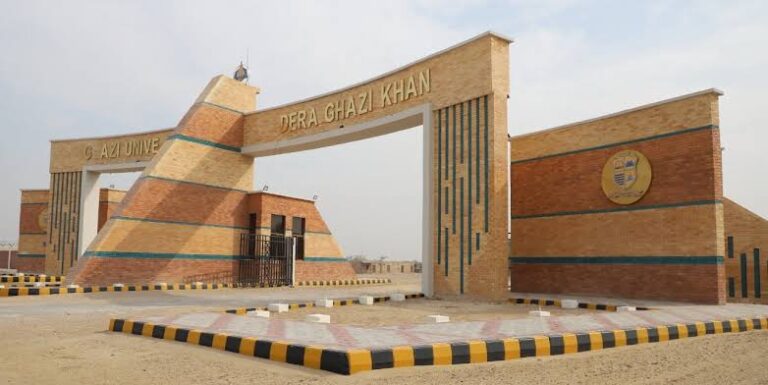
    Dera Ghazi Khan: The Ghazi University, Dera Ghazi Khan observed National Minorities Day today on the special directions of the Vice Chancellor Prof. Dr. Ashfaq Ahmad. The event, organized by the Directorate of Students Affairs and hosted by Prof. Dr. Arshad Munir, brought together members of the non-Muslim community and university officials to highlight the equal rights, religious freedom, and contributions of minorities in Pakistan. Members of the non-Muslim community from Dera Ghazi Khan, including Mr. Saleem Ilyas and Mr. Boota Masih, and others attended the ceremony. Senior university officials, Registrar Dr. Muhammad Asif, Prof. Dr. Saeed Ullah, Dr. Muhammad Ziaullah, Director ORIC Dr. Sagheer Atta, Dr. Irum Aziz, Dr. Khizra Bakhsh, and other faculty members were also in the event. The programme commenced with the recitation of the Holy Quran by an M.Phil scholar from the Department of Islamic Studies, followed by the recitation of verses from the Injeel (Gospel) by Mr. Boota Masih. Dr. Muhammad Ibrahim then presented a Naat-e-Rasool-e-Maqbool in praise of the Holy Prophet (PBUH). Thereafter, the National Anthem of Pakistan was played, with all participants standing in respect. In his welcome address, Prof. Dr. Arshad Munir highlighted the significance of National Minorities Day in Pakistan. He acknowledged the historic contributions of the non-Muslim community to the establishment of Pakistan and their continued role in strengthening the nation. On behalf of Vice Chancellor Prof. Dr. Ashfaq Ahmad, he extended an open invitation to members of the non-Muslim community to visit Ghazi University and enrol their children for higher education, assuring that the university would provide full facilitation and support in this regard. Two documentaries were screened during the event. The first showcased the establishment and progressive transformation of Ghazi University under the leadership of Vice Chancellor Prof. Dr. Ashfaq Ahmad. The second, prepared by the Directorate of Students Affairs, highlighted the efforts of non-Muslim personalities and movements that played a vital role in the creation of Pakistan and in its subsequent development. Speaking on the occasion, Mr. Saleem Ilyas expressed gratitude to the university administration for inviting members of the non-Muslim community and honouring them. He stated that minorities in Pakistan enjoy complete liberty, freedom of livelihood and worship, and equal rights alongside citizens of all other faiths. Mr. Boota Masih also thanked the university for the respect and affection extended to the community. He said non-Muslims feel comfortable and content in Dera Ghazi Khan, actively participate in local festivities, and remain an integral part of the social fabric. Extending a gesture of interfaith harmony, he invited all participants to visit their church. A cake marking National Minorities Day was cut by the honourable guests, symbolising unity and equality among people of all religions. Refreshments were also served to the participants. The Director Students’ Affairs, Dr. Muhammad Salman Haider presented the vote of thanks at the conclusion of the programme. The event conveyed a clear message of equal rights, religious freedom, and interfaith harmony, reaffirming that minorities are valued partners in Pakistan’s national progress and social cohesion.

  • |

    High taxes and energy costs push businesses out of Pakistan

    Islamabad: A Senate subcommittee has raised serious concerns over Pakistan’s tax system after being told that companies are reducing operations or leaving the country because of high electricity costs, heavy taxes and difficult business rules. The committee also warned the Finance Secretary that continued absence from its meetings could lead to the matter being sent to the Senate Privileges Committee. The Sub-Committee of the Senate Standing Committee on Finance and Revenue, chaired by Senator Muhammad Talha Mahmood, reviewed Federal Board of Revenue taxation policies and their impact on businesses, investment and economic activity. Senator Talha Mahmood said the main aim was to find ways to increase economic activity and create a better environment for businesses. He said many companies were either reducing their operations or leaving Pakistan because energy costs were too high and the tax system was pressuring businesses too much. The committee also expressed serious concern over the absence of the Finance Secretary. Senator Talha Mahmood directed the Finance Secretary to attend the next meeting and warned that another absence could result in the matter being referred to the Senate Privileges Committee. Business representatives also strongly criticised the current taxation system. Mian Zahid Hussain of the Federation of Pakistan Chambers of Commerce and Industry said national policy appeared to focus more on collecting revenue than on increasing economic growth. He called for a reduction in advance taxes and withholding taxes. He also asked the government to review customs duties, simplify tax audits and reconsider factory surveillance systems. According to him, complicated tax procedures and compliance requirements were increasing the cost of doing business and discouraging industrial growth. Another business representative, Mr Jadoon, Vice President of a Chamber of Commerce, said Pakistan had competitive labour costs but businesses were still struggling because of high electricity tariffs and regulatory pressure. He said the government should bring more businesses and sectors into the tax system instead of repeatedly increasing pressure on people and companies that were already paying taxes. FBR officials defended recent government measures, telling the committee that taxation policies were influenced by Pakistan’s import requirements and financial limitations. Officials said the government had introduced tax relief for salaried people, reduced super tax and removed super tax for exporters. The committee was informed that the government accepted a revenue impact of around Rs 359 billion while trying to provide relief to businesses and increase economic activity. FBR officials also said exporters facilitation committees had been established in Karachi, Lahore, Sialkot, Faisalabad, Islamabad and Multan to deal with tax related complaints and problems. Senator Talha Mahmood questioned whether current government policies were actually successful in attracting foreign investment. He sought details about investor protection and the rules for transferring shares. The committee directed the relevant authorities to provide a complete briefing on the existing system. The committee also discussed reforms FBR is introducing to simplify tax procedures. FBR officials said work was underway on a mobile application for tax reimbursements. They also said special facilitation days were being arranged in major commercial centres to help taxpayers deal with their problems. The ongoing goods transport strike also came under serious discussion. Senator Talha Mahmood said the strike was damaging trade and business activity and criticised delays in resolving the issue. He warned that perishable goods could be destroyed while businesses were also facing heavy financial losses because containers were being held for longer periods. The committee said the government should immediately open talks with transporters and other affected groups. Members warned that continued disruption could damage Pakistan’s trade and also hurt the country’s international business reputation. The sub committee strongly recommended immediate talks with transporters to restore normal business operations. Senator Talha Mahmood also called for faster action when taxpayers make genuine mistakes in their tax returns. He recommended that if a taxpayer corrects an honest mistake, the blocked account should be restored within 24 to 48 hours. He also called for a better biometric verification system so that taxpayers could complete required procedures more easily. The committee further discussed market closure timings. Senator Talha Mahmood said closing markets early was hurting business activity and reducing traders opportunities to earn income. The convener said Pakistan could achieve sustainable economic growth only through business friendly policies and transparent governance. He stressed that competent and honest officials should be appointed to important positions so they could create policies that support investment, industry and entrepreneurship.

  • | | |

    Three Pakistanis killed in Houthi attack on vessel

    Three Pakistani sailors were among four crew members killed after a commercial vessel came under attack in the Bab al-Mandeb Strait on Tuesday, according to Yemen’s Ministry of Transportation. The Yemeni-flagged vessel, identified as Tihamah, was carrying food supplies when it was reportedly struck by three ballistic missiles while sailing through the strategically important waterway. The attack set the vessel on fire and caused significant damage, the ministry said. Four other crew members were wounded, while a member of the rescue team also sustained injuries. The ministry said another missile was fired at the vessel while rescue teams were trying to reach the crew. It accused the attackers of attempting to disrupt the rescue operation and increase the number of casualties. The ministry condemned the incident and described the attack as a serious threat to maritime security and international trade. It also warned that attacks on commercial vessels carrying essential goods could affect food and consumer supplies in Yemen. There was no immediate statement from the Houthis regarding the reported attack. According to maritime security sources, the crew lost control of the vessel after the attack. Yemeni coastguard personnel moved towards the ship, but the responding forces reportedly came under fire. The incident occurred near Perim Island, a strategically important location close to the Bab al-Mandeb Strait. A British maritime security organisation said the vessel was reportedly at anchor northeast of the island when it was struck. The ship was reportedly carrying food supplies and had departed from the government-controlled Yemeni port of Al-Mokha on Saturday. Maritime data indicates that shipping activity through the Bab al-Mandeb and Red Sea has fallen sharply amid continuing security concerns. Traffic through the strategic waterway has declined by more than half compared with levels recorded before an earlier wave of Houthi attacks on commercial shipping. The latest restrictions have further reduced shipping activity in the region. Industry data showed that an average of about 32 vessels passed through the strait each day last week, compared with around 50 before the latest blockade was announced. The Bab al-Mandeb connects the Red Sea with the Gulf of Aden and serves as a major international shipping route. Any prolonged disruption could affect the movement of food, fuel and other essential goods between Asia, the Middle East and Europe. The incident also adds to concerns over the safety of Pakistani nationals amid the widening regional conflict.

  • HSA VC dismissal upheld in harassment case

    Islamabad: The President of Pakistan rejected the appeal of Health Services Academy Vice Chancellor Dr Shahzad Ali Khan and maintained his dismissal from service. The latest order held that retaliatory action against Dr Ayesha Khan created a hostile work environment and amounted to gender based harassment, justifying the punishment of dismissal. The decision creates a major legal twist in the high profile HSA case. The President’s legal forum clearly observed that this was not established as a case of sexual harassment in the manner found earlier by the Federal Ombudsperson for Protection Against Harassment of Women at the Workplace. It said the earlier FOSPAH decision contained serious weaknesses, including failure to properly examine the nature of the relationship between the two parties and failure to frame separate questions on several important parts of the dispute. However, those weaknesses did not save Dr Shahzad Ali Khan from dismissal. The final order stated that his later conduct, especially the abrupt termination of Dr Ayesha Khan, could not be ignored. It held that the retaliatory measures created a hostile work environment for her and amounted to gender-based harassment. The President approved the recommendation to dismiss Dr Shahzad Ali Khan’s representation and maintain the penalty of dismissal from service. The final decision also strongly observed that Dr Shahzad Ali Khan had not approached the President with clean hands. It questioned his claim that he had been honey trapped when that claim was examined together with what the decision described as extreme retaliatory measures taken against Dr Ayesha Khan. One important point was the timing of her removal from service. The record showed that Dr Ayesha Khan registered an FIR and her employment was terminated the following day. The presidential decision said this sequence was important when deciding whether retaliation had occurred. At the same time, the President’s legal forum strongly criticised major parts of the original FOSPAH reasoning. It said FOSPAH failed to properly establish the timeline of the different complaints and legal actions between the two parties. It also found contradictions and unanswered questions in the case. The decision said FOSPAH should have separately examined the exact nature of the relationship, whether any employment benefit was linked to a romantic or sexual demand, whether electronic evidence was reliable, what the financial transactions represented and whether Dr Ayesha Khan’s termination was retaliation. Instead, FOSPAH had mainly framed the broad question of whether harassment had occurred and who was responsible. The President’s legal forum described that approach as inadequate for such a complicated case. The order went further and stated that not a single specific incident of sexual harassment had been identified in the complaint. It said the sexual harassment conclusion was reached through indirect reasoning instead of being linked to a particular incident. The forum therefore concluded that the dispute could not properly be treated as sexual harassment on that basis. The decision described the dispute as involving two people who had remained close for several years before serious differences developed. Dr Ayesha Khan’s position was that the relationship involved marriage or a promise of marriage. Dr Shahzad Ali Khan denied that a marriage existed and claimed he had been honey trapped. The presidential forum said neither honey trapping nor marriage had been established on the record before it. It observed that questions over whether a valid marriage existed should be decided by a competent family court rather than through workplace harassment proceedings. The case originally started with complaints and counter complaints between Dr Shahzad Ali Khan and Dr Ayesha Khan. Dr Shahzad Ali Khan accused Dr Ayesha Khan of blackmail, honey trapping, financial fraud, threats and misuse of authority. He alleged that she extracted Rs 27.44 million from him through threats and manipulation for an alleged property investment. He also alleged that she threatened his wife while demanding Rs 30 million. According to his version, money from the sale of two vehicles, worth around Rs 10 million, was also handed to Dr Ayesha Khan for investment and was not returned. Dr Ayesha Khan denied those accusations. She alleged that Dr Shahzad Ali Khan made personal and inappropriate remarks, discussed private marital matters with her, promised marriage and later took retaliatory action against her. She also accused him of workplace harassment and alleged physical harassment in an official vehicle. She maintained that her termination and other actions followed her resistance to him and her pursuit of legal action. The original FOSPAH order took a much stronger view against Dr Shahzad Ali Khan. It found that he had misused his authority while serving as a teacher and later Vice Chancellor, developed an inappropriate relationship with a student who later became his junior colleague and gave her unusual professional benefits. FOSPAH ordered his removal from service after finding quid pro quo harassment. WhatsApp messages also became an important part of the original case. The record included messages from Dr Shahzad Ali Khan’s number in which Dr Ayesha Khan was addressed with personal names including Zalim Princess and other affectionate expressions. FOSPAH considered these messages important evidence against the honey trap allegation and viewed them as showing personal communication initiated from a position of authority. The Ombudsperson also found that allegations of financial misappropriation against Dr Ayesha Khan had not been proved through enough documentary evidence. Dr Shahzad Ali Khan challenged the FOSPAH decision before the President. His lawyers argued that Dr Ayesha Khan had given different versions of important events before different legal forums. They also challenged the use of WhatsApp screenshots, saying the material was incomplete and had not been properly examined through forensic testing. His side denied any marriage, sexual favour or sexual relationship and argued that the finding of quid pro quo sexual harassment was based on assumptions rather than direct evidence. Dr Ayesha Khan’s lawyers opposed the appeal. They argued that the original order had followed a full inquiry, evidence and cross examination. Her side said the WhatsApp messages came from Dr Shahzad Ali Khan’s registered number and argued that his