Opinion

  • When the Indus Runs Dry: Why Words Alone Cannot Pr…

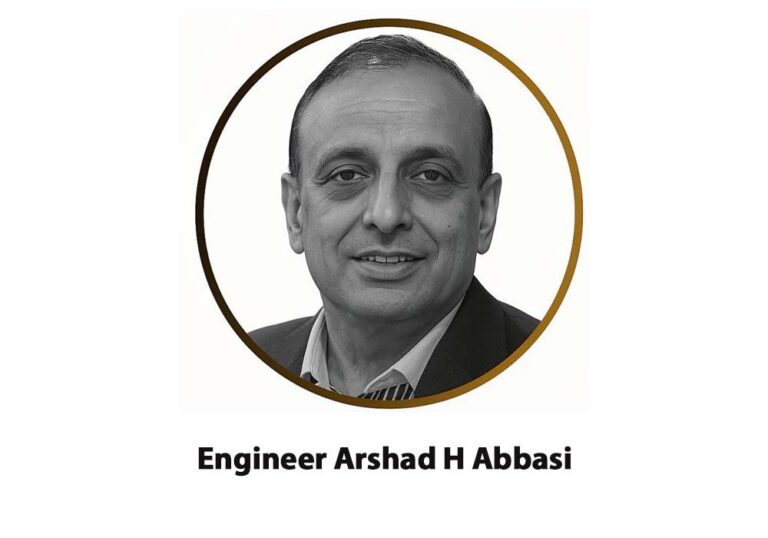
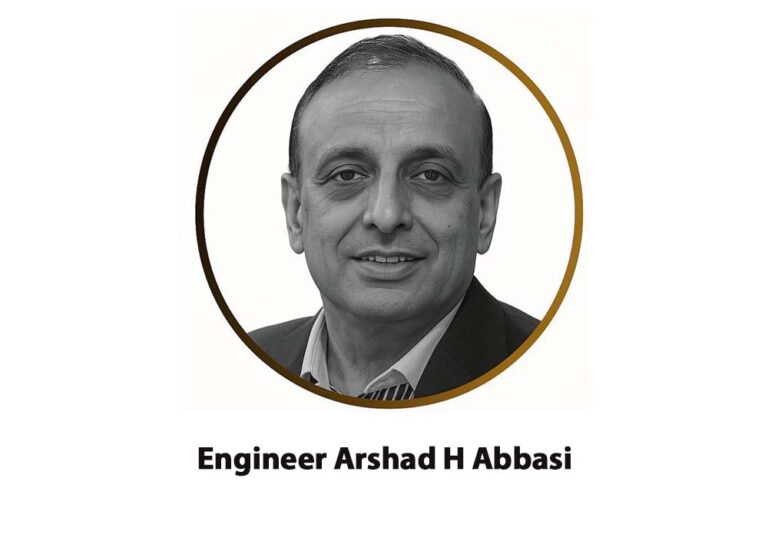
    By General Ghulam Mustafa (Served in different staff and command assignments, commanded a Corps, raised and commanded Army Strategic Force Command) & Engineer Arshad H Abbasi, Co-founder, Energy Excellence Centres at NUST and Engineering University Peshawar, International Transboundary Water Expert  Prime Minister Sahib, With the deepest respect, and as one voice among the 260 million you lead, we write to you today not to doubt your resolve, but to place before you what we believe you deserve to see in full — because a nation that trusts its Prime Minister also trusts him to be given the whole picture. On August 13, 2026, on the eve of our Independence Day, you stood at the inauguration of the Yadgar-e-Fatah monument in Islamabad and gave voice to what every Pakistani feels in their heart. “I declare in clear terms that every single drop of Pakistan’s water is our red line,” you said, warning that if India “does not come to its senses,” it would be “responded to directly.” We were moved by those words, Sir, as was the nation. It was the latest chapter in a warning you have repeated for over a year, since India placed the 1960 Indus Waters Treaty in abeyance following the April 2025 Pahalgam attack — a treaty that had, for six decades, survived three wars precisely because water was once considered too sacred, too existential, to be weaponized. It is with humility, then, and not with any wish to add to your burdens, that we ask you to consider what has been happening quietly at the river’s source while that red line was being drawn. What Has Been Happening in Ladakh: Almost two and a half months before your Independence Day address, on May 27, 2026, India inaugurated what it proudly called a first: the country’s inaugural Rock Check Dam, built across the Indus itself near Upshi village in Leh district, at 11,400 feet. Built in a mere seven days from 180 metric tonnes of interlocking riverbed boulders, without a gram of cement, it now holds back a 1,500-foot pool capable of storing 40 million litres — roughly 200 acre-feet — of Indus water. We respectfully submit that it may be something more: the opening move of the Sindhu Jal Samriddhi Abhiyan, a Ladakh-wide water campaign launched by Lieutenant Governor Vinai Kumar Saxena. It does not stand alone, Sir. It sits alongside the newly restored 43-kilometre Igoo–Phey canal; the Mahey Tokpo–Raldho canal at 14,000 feet, drawing from Yaya Tso Lake; the Brakdongthang Bodh Kharbu canal in Kargil; solar-powered lift-irrigation schemes at Latoo and Karsha; and Project Him Sarovar, a plan for fifty to one hundred small reservoirs across Leh and Kargil, unveiled on April 10, 2026, to capture glacier melt that would otherwise flow downstream toward us. We ask this humbly: for whom is all this water truly being gathered? Leh district is home to barely 160,000 people. It is also home to the Western Air Command’s most strategically dense high-altitude military footprint on India’s borders — Leh Air Force Station, the newly upgraded Mudh-Nyoma fighter base, Thoise Air Force Station feeding the Siachen front, and the world’s highest airstrip at Daulat Beg Oldi. Add the XIV “Fire and Fury” Corps and the newly raised divisions garrisoning eastern Ladakh, and a different picture may be emerging — one where the deepest beneficiary of this irrigation campaign is not the Ladakhi farmer but the soldier and the forward base that no longer wishes to depend on a single vulnerable mountain road. The massive military presence, characterized by extensive garrisons and airbases in the fragile Siachen and Ladakh regions, acts as a primary catalyst for glacial retreat, directly exacerbating climate vulnerabilities in downstream Pakistan We say plainly, Sir, out of fairness: under Annexure E of the treaty, India is permitted non-consumptive storage of up to 0.40 million acre-feet on the Indus main stem in the Ladakh sector, and a 200-acre-foot check dam, judged alone, is a small thing against that number. Our concern is not any single dam. It is the pattern — check dams, canals, lift schemes, and a hundred small reservoirs, each defensible on its own, together forming a system capable of holding back water at precisely the moment a suspended treaty leaves India no obligation to release it. You declare that Pakistan will not cede a single drop of water, yet the reality is otherwise. The diversion of Indus waters—driven by a stated Indian policy of zero flow to Pakistan—is already underway. Regrettably, your own ministries have taken this matter to global forums, even as the people of Ladakh bravely oppose this very diversion into their fragile permafrost lands.   Respectfully, we also note that your own minister is now questioning the very stability of governance in Pakistan. If that is so, Sir, we urge you—with humility and candour—to look inward before raising your voice outward. And downstream, Sir, is where our entire modern economy waits. Tarbela Dam alone generates close to 4,888 megawatts today, with capacity meant to rise toward 6,418. The 4,500-megawatt Diamer-Bhasha Dam and the 4,320-megawatt Dasu Dam were built on the assumption of a river that keeps flowing. To choke that flow at its source, even gradually, even in the name of a farmer’s canal, is to threaten the affordability of electricity for a nation already straining under its cost — and the food and economic security bound up with it. We wish to be clear: this is not written against Ladakh’s own people, or their right to a better harvest. It is worth remembering, respectfully, that Ladakh’s own most prominent son, the engineer and activist Sonam Wangchuk, our friend too, has spent years warning — through repeated hunger strikes over Ladakh’s fragile ecology and constitutional status — that his homeland’s landscape is being reshaped less for its own people than for priorities decided in Delhi. He has carried that protest in his own body, across multiple fasts since 2024. A Humble Word on Timing- We say this, Prime Minister

  • Who Watches the Workplace Watchdogs?

    Pakistan has a peculiar relationship with workplace merit. We talk about it constantly. Government departments are criticised for delaying promotions. Corporations are questioned over favouritism. Universities are urged to reward academic performance. Employers are told to retain talent. Media organisations routinely expose nepotism, extensions, political appointments and institutional injustice. But there is a question that is rarely asked: Do the organisations making these arguments follow the same standards inside their own walls? The question is particularly relevant to Pakistan’s media industry. Newspapers and television channels have considerable influence over how society understands fairness at work. They report on workers denied promotions, bureaucrats given extensions, senior officials superseded and institutions accused of favouritism. But journalism cannot demand accountability from everyone else while exempting itself from scrutiny. That is where the conversation around employee retention, promotions and extensions becomes uncomfortable. The Extension That Blocks an Entire Career Ladder In any hierarchical organisation, one senior position can determine the careers of dozens of people below it. When a person occupying a senior position retires, the organisation has several choices. It can promote someone from within. It can recruit externally. It can restructure the position. Or, where there is a genuine institutional requirement, it can retain the individual for a defined period. The problem begins when an exception becomes a culture. A six-month extension becomes another year. A temporary arrangement becomes a permanent arrangement. A retired employee is brought back. Another extension follows. Meanwhile, people below continue waiting. For them, the issue is not merely that someone has been allowed to continue working. It is that their own careers may have been placed on hold to accommodate someone else’s continued career. That distinction is often ignored in Pakistan. Even Dawn Has Written About This Problem Dawn itself has been among the publications highlighting the damage caused by prolonged temporary arrangements. In a May 2026 editorial titled “Ad hoc culture,” Dawn criticised the practice of keeping people in higher positions through prolonged temporary arrangements, noting that such practices can leave employees without formal promotion, financial benefits or recognition of seniority. It specifically highlighted the frustration of employees whose seniority is bypassed. That position is difficult to disagree with. In fact, it is precisely the position that responsible journalism should take. But it also raises a more uncomfortable question: What happens when the same principles are applied to the media organisations themselves? The Dawn Question Dawn has long presented itself as an institution committed to professional journalism, institutional accountability and workers’ rights. Its pages have repeatedly carried arguments in favour of merit-based promotions and against prolonged ad-hoc arrangements. A January 2026 Dawn editorial page contribution on academic promotions, for example, argued that delayed promotions erode meritocracy, demotivate employees and can drive talented professionals towards private institutions or overseas opportunities. In another recent editorial, Dawn argued that prolonged temporary arrangements can stagnate careers and deprive employees of financial progression and recognition. These are sound principles. But principles become meaningful only when they are applied consistently. And this is where, based on my own knowledge of the organisation, an uncomfortable contradiction deserves examination. Dawn’s senior management structure has itself seen prolonged extensions, while retired managers have, according to my knowledge, been brought back into employment in Lahore and elsewhere. That raises a straightforward question: If retaining retired or extended senior personnel is justified by institutional necessity, why should the same practice be criticised when governments or other organisations do it? And if prolonged extensions are capable of blocking the careers of younger employees in government departments, why would the principle suddenly cease to apply inside a media organisation? This is not an argument against experience. Nor is it an argument that every retired employee should automatically be removed. Experience has value. Institutional memory has value. A highly experienced editor or manager can be extremely difficult to replace. But institutional value cannot become a permanent justification for blocking succession. Fifteen Years Is a Long Time in Any Profession The question becomes even more significant when a senior position remains occupied for an exceptionally long period. From my own knowledge of Dawn, its editor has remained in the position for nearly 15 years through extensions. Again, the question is not whether an individual is competent. The question is whether an institution that advocates professional advancement should also have a mechanism for developing and promoting the next generation of leadership. Fifteen years is enough time for an entire generation of journalists to enter an organisation, build careers, become senior reporters, become editors and eventually expect to take on greater responsibility. If the top positions remain occupied indefinitely, where does that generation go? There is a very real distinction between retaining talent and preventing succession. A healthy institution must know the difference. The Supreme Court Has Now Entered This Conversation This is no longer merely an HR theory. Pakistan’s Supreme Court has recently addressed the issue in remarkably strong terms. In January 2026, the court ruled that government departments could not use administrative inefficiency and procedural delays as an excuse for denying employees timely consideration for promotion. It held that promotion is connected to merit, performance and operational requirements, and said employees should not suffer because a department failed to convene promotion committees or relied excessively on acting arrangements. Four months later, in May 2026, the Supreme Court went further. It held that prolonged ad-hoc, look-after, current-charge, acting-charge and additional-charge arrangements can amount to exploitation. The case involved a Pakistan Railways employee who had performed duties of a higher post for nearly eight years before receiving regular promotion. The court’s reasoning is important because it moves the debate beyond bureaucratic procedure. It is about human beings and their careers. A person who spends years doing higher-level work without receiving corresponding recognition, seniority or financial benefits is not merely dealing with an administrative inconvenience. Their career is being affected. What Happens to the Person Waiting Below? This is the part of the Pakistani workplace debate we often ignore. We discuss the person

  • Celebrating freedom through zero poverty

    On August 14, 2026 the independence day was celebrated with great fanfare. This year a Norwegian team was also here to foster business opportunities. Norway is one of the five Nordic Welfare states (Norway, Finland, Sweden, Denmark, Iceland). Foreign Minister Espen Barth Eide arrived in Islamabad on August 13, 2026 on a commercial flight. He carried his own luggage. The embassy staff received him and drove him to his hotel. He then held meetings with the foreign minister, prime minister and the chief of defense forces. Being a welfare state, every citizen there is covered from cradle to grave, with no worries. No one is left out to rot in the cold. The Government Pension Fund Global of Norway is valued at $2.39 trillion. Surplus oil and gas revenues are invested to support public services and pensions. During my days at the Literacy Commission, we received a telephone call from the Embassy of Norway. A visiting delegation wanted to meet the Director of the Punjab office. As adviser I was present in the meeting. We were surprised by their agenda. About 40,000 Pakistanis reside in Norway who get married to girls of their own village. These brides then join their husbands to live in the new land. The embassy was very keen to open a school in their home town to educate and train them to assimilate with the Nordic way of life. The purpose was total inclusion with no exclusion. It reminded me of Allama Iqbal’s verse, ‘Har Fard Hai Millat Kay Muqadar Ka Sitara’ (Every individual is the rising star of the nation). No one can be left behind to drag down the nation. While freed colonial states like India and Pakistan have failed to overcome the menace of poverty, China has succeeded. It calls for major soul searching. While the People’s Republic of China (PRC) is on track to dominate the world, we lag behind. Human development is at the core of the Chinese development model. Education and health are taken very seriously. The state acts like a mother; it facilitates its citizens. Resources are protected and spent on the welfare of the people. The PRC has a single party system that focuses primarily on the economic emancipation of the entire nation, not only of a selected few. In recent years India has advanced economically, but poverty persists mainly because of the uneven sharing of resources and opportunities. Norway presents a model of harmony where human freedom and economic growth have been balanced. In the original Pakistan Peoples Party manifesto, it was termed Mixed Economy or Islamic Socialism. While some basic industrialization was needed in the country, for which SOEs (State Owned Enterprises) were created, the nationalization of running industries did not sit well. Perhaps the loss of C.M. Latif’s BECO was the biggest loss, which should have been reversed through de-nationalization. Dr Muhammad Amjad Saqib of the Akhuwat Foundation believes that poverty can be overcome through freedom of mind and easy access to financing. His foundation provides interest-free loans while running a residential university with no fee. The Indus Hospital has a similar model of providing medical coverage free of cost. Despite these private efforts, poverty remains a major challenge for Pakistan. Equitable distribution of resources requires a major reduction in state expenses. Like time, public money has to be carefully handled, as it is always in short supply. Flamboyance, fanfare and protocol consume resources which could be put to better use. Freedom for all comes through sharing and hand holding, not sloganeering. I am not sure if the visiting foreign minister was impressed or concerned by our style of celebrating our independence. Norwegian investments will be a test of the success of his visit. But the poor fellow had to carry his own luggage on the way back and take a taxi upon arrival to reach his residence unnoticed.

  • How much do we love Pakistan?

    Patriotism is not a loud noise that we hear only on the 14th of August. It is not only flags on the streets, or songs on television, or speeches in big grounds. Real patriotism is a quiet light that burns in the heart of a common man, every single day. It lives in the way we treat our country when no one is watching. It lives in the small choices we make from morning till night. Pakistan was not given to us as a gift. It was bought with blood, with tears, with the prayers of mothers and the sacrifices of fathers. Millions left their homes. Millions never returned. Today, the debt of that sacrifice is on us. And how do we pay that debt? Not always with great battles. Often, we pay it with small, honest, and consistent acts. Look around you. When a young boy in Lahore gets up early and sweeps the street in front of his house without waiting for anyone to tell him, that is patriotism. When a shopkeeper in Karachi refuses to sell expired medicine to a poor child, even when he could earn more, that is patriotism. When a teacher in Peshawar stays for ten extra minutes to explain one more sum to a weak student, that is patriotism. When a driver in Islamabad stops at the red light at 2 AM when the roads are empty, that is patriotism. The world may not clap for them. Cameras may not follow them. But Allah sees. And the nation grows stronger because of them. Consider our daily life. We waste water while brushing our teeth. We throw plastic on the road and then complain that the drains are blocked. We break the queue and then blame the system for being corrupt. But a true patriot asks a different question. He asks, “What can I do today?” He turns off the extra fan. He plants one tree in his street. He picks up one wrapper and puts it in the dustbin. One person doing this means nothing. But when two hundred and forty million people do this, rivers become clean, cities become beautiful, and the government saves billions that can go to schools and hospitals instead of cleaning our mess. Now look at our work. A nation is built in offices, in fields, in factories, and in classrooms. The doctor who treats every patient with the same care, whether he is rich or poor, is serving Pakistan. The engineer who builds a bridge that does not fall for fifty years is serving Pakistan. The farmer who works under the hot sun of Punjab and Sindh to grow wheat so that no child sleeps hungry is serving Pakistan. The coder in Lahore who earns dollars from clients abroad and brings that money back to Pakistan is serving Pakistan. Even the mother at home who raises her children with honesty and faith is serving Pakistan. These are not small jobs. These are the pillars of a nation. In today’s world, patriotism also lives on our phones. Every day we forward messages. Every day we post something. A patriot thinks before he types. He does not spread hate between provinces. He does not share a lie to get more likes. He speaks about Pakistan with pride, even when he is criticizing to improve. When a Pakistani student sits in London or Dubai and works hard and follows the law, he becomes the face of Pakistan. When he helps a stranger and says “I am from Pakistan” with his head high, he wins respect for all of us. We are a nation of diversity. We speak different languages. We wear different clothes. We eat different food. But we share one sky, one land, and one flag. True patriotism is when a Baloch, a Sindhi, a Punjabi, a Pashtun, and a Kashmiri sit at one table and say “We are Pakistani first.” It is when during floods, people from Gilgit send donations to people in Thar. No one asks your caste. No one asks your sect. We only ask, “How can we help?” That is the Pakistan of Quaid-e-Azam. That is the Pakistan we must protect. And what about our land? Our rivers, our mountains, our air? To harm them is to harm Pakistan. The patriot plants a tree. The patriot says no to plastic. The patriot keeps his mosque, his school, and his park clean. Because a dirty nation can never be a great nation. Dear readers, let us be clear. We do not need to do everything. But we must do something. Every day. Faith, Unity, Discipline. These were not just three words. They were a plan. Faith in Allah and in ourselves. Unity with each other despite our differences. And Discipline in our small, daily actions. Do not wait for a hero to come and fix everything. You are the hero. In your home. In your street. In your office. On 14th August we celebrate. But on 15th August, and 16th August, and every day after that, we must build. With honesty. With hard work. With love. Because nations are not built by what we say in one day. Nations are built by what we do in three hundred and sixty-five days.

  • Whose Lives Count on Primetime? From Mir Raza Ali …

    Let me begin where every honest sentence on this subject must begin: I condemn, without reservation, the murder of Mir Raza Ali, the 25-year-old founder of Karachi’s beloved dessert brand Wafflix. He left his home before dawn on July 28, 2026, telling his mother he would return in ten minutes. He never did. His body was found the next day in the bushes of Gulistan-e-Jauhar, bearing torture marks and a gunshot wound. Eighteen days later, his family still waits for the truth, and I appeal — as every citizen should — for a swift, transparent investigation and justice for his killers. Nothing that follows in this essay is meant to diminish that grief. It is meant to sit beside it, uneasily, and ask why our grief is so selective. Because for eighteen days now, Pakistan’s television screens have offered something close to a live tribunal. Home Minister Zia Ul Hassan Lanjar and Inspector General of Police Javed Alam Odho face anchors nightly. Forensic reports are dissected line by line. Postmortem findings, CCTV timelines, taxi records — every fragment of evidence is turned over on air with a rigor that would not embarrass The Hague. I do not begrudge this scrutiny; a young man is dead and the public deserves answers. But I confess, with something between astonishment and despair, that I cannot recall our media applying this same forensic hunger to the killing of the country’s economy. Even the assassination of former Prime Minister Benazir Bhutto in 2007 — an event that reshaped this nation’s political history — did not receive this level of daily, granular dissection. Nor, in truth, did the world’s own gold standard for high-profile scrutiny, the 2018 murder of journalist Jamal Khashoggi inside the Saudi consulate in Istanbul, sustain eighteen straight days of forensic-audit-level coverage in the country that lost him. So where is that same appetite for NEPRA and CPPA? Here is what nobody puts on a talk show: over the past three years, dozens of Pakistanis — an elderly widow in Gujranwala, a mother of four in Jahanian, a young man in Faisalabad, a payphone operator in Peshawar — have taken their own lives after receiving electricity bills they could not pay. These were not abstractions. They were documented, named, buried. And yet no anchor has spent eighteen consecutive nights asking the chairman of NEPRA why. No panel has summoned the CEO of the Central Power Purchasing Agency to explain, plainly, in language a shopkeeper in Bahadurabad could understand, why this country of 260 million people pays some of the region’s highest power tariffs while its own regulator’s reports describe capacity sitting idle. Where is the media trial of the men who told us, from 2014 to 2018, that imported coal would be Pakistan’s “game changer,” and of the former prime minister who made the same promise about LNG-fired plants? Those promises are now line items in a debt-trapped economy, in a nation reduced, again and again, to a global begging bowl. But no one is asked to answer for them on camera. They sit, as it were, behind a veil — while the Director General of ISPR and the Chief of Defence Forces routinely stand before microphones and take hard questions. Why can Pakistan’s military spokesmen face the public, but not the men who set the price of electricity for every household in the country? I want to be precise, not merely aggrieved, so let me offer what I found when I went looking myself. CPPA-G’s own energy purchase data for May–June 2026 shows three nearly identical imported-coal plants — Huaneng Shandong Ruyi at Sahiwal (1,244 MW), China Power Hub in Balochistan (1,249 MW), and Port Qasim in Karachi (1,243 MW) — dispatched at wildly different rates. Huaneng ran at roughly 73 percent of capacity; Port Qasim at only 36 percent; China Power Hub at a mere 24 percent — this despite Huaneng being, by current fuel charges, the most expensive of the three at roughly Rs. 20.38 per unit, against Rs. 15.12 for Port Qasim and Rs. 16.09 for Hub. If Pakistan’s Economic Merit Order genuinely governed dispatch, the cheaper southern plants should be running harder, not idling at a quarter of their design capacity. Something else is deciding who generates and who doesn’t — transmission bottlenecks, take-or-pay contract terms that favor Sahiwal, or simple operational failure at Hub, whose output fell 37 percent in a single month. Whatever the cause, Pakistani consumers are still paying full capacity charges for roughly 760 to 940 idle megawatts at each underused plant — fixed costs for electricity that was never produced, quietly folded into tariffs nobody explains on air. This is not a call to relent on Mir Raza Ali. It is a plea that the same courage be extended elsewhere. I am not asking media to abandon one grieving family; I am asking whether this nation’s curiosity has been rationed, aimed carefully at the stories that move ratings but never at the ledgers that move our poverty. Who decides that a private tragedy in Gulistan-e-Jauhar deserves eighteen days of forensic television, while a public catastrophe costing every household thousands of rupees a month deserves none? Is there a veil, a ghost hand, guiding our screens away from NEPRA’s boardroom and toward whatever is easier to sell? My request to Pakistan’s media is respectful, not accusatory: summon the chairman and members of NEPRA and the CEO of CPPA, and ask them, on camera, to explain the dispatch logic behind May and June’s generation data, to quantify what idle capacity is costing consumers per unit, to say plainly whether transmission constraints are forcing reliance on costlier northern plants while cheaper southern capacity sits dark, and to commit to passing any findings transparently through the Fuel Charges Adjustment mechanism, as the NEPRA Act itself demands. Pakistan is the fifth most populous nation on earth, and yet the men who preside over its power sector — the chairmen and members of NEPRA and OGRA, the leadership

  • 79 Years of Independence and What Went Wrong with …

    On 14 August 1947, Pakistan emerged as a new country with enormous challenges but also extraordinary potential. Seventy-nine years later, the question is not whether Pakistan has achieved anything, it certainly has, but why a country that began with comparable hopes to many newly independent nations has struggled to convert its human and natural potential into sustained prosperity, strong institutions and a secure future. The comparison becomes uncomfortable when we look at countries that began their modern journeys around the same period. Singapore became self-governing in 1959 and independent in 1965. Bangladesh became independent in 1971 after emerging from the same Pakistan that had been created in 1947. Taiwan’s post-war transformation accelerated from the 1950s onward. South Korea, independent since 1948, also started from extraordinary hardship. Their histories are very different from Pakistan’s, so simplistic comparisons would be unfair. Yet they demonstrate one important principle, institutions, continuity, human capital and economic strategy can transform countries even when starting conditions are difficult. Bangladesh is perhaps the most striking comparison because it began as the poorer and more politically disadvantaged wing of Pakistan. In 1971, its future looked extremely uncertain. Today, Bangladesh’s nominal GDP per capita is substantially higher than Pakistan’s, the World Bank reports about $2,593 for Bangladesh compared with about $1,479 for Pakistan in 2024. Bangladesh’s total GDP has also grown larger than Pakistan’s despite having a much smaller land area according to world bank open data. Singapore represents an entirely different model. A small island with few natural resources, it concentrated on competent administration, education, trade, infrastructure, investment and institutional discipline. Its 2024 GDP per capita was approximately $90,674, compared with Pakistan’s approximately $1,479. World bank open data says. Taiwan and South Korea followed another path, export-oriented industrialisation, investment in education and technology, strong state capacity and, eventually, increasingly democratic institutions. These countries did not become successful because their people were inherently more capable than Pakistanis. They created systems that allowed capability to produce results. So what happened to Pakistan? The first failure was institutional continuity. Pakistan spent much of its history moving between civilian governments, military rule, political confrontation and constitutional crises. Instead of allowing institutions to mature, every political transition often became a struggle over who controlled the state. The second failure was the weak rule of law. A country cannot become prosperous when laws are applied selectively, institutions are politicised and citizens do not have equal confidence in justice. Democracy is not merely the holding of elections, it requires constitutional supremacy, independent institutions, accountable government and protection of fundamental rights. The third failure was education and human capital. Pakistan has a huge young population, yet education has too often remained underfunded, unequal and disconnected from the needs of a modern economy. Countries that transformed themselves invested heavily in the quality of their people. Pakistan has frequently treated education as expenditure rather than as the country’s most important investment. The fourth failure was economic inconsistency. Pakistan repeatedly moved between economic models without developing a stable, long-term national strategy. Political governments changed priorities, economic crises produced short-term fixes, dependence on external financing repeatedly returned. Meanwhile, countries such as Bangladesh built globally competitive export sectors, particularly garments, while East Asian economies moved aggressively into manufacturing, technology and high-value exports. The fifth failure was population planning and social development. Pakistan’s population has grown enormously, while economic growth has not consistently kept pace with the needs of its people. The World Bank’s latest figures show Pakistan with a life expectancy of around 68 years, compared with 75 years in Bangladesh and 83 years in Singapore. The sixth failure has been our inability to build a culture of accountability without political revenge. Accountability is essential, but when it becomes a weapon used selectively against political opponents, it destroys trust rather than strengthening the state. The seventh and perhaps deepest failure is that Pakistan repeatedly confused national security with national development. Security is essential, but a nation’s ultimate security comes from educated citizens, a productive economy, social cohesion, constitutional government and opportunities for its young people. Pakistan’s people, however, did not fail Pakistan. Pakistanis have demonstrated remarkable resilience. They built businesses, universities, industries, hospitals, technology companies and a vast overseas community. Millions of Pakistanis work abroad and send billions of dollars home. In 2024, remittances were equivalent to about 9.4% of Pakistan’s GDP, according to the World Bank. The real tragedy is that the capacity of the Pakistani people has repeatedly been greater than the capacity of the systems governing them. Independence was supposed to mean more than freedom from colonial rule. It was supposed to mean dignity, justice, representation and opportunity. After 79 years, Pakistan therefore needs a different question. Not who is responsible for our problems? but what kind of state do we want to become? The answer cannot be another political slogan or another temporary economic package or presidential system of government . Pakistan needs constitutional supremacy, civilian and institutional stability, independent justice, free media, serious investment in education and health, economic continuity, women’s participation in the workforce, export-led growth, technological development and genuine local governance. The comparison with Bangladesh, Singapore, Taiwan and South Korea should not produce humiliation. It should produce reflection. We began with a dream. The unfinished task of Pakistan’s next generation is to turn that dream into functioning institutions, human development and dignity for every citizen. Seventy-nine years after independence, perhaps the most patriotic thing Pakistanis can do is not merely celebrate the birth of the country, but honestly ask why the promise of 1947 has still not reached every Pakistani.

  • When Rivers Run Thin: Why Shared Water Is Becoming…

    In August 2022, satellite images showed the Indus River in Pakistan swelling to more than ten times its normal width, submerging a third of the country. Less than two years later, in early 2024, the same river system was running far below its seasonal average in its upper reaches, triggering emergency irrigation cuts in Punjab. Flood and drought extremes that once defined different eras are now defining the same decade. For the nearly 40 percent of humanity that lives in river basins shared by two or more countries, this volatility is turning a development issue into a security issue.   Water has always been political, but climate change is making it less predictable and less abundant at the moments when it is most needed. Three basins the Indus, the Nile, and the Mekong illustrate how historical treaties, new infrastructure, and a warming climate are converging to test whether water can be managed as a shared resource or will become a source of sustained confrontation.   The Indus: A Treaty Under Strain   The Indus Waters Treaty, signed in 1960 and brokered by the World Bank, is often cited as one of the most durable water-sharing agreements in the world. It survived two wars and multiple crises between India and Pakistan. Under its terms, the three eastern rivers Ravi, Beas, and Sutlej were allocated to India, and the three western rivers Indus, Jhelum, and Chenab to Pakistan, with limited rights for India to develop run-of-the-river hydropower upstream.   The treaty was designed for a different hydrological and political reality. It divides water volumes based on historical flows, with no explicit mechanism for climate adaptation. It also established a complex dispute resolution process involving a Neutral Expert and a Court of Arbitration.   Tensions have centered on India’s hydropower projects in Jammu and Kashmir, such as Kishenganga and Ratle. Pakistan argues that the design of these projects particularly pondage capacity and spillway gates violates treaty restrictions and could give India control over the timing of flows that are critical for Pakistani agriculture, which supports more than 80 percent of the country’s irrigated agriculture and employs a large portion of its workforce. India argues that the projects are within treaty allowances, are necessary for its own energy security and development, and that it has never interfered with Pakistan’s share.   Both governments have sought recourse through the treaty’s mechanisms simultaneously in recent years, leading to parallel proceedings that have raised questions about the treaty’s procedural resilience. Experts note that the underlying driver is not just engineering, but scarcity: glacier retreat in the Hindu Kush-Himalaya, altered monsoon patterns, and rising demand from growing populations on both sides are reducing the margin for error that allowed the treaty to function for six decades.   The Nile: Sovereignty Versus Survival   No river illustrates the clash between national development and downstream vulnerability more starkly than the Nile.   Ethiopia, where about 85 percent of the Nile’s water reaching Egypt originates from the Blue Nile, began construction of the Grand Ethiopian Renaissance Dam, GERD, in 2011. With a capacity of over 5,000 megawatts, the dam is central to Ethiopia’s plan to expand electricity access still below 50 percent in rural areas at the start of construction and to become a regional power exporter. For Addis Ababa, the dam is a matter of sovereignty and economic transformation, financed domestically and built without external funding.   For Egypt, which depends on the Nile for approximately 90 percent of its freshwater, the dam is viewed as an existential risk. A reduction in flow during the multi-year filling period, or during future droughts if filling and operating rules are not agreed, could directly affect agriculture in the Nile Delta and drinking water for over 100 million people. Egypt has therefore insisted on a legally binding agreement on filling and long-term operation, including drought mitigation mechanisms.   Sudan sits between the two, potentially benefiting from regulated flows and cheap electricity, but also concerned about dam safety and its own water needs.   More than a decade of negotiations mediated by the African Union, the United States, and others have failed to produce a binding deal. Ethiopia has proceeded with filling the reservoir, arguing that this is a natural consequence of exercising its right to develop resources within its borders under the principle of equitable and reasonable utilization. Egypt has argued for the principle of no significant harm and historical rights. International water law, primarily the 1997 UN Watercourses Convention, contains both principles, but leaves their balancing to negotiation.   The dispute has remained diplomatic rather than military, despite inflammatory rhetoric at times, and has spurred renewed discussion about benefit-sharing for example, linking power trade to water security rather than zero-sum volume allocation.   The Mekong: Upstream Control   In Southeast Asia, the Mekong River supports the food security of more than 60 million people. Its annual flood pulse drives one of the world’s most productive inland fisheries in the Tonle Sap lake in Cambodia and sustains rice cultivation in Vietnam’s Mekong Delta, which produces roughly half of Vietnam’s rice.   The construction of eleven large hydropower dams on the mainstream of the upper Mekong in China where the river is called Lancang and more than 100 tributary dams downstream, principally in Laos, has fundamentally altered that pulse. Data from the Mekong River Commission, an intergovernmental body of Cambodia, Laos, Thailand, and Vietnam, shows changes in seasonal water levels, sediment transport, and fisheries.   China, which is not a full member of the Commission but a dialogue partner, argues that its dams provide flood control and dry-season flow augmentation, and are essential for its clean energy transition. Data sharing has improved in recent years, with Beijing providing year-round water level and rainfall data.   Downstream countries offer a different perspective. Thailand and Cambodia have raised concerns about unpredictable releases affecting navigation and farming. Vietnam is particularly vulnerable: reduced sediment flow scientists estimate that dams have trapped more than half of the sediment

  • Guardians of Mind in the digital deluge

    A meticulous examination of human civilization reveals a fundamental, unrelenting truth: the ultimate destiny, rise, and moral endurance of nations are never dictated solely by the expansion of their treasuries, the volume of their industrial output, or the brute dominance of their military might. Rather, they hinge upon their intellectual sovereignty, their engagement with the zeitgeist, and the preservation of their scholarly legacy. Knowledge constitutes the living soul of any dignified society—an indispensable force that enables a people to safeguard their intellectual frontiers, foster collective evolution, and claim a distinguished standing in the global council of minds. The sturdiest, most ancient, and most sacred citadel dedicated to preserving this intellectual momentum, organizing it within modern scientific frameworks, and transmitting it across generations remains the library. Yet, it is a poignant and deeply troubling irony that our prevailing socio-educational attitudes routinely reduce the library to a sterile edifice of stone and mortar—a mere repository of silent shelves and dust-laden volumes. Through this narrow, utilitarian lens, the profession of the librarian is similarly diminished, cast as little more than a routine counter clerk or a custodian issuing loans. Such apathy betrays a profound collective negligence toward the very architects of our intellectual heritage and the true sentinels of wisdom. In an era ensnared by algorithmic echo chambers, sensationalist digital flows, and an unrelenting deluge of Artificial Intelligence—where the sheer abundance of information has blurred the boundaries between verified truth and superficial noise—the librarian’s vocation has acquired a heightened, almost sacred imperative. The modern librarian is no longer a passive guardian of books; they serve as an authoritative, discerning Information Navigator amidst a tempestuous ocean of data. They erect the scientific and critical filters that protect researchers, scholars, and students from sinking into the quagmires of misinformation. Ensuring the equitable, uninterrupted, and rigorous transmission of knowledge is the ultimate guarantee of a society’s intellectual sovereignty, and the librarian stands as the quiet architect fortifying that foundation behind the scenes. Throughout the subcontinent’s intellectual history, libraries served as the vital organs of the body politic—its heart and mind. In tracing the evolutionary arc of library science across South Asia, August 12 emerges as a watershed moment. This date marks the birth anniversary of Professor Dr. S.R. Ranganathan (1892–1972), the towering polymath and founding father of modern library science in the region. Ranganathan revolutionized traditional custodial practices, elevating library management into a structured, universally recognized scientific discipline. His seminal Five Laws of Library Science remain the universal constitution of bibliothecal organization. He catalyzed an epistemological shift by asserting that books are not meant to be locked away in archival isolation but are living tools for active inquiry; bridging the gap between every reader and their required text lies at the very core of a library’s purpose. Celebrating August 12 as Librarians’ Day across South Asia is, therefore, a public tribute to this intellectual legacy and an unequivocal affirmation of the nobility of the profession. It was against this rich historical backdrop that the Quaid-e-Azam Central Library at the University of Gujrat recently hosted a distinguished academic symposium to commemorate Librarians’ Day. Chaired by the Chief Librarian, A.R. Sheikh, the gathering transcended routine ceremonial formality. It served as a rigorous reaffirmation of the historical contributions of libraries in South Asia and an exploration of the evolving mandates of librarianship within contemporary higher education and research. The professional staff of the Quaid-e-Azam Central Library used the occasion not merely to celebrate history, but to renew their solemn pledge: to reignite the culture of deep reading and to transform the library into the region’s most dynamic, responsive, and technologically adept sanctuary for scholarly inquiry. The panel discussion opened with compelling insights from Senior Librarian Mrs. Rameeza Mushtaq, who underscored that no institution of higher learning can claim completeness without a fully realized library—the true intellectual heart of any university. Senior Librarian Mr. Liaquat Ali emphasized that while the digital age and e-books have fundamentally reshaped reading habits, the enduring value of physical texts and historical archival materials remains absolute; librarians serve as the indispensable bridge sustaining the bond between students, faculty, and authentic scholarship. Expanding on the technological horizon, Librarian Mrs. Khadija Munawar highlighted how modern information technology has expanded the librarian’s scope, transforming them into high-level information navigators capable of guiding researchers through vast digital landscapes. The capstone of the symposium was the presidential address delivered by Chief Librarian A.R. Sheikh—a masterclass in scholarly vision and professional reflection. In his keynote address, A.R. Sheikh articulated a powerful thesis: > “A library is not merely an inert structure built of brick and mortar, nor is it a quiet sanctuary of passive bookshelves; it is the ultimate fountainhead of a nation’s intellectual and ideological sovereignty. The true academic stature of any university or nation resides in its capacity for original research and the rigorous processing of information. In this era of chaotic digital overabundance, discerning signal from noise and quality from triviality is the defining professional test of the modern librarian. August 12 reminds us that safeguarding knowledge and ensuring its unimpeded flow is a sacred trust.” > This presidential manifesto resonates as a clarion call for our broader educational landscape. A close institutional assessment of the Quaid-e-Azam Central Library at the University of Gujrat demonstrates how a modern library can effectively anchor the research and pedagogical needs of a region. Beyond housing an extensive collection of print literature and rare manuscripts, the library’s staff has actively integrated state-of-the-art digital infrastructure. Through seamless access to the HEC Digital Library, international peer-reviewed journals, Online Public Access Catalogs (OPAC), specialized research bays for MPhil and PhD scholars, and robust plagiarism detection frameworks, the library stands as a vibrant, operational engine of advanced inquiry. Yet, while acknowledging such institutional achievements, we must confront a starker, systemic reality across our broader society: the guardians of books—our librarians and library staff—remain deeply underappreciated despite their quiet, indispensable contributions. This pervasive social blind spot reflects a broader intellectual stagnation. The time has come to

  • Xi Jinping’s vision for stronger party governanc…

    Since the 18th National Congress of the Communist Party of China (CPC), the CPC Central Committee with General Secretary Xi Jinping at its core has put forward a series of new ideas, new thinking and new strategies centered on the major issue of the era—what kind of long-term governing Marxist party to build and how to build it—giving rise to Xi Jinping Thought on Party Building. As an important component of Xi Jinping Thought on Socialism with Chinese Characteristics for a New Era, Xi Jinping Thought on Party Building carries significant practical relevance and far-reaching guiding significance for strengthening the Party and the nation. It explicitly sets forth the “14 commitments”, namely: adhering leadership by the CPC as the defining feature of socialism with Chinese characteristics; upholding the centralized, unified leadership of the Party Central Committee; exercising full and rigorous Party self-governance; staying true to the Party’s original aspiration and founding mission; taking strengthening the Party politically as the overarching principle; building cohesion and inner strength with the Party’s latest theory; forging strong Party spirit; improving the organizational system to ensure vertical coherence and effective implementation; cultivating high-caliber officials capable of shouldering the mission of national rejuvenation; making sustained and effective efforts to improve conduct; governing the whole Party with strict discipline; taking integrated steps to ensure that officials do not have the audacity, opportunity or desire to conduct corruption; governing the Party through systems and regulations, and ensuring that the political responsibility for Party self-governance is fulfilled. The “14 commitments” represent a concentrated summary of General Secretary Xi Jinping’s landmark, guiding new ideas and strategies on party building in the new era. They serve as the fundamental guideline for the CPC in strengthening party building, as well as a Chinese approach for political parties around the world to enhance self-improvement and state governance. China and Pakistan are ironclad friends and all-weather strategic cooperative partners. We are ready to deepen exchanges and mutual learning with Pakistan on party building and governance, work together to improve people’s well-being and promote prosperity and development, and accelerate the building of an even closer China-Pakistan community with a shared future in the new era. We must put people first and ensure that China-Pakistan cooperation delivers greater benefits to the two peoples. The CPC has always upheld building the Party for the public good and exercising state power for the people. Xi Jinping Thought on Party Building explicitly stresses “remaining true to the original aspiration and founding mission”, namely to seek happiness for the Chinese people and rejuvenation for the Chinese nation. Back in 2012, General Secretary Xi Jinping pointed out that our Party is dedicated to serving the people wholeheartedly; the people’s desire for a better life is the goal we strive to work for. Guided by this profound devotion to the people, in the well-known poverty elimination campaign in China, General Secretary Xi Jinping set a shining example through personal commitment. He conducted more than 50 field research visits on poverty alleviation, covering all 14 contiguous poor regions across China. Based on thorough investigations, he put forward and applied the concept of targeted poverty alleviation, setting a brilliant example of integrating the power of truth with moral integrity. Under his leadership, China won the poverty alleviation campaign, built a moderately prosperous society in all respects, and embarked on a new journey of advancing national rejuvenation and building a great modern socialist country through Chinese modernization. Practice since the 18th National Congress of the Communist Party of China (CPC) has fully demonstrated that the historic achievements and transformative changes in the cause of the Party and the country are fundamentally attributable to the steady guidance of General Secretary Xi Jinping as the core of the CPC Central Committee and of the Party as a whole, and to the scientific guidance of Xi Jinping Thought on Socialism with Chinese Characteristics for a New Era. Under the strong leadership of General Secretary Xi Jinping and the Party Central Committee, over 3 million first secretaries of CPC village committees and village-based officials, together with nearly 2 million township officials and millions of village officials, fought in unison to eliminate absolute poverty. This fully demonstrates the CPC’s capacity to mobilize resources to accomplish major undertakings, and embodies two core principles highlighted in Xi Jinping Thought on Party Building, which is “adhering to the leadership by the CPC as the defining feature of socialism with Chinese characteristics” and “upholding the centralized, unified leadership of the Party Central Committee. It is precisely because the CPC always puts people first and regards delivering people’s wellbeing as its paramount achievement that it enjoys enduring popular support and stands as the most reliable backbone for the Chinese people. Beyond seeking happiness for the Chinese people and rejuvenation for the Chinese nation, the CPC also strives for progress for humanity and the common good for the world. As General Secretary Xi Jinping noted, we Chinese not only aspire for good living for ourselves, but also hope people in other parts of the world lead a decent life. This is fully reflected in the development of China Pakistan relations in the new era. General Secretary Xi Jinping has always been concerned about and supported Pakistan’s national development and the improvement of people’s livelihoods. He and Pakistani leaders established the all-weather strategic cooperative partnership between the two countries and reached important consensus on building an even closer China-Pakistan community with a shared future in the new era. General Secretary Xi Jinping has stressed that China’s friendly policy toward Pakistan is always oriented toward all Pakistani people, the planning and layout of the China-Pakistan Economic Corridor (CPEC) should take into account all regions of Pakistan, so that the fruits of development can benefit all the Pakistani people. To date, CPEC has brought in over 25.9 billion US dollars in direct investment, created more than 260,000 jobs, added over 8,000 MW of power generation capacity, built 510 kilometers of highways and 886 kilometers of core national power

  • Correcting the Asymmetry: Why Bangladesh Needs UN-…

    I first learned to think of rivers as questions of survival, not just geography, from the late Dr. Mohammad Moniruzzaman Miah, the visionary Dhaka University vice-chancellor and geographer whose work shaped a generation of Bangladeshi thinking on transboundary water. In the years when Khaleda Zia’s government stood firm in defending Bangladesh’s water rights, I was part of the technical effort that helped galvanize opposition to India’s proposed 1,500 MW Tipaimukh Dam on the Barak River in Manipur — a fight documented in the broader scholarly record of that transnational resistance movement. That episode taught a lesson Bangladesh cannot afford to forget as it approaches the next deadline in its water diplomacy: December 2026, when the landmark 1996 Ganges Water Treaty expires. The Ganges Treaty, signed in December 1996, was hailed as a diplomatic breakthrough — the first long-term water-sharing arrangement between India and Bangladesh. But thirty years on, its formula looks less like fairness and more like a structural handicap for the downstream nation. Under the treaty, dry-season flow at the Farakka Barrage (January 1 to May 31) is divided in alternating ten-day blocks. When total flow is 70,000 cusecs or less, the two countries split it 50-50. But when flow reaches 75,000 cusecs or more — precisely the scenario Bangladesh needs most, during peak dry-season stress — India takes a fixed 40,000 cusecs off the top, and Bangladesh gets only the remainder. In practice, the treaty guarantees India a floor while leaving Bangladesh’s share to fluctuate with whatever is left. For a delta nation of 175 million people, dependent on the Ganges-Padma system for irrigation, drinking water, fisheries, and salinity control, that asymmetry has never been sustainable. It is even less so now, as climate change intensifies dry-season scarcity and accelerates saline intrusion along the coast. Bangladesh is not asking for charity. It is asking for a renewed, predictable framework that reflects present-day hydrological and demographic realities — not the assumptions of three decades ago. That renewal must also confront a public health emergency that the original treaty never anticipated: the mobilization of naturally occurring arsenic into the very groundwater tens of millions of Bangladeshis depend on for drinking water. The mechanism is worth explaining plainly. Reduced dry-season flow in the Ganges limits natural flushing and recharge of shallow aquifers. Farmers and municipalities, deprived of adequate surface water, turn increasingly to groundwater pumping for irrigation and drinking supply. That heavy extraction alters subsurface flow and oxygen conditions, encouraging microbial processes that break down buried organic carbon and release arsenic bound in iron-rich sediments — arsenic that occurs naturally in the geology of the Bengal delta. It’s important to be precise here: most researchers attribute the origin of this arsenic primarily to natural, geogenic sources within the delta’s Holocene sediments, not to the Farakka Barrage itself. But many Bangladeshi hydrologists and public health researchers argue, credibly, that reduced Ganges flow and the resulting over-reliance on groundwater pumping act as an accelerant — turning a latent geological hazard into an active public health catastrophe. Whatever the precise weighting of causes, the outcome is not in dispute: Bangladesh is living through what the World Health Organization has called the largest mass poisoning of a population in history. The economic toll is staggering and measurable. Studies estimate that arsenic contamination has reduced Bangladesh’s effective rural labor supply by roughly 8 percent — a contraction larger than the labor-market shock the United States experienced during the Great Recession. Projections suggest arsenic-related mortality and morbidity could cost the economy up to $13 billion over twenty years in lost productivity alone. Millions of person-days are lost annually to arsenicosis, and the neurotoxic effects on children threaten the cognitive development of the next generation — a bottleneck on Bangladesh’s long-term growth prospects. Contaminated irrigation water enters the food chain, straining agricultural yields and export credibility. At the household level, families spend hundreds of millions of taka annually on treatment, exhausting savings and pushing the rural poor deeper into poverty. Visible skin lesions bring social stigma, job loss, and marginalization, particularly for women. This is not an abstract environmental dispute; it is a slow-moving national emergency with a very real balance sheet. This debate does not exist in isolation. It sits alongside Bangladesh’s long-stalled push for a Teesta River sharing agreement, another dispute where upstream control and India’s domestic politics — particularly in West Bengal — have repeatedly delayed progress. Dhaka has made clear that a fair, long-term renewal of the Ganges pact is now central to the broader trajectory of India-Bangladesh relations. The two issues are linked in substance as much as in diplomacy: both test whether the region can move from a “mercantile” approach to shared rivers, in which every cusec is treated as a zero-sum resource to be captured upstream, toward an approach that treats water as a shared trust with obligations that flow downstream as well as up. Given this, the renewal of the Ganges Treaty must do more than reallocate cusecs. It must treat adequate, dependable freshwater flow as a public health intervention, not merely an irrigation input. Diluting arsenic concentrations in shallow aquifers, sustaining natural flushing, and reducing pressure to over-pump groundwater all depend on Bangladesh receiving a demonstrably larger and more reliable share of dry-season Ganges flow than the 1996 formula allows. Given the scale of what’s at stake — public health, food security, and the credibility of a 175-million-person delta nation’s future — this renewal should not be negotiated behind closed doors on India’s terms alone. Bangladesh should press for the process to include independent, internationally recognized water and public health experts, convened under UN auspices, to assess minimum flow requirements against verifiable arsenic, salinity, and agricultural data. This is not a call to internationalize a bilateral treaty in perpetuity; it is a call for technical objectivity in setting the numbers that will govern Bangladesh’s water security for the next generation. India, for its part, has its own legitimate claims — competing agricultural demand in West Bengal, and domestic