Opinion

  • India’s nuclear security dilemma: Kudankulam…

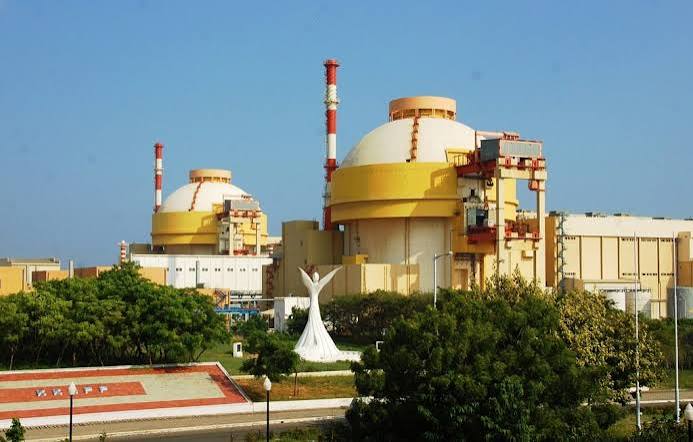
    By Sharjeel Zafar “Nuclear security is first and foremost a national responsibility.” This principle is not merely a diplomatic commitment – it is the minimum requirement for any state operating nuclear facilities. Against this fundamental principle, the reported data breach involving India’s largest nuclear power station, the Kudankulam Nuclear Power Project (KKNPP), which came to public attention on 15 July 2026, represents a serious setback to confidence in India’s nuclear security architecture and highlights vulnerabilities within one of its most critical strategic facilities. The exposure of sensitive engineering documents from one of India’s flagship nuclear facilities is not just a cybersecurity failure; it is a warning sign of deeper vulnerabilities within a nuclear establishment that seeks to expand rapidly while struggling to secure the infrastructure it already operates. According to cybersecurity researchers, thousands of engineering files related to Kudankulam Units 3 and 4 were reportedly exposed following a ransomware attack on Reliance Infrastructure, a contractor associated with the project. The leaked material allegedly included drawings of ventilation and cooling systems, layouts of auxiliary control rooms, inspection records with site photographs, supplier information, and insurance documentation. Indian authorities have maintained that no reactor-core designs or operational control systems were compromised. Yet modern cyber operations seldom begin by targeting the most protected assets. Instead, adversaries assemble seemingly routine engineering documents, contractor records, and infrastructure layouts to build an intelligence picture that can support future cyber intrusions, supply-chain compromises, or physical sabotage. In this context, the significance of the breach lies not merely in what was leaked, but in what such information can enable. The incident is particularly concerning because it follows an earlier cybersecurity breach at the same facility. In 2019, malware attributed by cybersecurity researchers to the Lazarus Group infiltrated an administrative network associated with Kudankulam. Although the Nuclear Power Corporation of India Limited (NPCIL) maintained that operational systems remained isolated, the episode demonstrated that India’s nuclear infrastructure had already become a target for sophisticated cyber actors. The recurrence of security incidents involving the same strategic installation suggests that vulnerabilities within India’s broader nuclear ecosystem, including contractors, suppliers, and administrative networks, remain insufficiently addressed. Such repeated breaches raise questions about the effectiveness of existing cybersecurity protocols and the resilience of critical nuclear infrastructure against evolving cyber threats. More troubling, however, is that Kudankulam represents only one aspect of a much larger problem. Over the past four decades, India has witnessed repeated incidents involving the theft, illegal possession, and trafficking of radioactive materials. Police have intercepted attempts to sell uranium and other radioactive substances in Maharashtra, West Bengal, Bihar, Jharkhand, Uttarakhand, and Dehradun involving stolen radioactive material. These repeated incidents raise serious questions about the effectiveness of India’s nuclear security mechanisms and its ability to maintain strict control over hazardous materials. These incidents expose a dangerous gap between India’s claims of maintaining a robust nuclear security architecture and the reality demonstrated by repeated security breaches. The timing of these concerns is particularly alarming. India is simultaneously seeking to dramatically expand its nuclear energy sector and introduce greater private-sector participation. Expansion without institutional strengthening creates a dangerous contradiction: the country is increasing the size and complexity of its nuclear ecosystem before fully resolving vulnerabilities already visible within the existing system. Private participation may bring investment, technological expertise, and efficiency, but it also introduces additional layers of complexity into nuclear security governance. Unlike a purely state-controlled system, a larger private-sector ecosystem involves multiple contractors, subcontractors, software providers, equipment suppliers, and service companies that may require access to sensitive information, digital networks, or operational support functions. Each additional entity connected to nuclear infrastructure expands the potential attack surface and creates new points at which cybersecurity failures, insider threats, inadequate security practices, or supply-chain compromises can occur. Differences in security standards, compliance capabilities, and oversight mechanisms among private entities may further complicate efforts to maintain uniform protection across the nuclear sector. Without strict regulatory control, mandatory cybersecurity standards, and continuous monitoring of third-party participants, privatization could unintentionally widen the pathways through which hostile actors attempt to access sensitive nuclear information or critical infrastructure. The implications extend far beyond India’s domestic energy programme. India’s expanding nuclear industry increasingly relies on international technology, foreign vendors, global supply chains, and cross-border investment. Consequently, vulnerabilities within one national nuclear programme can have wider strategic repercussions. A successful cyber operation or compromise of sensitive engineering information could undermine confidence in India’s nuclear security practices, raise concerns among international partners, and expose weaknesses in critical infrastructure protection within an increasingly interconnected nuclear industry. As civilian nuclear programmes worldwide become more digital and commercially integrated, cybersecurity failures in one country inevitably become matters of broader international concern. The Kudankulam breach should therefore serve as a strategic wake-up call, not another incident to be contained through official statements. A nuclear power’s credibility is not determined by the number of reactors it operates or the ambitions it announces, it is determined by its ability to prevent unauthorized access, protect sensitive information, secure radioactive materials, and maintain public confidence in its institutions. The question is whether the international community would still stay silent over a State’s perpetual weak demonstrated performance in nuclear security and remain vulnerable to risk of nuclear terrorism, cyber terrorism, illicit proliferation, and black market or transnational ecological disorder? India’s nuclear programme stands at a critical crossroads. Rapid expansion combined with unresolved security weaknesses creates a dangerous environment where a single successful cyber operation, insider compromise, or supply-chain failure could produce consequences far beyond financial losses or reputational damage. In the nuclear domain, prevention is not optional, and security lapses cannot be treated as routine administrative failures. The most serious threat facing India’s nuclear ambitions may not come from external adversaries seeking to undermine its programme, it may come from vulnerabilities that remain unaddressed within the programme itself. A nation aspiring to become a major nuclear power cannot afford a security culture built around reassurance after failure. It must build one based on prevention before disaster. The Kudankulam leak is not merely


  • The Euphemism of Integration: Kashmir Seven Years …

    By Ahmad Hassan “The convoluted wording of legalisms grew up around the necessity to hide from ourselves the violence we intend toward each other… Elaborate euphemisms may conceal your intent to kill, but behind any use of power over another the ultimate assumption remains: ‘I feed on your energy.’” When Frank Herbert wrote those words in his novel Dune Messiah, he observed that elaborate euphemisms are often used by the state to conceal the raw mechanics of power. In Pakistan, August 5 is observed as Youm-e-Istehsal to condemn the 2019 revocation of Article 370 and its supplementary provision, Article 35A. This act of the Indian government removed Kashmir’s separate constitution, its flag and its control over its own affairs. Last week marked seven years since that day. What began as a dramatic constitutional rupture has now, by design, become quietly normalized. Jammu and Kashmir joined India in 1947 on defined terms. The Maharaja handed over defence, foreign affairs and communications. Everything else stayed with the state. The United Nations later called for a plebiscite. It never happened. Instead, over decades, the protections that were supposed to stand in its place were worn down piece by piece, until August 5, 2019, when the government removed what remained in a single stroke. The method deserves more attention than it usually gets. Article 370 was not directly changed. First, the government reached for Article 367, which was intended to aid in the interpretation of the Constitution, and used it to redefine one phrase: “Constituent Assembly” became “Legislative Assembly.” Kashmir had no sitting assembly at the time, and the state was under President’s Rule. So, the government’s own appointee, the Governor, signed off on the change. India’s Supreme Court had already ruled, in 1959 and again in 1969, that Kashmir’s constitutional status could only be changed after the approval of the Constituent Assembly of Kashmir. When that body no longer existed, no institution had the standing to give that consent on Kashmir’s behalf. New Delhi decided that its own Governor could stand in for the people he had not been elected by. That is not consent. It is a government consenting to itself. The Indian government argued that Kashmiris had lived for decades under an insurgency that killed tens of thousands and emptied the Valley of its Pandit community in 1990. It left the region isolated from the investment and policing coordination. That argument would carry more weight if the method had matched it. What followed the revocation was not the language of integration. It was a total communications blackout, landlines and mobile networks and the internet all cut at once. Independent estimates put the troop presence at 600,000 to 800,000, roughly one soldier for every ten Kashmiris. Even pro-India politicians, former chief ministers among them, were placed under detention. Perhaps a security argument can justify counter-insurgency operations. It cannot by itself justify dissolving a state’s constitutional status, its legislature and its statehood in one move. That too with no elected Kashmiri voice given the chance to object. Jawaharlal Nehru warned Parliament about exactly this shortcut in 1952, while Article 370 was still being drafted. No clause in a constitution, he said, could substitute for the will of the Kashmiri people. Real integration, in his words, comes from the mind and the heart, not from a clause imposed from outside. Actually, there is a longer, quieter project behind the legal manoeuvre. Article 35A once barred outsiders from buying land or settling permanently in Kashmir. Since its removal, more than 3.2 million domicile certificates have gone to outsiders, most of them non-Kashmiri Hindus. This alarming thing is that wherever a disputed territory’s demographics are reshaped before its people are asked what they want, the eventual vote, if one ever comes, no longer reflects the population whose future was originally in question. None of this required an invading army, or an open declaration of intent. It required a redefined word, a signature from an appointee, and a great deal of time. The convoluted legalisms that Herbert warned about have become policy in Kashmir: development, integration, correction. Each euphemism has quietly done the work that an honest admission of purpose could never have achieved. Seven years on, Kashmir’s assembly has voted decisively against the BJP that carried out the revocation, and passed its own resolution demanding the restoration of its special status. New Delhi can easily ignore them. Yet, that very power to ignore an elected legislature proves, beyond any doubt, that the “consent” obtained seven years ago was always a legal fiction

  • Factors Which Can Lead Pakistan Towards Progress a…

    A nation’s destiny is not written by chance. It is written by the choices its people and institutions make in times of both crisis and opportunity. Seventy-nine years after independence, Pakistan stands at a decisive juncture. The country holds immense potential: a population of 241.49 million according to the 2023 Digital Census, strategic location at the crossroads of Asia, abundant natural resources, and a society that has repeatedly demonstrated resilience. Yet potential alone does not translate into prosperity. The path forward requires clarity of purpose and action on the fundamental drivers of national advancement. For Pakistan, five factors stand out as decisive: human capital, institutional credibility, economic diversification, technological adoption, and national cohesion. The most urgent factor is human capital. Pakistan is one of the youngest nations in the world. The United Nations Population Fund estimates that 64% of Pakistanis are under the age of 30, and the median age is 20.8 years. This demographic dividend can either accelerate growth or become a liability if left untapped. The World Bank’s Human Capital Index for Pakistan is 0.41, which means a child born today will be only 41% as productive as they could be with full education and health. Closing this gap demands investment that is both broad and deep. Foundational education must be prioritized, technical and vocational training must be aligned with industry, and health and nutrition must be treated as economic inputs, not social expenses. The inclusion of women is non-negotiable. With female labor force participation at 24.1% in 2021, Pakistan is underutilizing half of its talent. McKinsey estimates that advancing gender parity could add $60 billion to Pakistan’s GDP. Every girl in school and every woman in the workforce is a direct contribution to national prosperity. The second factor is institutional credibility. Prosperity is built where people trust that rules are fair, contracts are honored, and merit matters. Pakistan’s economy has shown resilience despite challenges. The State Bank of Pakistan reports GDP at $341.2 billion for FY2025 with projected growth of 3.6%, and remittances hit a record $35.3 billion. IT exports reached $3.55 billion in FY2025, a 24% increase year-on-year. These gains occurred even with regulatory uncertainty and energy constraints. Imagine the scale of investment and innovation if governance were more predictable. This requires digitizing public services, protecting property rights, depoliticizing key institutions, and empowering local governments with resources and accountability. When a young graduate in Multan or a startup founder in Karachi believes the system will reward effort, they will choose to build at home. Third is economic diversification. An economy dependent on a narrow base remains vulnerable. Pakistan must move beyond textiles and remittances toward value-added exports, modern agriculture, and new industries. Agriculture still employs 36.8% of the labor force but contributes less than 23% to GDP, signaling a major productivity gap. Climate change compounds this challenge, with Pakistan ranked 5th on the 2025 Global Climate Risk Index. Investing in climate-smart agriculture, water efficiency, and agri-tech is therefore both an economic and survival imperative. At the same time, the digital economy offers Pakistan its fastest route to high-value growth. With 142.3 million broadband subscribers and internet penetration crossing 54% as of June 2025, the infrastructure for a knowledge economy exists. Pakistan ranked 3rd globally on the 2024 Online Labour Index. Scaling IT exports toward the $15 billion target by 2030 will require tax incentives, venture funding, and global market linkages for startups. The $23.1 million raised by Pakistani startups in 2024, amid a global funding slowdown, proves that investor confidence exists and can be expanded. Fourth is technological adoption and innovation. The world is being reshaped by AI, renewable energy, and advanced manufacturing. Pakistan cannot afford to be a late adopter. The Alternative and Renewable Energy Policy target of 30% renewable share by 2030 must be met to address both energy security and climate risk. Technology must also transform service delivery. Telemedicine, digital payments, and AI in agriculture can bring quality services to remote areas at lower cost. Universities must become hubs of research and industry collaboration. Innovation thrives where there is capital, mentorship, and protection of intellectual property. The state’s role is to create that ecosystem. The fifth and binding factor is national cohesion. Economic policy fails without social trust. Pakistan’s diversity in language, culture, and region is a strength if it is united by a shared commitment to justice and opportunity. Cohesion is built when citizens feel they have an equal stake, when public discourse is grounded in facts, and when achievements in science, sports, and culture are celebrated as national, not regional. A country that trusts itself can make difficult reforms and sustain them. These five factors do not operate in isolation. Better education produces better institutions. Strong institutions attract investment for diversification. Diversification funds technology. Technology creates jobs that strengthen social unity. The absence of one undermines the others. The global context adds urgency. While many nations face aging populations, Pakistan has a 20 to 25 year window to leverage its youth. That window will not remain open indefinitely. Prosperity will not arrive through slogans or external assistance alone. It will come from millions of deliberate acts: a teacher focused on learning, a farmer adopting new techniques, an engineer building solar solutions, a policymaker choosing reform over delay. Pakistan’s history proves that the nation can achieve what seems impossible when it acts with unity and purpose. The factors for progress and prosperity are now clear. What remains is the will to pursue them consistently. If Pakistan invests in its people, strengthens its institutions, diversifies its economy, embraces technology, and unites its society, the next chapter will be one of sustained advancement. The opportunity is here. The responsibility is ours.

  • America First, Hormuz Next? Trump’s Dangerous Ir…

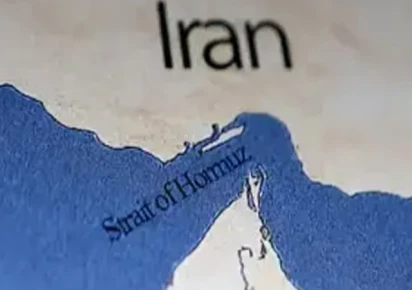
    By  Engr. Saqlain Abid tarrar Political Commentator | MS Power Engineering | NFPA-Certified Electrical Engine President Donald Trump, addressing a public rally, reportedly announced that the United States would soon “free” the Strait of Hormuz from what he described as Iranian captivity and suggested that it could effectively become American territory. The rhetoric immediately evokes his earlier statements about acquiring Greenland. But Hormuz is not Greenland. It is a strategic maritime chokepoint whose international legal status, geography and military consequences make any attempt to seize or control it an entirely different proposition. The question is whether Trump is merely bargaining through maximum pressure—or preparing the political ground for a ground invasion of Iran. Several geopolitical analysts, including a Chinese professor and commentator who has repeatedly warned that Trump could eventually choose ground intervention, now see such a possibility as increasingly rational from Washington’s perspective, even if strategically dangerous. The political clock is also ticking. With the US midterm elections approaching in November, a weak Republican performance could cost Trump control of the House. Having already signed the June 17 MoU, while Iran appears to have rejected or resisted key conditions, Trump may calculate that allowing Tehran to emerge claiming victory would carry a domestic political price. Yet this is precisely where strategic calculation can become strategic miscalculation. The Netanyahu government has also indicated that Israel could continue fighting even if Washington decides to stop. That creates an uncomfortable dilemma for Washington. The initial air campaign apparently exposed serious questions about the assumptions behind the war. If American planners underestimated Iran’s endurance, missile inventory and drone-interceptor economics, the conflict could become dramatically more expensive than anticipated. Even senior American military voices have reportedly debated whether continuing the war is necessary for credibility and deterrence. The USS Abraham Lincoln’s prolonged deployment, alongside reports of severe psychological strain among personnel, illustrates another hidden price of extended warfare. Meanwhile, Washington faces the enormous projected cost of the Golden Dome missile-defence programme, potentially requiring resources approaching $1.5 trillion. The central question is therefore simple: can America afford another open-ended adventure when it already needs enormous resources to compete with China and Russia? Iran, meanwhile, appears to be raising the price of any settlement. Its reported demands include lifting the naval blockade so that it can sell oil and gas freely, withdrawal of American forces from West Asia, release of roughly $12 billion in frozen or seized assets, an end to Israeli attacks on Yemen and Hezbollah, and substantial war reparations. Reports of command changes within the IRGC, including the appointment of hard-line figures, suggest that Tehran wants to signal a transition from a purely defensive posture towards greater offensive preparedness. Iran has also kept some capabilities, including submarines, underwater drones and long-range missile systems, relatively restrained. Whether all these claims are accurate or not, the message is unmistakable: Tehran wants Washington to understand that the next round could be more costly. The third actor is the Gulf. Saudi Arabia, under Mohammed bin Salman, has powerful economic reasons to prevent another escalation. A major American-Iranian war could threaten Saudi infrastructure, Vision 2030 projects and the enormous investments being built around them. Riyadh therefore has an incentive to use its relationship with Trump to discourage another military adventure. The UAE has likewise pursued back-channel diplomacy aimed at reducing the risk of Iranian retaliation. For the Gulf monarchies, the lesson is increasingly clear: money, investment and economic stability are more valuable than ideological confrontation. They may cooperate with Washington, but they do not want to become the battlefield. Pakistan has an opportunity—and a responsibility. With Iranian officials, including Mohammad Bagher Ghalibaf and Abbas Araghchi, expected to engage Islamabad again, Pakistan can provide a diplomatic channel between Tehran, Washington and the Gulf. The visit should not be treated merely as ceremonial diplomacy. Islamabad should push for a ceasefire mechanism, maritime de-escalation, protection of Gulf shipping, and a negotiated framework for American and Iranian security concerns. Trump now faces a historic choice: a safe exit that preserves American power, or another costly adventure that could transform Hormuz into the graveyard of his political calculations. Controlling the Strait by force is not the same as controlling the consequences. The real test of “America First” is knowing when not to fight.

  • Lessons from South Korea

    South Korea is one of the most remarkable countries in the world. Shortly after the mid-20th century, South Korea was one of the poorest countries in the world. According to World Bank, it had a per-capita gross domestic product (GDP) of roughly 159 USD in 1960. The Helen Kellogg Institute For International Studies (University of Notre Dame) points out that South Korea’s per-capita income in early 1960 was lower than Haiti, Ethiopia and Yemen and over 40% of the South Korea’s population was suffering from absolute poverty. However, with right public policy actions implemented in the right direction, South Korea was among the most rapidly growing economies in the world by the start of 21st century. Do you know that South Korea had exponentially increased its per-capita GDP to 12,710 USD (in 2000) that then sky-rocketed to over USD 36000 in 2025? A question that one would ask is, what formed the basis of this rapid economic growth and a resulting reduction in poverty in South Korea? A World Bank report “Republic of Korea: Four decades of equitable growth” points out that South Korea has experienced rapid economic growth in 1990, where its real GDP grew by over 5 percent each year except 1998. Absolute poverty decreased incredibly in South Korea during 1975 – 2001. Those who remained poor were either had low educational achievements or were unemployed or underemployed. In 1975, South Korea earned USD 12.4 billion through trade that then skyrocketed to a trade volume of USD 314.6 billion in 2002. Thus, in a span of 27 years, trade volume of South Korea increased over 25 times which is nothing less than a remarkable success story. A journey that helped South Korea to achieve rags-to-riches status in 3 decades time. In my opinion, education made a significant difference in South Korean society and made it more socially resilient to meet the challenges of today and tomorrow. As we all know that with education and the use of common sense, we make better life choices that then helps us is attaining better results for us and our families. Do you know that South Korean society is one of the most educated societies in the world? As per Organization for Economic Co-operation and Development (OECD), over 58% of masses in South Korea has tertiary education. In-fact, South Korea performed better than Luxembourg, Australia, Norway, Netherlands and several other countries when it comes to percentage of masses (25 – 64 years) who have completed tertiary education in 2025. Highly educated masses mean highly qualified labour that can help any country in commencing sustainable social and economic development over a sustained period. We all are familiar with Samsung Electronics and the leading role it plays in connecting countries and people across the globe. Do you know that Samsung Electronics is a South Korean company? In 2025, Samsung Electronics declared a revenue worth a whooping USD 233.3 billion. Similarly, Hyundai Motor Co., Ltd is another South Korean motor vehicles and parts manufacturing company. According to Forbes, in 2025, Hyundai Motor Co., Ltd declared a financial revenue worth a whooping USD 128.4 billion including a profit of USD 9.1 billion. Hyundai Motor Company pointed out that it sold over 4 million vehicles worldwide out of which close to a million vehicles were electrified vehicles. Likewise, Kia Corporation is South Korea’s oldest motor vehicles manufacturing company and has a capacity to produce over 1.4 million vehicles each year. Kia Corporation has over 40,000 employees and normally reports an annual revenue of over USD 17 billion each year.  LG Electronics is another South Korean tech giant that reported a revenue of USD 62 billion in 2025. Finally, SK Hynix Inc is another South Korean company that manufactures semiconductor products and had reported an annual revenue of USD 51.2 billion in 2025 with profits over USD 18 billion. It is crucial to mention here that SK Hynix Inc is among the largest memory chip manufacturer’s in the world and acts as a rival to Samsung. Moreover, it is an important memory supplier to Apple and the components supplied by SK Hynix Inc are widely used in iPhone, iPad and MacBooks. Carnegie Endowment for International Peace reports that South Korea’s gross domestic product (GDP) was USD 1.71 trillion in 2023 and its per-capita GDP was USD 33,121. Do you know that in 2020, South Korea invested USD 112.9 billion on domestic research and development (R&D). Globally, it stood on fifth position when it comes to spending on R&D. Top spending on R&D in 2020 was commenced by United States with USD 720.9 billion, followed by China with USD 582.8 billion, Japan with USD 174.1 billion and Germany with USD 143.4 billion. Despite commencing rapid social and economic development, South Korea has not compromised on environmental conservation. According to The Korea Times newspaper, South Korea planted roughly 10 billion trees from 1960 to 1980. As a direct result of this, Korea Forest Service (KFS) reported that South Korea’s forest growth rate exponentially increased from 50 cubic meters per hectare in 1990 to 148 cubic meters per hectare in 2015. Thus, in a span of 25 years, forests in South Korea observed nearly 3 times increase in growth rate. It serves as an excellent example that we can commence economic growth, eradicate absolute poverty and conserve environment simultaneously. The already discussed example shatters the paradigm that we must compromise and degrade environment to commence economic growth. A successful reforestation program in South Korea proves the fact that we can commence economic growth and protect environment simultaneously. Do you know that trees are the most inexpensive carbon capture and storage devices? Moreover, healthy forests help us to decrease the concentration of carbon dioxide gas in atmosphere, mitigate climate change, prevent biodiversity loss, avoid landslides and provide clean air and water by decreasing pollution. We must understand this basic fact that for our commenced economic growth to be sustainable, we must preserve and protect environment. In-fact, Sustainable Development has 3 pillars

  • Administrative Provinces: Winning Public Trust Bef…

    Dr. Abdul Jabbar Sahito Karachi, Pakistan The debate over creating new provinces in Pakistan has existed for decades, yet one crucial question remains unanswered: how can the public be convinced that administrative provinces are intended to improve governance rather than increase the burden on the country? Today, public trust in the state is already fragile. People are frustrated by corruption, bureaucratic inefficiency, and excessive government expenditure. Whenever the idea of creating new provinces is raised, many immediately assume that it will only produce more chief ministers, more governors, more provincial assemblies, more secretaries, chief secretaries, inspectors general (IGs), deputy inspectors general (DIGs), assistant commissioners, deputy commissioners, and an even larger bureaucracy. The public perception is straightforward: if corruption and inefficiency already exist with four provinces, what will happen if Pakistan has thirty-two or even thirty-six provinces? This concern must be addressed before any constitutional or administrative reform is proposed. The government should first present a clear governance model explaining exactly how these new provinces would function. People deserve to know whether these provinces will have provincial assemblies or whether they will operate through a compact administrative structure. Will each province be headed by a governor directly elected by the people? Will representation be limited according to population? These questions must be answered before asking the public for support. The objective of creating administrative provinces should never be to expand the bureaucracy. On the contrary, the government should explain that the existing administrative system can simply be reorganized. Unnecessary bureaucratic positions can be reduced, provincial cabinets can remain small, and major ministries can continue to operate under the federal government to avoid duplication. There should be only one chief executive for each province—either a governor or a chief minister, not both. Representation should remain limited and population-based instead of creating large provincial assemblies. The government must reassure the public that administrative reform will not increase financial burdens. Existing administrative and police structures can be reorganized instead of creating entirely new departments. A lean administrative structure is far more likely to gain public confidence than one that appears expensive and oversized. The purpose of administrative provinces is to bring governance closer to the people. Smaller administrative units can improve healthcare through new hospitals, strengthen education by establishing more schools and universities, expand road networks, and accelerate local infrastructure development. They can also encourage the emergence of new leadership, empower citizens to demand their rights, and make governments more responsive because they will be closer and more accountable to the people. Greater accountability should also become a central feature of this model. Institutions responsible for oversight, including NAB and other accountability bodies, would be able to monitor governance more effectively within smaller administrative units. Better administration can also attract greater investment, encourage industries and factories to expand, bring more businesses and brands into different regions, and create employment opportunities for local communities. The government should particularly engage the younger generation and begin this conversation in Sindh. It must make it absolutely clear that this proposal is not about creating provinces on ethnic or linguistic lines. It is not about separating Muhajirs from Sindhis or dividing communities. The proposal is purely administrative and aims to improve governance for every citizen. Instead of creating a province only for Karachi, every administrative division could become a province. Hyderabad, Nawabshah, Larkana, Mirpurkhas, Sukkur, Bahawalpur, and other divisions can each function as separate administrative provinces. If necessary, even the names of these provinces can be changed to prevent unnecessary political controversy. The purpose is not division—it is better administration. Such administrative provinces would encourage the establishment of more schools, universities, hospitals, IT parks, industries, factories, and businesses. They would provide young people with better educational opportunities, create employment, stimulate local economies, improve tax collection, strengthen infrastructure, support clean drinking water projects, facilitate the construction of dams, and promote environmental development through better local planning. However, none of these reforms can succeed unless the public fully understands the proposed governance structure. The government must organize seminars in universities, engage students and young professionals, and use the media to educate citizens about the objectives and practical benefits of administrative provinces. Public awareness must come before implementation. Ultimately, people will support administrative provinces only when they are convinced that the reforms are designed to create a government that is smaller, more efficient, more accountable, and closer to the people—not a larger bureaucracy with greater costs. Winning public trust is therefore the first and most essential step toward any successful administrative reform.  

  • Stoning in the City of Letters: The Tragic Death o…

    ​Where the nine-hundred-year legacy of the University of Cambridge has long claimed to stand guard over truth, intellect, and reason, a profoundly agonizing incident has laid bare the deep intellectual, political, and social fault lines of the modern West. Professor Jason Arday—who made history as the youngest Black academic appointed to a professorship at Cambridge—was found dead at his home in South West London on August 14, 2026. To dismiss his sudden passing as a mere bodily collapse or a quiet, solitary cardiac arrest would be a profound act of self-deception. This tragedy is, in truth, the direct consequence of a systemic crisis eroding Western academia—a space where the fragile boundary separating legitimate academic rigor from ruthless political and racial factionalism has dissolved, and where institutional accountability has steadily devolved into a spectacle of public humiliation. ​Jason Arday’s ascent was a rare testament to human endurance and unyielding resolve. Raised in a low-income neighborhood in South London, he was diagnosed in early childhood with a severe form of autism. He remained non-verbal until the age of eleven and was unable to read or write until he was eighteen. Yet, defying both societal expectations and medical prognoses, he mastered the written and spoken word, pursued higher education, and navigated his way through the faculties of Roehampton, Durham, and Liverpool, ultimately securing a chair in sociology at Cambridge in March 2023. ​However, Arday’s arrival at the pinnacle of British academia coincided with an intense ideological war engulfing universities and the press. Over the preceding decade, Diversity, Equity, and Inclusion (DEI) initiatives had been elevated to core institutional imperatives across British higher education. Universities leaned into these metrics to rebrand themselves, and scholars of Arday’s caliber frequently became the public face of this transformation. ​This is precisely where the deeper ideological friction of contemporary British society erupted into what is widely characterized as a culture war. On one side stood a progressive consensus viewing DEI policies as a overdue corrective to historical inequities; on the other stood a relentless right-wing press and traditionalist academic factions that framed such appointments as a dilution of meritocracy and an embrace of ideological tokenism. ​When questions were subsequently raised regarding technical details within Arday’s PhD thesis and past curriculum vitae, the matter did not remain confined to quiet internal review. Right-leaning media outlets swiftly weaponized these allegations to mount a broader assault on Cambridge’s DEI framework. The tragedy of this partisan crossfire was that Arday’s humanity was entirely erased; he was reduced from a living, breathing scholar into a battlefield for competing political narratives. ​Academic integrity is undeniably the bedrock of any serious higher education system. When allegations of plagiarism are leveled against a scholar, a university is legally and ethically bound to conduct a thorough, impartial, and confidential inquiry. Yet, when such proceedings leak beyond institutional walls into the arena of tabloid journalism and political point-scoring, the genuine purpose of oversight is lost. ​Liverpool John Moores University had previously conducted a comprehensive investigation into the allegations against Arday, fully exonerating him and reaffirming the validity of his doctorate. However, the toxicity of commercialized media and political polarization ran too deep for that clearance to settle the matter. When Cambridge University, bowing to intense media pressure, announced a secondary independent review, it revealed just how vulnerable modern elite institutions have become to the demands of public relations. ​The most damning dimension of this ordeal was the existential and psychological toll exacted upon a scholar watching a lifetime of discipline destabilized in an instant. In his resignation statement on August 5, Arday explicitly clarified that stepping down was not an admission of guilt, but the final recourse of a human being pushed beyond the limits of endurance by a relentless media trial. Just nine days later, on August 14, 2026, he was dead. Neuroscience and clinical psychology have long documented how sustained public humiliation, character assassination, and the erasure of one’s professional identity can inflict severe somatic stress, culminating in fatal systemic collapse. ​This event casts a severe shadow over liberal democracies that pride themselves on individual dignity and the presumption of innocence. In a hyper-digitized media ecosystem, accusations function as instant convictions in the court of public opinion, long before an individual has a meaningful opportunity to offer a defense. Academia, which ought to serve as a sanctuary for measured deliberation, has proven just as susceptible to sensationalism as the rest of society. Arday’s death leaves scholars worldwide asking whether the academic vocation has shifted from the quiet pursuit of truth to a harrowing exercise in surviving public vilification. ​Jason Arday’s death compels an overdue reckoning: institutional accountability must be structured so that it neither shields genuine intellectual dishonesty nor surrenders an individual scholar to the crossfire of racial and culture wars. If elite universities fail to insulate their investigative processes from media trials and political agendas, the most sensitive and brilliant minds will inevitably retreat from the academic life altogether. Arday’s silence now stands as a profound question mark hanging over the international scholarly community. ​The ultimate lesson of this tragedy is that the dignity of those who dedicate their lives to learning cannot be sacrificed on the altar of political or journalistic expediency. If the institutions entrusted with seeking truth cannot protect their own, society loses its moral compass. Standing before the red-brick facade of Cambridge, one is left asking how a scholar of such promise could crumble on its doorstep. This was not merely the loss of a single life; it was an institutional failure that demands the grief and critical reflection of the global intellectual community. ​The extraordinary resilience with which Arday conquered his early disabilities demonstrated the scale of his ambition and character. Yet, faced with the cold machinery of institutional cowardice and media hostility, that strength was ultimately overwhelmed. This moment offers a final, urgent opportunity for self-examination within higher education. If we remain silent, the fires of ideological intolerance will continue to consume the very minds meant to illuminate

  • Reforming the Security Council Without Entrenching…

    The United Nations was founded in 1945 after the League of Nations had failed to preserve peace. Its Security Council was designed for the world that emerged from the Second World War, with five permanent members holding the veto and a small number of elected seats. That basic architecture has scarcely changed since 1965, when the non-permanent membership rose from six to ten. The veto was meant to keep the great powers inside the system and to prevent open conflict among them. Eight decades later the organisation still carries the imprint of 1945 while the membership of the United Nations has grown to 193 states and the global population exceeds eight billion. The Council’s composition therefore no longer reflects the international community it is supposed to serve. In 2008 the General Assembly launched the Intergovernmental Negotiations to consider reform. The discussions have centred on five linked questions: categories of membership, the veto, regional representation, the size of the Council and its working methods. Africa still has no permanent seat. Latin America, South Asia and large parts of the Muslim world remain under-represented. The present arrangement is widely seen as a remnant of the colonial order that concentrates power among a few states. Many argue that emerging powers and significant regional actors—Pakistan, Brazil, Egypt, South Africa, Nigeria, Indonesia, Türkiye, Saudi Arabia, Mexico and India among them—ought to enjoy greater weight if the Council is to regain legitimacy and effectiveness. Yet the debate is locked. The Group of Four seeks permanent seats for itself and two for Africa. The African Group demands two permanent seats with full veto rights. France and Mexico urge the permanent members to refrain voluntarily from using the veto in cases of mass atrocity. The Uniting for Consensus group, led by Pakistan and supported by Italy, Mexico, Argentina, Canada and South Korea, rejects any enlargement of the permanent category. It proposes instead an expansion of elected seats that would be longer-term and renewable. The rival camps cancel one another’s majorities, leaving the process stalled. Enlarging permanent membership would not reform the Council so much as entrench new privileges. Additional veto-holders would multiply the occasions on which national interests can block action. The repeated American vetoes that have shielded Israel and allowed the destruction of Gaza to continue illustrate how a single permanent member can nullify the will of the rest. More permanent members would introduce further competing interests and raise the risk of paralysis. Once granted, permanent status is effectively irreversible; the new members would be free to obstruct any future attempt to revise the arrangement. India’s claim to a permanent seat invites particular scrutiny. Permanent membership requires sustained confidence in a state’s fidelity to the Charter. India’s refusal to implement successive Security Council resolutions on Jammu and Kashmir, its rejection of a United Nations-supervised plebiscite and its unilateral constitutional changes in the territory sit uneasily with that standard. Concerns about human-rights practices in the disputed region and elsewhere, the suspension of the Indus Waters Treaty, reports of transnational repression, the Citizenship Amendment Act, the treatment of Rohingya refugees and a foreign policy that has offered strategic comfort to Israel all raise legitimate questions. India’s status outside the Non-Proliferation Treaty and the Comprehensive Test Ban Treaty adds a further layer of unease. Germany’s candidature faces different objections. Europe already holds two permanent seats. Adding a third would deepen regional imbalance. Recent German positions on Gaza have been criticised as inconsistent with the very humanitarian principles permanent members are expected to uphold. The country’s failure to secure even a non-permanent seat in a recent election suggests that its aspirations do not command the necessary breadth of support. The Uniting for Consensus proposal offers a more measured path. Expanding the elected membership from ten to twenty would open opportunities for Africa, Asia-Pacific, Latin America and the Caribbean without creating new permanent centres of power. Periodic elections would keep members accountable to the wider membership. Rotation would allow more states to contribute to the maintenance of peace and security. Broader participation could improve the quality of deliberation on intractable questions such as Palestine, Ukraine and other long-standing disputes, without multiplying vetoes that have so often produced deadlock. Reform should strengthen the Council’s legitimacy without sacrificing its capacity to act. Expanding permanent membership would create additional privileged seats, heighten the risk of institutional paralysis and make subsequent change more difficult still. Wider geographical representation is better achieved by enlarging the elected ranks. The Uniting for Consensus approach preserves the existing institutional framework, enhances inclusivity, promotes accountability through regular elections and reflects the interests of the membership as a whole. Sustainable reform therefore lies in widening participation and reinforcing regional balance rather than in extending permanent privilege and the veto.

  • A Continent on Fire: What Central Asia Can Teach t…

    By Engineer Arshad H Abbasi, ahabasi@gmail.com, edited by Engineer Musa Arshad H Abbasi I write this from Islamabad, not as a diplomat or a historian, but as someone who spends his working life measuring rivers, glaciers, and energy systems — and who has spent the last year watching the instruments of my own profession become instruments of geopolitics instead. I am a water, energy and climate professional, not an expert in international relations. But you do not need a doctorate in strategic studies to feel what it means to live in a capital that sits within reach of two active fronts at once, and to watch a third, farther away, threaten the fuel that keeps my own country’s lights on. To the east, the Indus itself has become a weapon in a dispute I once only studied on paper. Since April 23, 2025, one day after the Pahalgam attack killed 26 people in Jammu and Kashmir, India has held the 1960 Indus Waters Treaty in abeyance, and as recently as July 3, 2026, New Delhi reaffirmed the suspension will continue until Pakistan “credibly and irrevocably” ends cross-border terrorism. Pakistan calls any interruption of that water an act of war. I measure river flows for a living, and I can tell you that a treaty which survived two wars and decades of hostility between 1960 and 2025 was never really about engineering — it was about restraint. Watching that restraint erode between two nuclear-armed neighbors, over a river that irrigates the fields I grew up walking beside, is not an abstraction to me. It is personal. To the west, the war that began on February 28, 2026 between the United States, Israel, and Iran has turned the Strait of Hormuz — the channel that once carried roughly a quarter of the world’s seaborne oil and a fifth of its LNG — into a contested chokepoint. Iranian forces have mined and attacked shipping there on and off for months; a ceasefire and a June memorandum of understanding collapsed in July when Iran resumed strikes on vessels it deemed noncompliant. Even now, in mid-August, Tehran and Oman are still negotiating the terms under which the strait might fully reopen. Every Pakistani household that has watched fuel prices swing this year has felt that war, even though it is being fought a thousand miles from here. And Pakistan’s own western border is no longer a metaphor for instability — it is an active one. Since February 2026, Pakistan and Afghanistan have fought what both sides’ own defense ministries have called open war along the 1893 Durand Line, with Pakistani airstrikes on Nangarhar and Kabul, an Afghan cross-border offensive, and casualty claims running into the hundreds on each side before Qatar- and Turkey-mediated pauses briefly held. I know these are not the only fires burning on this continent, and an honest accounting has to look past South Asia. In Southeast Asia, a century-old dispute between Thailand and Cambodia over the ancient temples of Preah Vihear and Ta Muen Thom erupted twice in 2025 — first in July, then again in December — leaving at least 101 people dead and forcing more than half a million civilians from their homes before a fragile ceasefire, signed December 27, brought an uneasy calm. In East Asia, the map is a thicket of overlapping claims: China and Taiwan over the island’s sovereignty itself; China and Japan over the Senkaku/Diaoyu islands in the East China Sea; China and the Philippines over Scarborough Shoal and reefs across the South China Sea; and Japan and its neighbors over a scattering of other contested waters that keep regional navies on constant alert. Indonesia and Malaysia, too, carry an unresolved history — the armed 1960s Konfrontasi and a maritime boundary dispute over the oil-rich Ambalat block in the Sulawesi Sea that periodically flares even between otherwise friendly neighbors. And running beneath all of it is the oldest fault line of all: the decades-long conflict between Israel and its Arab neighbors, still reshaping alliances and battlefields from Gaza to Lebanon to Yemen, where Houthi strikes on Saudi infrastructure continue even this month. Set against all of that, look at Central Asia — building transit corridors instead of trench lines, settling water and border disputes through negotiation rather than force, and courting the same investors that war has driven away from South Asia, the Gulf, and the South China Sea. Even the Armenia-Azerbaijan peace process next door, however unfinished — initialed in Washington in August 2025, still unsigned a year later over Armenia’s constitutional language — has produced something rarer than victory: an actual framework both sides keep returning to, rather than abandoning for the battlefield. While I want to avoid romanticizing Central Asia to those who know the region far better than I do, it stands as a compelling model for peace. The region offers a practical demonstration that Asian states can prioritize economic integration over territorial reflexes—a choice that others, from Islamabad to Phnom Penh to Manila, have yet to make. The Ledger of Conflict: A Continent Still at War With Itself It is worth setting all of this down in one place, because scattered across a dozen news cycles it is easy to lose the scale of it. India–Pakistan, Kashmir and the Indus Waters Treaty. Held in abeyance since April 23, 2025; reaffirmed as of July 2026 to remain suspended until Pakistan “irrevocably” ends cross-border terrorism, in a dispute that touches the water security of more than 300 million people and involves two nuclear-armed states that have already fought a war in 2025. Iran, Israel, and the United States. War since February 28, 2026, with Iranian attacks on shipping through the Strait of Hormuz — a corridor carrying roughly a quarter of the world’s seaborne oil and a fifth of its LNG — still unresolved as Tehran and Oman negotiate terms for reopening it, even this month. Pakistan–Afghanistan, the Durand Line. Open war since February 2026 between two governments that have never

  • The Transferability Paradox: Skills, Borders and t…

    We often speak of professional skills as though they were assets that can be packed into a suitcase and carried effortlessly across borders. In reality, skills do not all travel in the same way. A computer language remains a computer language whether one works in Pakistan, Singapore, the United Kingdom or the United States. Engineering principles, mathematics, manufacturing techniques and many scientific disciplines retain much of their relevance regardless of geography. The environment may change, but the fundamental language of the profession remains largely intact. The situation becomes more complicated with professions that operate within national regulatory and institutional frameworks. Accounting principles may be broadly understood internationally, but taxation, reporting requirements and corporate regulations can differ substantially between jurisdictions. The same is true of law and medicine. A lawyer who has spent decades mastering one country’s legal system cannot simply assume that the same statutes, procedures and precedents apply elsewhere. A doctor may possess years of clinical experience yet still be required to pass examinations and satisfy licensing requirements before being permitted to practise in another country. The knowledge has not disappeared. What has changed is the framework within which that knowledge is recognised and allowed to operate. This distinction is important because we sometimes confuse the transferability of skills with the transferability of credentials. They are not the same thing. A seasoned CFO does not forget how to evaluate risk, allocate capital, establish financial controls or understand a balance sheet upon crossing an international border. A doctor does not lose diagnostic ability at immigration, nor does a lawyer suddenly lose the capacity for legal reasoning. Yet the receiving country’s institutions may place conditions on recognising those abilities. What is being restricted is often not the skill itself, but the right, opportunity or credibility required to exercise it. For C suite professionals, however, there is another layer to the problem. As people rise through organisations, their professional value increasingly consists of much more than technical competence. Over twenty or thirty years, an executive accumulates reputation, relationships, cultural understanding, institutional knowledge and credibility. He or she learns how decisions are actually made, which relationships matter, how regulators think, how capital moves and how to navigate the unwritten rules of a particular business environment. This social and institutional capital can become as important as the technical skills that originally built the career. Crossing a border can dramatically alter the value of that accumulated capital. A CEO, CFO or senior executive who is well known and respected in one country may arrive in another market where few people recognise the organisations he or she worked for, understand the scale of previous responsibilities or appreciate the complexity of the environment in which those responsibilities were exercised. The person has not become less capable, but the ecosystem that validated that capability has been left behind. This is perhaps one of the least discussed dilemmas of international mobility at senior levels. The higher one climbs within a particular ecosystem, the more deeply one’s professional identity may become connected with that ecosystem. A young engineer may be assessed largely on technical competence and therefore move relatively easily between markets. A senior executive is assessed on a much broader collection of attributes, many of which are difficult to demonstrate on a CV. Reputation, networks, judgement and influence cannot always be exported as easily as qualifications. Then there is the uncomfortable issue of regional bias. Professional experience is not always evaluated purely on merit. Employers and institutions can consciously or unconsciously attach different values to experience depending on where it was acquired. A senior position in one part of the world may not automatically be regarded as equivalent to a similar position in another. Accent, nationality, familiarity with local business culture and perceptions about the sophistication of the previous market can all affect how a professional is judged. Regulation can create a formal wall, while perception can create an invisible one. Perhaps professional capital should therefore be thought of in three forms. There is skill capital, meaning what a person actually knows and can do. There is credential capital, meaning what institutions formally recognise or permit that person to do. Finally, there is social capital, meaning the network of people and institutions that know, trust and are prepared to place responsibility in that person’s hands. Skill capital can often travel. Credential capital may require rebuilding. Social capital can sometimes have to be recreated almost from the beginning. This brings me to the question that I find much harder to answer. If a country’s most capable professionals conclude that their talents will produce greater opportunities elsewhere, should they leave? Or should they remain and use their abilities, experience and influence to improve the environment that is encouraging them to leave in the first place? There is an obvious argument for mobility. A professional has a responsibility to his or her own life and family and cannot reasonably be expected to sacrifice decades waiting for institutions to improve. Talent naturally seeks environments where it can grow, where merit is recognised and where opportunities allow ability to compound. If those conditions exist elsewhere, moving may be entirely rational. Yet there is an equally uncomfortable consequence. When capable professionals, entrepreneurs, academics and executives continually leave weaker institutional environments for stronger ones, the countries they leave behind lose precisely the human capital that might have helped strengthen those institutions. Weak systems cause talent to leave, and the departure of talent can make those systems even harder to improve. We then arrive at something resembling the old question of the chicken and the egg. Do strong institutions create successful people, or do successful people create strong institutions? Do countries first need better systems to retain talent, or must talented people remain long enough to build those systems? If everyone waits for the environment to improve before contributing to it, who creates the improvement? But if individuals spend their lives fighting systems that are resistant to change, what happens to their own potential? Perhaps the