title Story

  • | | |

    New committee to review Mir Raza case today

    A new investigation committee will hold an important meeting today to review the Mir Raza Ali murder case. The meeting will be chaired by DIG Aamir Farooqi. The committee will conduct a fresh and impartial investigation into the case. It will examine all aspects of the incident. Investigators will identify and collect any new evidence linked to the case. The evidence will be properly preserved and examined. Physical, technical, circumstantial and forensic evidence will also be reviewed. The committee will closely examine the victim’s injuries and clothes. It will also compare the two conflicting post-mortem reports. Investigators have been directed to take all possible steps to reach a conclusion. The team will submit its findings to the relevant court within the given timeframe. Daily progress reports will also be prepared. Additional officers may be included in the investigation if required. The committee will also record statements from members of the medical board involved in the first post-mortem. Doctors and experts who conducted the first post-mortem are expected to be questioned. They may also be given a detailed questionnaire. Investigators will try to determine the evidence behind the first post-mortem findings. The report had stated that the bullet entered through the chest and exited through the back. The team will also examine how forensic evidence was documented and preserved during the initial investigation. The second post-mortem report gave a different assessment of the bullet’s direction. Investigators will therefore compare both reports in detail. They will also examine the injuries, clothing and other forensic material. Meanwhile, investigators have obtained details about Mir Raza Ali’s movements on the night of July 28. Details of his final phone calls and messages have also been collected. According to the investigation, Mir Raza spoke to two people through three phone calls that night. He reportedly spoke to a person named Ali at 2:13am and again at 2:16am. His final call was answered by his friend Abdullah. The two spoke for more than three minutes.

  • | |

    Karachi lights up for Pakistan-Saudi-Turkey defenc…

    KARACHI: Karachi lit up in a striking display of friendship and solidarity after Pakistan, Saudi Arabia and Türkiye signed a defence agreement in Makkah, with prominent government and historic buildings decorated in the colours and flags of the three countries. The city’s landmarks were transformed with special lighting, creating a festive atmosphere as Pakistanis welcomed the development involving the two brotherly Muslim countries. The Sindh Assembly building became one of the most prominent symbols of the occasion, with the national flags of Pakistan, Saudi Arabia and Türkiye displayed prominently on the building. The Sindh Secretariat was also illuminated with specially arranged lights reflecting the colours associated with the three nations. The decorations gave the government complex a distinctive appearance and drew attention from people passing through the area. Another major attraction was Karachi’s historic Frere Hall, which was illuminated with colourful lights to mark the defence agreement. The landmark’s nighttime appearance quickly caught the attention of residents and visitors, adding a celebratory touch to the city. Flags of Pakistan, Saudi Arabia and Türkiye were also displayed along important roads and at other prominent locations across Karachi. The coordinated decorations were aimed at expressing solidarity with the three countries and highlighting their longstanding fraternal ties. The development comes as Pakistan, Saudi Arabia and Türkiye seek to strengthen cooperation in areas of mutual interest. The defence agreement signed in Makkah has drawn considerable attention in Pakistan, particularly because of the close political, economic and strategic relationships among the three countries. For Karachi, however, the agreement was reflected not through speeches or official statements alone but through the city’s skyline and landmarks. From the Sindh Assembly to Frere Hall, the green, red and national colours created a powerful visual message of friendship. The illuminated landmarks offered residents a memorable glimpse of the occasion, turning parts of Karachi into a colourful tribute to the growing bonds among Pakistan, Saudi Arabia and Türkiye.

  • | | | |

    Iran sets six conditions for reopening Strait of Hormuz

    Iran has set six conditions for the United States to allow the full reopening of the Strait of Hormuz. The demands were presented by Mohammad Bagher Zolghadr, secretary of Iran’s Supreme National Security Council. He warned that Tehran would not reopen the strategic waterway unless Washington changed its policy towards Iran. Zolghadr said the first condition was that the United States must not threaten Iran under any circumstances. He also said Washington must avoid any language or action that insults the dignity of the Iranian people. The second condition calls for a permanent end to what Iran describes as war and aggression against the country and its allies. These include Lebanon, Palestine, Yemen and Iraq. Iran’s third demand is the lifting of the naval blockade imposed on the country. Tehran has also called for the withdrawal of US forces from areas surrounding Iran. The fourth condition concerns compensation for damage caused to Iran during the war. Zolghadr said Iran must receive full compensation for the losses it suffered. The fifth demand is the removal of what Tehran considers unfair and illegal sanctions imposed on the Iranian people. Iran’s sixth condition calls for the unconditional release of Iranian assets that have been seized or frozen abroad. Tehran wants these assets returned to the Iranian people. The Strait of Hormuz is a key international shipping route. It connects the Persian Gulf with the Gulf of Oman and the wider Arabian Sea. A disruption in the waterway could have major consequences for global energy supplies and international trade. Iran has repeatedly stressed the strategic importance of the strait. Any decision regarding its reopening could therefore have wider regional and international implications. Zolghadr also said Iran would maintain its position regardless of whether the situation develops into further conflict or diplomatic negotiations.

  • | | |

    Army captain martyred, seven militants killed in H…

    Army captain martyred, seven militants killed in Hangu operation A Pakistan Army captain was martyred during an intelligence-based operation in Hangu district of Khyber Pakhtunkhwa, while security forces killed seven militants, according to the military’s media wing. The operation was carried out on August 7 after security agencies received information about the presence of militants in the area. Security forces launched the raid after confirming the reported militant presence. Troops engaged the militants at their hideout. Seven militants were killed during the exchange of fire. Captain Hamza Akram, 27, was also martyred during the operation. He belonged to Narowal district. According to the Inter-Services Public Relations (ISPR), Captain Hamza was leading his troops from the front. He continued pursuing the militants during the firefight and lost his life while performing his duty. Security forces recovered weapons and ammunition from the militants’ possession. The military said the killed militants were involved in attacks against security personnel and law enforcement agencies. They were also linked to attacks targeting civilians. A clearance operation was launched after the main engagement. Security personnel searched the surrounding area to ensure that no militants remained there. Three militants killed in Mastung operation In a separate operation in Balochistan, security forces killed three militants in Mastung district. The operation was conducted in the Kambela and Asimabad areas as part of Operation Rad-ul-Fitna-3. Security forces carried out an extensive search and clearance operation across an area of around 68 square kilometres. Three militants were killed during the operation. The bodies of two of the militants were recovered. Four other militants were injured, including a key commander identified as Shaukat Mama, according to security sources. Security personnel also detained 12 suspects for questioning during the operation. Militant hideouts were dismantled during the clearance activity. Security forces also removed flags associated with the militant group from the cleared areas. The latest operations come amid continued security challenges in Khyber Pakhtunkhwa and Balochistan. Both provinces have witnessed a significant number of militant attacks in recent years. Security forces have intensified intelligence-based operations to target militant networks, their hideouts and support structures.

  • | |

    Senate, NA leaders vow closer coordination for Par…

    ISLAMABAD: The leadership of Pakistan’s Senate and National Assembly has agreed to strengthen cooperation between the two houses of Parliament, with the aim of promoting democratic stability, improving legislation and ensuring a more effective parliamentary system. Senate Chairman Syed Yousaf Raza Gilani met National Assembly Speaker Sardar Ayaz Sadiq and Deputy Speaker Syed Ghulam Mustafa Shah at his residence in Islamabad on Saturday. The meeting focused on parliamentary affairs, matters of national importance and coordination between the two legislative houses. According to a statement issued by the Senate Secretariat, the participants stressed that closer institutional coordination was essential for strengthening parliamentary democracy and ensuring the smooth functioning of the system. Gilani said effective communication and cooperation between the Senate and National Assembly were necessary to uphold strong democratic traditions and reinforce an effective parliamentary structure. He also emphasised the importance of maintaining close liaison between the two houses, saying institutional coordination would contribute to the stability and effectiveness of Parliament. Sadiq, meanwhile, said collaboration between parliamentary institutions needed to be further strengthened to ensure effective legislation and better respond to public expectations. The leaders also discussed the overall situation in the country and exchanged views on issues of national importance. During the meeting, they agreed on the need to keep national interests at the forefront, uphold the supremacy of the Constitution and work towards greater democratic stability. They further reaffirmed their commitment to promoting mutual respect and effective communication between parliamentary institutions. The agreement comes as Parliament continues to play a central role in legislative and constitutional affairs, making coordination between its two houses important for ensuring that legislation and parliamentary business proceed smoothly. The Senate and National Assembly form the two chambers of Pakistan’s bicameral Parliament, with the National Assembly representing the population and the Senate providing equal representation to the federating units. The Senate chairman’s emphasis on cooperation also reflects a broader focus on strengthening parliamentary institutions and improving their capacity to perform constitutional responsibilities. A day earlier, Gilani inaugurated a newly modernised office complex of the Senate Secretariat at Parliament House. Addressing the ceremony, he described the upgrade as part of efforts to improve institutional capacity and modernise parliamentary operations. He said strong democratic institutions required modern systems, efficient infrastructure and a professional working environment. The upgraded facilities, according to the Senate, are intended to improve service delivery and enable the Secretariat to better support Parliament in carrying out its constitutional duties. With the latest meeting, the parliamentary leadership has signalled that stronger coordination between the Senate and National Assembly will remain a key priority in efforts to consolidate democratic institutions and ensure a stable parliamentary system.

  • | | | | |

    Iran displays wreckage of US, Israeli aircraft in …

    Iran’s Islamic Revolutionary Guard Corps (IRGC) has put the wreckage of US and Israeli aircraft on public display, offering a dramatic glimpse of the military hardware Tehran says was destroyed during the recent war. Images released by Iranian state-linked media show sections of aircraft arranged as part of an exhibition, including what has been identified as the remains of a US F-15 fighter jet. The display reportedly includes the aircraft’s ejection seat, canopy and part of its tail. The exhibition appears designed not only to showcase recovered wreckage but also to underline Iran’s claims about the effectiveness of its air-defence capabilities during the conflict. The appearance of the F-15 debris is particularly significant. Recent reporting has identified the wreckage as belonging to an F-15E Strike Eagle, while Iranian authorities have presented it as evidence of a successful engagement against US airpower. However, claims surrounding aircraft losses have been contested throughout the conflict. In earlier incidents, Iranian officials announced that US aircraft had been destroyed, while American officials disputed some of the claims. Independent identification of battlefield wreckage has also sometimes proved difficult. Iranian forces have previously showcased captured or downed US military equipment as symbols of resistance. A similar exhibition in Tehran in 2019 displayed wreckage of a US Global Hawk drone claimed to have been shot down by Iran. The latest display comes after Iran also claimed on July 30 that three US F-35 fighter jets had been destroyed at Jordan’s Al Azraq airbase. That claim has not been independently established. By placing the aircraft remnants on display, Tehran is turning battlefield debris into a powerful political and military message—one intended to demonstrate that even advanced American and Israeli aircraft can be targeted during wartime. The exhibition is likely to fuel further debate over the scale of aircraft losses during the conflict and the competing narratives presented by Iran, the US and Israel.

  • | | |

    Rana Sanaullah vows to ‘set countdown critics st…

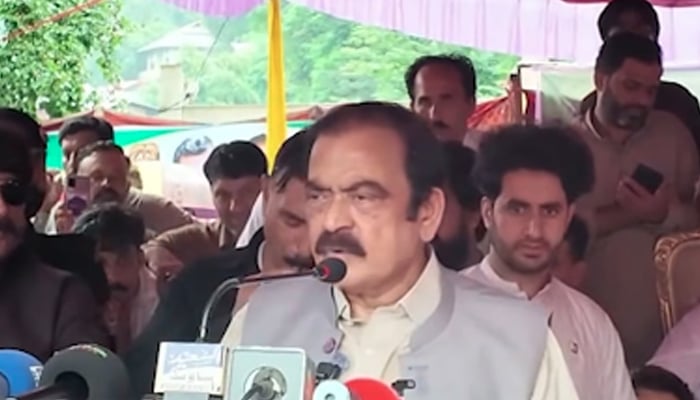
    Adviser to Prime Minister Shehbaz Sharif on Political Affairs Rana Sanaullah has said that those counting down the government’s tenure will eventually be “set straight” themselves, and their countdown will also be corrected. Addressing a public gathering in Bagh, Azad Jammu and Kashmir, Sanaullah said the people were the rightful owners of Pakistan and highlighted the strong bond between Pakistan and Kashmir. “Where in Pakistan are Kashmiris not working?” he asked, adding that Kashmiris enjoy all rights in the country. Sanaullah said Pakistan was incomplete without Kashmir and stressed that no force could weaken the longstanding relationship between Pakistan and Kashmir. The Pakistan Muslim League-Nawaz leader also claimed that four PML-N candidates would be elected to the legislative assembly in the upcoming election, which is scheduled to take place in two days. He said the PML-N needed only six more seats to secure a two-thirds majority in the Azad Jammu and Kashmir Assembly. Referring to the ongoing political activities and the action committee, Sanaullah said many people associated with the committee were their “brothers” and patriotic citizens. His remarks came as political parties intensified campaigning ahead of the Azad Jammu and Kashmir elections, with competing groups seeking to secure a strong mandate in the upcoming polls.

  • | | |

    Bilawal hails Makkah defence pact as historic mile…

    Pakistan Peoples Party (PPP) Chairman Bilawal Bhutto Zardari has welcomed the Makkah Joint Defence Agreement, describing it as a historic development that will further strengthen Pakistan’s defence capabilities. In a statement issued on Saturday, Bilawal said the agreement marked an important moment in Pakistan’s history and carried significance beyond the defence cooperation of the three participating countries. He said the pact would contribute to a stable and secure future for Pakistan, Saudi Arabia and Türkiye while also supporting broader efforts for peace and stability in the region and around the world. Bilawal praised Prime Minister Shehbaz Sharif and Chief of Defence Forces and Chief of Army Staff Field Marshal Asim Munir for their role in facilitating the agreement. He described their contribution to the agreement as commendable and said the pact represented an important step toward strengthening collective security and defence cooperation among the three countries. The agreement was signed in Makkah by Pakistan, Saudi Arabia and Türkiye, amid heightened regional tensions and growing concerns over security and stability in the Middle East. The three countries have described the agreement as a defensive arrangement aimed at enhancing cooperation and deterrence, with an attack against one member to be treated as an attack against all. Bilawal’s remarks underline the PPP’s support for the agreement and its potential role in strengthening Pakistan’s strategic and defence partnerships while promoting regional stability.

  • | | | | |

    Pakistan played key role in easing US-Iran tensions: analysis

    Pakistan played an important mediating role in efforts to ease tensions between the United States and Iran and helped bring the two sides to the negotiating table, according to an analysis by South Asian Voices, a policy platform focusing on security, political and economic developments in South Asia. The analysis said Pakistan stepped in at a critical stage when tensions between Washington and Tehran had escalated sharply and both sides had suffered significant losses. According to the assessment, Islamabad successfully facilitated communication between the United States and Iran and helped bring a global power and a major regional power into direct negotiations. The report described Pakistan’s diplomatic engagement as significant, arguing that Islamabad managed to perform a role that several major powers, including China, France, Germany, India and the United Kingdom, had been unable to achieve. The analysis further noted that talks between American and Iranian representatives in Islamabad continued for more than 20 hours. It described the discussions as the highest-level direct contact between the United States and Iran since the 1979 Iranian Revolution. Although Washington and Tehran subsequently accused each other of violating the terms of a ceasefire, the two sides did not completely abandon the diplomatic process, according to the analysis. The report therefore argued that it would be inaccurate to hold the mediator responsible for the failure of the process, stressing that Pakistan’s role should instead be viewed in the context of its efforts to keep communication channels open between the two sides. The assessment highlights Islamabad’s growing diplomatic role in attempts to reduce tensions between Washington and Tehran and underscores Pakistan’s efforts to facilitate dialogue during a period of heightened regional instability.

  • | | |

    Initial report suggests Mir Raza Ali was shot from…

    KARACHI: An initial medical report has reportedly indicated that businessman Mir Raza Ali sustained a gunshot wound from behind, while several signs of physical violence were also found on his body following his exhumation for a fresh post-mortem examination. According to investigation sources, the preliminary report has addressed all 14 questions raised by police surgeon Dr Summaiya Syed during the medical examination. The findings reportedly include a gunshot injury to the rear of the body, fractured ribs and multiple injuries to Ali’s head and face. The report also noted marks of violence on different parts of the deceased’s body. However, investigators have yet to officially receive the medical findings. SSP SIU Samiullah Somroo, who is leading the police investigation, said the investigation team had not been informed about the report or its findings. The exhumation process lasted around three hours and was conducted under the supervision of forensic experts. During the procedure, 17 samples were collected from the body for further examination. Four samples were preserved for DNA testing, while the remaining samples were collected for chemical analysis. Two additional reference samples were obtained from Ali’s parents to assist with DNA matching. Investigators said the collected samples have been preserved and will be submitted to the forensic laboratory at the University of Karachi on Monday. The chemical and DNA examination reports are expected to be available within three to four days. Ali’s body was exhumed earlier as part of efforts to determine the circumstances surrounding his death. After the medical examination was completed, his remains were reburied at a graveyard near Tariq Road. Ali, an IBA graduate and businessman, had returned home from his shop on the night of July 28. He later left the house again, telling his family that he would return within 10 minutes. He did not return, and his body was subsequently recovered from Gulistan-e-Jauhar. His father, Mir Hussain, has maintained that his son was murdered and rejected suggestions that he died by suicide. During the latest proceedings, members of the medical board collected various samples from Ali’s grave as part of the renewed examination. His family members and their lawyer, Jibran Nasir, were present at the graveyard, while a heavy police contingent was deployed to maintain security. The authorities had restored the original eight-member medical board responsible for supervising the exhumation after the family objected to the replacement of the panel with a five-member board. The disagreement had earlier prevented officials from carrying out the scheduled exhumation. Mir Hussain later said he was satisfied with the latest proceedings. He expressed hope that the fresh examination would provide clarity about what happened to his son. The family has also alleged that a fake audio recording attributed to Ali was circulated in an attempt to influence the case and create confusion around the circumstances of his death. The family’s lawyer had earlier raised concerns about changes to the medical board and questioned the decision to replace the original panel. He later said the family was satisfied with the renewed proceedings, which were conducted in the presence of the judicial magistrate, investigation officer and members of the medical team.