title Story

  • | | |

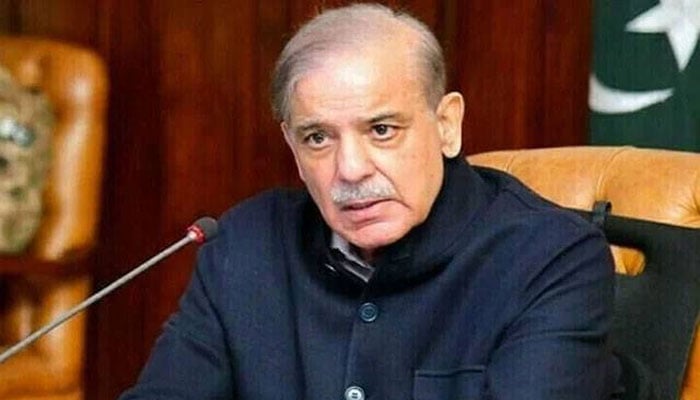
    Imran Khan marks three years in jail

    Former prime Minister Imran Khan has completed three years in prison after his arrest in the Toshakhana case. He was taken into custody on August 5, 2023, shortly after a court convicted him in the case. Following his arrest, he was shifted from his residence in Zaman Park, Lahore, to District Jail Attock under strict security arrangements. Imran Khan remained at Attock Jail for one month and 21 days. During that period, security around the prison was tightened, while legal proceedings related to multiple cases against him continued in different courts. On September 26, 2023, the Islamabad High Court ordered his transfer from Attock Jail to Adiala Jail in Rawalpindi. Since then, he has remained detained at the facility, where he continues to face legal proceedings in several cases. Under the Pakistan Prison Rules, the former prime minister has been provided better-class facilities because of his status as a former head of government. He is being housed in a separate compound consisting of seven cells inside Adiala Jail. The designated area is secured and managed in accordance with prison regulations. During his three years in custody, Imran Khan has reportedly faced a number of health-related issues, including physical complications that have required medical attention from time to time. His legal team has on several occasions raised concerns about his health and requested appropriate medical care, while prison authorities have maintained that medical facilities are being provided in line with the law. Despite remaining behind bars, Imran Khan continues to be a central figure in Pakistan’s political landscape. Court hearings in various cases involving the former prime minister are ongoing, while his party, Pakistan Tehreek-e-Insaf (PTI), continues to pursue legal and political efforts regarding his release.

  • | | |

    PM heads to Saudi Arabia for key talks

    Prime Minister Shehbaz Sharif is scheduled to leave for Saudi Arabia today on a two-day official visit, aimed at strengthening bilateral ties and discussing key regional developments. According to sources, the prime minister will hold a meeting with Saudi Crown Prince Mohammed bin Salman during the visit. The two leaders are expected to discuss the longstanding relationship between Pakistan and Saudi Arabia, with particular focus on enhancing cooperation in areas of mutual interest. Regional security and the evolving situation in the Middle East are also expected to feature prominently in the talks. The meeting is likely to include an exchange of views on matters affecting regional peace, stability and broader strategic cooperation between the two countries. The visit is seen as part of ongoing high-level engagements between Islamabad and Riyadh, reflecting the close diplomatic, political and economic partnership shared by the two countries.

  • | | | |

    Iran, Oman move closer to Hormuz shipping agreement

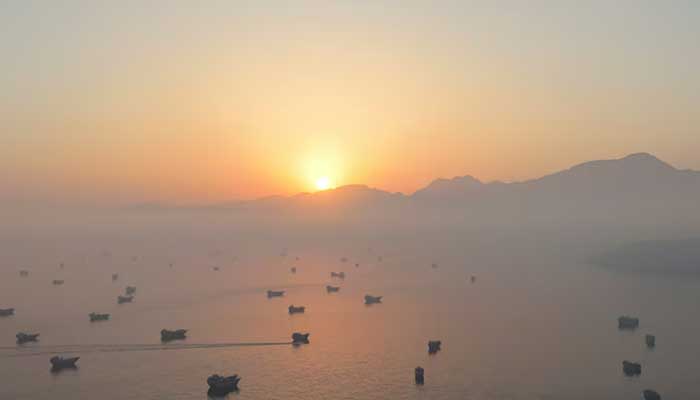
    TEHRAN: Iran and Oman have reached a preliminary understanding on the geographic coordinates of a proposed shipping route through the Strait of Hormuz, marking progress in negotiations aimed at regulating navigation through one of the world’s most strategically important waterways. Iranian Foreign Ministry spokesperson Esmaeil Baghaei said discussions between Tehran and Muscat had advanced positively and that both sides had agreed on the geographical framework of the proposed route. He added that a joint statement outlining the key points of the understanding was in its final stages and could be issued if the process is not disrupted by external factors. Despite the progress, Baghaei emphasised that the agreement alone would not automatically guarantee security in the Strait of Hormuz. He noted that ensuring stability in the region would require broader cooperation and continued diplomatic engagement. According to regional officials familiar with the negotiations, the proposed arrangement would give Iran a greater role in overseeing vessels entering the Gulf through the strategic waterway. However, several technical and operational issues still need to be resolved before any final agreement can be implemented. The Strait of Hormuz remains one of the world’s busiest energy transit routes, carrying a significant share of global oil and gas exports. Any changes to shipping arrangements in the area are closely watched by international markets due to their potential impact on global trade and energy supplies. Officials involved in the negotiations described the talks as constructive, while indicating that further consultations would continue before a formal announcement is made. Both Iran and Oman have maintained that dialogue remains the preferred path for addressing issues related to maritime navigation and regional stability.

  • | |

    Suicide bombing at Kabal Police Station kills 14, injures 20 in Swat

    SWAT: At least 14 people, including five police personnel and nine civilians, were killed and 20 others injured in a suicide bombing at the main gate of Kabal Police Station in Swat district on Sunday. According to Malakand Regional Police Officer (RPO) Syed Fida Hassan Shah, the attacker attempted to enter the police compound but was intercepted by security personnel stationed at the entrance. Prevented from gaining access, the suicide bomber detonated his explosive vest at the main gate. Police said the 20 injured include 14 police personnel and six civilians. The wounded were shifted to nearby hospitals, where several are reported to be in critical condition. The RPO said the police compound houses Kabal Police Station, Kabal Police Lines, a public facilitation center, and several other government offices. He noted that the casualties could have been significantly higher had the attacker succeeded in entering the compound. Following the blast, police and other law enforcement agencies cordoned off the area and launched a search operation, while investigators began collecting forensic evidence from the scene. Police officials said the severed head of the suspected suicide bomber has been recovered, and investigators are working to establish his identity and determine the circumstances surrounding the attack. Local sources said a public demonstration calling for peace was underway at nearby Kabal Chowk when the explosion occurred. Authorities have not yet confirmed whether the protest was linked to or affected by the attack. An investigation into the incident is ongoing. An emergency has been declared at the Saidu Group of Teaching Hospitals following the suicide blast in Kabal, Swat. All doctors, nursing staff, and paramedics have been placed on high alert to ensure the timely treatment of those injured in the attack. Hospital authorities said every effort is being made to provide the best possible medical care to the victims. Medical Superintendent Dr. Muhammad Saleem Khan, along with other senior officials, is personally overseeing the emergency response and monitoring the situation. The Saidu Hospital administration has appealed to the public to donate blood to help meet the urgent needs of the injured. Citizens have also been requested to avoid unnecessary visits to the hospital during the emergency to prevent overcrowding and allow medical teams to carry out their work efficiently. Hospital officials said the situation is being closely monitored, and emergency medical services remain fully operational.

  • | | |

    Six policemen among 15 martyred in Swat suicide bl…

    At least 15 people, including six police personnel, were killed in a suicide bombing near Kabal Police Station in Swat on Sunday, according to local administration and police officials. Authorities said the attacker attempted to enter the police station but was intercepted by security personnel stationed at the entrance. After failing to gain access, the suicide bomber detonated the explosives near the main gate, triggering a powerful explosion that caused multiple casualties. The blast occurred near Kabal Chowk, where a protest by local youths was also taking place at the time. The explosion spread panic throughout the area, with emergency teams and security forces rushing to the scene to launch rescue and relief operations. Police officials said several people sustained injuries in the attack and were shifted to nearby hospitals for medical treatment. Authorities fear the number of casualties could rise as some of the injured remain in critical condition. During the search operation, investigators recovered human remains from the blast site, including a severed head believed to belong to the suicide bomber. Forensic experts have collected evidence to help identify the attacker and determine the nature of the explosives used. Security forces immediately cordoned off the area and launched a comprehensive search operation to ensure no further threats remained. Bomb disposal teams also inspected the site while investigators gathered evidence for the ongoing inquiry. Officials said the timely action of police personnel prevented the attacker from entering the police station, a move they believe avoided even greater loss of life and damage. The attack has once again highlighted the security challenges facing law enforcement agencies, which continue to remain on high alert amid renewed militant violence in parts of Khyber Pakhtunkhwa.

  • | | | |

    PML-N secures seats in AJK polls with back-to-back…

    Muzaffarabad: The Pakistan Muslim League-Nawaz (PML-N) continued to consolidate its lead in the Azad Jammu and Kashmir (AJK) Legislative Assembly elections after the Election Commission announced additional constituency results, giving the party a commanding advantage in the latest vote count. According to the latest results, PML-N has secured victory in 11 constituencies, while it is leading in three more seats. The Pakistan Peoples Party (PPP) has won two constituencies and is ahead in four others. Polling in one constituency, LA-27, has been postponed. The newest official results announced by Election Commission member Syed Nazir-ul-Hassan Gilani confirmed PML-N’s victories in two more constituencies. In LA-38 (Jammu-5), PML-N candidate Zeeshan Ali emerged victorious after securing 13,652 votes, defeating the Pakistan Muslim League (AJK) candidate, who received 9,523 votes. In LA-39 (Jammu-6), PML-N’s Raja Muhammad Siddique claimed the seat with 10,981 votes, comfortably defeating PPP candidate Chaudhry Fakhar Zaman, who polled 5,081 votes. With these latest victories, PML-N has further strengthened its position in the AJK elections, while PPP remains competitive in several constituencies where vote counting is still underway. The final composition of the Legislative Assembly will become clearer once the remaining results are officially declared.

  • | | |

    Constitutional provisions fuel referendum debate

    Debate over the possibility of holding a national referendum has resurfaced in Pakistan, prompting discussions among political observers and constitutional experts about the legal framework governing such a move. Although the government has made no official announcement regarding a referendum, speculation in political circles has raised questions about when and how a nationwide vote can be conducted under the Constitution. Constitutional experts say Articles 48(6) and 48(7) of the Constitution empower the prime minister to propose a referendum on a matter of national importance. Under Article 48(6), the prime minister may refer such a proposal to a joint sitting of Parliament. If approved by the joint session, the matter can be presented to the public through a referendum in the form of a “Yes” or “No” question. Article 48(7) further provides that Parliament may legislate the procedure for conducting a referendum and determining its results. Legal experts note that, unlike a constitutional amendment, such legislation does not require a two-thirds majority and can be passed through a simple majority of members present, provided the quorum is complete. The renewed debate has also revived interest in the history of referendums in Pakistan. The concept first gained prominence during the political crisis that followed the March 7, 1977 general elections. Opposition parties, united under the Pakistan National Alliance (PNA), rejected the election results, alleging widespread rigging. They later boycotted provincial assembly elections and launched a nationwide protest movement demanding fresh elections, dissolution of assemblies and the resignation of then-prime minister Zulfikar Ali Bhutto. Despite mediation efforts by Saudi Arabia, negotiations between the government and the opposition failed, and the political deadlock culminated in the imposition of martial law by General Muhammad Zia-ul-Haq on July 5, 1977. Following these developments, constitutional provisions allowing referendums were introduced through the Seventh Constitutional Amendment. Pakistan’s first referendum was held on December 19, 1984, during General Zia-ul-Haq’s rule. While the public was asked to vote on the continuation of the Islamization process, a “Yes” vote effectively extended Zia’s presidency for another five years. Official results declared overwhelming support for the proposal, though opposition parties questioned both the process and the outcome. A second nationwide referendum was held in April 2002 under General Pervez Musharraf. The exercise enabled him to secure another five-year presidential term before the general elections later that year. After the 2002 elections, Musharraf was formally elected president by an electoral college comprising Parliament and the four provincial assemblies under the framework established through the Seventeenth Constitutional Amendment. Political analysts say recent discussions intensified after comments made during a media briefing by the Director General of Inter-Services Public Relations (ISPR), whose carefully worded responses to questions on constitutional matters drew public attention.

  • | | | |

    Trump says US-Iran talks to resume Monday

    US President Donald Trump has announced that fresh negotiations between the United States and Iran are expected to begin on Monday, saying he decided to suspend planned military action after being encouraged by signs of progress toward a possible agreement. Speaking to reporters aboard Air Force One, Trump said discussions with Tehran would resume through diplomatic channels, expressing hope that negotiations could help prevent further escalation in the region. He did not disclose the venue of the talks or identify the officials expected to participate. Earlier, Trump stated that he had delayed what he described as a large-scale military operation after receiving requests from Iran and several key US allies in the Middle East to give diplomacy another opportunity. According to him, regional partners believed a negotiated settlement was within reach and urged Washington to avoid immediate military action. Trump said Saudi Arabia, the United Arab Emirates and Qatar had all encouraged restraint, arguing that continued dialogue offered the best chance for reducing tensions. He added that discussions were expected to cover issues related to the Strait of Hormuz as well as Iran’s nuclear programme. Despite Trump’s comments, Iranian authorities have not officially confirmed the planned negotiations. Iran’s semi-official Mehr News Agency rejected claims that Tehran had requested the United States to postpone military action, describing the assertion as inaccurate. Iranian Foreign Minister Abbas Araghchi, however, said negotiations involving Oman over the future of the Strait of Hormuz were progressing toward a final stage, indicating that diplomatic contacts remain active. Trump also declined to set a deadline for reaching an agreement, saying his administration was prepared for different outcomes but preferred a peaceful resolution over military confrontation. The announcement had an immediate impact on global energy markets. Oil prices fell sharply in early Asian trading as investors reacted to the possibility of reduced tensions in the Gulf region. Brent crude and US benchmark oil both recorded notable declines following Trump’s remarks. The Strait of Hormuz remains one of the world’s most strategically important shipping routes, with roughly one-fifth of global crude oil and liquefied natural gas supplies passing through the narrow waterway. Any disruption in the area has the potential to significantly affect international energy markets.

  • | | |

    Iran holds fresh talks with Pakistan and Saudi Ara…

    ISLAMABAD: Iran has intensified its diplomatic engagement with key regional partners by holding another round of high-level discussions with Pakistan and Saudi Arabia, as efforts continue to ease tensions and prevent a wider conflict in the Middle East. According to Iranian state media, Foreign Minister Abbas Araghchi spoke by telephone on Monday with Pakistan’s Field Marshal Syed Asim Munir and Saudi Foreign Minister Prince Faisal bin Farhan. The conversations marked the second round of talks between the leaders within 24 hours, reflecting the urgency of ongoing diplomatic initiatives aimed at preserving regional peace and stability. During the discussions, the leaders exchanged views on the latest political and diplomatic developments and stressed the importance of strengthening regional cooperation to resolve tensions through dialogue rather than confrontation. They agreed that political engagement remains the most effective path toward ensuring lasting security across West Asia. The renewed diplomatic outreach comes shortly after US President Donald Trump announced that Washington had suspended planned military strikes against Iran and would resume negotiations with Tehran. While Trump claimed that regional countries had helped establish the framework for renewed talks, Iran rejected suggestions that it had requested a pause in hostilities. Nevertheless, Tehran has continued consultations with influential regional capitals to support diplomatic efforts. The upcoming negotiations between the United States and Iran are expected to focus on Tehran’s nuclear program and the future of the Strait of Hormuz, one of the world’s most strategically important maritime trade routes. The waterway remains under heavy international attention due to its critical role in global oil and liquefied natural gas shipments. Iran has maintained that any military action by the United States, Israel, or any regional country supporting such operations would receive a firm and proportionate response. The warning follows months of heightened confrontation that began after military operations launched by the United States and Israel earlier this year, citing concerns over Iran’s missile capabilities, nuclear ambitions, and support for allied armed groups. The prolonged conflict has disrupted shipping across the Gulf and Red Sea, pushed global energy prices higher, and increased fears of broader regional instability. Although Washington has repeatedly signaled the possibility of military escalation, diplomatic channels remain active as regional powers work to prevent the crisis from expanding further. With fresh talks now on the horizon, Iran’s latest engagement with Pakistan and Saudi Arabia underscores the growing role of regional diplomacy in seeking a peaceful resolution to one of the Middle East’s most challenging security crises.

  • | | |

    PM Shehbaz congratulates PML-N on AJK election vic…

    ISLAMABAD: Prime Minister Shehbaz Sharif has congratulated the Pakistan Muslim League-Nawaz (PML-N) on its strong performance in the second phase of the Azad Jammu and Kashmir (AJK) elections. In a statement, the prime minister extended his congratulations to PML-N President Nawaz Sharif and all successful party candidates, praising their efforts during the election campaign. Shehbaz Sharif said he wholeheartedly congratulated every winning PML-N candidate, adding that the party’s continued electoral success was the result of the hard work and dedication of Nawaz Sharif and the entire PML-N team. He said the party had run a highly successful election campaign in Azad Jammu and Kashmir under Nawaz Sharif’s leadership, describing the victory as a clear expression of the people’s confidence in the PML-N’s policies and vision. The prime minister reiterated that the development and prosperity of Azad Kashmir, along with the welfare of its people, remain among the federal government’s top priorities. He also noted that political parties actively participated in the second phase of the AJK elections, describing the electoral process as an important democratic exercise.