देश-विदेश

  • | | |

    US rejects Iran’s Hormuz demands

    The United States has rejected Iran’s demands concerning the management and monitoring of maritime traffic in the strategically important Strait of Hormuz, with US officials saying that Tehran’s proposals have not received approval from Oman or the broader international community. American officials said the agreement under discussion focuses only on coordination between the countries involved and does not include any taxes, transit fees, or other financial charges. They described Iran’s demands as unnecessary and maintained that the proposed arrangement should remain limited to practical coordination aimed at facilitating the movement of vessels through the strategic waterway. The US officials’ remarks came after Iranian Deputy Foreign Minister Kazem Gharibabadi revealed that Tehran had proposed a joint monitoring mechanism with Oman for shipping activity in the Strait of Hormuz. According to Gharibabadi, Iran has suggested that each country should manage maritime traffic on its respective side of the strait. Under the proposal, Iranian authorities would oversee vessels and shipping movements in the section under Iran’s responsibility, while Oman would monitor traffic moving through the opposite side. Gharibabadi presented the proposal as an effort to improve coordination and maintain smooth maritime traffic through the strategically located waterway. The Iranian government has long emphasized the importance of regional countries taking greater responsibility for security and navigation in the Gulf and surrounding waters. However, US officials have challenged Iran’s position and said the demands made by Tehran do not form part of the limited coordination framework currently under discussion. They also indicated that neither Oman nor the wider international community has accepted Iran’s proposed conditions. The Strait of Hormuz plays a crucial role in global energy trade. The narrow waterway connects the Persian Gulf with the Gulf of Oman and the Arabian Sea, making it a key route for international oil and gas shipments. Any disruption or uncertainty surrounding navigation in the strait could have consequences for global energy markets, shipping costs, and regional security. The latest disagreement comes amid broader tensions between Iran and the United States over regional security and maritime activity. Tehran has repeatedly stressed its role in maintaining security in the Gulf, while Washington has continued to monitor developments in the area and protect freedom of navigation for commercial and international shipping. The dispute over the proposed arrangement highlights the continuing differences between the two sides over the management of maritime traffic in the Strait of Hormuz. While Iran views its proposal as a framework for shared regional oversight and coordination, the United States maintains that any agreement should focus strictly on coordination and should not impose additional demands, taxes, or fees on international shipping. The issue remains significant because of the strait’s importance to the global economy. Any escalation between Iran and the United States or disagreement over maritime access could draw international attention and raise concerns about the safety and uninterrupted movement of commercial vessels through one of the world’s most important shipping corridors.
  • |

    China rejects US sanctions on research institutions

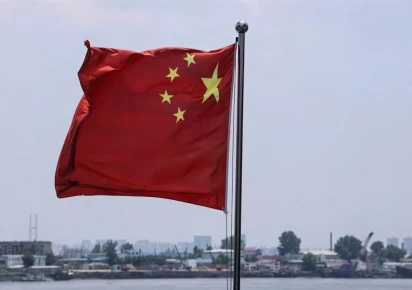
    China has strongly opposed a US decision to place several Chinese research institutions on a sanctions list. Beijing criticised the move on Wednesday. It accused Washington of using national security concerns to restrict scientific and technological cooperation between the two countries. A spokesperson for China’s Ministry of Commerce said Beijing would take necessary steps to protect the legitimate rights and interests of its research institutions. The spokesperson also said China wanted to maintain a stable environment for normal scientific exchanges and cooperation with international partners. Beijing accused the United States of repeatedly expanding the definition of national security. It said Washington had created discriminatory barriers against Chinese institutions. China also criticised what it described as the politicisation and weaponisation of scientific research. According to Beijing, such policies could damage cooperation between researchers and universities in both countries. The Chinese government said the US measures were against the broader global trend of international cooperation in science and technological innovation. Beijing urged Washington to withdraw what it called unjustified accusations against Chinese research institutions. China also called on the United States to correct its policies as soon as possible. It demanded fair, just and non-discriminatory treatment for Chinese research organisations. The dispute comes amid wider tensions between Washington and Beijing over technology, trade and national security. The United States has increasingly tightened restrictions on Chinese access to advanced technologies. Semiconductor manufacturing has become a major area of competition between the two countries. China is also working to expand its domestic semiconductor industry. Beijing aims to reduce its dependence on advanced foreign chips affected by US export restrictions. Last week, the US Department of Defence updated a list of foreign institutions it considers involved in “problematic activities”. The updated list included Chinese defence-related academies and several universities. Shanghai-based Fudan University was also among the institutions added to the list. The latest move is likely to add another point of tension to already strained US-China relations. Beijing has repeatedly opposed US measures targeting Chinese companies, universities and research organisations. Washington, meanwhile, has maintained that its restrictions are linked to national security and technology concerns.

  • |

    Escalating water shortages compound the crisis for Sudanese refugees in Chad

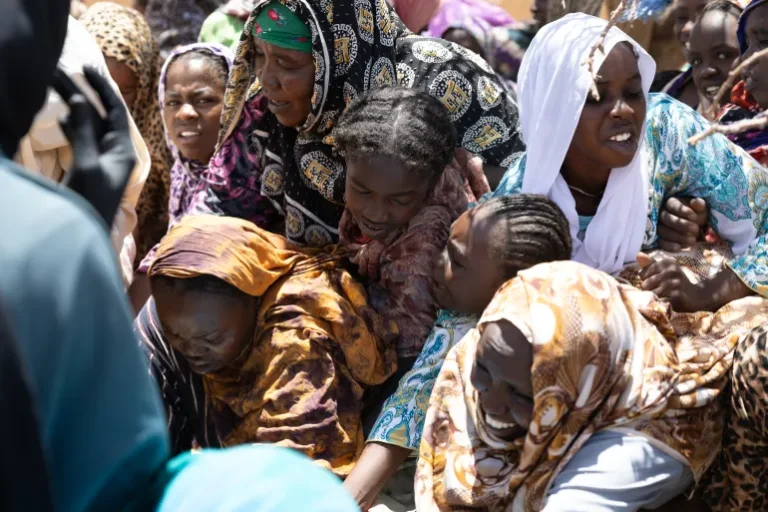
    Sudanese refugees who escaped violent conflict in Darfur are facing an severe water shortage in eastern Chad’s overcrowded displacement camps. Over 938,000 people have fled into Chad since fighting erupted in April 2023 between the Sudanese Armed Forces (SAF) and the Rapid Support Forces (RSF). Settlements such as the Goudrane refugee camp, which accommodates roughly 50,000 refugees, frequently go days without water tank deliveries, leading to desperate scrambles when limited supplies arrive. The extreme scarcity forces many families to survive on less than half of the United Nations High Commissioner for Refugees’ (UNHCR) recommended daily minimum water allocation. At local medical clinics, doctors report an inability to effectively administer treatments for bacterial infections because patients lack access to clean drinking water. Aid agencies, including Solidarités International, caution that existing funding levels cannot keep pace with the growing capacity requirements for boreholes, sanitation, and water treatment infrastructure. Refugees arriving at transit sites such as Adré and long-term camps like Metche describe systematic violence in Sudan, particularly targeting the Masalit community. Reports detail mass killings, sexual violence, heavy shelling, and deliberate destruction of vital supplies by RSF fighters during escapes from towns like el-Fasher and el-Geneina. With the conflict entering its fourth year and diplomatic resolution remaining distant, displaced families face prolonged instability alongside severe resource shortages.

  • |

    Diplomatic tension flares between Kyiv and Tehran following Caspian Sea maritime strike

    Ukrainian Foreign Minister Andrii Sybiha held a direct phone call with Iranian counterpart Abbas Araghchi following Tehran’s formal condemnation of a Ukrainian drone attack on a vessel in the Caspian Sea. During the exchange, Sybiha cautioned Iran against taking escalatory measures and reiterated Kyiv’s demand that Tehran cease all military support for Russia’s invasion. Ukrainian officials maintained that their military strikes in the Caspian body of water strictly targeted Russian warships and cargo ships transporting military equipment between Iran and Russia, stressing that Ukraine had no intention of causing civilian casualties or damaging commercial shipping. In response, Iranian Foreign Minister Araghchi confirmed that Sybiha characterised the strike on the vessel as unintentional, noting that while Tehran does not seek wider conflict, any assault on Iranian citizens or commercial assets remains unacceptable. The incident, which resulted in the death of one Iranian sailor and injuries to another, previously drew sharp rhetoric from Tehran, with Iranian officials accusing Ukraine of acting at the behest of Israel and warning that the strike would not go unanswered. The dispute highlights the growing convergence between the Eastern European conflict and Middle Eastern tensions, underscored by concurrent discussions between Ukrainian and Israeli foreign ministers regarding shared security threats posed by Iranian military capabilities.

  • |

    Gulf nations back Omani plan for voluntary transit payments to resolve Hormuz maritime crisis

    Gulf Cooperation Council member states have formally endorsed a diplomatic initiative proposed by Oman to introduce voluntary service fees for commercial vessels transiting the Strait of Hormuz, seeking to restore global energy shipments disrupted by the broader conflict involving the United States, Israel, and Iran. The framework, modeled after the cooperative navigation safety mechanism used in Asia’s Malacca Strait, allows shipowners to make optional financial contributions toward environmental protection, search-and-rescue services, and navigational maintenance rather than paying mandatory tolls. Designed as a compromise between Tehran’s demand for administrative authority over shipping lanes and Washington’s insistence on unimpeded international transit, the Omani proposal explicitly prevents Iran from exercising exclusive operational control over the waterway while offering a structured path toward reopening commercial transit routes. The diplomatic breakthrough coincides with a temporary lull in direct aerial bombardments after US President Donald Trump called off a two-week bombing campaign following advice from military commanders. Despite the pause in direct strikes between Washington and Tehran, regional tensions remain elevated due to ongoing proxy drone activity across Jordan, Saudi Arabia, and Iraq, alongside continued US naval enforcement actions against non-compliant commercial vessels. While market reactions to the suspension of airstrikes sent global crude prices down sharply, formal resolution remains subject to upcoming diplomatic negotiations in Washington and the broader implementation of the bilateral framework agreement.

  • |

    Backlash grows within conservative ranks as far-right AfD surges past German chancellor in polls

    German Chancellor Friedrich Merz is facing acute political pressure following a contentious cabinet reshuffle that triggered widespread friction within his conservative ranks. The internal discord comes at a critical juncture, as the far-right Alternative for Germany (AfD) pulls ahead in national opinion polls ahead of key regional elections in September. The shake-up was prompted by the abrupt departure of party heavyweight Jens Spahn over his decision to have a child via surrogacy abroad, a practice banned in Germany and previously opposed by Spahn himself. Merz appointed his chief of staff, Thorsten Frei, to replace Spahn as leader of the conservative parliamentary group, whilst moving Health Minister Nina Warken into the chancellery. However, additional dismissals, including Transport Minister Patrick Schnieder and junior minister Tino Sorge, provoked sharp backlash from party members in Rhineland-Palatinate and Saxony-Anhalt, who accused Merz of poor communication and unfair treatment. With approval ratings for the CDU/CSU alliance slipping to 21% behind the AfD’s 27%, the upcoming state elections in Saxony-Anhalt and Mecklenburg-Vorpommern present a formidable test. Merz has urged patience, predicting internal tempers will cool before parliament reconvenes in September. However, growing discontent within the coalition leaves the chancellor in a precarious position as he attempts to push forward economic and social reforms.

  • US and Saudi forces launch joint precision strikes on Iranian-backed targets in eastern Iraq

    Joint military operations between United States fighter jets and the Saudi Arabian Armed Forces targeted multiple logistics and weapons facilities belonging to Iranian-aligned armed groups across eastern Iraq, US Central Command confirmed in an official statement. The coordinated air raids were conducted in direct retaliation to more than thirty Iranian-directed aerial drone attacks launched over a seventy-two-hour period. Central Command specified that the targeted militia groups acted under the explicit direction of Iran’s Islamic Revolutionary Guard Corps to strike American troop installations and Saudi energy infrastructure. While American military officials confirmed that recent strikes against US assets were successfully defended without casualties, the Saudi Ministry of Defense cited international self-defence provisions under Article 51 of the United Nations Charter, noting that the aerial campaign directly addressed drone incursions originating from Iraqi territory against petroleum facilities in eastern Saudi Arabia and Riyadh. The joint intervention signals a notable strategic escalation for Saudi Arabia, which had previously sought to limit direct military involvement despite recurring proxy threats along its borders and maritime trade corridors. Central Command noted that Iranian-backed militias in Iraq attempted over six hundred attacks against US personnel and facilities between February and April alone, warning that failure to cease offensive operations would trigger further military action. In response to the bombings, representatives for Iraq’s Popular Mobilization Forces reported casualties and structural damage across several headquarters, condemning the strikes as a severe violation of Iraqi national sovereignty.

  • |

    Shift in Democratic backing signals growing rift over US support for Israel

    A long-standing bipartisan consensus in Washington regarding unyielding support for Israel is facing unprecedented strain, primarily driven by deepening fractures within the Democratic Party. Escalating military action in Gaza, broader regional conflict, and Prime Minister Benjamin Netanyahu’s close alignment with US Republicans have steadily eroded traditional Democratic backing, threatening to transform America’s foreign policy landscape into a sharp partisan divide. This internal tension is increasingly evident across Capitol Hill and key electoral contests. Congressional votes attempting to restrict or eliminate annual military assistance, which amounts to billions of dollars alongside recent emergency packages, have gained significant momentum, drawing support from senior figures like former Speaker Nancy Pelosi despite pushback from House leadership. High-profile primary races in battlegrounds such as Michigan, Florida, and Colorado highlight this rift, pitting progressive candidates advocating a complete halt to military funding against establishment figures emphasising the strategic necessity of security ties. Recent public opinion polls reinforce this realignment, with a solid majority of Democratic voters maintaining that Washington is overly supportive of Israel, reflecting a generational shift that could permanently alter future US diplomatic relations.

  • |

    Indian authorities suspend police constable over assault rifle deployment at student rally

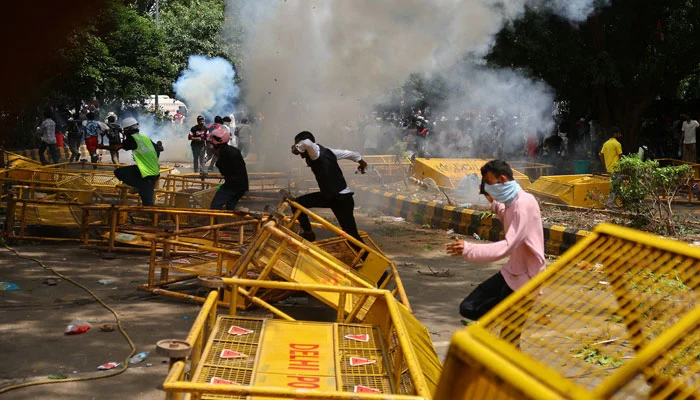
    Indian law enforcement authorities have suspended a police constable in the eastern state of Bihar after social media footage revealed him discharging an AK-47 assault rifle into the air to disperse a student demonstration in the city of Siwan. Senior Bihar police official Nilesh Kumar confirmed that the officer, who was carrying the weapon as part of a specialised intelligence unit, acted without justification or authorisation when firing live rounds above the crowd, adding that formal disciplinary proceedings have been initiated despite no injuries being reported. The incident marks the latest escalation in weeks of nationwide youth demonstrations sparked by question paper leaks in the NEET national medical entrance examination. Fueled further by broader anxieties surrounding high youth unemployment and technological job displacement, the persistent protests recently forced the resignation of Indian Education Minister Dharmendra Pradhan. The police crackdown has drawn intense condemnation from opposition lawmakers and legal authorities alike. In parliament, Congress party chief Mallikarjun Kharge denounced the deployment of assault rifles against unarmed students as a grave assault on democratic norms and demanded clear governmental accountability. The harsh crowd-control measures also prompted rare public criticism from Supreme Court Judge Ujjal Bhuyan, who warned against the steady erosion of fundamental freedoms and the public space required for peaceful demonstration.

  • |

    Rome to host US-mediated Israel-Lebanon negotiations on southern pilot zones

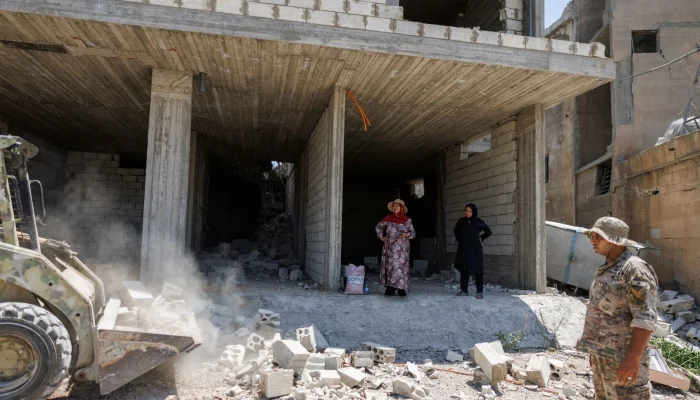
    Technical delegations from Israel and Lebanon will assemble in Rome from August 4 to 6 for a fresh round of United States-brokered talks designed to advance the implementation of their bilateral framework agreement. First disclosed by Italian Foreign Minister Antonio Tajani and subsequently confirmed by the US State Department, the upcoming dialogue will address the expansion of designated pilot zones in southern Lebanon alongside broader border resolutions and long-term peace objectives. The core terms of the underlying framework deal, established after conflict flared between Israel and the Iran-backed militant group Hezbollah in March, require a cessation of hostilities, the disarming of Hezbollah, the national deployment of the Lebanese Armed Forces, and a structured, phased withdrawal of Israeli forces commencing from two initial pilot areas. Negotiators aim to leverage early operational data from these initial zones to refine the broader security rollout and facilitate a progressive expansion of government control throughout the border region. The upcoming diplomatic round occurs amidst friction on the ground, with the Lebanese military recently condemning persistent Israeli artillery shelling and strikes in southern territory, cautioning that continued operations directly impede the full deployment of state troops outlined in the agreement.