देश-विदेश

  • |

    Search for survivors intensifies after devastating 7.1-magnitude earthquake strikes southern Japan

    Emergency responders in southwestern Japan are racing against time to locate survivors trapped in rubble following a powerful 7.1-magnitude earthquake that killed at least 13 people in the Kumamoto region of Kyushu island. The powerful tremor, which struck at a shallow depth of ten kilometres, flattened residential homes, triggered severe fires, ruptured critical bridges, and cut electricity to nearly 37,000 households. Japanese Prime Minister Sanae Takaichi confirmed the death toll during an official address in Tokyo, while chief cabinet spokesman Minoru Kihara noted that at least seven individuals suffered severe injuries and more than 9,000 residents sought safety across hundreds of emergency evacuation shelters. Search operations remain heavily concentrated in the town of Kashima, where part of the Aeon Mall collapsed after a gas explosion ripped through the structure shortly after the primary quake. Rescue teams in specialised gear navigated twisted steel girders and fallen concrete inside the shopping centre, where at least two women lost their lives and eight others were pulled from the debris. Meanwhile, in Yatsushiro city, search crews continue to look for nine workers unaccounted for at a Nippon Paper Industries plant after a large smokestack collapsed onto the facility below. The seismic shock registering at the maximum level on Japan’s intensity scale caused widespread logistical disruption across Kyushu island, derailing a cargo train, suspending high-speed bullet train lines, and causing structural collapses at the historic centuries-old Kumamoto Castle. In response, the Japanese military has deployed 3,600 personnel alongside 20 reconnaissance aircraft to support disaster relief efforts, clear impassable roads, and assess localised damage in remote communities.

  • | | |

    US forces thwart Iranian missile barrage as region…

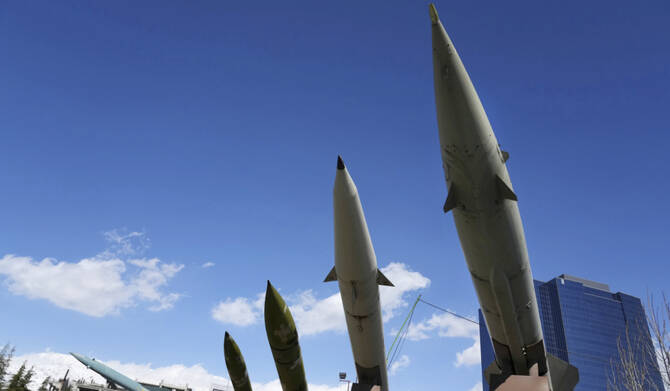
    WASHINGTON: A fragile pause in hostilities between the United States and Iran came to an abrupt end on Tuesday after Iranian forces launched multiple ballistic missiles toward US military positions in the Middle East, according to the US military. The US Central Command (CENTCOM) said the missiles were fired by Iran’s Islamic Revolutionary Guard Corps (IRGC) in what it described as a surprise attack. In a statement posted on X, CENTCOM reported that all incoming missiles were successfully intercepted, preventing any reported damage or casualties. However, it did not disclose the exact locations that were targeted. The latest exchange marks a renewed escalation after several days of relative calm. Both countries had refrained from military action over the weekend following nearly two weeks of intense conflict, during which the United States carried out nightly strikes on Iranian positions while Tehran responded with repeated missile and drone attacks against US allies across the Gulf region. The recent confrontation traces back to mid-July, when Iran targeted several commercial vessels in the Strait of Hormuz, triggering a sharp rise in regional tensions and prompting a sustained military response from Washington. The temporary ceasefire had raised hopes for diplomacy, with US President Donald Trump stating there was a strong possibility of progress in negotiations aimed at ending the conflict. The lull in fighting also contributed to a decline in global oil prices, reflecting growing market optimism that the crisis could be contained. Tuesday’s missile launch, however, signals that tensions remain high, casting fresh uncertainty over diplomatic efforts and raising concerns about the potential for another round of military escalation in the Middle East.

  • |

    Iran set to receive Chinese air-defence missiles

    Iran is expected to receive a shipment of Chinese-made shoulder-fired air-defence systems within weeks, according to sources familiar with the reported agreement. The deal involves between 300 and 400 man-portable air-defence systems (MANPADS). The systems reportedly include China’s QW-12 and FN-16 missiles. The agreement is estimated to be worth between $60 million and $70 million. If completed, it would represent one of Iran’s most significant known efforts to strengthen its short-range air-defence capabilities since the country’s recent conflict with the United States and Israel. Three sources familiar with the agreement told Reuters that the deal has already been signed. They spoke anonymously because of the sensitivity of the reported military arrangement. The agreement was reportedly made through Zhongqing Baoshang International Investment, a Hong Kong-based company described by the sources as an intermediary between Iranian interests and the Chinese supplier. Iran has been seeking to rebuild and strengthen its military capabilities after months of fighting. During the conflict, US and Israeli strikes reportedly targeted facilities associated with Iran’s missile, drone and air-defence programmes. Tehran responded with missile and drone attacks. The fighting also exposed difficulties in protecting fixed military installations and strategic infrastructure from advanced aircraft and precision-guided weapons. The reported acquisition of hundreds of MANPADS could provide Iran with a more mobile layer of defence. Unlike large fixed air-defence systems, portable systems can be operated by small teams and moved quickly between locations. The QW-12 and FN-16 are shoulder-fired, infrared-guided surface-to-air missile systems. They are designed to engage low-flying targets, including aircraft, helicopters and drones. Their mobility could allow Iranian forces to deploy them around military facilities, energy infrastructure and other sensitive locations. Defence analysts consider the QW-12 less advanced than some newer Chinese systems. However, they say such weapons can still offer useful short-range protection against drones and low-flying aircraft. The reported delivery route has also drawn attention. According to the sources, the initial shipments are expected to travel by air from Urumqi in western China before passing through Pakistan and reaching Iran. The sources did not clarify whether the equipment would subsequently be transported into Iran by road or by air. Pakistan has rejected any suggestion that it is involved in supplying Chinese air-defence weapons to Iran. The Inter-Services Public Relations (ISPR) described reports of Pakistan’s involvement in the transfer as false and fabricated. A Pakistani Foreign Ministry spokesperson did not immediately respond to requests for comment. China has also denied the reported deal. Its Foreign Ministry described the reports as groundless and said Beijing’s position has consistently focused on promoting peace and ending conflict. Iran’s Foreign Ministry did not immediately respond to requests for comment on the reported agreement. The sources also cautioned that the reported deal could still change. Delivery schedules, quantities and other implementation arrangements may be altered before the weapons reach Iran. Security officials and defence experts have indicated that Iran has been exploring different options to acquire Chinese military equipment. A European security source said authorities were aware of several proposed contracts involving QW-series MANPADS. These reportedly included the QW-12, QW-18 and QW-19 systems. A separate Middle Eastern security source said Iran had sought QW-12 and QW-18 missiles but was not aware of a completed agreement. Iran has invested heavily in domestic missiles, drones and radar systems over the past two decades. However, international sanctions and restrictions have continued to limit its access to foreign defence equipment. The reported purchase highlights Tehran’s continued effort to combine domestic weapons production with foreign military supplies. Two Western intelligence sources and an Iranian official also said Iran had explored land routes for transporting Chinese military equipment and dual-use components. Such routes could potentially provide a more discreet method of moving sensitive supplies and reduce the risk of disruption. The reported agreement comes as military ties between China and Iran appear to be attracting greater attention. A separate agreement involving Chinese anti-ship cruise missiles was also reportedly under discussion. However, it remains unclear whether that deal was ultimately completed.

  • |

    Russia charges Telegram founder Pavel Durov over alleged terror facilitation

    MOSCOW: Russia’s Federal Security Service (FSB) has charged Telegram founder Pavel Durov with allegedly facilitating terrorist activities and issued an international arrest warrant for him. The FSB announced the charges on Wednesday. It accused Telegram of failing to remove content that was allegedly used by Ukrainian intelligence-linked groups and terrorist and extremist organisations. According to the Russian security agency, the material was allegedly used to prepare and coordinate acts of sabotage, terrorism, mass killings and cyber-fraud operations inside Russia. The allegations have not been independently established, and Durov has not publicly responded to the charges. Soon after the announcement, Telegram’s official account on X posted an image of Durov making an obscene gesture. The post did not include an explanation or detailed response to the Russian allegations. Telegram is an encrypted messaging platform founded by Durov in 2013. The service has grown into one of the world’s largest messaging applications, with more than one billion users. The platform is widely used in both Russia and Ukraine and has played a significant role in communication during the Russia-Ukraine war. Russian authorities have repeatedly sought to restrict Telegram’s operations. The government has also promoted its own state-backed messaging service, MAX. Despite previous attempts to limit Telegram, Russian state institutions continue to use the platform. The Kremlin and the Russian Defence Ministry remain active on Telegram and regularly publish official updates. Durov was born in Russia but now holds French and Emirati citizenship. Before creating Telegram, he founded VKontakte, a major Russian social networking platform often described as the country’s equivalent of Facebook. He sold his remaining stake in VKontakte in 2014 after facing increasing pressure from Russian authorities. The latest Russian case comes as Durov is also facing legal scrutiny in France. French authorities are investigating allegations that Telegram failed to adequately tackle criminal activity on its platform and did not sufficiently cooperate with law enforcement agencies. Durov has denied wrongdoing in the French case. Russia’s latest move was preceded by reports earlier this year that Durov was already being investigated in connection with a terrorism-related case. In April, Durov said on Telegram that a summons addressed to “Suspect P.V. Durov” had been delivered to an apartment in Russia where he had lived about two decades ago. He responded sarcastically at the time, suggesting that the authorities could be targeting him for defending constitutional protections related to freedom of speech and private correspondence. Durov’s current location was not immediately confirmed. A post on his Telegram channel in May indicated that he was in Dubai. On July 23, he said he had been impressed by Georgia and hoped to return there soon.

  • | |

    Japan PM’s market woes deepen as support slides

    Japanese Prime Minister Sanae Takaichi is facing mounting political and economic pressure as falling public support makes it harder for her government to balance tax cuts, economic stimulus and financial stability. Takaichi’s approval rating fell sharply in July, reaching its lowest level since she became prime minister last year. Rising inflation has increased pressure on households and weakened public confidence in the government. Higher import costs linked to a weaker yen have contributed to price increases. The impact of inflation is now becoming a major political challenge for Takaichi. The prime minister has continued to support higher government spending and large-scale investment. She has also criticised excessive monetary and fiscal tightening. However, investors are increasingly worried that the government’s expansionary policies could worsen Japan’s already difficult fiscal position. Those concerns have pushed Japanese government bond yields higher. Rising yields indicate that investors are demanding greater returns to hold Japanese debt. The market pressure has also complicated government efforts to support the yen. Officials have repeatedly warned currency traders against excessive speculation, but their comments have had limited impact. Government sources said the effectiveness of such verbal intervention was weakening as investors became more concerned about Japan’s fiscal outlook. One source warned that financial markets were gaining greater influence over fiscal management, creating a situation Japan had not experienced on this scale for decades. Takaichi is caught between two competing objectives. She wants to stimulate economic growth and reduce the burden of rising living costs. At the same time, she needs to convince investors that Japan remains committed to fiscal discipline. Her government’s spending plans have already contributed to market concerns. Japanese government bond yields climbed to their highest level in about three decades in July as investors assessed the potential impact of increased spending and borrowing. Takaichi has acknowledged the importance of rebuilding confidence among investors. She recently said that communication with financial markets would become increasingly important. However, she has shown little intention of abandoning her expansionary economic strategy. The prime minister has reiterated her goal of ending what she calls excessive fiscal tightening. She wants to promote growth through increased investment and tax reductions. That position has created a political dilemma. Reducing or delaying her planned measures could weaken her popularity. But continuing with them could further unsettle financial markets. The pressure could intensify in the coming months. Takaichi is expected to proceed with a proposal to reduce an 8% consumption tax on food for two years. Japanese media have reported that the government intends to move ahead despite reservations within the ruling party. The plan could provide relief to households struggling with higher prices. However, analysts say uncertainty over how the tax reduction would be financed could create additional pressure in the bond market. The government is also considering changes to its budget-making process. Under the proposed system, spending requests for key growth sectors would not be subject to strict ceilings. That could lead to higher government expenditure and increased debt issuance in the next fiscal year. Economists have warned that such measures may make it more difficult for the government to reassure investors about its commitment to fiscal responsibility. Japan’s currency is also facing significant pressure.

  • | |

    Iran rejects Hormuz plan as US intercepts missiles

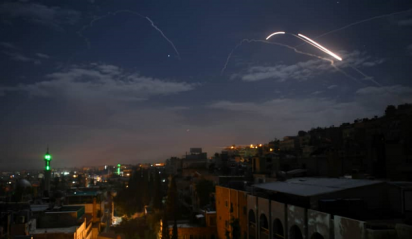
    WASHINGTON: Regional tensions intensified on Wednesday after Iran rejected Oman’s proposal for jointly managed shipping routes in the Strait of Hormuz, while the United States said it intercepted multiple Iranian ballistic missiles allegedly launched towards American forces in the Middle East. Iranian Deputy Foreign Minister Kazem Gharibabadi said Muscat had proposed dividing the Strait of Hormuz transit route equally between Iranian and Omani territorial waters. However, Tehran instead suggested that shipping passing through Iranian waters should remain under its control, while Oman would oversee only part of the route on its side. He warned that if Oman declined the proposal, the strategic waterway would remain closed. The Strait of Hormuz is one of the world’s busiest maritime corridors and a vital route for global energy exports, making any disruption a significant concern for international trade and regional security. Meanwhile, the US Central Command announced that its forces had intercepted several ballistic missiles launched by Iran in what Washington described as an attempted surprise attack on US military personnel stationed in the Middle East. Although the exact target was not disclosed, Iranian state media reported that the Islamic Revolutionary Guard Corps (IRGC) had fired missiles at a US military base and a Central Command facility in Jordan, claiming the strikes were retaliation for recent American actions against Iranian interests. US President Donald Trump said diplomatic contacts with Tehran had shown positive signs but warned that military action could resume if negotiations failed to produce results. Iran, however, denied reports suggesting it was preparing to restart direct talks with Washington. The conflict has also spilled into neighbouring countries. Jordan confirmed that its air defence systems intercepted five missiles entering its airspace early Wednesday, marking the third consecutive day of aerial threats against the kingdom. No casualties or property damage were reported. In response to the escalating crisis, Gulf nations intensified diplomatic coordination. Saudi Foreign Minister Prince Faisal bin Farhan held separate discussions with his counterparts from Qatar, Kuwait and Bahrain, with all sides stressing the importance of reducing regional tensions and ensuring freedom of navigation through the Strait of Hormuz and the Bab al-Mandeb Strait. The ministers also condemned attacks attributed to Iran and its allied armed groups. The Gulf Cooperation Council (GCC) strongly criticised repeated attacks on Saudi Arabia, describing them as a serious violation of the kingdom’s sovereignty and a threat to regional stability. GCC Secretary-General Jasem Mohamed AlBudaiwi reaffirmed the bloc’s full support for Saudi Arabia and urged stronger regional cooperation to prevent further escalation. The European Union also expressed concern over the deteriorating security situation. EU foreign policy chief Kaja Kallas discussed Gulf tensions with Iranian Foreign Minister Abbas Araghchi, calling for renewed diplomacy while also raising concerns over Iran’s military support for Russia and the temporary detention of two French diplomats in Tehran. China appealed for restraint, urging all parties to resolve disputes through dialogue while safeguarding freedom of navigation in international waterways. Beijing reiterated its support for peaceful solutions and respect for the sovereignty of regional states. Separately, Iran’s IRGC Navy announced that it had intercepted and halted three oil tankers in the Strait of Hormuz after the vessels allegedly ignored official warnings. Iranian authorities did not disclose the ships’ identities or provide further details regarding the alleged violations. Iran also rejected accusations linking it to projectiles fired at targets inside Saudi Arabia from other countries, insisting that attributing every attack on US interests in the region to Tehran was a serious miscalculation. The latest developments highlight growing instability across the Gulf, with military confrontations, diplomatic efforts and concerns over maritime security continuing to shape one of the world’s most sensitive geopolitical flashpoints.

  • | |

    Iran denies role in Iraq-launched attacks on Saudi…

    TEHRAN: Iran has firmly denied any involvement in projectiles launched from Iraq towards Saudi Arabia, dismissing allegations that it was behind the recent attacks on the kingdom’s energy facilities amid escalating tensions across the Middle East. An Iranian military official, speaking to state broadcaster IRIB, rejected claims linking Tehran to the attacks, saying accusations that Iran was responsible for strikes against United States interests or Saudi Arabia reflected a misunderstanding of the regional situation. The official also insisted that projectiles fired from Iraqi territory towards Saudi targets had no connection with the Islamic Republic. The denial came after Saudi Arabia announced that its air defence systems had intercepted and destroyed several drones targeting petroleum facilities in the country’s Eastern Province. Riyadh alleged that the drones were launched from Iraqi territory by armed groups aligned with Iran. In response to the attacks, the United States Central Command (CENTCOM) said American and Saudi forces carried out coordinated precision airstrikes against targets belonging to Iran-aligned groups in Iraq. According to the US military, the operation targeted sites linked to attacks on American personnel and Saudi energy infrastructure. Saudi Arabia described the strikes as an act of self-defence under Article 51 of the United Nations Charter, warning that it would take further military action if similar attacks were carried out by Iran-backed groups. Meanwhile, Iraq’s Popular Mobilisation Forces (PMF) reported heavy casualties from the joint airstrikes, stating that at least 20 of its members were killed and 32 others injured. The group said its headquarters and military assets in several provinces, including Baghdad, Basra, Kirkuk, Karbala, Diyala, Wasit and Nineveh, sustained extensive damage. The exchange marks another sharp escalation in regional tensions, with diplomatic and military confrontations continuing to raise concerns about wider instability across the Middle East.

  • | |

    Trump hails meetings with Netanyahu and Zelenskiy

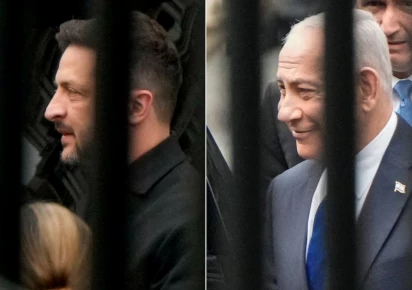
    US President Donald Trump said his recent meetings with Israeli Prime Minister Benjamin Netanyahu and Ukrainian President Volodymyr Zelenskiy went well, as the leaders visited Washington to attend a memorial service for Republican Senator Lindsey Graham. Trump met the two leaders separately and later shared brief comments on his social media platform, Truth Social. He said he discussed several important issues with both leaders but did not provide details about the conversations. Describing his meeting with Netanyahu as “very good,” Trump said the two sides discussed a range of significant matters. Netanyahu also called the talks “excellent.” The meeting came amid tensions over the conflict involving Iran and Israel. Trump had expressed frustration before meeting Netanyahu after details about the Israeli prime minister’s planned discussion points on Iran emerged publicly. Trump also held talks with Zelenskiy on strengthening Ukraine’s air defense capabilities and efforts to revive peace negotiations with Russia. The two leaders discussed plans for Ukraine to produce Patriot missile interceptors as Kyiv continues to seek greater military support. Zelenskiy described his meeting with Trump as “good,” while Trump said they discussed many issues and characterized the talks as successful. The meetings took place as the conflicts in the Middle East and Ukraine remain major international concerns, with diplomatic efforts continuing alongside ongoing military tension.

  • | |

    Pakistan, Kuwait agree to expand bilateral cooperation

    Pakistan and Kuwait have agreed to strengthen cooperation in several key areas, including trade, investment, energy, labour, agriculture, information technology, health, mining and minerals, and defence. The understanding came during delegation-level talks held at the Ministry of Foreign Affairs in Islamabad on Wednesday. Deputy Prime Minister and Foreign Minister Ishaq Dar and Kuwait’s Foreign Minister Sheikh Jarrah Jaber Al-Ahmad Al-Sabah co-chaired the meeting. Sheikh Jarrah arrived in Islamabad on Tuesday for a two-day official visit aimed at reviewing Pakistan-Kuwait relations and discussing regional and international developments of mutual interest. According to the Ministry of Foreign Affairs, the two sides reviewed the full range of bilateral ties and explored ways to expand economic cooperation and strengthen partnerships across various sectors. The two foreign ministers also agreed to improve institutional coordination by building stronger links between relevant institutions and maintaining regular high-level exchanges. Pakistan and Kuwait further reaffirmed their commitment to working closely at multilateral forums on matters of shared interest. During the talks, Sheikh Jarrah thanked the Pakistani government and people for their warm welcome and hospitality. He also appreciated Pakistan’s support to Kuwait during the COVID-19 pandemic.

  • |

    Israel accused of AI influence campaign

    Israel allegedly spent tens of millions of dollars on a digital campaign aimed at shaping how artificial intelligence systems respond to questions about the war in Gaza. The report claims that Brad Parscale, a former campaign manager for US President Donald Trump, and his company, Clock Tower X, secured a $46.5 million contract from the Israeli government to create an online network promoting Israeli viewpoints. The campaign reportedly sought to influence AI platforms such as ChatGPT, Claude, Gemini and Perplexity. According to documents cited in the report, Clock Tower X created hundreds of articles on websites covering the Gaza war, Israel’s military operations and US-Israel relations. The strategy focused on producing large amounts of online content that search engines could index and AI systems could later use when generating answers. The report described the approach as a form of “LLM poisoning,” in which coordinated online content attempts to shape the information that large language models encounter during web searches, data collection or training. Websites reportedly linked to the campaign, including Allyvia.org, FactSignal.org and Paxpoint.org, published material supporting stronger US-Israel military cooperation, defending Israel’s actions in Gaza and disputing allegations against the Israeli military. Drop Site News also reported that some AI-powered services have already referenced content from the network. In one test, Perplexity reportedly cited Allyvia.org in response to a question about US military cooperation with Israel, while Microsoft’s Copilot also referenced websites associated with Clock Tower X. The report further claimed that content from the network entered Common Crawl, a widely used archive of web pages that developers and researchers rely on to build and train AI systems. The 10 websites allegedly connected to Clock Tower X appeared in Common Crawl records hundreds of times between January and June, potentially increasing their visibility to AI systems and influencing future AI-generated responses.