देश-विदेश

  • |

    Netanyahu visits White House for first Trump talks…

    Israeli Prime Minister Benjamin Netanyahu visited the White House on Tuesday for his first in-person meeting with US President Donald Trump since the Iran war began, as the two leaders held closed-door talks dominated by the conflict and regional security. The meeting, described by the White House as “positive and productive,” lasted about an hour and a half. It came amid a recent pause in the fighting between the US and Iran, with Washington signaling it wants to give negotiations a chance. Israel has not taken part in the latest round of hostilities, which flared earlier this month after an April ceasefire collapsed. Relations between Trump and Netanyahu reached a low point in April during negotiations on the ceasefire with Iran, with Trump unleashing profanity-laced tirades against his Israeli ally. Trump later described Netanyahu in an interview as a “very difficult guy,” while Netanyahu downplayed the exchanges as “tactical disagreements” that were “drawn out.” Upon arriving in Washington, Netanyahu attended a private memorial dinner on Monday evening in honor of the late US senator Lindsey Graham, and he was also scheduled to attend Graham’s memorial service later on Tuesday. Observers suggest that any differences between Trump and Netanyahu concern the means  timeline, intensity, and immediate objectives of operations rather than the ends of the war. Analysts believe Trump would mainly seek to focus on his two regional priorities: Iran and the expansion of the Abraham Accords, the US-brokered normalisation agreements signed during his first term that established formal diplomatic relations between Israel and the United Arab Emirates, Bahrain, and Morocco. Gaza is seen as less of a priority for Trump, but other observers believe the talks could also address the possible easing of Israel’s military presence elsewhere in the region, such as in Lebanon, Syria, or Gaza. The meeting comes as diplomatic efforts to end the broader conflict continue, with Pakistan and Qatar playing mediation roles between Washington and Tehran.

  • | |

    Houthis claim attack on Saudi Tanker as US Naval b…

    Yemen’s Houthi rebels have claimed responsibility for targeting a Saudi oil tanker in the Red Sea with ballistic missiles, alleging the vessel violated a blockade on Saudi ports announced by the group last week . The Houthi military spokesman identified the ship as the NCC Ghazal, stating it had been “forced to turn back” after ignoring warnings. This attack is the latest in a series of maritime operations by the Iran-aligned group, which previously claimed to have targeted two Saudi tankers, the Encelia and Layla, and to have forced around ten ships to retreat . In a related development, the US Central Command (CENTCOM) announced on Tuesday that it has redirected 18 commercial vessels, disabled two, and boarded two others as part of its ongoing naval blockade against Iran . The intensified maritime operations come amid a complex regional conflict involving US-Iran hostilities, with CENTCOM stating there are more than 20 ships currently supporting military operations in the Middle East . The Houthi actions and the US naval blockade add new layers of tension to the region’s shipping lanes, critical for global energy supplies, and coincide with broader diplomatic efforts to de-escalate the wider conflict.

  • |

    Dubai Airport introduces passport-free AI immigration system

    If you want to travel abroad, you usually need considerable time at the airport for passport checks, identity verification and other procedures. Imagine being able to board your flight without showing your passport, identity documents or ticket. It would save a lot of time. It may sound unbelievable but this has become possible at an airport in a Muslim country due to Artificial Intelligence (AI) technology. At Dubai Airport, AI technology helps passengers complete immigration procedures at high speed. The new system was first introduced in September 2025 for passengers boarding flights. However, now immigration procedures have also been made faster for passengers arriving from other countries at Dubai Airport. The new system uses AI, biometric cameras and flight data to complete the verification of passengers and their luggage within seconds. This technology allows up to 10 passengers to pass through border control simultaneously. Passengers walking through the red-carpeted Terminal 3 no longer need to show travel documents or stop for manual checks. They only need to complete registration before arriving at Dubai Airport so that their passport details and facial images can be identified. The system completes passenger clearance in just 3.4 seconds. According to Dubai Airports CEO Paul Griffiths, the airport has invested in camera technology allowing passengers to enter or leave the country without carrying a passport, passing through gate readers or facing difficulties during the process. He further stated that the new technology is currently being tested on first-class passengers and will gradually be made available to all passengers.

  • |

    EU fines Google $1 billion over competition violations

    The European Union has imposed a heavy fine on Google for allegedly using its dominance in the search engine sector to suppress other companies. According to a statement issued by the European Commission, Google illegally used its dominant position in the search engine market to reduce competition. The statement said that Google has been fined €890 million (around $1 billion) for this violation. The move is expected to increase trade tensions between the European Union and the United States as the Trump administration has warned of possible retaliatory measures and described EU trade policies as “unfair.” According to the European Commission, Google unfairly used its dominant search engine position to promote its own services including shopping, travel, gaming and other platforms reaching more users. The commission stated that Google placed its own services higher in search results while pushing competing services lower. The statement further explained that under the European Union’s Digital Markets Act, technology companies cannot show such biased behavior toward their own services and must follow transparent, fair and non-discriminatory policies. The European Commission also accused Google of unfairly preventing developers from informing users about alternative payment options on the Google Play Store as this could reduce Google’s service fees. This action was also considered a violation of the Digital Markets Act which aims to prevent large technology companies from establishing monopolies. According to the statement, Google must comply with the decision within 60 days otherwise additional penalties may be imposed. On the other hand, Google said in a statement that the decision would harm European consumers. This is not the first time the European Union has fined Google. In 2018, the EU imposed a $4.7 billion fine on Google over the alleged abuse of its dominance in the Android mobile operating system market and Google’s final appeal against the decision was rejected. In 2017, Google was fined $2.8 billion for abusing its dominance in the search sector while in 2024 its final appeal was also rejected.

  • | |

    Apple briefly crosses $5 trillion market value

    Apple has become the second company in history to reach a market valuation of $5 trillion. The technology giant briefly crossed the landmark during trading on Tuesday. Its shares rose as much as 1.8% to a record intraday price of $342.89. The rise pushed Apple’s market capitalisation above the $5 trillion mark. The stock later gave up some of its gains, but the milestone marked another major achievement for the iPhone maker. The surge also helped Apple reclaim its position as the world’s most valuable publicly traded company. It moved ahead of chipmaker Nvidia in market value. The latest rally reflects continued investor confidence in Apple. The company has taken a different approach to the growing artificial intelligence race. Apple has focused on partnerships and external infrastructure instead of making huge investments in its own data centres. This strategy has helped the company control capital spending while expanding its AI capabilities. Several major technology companies have committed billions of dollars to AI infrastructure. Apple has sought to avoid some of those heavy costs. The company has instead worked with external partners to support its AI-related services. Its collaboration with Google is among the initiatives aimed at strengthening features such as the upgraded Siri assistant. Apple’s approach has helped reduce pressure on its cash flow. It has also reassured investors as the company works to expand its presence in artificial intelligence. The $5 trillion milestone comes as Apple continues to focus on its hardware and services businesses. The company is also looking for new ways to encourage customers to upgrade their devices. As part of that effort, Apple has introduced a new device-leasing programme in the United States in partnership with Klarna. Under the programme, customers can lease iPhones for payments starting at $17.99 per month. The initiative is designed to make new devices more affordable and encourage consumers to upgrade their existing phones. Apple’s latest market milestone highlights the scale of investor expectations surrounding the company. It also shows the continued strength of its brand and business model in an increasingly competitive technology sector.

  • |

    Airbus completes record 24-hour flight with plane …

    A specially modified Airbus A350 plane touched down in France on Tuesday after a record 24-hour test flight from Australia, ahead of its joining Qantas’s fleet next year. Its 23,076-kilometre journey across three continents and two oceans, and through two sunsets and two dawns  was one of the most-watched flights shown on the Flightradar24 tracking site. The flight from Australia to France took precisely 24 hours and 24 minutes. On its outbound flight last week, from Toulouse to Melbourne, the test aircraft flew 17,000 kilometres in 19 hours and 12 minutes. The test flight was a crucial step before Australian airline Qantas receives its first A350-1000ULR in April next year, to be followed by 11 others for services able to link Australia non-stop to destinations in the United States and Europe. The ULR in its designation stands for “ultra long distance,” a feat made possible by an additional 20,000-litre rear centre fuel tank being fitted to Airbus’s A350-1000 model. Qantas plans to start offering non-stop flights between London and Sydney from October 2027. Later, it intends to start flying between Sydney and New York. On board the plane was a cockpit crew of eight people from Airbus’s testing division, accompanied by two Qantas pilots. Two Airbus engineers were also on board. Some of the aspects studied on the flight were the modified architecture around the extra fuel tank, changes to make the cabin quieter, and the plane’s air circulation system. Qantas’s ‘Project Sunrise,’ using ultra-long-haul planes, has been on the cards for the past nine years but has been repeatedly delayed. Currently, the longest commercial flight service in the world is Singapore Airlines’ route between Singapore and New York, which covers 15,350 kilometres and lasts more than 18 hours using another variant of the A350. The successful test flight brings Qantas one step closer to realizing its vision of non-stop connections between Australia and some of the world’s farthest destinations.

  • | | |

    Kuwait’s foreign minister arrives in Pakistan on…

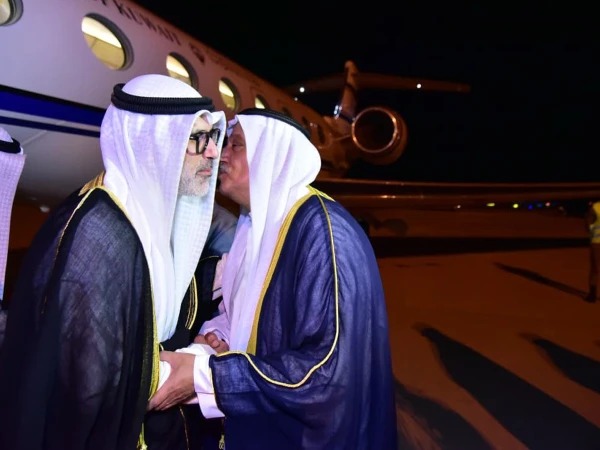
    Kuwait’s Foreign Minister, Sheikh Jarrah Jaber Al-Ahmad Al-Sabah, arrived in Islamabad on Tuesday for an official visit to Pakistan at the invitation of Deputy Prime Minister and Foreign Minister Ishaq Dar. The visit highlights the longstanding friendship and growing diplomatic cooperation between the two countries. According to Pakistan’s Ministry of Foreign Affairs, the Kuwaiti foreign minister received a warm welcome upon his arrival at Islamabad International Airport. Additional Secretary for the Middle East, Zahid Hussain, welcomed the distinguished guest on behalf of the Pakistani government. During the visit, senior officials from both countries are expected to hold high-level discussions on a wide range of bilateral, regional, and international issues of mutual interest. The talks will focus on strengthening political cooperation, expanding economic partnerships, enhancing trade and investment opportunities, and promoting collaboration in various sectors. The Foreign Office stated that the visit reflects the deep-rooted brotherly relations between Pakistan and Kuwait, built on a shared history, mutual trust, and close cooperation over the years. Both nations have maintained friendly diplomatic ties and regularly work together on regional and international platforms. Pakistan and Kuwait enjoy strong cooperation in labor, energy, investment, and defense, while a large Pakistani expatriate community continues to contribute significantly to Kuwait’s economy. The leadership of both countries has repeatedly expressed a commitment to further strengthening these ties through increased engagement and high-level exchanges. Officials believe the visit will provide an opportunity to review the progress made in bilateral relations and identify new areas for collaboration. Discussions are also expected to cover regional developments in the Middle East and South Asia, as well as other international issues of common concern. The official visit underscores the shared commitment of Pakistan and Kuwait to enhancing diplomatic relations, promoting economic cooperation, and expanding strategic partnerships. It also reaffirms both countries’ desire to deepen engagement through regular dialogue and continued collaboration for mutual benefit. The outcomes of the meetings are expected to contribute to stronger Pakistan-Kuwait relations and pave the way for future initiatives aimed at boosting trade, investment, and regional cooperation.

  • |

    Oman proposes gulf-backed plan to ease Strait of Hormuz tensions

      Oman has proposed a new framework for managing the strategically important Strait of Hormuz, with support from Gulf countries, according to a Gulf source and a Western diplomat who spoke to Reuters on Tuesday. The proposal includes a system under which ships using the waterway would be encouraged to make voluntary financial contributions rather than pay mandatory transit fees. The initiative is aimed at easing tensions and restoring stability in one of the world’s busiest maritime trade routes following months of disruption caused by the conflict involving the United States, Israel, and Iran. A senior Iranian official told Reuters that Tehran has not yet responded to Oman’s proposal, which is intended to provide a foundation for a broader agreement to ensure the safe movement of commercial vessels through the strait. The Strait of Hormuz is one of the most critical shipping lanes in the world, carrying around one-fifth of global oil and liquefied natural gas supplies before the conflict intensified. The route has become a focal point of regional tensions, with repeated incidents affecting international trade and energy markets. Meanwhile, US President Donald Trump said there had been “good talks” involving Iran but warned that military action could resume if diplomatic efforts fail to produce results. Trump recently halted a planned two-week US bombing campaign, marking another major shift in his administration’s approach toward the conflict. Despite his comments, Iranian officials continue to deny that Tehran is preparing to restart negotiations with Washington. Earlier this month, the United States launched a renewed military campaign aimed at reducing Iran’s influence over the Strait of Hormuz. Iran had effectively restricted access to the waterway following military strikes by the United States and Israel on February 28, allowing only Iranian vessels to move freely through the area. Although a temporary agreement between Washington and Tehran led to the partial reopening of the strait last month, the arrangement quickly fell apart in early July. According to reports, Iran fired on ships using a navigation channel that it does not officially recognize, reigniting concerns about maritime security and the uninterrupted flow of global trade. Iran has repeatedly stated that it wants to jointly oversee the Strait of Hormuz with Oman, which borders the opposite side of the narrow waterway. Tehran has also proposed charging vessels for navigation-related services. However, the United States argues that international ships should continue to enjoy unrestricted passage without being required to pay mandatory fees, maintaining that such charges would violate international law. Under the proposal put forward by Oman, Iran would not have exclusive authority over the strait. Instead, management responsibilities would be shared, and any payments made by vessels would be entirely voluntary rather than compulsory, according to the Gulf source and the Western diplomat familiar with the discussions. The proposed model is similar to the system used in Southeast Asia’s Strait of Malacca, where Indonesia, Malaysia, and Singapore invite shipping companies to make voluntary contributions. Those funds are used to support navigation safety, environmental protection, and search-and-rescue operations instead of functioning as mandatory transit charges. The Omani initiative is being viewed as a possible compromise that could reduce regional tensions, safeguard international shipping, and help restore confidence in one of the world’s most strategically significant maritime corridors.

  • |

    Lt Gen (R) Abdul Qayyum calls for global peace through dialogue; FIRD Chairman Toaha Qureshi backs strong armed forces

    LONDON:  Senator Lt Gen (R) Abdul Qayyum (HI(M)), President of the Pakistan Ex-Servicemen Society, called for greater respect for international law, dialogue under the umbrella of the United Nations and enhanced cooperation among Muslim countries to address global security challenges, while Forum for International Relations Development (FIRD) Chairman Toaha Qureshi reaffirmed support for Pakistan’s armed forces, saying they remained the country’s defenders and that the Field Marshal had enhanced Pakistan’s reputation on the global stage. Addressing the Second International Conference on Global Peace, organised by FIRD in London, Senator Abdul Qayyum said lasting peace could only be achieved through diplomacy and adherence to international law. “Respect for international law and pursuing dialogue as a strategy for peace under the umbrella of the United Nations can help resolve even the most complex global challenges. Destructive wars can only lead to catastrophic consequences and bring suffering to humanity as a whole,” he said. During his address, the senator argued that the post-Cold War unipolar world had witnessed repeated violations of international law and human rights, weakening the effectiveness of institutions such as the United Nations and the International Court of Justice. Discussing global security, he said colonialism had evolved into neo-colonialism in the modern era and referred to the establishment of US military bases around the world. He also cited recent developments in the Middle East, saying they had highlighted the importance of national self-reliance in defence and strategic planning. Senator Abdul Qayyum said vulnerable states increasingly needed to strengthen their own defence capabilities while developing strategic partnerships through mutual defence agreements. Referring to recent tensions involving Iran, Israel and the United States, he said the evolving regional security environment had prompted Gulf countries to reassess their strategic priorities and seek greater autonomy. He said Pakistan, with its strategic geographical location and strong defence capability, could play a constructive role in promoting closer cooperation among Muslim-majority countries. He added that greater unity among Muslim states, beyond sectarian divisions, could strengthen regional stability and collective security. The senator warned that unilateral actions and disregard for international law risked pushing the world towards another major global conflict. Referring to former US President Richard Nixon’s geopolitical doctrine, he said pragmatic diplomacy, a balance of power and economic stability remained essential foundations for international peace. Addressing interfaith harmony, Senator Abdul Qayyum said dialogue and mutual respect remained essential to strengthening relations between different faith communities. He expressed concern over the rise of Islamophobia and called for greater engagement, education and cooperation to counter prejudice and promote peaceful coexistence. Speaking at the conference, FIRD Chairman Toaha Qureshi said Pakistan’s armed forces were the guardians of the country’s sovereignty and deserved the nation’s continued support. “Pakistan’s armed forces are the protectors of the country. We need strong armed forces, and it is necessary that we continue to support this institution,” he said. Qureshi added that Pakistan’s Field Marshal had earned the country greater international recognition and enhanced its standing through his leadership. The conference also heard from educationist and businessman Mian Muhammad Jehangir, who stressed the importance of meaningful education in shaping future generations and driving national development. He said Pakistan’s youth possessed immense talent and potential, adding that investment in quality education, skills development and character-building was essential for the country’s progress. He praised the achievements, resilience and capabilities of Pakistan’s young people, expressing confidence that they would play a pivotal role in building a stronger, more prosperous and globally competitive nation.

  • | | | |

    US, Saudi forces strike Iran allies in Iraq

    The conflict involving Iran, the United States and its regional allies has entered a new and more dangerous phase, with fresh military strikes reported across the Middle East. US and Saudi forces carried out coordinated airstrikes against Iran-aligned armed groups in eastern Iraq, according to US Central Command (CENTCOM). The operation came after a series of drone attacks that Washington and Riyadh attributed to groups linked to Iran’s Islamic Revolutionary Guard Corps (IRGC). CENTCOM said American and Saudi fighter jets targeted weapons and logistics facilities used by the armed groups. The US military claimed the groups had carried out more than 30 IRGC-directed drone attacks in recent days, including strikes targeting Saudi energy infrastructure. Saudi Arabia also confirmed the operation, saying its forces acted alongside CENTCOM after drones were launched from Iraqi territory toward petroleum facilities in the kingdom’s Eastern Province and Riyadh region. Riyadh said it did not seek a wider escalation but warned that it would respond to further attacks. The latest strikes were followed by an explosion at the headquarters of Iraq’s Popular Mobilisation Forces (PMF) in Basra. The PMF is an umbrella organisation containing several armed factions, including groups closely aligned with Iran. The cause of the blast and any casualties were not immediately confirmed. Meanwhile, tensions escalated further after the US military reported that Iran had launched multiple ballistic missiles toward American military positions in Jordan. CENTCOM said the missiles were intercepted and that US forces remained on heightened alert. Iranian authorities had not immediately issued an official statement regarding the missile launches. However, an Iranian military official rejected claims that Tehran was responsible for projectiles fired toward Saudi Arabia, warning that attributing attacks on US interests to Iran could be a serious miscalculation. The developments threaten to derail diplomatic efforts aimed at containing the conflict. Iran has repeatedly warned that any attempt to restrict its control over the Strait of Hormuz could trigger a renewed military confrontation. The latest escalation also comes as US President Donald Trump met Israeli Prime Minister Benjamin Netanyahu. Their discussions reportedly focused on Iran and the possibility of renewed military action