देश-विदेश

  • | |

    Zelensky says Russia deploying North Korean missil…

    Ukrainian President Volodymyr Zelensky said Russia used North Korean missiles in overnight strikes on Zaporizhzhia that killed at least six people and injured 19 others, as both sides continued exchanging attacks across the front line. In a video address Monday evening, Zelensky said Russia has reached a point where it “cannot wage war without reinforcements from North Korea” for the first time. He warned that continued use of North Korean missiles and troops inside Ukraine and across Europe allows Pyongyang to identify and fix weaknesses in its weapons systems, calling this a growing danger that extends beyond the immediate conflict. Zaporizhzhia regional governor Ivan Fedorov shared images of burning vehicles and damaged buildings, saying Russian forces struck the city with missiles and guided bombs. He said the attack damaged industrial sites, infrastructure and non residential buildings across the city, in addition to causing casualties. The strikes followed a separate wave of Ukrainian drone attacks that killed at least 13 people, including a child, in Russia’s republic of Tatarstan, located more than 1,100 kilometers, or roughly 680 miles, from the Ukrainian border. Ukraine’s Armed Forces said the strikes hit the city’s Tanevo oil refinery, and verified social media footage showed large plumes of smoke and daytime flames at the site as air raid sirens sounded nearby. Officials said at least 75 people were injured in that attack, which ranks among the deadliest single strikes on Russian territory since the full scale invasion began in 2022. Uzbekistan’s consulate in Tatarstan said seven of those killed held Uzbek citizenship. In Kyiv, air raid sirens sounded twice overnight and explosions struck the outskirts of the capital, sparking fires and injuring one person. A strike also damaged a hospital in the city, though officials said staff and patients had already moved to shelter. Separate strikes on power substations in Kherson and Kharkiv caused outages in both cities. In Sumy, a Russian drone strike injured two women, aged 52 and 66, according to Sergiy Kryvosheenko, head of the Sumy City Military Administration. He said both were treated at the scene and that the strike also damaged civilian vehicles, warehouse buildings and other infrastructure. Ukrainian officials said Russia launched 120 drones overnight along with a mix of missile types, though for the first time authorities did not disclose how many missiles were fired or intercepted. The omission followed a statement from Ukraine’s Air Force on Monday asking media outlets to avoid sensationalized coverage or pessimistic framing regarding the country’s shortage of air defence interceptors. Ukraine also struck Russian territory overnight, hitting warehouses belonging to online retailer Wildberries in the Voronezh region in southern Russia. Wildberries, often described as Russia’s answer to Amazon, has faced repeated attacks on its facilities in recent weeks. The company has not confirmed the latest strike but said it evacuated facilities in the border region as a precaution. In July, Ukrainian drone strikes on several Wildberries warehouses disrupted operations for a large number of small and medium sized Russian businesses. Kyiv said at the time that it was targeting logistics hubs Russian buyers used to acquire military equipment, part of a broader effort to disrupt supply lines feeding the Russian military. In his Monday address, Zelensky also praised a separate strike on a Russian petrochemical plant in western Siberia, calling it a significant achievement for Ukraine’s military. He pledged additional long range Ukrainian strikes intended to convince Russia and the Russian public that peace remains necessary. This is not the first time Zelensky has raised alarm over North Korean military support for Russia. He said over the weekend that as many as 50,000 North Korean soldiers have been deployed to fight alongside Russian forces, part of a growing pattern of cooperation between Moscow and Pyongyang that Ukrainian officials say is reshaping the battlefield and raising broader security concerns well beyond the immediate conflict.

  • |

    China missile test deepens pacific’s struggle fo…

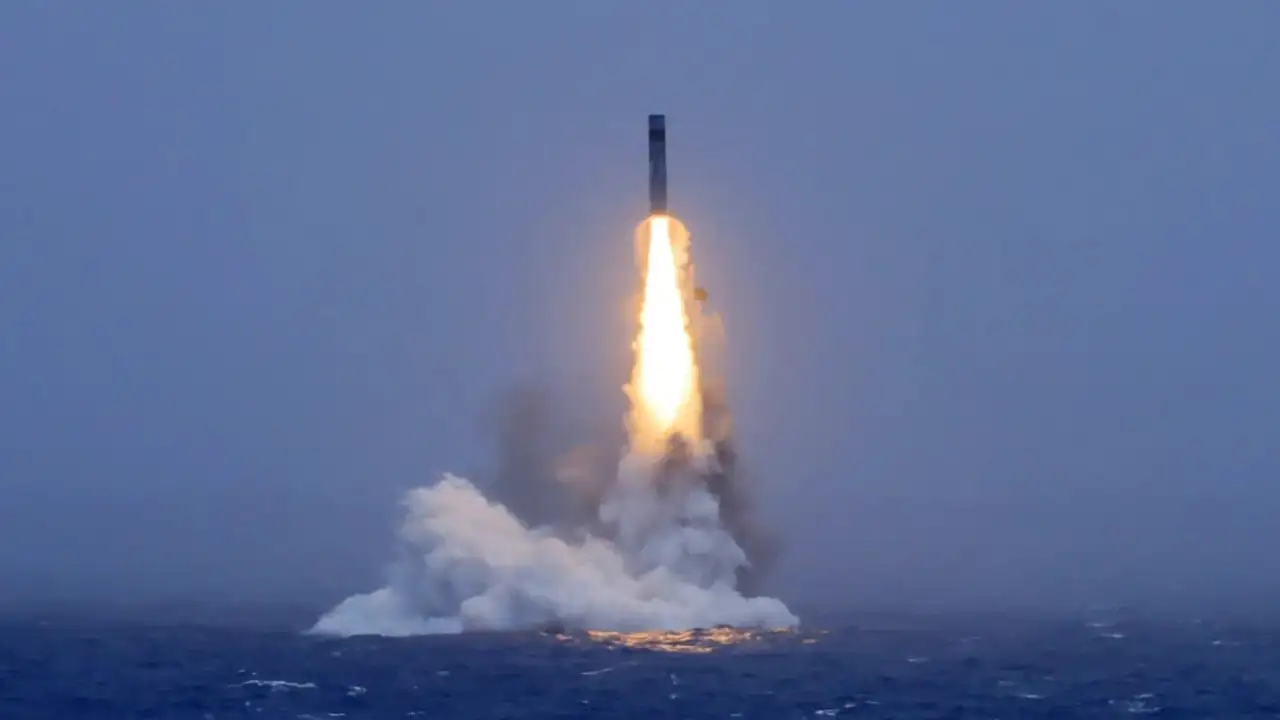
    SUVA: A Chinese ballistic-missile test in the Pacific has exposed a growing dilemma for the region’s small island nations: how can they preserve their vision of an “Ocean of Peace” while increasingly finding themselves caught between the military ambitions of major powers? China’s July missile launch, its first known ballistic-missile test into the Pacific since September 2024, has intensified concerns about the region’s rapid militarisation. The test came just hours after Fiji signed a major defence agreement with Australia, its first-ever military alliance. The timing highlighted the competing security interests shaping the Pacific, where the United States and China are increasingly contesting influence. Yet despite widespread concern among Pacific leaders, the region failed to agree on a joint statement condemning the Chinese missile test during a meeting of foreign ministers in Suva last week. Papua New Guinea Foreign Minister Justin Tkatchenko described the launch as “totally inappropriate”, saying that while China remained a close friend and partner of Papua New Guinea, the missile test was not helpful. Beijing had informed Papua New Guinea about the launch beforehand, Tkatchenko said, but did not provide details about where the missile would land. China defended the exercise at the time. Foreign Ministry spokesperson Mao Ning said the test had been conducted safely and urged other countries not to “over-interpret” the event. Pacific caught between major powers The missile launch was the latest in a series of military developments that have transformed the Pacific into an increasingly contested strategic space. Chinese naval deployments and live-fire exercises, including drills in the Tasman Sea, have become more visible. At the same time, US allies have expanded military exercises around Guam and Hawaii, while Washington maintains major military facilities and forces across Hawaii, Guam and the Marshall Islands. For Pacific island governments, the growing military activity creates an uncomfortable contradiction. Many have repeatedly insisted that their region should not become another battleground for global power competition. In September 2025, Pacific leaders endorsed the Ocean of Peace Declaration, pledging to protect the region and strengthen international peace and security. The initiative was intended to put Pacific countries themselves at the centre of discussions about their security rather than allowing outside powers to define the region’s strategic priorities. David Peebles of the Australian National University’s Pacific Security College said Pacific nations had historically resisted security agendas imposed by larger countries. But the growing number of defence agreements is now testing that principle. Defence deals bring benefits — and fears For some Pacific governments, security partnerships offer practical advantages. They can provide surveillance against illegal fishing, disaster-response capabilities, policing assistance, military equipment and training. Australia’s new defence agreement with Fiji, known as the Ocean of Peace Alliance, reflects that approach. But critics fear that a growing network of bilateral security arrangements could gradually draw Pacific nations deeper into the strategic competition between China and the United States. Tuvalu’s permanent foreign secretary, Pasuna Tuaga, speaking in a personal capacity, expressed concern over increasing militarisation, including security arrangements such as the AUKUS partnership between Australia, Britain and the United States. The concern is not simply about military exercises or missiles. Pacific governments also worry that agreements could eventually influence how their territory, waters and critical infrastructure are used. Solomon Islands Foreign Minister Rick Houenipwela, who chaired the Suva talks, stressed that the region’s security agenda must remain “conceived by the Pacific, shaped by the Pacific”. Yet achieving that unity is becoming increasingly difficult. China divides Pacific consensus The failure to produce a common statement on China’s missile test revealed just how sharply interests differ among Pacific nations. Officials familiar with the discussions said Kiribati and Nauru did not support the wording of a proposed statement. Both countries have strengthened relations with Beijing after switching diplomatic recognition away from Taiwan. New Zealand Foreign Minister Winston Peters attributed the failure to reach consensus to foreign influence, although he did not identify any country. The disagreement reflects a broader challenge. Some Pacific governments, particularly those closer to longstanding US military facilities, favour stronger security ties with Washington and its allies. Others remain cautious about becoming involved in military competition between major powers and maintain close economic or diplomatic relations with Beijing. Fiji faces a difficult balancing act Fiji is now at the centre of this debate. The country signed its defence agreement with Australia and participated for the first time in the US-led RIMPAC military exercises last month. At the same time, Fiji has publicly supported the vision of a peaceful Pacific free from major-power confrontation. Foreign Minister Sakiasi Ditoka acknowledged the tension, saying Pacific nations wanted to be free from “all these war-making paraphernalia” while recognising that some security capabilities were necessary to protect them. For Pacific leaders, the challenge is increasingly about finding the right balance. The region does not want to choose sides in a rivalry between Washington and Beijing. But as military exercises expand, defence agreements multiply and missiles are tested in Pacific waters, remaining completely outside that rivalry is becoming harder. The issue is expected to return to the spotlight when Pacific leaders gather in Palau in three weeks for the Pacific Islands Forum summit. The missile test may have lasted only moments, but its political impact could linger far longer — forcing Pacific nations to confront whether their dream of an “Ocean of Peace” can survive amid an increasingly militarised region.

  • | |

    Report details Trump’s covert aircraft switc…

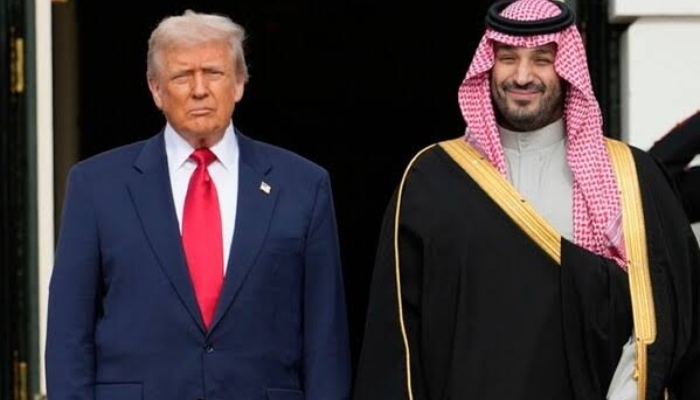
    President Donald Trump quietly switched planes while departing a NATO summit in Turkey last month as part of an elaborate security maneuver designed to counter a possible Iranian threat, according to a US media report. The report said Trump boarded Air Force One in full public view before being discreetly transferred to a separate military aircraft with the help of a catering truck used to shield the movement from onlookers. Journalists and some White House staff traveling with the delegation reportedly had no idea at the time that Trump had already been moved off the plane. Officials said security teams had identified a credible Iranian threat involving a possible missile strike against the aircraft. During the Ankara summit, Trump had described Iran as the country’s top target. According to the report, Trump had traveled to Turkey aboard a newer Boeing 747-8 previously donated by Qatar, but chose to depart on the older Air Force One instead, saying at the time it was “for old time’s sake.” Footage released on July 9 showed Trump boarding the presidential aircraft at Ankara airport before being secretly transferred to a smaller C-32A military jet, a modified Boeing 757 typically used to transport the vice president. Defense Secretary Pete Hegseth reportedly boarded the C-32A through a separate exterior entrance as part of the effort to keep the flight’s appearance routine. Journalists and staff who boarded Air Force One were told to lower their window shades during the departure. While in the air, Trump spoke with reporters on board and acknowledged concerns about threats from Iran, though he made no mention of the earlier switch between aircraft. Explaining why passengers had been asked to keep their windows lowered during the flight from Turkey, Trump said the flight carried added risk “because of the sleazebags we have to deal with.” A previous report had already raised questions about security risks tied to the Qatari donated jet, noting that the Secret Service had urged Trump to change planes during his return from the NATO summit. The United States has spent months upgrading the $400 million Boeing 747-8 to bring it up to presidential standards, while older Air Force One aircraft carry laser based countermeasures designed to disrupt the guidance systems of incoming missiles.

  • | |

    China leans on AI forecasting tools as Typhoon Dol…

    China has ramped up investment in artificial intelligence powered weather forecasting as the country works to track a rising number of natural disasters and predict extreme weather events such as powerful typhoons, intense rainfall and prolonged heatwaves tied to climate change. The country has positioned itself as a leading force in data driven meteorology, increasingly running AI systems alongside traditional forecasting methods rather than replacing them outright. As meteorologists monitored Typhoon Dolphin’s approach toward China in recent days, a newer generation of AI weather models operated in parallel with conventional forecasting systems, underscoring China’s expanding role in the broader push to improve storm prediction. Unlike standard numerical weather models, which depend on powerful supercomputers to simulate the physics of the atmosphere, AI based systems instead learn from decades of historical weather data. That approach lets them generate forecasts within seconds or minutes while using only a small fraction of the computing power traditional methods require. According to a state affiliated newspaper, some of China’s most prominent AI forecasting tools include Fengwu, built by the Shanghai AI Laboratory, Huawei’s Pangu Weather system, and Fuxi, developed at Fudan University. These models are increasingly being put through real world testing during East Asia’s intense typhoon season, a period when even modest improvements in tracking a storm’s path can help authorities plan flood responses, coordinate evacuations and manage disruptions to transportation networks. Fengwu in particular has shown strong results in predicting storm trajectories, with researchers noting that AI based systems can produce forecasts far faster than conventional models while matching or, in some cases, surpassing them on certain accuracy measures. The rapid progress in AI driven weather forecasting has sparked growing competition among technology firms, research institutions and national meteorological agencies worldwide, with China establishing itself as one of the sector’s most active players. Even so, meteorologists caution that AI tools currently serve as a complement to physics based forecasting rather than a full replacement. These systems still struggle to accurately capture sudden shifts in storm intensity, and they remain largely untested when it comes to long term climate modeling. As a result, traditional forecasting methods are expected to remain a core part of weather prediction for the foreseeable future, even as AI tools continue to mature and take on a larger role alongside them. The push toward AI assisted forecasting fits into a broader global trend, as governments and research institutions increasingly explore machine learning as a tool for anticipating the growing frequency and intensity of extreme weather linked to a changing climate.

  • | | | |

    Israeli raids, settlement plans deepen West Bank t…

    RAMALLAH: Tensions across the occupied West Bank intensified on Monday as Israeli forces reportedly destroyed water pipelines, detained Palestinians and ordered families to leave their homes ahead of a planned demolition. While a new settlement plan near Jerusalem raised fresh concerns over the expansion of Israeli settlements. The latest developments have added to growing pressure on Palestinian communities already facing restrictions on movement, damage to agricultural land and disruptions to basic services. Palestinian human rights activist Aref Daraghmeh said Israeli forces destroyed water pipelines in the Atouf and Ras al-Ahmar areas of Tubas governorate. The areas, located in the northern Jordan Valley, have experienced repeated military operations in recent months. According to Daraghmeh, agricultural land has been cleared, water networks damaged and artesian wells filled in, causing significant losses for farmers who depend on the land and water supplies for their livelihoods. The destruction of water infrastructure has particular significance in the Jordan Valley, where Palestinian farming communities rely heavily on limited water resources. Brothers detained during raid In another operation in the northern Jordan Valley, Israeli forces detained two Palestinian brothers in the Ein al-Hilweh area, according to local sources cited by Anadolu. Meanwhile, Israeli troops raided the village of Tell, southwest of Nablus, and ordered residents to leave several homes ahead of the planned demolition of a house belonging to Palestinian Farouq Ramadan. Ramadan was killed on July 24 during an attack in the village, according to Palestinian sources. They said he had disarmed and killed one of the attackers before being shot dead. Three other members of his family were also killed and four Palestinians were injured during the incident, the sources said. Near Ramallah, agricultural land east of Jaljaliya village was also set on fire, Palestinian official news agency Wafa reported. Palestinian civil defence crews later brought the blaze under control. Village council head Osama Nazmi said an Israeli outpost had been established in the area about a year ago and that Palestinian homes belonging to residents from nearby Al-Mazraa Al-Sharqiya had subsequently been seized. New settlement plan raises alarm At the same time, Palestinian officials said Israel had advanced plans for a new settlement containing approximately 650 housing units south of Jerusalem. The Palestinian Jerusalem Governorate said Israel’s District Planning and Building Committee had deposited the plan for the proposed “Nofei Rachel” settlement. The project would cover approximately 27 dunams, or 6.7 acres, near Palestinian homes, according to the governorate. Palestinian authorities warned that the consequences would extend beyond the construction of the housing units, arguing that the development could affect Palestinian movement, urban growth and the ability of local communities to expand. They described the plan as part of a broader Israeli policy of expanding settlements and restricting Palestinian development. Israeli rights organisation Ir Amim separately said Israel had advanced three major settlement projects involving more than 3,400 housing units in East Jerusalem in recent weeks. The developments have renewed international concerns about settlement expansion. The United Nations and most countries regard Israeli settlements established in territory occupied since 1967 as illegal under international law. Critics say continued settlement construction threatens the possibility of establishing a viable Palestinian state alongside Israel. West Bank caught in wider conflict The latest events come as the Israeli-Palestinian conflict continues to reverberate across the region. According to figures cited by Palestinian authorities, violence in the West Bank has intensified alongside the wider war that began after the October 2023 Hamas attack on Israel. The situation has also drawn attention to the issue of Palestinian remains held by Israel. Report: Israel holds 1,700 Palestinian bodies Israel is holding the remains of around 1,700 Palestinians for possible use in future exchanges, Israeli newspaper Haaretz reported, citing two unnamed sources familiar with recent discussions within Israel’s security establishment. According to the report, Shin Bet chief David Zini supports retaining the bodies in case Israeli citizens are captured or disappear in the future. The Israeli military is also reportedly supportive of the position. Haaretz reported that most of the remains are believed to belong to Palestinians from Gaza who participated in the October 7, 2023 attack on Israel or subsequent fighting. However, the newspaper also reported that some of the bodies belong to Palestinians who were not involved in combat. The issue has raised legal questions inside Israel. Legal experts cited by Haaretz questioned whether authorities have the power to retain the remains of Palestinians who have not been proven to have taken part in fighting. The Palestinian National Campaign for the Retrieval of Martyrs’ Bodies and Disclosure of the Fate of the Missing said in October 2025 that Israel was holding around 1,500 bodies of Palestinians from Gaza at the Sde Teiman military facility in southern Israel. A crisis extending beyond borders The developments in the West Bank are unfolding against the backdrop of the devastating Gaza conflict. Palestinian health authorities say tens of thousands of Palestinians have been killed and injured since October 2023, while much of Gaza’s infrastructure has been destroyed or severely damaged. The reported destruction of water pipelines in the West Bank, the proposed settlement expansion and the continued disputes over Palestinian remains highlight how the conflict affects not only major political centres but also ordinary families, farmers and communities. For Palestinians living in areas such as Tubas, Nablus and the outskirts of Jerusalem, the immediate concerns are often deeply personal: access to water, the safety of their homes, the ability to farm their land and the uncertainty of what another military raid may bring. As settlement plans move forward and military operations continue, hopes for a reduction in tensions remain overshadowed by developments that are reshaping the landscape of the occupied West Bank.

  • | |

    Colombia’s death toll from earthquake climbs…

    Rescue crews continue combing through collapsed buildings across western Colombia after a powerful magnitude 7.4 earthquake struck the region on Monday, August 10, with officials confirming the death toll has risen to at least 164 people. Authorities said more than 880 people have sustained injuries, while over 3,200 remain unaccounted for as soldiers, emergency responders and local volunteers work through debris from dozens of collapsed structures. Thousands of residents have been forced from their homes since the quake struck, adding to the scale of the humanitarian response now underway. The earthquake flattened multi story buildings in cities including Pereira and Cali, and severely damaged one of the towers of a historic cathedral in Manizales. The tremor originated at an intermediate depth with its epicenter located near San José del Palmar in the western department of Chocó, causing widespread destruction across Pereira, Cali, Manizales and other communities in Colombia’s coffee growing region. Residential buildings, hospitals, schools and key infrastructure, including several regional airports, all suffered severe damage in the quake. At one city hospital, several upper floors, including sections dedicated to pediatric care, collapsed inward, trapping some patients inside and forcing hospital staff to treat roughly 600 additional patients outdoors on a street littered with debris, according to hospital director Irne Torres Castro, who spoke to a Colombian television network. That same city saw some of the earthquake’s most extensive destruction, with entire residential blocks reduced to piles of concrete and twisted metal. Video circulating online captured buildings shaking violently as residents fled into the streets, while separate footage showed a regional airport swaying dramatically during the quake as large sections of ceiling came down around people sheltering inside. Among the most widely shared images online is footage showing the Cathedral Basilica of Our Lady of the Rosary shaking and partially collapsing. The cathedral, built in the 1920s, holds the distinction of being Colombia’s tallest cathedral and ranks among the highest neo Gothic churches anywhere in the Americas. The disaster struck just days after Abelardo De La Espriella was sworn in as Colombia’s president, immediately confronting his new administration with a major crisis. The earthquake also comes with memories still fresh of a pair of devastating earthquakes that struck neighboring Venezuela in June. Colombia’s national government has declared a state of emergency and mobilized the military, police and specialized rescue units to lead recovery operations, while accepting offers of international assistance as the search for survivors continues. The disaster adds to a string of major seismic events across the region in recent months, underscoring the ongoing vulnerability of Andean nations to powerful earthquakes and the strain such disasters place on emergency infrastructure even in areas with established disaster response systems.

  • |

    Trump media loss widens to $238m as new revenue pu…

    NEW YORK: Trump Media & Technology Group, the company behind US President Donald Trump’s Truth Social platform, reported a sharply wider quarterly loss as falling cryptocurrency values weighed heavily on its finances. The company said its net loss for the second quarter reached $238.1 million, compared with a loss of about $20 million during the same period a year earlier. The steep increase was largely linked to unrealised losses on digital assets held by the company, highlighting the financial risks of its growing exposure to cryptocurrencies. The results come at a time when digital assets faced renewed pressure from investors. During the April-to-June quarter, uncertainty over US interest rates, geopolitical tensions and continued outflows from crypto investment products pushed many investors away from riskier assets. Despite the large loss, Trump Media reported an increase in revenue. Revenue for the quarter ended in June rose to $1.7 million, compared with $900,000 during the same period last year. The company is now attempting to build new sources of income beyond advertising and social media. Truth API enters the market One of its most closely watched projects is Truth API, a licensed data feed launched on August 1. The service is designed to provide banks, trading firms and other financial institutions with rapid access to posts from influential Truth Social accounts. Trump’s posts frequently attract significant attention from investors and can influence financial markets, making access to the data potentially valuable for trading and financial analysis. Trump Media has reportedly discussed charging customers as much as $100,000 per month for the service. The company said it had already signed more than 10 customer agreements for Truth API and was continuing to add partners. “Our new Truth API product is already generating revenue, with more than ten customer agreements signed to date,” interim Chief Executive Kevin McGurn said in a statement. The early agreements offer the company a potentially important new revenue stream as it seeks to reduce its dependence on Truth Social. Bigger ambitions beyond social media Trump Media is also pursuing an ambitious expansion into other industries. McGurn said the company was making progress toward its proposed merger with TAE Technologies, a fusion-energy developer. The planned deal reflects a broader strategy to position Trump Media around emerging technologies and businesses expected to benefit from growing demand for electricity. Fusion energy has attracted increased attention as artificial intelligence data centres consume increasing amounts of power, creating pressure for new energy sources. The company’s expansion adds another unusual chapter to Trump Media’s corporate strategy, which already stretches from social media and cryptocurrency into financial technology and other ventures. Investors watching closely The latest results underline the challenge facing Trump Media as it attempts to turn its high-profile brand into a sustainable business. Truth Social has significant visibility because of Trump’s political influence and his large following on the platform. However, the company’s relatively modest quarterly revenue compared with its substantial loss highlights the difficulty of converting that attention into consistent earnings. The launch of Truth API could provide a new path if financial institutions continue signing up for the service. At the same time, the company’s exposure to cryptocurrency means its financial results could remain sensitive to swings in digital-asset prices. For investors, the latest figures present a mixed picture: Trump Media is expanding its business ambitions and adding new customers, but its losses remain substantial and its strategy carries considerable financial risk.

  • | | |

    Three Pakistanis killed in Houthi attack on vessel

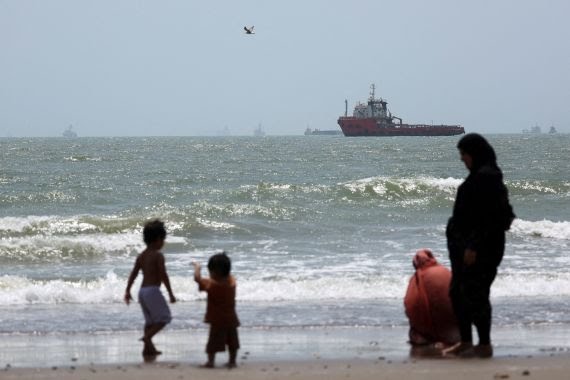
    Three Pakistani sailors were among four crew members killed after a commercial vessel came under attack in the Bab al-Mandeb Strait on Tuesday, according to Yemen’s Ministry of Transportation. The Yemeni-flagged vessel, identified as Tihamah, was carrying food supplies when it was reportedly struck by three ballistic missiles while sailing through the strategically important waterway. The attack set the vessel on fire and caused significant damage, the ministry said. Four other crew members were wounded, while a member of the rescue team also sustained injuries. The ministry said another missile was fired at the vessel while rescue teams were trying to reach the crew. It accused the attackers of attempting to disrupt the rescue operation and increase the number of casualties. The ministry condemned the incident and described the attack as a serious threat to maritime security and international trade. It also warned that attacks on commercial vessels carrying essential goods could affect food and consumer supplies in Yemen. There was no immediate statement from the Houthis regarding the reported attack. According to maritime security sources, the crew lost control of the vessel after the attack. Yemeni coastguard personnel moved towards the ship, but the responding forces reportedly came under fire. The incident occurred near Perim Island, a strategically important location close to the Bab al-Mandeb Strait. A British maritime security organisation said the vessel was reportedly at anchor northeast of the island when it was struck. The ship was reportedly carrying food supplies and had departed from the government-controlled Yemeni port of Al-Mokha on Saturday. Maritime data indicates that shipping activity through the Bab al-Mandeb and Red Sea has fallen sharply amid continuing security concerns. Traffic through the strategic waterway has declined by more than half compared with levels recorded before an earlier wave of Houthi attacks on commercial shipping. The latest restrictions have further reduced shipping activity in the region. Industry data showed that an average of about 32 vessels passed through the strait each day last week, compared with around 50 before the latest blockade was announced. The Bab al-Mandeb connects the Red Sea with the Gulf of Aden and serves as a major international shipping route. Any prolonged disruption could affect the movement of food, fuel and other essential goods between Asia, the Middle East and Europe. The incident also adds to concerns over the safety of Pakistani nationals amid the widening regional conflict.

  • | | |

    Trump claims US controls Iran’s finances 

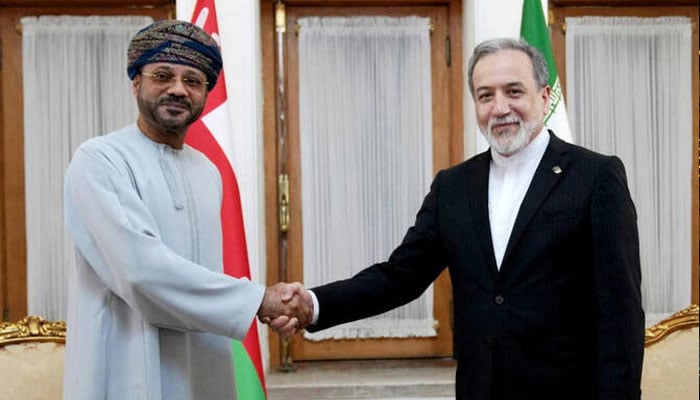
    WASHINGTON: US President Donald Trump has claimed that Washington has control over Iran’s financial resources as the conflict between the United States and Iran continues. In an interview, Trump said the US was effectively acting as a banker for Iran. He claimed Washington had control over a large amount of Iranian money. Trump also described Iran’s economic situation as extremely difficult. He alleged that the country was facing very high inflation and that its currency had lost much of its value. The US president further claimed that Iran was struggling to pay its soldiers and suggested that the economic pressure could become increasingly difficult for Tehran to sustain. Trump outlined several possible approaches toward Iran. He said Washington could maintain the current economic pressure, launch further military action or rely more heavily on financial measures. He said his main objective in the conflict was to prevent Iran from acquiring a nuclear weapon. Trump also claimed that US military action had stopped Tehran from obtaining such a capability. Qatar urges reopening of Strait of Hormuz Meanwhile, Qatar said talks between Iran and Oman on arrangements for reopening the Strait of Hormuz had reached an advanced stage. Qatari Foreign Ministry spokesman Majed Al-Ansari said the negotiations had reached a critical point. He expressed hope that the strategically important waterway would reopen as soon as possible. Qatar said it supports diplomatic efforts aimed at reducing tensions and resolving the dispute. Iran and Oman have been discussing legal and technical arrangements for the resumption of maritime traffic through the strait. Shipping activity in the area has been disrupted following the military confrontation between Iran and the United States. Tehran has linked the reopening of the waterway to the resolution of disputes surrounding what it describes as US violations of a June memorandum of understanding. Araghchi says US sought negotiations Iranian Foreign Minister Abbas Araghchi has claimed that Washington eventually sought negotiations with Tehran after initially demanding Iran’s unconditional surrender. Speaking during a televised press conference, Araghchi said the US had initially taken a hard-line position but later sought talks. He claimed that the change demonstrated Iran’s ability to withstand military and political pressure. Araghchi also said Iran had surprised countries around the world by resisting the United States. The Iranian foreign minister said Washington had support from Israel and several Western countries during the conflict. He also discussed the situation with German Foreign Minister Johann Wadephul during a telephone conversation. According to Iranian state media, Araghchi told his German counterpart that the insecurity in the Strait of Hormuz was the result of US and Israeli military actions against Iran. He briefed Wadephul on Iran’s discussions with Oman regarding the creation of a safe route for maritime traffic through the strategic waterway. The two officials also discussed bilateral relations and wider regional and international developments. Araghchi called on the international community to hold Washington accountable for what he described as the security and economic consequences of the disruption in the Strait of Hormuz. He maintained that lasting security in the waterway would require an end to what Tehran considers US military aggression, maritime restrictions and violations of previous commitments.

  • |

    Trump appoints Will Scharf as new White House counsel

    US President Donald Trump has named Will Scharf as the incoming White House counsel and assistant to the president, succeeding David Warrington on September 1, 2026. Warrington, who previously served as general counsel for Trump’s campaign and managed initial administration legal affairs, will be departing for the private sector. Scharf currently serves as the White House staff secretary, a role where he manages the daily flow of papers and documents reaching the president’s desk. In addition to these duties, he chairs the National Capital Planning Commission, where he helped fast-track approvals for a controversial $400 million White House ballroom project. A former federal prosecutor and appellate law clerk, Scharf joined Trump’s personal legal team in 2023. He played a central role in defending Trump across several high-profile legal battles, including the federal election interference case and the landmark presidential immunity ruling before the US Supreme Court. In his new post, Scharf will lead the administration’s legal strategy. His responsibilities will include overseeing executive privilege, managing judicial nominations, liaising with the Department of Justice, and preparing for potential congressional inquiries ahead of the upcoming midterm elections.