देश-विदेश

  • | | |

    Trump says US controls Strait of Hormuz

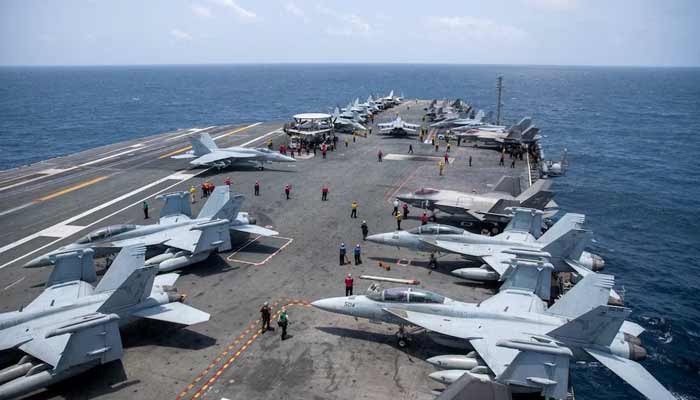
    US President Donald Trump has claimed that the United States is now controlling the Strait of Hormuz. Trump said the US Navy had cleared the entire waterway of naval mines. He made the remarks while speaking to reporters at the Oval Office. The Strait of Hormuz is a major international shipping route. It is also an important passage for global energy supplies. Any disruption in the area can affect international trade and energy markets. Trump was asked about the next steps following recent talks with Iran. However, he declined to provide details about what the United States would do next. The US president also indicated that Washington could increase pressure on Iran. He did not give specific details about what further action could be taken. Trump has also announced plans to seek compensation from Iran. The demand is linked to Americans who were killed or injured in various conflicts involving Iran. He had earlier said that Iran should provide compensation to the families of those killed aboard the US Navy destroyer USS Cole. Trump said his administration was seeking compensation for people who had been killed or wounded in different conflicts. He argued that Iran should be held responsible for the losses. According to Trump, Iran had not previously demanded compensation during earlier negotiations or discussions at different levels. He said Tehran had now unexpectedly raised such a demand. Trump said his decision to seek compensation from Iran would be made in response to the Iranian demand. The latest statements come as tensions between Washington and Tehran remain high. Trump has continued to signal that the United States is prepared to take further action if necessary. However, he did not reveal whether the US would pursue additional military or diplomatic measures.

  • |

    Turkish parliament passes landmark law to advance PKK peace process

    Turkey’s parliament passed a law on Monday establishing a legal framework for the disbandment of the outlawed Kurdistan Workers’ Party (PKK), marking a major step toward ending a decades-old conflict that has killed tens of thousands. The legislation provides legal protections for many former militants who have not committed specific crimes and facilitates the suspension of prison sentences for some people convicted of PKK membership, paving the way for their reintegration into society. The law was approved by a 468-vote majority in the 600-seat parliament after securing support from President Tayyip Erdogan’s ruling AK Party, its nationalist MHP allies, and the pro-Kurdish DEM Party. This measure represents the most concrete step taken by Ankara in the peace process since jailed PKK leader Abdullah Ocalan called on the group in February 2025 to disarm and disband. Following Ocalan’s call, the PKK announced in May 2025 that it would end its armed struggle, leading to a symbolic ceremony in northern Iraq two months later where a group of militants burned their weapons. The PKK launched its insurgency in 1984, leading to a conflict that has killed over 40,000 people, placed a heavy economic burden on southeast Turkey, and fuelled decades of political and social division. This new legislation specifically addresses the long-standing question of how to manage thousands of PKK members as the organisation dismantles its military and organizational structures. The current public peace initiative began in October 2024 when MHP leader Devlet Bahceli unexpectedly suggested that Ocalan could address parliament to announce the PKK’s dissolution. A parliamentary commission established in August 2025 subsequently heard testimony from politicians, officials, and civil society groups before recommending legislation to oversee disarmament and reintegration. While the law addresses reintegration, it does not by itself resolve broader Kurdish demands regarding expanded political and cultural rights, anti-terrorism amendments, or the detention status of Ocalan. The Turkish government frames the initiative as a pathway toward creating a “terror-free Turkey,” whereas Kurdish politicians emphasize that achieving lasting peace requires broader democratic and legal reforms.

  • |

    Trump cuts childhood vaccine recommendations as doctors warn of health risks

    US President Donald Trump signed an executive order on Monday calling for fewer childhood vaccinations, limiting core federal guidance to immunisations against 11 diseases. Trump stated the adjustments would offer children “gold-standard” protection while bringing US policies in line with foreign nations that recommend fewer routine shots. The executive directive advises breaking up the combined measles, mumps, and rubella (MMR) vaccine into three distinct doses administered across separate clinical visits. Health Secretary Robert F. Kennedy Jr. has long advocated for reductions in the pediatric vaccine schedule. Medical researchers and global health bodies have repeatedly debunked claims championed by Kennedy alleging a causal link between routine childhood vaccines and autism. The American Academy of Pediatrics and pharmaceutical manufacturer Merck sharply criticised the executive action. “We are evaluating our next steps,” stated Richard Hughes IV, lead legal counsel for the American Academy of Pediatrics. Merck noted there is no published scientific evidence demonstrating clinical advantages to unbundling the MMR vaccine, warning the mandate could induce delayed or skipped immunisations. Republican Senator Bill Cassidy, a practicing physician, publicly broke with the administration over the decree. “I’m a doctor. This executive order is wrong. The president does not have the expertise to make these changes,” Cassidy said. Cassidy cautioned that unbundling combination shots will force children to endure a higher volume of individual injections to secure identical protection.

  • |

    Houthis strike Saudi Aramco refinery following historic defence pact with Pakistan and Turkey

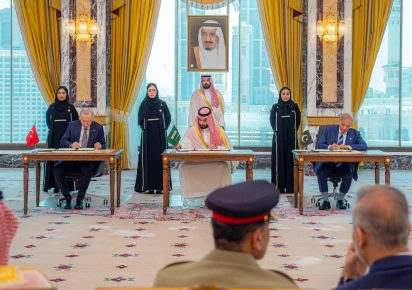
    Yemen’s Iran-aligned Houthis launched a drone strike against Saudi Aramco’s Jazan refinery, just two days after Saudi Arabia signed a tripartite defence pact with Turkey and Pakistan to bolster regional deterrence. The Saudi Energy Ministry confirmed that emergency crews extinguished a fire resulting from the drone strike at the 400,000-barrel-per-day facility, reporting no casualties or disruptions to operations. The Houthis also executed combined missile and drone strikes against the Yemeni Red Sea port city of Mocha, killing seven people and damaging critical maritime infrastructure near the Bab-el-Mandeb strait. The newly forged Saudi alliance with Pakistan and Turkey specifies that an armed aggression against one signatory constitutes an attack on all, though member states have not yet detailed any operational military response. Houthi military spokesperson Yahya Saree stated that the Red Sea strikes targeted Saudi military assets and ammunition stores, framing the operations as part of an ongoing naval blockade against the kingdom. The escalating attacks in the Red Sea further complicate global energy transport, depriving Saudi Arabia of key alternative routes while regional access through the Strait of Hormuz remains constrained.

  • |

    Poland and Baltic states shield critical infrastructure against potential Russian false-flag drone attacks

    Poland, Lithuania, Latvia, and Estonia have tightened security around vital energy and national infrastructure, acting on intelligence warnings that Moscow may stage false-flag attacks using Ukrainian-made drones to provoke a political crisis within NATO. Lithuania deployed troops alongside riot police to protect its floating liquefied natural gas terminal at Klaipėda, an oil products terminal, a key power link with Poland, and the Kruonis hydro plant. Latvia reinforced security around the Daugava River dam near Riga and the Incukalns underground gas storage facility. In Poland, state-owned energy developers launched an investigation alongside security services after forged documents surfaced targeting the construction site of the country’s first nuclear power plant, a move traced to sources east of Poland. Military personnel also stepped up security around power grid interconnectors running to Ukraine. Baltic intelligence assessments indicate Russian military and domestic security agencies may execute a staged attack inside Russia or across the border using captured or forged Ukrainian drones. Regional officials warn that Moscow’s primary objective is to trigger political paralysis in Brussels by forcing NATO members into a divisive debate over how to respond. Kremlin spokesperson Dmitry Peskov dismissed the reports, calling warnings of Russian sabotage scare stories used to justify NATO militarisation. The surge in defensive measures follows a series of unexplained drone incidents across Europe, including an explosive-laden drone recently discovered at Leipzig/Halle Airport in Germany. With Russian forces facing continued pressure in Ukraine, intelligence analysts suggest Moscow may be attempting to destabilise European infrastructure to test the alliance’s political resolve.

  • |

    US official insists Gaza peace plan remains active despite Netanyahu’s rejection

    A Board of Peace official confirmed on Monday that US President Donald Trump’s Gaza peace framework remains operative, despite public pushback from Israeli Prime Minister Benjamin Netanyahu. Netanyahu rejected any withdrawal of Israeli forces until the Palestinian militant group Hamas is genuinely disarmed. His remarks came as the Israeli military  halted offensive operations in Gaza following pressure from Washington. The Board of Peace official emphasized that the initiative relies on phased implementation and verification on the ground, ensuring Israel makes no irreversible security concessions prior to confirmed compliance. Under the plan announced last month, Israeli forces would withdraw as Hamas disarms, paving the way for an International Stabilisation Force to partner with a newly formed Palestinian police unit. Negotiation roadmaps are being coordinated between the Board of Peace and Hamas while bilateral discussions with Israeli leadership continue.

  • |

    Iran appoints former IRGC commander Mohsen Rezaei as national security chief

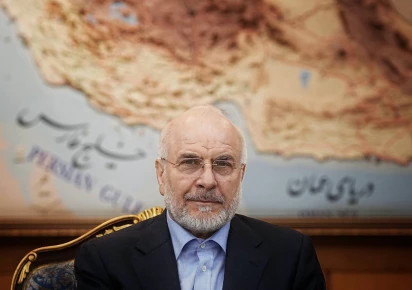
    Iran has appointed former Islamic Revolutionary Guard Corps (IRGC) commander Mohsen Rezaei as secretary of the Supreme National Security Council (SNSC), placing a prominent hardliner at the center of the country’s defense and foreign policy establishment. Rezaei replaces Mohammad Baqer Zolqadr, who held the post briefly following the death of previous secretary Ali Larijani during an air strike in the ongoing conflict with the US and Israel. Supreme Leader Mojtaba Khamenei issued a decree appointing Rezaei as his direct representative on the council alongside Saeed Jalili, citing Rezaei’s extensive military experience during the Iran-Iraq War. The leadership shuffle comes as Iran negotiates conditional proposals to reopen shipping lanes through the Strait of Hormuz amid ongoing military and diplomatic friction. Rezaei, 71, commanded the IRGC from 1981 to 1997 and later served as secretary of the Expediency Discernment Council and vice president for economic affairs under President Ebrahim Raisi. Zolqadr, whom officials shifted to a political advisory role under the Supreme Leader, had previously outlined strict preconditions for diplomatic progress, including an immediate end to US military threats and an easing of economic sanctions.

  • |

    Ukrainian drone strike on Nizhnekamsk oil refinery kills 13 and injures dozens

    A devastating Ukrainian drone attack on the industrial city of Nizhnekamsk in Russia’s Tatarstan region has killed at least 13 people, including a child and several foreign nationals, and left dozens injured. The strike targeted Tatneft’s TANECO oil refinery, located approximately 1,200 kilometres east of the Ukrainian border, marking one of the heaviest civilian death tolls inside Russian territory in months. Footage verified on social media showed thick plumes of smoke rising over the refinery complex, which processed 17 million metric tonnes of crude oil in 2024. Ukrainian military officials confirmed targeting the facility as part of an ongoing strategy to dismantle key Russian fuel infrastructure and reduce the Kremlin’s economic capability to sustain its war effort. Russian authorities launched a formal criminal investigation into the incident, qualifying the strike as a terrorist attack. Officials stated that residential structures were hit in addition to industrial sites, with nine of the fatal casualties occurring inside a local worker hostel. Diplomatic officials confirmed that the dead included seven citizens of Uzbekistan and one national from Tajikistan. The attack reflects Kyiv’s intensified campaign of long-range strikes targeting major fuel and energy hubs deep within Russia, which has created localized supply disruptions across several Russian regions. Local authorities in Tatarstan have declared an official period of mourning following the incident.

  • |

    Powerful 7.4 magnitude earthquake hits western Colombia, killing at least 111

    A powerful 7.4 magnitude earthquake struck western Colombia on Monday, killing at least 111 people and injuring dozens more in what authorities have confirmed is the country’s strongest earthquake of the 21st century. The massive tremor struck at a depth of 107 kilometres, with its epicentre located near Chocó. Despite occurring deep beneath the Earth’s crust, the intense seismic shock waves triggered widespread destruction across densely populated urban valleys throughout western Colombia and the primary coffee-growing regions. In Pereira, a four-story building collapsed into rubble, while video footage from Manizales captured the catastrophic collapse of one of the side towers of the city’s historic neo-Gothic cathedral. Severe building collapses and casualties were also reported in Cali, where local residents formed human chains alongside emergency responders to shovel away fallen concrete and pull survivors from trapped spaces. Thrusting the administration into its first major crisis just days after his inauguration, President Abelardo De La Espriella declared a national state of emergency. In a live television address, De La Espriella announced that all available state and military resources were being deployed to western Colombia, confirming that the national government’s immediate priority remains the location and rescue of victims trapped beneath collapsed structures. Severe regional communications outages initially delayed casualty reporting from rural zones near the epicentre in Chocó, where Governor Nubia Carolina Córdoba confirmed at least 12 fatalities and scores of injuries. Meanwhile, Colombia’s civil aviation authority halted flight operations across key regional airports, including facilities in Pereira, Manizales, Quibdó, Armenia, Cartago, and Buenaventura, while structural engineers assess airfield and terminal safety. The Colombian Geological Service recorded over 20 aftershocks following the initial quake and warned that additional tremors remain likely. Sitting directly along the seismically active Pacific Ring of Fire, western Colombia previously suffered a devastating magnitude 6.2 earthquake in 1999 that claimed more than 1,000 lives across the same region.

  • |

    Deadly 7.4 quake rocks Colombia, 111 killed

    BOGOTA: A powerful 7.4-magnitude earthquake has killed at least 111 people and injured 87 others in western Colombia, leaving communities grappling with widespread destruction and fears that more victims remain trapped beneath collapsed buildings. The earthquake struck on Monday, with its epicentre near San José del Palmar in the Chocó region. The powerful tremor was felt across a wide area and caused buildings to collapse in several locations. Emergency crews have been working through piles of concrete, bricks and debris as they search for survivors. Authorities warned that the death toll could rise as rescue teams reach areas where communication and access remain difficult. The disaster has caused severe damage in cities including Pereira, Cali and Manizales, while infrastructure and public services have also been affected. Rescue workers have been using heavy machinery alongside manual searches to reach people believed to be trapped under the rubble. Colombian authorities have mobilised emergency resources and launched a large-scale response operation. The government has also declared a national disaster as officials assess the full extent of the destruction. The earthquake has left families anxiously waiting for news of relatives who remain missing, while hospitals and emergency services continue treating the injured. As rescue operations continue, authorities are urging residents to remain alert for possible aftershocks and avoid entering damaged structures. With 111 lives already lost, the focus remains firmly on finding survivors and bringing urgent assistance to communities devastated by the powerful quake.