देश-विदेश

  • |

    Norwegian teenager convicted of conspiracy to commit contract murder in the UK for Iran-linked gang

    Following a retrial at the Old Bailey, 19-year-old Norwegian national Johannes Kongsnes Natland has been found guilty of conspiracy to commit murder. Natland had travelled from Stavanger to Huddersfield in March last year after accepting a €25,000 (£21,500) contract to assassinate an unidentified target in the UK. Counter-terrorism officers arrested Natland in a hotel room two days after his arrival, recovering a semi-automatic pistol, a revolver, and ammunition concealed under his bed. The plot was orchestrated by the Foxtrot Network, a Swedish organised crime group linked to the Iranian government, and directed by an unidentified controller using the moniker “Agent 47”. While Natland claimed during the trial that he viewed the plot as a “joke” and intended to shoot himself in the foot to avoid executing the hit, prosecutors presented evidence of text messages and bragging that demonstrated his full awareness of the plan. Natland, who previously pleaded guilty to firearms possession, was remanded in custody by Mrs Justice Cheema-Grubb and is scheduled for sentencing in October.

  • | | | |

    Iraq demands proof over Saudi attack claims

    BAGHDAD: Iraq has rejected allegations that its territory was used to launch attacks against Saudi Arabia and has called for evidence to support the claims. A spokesperson for the Commander-in-Chief of the Iraqi Armed Forces said no country or organisation had presented proof that attacks on Saudi Arabia originated from Iraqi soil. The spokesperson said Iraq remained committed to protecting its sovereignty and preventing its territory from being used to threaten neighbouring countries. He added that the government was implementing measures to strengthen national security and maintain full control over the country’s borders and military activities. The statement came after reports linked Iraq to attacks on Saudi Arabia, increasing tensions in an already volatile region. Following recent US and Saudi military strikes inside Iraq, the Iraqi National Security Council convened an emergency meeting to assess the security situation. During the meeting, the council condemned the attacks and described them as a violation of Iraq’s sovereignty. Officials stressed that all hostile actions carried out on Iraqi territory were unacceptable. The council said the Iraqi government alone has the authority to decide how to respond to any attacks launched from within the country. It warned against any unilateral military action that could further destabilise the region. The office of Iraqi Prime Minister also issued a statement reaffirming Baghdad’s policy of keeping Iraq out of regional conflicts. The statement said the government would continue to pursue diplomatic and legal measures to protect the country’s sovereignty, security and political stability. The latest developments follow joint US and Saudi air strikes targeting locations believed to be used by Iran-backed militias in Iraq. The strikes were reportedly carried out in response to drone attacks on Saudi oil facilities. According to the Popular Mobilisation Forces (PMF), the attacks targeted its headquarters and facilities across seven Iraqi provinces. The group said at least 20 of its personnel were killed, while another 32 were injured in the air strikes. It added that the heaviest attack took place in Nineveh province, where 10 fighters lost their lives. The military action has further raised concerns about growing instability in the region and the possibility of wider confrontation involving regional and international powers.

  • |

    US Senate unanimously approves resolution opposing executive clemency for Ghislaine Maxwell

    The United States Senate has unanimously passed a non-binding resolution expressing formal opposition to any potential presidential pardon or clemency for Ghislaine Maxwell, who is currently serving a twenty-year prison sentence for her role in Jeffrey Epstein’s sex-trafficking operation. Introduced by Democratic Senator Jacky Rosen of Nevada, the measure asserts that granting executive clemency to Maxwell would run contrary to the interests of justice and accountability regarding crimes involving the sexual exploitation and abuse of minors. The vote occurred alongside congressional deliberation over the permanent nomination of Acting Attorney General Todd Blanche, who previously conducted an interview with Maxwell and stated to lawmakers that he would not recommend her for a pardon. The bipartisan action follows Maxwell exhausting her judicial appeals after the US Supreme Court declined to hear her petition last October, and her subsequent refusal to testify before a House oversight committee without a guarantee of immunity or clemency. Survivors and legal advocates have strongly condemned any prospect of executive intervention, maintaining that offering leniency to an individual convicted of facilitating child exploitation undermines the fundamental integrity of the justice system.

  • |

    Central Command announces completion of two-hour retaliatory strike campaign against Iranian military targets

    The United States military has completed a concentrated two-hour campaign of heavy air strikes targeting dozens of Islamic Revolutionary Guard Corps installations across Iran, according to an official statement released by US Central Command. The precision operations focused primarily on disabling strategic military assets, including high-level command centres, missile production and drone manufacturing facilities, coastal radar surveillance outposts, integrated air defence networks, and naval infrastructure. Military officials confirmed that the retaliatory operation was executed following an attempted surprise ballistic missile attack launched by Iranian forces against American military personnel stationed in the region. Central Command stated that US defensive systems successfully intercepted all incoming Iranian missiles, preventing casualties or facility damage. According to defence spokespersons, the targeted strikes were designed to degrade Iran’s offensive capabilities, neutralise recurring threats posed by regional proxy forces, and safeguard commercial shipping corridors and partner nations across the Arabian Gulf.

  • | |

    World Cup conspiracies weaponised as Javier Milei blames foreign leftists for online backlash

    Following Argentina’s defeat by Spain in the World Cup final, President Javier Milei has alleged that a coordinated, foreign-funded anti-Argentina campaign was launched to undermine his nation and its football team. The far-right libertarian president claimed during a radio interview that the US Democratic party, alongside the governments of Mexico and Brazil, financed widespread online hostility, fan racism accusations, and rumours of favorable treatment towards Lionel Messi’s squad. Milei specifically targeted Brazilian President Luiz Inácio Lula da Silva, alleging that Brazil provided the largest share of funding for these attacks, a statement he reiterated while attending a campaign launch for far-right senator Flávio Bolsonaro in São Paulo. The president’s claims come amidst online friction and high-profile international criticism, including an Instagram post by actor Samuel L. Jackson urging fans not to support Argentina due to historical racism in the country. Whilst digital communications researchers acknowledge a genuine surge of transnational hostility online, experts note there is no public evidence supporting Milei’s claims of an organised international funding plot. Instead, political analysts view the narrative as a calculated tactic to stoke culture wars and divert public attention away from domestic corruption scandals, rising unemployment, and the severe impact of his austerity measures, which have pushed the administration’s popularity to its lowest level since taking office.

  • |

    Emergency food distribution begins in Uganda as severe drought leaves 19 dead from hunger

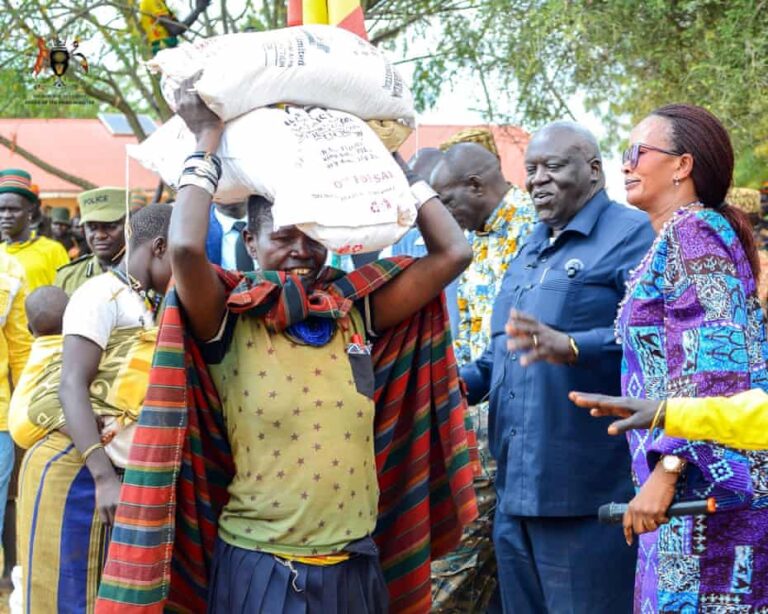
    The Ugandan government has initiated a large-scale emergency relief operation across the eastern Karamoja region following at least nineteen hunger-related deaths caused by prolonged drought and devastating crop failures. With approximately 1.5 million residents confronting acute food shortages and rising rates of malnutrition, parliament approved a emergency funding allocation of forty-five billion Ugandan shillings to procure and distribute over nine thousand tonnes of food aid over the coming two months. Minister for Disaster Preparedness and Refugees Sam Engola personally launched the distribution efforts in Kaabong district, assuring local communities that the state would oversee the delivery to ensure no starving household is left behind. The current environmental crisis marks the most severe dry spell to strike Karamoja in recent years, with the crucial rains failing completely since the start of the planting season in April. Health facilities across the region report a surge in children suffering from severe malnutrition, forcing desperate residents to seek low-paying, grueling work in informal gold-mining operations simply to purchase basic staples like maize and beans. The disaster comes amidst significant international aid reductions, particularly following severe budget cuts from donors such as USAID, which forced organisations like the World Food Programme to scale back assistance to over one million refugees in the country. In response, Ugandan officials and civil rights advocates emphasise that while emergency food distribution provides immediate life-saving relief, the government must prioritise long-term climate resilience, drought-resistant crops, and proper water infrastructure to permanently prevent recurring starvation in the region.

  • |

    Seven killed in Argentina helicopter crash

    Seven emergency personnel were killed after a firefighting helicopter crashed in Argentina’s western San Juan province while responding to a forest fire, authorities said. The Bell 412 helicopter had been deployed for wildfire response operations and was travelling to neighbouring La Rioja province to assist in controlling a major forest fire when the accident occurred. Officials said the aircraft lost contact with its base shortly after take-off on Wednesday morning, prompting an emergency response. San Juan Governor Marcelo Orrego confirmed that all seven people on board lost their lives in the crash. The victims included members of the civil protection department, firefighters and senior police officials who were involved in emergency response operations. The governor expressed deep sorrow over the tragedy and extended condolences to the families of those who died while serving in the line of duty. Emergency teams were dispatched to the crash site, while authorities secured the area and began recovery operations. Officials have launched an investigation to determine what caused the helicopter to crash. No official findings have yet been released. The Bell 412 helicopter was part of the province’s aerial firefighting fleet and was regularly used to support operations against wildfires in the region. The incident has shocked emergency services across Argentina, with tributes pouring in for the personnel who lost their lives during the mission.

  • | |

    Jordan says it intercepted 5 missiles launched fro…

    AMMAN: Jordan’s Armed Forces announced on Thursday that its air defence systems successfully intercepted and destroyed five missiles launched from Iran before they could reach their intended targets within Jordanian airspace. In an official statement, the military said its air defence units detected the incoming missiles during the early hours of Thursday and neutralised them in line with the country’s pre-planned defensive strategy. Authorities confirmed that all five missiles were destroyed mid-air, preventing any casualties or damage to property. A military spokesperson said the armed forces remain on high alert and are fully prepared to safeguard Jordan’s airspace, protect civilians and respond effectively to any threat to the country’s national security. Jordanian officials did not disclose further technical details about the missiles or identify their intended targets. The reported interception comes amid rising tensions across the Middle East, where strained relations between Iran and the United States have heightened regional security concerns. Countries across the region have continued to strengthen their defence readiness in response to the evolving situation. Defence analysts have warned that any further exchange of missile attacks or military retaliation could have wider implications for stability and security throughout the Middle East.

  • | | |

    Oil prices slip despite Gulf tensions as markets f…

    LONDON: Global oil prices edged lower on Thursday as investors shifted their attention from escalating military tensions in the Gulf to the resilience of energy supplies flowing through the region’s critical shipping routes. Brent crude futures fell 96 cents, or 1.06%, to $89.78 per barrel, while US West Texas Intermediate (WTI) crude declined 64 cents, or 0.76%, to $83.82 per barrel. The retreat came just a day after both benchmarks posted sharp gains, reflecting the market’s growing tendency to react briefly to geopolitical developments before refocusing on supply fundamentals. Oil markets had surged on Wednesday after US President Donald Trump warned Iran of a forceful response following an alleged Iranian missile strike on a US military base in Jordan. The rally was further fuelled by fresh US military operations against Iranian targets and joint US-Saudi strikes on Iran-backed armed groups in Iraq, heightening fears of wider regional instability. Despite the renewed military activity, analysts said traders are increasingly assessing whether the conflict will significantly disrupt global oil exports. Market participants remain closely focused on the Strait of Hormuz, a strategic waterway that traditionally carries nearly one-fifth of the world’s oil and gas shipments. According to energy consultancy Rystad Energy, around 13 million barrels of Gulf oil per day are still reaching international markets despite severe disruptions and restrictions in the region. Analysts noted that alternative shipping routes and logistical adjustments have helped prevent a complete supply shock. Lin Ye, Vice President of Commodity Markets at Rystad Energy, said geopolitical headlines continue to trigger rapid price spikes, but such rallies often fade as investors evaluate actual supply conditions and ongoing diplomatic efforts. Meanwhile, shipping challenges persist after Iran’s closure of the Strait of Hormuz and the Iran-aligned Houthi movement’s naval blockade in the Red Sea. Even so, some cargoes, particularly those linked to Chinese buyers, continue to move through alternative channels. IG market analyst Tony Sycamore said the longer alternative export routes remain operational, the weaker Iran’s leverage over the Strait of Hormuz becomes. He added that markets are increasingly adapting to prolonged disruptions, reducing the lasting impact of geopolitical shocks on crude prices. Although volatility remains elevated, traders are now placing greater emphasis on uninterrupted oil flows rather than military rhetoric, suggesting that supply resilience could continue to shape global energy markets in the weeks ahead.

  • | |

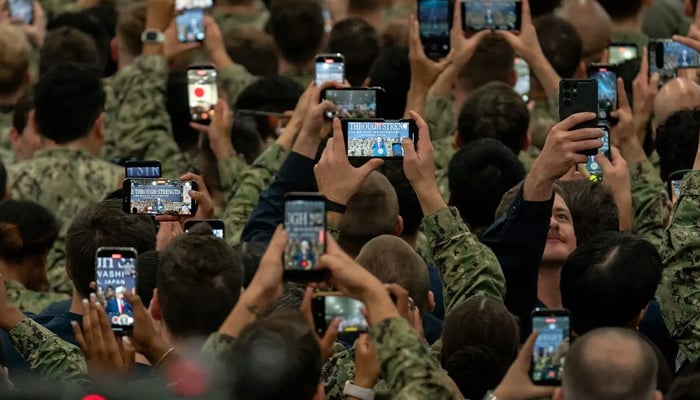
    US commander warns troops over social media posts

    The top US military commander overseeing American forces in the Middle East has warned troops that photos and videos shared on social media could help Iran quickly assess the damage caused by attacks on US bases. According to Reuters, US Central Command chief Admiral Brad Cooper made the warning in a July 28 letter to service members. He said Iran was using media reports, along with images and videos posted by US troops, to determine whether its attacks had succeeded or failed. Cooper urged military personnel to follow operational security rules more strictly, although he did not outline any specific measures in the letter. Reuters reported that some US troops stationed in Jordan have been told that authorities could take away their mobile phones in the coming days. Another source said officials were also considering similar measures elsewhere in the region, although no final decision has been made.   US Central Command spokesman Captain Timothy Hawkins said the message aimed to remind troops about the importance of operational security. The warning followed the appearance of a video on social media earlier this month that showed a US service member recording himself while heading toward a bunker during an Iranian attack on Jordan’s Muwaffaq Salti Air Base. Cooper said the soldier recorded the video using Meta smart glasses, potentially giving Iran information about the troops’ location and their response to the attack. He said that without publicly available images, videos and reports, Iran would have a harder time determining whether its strikes hit their intended targets. However, such material can effectively provide Iran with a free assessment of battlefield damage. According to Reuters, 18 US service members have been killed and more than 600 injured since the conflict with Iran began on February 28. The US Department of Defense has limited the release of information about the attacks and military casualties due to security concerns.