देश-विदेश

  • | | | |

    Iran claims destruction of three US F-35 jets

    The conflict between Iran and the United States intensified on Thursday after Iran’s Islamic Revolutionary Guard Corps (IRGC) claimed it destroyed three US F-35 fighter jets during a missile attack on Jordan’s al-Azraq airbase, a key facility used by American forces. According to the IRGC, the attack was carried out in retaliation for a US strike on Iran’s Qeshm Island that allegedly killed members of a civilian family. Iranian officials claimed several ballistic missiles struck aircraft maintenance facilities at the base, destroying three F-35 fighter jets and severely damaging three others. The IRGC also alleged that several US military personnel and technical staff were killed in the attack. No independent confirmation of these claims has been provided by US or Jordanian authorities. The latest exchange came after the United States launched fresh overnight strikes targeting multiple locations in Iran, including Bushehr, Qeshm, Bandar Abbas, Kish and Abadan. Iranian media reported that residential areas on Qeshm Island were hit, killing three members of one family and injuring two children. Iran’s Revolutionary Guards also announced that three of their personnel were killed in separate US missile attacks, vowing retaliation against what they described as American aggression. Meanwhile, Jordan said its air defence systems intercepted and destroyed five Iranian missiles heading toward its territory, marking the fourth consecutive day of missile interceptions. Authorities reported no casualties or damage. Iraq also sought to distance itself from the growing conflict. A military spokesperson stated there was no evidence that recent regional attacks had been launched from Iraqi territory, while stressing that only official security forces would be responsible for the country’s defence and security. Iran’s Foreign Ministry said discussions with Omani officials aimed at reducing tensions remain ongoing in Tehran. Iranian officials blamed the continued closure of the Strait of Hormuz and disruptions to global shipping on US and Israeli military operations, insisting that foreign military actions had created instability in one of the world’s most important energy corridors. The IRGC also claimed two oil tankers attempting to pass through the Strait of Hormuz turned back after a fire broke out on one vessel. The group warned the strategic waterway would remain closed while military pressure against Iran continued. Elsewhere, Iran condemned recent US and Saudi air strikes inside Iraq, calling them violations of Iraqi sovereignty and international law. The attacks reportedly targeted Iran-aligned groups operating in the country. The United Nations expressed growing concern over the escalating hostilities. UN Secretary-General António Guterres urged all parties to end military operations immediately and return to diplomatic negotiations, warning that continued escalation could further destabilise the Middle East.

  • |

    Japan earthquake survivors struggle with water shortages and extreme heat

    Communities across southern Japan are facing growing hardship after a powerful 7.1 magnitude earthquake left at least 17 people dead, damaged essential infrastructure, and cut off water and electricity for thousands of residents. As emergency teams continue rescue and relief operations, authorities are racing to address the worsening impact of intense summer temperatures on affected communities. The earthquake struck Kumamoto Prefecture on Tuesday, causing widespread destruction in Yatsushiro, a port city where cracked roads, collapsed buildings, and broken water pipelines have made daily life increasingly difficult. While damaged homes and public buildings are visible reminders of the disaster, local officials say the lack of clean water and electricity has become one of the biggest challenges facing residents. Akio Matsushita, a city official involved in coordinating relief efforts, said restoring the damaged water system could take a long time because of the scale of the destruction. He explained that repair crews are still assessing the underground damage and cannot estimate when normal services will resume. With temperatures reaching around 35 degrees Celsius and humidity remaining high, the shortage of water has become especially dangerous. Even city hall has been affected, forcing officials to install temporary toilets above sewer manholes after indoor facilities stopped working. Authorities have confirmed that at least 17 people lost their lives in the earthquake. Most of the deaths occurred at a paper manufacturing plant operated by Nippon Paper Industries, where severe structural damage trapped workers. Others were reported at an Aeon shopping mall after what officials believe may have been a gas explosion. Six more people remain in cardiopulmonary arrest, while authorities continue investigating additional deaths that may also be linked to the earthquake. Including those cases, the overall death toll could rise to 28. Emergency responders are also preparing for another serious threat as weather forecasts predict temperatures could approach 40 degrees Celsius over the coming days. Officials have warned that people staying in evacuation centres face an increased risk of heat related illnesses. To reduce that danger, Japan’s Self Defense Forces have begun installing around 300 air conditioning units at evacuation shelters and other important relief locations throughout Kumamoto Prefecture. In the hours after the earthquake, military vehicles transported large water tanks to schools and community centres across Yatsushiro. Emergency water stored beneath city hall has been used to refill the tanks, allowing residents to collect drinking water. However, supplies remain limited, with each person allowed only three litres. Among those waiting for water was Masahiro Miyamoto, who spent hours clearing debris after a temple gate collapsed during the quake. Although his own home remained standing, the neighbouring house was destroyed. Without running water, he has depended entirely on military water deliveries. He said the few stores that reopened after the disaster were crowded with shoppers trying to buy food and other essentials, while long lines formed outside petrol stations as people rushed to fill their vehicles. Japan’s location along the Pacific Ring of Fire makes earthquakes a frequent occurrence. The country has invested heavily in earthquake resistant construction and emergency preparedness, helping reduce casualties during many disasters. Even so, powerful earthquakes continue to cause severe disruption, especially in regions with major industrial facilities. The latest earthquake has also affected manufacturing across Kyushu, an important centre for Japan’s automobile and semiconductor industries. Several leading companies, including Toyota, Honda, Nissan, Aisin, and Sony, temporarily suspended parts of their production while inspections were carried out. Taiwan Semiconductor Manufacturing Company also evacuated workers and briefly stopped operations to ensure facilities remained safe. Many residents of Kumamoto still remember the devastating earthquakes that struck the region in 2016, killing more than 260 people and destroying thousands of homes. Even those who survived that disaster said this week’s shaking felt stronger in parts of Yatsushiro. Miyamoto recalled shelves crashing to the floor and computers being thrown across rooms. He said the violent movement was unlike anything he had experienced before, describing the sensation as if he had been lifted off the ground and tossed through the air.

  • |

    Kangana Ranaut sparks criticism after calling Gen Z ‘Generation Gutter’

    Bollywood actor and BJP Member of Parliament Kangana Ranaut has come under heavy criticism after making a series of controversial remarks about young people who participated in recent anti government protests in India. Her comments, shared on social media, quickly went viral and triggered strong reactions from politicians, activists, and social media users. The controversy began after a 36 day protest led by the Cockroach Janata Party along with students and civil society groups ended on July 25. The demonstrations concluded after the government accepted several key demands, including the resignation of then Union Education Minister Dharmendra Pradhan. A few days later, Ranaut posted on Instagram, where she strongly criticised videos from the protests held at Jantar Mantar. She described the footage as disturbing and accused participants of displaying behaviour that she considered offensive and lacking basic values. She questioned the conduct and language of the young protesters and claimed their actions reflected poorly on the country’s cultural traditions. In another post, Ranaut focused on young women who took part in the demonstrations. She argued that true independence comes through personal responsibility, career choices, and accountability rather than simply demanding freedom. Referring to the younger generation as “Generation Gutter,” she claimed many participants were promoting irresponsible lifestyles while depending on their families for financial support. The actor also suggested that independence must be earned through hard work and self reliance. She criticised what she described as a culture of entitlement among some young people and argued that freedom without responsibility leads to negative consequences. Ranaut continued defending her position in another social media post, saying that those who publicly express strong opinions should also be prepared to face criticism. She claimed that if protesters insult public leaders or damage public property, they should expect a response from people who support the government. Referring to Newton’s third law of motion, she argued that every action naturally brings an equal reaction. Her remarks immediately attracted widespread criticism online. Many users accused her of making disrespectful and insulting comments about an entire generation. Others argued that her statements distracted attention from the issues that motivated the protests in the first place. Congress leader Renuka Chowdhury criticised Ranaut’s language, saying it was disappointing for a sitting Member of Parliament to make such remarks about young citizens. She added that public representatives should communicate more responsibly and suggested that Ranaut could eventually face political consequences for her comments. Congress MP Imran Pratapgarhi also condemned the actor’s statements. He expressed confidence that India’s younger generation would respond through democratic means and reject the views she had expressed. Several social media users also pointed to Ranaut’s previous controversial remarks, including comments about actor Urmila Matondkar and participants in earlier protests such as the Shaheen Bagh and farmers’ demonstrations. Critics argued that her latest statements followed a pattern of using harsh language against those with opposing views. Others accused the actor of hypocrisy, saying she frequently criticises the tone of her opponents while overlooking aggressive language used by members of her own political camp. One user described her comments as deeply offensive and questioned why someone in a position of influence would use social media to attack young women instead of encouraging meaningful discussion. The debate has once again placed Ranaut at the centre of political and social controversy. While her supporters defended her right to express her opinions, critics argued that public figures should promote respectful dialogue, especially when discussing young people participating in democratic protests. The exchange has continued to fuel intense debate across social media platforms, reflecting the growing political divide over youth activism and freedom of expression in India.

  • |

    Netanyahu says social media is driving decline in US support for Israel

    Israeli Prime Minister Benjamin Netanyahu has acknowledged that public support for Israel has declined in the United States, attributing the shift largely to the influence of social media and online misinformation. His remarks came during an interview with ABC News, where he also discussed the war in Gaza, Iran’s nuclear programme, and Israel’s relationship with the United States. Netanyahu admitted that attitudes toward Israel among Americans have changed in recent years and said the trend was a matter of concern. He argued that the rapid growth of social media platforms, along with the use of coordinated online campaigns and automated accounts, has shaped public opinion against Israel. According to him, misleading portrayals of the conflict in Gaza have contributed significantly to the fall in support. Recent surveys suggest that American views of Israel have become increasingly critical. A July poll by the Pew Research Center found that unfavorable opinions of the Israeli people have risen compared with previous years, while support for the Israeli government has also declined. The findings reflect growing concern among Americans over Israel’s military operations in Gaza and the humanitarian impact of the conflict. During the interview, Netanyahu said he wanted Israel to continue receiving support from both major political parties in the United States. He described bipartisan backing as an important part of Israel’s national security and argued that the debate surrounding Israel extends beyond the Middle East. He claimed that those who oppose Israel often also oppose American interests and values. The Israeli leader also discussed Iran, saying Israel and US President Donald Trump share the same objective of preventing Tehran from developing nuclear weapons. He said Israel would support any approach that successfully ends Iran’s nuclear programme, whether through diplomacy, economic sanctions, or military action. However, he stressed that decisions regarding American policy ultimately rest with the US president. Netanyahu accused Iran of repeatedly acting in bad faith during previous negotiations, claiming its leaders have used talks to delay action while continuing their nuclear ambitions. Iran has previously rejected such accusations and argued that inconsistent policies and broken commitments by the United States have undermined diplomatic efforts. He also warned Iran against carrying out any future attacks on Israel, saying such actions would be met with a strong military response. Although he believes Iran’s leadership has become weaker in recent years, Netanyahu said the current government remains in power and predicted that it could eventually collapse. Addressing his relationship with President Trump, Netanyahu dismissed suggestions that either leader was directing the other. He described the two countries as close allies and said the United States remains the senior partner while Israel continues to work closely with Washington on security matters. The prime minister also rejected reports claiming he had underestimated the consequences or duration of military action against Iran. He insisted those reports misrepresented his earlier assessments and said President Trump independently viewed Iran’s nuclear ambitions as a serious threat. Netanyahu strongly denied allegations that Israel had committed war crimes or genocide during its military campaign in Gaza. He argued that Israeli forces had taken steps to reduce civilian casualties by issuing warnings through phone calls, text messages, and leaflets urging people to leave areas of fighting. He also accused Hamas of preventing civilians from evacuating. The Israeli leader again ruled out the creation of an independent Palestinian state, arguing that it would pose a security threat to Israel. His comments come despite ongoing international calls for a two state solution. The conflict remains under intense international scrutiny. In November 2024, the International Criminal Court issued arrest warrants for Netanyahu and former Defence Minister Yoav Gallant over allegations of war crimes and crimes against humanity linked to the Gaza conflict. Israel rejects the accusations, while military operations in the territory have continued despite a ceasefire agreement reached in October 2025.

  • |

    Arab and Palestinian groups urge global action to protect Jerusalem and Al Aqsa Mosque

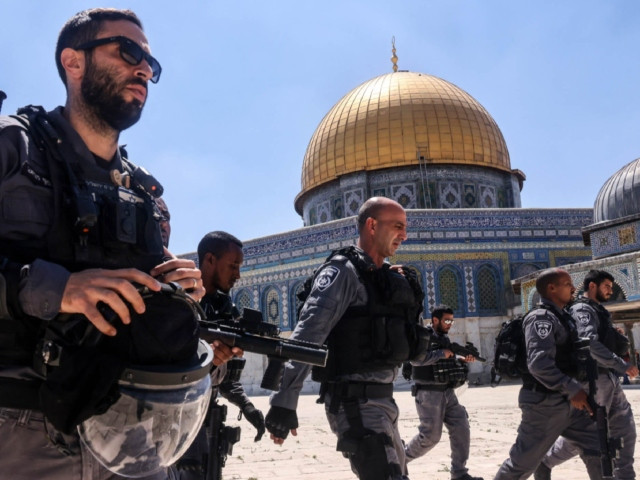
    Fourteen Arab and Palestinian organisations have issued an urgent appeal calling for immediate international action to protect occupied East Jerusalem and the Al Aqsa Mosque, warning that recent Israeli measures are threatening the city’s religious heritage and historic identity. The groups said the situation has reached a critical stage and argued that stronger global intervention is needed to prevent further escalation. In a joint statement released on Wednesday, the organisations expressed concern over what they described as increasing Israeli actions aimed at changing the existing status of Jerusalem and its holy sites. They said recent developments have targeted not only Al Aqsa Mosque but also the Palestinian residents of Jerusalem and the city’s Arab, Islamic, and Christian character. Al Aqsa Mosque is considered Islam’s third holiest site. The same area is also revered by Jews as the Temple Mount, believed to be the location of two ancient Jewish temples. Israel captured East Jerusalem during the 1967 Arab Israeli war and later declared the entire city its capital in 1980, a move that has not been recognised by most of the international community. According to the appeal, Israeli authorities have allowed an increase in visits to the Al Aqsa compound by Jewish groups under police protection. The organisations claimed these actions, along with restrictions placed on Muslim worshippers, are attempts to alter the long standing arrangements governing access to the holy site. The statement also raised concerns about attacks on worshippers, restrictions placed on religious leaders, and measures targeting guards responsible for protecting the mosque. The groups argued that these actions undermine freedom of worship and threaten the historical and legal status of one of Islam’s most important religious landmarks. Beyond the mosque itself, the organisations accused Israel of expanding settlements, demolishing Palestinian homes, revoking residency rights, carrying out excavations around the Old City, and increasing pressure on both Islamic and Christian religious sites. They warned that these policies are changing the city’s demographic and cultural landscape while placing Jerusalem’s diverse religious heritage at risk. The appeal also highlighted concerns over the city’s Christian community. It said restrictions affecting churches, religious institutions, and Christian leaders threaten the long established Christian presence in Jerusalem and weaken the city’s multicultural identity. The organisations argued that international statements of concern are no longer enough to address the situation. They called for coordinated political, legal, and human rights efforts to stop actions they consider violations of international law. They also urged governments and international institutions to ensure accountability and prevent further changes to the city’s status. The statement specifically called on Jordan, which holds custodial responsibilities for Jerusalem’s Islamic and Christian holy sites, to intensify diplomatic efforts and encourage stronger international engagement. The groups said Jordan’s role remains essential in defending the religious and historical significance of the city’s sacred places. Describing Jerusalem as a shared historical, cultural, and religious responsibility, the organisations stressed that protecting the city requires practical measures rather than symbolic declarations. They said preserving the rights of its residents and safeguarding its holy sites should remain an international priority. The appeal was signed by several organisations, including the Popular Conference for Palestinians Abroad, the Al Quds International Institution, the Arab National Congress, the European Palestinian Conference, and the Islamic National Conference. The statement comes as tensions continue to rise across the occupied West Bank, where Israeli military raids and settler related violence have increased since the start of the Gaza conflict in October 2023. Palestinian officials say thousands of people have been injured or arrested during this period, while violence has intensified further following recent deadly clashes near Nablus involving Palestinians, Israeli settlers, and Israeli forces.

  • |

    Pakistan pushes for renewed US and Iran talks under Islamabad agreement

    Pakistan has reaffirmed its commitment to helping revive negotiations between the United States and Iran, saying it is making every possible effort to bring both sides back to the framework established under the Islamabad memorandum of understanding signed last month. Officials believe renewed dialogue remains the best path to easing tensions in the Middle East and restoring regional stability. Speaking at the Foreign Office’s weekly media briefing on Thursday, spokesperson Tahir Andrabi said Pakistan remains concerned about the fragile security situation in the region despite a brief period of relative calm in recent days. He said the temporary reduction in violence had raised hopes for a lasting ceasefire, but recent developments have shown that the situation remains highly unstable. Andrabi stressed that Pakistan continues to support diplomacy as the only practical solution to the conflict. He said Islamabad welcomes every effort aimed at maintaining the pause in hostilities and encouraging both Washington and Tehran to return to negotiations. According to him, Pakistan remains actively engaged with all relevant parties and will continue supporting diplomatic initiatives. He added that discussions are still taking place to restore stability, particularly around the Strait of Hormuz, one of the world’s most important energy shipping routes. Pakistan, he said, is working to encourage both countries to resume talks under the Islamabad memorandum of understanding while also following the commitments outlined in the Pakistan Qatar joint statement issued on June 22. The Foreign Office urged both the United States and Iran to exercise restraint and honour their commitment to restart technical level discussions. Andrabi said continued dialogue is essential to resolving outstanding disputes and preventing another escalation that could threaten regional peace and global energy supplies. The Islamabad memorandum of understanding was signed on June 18 after weeks of diplomatic efforts. The agreement was intended to reopen the Strait of Hormuz and create conditions for ending the wider conflict that began following US and Israeli strikes on Iran earlier this year. Under the understanding, both sides had agreed to continue negotiations over the following two months. However, tensions returned on July 7 when Iran launched attacks on commercial vessels in the Strait of Hormuz, including a Qatari liquefied natural gas tanker. Tehran accused Washington of violating the agreement, leading to renewed US military strikes on Iranian targets. Since then, the conflict has expanded, with Houthi forces in Yemen imposing a naval blockade affecting Saudi Arabia and increasing pressure on another key maritime route. Violence has continued to spread across the region. On Wednesday, explosions were reported at a natural gas export facility in Egypt, while a US owned floating storage vessel was reportedly struck by a drone. At the same time, the United States and Saudi Arabia carried out joint operations against Iran backed armed groups in Iraq following attacks on American troops and Saudi energy infrastructure. After several days without major military action, the United States also launched fresh strikes against Iranian targets on Thursday in response to attacks on American bases in Jordan. During the briefing, Andrabi also rejected a recent documentary produced by Germany’s international broadcaster Deutsche Welle about Pakistan’s nuclear programme. He described the report as misleading and said it relied on outdated claims, speculation, and one sided sources. The spokesperson argued that the documentary failed to accurately reflect the history and purpose of Pakistan’s nuclear programme. He said responsible journalism requires balanced reporting and careful verification, adding that publishing unsupported allegations could damage the broadcaster’s credibility. He maintained that Pakistan has a strong command and control system for its nuclear assets, supported by legal, technical, and institutional safeguards that meet international standards. According to Andrabi, these arrangements have been recognised by independent experts. Responding to questions about India’s decision to block social media accounts belonging to Pakistan Television and other Pakistani platforms, Andrabi criticised the move, calling it another example of restrictions on independent media. He said the Indian government was attempting to limit access to alternative viewpoints while promoting an official narrative. He also urged the international community to take notice of what he described as shrinking space for free expression and media freedom in India.

  • |

    Salman Rushdie attacker convicted on US federal terrorism charges

    The man who stabbed renowned author Salman Rushdie during a public event in 2022 has been found guilty on multiple federal terrorism charges in the United States. The verdict marks another major legal milestone in a case that drew worldwide attention because of the long standing threats against the celebrated novelist. A federal jury in Buffalo, New York, convicted 28 year old Hadi Matar after only a few hours of deliberation. Prosecutors argued that the attack was motivated by decades old calls for Rushdie’s death following the publication of his controversial novel The Satanic Verses. Matar was found guilty of attempting to provide material support to Hezbollah, engaging in terrorism across national borders, and providing support to terrorists. Matar is already serving a 25 year prison sentence after being convicted in a New York state court for attempted murder. Following the federal conviction, he now faces the possibility of life imprisonment when he is sentenced in November. The federal trial began last week and included testimony from Rushdie himself. The 79 year old author described the attack that left him with life changing injuries. The defence did not call Matar or any other witnesses to testify during the proceedings. Rushdie has lived under threat since the publication of The Satanic Verses in 1988. The novel sparked widespread controversy in parts of the Muslim world, leading Iran’s then Supreme Leader Ayatollah Ruhollah Khomeini to issue a religious decree in 1989 calling for the author’s death. The fatwa also targeted people involved in publishing the book and led to violent attacks over the following years, including the killing of Japanese translator Hitoshi Igarashi in 1991. Although the Iranian government later distanced itself from the fatwa, US prosecutors said it continued to receive support from Hezbollah leaders and was reaffirmed by Iran’s current Supreme Leader, Ayatollah Ali Khamenei. During the trial, prosecutors presented evidence showing that Matar spent more than a year studying the fatwa before carrying out the attack. They argued that he deliberately planned the assault to carry out the religious decree against Rushdie. The attack took place on August 12, 2022, while Rushdie was preparing to speak at the Chautauqua Institution, an educational and cultural centre in New York state. Matar rushed onto the stage and repeatedly stabbed the author before audience members intervened and restrained him until police arrived. Rushdie suffered multiple stab wounds to his head, neck, chest, and hand. The injuries permanently blinded him in one eye and caused severe damage to several internal organs. Another man on stage was also injured during the incident. Born in the United States and holding Lebanese citizenship, Matar had been living in New Jersey before the attack. His conviction in state court earlier resulted in a 25 year prison sentence, but the federal terrorism charges carry significantly harsher penalties. Rushdie, who was born in India and later became a British and American citizen, spent many years under police protection after the fatwa was issued. He lived largely in hiding throughout the 1990s before gradually returning to public life and eventually settling in New York City. The latest verdict closes another chapter in one of the most widely followed literary and terrorism related cases in recent history. It also reinforces the long lasting impact of threats that began nearly four decades ago over a work of fiction and continued to influence events many years later.

  • |

    Coal drops below half of China’s power mix for first time ever

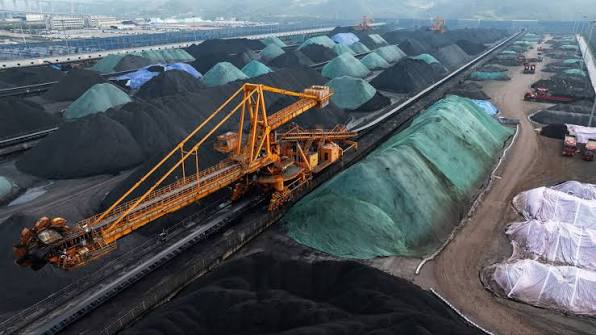
    China has reached a turning point in its energy story. For the very first time, coal supplied less than half the country’s electricity over a six-month stretch, according to officials who spoke on Thursday. Between January and June, coal made up 49.7 percent of total power generation. That figure came from Xing Yiteng, a senior official at the energy administration’s planning office. It marks a steep fall from 65.5 percent back in 2016, based on earlier government data. Clean energy sources picked up the slack. Renewables reached 41.2 percent of the total mix, crossing the 40 percent line for the first time ever. Wind and solar alone made up nearly a quarter of all power generated, a huge leap from just under 10 percent in 2020. The remaining share came from natural gas and nuclear plants. Despite this progress, experts warn that coal use in raw terms might actually increase this year. Electricity demand across China is rising quickly, driven by more electric vehicles on the road, a boom in AI-related data centers, and steady growth in exports. Beijing has pledged that coal use will peak no later than 2030, with wind and solar expected to reach 30 percent of the power mix by then. Gao Yuhe, who works as a project manager at Greenpeace East Asia, thinks that milestone might actually arrive two years early, by 2028. She credited this to the rapid spread of home solar systems paired with battery storage, along with more flexible electricity markets that make better use of renewable supply. China still burns far more coal than most major economies, mainly because it has large domestic reserves and limited natural gas access. For comparison, coal accounted for just 17 percent of America’s utility-scale power output last year, with natural gas covering 41 percent. China’s coal reliance, though, remains lower than India’s, where coal and lignite made up 69 percent of electricity generation last year. Interestingly, China still imported close to 500 million metric tons of coal last year, even with domestic output reaching 4.83 billion tons, mostly to supply power plants along the coast. If coal consumption keeps falling, major exporters like Indonesia, Mongolia, Australia, and Russia could feel the impact, depending on global price trends. Meanwhile, coal remains central to China’s coal-to-chemicals industry, where many facilities continue relying on cheap, locally produced coal to stay competitive.

  • |

    US awards Lockheed up to $58.6 billion for Patriot missile production

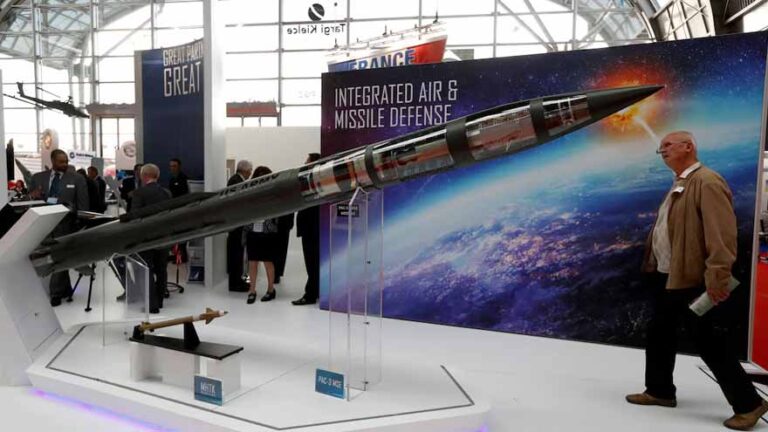
    The United States has awarded Lockheed Martin a defence contract worth up to $58.6 billion to expand production of Patriot interceptor missiles, as ongoing conflicts in the Middle East and Ukraine continue to put pressure on American weapons stockpiles. The agreement, announced by the Pentagon on Wednesday, is designed to strengthen the country’s air defence capabilities and ensure a steady supply of Patriot missiles over the coming years. The move comes after the United States supplied large quantities of military equipment to its allies while also using significant numbers of precision guided weapons during its own military operations against Iran. The new contract replaces an earlier one year agreement valued at $4.7 billion that was signed in April. It now establishes a seven year procurement framework covering the period from the 2026 to the 2032 fiscal years. According to the US Army, the longer term arrangement is expected to provide greater stability for production planning while helping manufacturers increase output to meet rising demand. The Pentagon has been urging defence companies to speed up production as global security challenges increase. Officials have been negotiating with major contractors throughout the year to secure higher manufacturing capacity for missiles and other critical military equipment. The administration of President Donald Trump has also increased pressure on defence firms to focus more heavily on fulfilling government contracts. Earlier this year, Trump signed an executive order directing officials to identify companies that were failing to meet contract obligations while continuing to reward shareholders. The administration has argued that expanding production is essential as the US seeks to replenish military inventories. Industry leaders have welcomed the government’s long term procurement strategy, saying it gives manufacturers greater confidence to plan future investments. However, they have also noted that Congress must approve the necessary funding before companies can fully expand production facilities and hire additional workers. Many of the final details surrounding Pentagon weapons contracts, including delivery schedules and production targets, are still being negotiated. The Patriot missile agreement follows a similar initiative involving RTX, the parent company of Raytheon, aimed at increasing production of Tomahawk cruise missiles. Under that plan, annual output is expected to rise dramatically from around 60 missiles to as many as 1,000 each year once production reaches full capacity. Lockheed Martin said the latest contract will support its long term investment plans and help the company significantly expand manufacturing. The company expects to triple production capacity for its PAC 3 MSE interceptor missiles by the end of 2030. It also plans to increase its workforce at its Camden, Arkansas, facility by about 50 percent, raising employment from roughly 1,200 workers to around 1,850. The defence contractor has also announced plans to invest between $8 billion and $9 billion through 2030 to modernise more than 20 facilities across the United States. The investment includes the construction of new munitions production centres in Alabama and Arkansas to support increased manufacturing. The PAC 3 MSE interceptor is one of the most advanced missiles used within the Patriot air defence system. It is designed to destroy incoming ballistic missiles, cruise missiles, and aircraft through direct impact rather than carrying an explosive warhead. The system has become an important part of air defence operations in several regions facing growing missile threats. Concerns over US missile inventories have intensified in recent months. The Washington based Center for Strategic and International Studies recently estimated that the US military has fewer than 1,000 Patriot interceptors and fewer than 250 THAAD interceptors remaining in its stockpile. Both systems have been heavily used during recent military operations in the Middle East while the United States has also continued supplying advanced air defence equipment to partners facing ongoing security challenges.

  • |

    Rising fuel prices drive global surge in electric vehicle sales

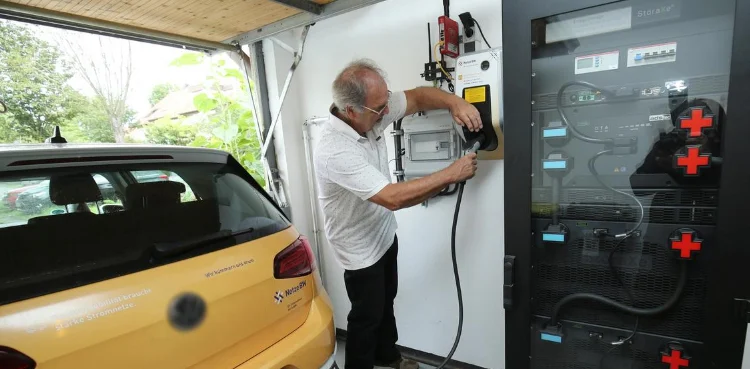
    Global sales of electric vehicles rose sharply during the second quarter of 2026 as soaring fuel prices linked to the conflict in the Middle East encouraged more consumers to switch away from petrol and diesel powered cars, according to a new report by the International Energy Agency. The agency said electric vehicle sales increased by 35 percent between April and June compared with the first three months of the year. Record sales were reported across 50 countries despite a slowdown in the overall global automobile market. According to the IEA, the renewed interest in electric vehicles was largely driven by the sharp rise in oil prices following the conflict involving Iran, Israel, and the United States. The report said the resulting energy crisis reminded governments and consumers of the economic risks associated with dependence on imported oil. Oil prices climbed dramatically during the year after Iran effectively closed the Strait of Hormuz, one of the world’s busiest energy shipping routes, in response to military strikes carried out by Israel and the United States. Crude prices rose from around 60 dollars per barrel at the beginning of the year to nearly 120 dollars, increasing fuel costs around the world and putting additional pressure on households and businesses. The IEA said the situation has brought energy security back to the centre of government policy discussions. Since road transport accounts for nearly half of global oil consumption, the agency noted that expanding the use of electric vehicles can reduce reliance on imported fuel while protecting consumers from sudden increases in fuel prices. The report said electric vehicles are now being viewed as an important tool for improving national energy security, particularly in countries that rely heavily on imported oil. By reducing dependence on global oil markets, governments hope to make their economies more resilient during periods of international instability. Several countries in Southeast Asia that were particularly affected by rising fuel costs responded by introducing temporary tax incentives to encourage people to buy electric vehicles. Similar government support measures have also been expanded in parts of Latin America and Europe as officials seek to accelerate the transition to cleaner transport. Based on the strong performance in the second quarter and continued policy support in many regions, the IEA expects global electric vehicle sales to increase by around 10 percent over the full year. If that forecast is achieved, electric cars are expected to account for approximately 29 percent of all new vehicle sales worldwide in 2026. The agency also predicted that the overall global car market will shrink this year, meaning electric vehicles are continuing to gain market share even as total vehicle demand weakens. The report noted that the year began on a slower pace for the electric vehicle industry. Sales dropped during the first quarter, mainly because of weaker demand in China and the United States, the world’s two largest EV markets. In the United States, the removal of government subsidies reduced consumer demand, while China’s slowing economy and reductions in financial incentives also affected purchases. Because China represents the largest electric vehicle market in the world, weaker sales there had a significant impact on global figures despite healthy growth in many other regions. Europe recorded the strongest performance during the first half of the year. According to the IEA, electric vehicle sales across the continent rose by more than 30 percent as supportive government policies, expanding charging infrastructure, and higher fuel prices encouraged more drivers to choose electric cars over conventional vehicles. The agency believes these trends could continue if governments maintain incentives and energy prices remain elevated.