देश-विदेश

  • |

    Chinese warehouse robots reshape UK retail as automation gathers pace

    Chinese made robots are playing an increasingly important role in Britain’s retail industry as major companies turn to automation to improve efficiency, speed up online orders, and tackle ongoing labour shortages. From supermarkets to clothing retailers, robotic systems are becoming a common sight inside warehouses that process thousands of customer purchases every day. Many online orders in the UK now begin with small autonomous robots moving beneath storage shelves, lifting them, and transporting them to warehouse workers. These machines are produced by Chinese robotics company Geek+, which manufactures and tests its equipment at a factory in Hefei before exporting it to customers around the world. Several leading British retailers, including Tesco, Asda, and Next, have adopted the company’s technology. According to Geek+, the robots help businesses process orders faster, improve storage capacity, and reduce mistakes by automating repetitive tasks that would otherwise require significant manual labour. Unlike traditional warehouse automation systems that depend on fixed conveyor belts and expensive infrastructure, these mobile robots move independently using floor markers and safety barriers. This allows companies to introduce automation more quickly and with less disruption to existing warehouse operations. Geek+ has grown into the world’s largest supplier of autonomous mobile robots and expanded its international presence after listing on the Hong Kong stock exchange last year. Britain has become the company’s biggest European market, with its UK partner MotionTech deploying more than 2,000 robots across 10 warehouse sites. MotionTech says demand for automated warehouse technology continues to rise as businesses seek faster order processing while dealing with persistent labour shortages. Company representatives say customers want solutions that increase storage capacity, improve picking speeds, and reduce reliance on large workforces without sacrificing efficiency. The growing use of robotics comes as the United Kingdom continues to struggle with weak productivity growth. Economists have argued that wider adoption of automation will be necessary if businesses are to remain competitive in the years ahead. A recent report by the Organisation for Economic Co operation and Development found that Britain has been slower than many other advanced economies in adopting robotics, despite its long industrial history. While British companies have embraced many digital technologies, the report said automation and robotics remain underused across much of the economy. Labour organisations have urged businesses to introduce new technology responsibly. The Trades Union Congress has argued that automation should improve working conditions and productivity rather than simply reduce employment. It has called for workers to be involved in decisions about automation and for companies to provide retraining opportunities as technology changes the workplace. China’s rapid progress in robotics reflects a broader national strategy aimed at strengthening advanced manufacturing. President Xi Jinping has identified robotics as one of the country’s key future industries, with automation expected to offset the effects of a shrinking working age population and support long term economic growth. Analysts say China’s leadership in robotics has benefited from its success in electric vehicle manufacturing. Many of the same technologies used in electric cars, including batteries, motors, cameras, sensors, and semiconductors, are now being applied to robotic systems, creating a strong industrial network that accelerates development. Chinese electric vehicle manufacturer XPeng is among the companies expanding into robotics. The company has introduced a humanoid robot called Iron as part of its strategy to transform from a traditional carmaker into a broader technology company. Industry experts believe China’s robotics industry could follow a similar path to its electric vehicle sector by combining large scale manufacturing with rapid innovation. At the same time, competition in robotics has become increasingly tied to global politics. This week the United States announced restrictions on imports of new advanced foreign made robots, citing national security concerns. China criticised the decision, accusing Washington of using trade measures for political purposes. Looking ahead, Geek+ says it wants to move beyond transporting goods and eventually create fully automated warehouses where robots handle picking, moving, and packing products with minimal human involvement. While companies across China are investing heavily in humanoid robots capable of performing more complex tasks, experts believe these machines are still several years away from widespread commercial use. For now, wheeled warehouse robots remain the most practical solution for retailers. As British businesses continue searching for ways to improve productivity and overcome staffing shortages, warehouses across the country are becoming an important testing ground for China’s rapidly expanding robotics industry.

  • |

    Russia issues arrest request for Telegram founder Pavel Durov

    Russian authorities have announced that they are seeking the arrest of Telegram founder Pavel Durov, accusing him of allowing the messaging platform to be used for activities linked to terrorism. The move marks the latest escalation in Moscow’s long running dispute with the tech entrepreneur, who has repeatedly clashed with Russian officials over internet freedom and user privacy. Russia’s Federal Security Service, known as the FSB, said it had launched international search proceedings against Durov, alleging that Telegram was being used by Ukraine’s security services to recruit Russian citizens for sabotage and other attacks. The agency claimed that Durov failed to remove a dating bot that it says played a central role in these recruitment efforts. According to the FSB, an international wanted notice has been issued for Durov, who serves as Telegram’s chief executive. However, Russian authorities did not clarify the type of notice issued or whether foreign governments or international law enforcement agencies would recognise or act on the request. Durov’s legal representatives declined to comment on the allegations, while Telegram said the company would not make any public statement at this stage. The FSB alleged that a bot known as Leo Match Bot, which is banned in Russia, was used by individuals posing as young women to contact Russian teenagers and young adults. Authorities claimed these fake identities were created by Ukrainian intelligence agents to persuade users to attack police officers and carry out acts of sabotage against transport and energy infrastructure. Russian officials said that since July 2025, 46 people between the ages of 12 and 22 have been arrested in connection with attacks allegedly organised through the messaging bot. Ukraine has not publicly responded to these specific accusations. Since the beginning of the war, both Russia and Ukraine have accused each other of using online platforms and social media to recruit supporters and gather intelligence. The internet has become an increasingly important part of the conflict, with governments closely monitoring digital communication and online activity. Durov, who was born in Saint Petersburg, left Russia years ago and now holds French and United Arab Emirates citizenship. He first gained prominence after creating VKontakte, Russia’s largest social networking platform, before losing control of the company as government pressure increased. He later founded Telegram, which has grown into one of the world’s most widely used encrypted messaging services. Telegram has remained especially popular in Russia despite repeated attempts by the government to restrict access to the platform. Officials have long criticised the company for refusing to provide user data and have encouraged citizens to use state backed communication services instead. Durov also faced legal challenges in France last year, when he was arrested as part of an investigation into the distribution of illegal content through Telegram. He was later released on bail, and French authorities eventually lifted restrictions on his travel, allowing him to leave the country. The latest action by Russia comes as state controlled social media company VK continues promoting its government backed messaging application Max as an alternative to Telegram and WhatsApp. Russian authorities have increasingly supported domestic digital platforms as part of broader efforts to strengthen control over online communications. The announcement adds another chapter to the long standing conflict between the Russian government and Durov, whose commitment to encrypted communication and user privacy has repeatedly placed him at odds with Moscow’s efforts to regulate internet platforms. The outcome of Russia’s international arrest request remains uncertain, particularly given Durov’s residence outside the country and his foreign citizenship.

  • | |

    China lodges complaint after New Zealand’s W…

    China’s embassy in New Zealand has filed a formal complaint after Deputy Prime Minister Winston Peters told a Green Party lawmaker of Chinese descent to return to his own country during a heated parliamentary exchange. The clash unfolded Wednesday when Green Party member Lawrence Xu-Nan, who was born in the Chinese city of Tianjin but raised in New Zealand, asked Peters during a debate over the country’s Covid pandemic response whether he was vaccinated. Peters, who leads the populist NZ First party, responded by telling Xu-Nan he had arrived in the country only recently and should return home, adding a remark suggesting dishonesty in China that does not apply in New Zealand. He went on to describe New Zealand as a democracy, in contrast to what he implied Xu-Nan was used to, and told him to go back to where he came from. The remarks prompted an unusual public response from Chinese Ambassador to New Zealand Wang Xiaolong, who said on social media that he generally avoids commenting on domestic politics but suggested the statement revealed more about the speaker than anyone else. China’s embassy in Wellington confirmed it had lodged a complaint with New Zealand’s foreign ministry over what it called negative China related remarks from a New Zealand politician. Peters has stood by his comments, saying New Zealand’s democratic system protects free speech and rights that other countries restrict, at times through force. He said on social media that those offended by his remarks were welcome to the reality of living in New Zealand. New Zealand Prime Minister Christopher Luxon, whose National Party governs in coalition with Peters’ NZ First, criticized the remarks as inappropriate attention seeking behavior. This is not the first time Peters and his party, who hold significant influence as coalition partners in New Zealand’s fragmented political landscape, have faced accusations of racially charged rhetoric. Earlier this year, Peters’ deputy Shane Jones drew criticism for describing a free trade agreement with India as risking what he called a butter chicken flood. Last year, Peters and Jones faced backlash after Jones shouted at another lawmaker to send Mexicans home during a parliamentary debate, a comment aimed at a legislator who was actually born in the Philippines. Peters later told that lawmaker and Xu-Nan that they should show gratitude for being allowed to live in New Zealand. The episode adds to a pattern of controversies surrounding minor coalition partners in small parliamentary democracies, where kingmaker parties often wield outsized influence despite representing a smaller share of the electorate, occasionally straining diplomatic relationships in the process.

  • | |

    Egypt confirms drone strike behind blaze at two ga…

    A drone strike caused the fire that engulfed two gas vessels at Egypt’s Mediterranean port of Damietta, the Egyptian cabinet confirmed Thursday, ending speculation over whether the blaze that broke out a day earlier was an accident or an attack. No group has claimed responsibility for the strike, which occurred close to the Suez Canal, now serving as the last safe route for Saudi oil shipments reaching global markets. Egyptian authorities said they are continuing their investigation and taking steps to safeguard national security. British maritime security firm Ambrey said Wednesday that a drone had struck a US owned gas storage tanker at the port, an early assessment that raised fears the wider regional conflict could spread further. Three trading sources familiar with the incident said the drone hit the floating storage vessel Energos Winter, sparking a fire that then spread to a second ship, Gaslog Salem. According to maritime risk group Vanguard, the Energos Winter was struck on its starboard side, and the resulting fire was later extinguished. Egypt’s petroleum ministry said firefighting and security teams responded immediately and that the incident caused no injuries or fatalities. Petroleum Minister Karim Badawi traveled to the port to personally oversee the emergency response, according to the ministry. The strike came shortly after Iran launched a missile attack targeting US forces in Jordan, prompting Washington and Saudi Arabia to carry out strikes against Iran backed paramilitary groups in Iraq. President Donald Trump warned of retaliation against Iran, while Yemen’s Houthi movement declared a naval blockade against Saudi Arabia, marking what appears to be the widest expansion of the conflict since the United States and Israel began bombing Iran in February. The Energos Winter is a floating storage and regasification unit owned by the US based firm Energos Infrastructure. Its technical, safety and commercial operations are managed by Wilhelmsen Ship Management, a Singapore based subsidiary of the Norwegian company Wilhelmsen Group. In a first for the five month war, Saudi Arabia publicly joined US forces in striking Iran aligned groups in eastern Iraq on Wednesday, responding to drone attacks on Saudi oil facilities that were launched from Iraqi territory. Following the joint operation, Saudi Arabia’s defense minister met with US Vice President JD Vance in Washington to urge the Trump administration against further escalation, according to two people familiar with the meeting. The conflict began in February when the United States and Israel launched a bombing campaign against Iran that Trump initially said would last only a few weeks. A temporary ceasefire reached in June collapsed amid renewed fighting centered on the Strait of Hormuz, a critical waterway that Iran now claims to control. The latest strikes in Iraq and Egypt threaten to pull additional countries into the conflict, coming after Yemen’s Houthi forces declared a naval blockade on Saudi Arabia last week, putting the alternative Red Sea shipping route for Saudi oil bound for Asia at risk. Attacks on vessels by Houthi fighters have already prompted London’s marine insurance market to expand its high risk zone in the Red Sea to cover a larger stretch of coastline near Saudi ports. Trump said the United States would respond forcefully to Iran’s missile attack on American forces, while maintaining that Washington remains open to a negotiated peace deal to end a war that has unsettled global energy and financial markets. Oil prices jumped more than eight percent on Wednesday before easing slightly on Thursday amid volatile trading, with benchmark Brent crude hovering just under 90 dollars a barrel. Iran said Wednesday that it had struck three tankers attempting to pass through the Strait of Hormuz along what it called an unauthorized route. Even so, a QatarEnergy controlled liquefied natural gas tanker exited the strait overnight, the first such vessel tracked leaving the waterway since July 11. Iran’s semi official Fars news agency reported that Tehran had specifically authorized the tanker’s passage. Oman has presented Iran with a Gulf backed proposal to manage traffic through the Strait of Hormuz, including a system of voluntary usage fees, according to sources familiar with the talks. Iran rejected that proposal on Wednesday, though foreign ministry spokesperson Esmaeil Baghaei said discussions with Oman over the strait’s management are continuing, according to the semi official ILNA news agency. Separately, sources familiar with the matter said Iran is expected to receive its first shipment within weeks of up to 400 Chinese made shoulder fired air defense missile launchers, part of an effort to shore up gaps in its ability to protect military sites and strategic infrastructure exposed during the war. Iran’s foreign ministry did not immediately respond to a request for comment, while China’s foreign ministry denied the report. The expanding pattern of strikes across Iraq, Egypt and the Red Sea underscores how a conflict initially centered on Iran has increasingly drawn in neighboring states and global shipping lanes, complicating efforts by mediators to contain the fighting before it further disrupts international energy markets.

  • | |

    Chelsea complete £52 million signing of France defender Maxence Lacroix from Crystal Palace

    Chelsea have signed France international defender Maxence Lacroix from Crystal Palace in a deal reported to be worth 52 million pounds, or roughly 69 million dollars. Lacroix has put pen to paper on a six year contract with the Blues and will now join his new teammates for pre season training. The 26 year old has earned seven caps for France and featured for his country at the recent World Cup. Speaking after the move was confirmed, Lacroix said he felt proud to become part of a club with Chelsea’s history and winning tradition. He said his conversation with the club’s manager convinced him they share the same vision and ambition, adding that the quality of the squad and the resources around the club make winning trophies a realistic goal he is eager to help achieve. Lacroix joined Crystal Palace from Wolfsburg in 2024 and went on to make 98 appearances for the club. During his time at Selhurst Park, he helped Palace win the FA Cup, the UEFA Conference League and the Community Shield. The defender becomes the latest addition to new Chelsea manager Xabi Alonso’s rebuilding effort this close season. Alonso has already overseen a British record 117 million pound deal for Aston Villa forward Morgan Rogers and a 47 million pound move for Atalanta right back Marco Palestra. Winger Geovany Quenda and forward Emmanuel Emegha have also joined the club, completing transfers that were initially agreed last year. Chelsea have further been linked with moves for Brighton striker Danny Welbeck and Brentford midfielder Jordan Henderson. Alonso took charge of the club on July 1 and is tasked with reviving a Chelsea side that finished a disappointing 10th in the Premier League last season, a result that left the club without European football for the upcoming campaign.

  • |

    AI matchmaking helps hundreds find life partners in Japan

    Tokyo- Artificial Intelligence (AI) is now being used for a wide range of purposes around the world including helping people find a life partner. In Japan, AI-powered matchmaking has already helped hundreds of couples get married. Japan has been facing a decline in marriage and birth rates while its aging population continues to grow. To address this issue, local governments have partnered with private companies to introduce AI-based matchmaking systems. The AI analyzes users personalities, values, interests, hobbies and lifestyle preferences to recommend compatible life partners. An AI-powered matchmaking app was launched in September 2024 to make it easier for people seeking marriage to find a suitable lifelong partner. To use the app, users must provide verified proof of identity, confirm that they are legally unmarried, submit income-related documents and complete an online interview before joining the platform. According to Japanese authorities, the technology has encouraged more people especially young adults to consider marriage. Previously, many young people showed little interest in traditional matchmaking services. Officials say the program has contributed to an increase in marriages in several Japanese cities. Its primary goal is to help boost Japan’s declining birth rate with the government introducing various initiatives to encourage marriage. Experts note that while AI cannot decide relationships on its own, it can help remove barriers and make it easier for people to find compatible life partners.

  • |

    Russia warns US sanctions will backfire

    Russia has criticised a proposed new package of US sanctions, warning that additional restrictions would hurt American interests more than Moscow and further complicate global economic and energy stability. In a statement, the Russian Embassy in Washington reacted to a sanctions bill that received preliminary approval in the US Senate on July 28. The embassy argued that the legislation would restrict the White House’s diplomatic flexibility while increasing economic pressure on the United States itself. The statement criticised the bill’s supporters, particularly Republican Senator Lindsey Graham, accusing them of pursuing an aggressive anti-Russia agenda. It claimed the proposed legislation included sweeping measures, such as imposing tariffs of up to 500% on countries that continue purchasing Russian energy products. According to the embassy, the US administration had previously sought to slow congressional efforts to introduce additional sanctions, maintaining that the president already possessed sufficient authority to impose economic measures without further legislation. Russia also linked the sanctions debate to broader geopolitical developments, arguing that growing tensions in the Middle East and Washington’s involvement in regional conflicts have increased the risk of disruption in global energy markets. It warned that higher energy prices could fuel inflation in the United States and place additional pressure on American consumers ahead of the country’s upcoming midterm elections. The embassy further claimed that political divisions in Washington were undermining the administration’s foreign policy, arguing that some lawmakers were prioritising political objectives over economic realities. Reiterating its long-held position, Russia said years of sanctions had failed to change its policies or weaken its economy in the way Western governments had anticipated. It maintained that further punitive measures would produce limited results against Russia while creating greater economic challenges for the United States. The statement also referred to the Countering America’s Adversaries Through Sanctions Act (CAATSA), enacted during President Donald Trump’s first term. Russia argued that the law significantly reduced the executive branch’s flexibility by requiring congressional approval before any sanctions could be lifted or eased. Concluding its remarks, the Russian Embassy expressed hope that the US administration would carefully assess the potential political and economic consequences before moving forward with any new sanctions package.

  • | |

    Russia extends fuel export ban until January 2027

    Russia has extended its ban on diesel and petrol exports until January 31, 2027, as the government seeks to stabilise domestic fuel supplies and curb rising prices. In a statement, the Russian government said the export restrictions will remain in force until the end of January next year. The move is aimed at ensuring adequate fuel availability in the domestic market amid continued pressure on the country’s energy sector. The latest decision follows an earlier temporary ban on diesel exports that was imposed from July 8 to July 31. Russia has also previously restricted exports of petrol and jet fuel in an effort to address supply shortages at home. According to reports, the export curbs come after repeated Ukrainian drone attacks on Russian oil refineries, which have disrupted refining operations and reduced fuel production in several regions. The attacks have contributed to fuel shortages and rising domestic prices, prompting authorities to prioritise local demand over exports. The government believes extending the restrictions will help ease pressure on consumers and maintain stability in the country’s fuel market. Russia is one of the world’s leading exporters of refined petroleum products, and any changes to its export policy are closely monitored by global energy markets. Analysts say prolonged export restrictions could influence regional fuel supplies and international energy prices if they remain in place for an extended period. The government has not indicated whether the ban will be lifted before the January deadline, saying it will continue to monitor domestic fuel availability and market conditions.

  • |

    Heatwave pushes UK death toll towards 2022’s grim record

    Britain is edging dangerously close to matching one of its deadliest summers on record, and the peak heat month of August hasn’t even fully arrived yet. The UK Health Security Agency reported that an estimated 2,877 people have already died from heat-related causes this year. That number is nearly twice the total seen throughout all of 2025, and it’s steadily approaching the historic high recorded back in 2022. This latest update comes as the country deals with its fourth heatwave of the year. A string of unusually intense hot spells has already driven temperatures to record-breaking levels in parts of Britain during May and June. The extended dry spell has also worsened conditions on the ground, contributing to a rise in wildfires across several regions. Breaking the numbers down further, most deaths occurred across two distinct periods. Late May accounted for 753 fatalities, while a particularly severe June heatwave saw that number jump sharply to 2,124, prompting authorities to issue a rare red heat-health alert. Even though these figures only cover a two-month window, they already surpass the total number of heat-related deaths recorded across the entire previous year. Experts studying the data believe that roughly 42 percent of these deaths can be traced back to the effects of human-driven climate change. That estimate has reignited concern among scientists and public health officials, who warn that healthcare systems and at-risk populations are facing mounting pressure as extreme heat becomes more frequent. The crisis is not confined to the UK alone. Neighboring countries have also been hit hard, with wildfires sweeping through parts of France, Spain, and Greece. These fires have claimed the lives of several firefighters, forced thousands of residents to evacuate, and caused major disruptions to businesses and travel throughout the affected areas. France’s national health agency confirmed on Wednesday that the country recorded 5,764 excess deaths between June 17 and July 2 alone. Germany has faced a similarly troubling situation, with its national health body, the RKI, reporting on Thursday that around 9,800 people have died from heat-related causes so far this year. As temperatures remain stubbornly high across Europe, health officials continue urging caution, particularly for elderly individuals and those with existing health conditions who face the greatest risk during prolonged heat events.

  • |

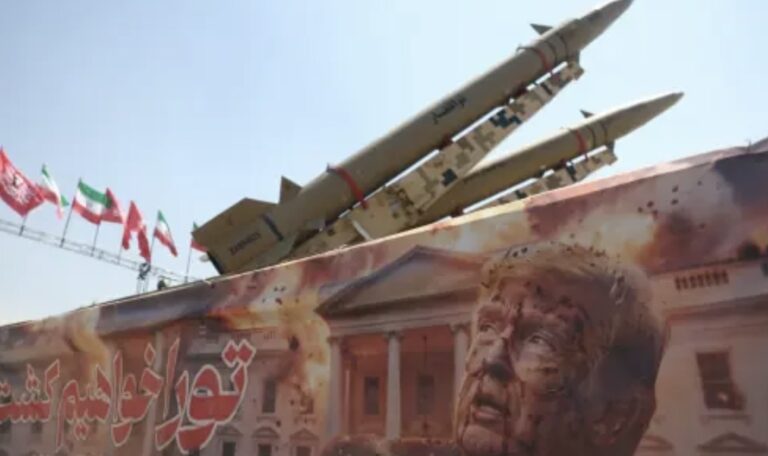
    Iran’s Top Commander issues harsh warning to US forces : ‘their coffins are a part of their equipment’

    The commander of Iran’s Khatam Al-Anbiya Central Headquarters, Major General Ali Abdollahi, has issued a stark warning to US forces, declaring that “their coffins are a part of their equipment” in the region. “Today, the Americans and their mercenaries have realised to the very core of their being that their coffins are part of their equipment in the region,” Abdollahi said, according to the Fars news agency. The warning comes amid heightened tensions between Tehran and Washington, following recent hostilities in the Persian Gulf. The statement also comes as US Senate Republicans blocked a resolution to halt the Iran war, signaling continued congressional support for the administration’s military stance. Meanwhile, Egypt’s president has warned of “escalation” after a port strike, adding to regional instability. Abdollahi’s remarks reflect Iran’s continued defiance in the face of US military pressure and its determination to maintain its position in the ongoing conflict. The rhetoric is likely to further complicate diplomatic efforts, including those being mediated by Pakistan and Qatar, as both sides remain locked in a bitter standoff.