देश-विदेश

  • |

    Saudi Arabia unveils plans for Multinational Marit…

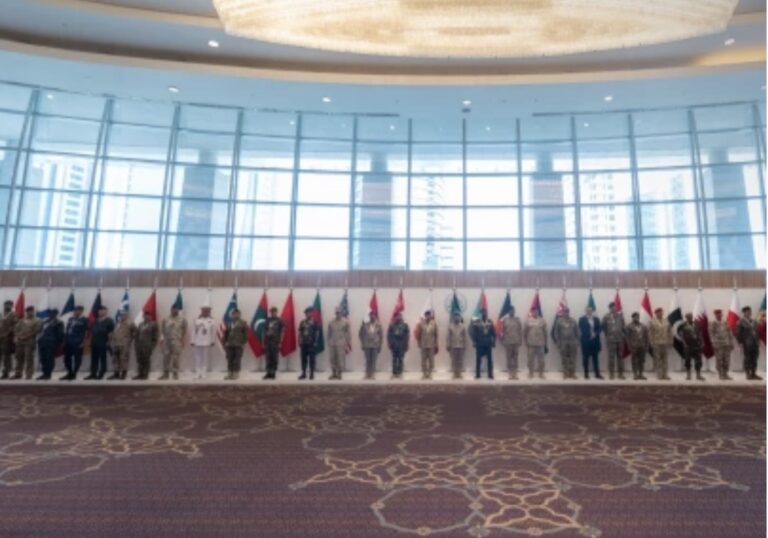
    Saudi Arabia and 13 other countries, including Pakistan, on Thursday announced the creation of a multinational maritime defence coalition aimed at safeguarding freedom of navigation, international trade and energy supply routes in the Bab al-Mandab Strait, the Red Sea and the Gulf of Aden. The Saudi defence ministry said representatives from 43 countries and the European Union attended an international meeting that discussed the proposed coalition, with Saudi Arabia serving as its founding and leading state and hosting its headquarters. The ministry said the coalition would strengthen maritime security, safeguard freedom of navigation, secure international trade routes and energy supply lines, and protect shared maritime interests in the strategic waterways. Fourteen countries, including Turkey, Pakistan, Egypt, Sudan and Djibouti, issued a joint statement supporting the proposed coalition. Among the six Gulf Arab states, Oman and the United Arab Emirates were not listed among the countries backing the statement. The founding states said participation in the coalition’s activities would remain a sovereign decision for each member state, stressing that the alliance is “purely defensive in nature, does not target any state, alliance or international organization, and will conduct all its activities in full compliance with international law while respecting state sovereignty and protecting freedom of navigation.” The joint statement said the coalition was established as a “framework for maritime defence cooperation” aimed at enhancing maritime security, protecting freedom of navigation, securing international trade and energy supply routes, and safeguarding interests in the Bab al-Mandab Strait, the Red Sea and the Gulf of Aden. The announcement comes amid heightened tensions in the Red Sea, where Yemen’s Houthi rebels have launched a series of attacks on Saudi-linked shipping. Saudi Arabia has responded with air strikes on what it said were Houthi military facilities in Yemen’s Hodeidah used to threaten commercial shipping. The Red Sea tensions mark the latest front in the wider Iran war, with attacks on shipping spreading beyond the Gulf and pushing oil prices higher. The Bab el-Mandeb Strait, linking the southern Red Sea with the Gulf of Aden and the Indian Ocean, is a key maritime chokepoint for global trade and energy shipments. The European Union launched a naval mission in the Red Sea in 2024 to help restore and safeguard freedom of navigation after the Houthis disrupted maritime traffic by attacking vessels in what they said was solidarity with Palestinians during the Gaza war. The new Saudi-led coalition represents a significant expansion of international efforts to secure the region’s vital waterways.

  • Egypt secures energy alternatives after drone attack on Damietta Gas Vessel

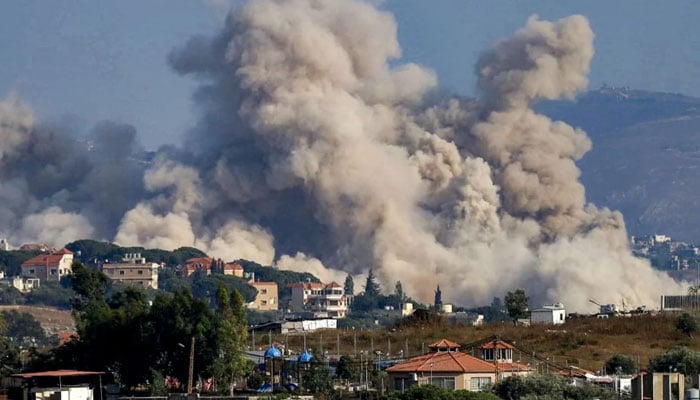
    Egypt’s Prime Minister Mostafa Madbouly has announced that the country has secured alternatives to cover its energy needs following a drone attack on Wednesday that damaged a gas vessel at Damietta port. No group has claimed responsibility for the attack, and authorities are continuing their investigation, Madbouly added. The incident marks the latest escalation in maritime tensions that have spread across the Red Sea and eastern Mediterranean amid the wider Iran war. The attack on Damietta port comes as regional tensions continue to mount. In a separate development, Iran’s state media claimed strikes on Bahrain’s Sheikh Isa Airbase, while the Israeli army bombed a town in southern Lebanon. The United States has also issued new sanctions targeting support networks for Iran’s Mahan Air. The drone strike at Damietta adds to growing concerns over the security of energy infrastructure in the region, as attacks on shipping and energy facilities have become increasingly common since the outbreak of the US-Iran conflict. The Red Sea and surrounding waterways have seen a series of attacks on commercial vessels, with Yemen’s Houthi rebels targeting Saudi-linked shipping in what they say is solidarity with Palestinians. Egypt’s ability to secure alternative energy supplies will be critical in mitigating the impact of the attack on its domestic energy needs and potentially avoiding further economic disruption. The incident underscores the vulnerability of energy infrastructure in the region and the broader implications of the ongoing conflict for global energy markets.

  • | |

    Nirmal Purja feared missing in Pakistan avalanche

    World-renowned mountaineer Nirmal Purja is among 10 climbers feared missing after a powerful avalanche struck an expedition on Broad Peak in Pakistan’s Karakoram mountain range. According to the Alpine Club of Pakistan, the avalanche hit the team around midday on Thursday while they were attempting to climb the 8,047-metre peak. Since the incident, all members of the expedition have reportedly lost communication, raising serious concerns about their safety. The missing group is said to include climbers from Pakistan, Oman, China and the United States. Rescue officials are working to gather more information as efforts continue to establish contact with the team. The Alpine Club stated that it is coordinating closely with government authorities and relevant agencies to launch an urgent search and rescue operation. Helicopter support and other emergency resources are being arranged, although rescue efforts may depend on weather conditions and access to the remote mountain. Nirmal Purja, a Nepal-born climber, is widely regarded as one of the world’s greatest high-altitude mountaineers. He gained global recognition in 2019 after becoming the first person to climb all 14 of the world’s mountains above 8,000 metres in just over six months, a record-breaking achievement that earned international acclaim. Broad Peak, located near K2 in northern Pakistan, is one of the world’s 14 highest mountains and is known for its challenging terrain and unpredictable weather. Avalanches and harsh conditions have made it one of the most dangerous climbing destinations in the region. Authorities have not yet confirmed the fate of the climbers. Search teams remain on standby, hoping for improved weather conditions to begin a full-scale rescue mission. The mountaineering community is closely monitoring developments as hopes remain that the missing climbers will be found safely.

  • | |

    Afghanistan exports Black Dimension Stone to US

    Afghanistan has exported a shipment of its natural Black Dimension Stone to the United States for the first time, marking a significant step for the country’s mining and export sector. According to Afghan media reports, the shipment is valued at around $100,000. The export is being viewed as an important milestone in Afghanistan’s efforts to expand its presence in international mineral markets. The shipment was arranged by a private Afghan company. However, officials have not disclosed the name of the exporting company or the identity of the American buyer. The exported stone was extracted from a mine located in the Zindajan district of Herat province, an area known for its mineral resources. Zindajan lies approximately 40 kilometres west of Herat city, close to the border with Iran. Natural Black Dimension Stone is widely used in the construction and architectural industries for flooring, wall cladding, monuments and decorative projects because of its durability and polished appearance. The latest export highlights Afghanistan’s growing interest in developing its mining sector, which is considered one of the country’s most valuable economic resources. The country possesses significant deposits of marble, gemstones, precious metals and other industrial minerals that have the potential to boost exports and generate foreign exchange. Officials hope that increased international demand for Afghan minerals will encourage further investment in the mining industry and create new economic opportunities

  • |

    Saudi Arabia forms 14-nation maritime defence alliance

    RIYADH: Saudi Arabia has announced the formation of a new multinational maritime defence alliance with 13 other countries to strengthen security along some of the world’s busiest shipping routes amid rising tensions in the Middle East. The Saudi Ministry of Defence said the coalition has been created to protect freedom of navigation through the Bab al-Mandeb Strait, the Red Sea and the Gulf of Aden. These waterways are critical for global trade and international energy supplies. The new alliance includes Saudi Arabia, Pakistan, Türkiye, Kuwait, Bahrain, Qatar, Jordan, Egypt, Djibouti, Somalia, Bangladesh, Yemen, Sudan and the Comoros. According to Saudi authorities, representatives from 43 of the 51 invited countries attended the meeting that led to the creation of the alliance. A delegation from the European Union also participated in the discussions. The ministry said the coalition aims to improve coordination among member states to address growing maritime security challenges. It will focus on intelligence sharing, joint operational planning, military exercises and coordinated maritime operations. Saudi officials stressed that the alliance is purely defensive and is not intended to target any country. They said its primary objective is to secure international shipping lanes and ensure the uninterrupted flow of global trade. The announcement comes as security concerns continue to grow across the region due to escalating tensions involving Iran and attacks on commercial vessels in strategic waterways. The Bab al-Mandeb Strait has become increasingly important for international shipping. It connects the Red Sea with the Gulf of Aden and serves as a vital link between the Indian Ocean and the Mediterranean through the Suez Canal. Experts estimate that around 10 to 12 percent of global maritime trade passes through the narrow waterway every year. Millions of barrels of crude oil and petroleum products are transported through the route daily, making it one of the world’s most strategically important sea lanes. Saudi Arabia has increasingly relied on the Red Sea route for oil exports through its East-West pipeline, which transports crude from the country’s eastern oil fields to the port of Yanbu on the Red Sea coast. However, ships departing from Yanbu must still pass through the Bab al-Mandeb Strait before reaching international markets. Regional instability has increased concerns over the safety of commercial shipping. Repeated attacks on vessels operating in the Red Sea have disrupted maritime traffic and raised fears of higher transportation costs and energy prices.

  • |

    Communal violence kills three in Nepal

    Nepal’s Prime Minister Balendra Shah has appealed for peace and restraint after deadly clashes between Hindu and Muslim communities in the country’s southern region left three people dead and prompted authorities to impose curfews in several districts. In his first major national address since taking office in March, Shah urged citizens to remain calm and reject violence, calling on political leaders, religious groups, civil society and the media to work together to preserve national unity. “I appeal to everyone to exercise patience and help restore peace, harmony and brotherhood,” the prime minister said, while assuring the public that the government would conduct a fair and transparent investigation into the violence. The unrest began earlier this week in Sunsari district near the Indian border after a dispute reportedly erupted during a Hindu religious procession. The disagreement centered on loud music and the display of religious flags, which escalated into violent clashes between members of the Hindu and Muslim communities. Police intervened to disperse the crowds and opened fire during the confrontation. Two people were killed in the initial violence, according to officials. A third person later died during a protest in the neighbouring Siraha district despite a curfew being in force. Following the violence, authorities imposed strict curfews in Sunsari and nearby districts to prevent further unrest. Security forces have been deployed across the affected areas, while police remain on high alert to protect public property and maintain law and order. Police officials said security personnel are attempting to restore normalcy while using the minimum level of force necessary to prevent additional clashes. Authorities also warned against the spread of misinformation that could further inflame tensions. The government has pledged to identify those responsible for the violence and bring them before the courts. Officials said the investigation would be conducted impartially and that anyone found involved in the unrest would face legal action.

  • | |

    Trump announces phased Hamas disarmament, gradual Israeli withdrawal

    US President Donald Trump has announced that an agreement has been reached for the phased disarmament of Hamas and other armed groups in Gaza, alongside a gradual withdrawal of Israeli forces under a broader peace framework. According to Trump, the deal was brokered through the Gaza Board of Peace after months of negotiations involving international mediators. He described the agreement as a major step toward improving security in Gaza and creating conditions for a future Palestinian civilian administration. Under the proposed plan, Hamas and other armed factions would surrender their weapons in stages while Israeli troops withdraw gradually from areas under their control. The process would be monitored by an international verification mechanism to ensure both sides comply with their commitments. The agreement calls for a complete inventory of weapons to begin within two weeks. Heavy weapons, military facilities, weapons depots and tunnel networks would be addressed during the initial phase of the disarmament process. A Palestinian National Committee would oversee the collection and storage of weapons, becoming the only Palestinian body authorised to control arms in Gaza. The plan also states that no weapons collected under the agreement would be transferred to Israel or any other non-Palestinian party. Implementation of the agreement would be supervised by an international verification commission, supported by an international stabilisation force and a newly established Palestinian police force. Israeli military withdrawals would take place in phases, linked to progress in the disarmament process. A member of the Hamas delegation said the group’s implementation of the agreement would depend on Israel fulfilling its own obligations under the deal. Meanwhile, Egypt is expected to host a high-level meeting involving mediators from the United States, Qatar and Türkiye to discuss the next stage of the ceasefire roadmap and oversee implementation of the agreement. If successfully implemented, the framework is expected to pave the way for humanitarian recovery, reconstruction efforts and the establishment of a Palestinian-led administration in Gaza. However, analysts say the agreement’s success will ultimately depend on both sides fully honouring their commitments during the implementation process.

  • |

    Russian missile enters polish airspace, NATO jets put on alert

    A Russian missile reportedly entered Polish airspace and exploded after crossing into the territory, prompting NATO and Polish forces to quickly deploy fighter jets and other surveillance aircraft. According to international media reports, the missile entered Polish airspace early Thursday as part of a large-scale Russian overnight attack on Ukraine involving ballistic missiles and drones. The wider strikes reportedly killed around eight civilians, including children, and injured more than 50 others. NATO officials said that allied forces immediately responded after detecting the unidentified object. Poland and other NATO members scrambled F-16 fighter jets, an aerial refueling aircraft and an early warning and surveillance plane to monitor the situation and protect allied airspace. A NATO spokesperson said the alliance would continue taking all necessary measures to safeguard its territory and maintain the security of its member states. Polish authorities reported that the missile exploded near the eastern village of Taranawa-Kolonia, leaving a large crater at the site. Officials said the incident caused no casualties or significant property damage. The incident has nevertheless raised fresh concerns over the potential expansion of the Russia-Ukraine war beyond Ukraine’s borders. European countries have repeatedly warned that continued attacks could increase the risk of the conflict spilling into NATO territory. The latest development is also likely to intensify tensions between Russia and NATO, particularly as Poland remains a key member of the alliance and a major logistical hub for international support to Ukraine. NATO has previously reinforced its eastern flank in response to security threats linked to the ongoing war.

  • | |

    Iran claims drone strike on US air base in Kuwait

    Iranian forces have claimed responsibility for a drone attack targeting key US military and strategic facilities at Ahmed Al Jaber Air Base in Kuwait. According to Iranian officials, the operation came in response to recent US strikes against Iranian targets. The Iranian military said its forces launched the drone attack as a retaliatory measure following a US strike on a residential building on Iran’s Qeshm Island. Iranian news agency Tasnim, citing a statement from the military, reported that the drones targeted several strategically important locations at the air base. These reportedly included aircraft hangars, satellite communication systems, and warehouses containing military equipment. The Iranian military described Ahmed Al Jaber Air Base as a significant hub for US aerial surveillance and military operations in the region. The base plays an important role in supporting American air activities and maintaining regional military capabilities. The claims come amid heightened tensions between Iran and the United States, with both sides warning of further military action in response to attacks. However, the extent of the reported damage and the impact of the drone strike have not been independently verified.

  • | | | |

    IRGC releases satellite images of US jets in Jordan

    Iran’s Islamic Revolutionary Guard Corps (IRGC) has released satellite images that it says show hangars housing US military aircraft at Jordan’s Al Azraq air base, escalating its information battle with Washington. The IRGC also called on the United States to end what it described as censorship and urged officials to provide the public with accurate information about the ongoing conflict. The release comes after the United States rejected an Iranian claim that its forces had destroyed US F-35 fighter jets. Iranian authorities had earlier claimed that three American fighter aircraft were destroyed at the Al Azraq air base in Jordan. In a statement, the IRGC said its forces had targeted three US F-35 aircraft stationed at the base. The claim has not been independently verified, while US officials have denied that Iran destroyed any American F-35s. By publishing the satellite imagery, the IRGC appears to be seeking to support its version of events and challenge the US account of the reported attack. However, the images alone do not independently confirm whether any aircraft were damaged or destroyed. The conflicting claims come amid heightened regional tensions and an ongoing exchange of accusations between Iran and the United States over military operations and attacks in the Middle East.