देश-विदेश

  • |

    Archbishop of Canterbury commits to £100m fund over Church of England’s historical role in transatlantic slave trade

    The Archbishop of Canterbury, Dame Sarah Mullally, has renewed the Church of England’s commitment to a controversial £100m fund for reparative justice during a pastoral visit to Cape Coast Castle in Ghana. Speaking from the historic site where enslaved Africans were held before being trafficked to the Americas, Mullally stated that touring the castle’s dungeons and chapel reinforced the institution’s need to take active steps to support communities still experiencing the legacy of the slave trade. The £100m investment and research fund was established following an audit of the Church’s historic endowment, which revealed extensive financial links to slave-trafficking operations, alongside missionary ownership of plantations in the Caribbean. Despite facing vocal opposition from critics who question the fund’s legal grounds and historical accuracy, Mullally reaffirmed that repentance requires concrete action. Ghanaian Foreign Minister Samuel Okudzeto Ablakwa praised her stance, arguing that acknowledging past institutional complicity is essential for genuine reconciliation.

  • | |

    FIFA pushes ahead with controversial commercial investment plan despite opposition from UEFA and Concacaf

    FIFA has insisted that “nobody is selling football” whilst reaffirming its intention to proceed with a plan to sell minority stakes in its commercial operations to private investors, despite a fierce backlash from major regional governing bodies. UEFA voted to boycott future World Cups if the initiative moves forward, whilst Concacaf confirmed its 41 member associations also rejected the proposal put forward by FIFA president Gianni Infantino. Under the proposal, FIFA intends to establish a new commercial subsidiary, FIFA Forward Enterprise (FFE), to manage the commercial rights of major tournaments including the men’s World Cup. Private equity firm Thrive Eternal, founded by venture capitalist Joshua Kushner, is expected to lead the investor group purchasing a minority stake in the new entity, which carries an initial valuation of $20 billion. To secure the necessary 106 votes from FIFA’s 211 member associations, Infantino has offered an immediate $20 million payout to federations that back the proposal before a 19 September deadline. FIFA maintains the initiative will significantly increase development funding for smaller footballing nations without compromising the sport’s governance.

  • |

    Renowned mountaineer Nirmal Purja amongst ten missing after avalanche on Pakistan’s Broad Peak

    A ten-member international climbing expedition led by world-renowned Nepali-born mountaineer Nirmal “Nims” Purja has gone missing after a massive avalanche struck Broad Peak in Pakistan’s Karakoram range. Communication with the group was completely cut off following the impact near the 8,047-metre summit. The missing team comprises five Nepalese guides, Pakistani mountaineer Sohail Sakhi, Omani climber Nadhira Al Harthy, American climber Mallory Geis, Chinese national Wang Zhong, and another foreign national. Search and rescue operations were launched as weather conditions permitted, with the Pakistan Army dispatching helicopters to assist ground crews and rescue teams ascending from nearby mountains. Initial tracking data from Purja’s device registered downhill movement following the slide, offering a faint glimmer of hope as emergency teams race against time in high-altitude conditions. The expedition was part of Purja’s attempt to become the first person in history to summit all fourteen of the world’s 8,000-metre peaks twice without supplemental oxygen.

  • |

    Thousands storm Spain’s Ceuta border

    Thousands of migrants gathered overnight in the Moroccan town of Fnideq near the border with the Spanish enclave of Ceuta, creating fresh pressure on one of Europe’s busiest migration routes. The large movement of people came despite a major security operation launched by Moroccan and Spanish authorities to stop illegal border crossings. Security forces strengthened patrols and reinforced checkpoints around the border. However, many migrants continued searching for ways to reach Ceuta. Some walked along the coastline looking for gaps in the border fence, while others prepared to swim across the sea in hopes of entering Spanish territory. According to Spanish media reports, between 2,000 and 3,000 migrants managed to cross into Ceuta on Thursday. Most of the successful crossings reportedly took place before security measures were tightened later in the day. Ceuta, along with the nearby Spanish enclave of Melilla, is the European Union’s only land border with Africa. The two territories have long served as major entry points for migrants hoping to begin a new life in Europe. Spain responded to the latest migration surge by sending additional military personnel and police officers to Ceuta. Authorities in the enclave also confirmed that nine bodies had been recovered following the crossing attempts, although officials have not released further details about the victims. Moroccan authorities deployed water cannon vehicles and additional security personnel at the border. Officers repeatedly pushed back groups attempting to force their way through the crossing points. Despite the heavy presence, migrants continued gathering throughout the night. Violence broke out near the border as tensions escalated. Several vehicles, including a bus and seven other vehicles, were set on fire during clashes. Burnt-out vehicles remained on the roadside after the unrest, highlighting the intensity of the confrontation. Many migrants described scenes of panic and confusion. One migrant said he became trapped in a stampede as people rushed toward a narrow coastal route. He said he feared for his life as people pushed and stepped on one another while trying to reach the border. Traffic into Fnideq remained heavily congested as more migrants continued arriving from different parts of Morocco. Some travelled along highways on foot, while others used mountain paths to avoid police checkpoints. Many spent the night waiting for another opportunity to cross. The crowds included men, women and children from Morocco as well as several countries in sub-Saharan Africa. Many families remained stranded near the border after repeated attempts to enter Ceuta were blocked. Among them was 23-year-old Fatima Mahli from the Moroccan city of Tetouan. She said she had travelled with her two daughters hoping to cross into Ceuta with her husband. According to her, her husband left before dawn to try to swim across after they realised the border crossing was effectively closed.

  • | | | | |

    US offers $15 million reward for Iran drone networ…

    WASHINGTON: The United States has announced a $15 million reward for information leading to the disruption of an alleged financial network linked to Iran’s drone programme, escalating pressure on entities accused of supporting the country’s military operations. The reward was announced by the Rewards for Justice programme run by the US State Department. According to the programme, the offer targets information about financial networks associated with Kimia Pars Sepehran Company (KIPAS), which Washington alleges is involved in producing drones for Iran’s Islamic Revolutionary Guard Corps (IRGC) Quds Force and its regional allies. In a statement posted on the social media platform X, the programme said it is seeking information on seven senior officials, their associates and the financial infrastructure that allegedly supports the company’s operations. US authorities said individuals who provide credible and actionable information may qualify not only for the financial reward but could also receive assistance with relocation if necessary. The announcement identified the individuals of interest as Hassan Aram Banizadeh, Reza Naharvani, Mehdi Naqaneh, Hadi Zavaraki, Abolfazl Meshkani, Abbas Sartaji, and Ehsan Mohaghegh. The latest reward offer is part of Washington’s broader campaign to disrupt networks it believes are involved in the financing, development and distribution of unmanned aerial vehicles used by Iran and affiliated groups across the Middle East. US officials have repeatedly accused Iran of supplying drones and military technology to allied armed groups operating in the region. Tehran, however, has consistently rejected allegations that it provides weapons in violation of international obligations, maintaining that its military activities are conducted within its national defence framework. The new announcement comes amid continued tensions between Washington and Tehran over regional security, sanctions and Iran’s military capabilities. Analysts say targeting financial facilitators has become a key element of the US strategy to weaken supply chains supporting Iran’s drone programme. The Rewards for Justice initiative has previously offered multimillion-dollar rewards for information related to terrorism, sanctions evasion and other activities considered threats to US national security. The latest offer underscores Washington’s continued focus on disrupting networks it believes contribute to Iran’s expanding drone capabilities.

  • |

    Japan unveils first spy agency since WWII

    Japan has launched its first centralized intelligence agency since the end of World War II. The move marks one of the country’s biggest security reforms in decades. It comes as Japan faces rising regional tensions and growing concerns over espionage, cyber threats, and global instability. The new body is called the National Intelligence Bureau (NIB). It officially began operations on Friday. It replaces the Cabinet Intelligence and Research Office (CIRO), which had served as Japan’s main intelligence office for years. However, experts often criticized the old system for lacking authority and coordination. Prime Minister Sanae Takaichi described the new agency as the first step in a broader intelligence reform plan. She said today’s security environment is changing rapidly. According to her, modern conflicts now involve cyberattacks, intelligence operations, and other non-traditional forms of warfare. She stressed that Japan must strengthen its intelligence capabilities to protect national security. The National Intelligence Bureau will collect, analyze, and coordinate intelligence gathered by various government departments. These include the ministries of defense, foreign affairs, justice, and the National Police Agency. Under the new system, government agencies will be required to share information with the bureau. Officials believe this will improve cooperation and eliminate delays caused by fragmented intelligence networks. The bureau will work under the newly created National Intelligence Council. The council will be chaired by the prime minister and include senior cabinet ministers. It will oversee national intelligence policy and coordinate responses to major security threats. The agency’s responsibilities will cover a wide range of issues. These include counterterrorism, emergency response, cybersecurity, foreign espionage, and efforts to detect covert influence operations carried out by hostile states. Security analysts have long argued that Japan’s intelligence system has been weaker than those of many other developed countries. Unlike several of its close allies, Japan does not have a dedicated foreign intelligence agency that operates overseas. The country also lacks a comprehensive anti-espionage law, making it more difficult to investigate and prosecute espionage activities. Experts say these weaknesses have raised concerns among Japan’s international partners. Countries sharing sensitive intelligence expect strong security measures to prevent leaks. A weak intelligence system can reduce confidence and limit intelligence cooperation. Calls for reform are not new. In the 1980s, former Prime Minister Yasuhiro Nakasone warned that Japan had become a “paradise for spies.” He proposed stronger anti-espionage laws, but the plan faced strong public opposition and was never approved. At the time, many Japanese feared that expanding intelligence powers could revive the surveillance and repression experienced before and during World War II. Today, the security situation is very different. Japan faces increasing military and strategic challenges from China, North Korea, and Russia. The country also hosts thousands of US military personnel, making it an important strategic partner in the Indo-Pacific region. Officials believe foreign intelligence services are actively seeking information about Japan’s defense systems, advanced technology, and military cooperation with its allies. Growing military cooperation among China, Russia, and North Korea has also increased concerns in Tokyo. Their joint military activities and closer political ties have reinforced the belief that Japan must strengthen its national security institutions. Prime Minister Takaichi has made defense and intelligence reform a key priority since taking office. With strong support in parliament, her government is expected to push for further changes. These may include introducing an anti-espionage law and creating a dedicated foreign intelligence service similar to those operated by other major democratic nations. Despite the government’s arguments, the reforms remain controversial. Opposition lawmakers and civil rights groups warn that expanding intelligence powers could threaten privacy and individual freedoms if proper safeguards are not introduced. They argue that stronger oversight, parliamentary scrutiny, and independent monitoring will be essential to prevent misuse of power.

  • | |

    US imposes fresh sanctions on Mahan Air allies

    The United States has imposed fresh sanctions on an international network accused of supporting Iran’s Mahan Air, alleging the airline has played a key role in transporting personnel, weapons, and drones linked to Iran’s Islamic Revolutionary Guard Corps (IRGC). In a statement, the US Treasury Department announced sanctions against six individuals and entities based in China, India, Russia, and Iran. The targeted network is accused of facilitating operations for Mahan Air despite existing US and European sanctions on the carrier. According to US officials, several of the sanctioned companies acted as sales agents for Mahan Air, helping the airline maintain international operations and evade restrictions imposed by Western governments. Washington has repeatedly accused Mahan Air of providing logistical support to the IRGC by transporting military personnel, weapons, and unmanned aerial vehicles. Iran has consistently denied similar allegations in the past. The latest sanctions come amid heightened tensions between the United States and Iran following recent drone attacks targeting gas-carrying vessels at Egypt’s Mediterranean port of Damietta. The incident has raised concerns that the confrontation between the two countries could expand into a new area of conflict. The US said the new measures are aimed at disrupting financial and commercial networks that support Iran’s sanctioned aviation sector and limiting its ability to conduct activities viewed as a threat to regional security.

  • |

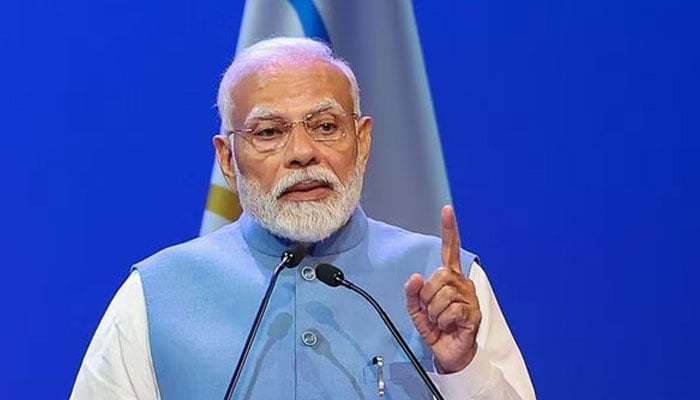
    Police file case against Meta India chief over Modi videos

    Police in the southern Indian city of Hyderabad have registered a criminal case against the head of Meta India over videos shared on Facebook that allegedly portrayed Prime Minister Narendra Modi in an abusive manner. Officials said the cybercrime unit has initiated legal proceedings and is preparing to issue a formal notice to Meta Platforms as part of the investigation. The notice had not been served as of Friday. Authorities have not disclosed further details about the videos but said the case relates to content published on Facebook that allegedly violated Indian laws. Meta did not immediately comment on the development. The latest case adds to growing friction between the Indian government and the social media company over content involving Prime Minister Modi. Earlier this week, India’s Ministry of Electronics and Information Technology summoned Meta representatives after Facebook briefly restricted one of Modi’s posts. The government sought an explanation from the company, calling for accountability over the incident. Meta later stated that the restriction was the result of an unintended error and restored the post. The message was Modi’s first public response to nationwide student protests that eventually led to the resignation of India’s education minister. In recent weeks, the Indian prime minister has faced intense criticism on social media, with users sharing protests, satire, and political commentary related to the ongoing unrest.

  • |

    19 dead as 49,000 rush Spain’s Ceuta border

    Spain and Morocco have strengthened security along the border of the Spanish enclave of Ceuta after an unprecedented surge saw around 49,000 migrants cross by land and sea within a single day, triggering a humanitarian and political crisis. Authorities from both countries reinforced border fences and increased security deployments on Friday, effectively halting further mass crossings. Moroccan security forces used water cannons to disperse crowds attempting to reach the enclave, while damaged vehicles and signs of violent clashes were visible near the border. Spanish officials confirmed that at least 19 bodies were recovered from the waters during the chaotic crossings, raising concerns over the growing human cost of irregular migration. Prime Minister Pedro Sánchez was expected to visit Ceuta alongside Interior Minister Fernando Grande-Marlaska to assess the situation and oversee the government’s response. Ceuta, a Spanish territory on Morocco’s northern coast, represents one of the European Union’s only land borders with Africa. While the enclave has experienced migration waves in the past, officials described the latest influx as the largest recorded in recent years. Spain’s government said migrants who entered the enclave illegally would be returned in accordance with Spanish law while respecting recent court rulings and international human rights obligations. Officials believe the sudden increase in crossings may have been influenced by a recent Spanish Supreme Court ruling that placed new limits on the immediate return of migrants intercepted while attempting to reach Ceuta and the nearby enclave of Melilla. On the Moroccan side, thousands of migrants gathered near the border town of Fnideq despite heavy security. Many searched for alternative routes after official crossing points were sealed, while others attempted to reach Ceuta by swimming along the coastline. The crowds included men, women, and children from Morocco as well as several Sub-Saharan African countries. The crisis has sparked political tensions across Europe. Italian Prime Minister Giorgia Meloni warned that Italy could consider extraordinary measures, including suspending participation in the Schengen border-free travel system with Spain, if migration pressures continue to escalate. Italy also criticized Spain’s immigration policies, arguing that recent measures to regularize the status of hundreds of thousands of undocumented migrants could encourage further irregular migration. Spain rejected the criticism, insisting that migration requires a coordinated European response based on solidarity rather than political rhetoric. Spanish officials stressed that migrants contribute to the country’s economy while reaffirming their commitment to tackling illegal border crossings.

  • |

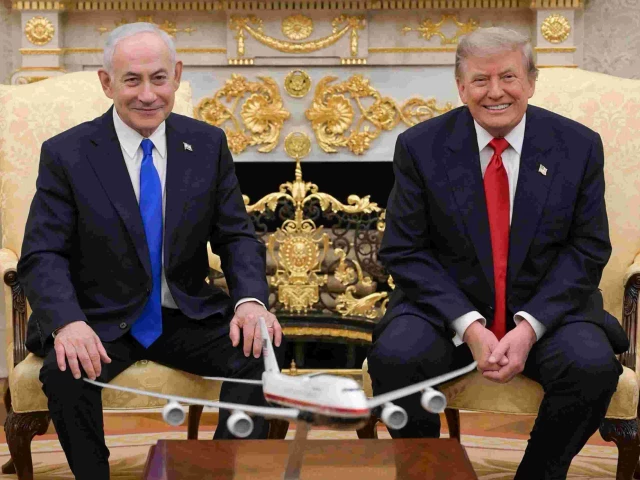
    Israel’s influence in Washington weakens under Trump says former envoy

    Former Israeli ambassador to the United States Mike Herzog has said Israel’s ability to influence decisions in Washington has declined significantly during President Donald Trump’s current administration. He also warned that support for Israel among the American public has been steadily weakening, creating long term challenges for the country’s relationship with its closest ally. Speaking in an interview with Israeli radio station 103FM, Herzog said the close personal bond that once existed between Israeli Prime Minister Benjamin Netanyahu and Trump no longer appears as strong as before. While Netanyahu recently described his latest meeting with Trump at the White House as one of their best meetings, Herzog argued that the event should be viewed more carefully. In his opinion, the meeting lacked the warmth and personal interaction that previously defined the relationship between the two leaders. Herzog said one positive outcome for Netanyahu was that Trump avoided publicly criticising Israel or placing any visible demands on the Israeli government during the meeting. He suggested that this helped Netanyahu present the visit as a diplomatic success, particularly as Israel moves closer to national elections. According to Herzog, the prime minister had a political interest in showing that his ties with Trump remain strong despite growing speculation that relations between the two leaders have cooled. The former ambassador also pointed to several details surrounding the visit that, in his view, reflected a more distant relationship. Netanyahu entered the White House through a side entrance instead of receiving a more prominent arrival. There was no private one on one meeting between the leaders and media attention surrounding the visit remained limited. Herzog said these diplomatic signals suggested the White House wanted to avoid creating the impression that Trump was closely aligned with Netanyahu. He linked this cautious approach to political concerns in the United States following the conflict with Iran. Herzog said many Americans believe Israel played a major role in drawing the United States into the confrontation. Since the conflict has been unpopular with parts of the American public, he believes Trump is careful not to appear as though he acted under pressure from the Israeli leadership. Even so, Herzog said there are currently no major disagreements between Washington and Tel Aviv over Iran, although the relationship is no longer as close as it once was. Beyond the immediate political situation, Herzog warned that Israel’s overall standing in the United States has suffered lasting damage. He said changes in American society, political shifts, economic developments, international campaigns against Israel and policy decisions made by successive Israeli governments have all contributed to a steady decline in public support. He also acknowledged that the actions of Israel’s current government and the ongoing military campaign in Gaza have negatively affected how many Americans view the country. Netanyahu himself recently admitted that support for Israel has weakened in the United States, arguing that social media has played a major role in shaping public opinion. His comments came as recent polling showed a noticeable increase in negative attitudes toward both the Israeli government and the Israeli people. A survey conducted by the Pew Research Center found that public opinion has shifted over the past several years. The percentage of Americans holding unfavourable views of the Israeli people rose from 28 percent in 2019 to 42 percent in 2026. During the same period, favourable views of the Israeli government fell from 41 percent to 32 percent. International criticism of Israel has also intensified since the war in Gaza began in October 2023. In November 2024, the International Criminal Court issued arrest warrants for Prime Minister Netanyahu and former Defence Minister Yoav Gallant on allegations of war crimes and crimes against humanity linked to Israel’s military operations in Gaza. According to reported figures, more than 73,000 people have been killed during the conflict, which has continued despite a truce agreement reached in October 2025.