offers million reward
| | | | |

US offers $15 million reward for Iran drone networ…

WASHINGTON: The United States has announced a $15 million reward for information leading to the disruption of an alleged financial network linked to Iran’s drone programme, escalating pressure on entities accused of supporting the country’s military operations.

The reward was announced by the Rewards for Justice programme run by the US State Department. According to the programme, the offer targets information about financial networks associated with Kimia Pars Sepehran Company (KIPAS), which Washington alleges is involved in producing drones for Iran’s Islamic Revolutionary Guard Corps (IRGC) Quds Force and its regional allies.

In a statement posted on the social media platform X, the programme said it is seeking information on seven senior officials, their associates and the financial infrastructure that allegedly supports the company’s operations.

US authorities said individuals who provide credible and actionable information may qualify not only for the financial reward but could also receive assistance with relocation if necessary.

The announcement identified the individuals of interest as Hassan Aram Banizadeh, Reza Naharvani, Mehdi Naqaneh, Hadi Zavaraki, Abolfazl Meshkani, Abbas Sartaji, and Ehsan Mohaghegh.

The latest reward offer is part of Washington’s broader campaign to disrupt networks it believes are involved in the financing, development and distribution of unmanned aerial vehicles used by Iran and affiliated groups across the Middle East.

US officials have repeatedly accused Iran of supplying drones and military technology to allied armed groups operating in the region. Tehran, however, has consistently rejected allegations that it provides weapons in violation of international obligations, maintaining that its military activities are conducted within its national defence framework.

The new announcement comes amid continued tensions between Washington and Tehran over regional security, sanctions and Iran’s military capabilities. Analysts say targeting financial facilitators has become a key element of the US strategy to weaken supply chains supporting Iran’s drone programme.

The Rewards for Justice initiative has previously offered multimillion-dollar rewards for information related to terrorism, sanctions evasion and other activities considered threats to US national security. The latest offer underscores Washington’s continued focus on disrupting networks it believes contribute to Iran’s expanding drone capabilities.

Similar Posts

  • | |

    Pakistani content creators demand justice in Azad Kashmir

    A wave of digital voices is rising from Azad Jammu and Kashmir and from across Pakistan as deeply disturbing reports emerge of violence following elections held in the region. Content creators, local witnesses and public figures have taken to social media to share footage, demand accountability and appeal for international attention as claims of civilian killings spread rapidly online. The unrest followed elections in AJK, after which protests erupted amid allegations of election rigging. Demonstrators took to the streets demanding protection of their mandate, and the situation deteriorated sharply when clashes broke out between security forces and protesters. According to locals sharing updates on social media, heavy firing continued throughout the night and cellular services were shut down in parts of the region, limiting the flow of information. Reports from the ground claim that more than 200 people have been killed, though these figures have not been independently verified. Among the most widely shared voices was young digital creator Laibaro Manak, who addressed her message directly to PPP chairman Bilawal Bhutto Zardari. “My video is for Bilawal Bhutto,” she said. “I asked him about the internet shutdown and the situation, and he responded that everything should be handled peacefully. But soon after the election, countless people died due to open firing by forces. You took votes and are celebrating your victory, but Kashmir is bleeding. My appeal is to stop the firing. Mothers are waiting for their sons, unaware that their children are being killed by direct gunfire.” Another content creator broke down in tears while addressing the camera, describing scenes of chaos and death he had personally witnessed. He said that after watching his friends die, he stood before the camera and demanded that forces open fire on him too, a raw and anguished act of protest against what he described as indiscriminate killing of innocent people. A third creator spoke directly to the camera from the site of what he described as a long march that was met with force. “Today we were doing a long march, and security forces opened direct fire on us. Countless people are injured, and many are dead. Cellular services are shut down, and they are committing genocide in Kashmir. I request international humanitarian organizations to take action against the oppressors and share this news as much as you can.” Actress Mishi Khan was among the Pakistani public figures to raise her voice. “Please have mercy on the people of Azad Kashmir and Balochistan,” she wrote. “They are citizens of Pakistan who are being treated in the most inhumane manner just because they wanted their rights as citizens. This kind of treatment is so cruel. Have mercy on your own people.” Content creator Anumta Imran also shared footage documenting the deaths, as a growing number of digital voices from within and outside AJK worked to bypass the communication blackout and ensure the situation reached a wider audience. The voices emerging from AJK are not simply asking for sympathy. They are asking to be seen, heard and counted at a moment when the tools that might otherwise amplify their cries have been deliberately switched off.

  • |

    Azad Kashmir goes to polls under revised schedule following civil unrest

    Voting has commenced in the Mirpur division of Azad Jammu and Kashmir (AJK) for the first phase of the region’s general elections, following weeks of political instability and civil unrest. The election commission announced a three-phase schedule across 45 assembly constituencies after campaign activities were severely disrupted by protests led by the Joint Awami Action Committee (JAAC), a civil rights movement recently banned under anti-terrorism laws. The unrest primarily stems from JAAC’s demand to abolish 12 legislative seats reserved for Kashmiri refugees living in Pakistan, which the group contends allow mainstream Pakistani political parties to improperly influence local government formation. While the AJK Supreme Court ruled that these reserved seats hold constitutional protection and cannot be removed by executive decree, security remains high across polling areas, with officials warning of strict legal measures against any attempts to disrupt the voting process. Following the Mirpur phase, voting for the Muzaffarabad division and refugee constituencies will take place on August 2, concluding with the Poonch division on August 10.

  • |

    Nepra approves Rs21.4bn investment plan for SEPCO, sets loss targets

    The National Electric Power Regulatory Authority (Nepra) has approved a Rs21.436 billion Distribution Investment Plan (DIP) for Sukkur Electric Power Company Limited (SEPCO), covering its transmission and distribution operations for the five-year Multi-Year Tariff (MYT) period from fiscal year 2025-26 through FY2029-30. Along with the investment plan, the regulator has also set provisional targets for transmission and distribution (T&D) losses, while directing SEPCO to improve project execution, digitalise operational data and strengthen its planning and monitoring mechanisms. SEPCO had originally requested approval for an investment programme worth Rs90.563 billion. However, after Nepra raised several questions regarding the proposed projects, costs, utilisation of existing assets and investment requirements, the power utility submitted revised details. Following the revisions, SEPCO reduced its proposed investment to Rs40.191 billion in information submitted to Nepra on June 19, 2026. The revised proposal included changes in investment priorities and network development requirements based on updated demand projections. The company also revised project costs in light of the latest Purchase Orders (POs). Nepra, however, found substantial weaknesses in SEPCO’s original investment submission. According to the regulator, the initial proposal did not adequately reflect actual field conditions and lacked a comprehensive assessment of the utility’s requirements. It also contained gaps in cost calculations and information concerning the utilisation of existing assets. The regulator stressed that future investment planning should be based on reliable data, realistic demand assessments and proper evaluation of existing infrastructure rather than relying solely on projected requirements. Low utilisation of previous investments raises concerns Nepra also raised concerns over SEPCO’s ability to execute projects and utilise approved investment funds effectively. During the previous control period, SEPCO had been allowed investment of Rs39.509 billion. However, the company utilised only Rs14.231 billion, representing around 36% of the approved amount. The regulator said the low utilisation rate raised questions about SEPCO’s project implementation capacity and the efficiency with which approved investments were being converted into infrastructure and operational improvements. Delays were particularly noted in projects falling under the STG head. Nepra attributed the slow progress to difficulties in acquiring land, procurement-related problems and inadequate coordination between relevant departments. The regulator indicated that these issues point towards weaknesses in project planning, monitoring of milestones and implementation. SEPCO asked to improve network performance Nepra has also expressed concern over SEPCO’s technical and operational performance, particularly its transmission and distribution losses and reliability indicators, including the System Average Interruption Frequency Index (SAIFI) and System Average Interruption Duration Index (SAIDI). The authority directed the company to strengthen preventive maintenance programmes, improve energy accounting and introduce stronger system controls. These measures, Nepra said, are necessary to reduce losses, improve reliability and ensure consumers receive a more stable electricity supply. SEPCO’s approved investment priorities include expansion and strengthening of its 132-kilovolt network, augmentation of the existing system to accommodate future electricity demand and the deployment of modern technologies. The proposed technological improvements include Advanced Metering Infrastructure (AMI), Supervisory Control and Data Acquisition (SCADA) systems and Geographic Information System (GIS)-based mapping. These technologies are expected to support better monitoring of the electricity network, improve operational efficiency and enhance safety and service quality. Independent consultant made mandatory In a significant condition attached to the investment approval, Nepra has required SEPCO to engage an independent third-party consultant to review and validate its future investment plans before they are submitted to the regulator. SEPCO has also been instructed to prepare detailed Terms of Reference (ToRs) for the consultant and obtain Nepra’s approval before beginning the procurement process. The regulator said independent validation would help ensure that future investment proposals are based on actual requirements and that proposed projects are properly justified. Nepra pushes digitalisation of SEPCO operations Nepra has further directed SEPCO to move away from manual data-management practices and establish a comprehensive digital system for its operational information. The authority noted that dependence on manual systems can result in errors, delays and inefficient decision-making. A fully integrated digital platform, according to Nepra, would allow the company to monitor its network in real time, improve demand forecasting and make investment decisions based on reliable data. The regulator has also adopted a dynamic approach to the approved investment programme, allowing adjustments on an annual basis as well as a mid-term review. SEPCO has been directed to submit its mid-term review by December 2027. The review will include updated electricity demand forecasts, progress on approved projects and the company’s financial performance. Provisional T&D loss target set at 16.31% For FY2025-26 and FY2026-27, Nepra has approved a provisional T&D loss target of 16.31% for SEPCO. The target includes a 1% allowance related to law-and-order conditions. The regulator has also ordered SEPCO to commission an independent third-party assessment of its T&D losses through an international consultant or consortium. The study is required to be completed within nine months, with the timeline taking effect from January 7, 2026, in accordance with the tariff rebasing decision. Nepra warned that failure to submit the required independent study within the prescribed period could result in the regulator applying benchmark loss levels. Under the benchmark framework, the applicable levels would include 5.32% high-tension (HT) losses and 1.85% low-tension (LT) losses, resulting in total distribution losses of 7.17%. Transmission losses would be set at 1%, while the overall technical loss ceiling would remain within the range of 8% to 10%.

  • | |

    ‘I’ll lead from the front’: Sohail Afridi vo…

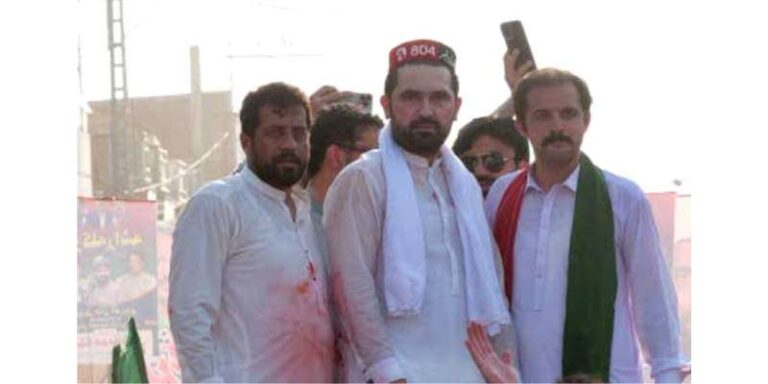
    Khyber Pakhtunkhwa Chief Minister Sohail Afridi has announced a major march towards Islamabad on September 27, saying he will personally lead the protest demanding the release of PTI founder Imran Khan. Addressing a public gathering in Bannu on Sunday, Afridi urged supporters not to be afraid and said more than two million people would take part in the planned demonstration. “I will be at the front of the march for Imran Khan’s release,” Afridi said, assuring supporters that he would stand with them throughout the protest. He called on people to remain determined and claimed that a large turnout would make it difficult for authorities to stop the protesters. He also said that those who use oppression are often afraid when confronted by a large public movement. The chief minister also criticised the federal government, alleging that the people of Khyber Pakhtunkhwa had repeatedly been used as “scapegoats” in the past. He accused the authorities of treating the province as an experimental ground and said his administration was independent in making decisions. Speaking about law and order, Afridi said maintaining peace was a shared responsibility. He assured police personnel that his government stood firmly behind them and was providing funds for modern weapons and improvements to police infrastructure. Afridi also compared the current security situation with the period between 2018 and 2022, when Imran Khan was prime minister. He claimed that there had been peace and stability across the region during that period and said terrorism had not been a major threat. According to Afridi, violence and terrorism have returned to the province, with southern districts, particularly Bannu, among the worst affected areas. He held the federal government and those he alleged were responsible for bringing it to power accountable for the deteriorating security situation.

  • |

    US President Donald Trump backtracks on promise allowing Ukraine to produce Patriot missiles

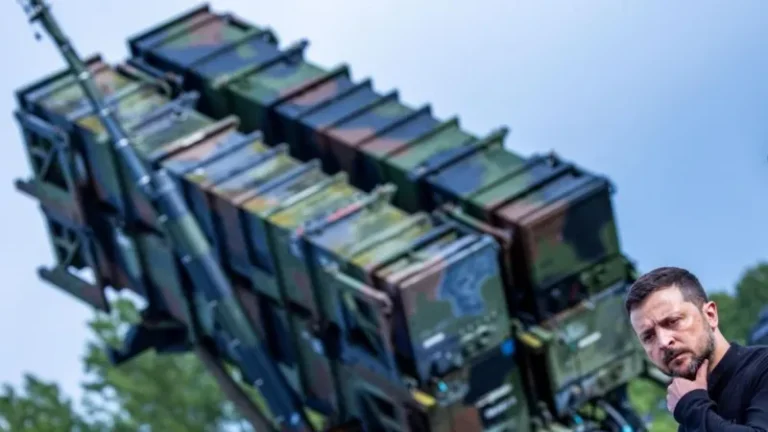
    US President Donald Trump has walked back his previous offer to grant Ukraine a license to domestically produce Patriot interceptor missiles, stating during a Cabinet meeting at Camp David that the United States has “not agreed” to share the technology. Trump expressed caution over transferring sensitive defense hardware, warning that “they can someday turn on you” and emphasising the need to safeguard advanced military systems. The reversal comes just three weeks after Trump publicly promised Ukrainian President Volodymyr Zelensky at a NATO summit in Ankara that Washington would grant Kyiv the manufacturing rights to build the air defense interceptors. Although Zelensky recently stated after a White House visit that the production licensing had been approved, Trump clarified that no final commitment has been made. The decision arrives as Kyiv faces intensified Russian drone and ballistic missile strikes, with Ukrainian military officials warning that critical shortages of Patriot interceptors are severely compromising their air defense capabilities.

  • |

    Wasim Akram’s 1992 heroics inspire Rabada ahead of 2027 World Cup

    JOHANNESBURG: South Africa fast bowler Kagiso Rabada has revealed that one of Wasim Akram’s greatest World Cup performances is motivating him as the Proteas prepare for the 2027 ICC Cricket World Cup on home soil. Rabada, speaking at the official World Cup 2027 venue and brand announcement event in Johannesburg, acknowledged that hosting cricket’s biggest tournament brings an added sense of responsibility. However, the experienced pacer said he prefers to view home advantage as an opportunity rather than a burden. “I think there’s a lot more to it at the moment with us hosting it,” Rabada said. Rather than feeling pressured to deliver a title in front of home supporters, the 31-year-old wants South Africa to embrace the occasion and protect what he described as their “fortress”. “For me, it’s about representing the badge,” Rabada said, stressing the pride that comes with playing a World Cup in front of South African fans. The fast bowler also looked back at the 1992 World Cup final, identifying Pakistan great Wasim Akram’s devastating spell against England as one of the tournament moments he remembers most vividly. Akram changed the final with two remarkable deliveries that removed Allan Lamb and Chris Lewis in successive balls, helping Pakistan seize control before eventually lifting the trophy. For Rabada, the performance represented everything he admires about fast bowling: pace, skill, intensity and the ability to rise to the biggest occasion. “He was fast, had so much skill, and just had this presence, this heightened energy about him,” Rabada recalled. The South African pacer hopes his team can create a similarly memorable moment in 2027. South Africa have repeatedly shown the ability to reach the latter stages of major ICC tournaments but have struggled to convert those appearances into a world title. Rabada believes that barrier is no longer psychological. “We’ve shown that we can go and play in finals and in the semi-finals,” he said. The remaining challenge, he added, is taking that final step. With the 2027 World Cup set to be staged across South Africa, Zimbabwe and Namibia, Rabada and his teammates will have a major opportunity to write their own chapter in cricket history. And if Rabada can channel even a little of Akram’s 1992 magic, South African fans may have plenty to celebrate.

Leave a Reply

Your email address will not be published. Required fields are marked *