देश-विदेश

  • |

    Israel says Hezbollah tunnel network destroyed in southern Lebanon

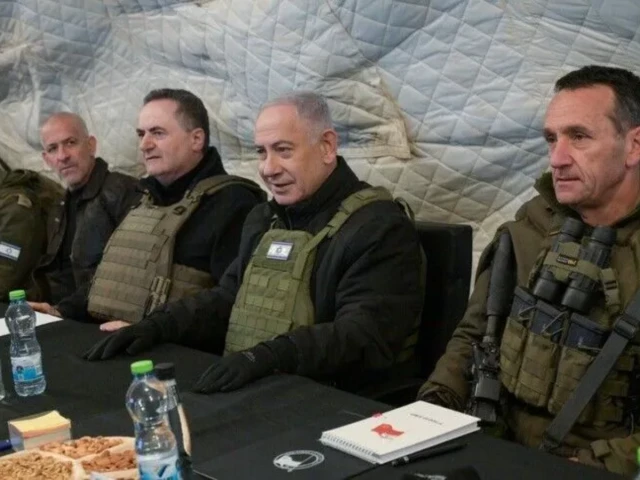
    Israeli Prime Minister Benjamin Netanyahu and Defence Minister Israel Katz announced that Israeli forces had destroyed what they described as a major Hezbollah tunnel network in southern Lebanon. According to a joint statement released on Friday, the underground tunnels in the Beaufort area were considered an important part of Hezbollah’s alleged plan to enter communities in northern Israel’s Galilee region. The Israeli government said the military used around 700 tons of explosives to demolish the tunnel system. Officials described the operation as part of Israel’s continuing efforts to eliminate Hezbollah’s military infrastructure in southern Lebanon. They claimed the action was necessary after accusing Hezbollah of violating the ceasefire agreement that had been reached between the two sides. Before the Israeli announcement, Lebanese media reported a series of powerful explosions across several locations in southern Lebanon. Blasts were heard in the town of Hadatha, around Deir Mimas near Beaufort Castle and in the area between Arnoun and Yahmar. Residents said the explosions echoed across nearby districts and caused widespread concern during the night. The military operation comes only weeks after Lebanon and Israel signed a United States backed framework agreement on June 26 aimed at reducing tensions along the border. The deal outlined a gradual withdrawal of Israeli forces from occupied Lebanese territory while the Lebanese army would expand its presence in the south and armed groups would be disarmed. Although Hezbollah was not named directly, the agreement was widely understood to include the group. As part of the first phase of the agreement, the Lebanese army began deploying forces in the town of Zawtar al Gharbiyeh on July 21 after Israeli troops pulled back from the area. The town was selected as one of the first locations for implementing the security arrangements outlined in the agreement. Despite the deal, tensions remain high. Israel continues to maintain a military presence in parts of southern Lebanon. Some of these areas have been occupied for decades while others have been under Israeli control since the conflict that took place during 2023 and 2024. Reports also indicate that Israeli forces recently advanced more than 10 kilometres into Lebanese territory during their latest operations. According to Lebanon’s Health Ministry, Israeli attacks carried out since March 2 have killed 4,333 people and injured more than 12,200 others. The figures reflect the heavy human cost of the ongoing conflict, which has continued despite diplomatic efforts to restore stability along the border. Lebanon’s National News Agency also reported that large explosions shook the southern regions of Yohmor al Chqif, Arnoun and Kfar Tebnit overnight. The blasts were so powerful that shockwaves were felt in towns far from the affected areas. In the Marjayoun district, explosions near Beaufort Castle reportedly shattered windows and damaged nearby homes in Qlayaa. Residents described strong vibrations and the smell of gunpowder spreading through the area after the blasts. The agency further reported that Israeli forces carried out heavy machine gun fire near al Mansouri and Biyout al Sayyad in the Tyre district while artillery shells struck al Mansouri. Tank movements were also reported near Baraachit hill heading towards Aainata in the Bint Jbeil district as military activity continued across southern Lebanon.
  • |

    Wildfire smoke drives dangerous air pollution across France and Spain

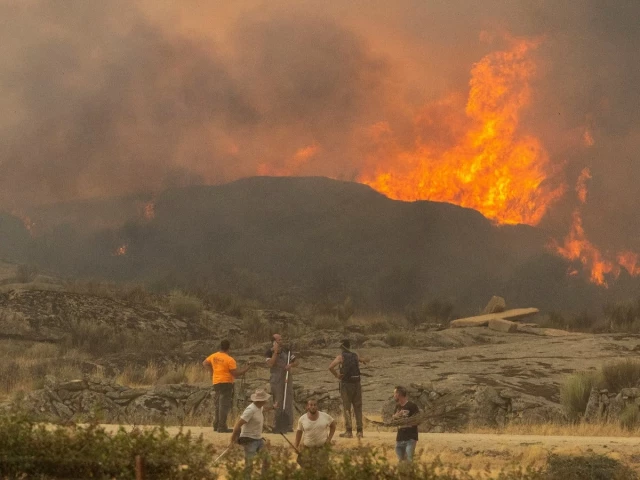
    Massive wildfires burning across France and Spain have pushed air pollution to dangerous levels, exposing millions of people to harmful smoke and raising fresh concerns about public health and climate change. Scientists say the fires have released large amounts of fine particulate matter known as PM2.5, a pollutant linked to heart disease, lung cancer and serious respiratory illnesses. Experts explained that wildfire smoke can travel hundreds of kilometres, reducing air quality far beyond the areas directly affected by the flames. They warned that prolonged exposure to high levels of PM2.5 poses a significant health risk, especially for children, older adults and people with existing medical conditions. Theodore Keeping, a climate scientist at Imperial College London, said repeated exposure to dense wildfire smoke can have serious health consequences. He noted that climate change is contributing to more frequent and intense wildfires, increasing the number of people breathing unhealthy air for extended periods. Air quality data from the European Union’s Copernicus Atmosphere Monitoring Service showed that pollution levels in the French city of Bordeaux rose sharply on July 26. PM2.5 concentrations exceeded 300 micrograms per cubic metre at their highest point, while the daily average reached around 115 micrograms. Scientists said this was nearly five times higher than the European Union’s recommended daily limit. Smoke from the fires also spread across large parts of southern France and central Spain. In Limoges, located more than 200 kilometres northeast of Bordeaux, PM2.5 levels climbed above 400 micrograms per cubic metre during the weekend. Scientists said these figures demonstrate how wildfire pollution can affect communities located far from the fires themselves. Mark Parrington, a senior scientist at the European Centre for Medium Range Weather Forecasts, said the fires are producing enormous amounts of smoke that continue to spread across the region. He explained that particles released by wildfires may become even more harmful because they mix with other chemicals in the smoke. These tiny particles can travel deep into the lungs, increasing the risk of breathing problems and other health complications. Health experts have advised people living in affected areas to follow official safety guidance. Recommended precautions include staying indoors whenever possible, keeping windows closed to prevent smoke from entering homes and wearing protective masks if outdoor travel cannot be avoided. Scientists also warned that the environmental impact of the fires extends beyond air pollution. Europe’s forests normally absorb large amounts of carbon dioxide from the atmosphere, helping to slow global warming. When forests burn, much of that stored carbon is released back into the air, adding to greenhouse gas emissions. According to data from the European Forest Fire Information System, wildfires across Europe have released around 18 million metric tons of carbon dioxide so far this year. France has recorded its highest wildfire related carbon emissions ever measured by this stage of the year. Researchers said nearly half of the European Union’s wildfire emissions for 2026 were produced during the past week alone. Although wildfire emissions currently represent only a small share of the European Union’s overall greenhouse gas output, scientists cautioned that the situation could become more serious in the future. As climate change creates hotter and drier conditions, wildfire risks are expected to expand into northern Europe, where vast forests play a major role in storing carbon. Researchers warned that increasingly destructive fire seasons could make it more difficult for European countries to achieve their long term climate goals.

  • |

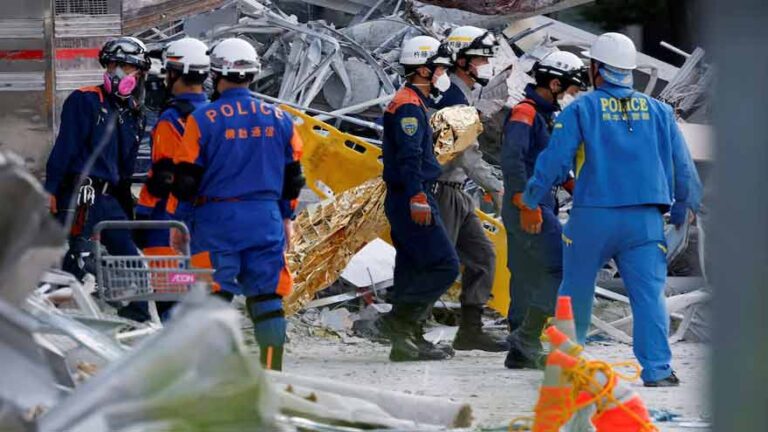
    Japan earthquake disrupts auto and chip production as death toll rises to 34

    A powerful earthquake that struck Japan’s Kumamoto region has killed at least 34 people and disrupted major manufacturing operations, exposing the continued vulnerability of the country’s industrial supply chains. The 7.1 magnitude quake damaged roads, interrupted essential services and forced several automobile and semiconductor companies to suspend production, raising concerns about delays across global supply networks. The earthquake struck on Tuesday, causing widespread destruction in southern Japan. Thousands of households were left without basic utilities while damaged roads and transport links made it difficult for businesses to continue normal operations. Kumamoto is one of Japan’s most important manufacturing regions and plays a key role in producing vehicles, auto parts and semiconductors used around the world. Toyota has temporarily suspended production at three factories in Fukuoka until August 5 because of concerns about employee safety and disruptions affecting suppliers and transport companies. The company has also decided to halt operations at one of its plants in Aichi, located more than 600 kilometres from the disaster zone, showing how shortages of essential components can quickly affect factories far from the earthquake’s epicentre. One of Toyota’s major suppliers, Aisin, also suffered disruptions at its factory near the hardest hit area. The company manufactures engines, doors and other vehicle parts for Toyota, Nissan and Daihatsu. Aisin said it plans to restart production gradually after confirming that facilities are safe and product quality can be maintained. However, it has not announced when full operations will resume. Trucks carrying supplies, including portable toilets, were seen entering the factory as recovery work continued. Local businesses reported that water services had been interrupted although electricity remained available. The latest disaster has revived memories of the 2016 Kumamoto earthquake, which caused severe damage to the same Aisin plant and forced Toyota to suspend production across Japan because of shortages of a critical door component. Industry officials said smaller suppliers further down the supply chain may also have been affected this time, increasing the risk of continued production delays. Auto parts manufacturer Denso said one of its suppliers had already reported damage while several others were still assessing conditions. Nissan has suspended some production at its two vehicle plants in Kyushu because of delays in receiving parts. Mitsubishi Motors has also halted certain production lines at its factory in Okayama as the effects of the earthquake continue to spread through the manufacturing sector. Kumamoto has also become one of Japan’s leading centres for semiconductor production in recent years. The region is often referred to as the country’s Silicon Valley because of its concentration of advanced chip manufacturers. Taiwan Semiconductor Manufacturing Company, the world’s largest contract chipmaker, evacuated workers from its Kumamoto plant immediately after the earthquake. The company later confirmed that operations had started to resume within a few hours. Other semiconductor companies are expected to take longer to recover. Renesas said damage at one of its facilities included fallen ceiling panels, cracked walls and water leaks. The company plans to restart production in stages beginning on August 5. Tokyo Electron announced that it expects to resume production next week, while Sony said efforts are continuing to restore operations at its semiconductor factory in Kumamoto. Although the number of deaths is lower than the more than 260 people killed in the 2016 earthquake, this disaster has still caused significant human and economic losses. Nearly half of the fatalities occurred inside commercial buildings. Nine people died when severe structural damage struck a Nippon Paper Industries mill near the epicentre. Another seven people lost their lives at an Aeon shopping mall where authorities believe a gas explosion occurred more than an hour after the initial earthquake. The disaster has once again highlighted the challenge Japan faces in protecting both its population and its globally important manufacturing industry from natural disasters.

  • |

    Ukraine urges faster missile support as envoy pushes for stronger air defences

    Ukraine has renewed its appeal for advanced air defence missiles, warning that the country urgently needs stronger protection against Russian ballistic missile attacks before winter arrives. Speaking in Washington, Ukraine’s ambassador to the United States, Olha Stefanishyna, said diplomatic efforts to end the war are continuing, but military support remains essential as Russian strikes intensify. Stefanishyna said Ukraine hopes renewed ceasefire discussions with Russia could help bring an end to the conflict before the harsh winter season. However, she stressed that negotiations alone will not protect civilians from the increasing number of missile attacks targeting Ukrainian cities and infrastructure. She said the country urgently requires additional Patriot PAC 3 interceptor missiles to strengthen its air defence system. According to the ambassador, Ukraine is in talks with the Pentagon about obtaining a licence to manufacture Patriot PAC 3 missiles domestically. She acknowledged that such a project would take considerable time, with production possibly beginning anywhere between one and five years after approval. Ukrainian officials are also discussing a long term purchasing arrangement that would allow the country to secure future missile supplies by exchanging production slots with another customer. Stefanishyna revealed that representatives from Raytheon, the company that produces the Patriot air defence system, have already visited Ukraine. She added that Lockheed Martin, which manufactures the PAC 3 interceptor missiles, is preparing to send a team of specialists to the country to explore possible cooperation. Describing the current security situation, the ambassador said Russia has sharply increased its use of ballistic missiles during overnight attacks. She noted that recent waves of strikes have included between 30 and 40 ballistic missiles in a single night. While Ukraine has become more effective at intercepting drones supplied or produced by Russia and Iran, it still lacks enough advanced missile systems to counter large scale ballistic attacks. Stefanishyna said Russian President Vladimir Putin continues to expand missile production while maintaining pressure on Ukrainian cities. She argued that Ukraine has adapted successfully in many areas of the conflict but still requires additional missile defences to protect the population during the coming winter months. The renewed request for military assistance follows Ukrainian President Volodymyr Zelensky’s meeting with United States President Donald Trump at the White House earlier this week. During the talks, Zelensky sought greater support for Ukraine’s air defence capabilities while also encouraging a fresh diplomatic effort aimed at ending the war. The ambassador said the latest peace initiative could include a visit to Kyiv by senior United States representatives Steve Witkoff and Jared Kushner. Although no official date has been announced, she said the visit could take place as early as next week if preparations are completed. Stefanishyna also said Zelensky has repeated Ukraine’s proposal for a ceasefire based on the current front lines, with negotiations continuing from that point. She stressed that meaningful progress is needed before winter because colder weather will make both military operations and humanitarian conditions more difficult. The ambassador also addressed reports about her own future in government. She confirmed that she had offered to resign from her position and return to Ukraine to respond personally to corruption allegations related to her financial declarations. Stefanishyna said President Zelensky had not requested her resignation and preferred that she remain in her role. However, she believes returning home is the best way to defend herself and her family against the accusations while the legal process moves forward.

  • |

    Trump’s Board of Peace plan draws global attention and criticism

    United States President Donald Trump has announced that his Board of Peace has secured an agreement aimed at the complete disarmament of Hamas and other armed groups in Gaza, along with the gradual withdrawal of Israeli forces from the territory. Trump described the agreement as a historic breakthrough and said it would be carried out in stages, with Israeli troops leaving Gaza as disarmament progresses. The Board of Peace was first proposed by Trump in September last year as part of his plan to end the war in Gaza. He later expanded the initiative, saying it would also work to address conflicts in other parts of the world. The board is intended to coordinate peace efforts and oversee reconstruction projects, a role that has traditionally been led by the United Nations. According to its charter, countries joining the board normally serve three year terms. However, nations that contribute one billion dollars toward its activities are eligible for permanent membership. Trump serves as chairman of the initiative and has broad executive authority, including the power to veto decisions and remove members under certain conditions. The White House named Secretary of State Marco Rubio, special envoy Steve Witkoff, former British Prime Minister Tony Blair and presidential adviser Jared Kushner as members of the board’s founding executive team. More than two dozen countries have joined the initiative. Alongside the United States, members include Israel, Saudi Arabia, Egypt and Qatar, all of which have played important roles in recent Middle East diplomacy. Other participating countries include Bahrain, Jordan, Kuwait, Morocco, Turkey and the United Arab Emirates. Outside the region, Albania, Argentina, Armenia, Azerbaijan, Belarus, Bulgaria, Cambodia, El Salvador, Hungary, Indonesia, Kazakhstan, Kosovo, Mongolia, Pakistan, Paraguay, Uzbekistan and Vietnam have also joined. Several major countries and international partners have declined to participate. Britain, France, Germany, Norway, Sweden and the European Union have all decided not to join the initiative. Brazil, Mexico, India and South Africa have also remained outside the board, while China and Russia have chosen not to participate. The Vatican has argued that responsibility for handling international conflicts should remain with the United Nations. Canada also lost its invitation after a diplomatic disagreement between Trump and Prime Minister Mark Carney earlier this year. The Board of Peace received international recognition after the United Nations Security Council approved a United States drafted resolution acknowledging its temporary role in Gaza. Under the resolution, the board will coordinate funding for reconstruction and oversee a temporary international stabilisation force in Gaza through 2027. It must also report its progress to the Security Council every six months. China and Russia abstained from the vote, saying the resolution did not clearly define the United Nations’ role in Gaza’s future administration. Despite official backing, the initiative has attracted widespread criticism from human rights organisations and political observers. Critics argue that the board resembles a colonial style governing structure because it is designed to supervise Gaza without including Palestinian representatives. They have also questioned the inclusion of Tony Blair because of his role in the Iraq war and criticised the participation of countries with poor human rights records. The decision to include Israel on a body responsible for overseeing Gaza has generated additional controversy. Opponents argue that Israel’s ongoing military campaign has left much of Gaza destroyed and displaced its population. Israel maintains that its military actions were carried out in self defence following the Hamas attack in 2023 that killed around 1,200 people and resulted in more than 250 hostages being taken. Since its launch, the Board of Peace has focused mainly on plans for rebuilding Gaza. Trump said member countries have already pledged around seven billion dollars toward reconstruction, although experts estimate that restoring the territory after more than two years of conflict could cost as much as 70 billion dollars. The board has also reportedly held discussions with international companies on future infrastructure and supply chain projects as planning for Gaza’s recovery continues.

  • |

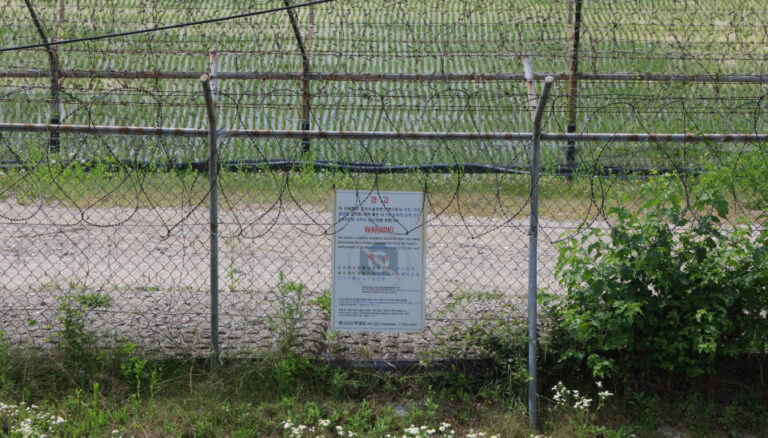
    South Korea investigates military response after US drone mistaken for threat

    South Korea has launched a review after its military nearly opened fire on a United States military drone that was initially identified as an unknown aircraft near the border with North Korea. The incident briefly raised security concerns in one of the most heavily guarded areas of the Korean Peninsula before officials confirmed the aircraft was taking part in a joint military exercise. According to South Korea’s Joint Chiefs of Staff, the drone was detected on Thursday in northern Gyeonggi Province close to the border. Military personnel followed standard operational procedures after they were unable to immediately identify the aircraft. As a precaution, troops prepared to respond while continuing to track its movements. The aircraft was later confirmed to be a United States Marine Corps drone participating in combined training with South Korean forces. The incident prompted a temporary security alert in the border region. Local authorities issued evacuation warnings to residents and farmers living inside the Civilian Control Zone around Cheorwon and nearby communities. Emergency text messages sent shortly after 2 pm advised people in frontline areas to move to shelters or other safe locations until the situation became clear. After military officials confirmed the aircraft’s identity, a second message informed residents that the alert had been lifted and there was no longer any immediate danger. No shots were fired and no injuries or damage were reported. United States Forces Korea confirmed that the aircraft belonged to the US Marine Corps and was involved in a scheduled joint exercise with South Korean troops. The command said it is reviewing the circumstances that led to the misunderstanding and is working with South Korean authorities to examine the incident. South Korea’s Joint Chiefs of Staff announced that military inspectors from its readiness office would visit the Army’s 1st Corps on Friday to review how the situation was handled. The inspection will assess whether existing identification and communication procedures were properly followed and whether improvements are needed to prevent similar incidents in the future. The episode highlights the high level of military alert maintained along the border with North Korea, where tensions remain elevated. South Korean forces routinely monitor unidentified aircraft because of the possibility of North Korean military activity. Officials said troops acted according to established procedures because they could not immediately determine whether the aircraft posed a potential threat. The incident also comes shortly after another security concern involving the United States military. Earlier this week, residents living near a US military base in Pyeongtaek were briefly advised to evacuate following an incident involving white phosphorus. That event prompted some civic groups to call for an investigation and for the US military to provide a public explanation. Although the drone incident ended without violence, it has renewed attention on the challenges of coordinating military operations in a region where misunderstandings can quickly escalate. South Korean authorities are expected to use the findings of their review to strengthen communication and operational procedures during future joint exercises with United States forces.

  • |

    At least 18 migrants die as thousands cross into Spain’s Ceuta enclave

    At least 18 migrants have died while attempting to reach the Spanish enclave of Ceuta after thousands crossed the border from Morocco in one of the largest migration surges seen in the region in recent years. The humanitarian situation continued to worsen on Friday as migrants kept arriving by sea while clashes broke out between Moroccan security forces and groups gathered near the border. Hundreds of migrants were seen on hills overlooking Ceuta as Moroccan authorities used tear gas to disperse crowds trying to move toward the Spanish territory. Despite the security operation, many people continued to swim across the narrow stretch of water separating Morocco from Ceuta. At the same time, large numbers of migrants who had already entered the enclave chose to return to Morocco on foot. Rachid Sbihi, who heads a local association representing Spain’s Civil Guard officers, described the situation as a serious humanitarian emergency. He said thousands of migrants, including many unaccompanied children, were sleeping in parks, streets and public spaces because reception centres had reached capacity. Emergency teams and military personnel sent to the area have mainly focused on treating the injured and providing humanitarian assistance as authorities struggle to manage the crisis. According to local officials, many of the 18 victims drowned while trying to swim into Ceuta. Others reportedly died during a stampede near the breakwater at Tarajal beach as large crowds rushed toward the border. Rescue teams continued searching the coastline while personal belongings including shoes, clothing and flotation devices were scattered along the shore. Many migrants said they left Morocco in search of better economic opportunities in Europe. One migrant, 33 year old Ahmed Karim, said unemployment and limited prospects at home had driven many people to take the dangerous journey. He explained that many dream of reaching Europe or the United States but see few legal opportunities to do so. Moroccan authorities strengthened security along the border by deploying additional police officers, using water cannons and firing warning shots into the air to stop more crossings. Human rights groups said migrants who were detained near the border were transported further into Morocco, although many others continued arriving in the area hoping to enter Ceuta. Morocco’s ambassador to Spain, Karima Benyaich, expressed hope that those who had crossed into Ceuta would voluntarily return. She said Morocco supports safe and orderly migration but did not comment on what had triggered the sudden movement of thousands of people toward the Spanish territory. Officials in Spain linked the surge to a recent Supreme Court ruling stating that migrants who reach Spain by swimming cannot automatically be returned, unlike those who cross by land or climb the border fence. The Spanish government argued that people smuggling networks had exploited public misunderstanding of the ruling to encourage migrants to attempt the dangerous crossing. Some Moroccan rights activists questioned that explanation, saying many migrants were unlikely to have known about the legal decision. Spanish Prime Minister Pedro Sánchez was expected to visit Ceuta after local authorities requested military assistance. His government’s migration policies have come under criticism from opposition politicians, who argue that recent measures granting residency and work permits to certain undocumented migrants have encouraged more people to head for Spain. The government rejected those claims, insisting the current crisis is unrelated to its immigration reforms. The unrest also spread to Melilla, Spain’s other North African enclave, where groups of migrants attempted to cross the border and clashed with Moroccan police. Rights groups reported injuries among security personnel and dozens of arrests. Spanish officials have not yet confirmed how many migrants entered Ceuta, although media reports estimate that between 30,000 and 49,000 people crossed into the territory within a single day, placing enormous pressure on a city with a population of about 84,000.

  • |

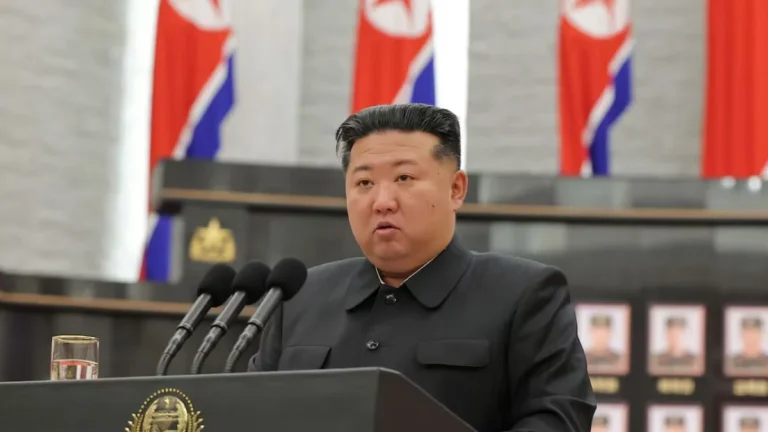
    South Korea estimates North Korea’s economy grew over 3 percent for third year

    North Korea’s economy expanded by more than three percent in 2025 for the third consecutive year, according to new estimates released by South Korea’s central bank. The report suggests that stronger economic and military cooperation with Russia played a major role in boosting growth despite North Korea’s continued international isolation. The Bank of Korea, which has published annual estimates of North Korea’s economy since 1991 because Pyongyang does not release official economic data, estimated that the country’s real gross domestic product grew by 3.5 percent last year. The report valued North Korea’s economy at approximately 38.26 trillion won, or about 26.6 billion dollars. According to Bank of Korea officials, expanded cooperation with Russia was one of the main reasons for the improvement. Analysts have said North Korea has strengthened ties with Moscow by supplying troops and military equipment for Russia’s war in Ukraine. In return, Pyongyang is believed to have received financial assistance, food supplies, energy resources and military technology. A Bank of Korea official said increased weapons exports to Russia supported growth in North Korea’s manufacturing sector. The official also noted that a rise in Russian tourists and improved transport links between the two countries contributed to stronger performance in construction and service industries. The report estimated that North Korea’s exports increased by 30 percent during 2025, reaching around 470 million dollars. Among the leading export products were prepared feathers and wigs, along with toys and sporting goods. Although the report did not identify all exported items, officials said stronger overseas sales contributed significantly to economic growth. The latest figures were released as reports continued to highlight growing military cooperation between Moscow and Pyongyang. Ukraine’s military intelligence, quoted by the Kyiv Independent, claimed that more than 7,000 North Korean troops were killed or wounded while fighting alongside Russian forces during military operations in Russia’s Kursk region between 2024 and 2025. Neither Russia nor North Korea has independently confirmed those figures. Separately, the Ukrainian human rights organisation Truth Hounds said Russia and North Korea are close to completing their first road bridge connecting the two countries. The group said such a link could strengthen military and economic cooperation by allowing easier movement of personnel, equipment and supplies across the border. The Bank of Korea also reported a significant increase in North Korea’s gross national income, which measures the total income earned by a country’s residents. The estimate showed GNI rising by 9.4 percent to 48.5 trillion won, or approximately 33.8 billion dollars. Officials said the increase was supported by higher foreign currency earnings, including income linked to North Korean personnel sent to Russia. Despite the recent growth, North Korea’s economy remains extremely small compared with its southern neighbour. According to the Bank of Korea, North Korea’s gross national income is still less than two percent of South Korea’s economy, highlighting the large economic gap that continues to separate the two countries. The latest estimates suggest that while North Korea remains under international sanctions and largely isolated from global markets, its expanding partnership with Russia is providing new sources of economic activity that have helped sustain growth for a third straight year.

  • |

    Apple forecasts slower sales growth as supply chain problems continue

    Apple has projected slower sales growth for the current quarter, disappointing investors as ongoing supply chain problems continue to limit the company’s ability to meet strong customer demand. The weaker outlook sent Apple shares down by more than five percent in after hours trading despite the company reporting better than expected financial results for the previous quarter. The technology giant said revenue for the quarter ending in September is expected to grow between 9 and 11 percent compared with the same period last year. That forecast fell short of market expectations, which had predicted growth of around 12 percent. Apple also expects iPhone sales to increase at a mid teens rate, slightly below analysts’ forecasts. Chief Executive Tim Cook said the company’s biggest challenge is not weak demand but limited supplies of critical components. He explained that shortages of advanced chip manufacturing technology have reduced Apple’s ability to produce enough of its custom designed processors, especially for its Mac computers. Cook said the company is reviewing all possible options to secure additional supplies, including working with alternative memory chip suppliers. Apple’s Chief Financial Officer Kevan Parekh told investors that the company expects gross profit margins to remain between 47 and 48 percent during the current quarter. Although supply problems remain a concern, executives said demand for Apple products continues to be stronger than expected across several product categories. According to Cook, the company experienced particularly high demand for its Mac lineup during the recently completed fiscal third quarter. Sales of Mac computers rose by nearly 29 percent, driven by strong demand for the entry level MacBook Neo and the premium MacBook Pro models. Cook said the advanced chip manufacturing industry currently lacks the flexibility to respond quickly to unexpectedly high demand, making it difficult for Apple to increase production. Despite concerns about future growth, Apple reported financial results that exceeded most market expectations. Revenue for the fiscal third quarter, which ended on June 27, increased by 16.4 percent to 109.42 billion dollars. Net profit reached 2.02 dollars per share, including benefits from tariff refunds provided by the United States government. Even without those refunds, earnings remained above analysts’ expectations. The company’s strongest performance came from iPhone sales, which climbed 21.7 percent to 54.25 billion dollars. These were Apple’s highest ever third quarter iPhone sales, a period that usually experiences slower demand as customers wait for new models to be released later in the year. Analysts believe some consumers accelerated purchases because of concerns that future price increases could result from the global shortage of memory chips. Mac sales also exceeded expectations, reaching 10.35 billion dollars during the quarter. However, iPad sales declined by 5.9 percent to 6.19 billion dollars. Cook said the decline reflected difficult comparisons with the previous year, when Apple launched a lower priced iPad model that generated unusually strong demand. Revenue from Greater China increased by 22.4 percent to 18.82 billion dollars, although that figure still fell below market forecasts. Analysts said investors remain uncertain about whether demand will remain strong if Apple decides to raise iPhone prices during its expected product launch in September. Although Apple continues to benefit from strong consumer interest and solid financial performance, the company acknowledged that supply chain disruptions remain a major obstacle. Executives said resolving shortages of advanced chips and memory components will be critical to maintaining growth as demand for premium technology products continues to rise.

  • |

    Delhi court gives Tahir Hussain life sentence

    A court in New Delhi on Friday sentenced former Aam Aadmi Party (AAP) leader Tahir Hussain to life imprisonment for the murder of Intelligence Bureau (IB) officer Ankit Sharma during the 2020 Delhi riots. The verdict was delivered by Additional Sessions Judge Parveen Singh after the court found Hussain guilty in the high-profile murder case linked to the communal violence that erupted in northeast Delhi in February 2020. The court also awarded life imprisonment to four other convicts found guilty in the same case. All five were held responsible for the killing of Ankit Sharma, whose death became one of the most widely discussed incidents of the riots. According to the prosecution, Sharma was attacked and killed during the violence that broke out in northeast Delhi, where clashes between rival groups resulted in widespread destruction, loss of life and damage to public and private property. The 2020 Delhi riots lasted several days and claimed dozens of lives while leaving hundreds of people injured. The violence triggered multiple criminal investigations, with police registering several cases against individuals accused of involvement in killings, arson and rioting. Tahir Hussain was elected as a municipal councillor from northeast Delhi on an Aam Aadmi Party ticket in 2017. He was considered a prominent local political figure before the riots. Following his arrest in connection with multiple cases related to the 2020 violence, the Aam Aadmi Party suspended him from the party. Since then, Hussain has remained at the centre of several legal proceedings arising from the riots. Friday’s judgment marks a significant development in one of the most prominent cases linked to the 2020 Delhi violence. The court concluded that Hussain and the four co-convicts were responsible for the murder of IB officer Ankit Sharma and imposed life imprisonment as punishment. The ruling is expected to remain one of the most significant judicial decisions connected to the 2020 Delhi riots, which continue to have legal and political implications in India.