देश-विदेश

  • | |

    Greek police fast-track toxicology tests in probe …

    Greek investigators say they are prioritizing toxicology testing in hopes of determining within days how a Scottish woman died after her body was discovered inside a suitcase in Athens. Elisabeth-Jane Ross, 38, was found in an abandoned building in the Kypseli district of the Greek capital on July 18, reportedly by a homeless man who came across the body. Known to family as Lisa, she is believed to have traveled to Greece from Edinburgh in late June and was reported missing on July 15. Greek authorities are also working to locate American friends of Lisa’s who they say were staying in the same Kypseli area at the time she disappeared. Police have not yet determined whether her death is being treated as a homicide. A post mortem examination is currently underway, and investigators say toxicology results could help establish whether foul play was involved in her death. Such tests typically take anywhere from several weeks to a few months to complete, depending on case complexity and the workload of forensic laboratories. However, police spokesperson Konstantina Dimoglidou told a Scottish broadcaster on Saturday that authorities have made the case a priority and expect results within days, saying investigators need answers on how she died without further delay. According to police accounts, Lisa initially stayed in the Keratsini area, located roughly six miles west of central Athens, with Greek friends. She told them that on July 15 she planned to travel to Kypseli to meet American friends or acquaintances. Investigators are now trying to identify those individuals. Officials also noted that her mobile phone continued transmitting a signal and sending messages for several days after her death is believed to have occurred. The UK’s Foreign, Commonwealth and Development Office confirmed Wednesday that it is providing consular support to Lisa’s family and remains in contact with Greek authorities. Scotland’s First Minister John Swinney described the case as absolutely appalling and said the Scottish government and the FCDO would continue supporting her family. Police Scotland said it is also providing assistance to the family as the investigation continues.

  • | |

    Renowned mountaineer Nirmal Purja among 10 killed …

    British Nepali mountaineer Nirmal Purja has died along with nine other climbers in an avalanche on Broad Peak in Pakistan, according to his expedition company. Elite Expeditions confirmed the death of the 43 year old climber on social media, saying the news came with profound sadness and heartbreak following Thursday’s avalanche. Purja, who was born in Nepal and later served in the British army, had earned global recognition for climbing the world’s 14 highest peaks in just over six months in 2019. Pakistani officials had earlier reported the recovery of the bodies of three other climbers from the same expedition, identified as American Mallory Geis, Nadhira Ahmed Abdullah Al Harthy from Oman and Pur Bahadur Gurung from Nepal. Nepal’s Prime Minister Balendra Shah also confirmed Purja’s death, saying the loss of six Nepali climbers and four foreign climbers, including world record holder Purja, in Pakistan’s Karakoram range had shocked the nation. Shah said the climbers’ courage and contributions would continue to inspire others. Naila Kiani, a spokesperson for the Alpine Club of Pakistan, which is coordinating rescue operations, told a British broadcaster that Purja had led numerous expeditions she had personally taken part in and described him as an extremely experienced and fearless climber with strong leadership skills. Kiani said the Alpine Club would only formally confirm his death once his body has been recovered, though she acknowledged rescuers fear all members of the group have died. She said search teams have spotted some bodies but have not yet been able to reach them. Rescue teams in Pakistan have been searching for the missing climbers on the world’s 12th highest peak following the avalanche, which struck the 8,047 meter summit in the Karakoram mountain range. Purja was leading the multinational climbing group at the time. Also known as Nims, Purja rose to international fame in 2019 after climbing all 14 of the world’s peaks above 8,000 meters in 189 days, breaking the previous record by more than seven years. His achievement later became the subject of a Netflix documentary titled 14 Peaks: Nothing Is Impossible. At the time of his historic climb, he described the effort as grueling but humbling, and said he hoped to show that determination, self belief and positivity could make anything possible. Purja served in the British military for 16 years, including a decade in the special forces, and received an MBE from the late Queen in 2018 in recognition of his extreme high altitude mountaineering achievements. He lived in Hampshire in southern England with his wife and three year old daughter, and was also known as the first Gurkha soldier to climb Everest while still serving in the British military. In his final social media post, shared on Monday, Purja wrote that he had not originally planned to climb Broad Peak. He said his trip had initially been focused solely on Gasherbrum II, another peak in the Karakoram range, but that he realized shortly before departing for Pakistan that summiting Broad Peak as well would leave him needing just one more mountain to become the first person in history to climb all 14 peaks above 8,000 meters twice without supplemental oxygen. He described the added goal as something that emerged unexpectedly rather than as part of a plan, writing that opportunities tend to present themselves quietly to those already putting in the work. He added that he was asking Broad Peak for nothing more than safe passage up and back down, saying he never took any mountain for granted. Broad Peak is widely regarded as one of the more difficult peaks for climbers to summit. The mountain was first successfully climbed in 1957 by an Austrian expedition, and while many climbers have reached its summit since then, dozens have died attempting the ascent. One of its deadliest recorded years was 2013, when at least six climbers lost their lives on the mountain.

  • |

    West Bank village mourns lost harvest as violence halts annual fig festival

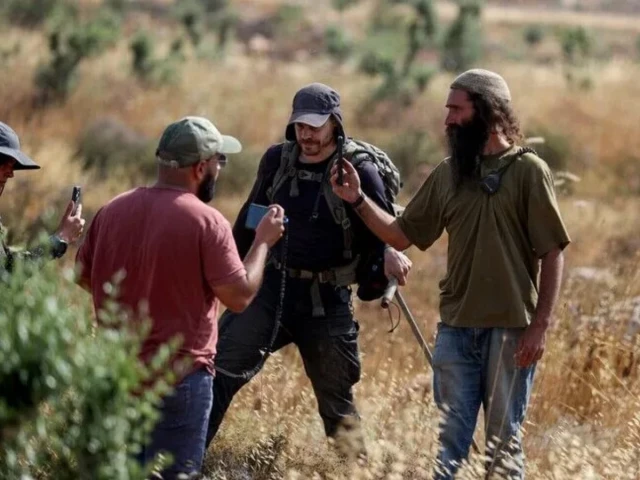
    The Palestinian village of Tel in the northern occupied West Bank should have been celebrating one of its busiest and most cherished times of the year. Residents had spent weeks preparing for the annual fig harvest and a festival expected to attract visitors from across the region. Instead, the village has been left grieving after a deadly confrontation forced organizers to cancel the event and replaced the festive atmosphere with mourning. The violence erupted after an attack involving Israeli settlers last week. The clashes that followed resulted in the deaths of four Palestinians and two Israeli settlers, leaving the community in shock. Black flags now hang where festival decorations were meant to be displayed, while many orchards remain out of reach because of an increased Israeli military presence and ongoing restrictions in the area. Tel village council head Walid Zaidan said the tragedy has deeply affected the community of around 7,000 people. According to him, the village has lost its usual energy and sense of joy after the deaths of four young residents in a single day. He said the emotional impact is visible throughout the village, where families continue to cope with grief and uncertainty. Zaidan said residents had not been seeking confrontation but were trying to protect their homes after repeated attacks by Israeli settlers. He recalled an earlier incident in which the home of a local resident, Sohaib Ramadan, was set on fire. The family managed to escape only moments before the house was completely destroyed. He said many villagers feared another similar attack and went out to defend their neighborhood when violence broke out again. The damage has extended beyond the loss of life. Zaidan said Israeli bulldozers entered farmland and cleared large sections of agricultural land. Initial estimates suggest that around 2,000 dunams, or roughly 500 acres, have been affected. Local officials have been unable to inspect the full extent of the destruction because access to the area remains restricted by Israeli forces and settlers. Residents also claim that a new settlement outpost is being established on the land. At the same time, Israeli forces have carried out arrests and questioned dozens of Palestinians in the village, adding to growing tensions. For the people of Tel, farming is more than an economic activity. Fig trees, olive groves and prickly pear plants have long been central to the village’s identity and way of life. Tel is known throughout the occupied West Bank for producing several varieties of figs, drawing visitors each harvest season to buy fresh fruit and locally made products. Plans for a three day festival featuring figs, dairy products, cheeses and other local goods were abandoned after the violence. Farmers who own nearby livestock and poultry farms have also struggled to reach their animals because roads remain blocked, raising concerns about the welfare of their livestock. Local resident Omar Ishtayeh said the village has depended on agriculture for generations, but increasing restrictions and repeated settler attacks have made farming more difficult. He said orchards that once represented prosperity now reflect the hardships facing local families. With the fig season already underway, many farmers fear the fruit will spoil before they are able to safely return to their land. Palestinian officials argue that the events in Tel are part of a wider rise in settler violence across the occupied West Bank. According to the Palestinian Colonisation and Wall Resistance Commission, thousands of attacks targeting Palestinians and their property were recorded during the first half of 2026. These incidents included assaults on civilians, arson attacks, damage to farmland, restrictions on access to agricultural areas and the expansion of settlement outposts. The United Nations considers Israeli settlements in the occupied Palestinian territories illegal under international law. Palestinians say the continued expansion of settlements is reducing hopes for the creation of an independent Palestinian state and making everyday life increasingly difficult for communities that rely on their land for survival.

  • |

    Bodies of 14 Afghan migrants recovered in Southwestern desert While attempting to reach Iran

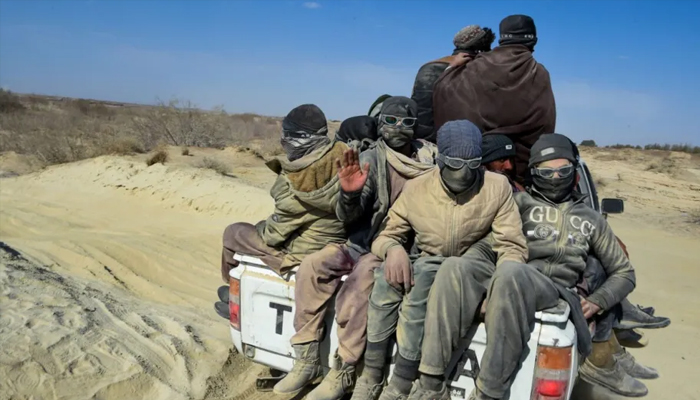
    The bodies of 14 Afghan migrants have been recovered from the desert in southwestern Afghanistan after they reportedly died while attempting to cross into neighboring Iran, according to local authorities. Officials said the victims had been missing for several weeks after setting out on an overland journey toward the Iranian border. The group was traveling by vehicle through the remote desert region when their transportation reportedly broke down, forcing them to continue the journey on foot under extremely harsh conditions. According to media reports, the search for the missing migrants began in Afghanistan’s Nimroz province after the driver of the vehicle managed to reach a nearby village in a state of severe exhaustion and dehydration. The driver reportedly sought emergency assistance and informed local residents and authorities that several passengers had been left stranded in the desert. Rescue teams were subsequently dispatched to search the area. During the initial operation, authorities recovered the bodies of five people. Search efforts then continued for the remaining members of the group who had attempted to continue their journey on foot after the vehicle became inoperable. On Saturday, local officials confirmed that the bodies of an additional 14 migrants had been discovered buried beneath the sand in the remote desert, bringing a tragic end to the search operation. Hospital sources in the region said the victims had likely succumbed to the extreme heat, dehydration, and exhaustion after becoming stranded without adequate food, water, or shelter. The exact cause of death is expected to be confirmed following official examinations. Nimroz province, which borders Iran, is one of Afghanistan’s hottest and driest regions. During the summer months, temperatures frequently reach around 45 degrees Celsius (113 degrees Fahrenheit), creating life-threatening conditions for anyone traveling across its vast desert landscape without sufficient supplies. The province has long served as one of the main transit routes for Afghans attempting to migrate to Iran in search of employment, economic opportunities, or a better future. Many migrants rely on human smuggling networks to organize dangerous journeys across isolated desert areas, exposing them to significant risks, including extreme weather, dehydration, and abandonment. Fatal incidents involving migrants are not uncommon along these routes, particularly during periods of intense summer heat. Humanitarian organizations have repeatedly warned about the dangers associated with irregular migration through remote border regions, where access to rescue services is limited and survival can quickly become impossible if travelers become stranded. Following the latest tragedy, Afghan authorities reaffirmed their commitment to combating human smuggling networks operating inside the country. In a statement carried by Afghanistan’s national broadcaster, Interior Ministry spokesperson Abdul Mateen Qani said security agencies would continue their operations against individuals and criminal groups involved in facilitating illegal migration. “Our authorities remain fully committed to continuing operations against human trafficking and smuggling networks,” Qani said, emphasizing that efforts to dismantle these criminal organizations would continue. The discovery of the victims has once again highlighted the desperate circumstances that drive many Afghans to undertake perilous journeys across some of the world’s most unforgiving terrain. It also underscores the continuing humanitarian challenges facing the country, where economic hardship and limited opportunities continue to push many people toward dangerous migration routes despite the potentially fatal consequences.

  • |

    US-backed Venezuela talks set to begin as Machado stays out of negotiations

    Negotiations aimed at reshaping Venezuela’s political system are expected to begin in the coming days with support from the United States, but the country’s most influential opposition leader, Maria Corina Machado, will not take part in the discussions. The talks are intended to lay the foundation for future democratic elections and political reforms following major changes in the country’s leadership. The dialogue will bring together representatives of Venezuela’s interim government and a faction of the opposition. Jorge Rodriguez, president of the National Assembly and an experienced negotiator, will head the government delegation. The opposition team will be led by Dinorah Figuera, who heads the opposition controlled National Assembly elected in 2015. That legislature continues to be recognised by the United States as Venezuela’s last democratically elected parliament. Sources familiar with the process said Washington encouraged Figuera to lead the opposition delegation because of her position within the 2015 assembly. The United States has backed her group’s efforts to reform Venezuela’s electoral authority and judicial system in preparation for future elections that it says should be free and transparent. Machado’s absence has attracted significant attention because she remains the country’s most popular opposition figure. The Nobel Peace Prize winner has been living mostly outside Venezuela after spending months in hiding following the disputed 2024 presidential election. She recently announced plans to return to Venezuela to assist communities affected by the devastating earthquakes that struck the country in June, despite concerns expressed by some US officials about the timing of her return. Reports suggesting that the Trump administration discouraged Machado from returning have been rejected by US President Donald Trump. Since the removal of former president Nicolas Maduro earlier this year, Machado has largely remained outside the political process promoted by Washington. US officials have argued that broader political support is needed to lead the country’s transition. According to people familiar with the negotiations, Machado was either informed about the talks shortly before they were announced or was never invited to join the delegation because she is not a member of the 2015 National Assembly. Despite her exclusion, she has said she will not obstruct any effort that genuinely advances democracy. Machado has stated that she will judge the success of the negotiations by whether they restore democratic institutions, release political prisoners and establish a clear path toward credible elections. Political analysts believe the negotiators face pressure to deliver meaningful progress quickly. They say any agreement must convince Venezuelans that the process is capable of producing real political change while addressing concerns over Machado’s absence from the discussions. The interim government is expected to use the negotiations to seek the removal of remaining US sanctions. Washington has previously eased restrictions on Venezuela’s oil, gas and gold industries after agreements aimed at improving electoral conditions. Officials hope further progress could lead to additional sanctions relief as part of a broader political settlement. Although the talks were initially scheduled to begin on August 1, sources close to both the government and the opposition said they are now expected to start on Sunday or Monday after the opposition delegation arrives in Caracas. Previous negotiations between the opposition and the former Maduro administration produced limited results. An agreement before the 2024 election promised fair competition and full opposition participation, but Machado was later barred from running. International observers and the United States questioned the election outcome, arguing that opposition candidates received the majority of votes while state institutions declared Maduro the winner. Some experts believe excluding Machado’s political movement leaves an important section of Venezuelan society without direct representation. However, they also note that divisions within the opposition have existed for years, making further splits unlikely. US Secretary of State Marco Rubio has said the United States supports an inclusive political process and believes Machado represents a significant part of Venezuelan society. He stressed that Washington’s role is to facilitate negotiations rather than control them. Opposition figures also say US involvement provides reassurance because many political leaders have previously faced arrests and legal action that they describe as politically motivated. They believe continued international support will be essential if the negotiations are to produce lasting democratic reforms.

  • |

    Sri Lankan court sentences two former security chiefs to death over Easter bombings

    A special court in Sri Lanka has sentenced two former senior security officials to death after finding them guilty of failing to prevent the devastating Easter Sunday bombings that killed 279 people in 2019. The ruling marks one of the country’s most significant legal decisions related to the attacks, which also claimed the lives of 45 foreign nationals and injured more than 500 others. The three judge bench ruled by majority that former police chief Pujith Jayasundara and former defence ministry secretary Hemasiri Fernando neglected their responsibilities despite receiving advance warnings about the possibility of extremist attacks. The court concluded that their failure to act contributed directly to one of the deadliest terrorist incidents in Sri Lanka’s history. Jayasundara, 66, and Fernando, 76, were taken into judicial custody following the verdict. Although both have been sentenced to death, they have the right to challenge the ruling before Sri Lanka’s Supreme Court. They will remain in custody until they are granted bail during the appeals process. Despite the sentence, executions are unlikely to take place. Sri Lanka has not carried out a death sentence since 1976 and has maintained an unofficial moratorium on capital punishment for decades. Government figures presented to parliament earlier this year showed that around 800 prisoners are currently on death row, with most death sentences later reduced to life imprisonment. Friday’s ruling overturned an earlier decision that had cleared both men of criminal responsibility. In 2022, a lower court acquitted the former officials, but prosecutors appealed the verdict, leading to a fresh review of the case before the special fast track court. During the trial, prosecutors presented evidence showing that Indian intelligence agencies had warned Sri Lankan authorities on April 4, 2019 about the possibility of suicide attacks by extremist groups. The warning came more than two weeks before the coordinated bombings on April 21, yet the court found that adequate preventive measures were never taken. The Easter Sunday attacks targeted three churches during religious services and three luxury hotels across the country. The coordinated explosions shocked Sri Lanka and drew international condemnation, becoming one of the country’s worst terrorist attacks since the end of its civil war. Both Jayasundara and Fernando were arrested later in 2019 and spent four months in custody before being released on bail. In a separate civil case, they were ordered to pay 125 million Sri Lankan rupees in compensation to victims and survivors for failing to fulfil their duties. Prosecutors argued that the negligence of the two senior officials amounted to an extremely serious offence because they ignored credible intelligence that could have prevented the attacks. They initially sought murder convictions, claiming their failure to respond to the warnings resulted in hundreds of avoidable deaths. The court ultimately convicted both men of negligence leading to the deaths of 279 people. During earlier parliamentary investigations, Jayasundara and Fernando testified that then President Maithripala Sirisena had not followed established national security procedures before the attacks. They claimed weaknesses in communication and decision making at the highest levels of government contributed to the failure to respond effectively to the intelligence warnings. The verdict is expected to renew debate over accountability for the Easter Sunday bombings and the responsibilities of senior officials in protecting national security. Families of the victims have repeatedly demanded justice and greater transparency over the events leading up to the attacks, while the case remains one of the most closely watched legal proceedings in Sri Lanka’s recent history.

  • |

    Trump jokes about ICC as US steps up campaign against the court

    US President Donald Trump joked on Friday that he has not become a target of the International Criminal Court, making the remarks as his administration continues a diplomatic campaign against the Hague based institution and encourages member states to withdraw from it. Speaking during a cabinet meeting at the Camp David presidential retreat, Trump interrupted Secretary of State Marco Rubio while he was explaining the administration’s opposition to the court. Trump joked that there was no indication the ICC was pursuing him but added that it “could happen,” prompting laughter from those in attendance. The president then said Rubio was not trying to defend him but was instead supporting Israeli Prime Minister Benjamin Netanyahu, who is the subject of an arrest warrant issued by the ICC in 2024. Trump referred to the Israeli leader by his commonly used nickname, Bibi. The comments came as the United States continues to increase pressure on the International Criminal Court. In July, Washington launched a broad diplomatic effort aimed at weakening support for the institution. The campaign includes plans for additional sanctions against the court and calls on member countries to leave the organisation. Relations between the Trump administration and the ICC have remained tense. The United States has already imposed sanctions on several judges linked to the court, accusing it of overstepping its authority and threatening American interests. The International Criminal Court was established in 2002 to investigate and prosecute individuals accused of genocide, war crimes, crimes against humanity and other serious international offences when national legal systems are unwilling or unable to take action. Rubio repeated the administration’s criticism of the court during Friday’s meeting, describing it as an illegitimate international organisation. He said the United States had previously attempted to encourage reforms but claimed those efforts had failed. According to Rubio, the administration has now shifted its focus to reducing the court’s influence and encouraging more countries to reconsider their membership. He also said that five countries had either withdrawn from the ICC or announced plans to do so, adding that Washington hopes additional nations will follow the same path. Chad and Venezuela have recently declared their intention to leave the court. Neither the United States nor Israel is a member of the ICC. Both countries are not parties to the Rome Statute, the international treaty that created the court. Despite that, the ICC has continued to investigate cases involving several global conflicts, leading to repeated disagreements with governments that reject its jurisdiction. The latest remarks from Trump and Rubio underline the administration’s determination to challenge the authority of the International Criminal Court and strengthen its campaign against an institution it says exceeds its legal mandate.

  • |

    Israeli strikes kill two in Gaza as hospital medicine warehouses are destroyed

    Two Palestinians were killed in an Israeli air strike in Gaza on Saturday, while separate strikes destroyed warehouses storing medical supplies for Al Aqsa Martyrs Hospital, raising new concerns about access to healthcare in the territory as uncertainty continues over a possible agreement between Israel and Hamas. According to Palestinian health officials, the two people were killed in the Sheikh Radwan area of Gaza City. The Israeli military said the strike targeted Hamas fighters but did not provide further details about the operation or identify those killed. In another strike earlier the same day, two warehouses near Al Aqsa Martyrs Hospital in Deir al Balah were destroyed. Gaza’s Health Ministry said the buildings contained essential medicines and medical equipment used by the hospital to treat patients, including those receiving dialysis for kidney failure. Other supplies such as wound care materials and gauze were also stored there. The attack also damaged two additional medical storage facilities and the hospital’s outpatient clinic. Hospital officials said no injuries were reported among staff or patients during the incident, but they warned that the destruction of medical supplies would make it more difficult to provide treatment to those in need. Dr Khalil al Daqran, who works at the hospital, condemned the strike and said the destroyed warehouse contained critical medical resources needed for daily operations. He said the loss of the supplies would place further strain on healthcare services already struggling under difficult conditions. Witnesses said Israeli forces issued an evacuation warning before carrying out the strike. The Israeli military did not immediately comment on the attack targeting the warehouse complex. Under international humanitarian law, hospitals and civilian medical facilities are protected during armed conflict unless they are being used for military purposes. Israel has repeatedly accused Hamas and other armed groups of operating from within civilian infrastructure, including hospitals and surrounding buildings, an allegation Hamas has denied. Fatima Sharab, a displaced Palestinian staying in a nearby camp, said many families had chosen to shelter close to the hospital because they expected easier access to medical care if needed. She said the strike caused widespread destruction in the area and left many displaced people without shelter. The latest attacks come despite a ceasefire agreement reached last year through US mediation. Fighting and Israeli military operations have continued across Gaza in the months since. Palestinian health authorities say more than 1,200 people have been killed during that period, with many of the victims reported to be civilians, including women and children. Hamas has not regularly disclosed the number of its fighters killed. Attention is now focused on a possible breakthrough in negotiations to end the conflict. US President Donald Trump recently announced that Hamas had agreed to disarm as part of a broader peace initiative aimed at ending the war. However, Israeli Prime Minister Benjamin Netanyahu has not publicly confirmed whether Israel accepts the reported agreement. Israeli National Security Minister Itamar Ben Gvir has openly opposed the proposal, saying Israel should continue military operations and maintain its campaign against Hamas leaders. Meanwhile, Trump’s Board of Peace has released a roadmap outlining the final steps of its proposed plan, stating that Israel would halt military operations as part of the agreement if all parties move forward with its implementation.

  • |

    China holds military drills near disputed Scarborough Shoal

    China’s military carried out joint naval and air exercises around the disputed Scarborough Shoal in the South China Sea on Saturday, saying the operations were intended to strengthen combat readiness and protect what it considers its territorial and maritime rights. The People’s Liberation Army Southern Theater Command said the drills took place in the waters and airspace surrounding the shoal, which China refers to as Huangyan Dao. The area is also claimed by the Philippines, where it is known as Bajo de Masinloc, and has long been one of the region’s most contested maritime zones. In a statement, the Chinese military said the exercises were a necessary response to actions by what it described as “certain countries” that it claimed were disrupting peace and stability in the South China Sea. The statement did not identify any country by name, but the Scarborough Shoal has remained at the centre of ongoing tensions between China and the Philippines. The Philippine embassy in Beijing did not immediately comment on the military exercises or respond to requests for a statement. According to the Chinese military, the operation was designed to test the coordination and readiness of naval and air forces while improving their ability to respond to security challenges in the region. Officials said the exercises would help strengthen China’s capability to defend its territorial claims and safeguard its maritime interests. On the same day, Chinese authorities also announced new rules governing the Huangyan Island National Nature Reserve, which was established in September 2025. State news agency Xinhua reported that the updated policy bans unauthorised fishing, mining, coral collection, giant clam harvesting and other activities considered harmful to the protected marine environment. Chinese officials said anyone found violating the new regulations would face legal action under the country’s laws. The measures are intended to strengthen environmental protection while reinforcing China’s administrative control over the disputed area. The Scarborough Shoal has been a source of repeated diplomatic and maritime disputes for years. Both China and the Philippines claim sovereignty over the area, and encounters between their coast guards and fishing vessels have frequently heightened tensions in the South China Sea. The latest military exercises are expected to draw close attention from neighbouring countries and regional observers, as competing territorial claims continue to shape security concerns in one of the world’s busiest and most strategically important waterways.

  • |

    India expects weaker August monsoon raising concerns for crops

    India is likely to receive below average rainfall in August after recording near normal monsoon rains in July, according to the country’s weather department. The forecast has raised concerns about crop production and economic activity because millions of farmers depend on seasonal rainfall for agriculture. The India Meteorological Department said rainfall in August is expected to remain below 94 percent of the long period average. Director General Mrutyunjay Mohapatra said the combined rainfall for August and September, which make up the second half of the monsoon season, is also expected to stay below the long term average. The annual monsoon is vital for India’s economy, providing nearly 70 percent of the country’s yearly rainfall. It replenishes reservoirs, rivers and groundwater supplies while supporting agriculture in a country where almost half of all farmland relies entirely on rain instead of irrigation. Farming remains the primary source of income for about half of India’s population. Weather officials said moderate El Nino conditions are currently present in the Pacific Ocean and are expected to strengthen in the coming weeks. The phenomenon could become strong by September, increasing the likelihood of reduced rainfall across parts of India and other areas of Southeast Asia. El Nino is a recurring climate pattern caused by warmer than normal sea surface temperatures in the central and eastern Pacific Ocean. It often disrupts weather systems around the world and has historically been linked to weaker monsoon seasons in India. Previous El Nino years have brought drought conditions that damaged crops, reduced agricultural output and forced the government to restrict exports of certain food grains. Despite the weaker outlook for August, rainfall improved significantly during July. India received one percent more rain than the long period average during the month, helping reduce the overall seasonal rainfall deficit. Since the monsoon began on June 1, the deficit has narrowed to 12.6 percent after reaching 35.4 percent at the end of June. The stronger rainfall in July also helped farmers recover from delays in planting caused by a slow start to the season. Agricultural experts say the improved weather allowed growers to speed up sowing in many regions after an uncertain beginning. However, analysts warn that below normal rainfall during August could still affect the development of crops that have recently been planted. Adequate rainfall during this stage of the growing season is considered essential for healthy crop growth and stable harvests. Government data shows that summer crop planting was nearly 25 percent lower than the previous year at the end of June. Since then, the situation has improved considerably, with the shortfall shrinking to less than five percent as better rainfall encouraged farmers to increase sowing. The latest weather forecast has increased attention on the remainder of the monsoon season, as rainfall over the next two months will play a key role in determining agricultural output, food supplies and overall economic performance in one of the world’s largest farming economies.