देश-विदेश

  • |

    North Korea accuses NATO of expanding war preparations

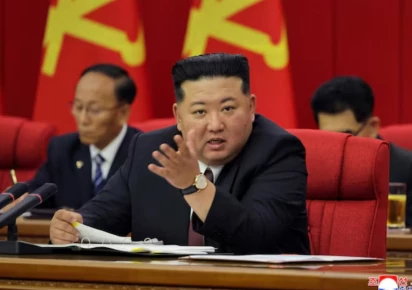
    PYONGYANG: North Korea has accused NATO of increasing preparations for future conflicts, claiming the alliance’s planned expansion of military fuel infrastructure reflects a shift toward a more aggressive military posture. In a statement carried by the state-run Korean Central News Agency (KCNA), Pyongyang criticised NATO’s reported plans to upgrade and expand its fuel supply network across Europe. The project reportedly includes new pipelines and fuel storage facilities aimed at improving military logistics between western Europe and newer eastern and northern member states. North Korea claimed the expansion of fuel infrastructure shows NATO is strengthening its ability to maintain strategic reserves and conduct large-scale military operations. It alleged that the alliance is preparing not only for conflicts in Europe but also for possible involvement in other regions, including the Asia-Pacific. The commentary accused NATO of increasing its military presence in the Asia-Pacific region and criticised the alliance’s cooperation with countries that Pyongyang considers hostile. North Korea claimed that NATO’s recent activities near the Korean Peninsula have contributed to rising regional tensions. Pyongyang also criticised NATO members’ participation in multinational military exercises, including the Rim of the Pacific (RIMPAC) drills. It claimed such exercises demonstrate that the alliance views the Asia-Pacific as a possible area of future military confrontation. North Korea warned that NATO’s expansion of military capabilities and logistics networks could increase global instability. It said strengthening military infrastructure would encourage an arms buildup and create further tensions between major powers. The allegations come amid growing concerns over security developments in Europe and the Asia-Pacific. NATO, however, has repeatedly stated that its military posture is defensive and focused on protecting member countries and deterring potential threats.

  • |

    Russian missile attack kills nine in Kyiv

    KYIV: At least nine people were killed and 28 others injured after Russian ballistic missile strikes hit Ukraine’s capital, Kyiv, on Saturday morning, Ukrainian officials said. The attack caused heavy damage in several areas of the city. Multiple explosions were reported as missiles struck residential areas and other locations. Emergency teams rushed to the affected sites to rescue people and control fires. Kyiv Mayor Vitali Klitschko said the capital came under a major missile attack. He said several explosions were heard across the city, while fires broke out and some areas faced power disruptions. Officials said the Darnytskyi district was among the worst-hit areas. At least seven people were killed there, while 14 others were injured. Two children were among those wounded in the strike. Another missile strike hit the Solomyanskyi district, killing two people and injuring eight others. A five-storey residential building was partially destroyed, trapping some residents inside. Rescue workers carried out operations to search for survivors and clear the damaged structure. The attack also affected the area around the Lithuanian embassy. Lithuania’s Foreign Ministry said a missile landed nearby, damaging windows and spreading debris inside the embassy compound. No casualties were reported among diplomatic staff. The latest strikes are part of an increase in Russian missile attacks on Kyiv in recent weeks. Ukrainian officials say Moscow has intensified the use of ballistic missiles, creating greater pressure on the country’s air defence systems. President Volodymyr Zelensky has repeatedly called for additional air defence support, especially Patriot missile interceptors, which Ukraine says are essential for stopping ballistic missile attacks. Zelensky raised the issue during his recent meeting with US President Donald Trump in Washington. He urged greater support for Ukraine’s air defence capabilities as Russian attacks continue. Trump said discussions over Ukraine’s request to produce Patriot interceptors are still ongoing. However, he expressed concerns about sharing advanced US military technology and said such decisions require careful consideration. Ukraine has faced shortages of Patriot systems as Russian air attacks have increased. Kyiv says these systems remain among the few weapons capable of intercepting high-speed ballistic missiles. Meanwhile, Ukraine has continued launching retaliatory strikes against Russian targets. Ukrainian officials say their operations are aimed at disrupting military supply routes and damaging facilities linked to Russia’s war efforts.

  • | |

    Germany faces ICJ hearing over Nicaragua’s Gaza …

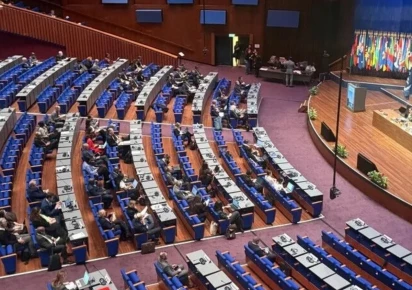
    THE HAGUE: The International Court of Justice (ICJ), the United Nations’ highest judicial body, has announced that it will hold public hearings in September to examine Germany’s preliminary objections in a case filed by Nicaragua over alleged violations of international law related to the occupied Palestinian territory, particularly the Gaza Strip. According to an official statement issued by the court, the hearings will take place from September 7 to September 10 at the Peace Palace in The Hague. The proceedings will focus solely on Germany’s objections to the court’s jurisdiction and the admissibility of parts of Nicaragua’s legal claims before the case can move forward on its merits. Nicaragua initiated the case on March 1, 2024, accusing Germany of breaching its obligations under the Genocide Convention, the 1949 Geneva Conventions, their Additional Protocols and other principles of international humanitarian law. The Central American nation argues that Germany has failed in its duty to help prevent genocide by continuing political, financial and military support for Israel during the conflict in Gaza. Nicaragua also claims Germany’s decision to suspend funding for the United Nations Relief and Works Agency for Palestine Refugees (UNRWA) contributed to worsening the humanitarian situation. According to Nicaragua, the ongoing conflict, which began in October 2023, has created what it describes as a recognized risk of genocide against the Palestinian population in Gaza, making all states party to the Genocide Convention responsible for taking preventive measures. Germany formally challenged the case on October 21, 2025, filing preliminary objections that argue the ICJ does not have jurisdiction to hear the dispute. Berlin also contends that several of Nicaragua’s claims are legally inadmissible. Under ICJ procedures, consideration of the main case has been suspended until the court decides whether it has the authority to proceed. The hearing schedule provides Germany with the first opportunity to present oral arguments on September 7, followed by Nicaragua on September 8. Germany will return for a second round on September 9, while Nicaragua will deliver its final submissions on September 10. The case is being closely watched by governments, legal experts and international human rights organizations, as the court’s eventual ruling on jurisdiction could determine whether one of the most closely followed legal disputes arising from the Gaza conflict proceeds to a full hearing on its merits.

  • | |

    Modi calls for mercy as India moves past exam prot…

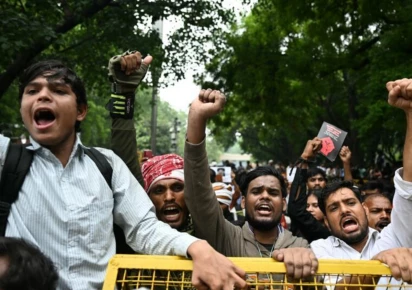
    NEW DELHI: Indian Prime Minister Narendra Modi has called for compassion toward students who participated in recent nationwide protests over a controversial examination paper leak, saying that punishment alone would not resolve the underlying issues that triggered one of the biggest political challenges of his third term. In a video message shared on social media, Modi said he wanted to forgive students who shouted abusive slogans against him during demonstrations held across the country last month. He argued that dragging young protesters through lengthy legal proceedings would not help restore trust or address their concerns. “These are misguided children. It is our responsibility to show them the right path,” Modi said. “Punishing them, making them appear repeatedly in court or subjecting them to social humiliation will not solve the problem.” The protests erupted after the leak of national examination papers forced authorities to conduct a retest for nearly two million students, sparking widespread anger over transparency, fairness and employment opportunities for young people. The demonstrations quickly spread to several cities, including the capital, New Delhi, where clashes broke out between protesters and security personnel. Police used tear gas and baton charges to disperse crowds attempting to march toward Parliament, while authorities registered cases against hundreds of demonstrators following incidents of violence and anti-government slogans. The student-led movement, identifying itself as the Cockroach Janta Party, has claimed that hundreds of protesters were arrested across different states despite government assurances that police cases against demonstrators would be withdrawn. Following weeks of sustained protests, the government accepted the movement’s key demands, including reforms to the examination system and the resignation of the education minister. The demonstrations were subsequently called off. At the same time, the Modi government has moved to tighten laws against examination fraud by introducing new legislation in Parliament. The proposed bill seeks stricter punishments, including longer prison terms and heavier financial penalties, for individuals involved in leaking examination papers or manipulating public examinations. Political analysts say Modi’s latest remarks appear aimed at easing tensions and encouraging national reconciliation after weeks of unrest. However, they note that public confidence will ultimately depend on the government’s ability to implement meaningful reforms that ensure transparent examinations and restore trust among millions of students preparing for competitive tests across India.

  • |

    Modi says he forgives students over protest slogans

    Indian Prime Minister Narendra Modi has said he forgives students who shouted abusive slogans against him during last month’s nationwide demonstrations, describing them as “misled children” who should be guided instead of punished. Speaking in a video message, Modi said the protesters had used offensive language against him and his late mother during the demonstrations. Despite that, he said he did not want young people to face legal action or social persecution, stressing that they should be shown the “right path” rather than dragged into lengthy court proceedings. The protests emerged after controversy surrounding the National Eligibility cum Entrance Test (NEET), one of India’s largest competitive examinations. The movement gained momentum after the exam was cancelled because of a paper leak, forcing more than two million students to retake the test. What began as an online campaign for education reforms quickly developed into a nationwide protest movement, drawing thousands of students onto the streets. The demonstrations eventually ended after the Indian government accepted several key demands, including the resignation of the education minister. Authorities also announced that criminal cases against protesters would not be pursued. However, reports indicate that police in several states later registered cases against hundreds of demonstrators, particularly those accused of clashing with security personnel or participating in protests where anti-government slogans were raised. The development has sparked criticism from opposition parties and student groups, who argue that it contradicts the government’s earlier assurances. The protests were accompanied by clashes between demonstrators and security forces in several cities. In New Delhi, police used tear gas, baton charges and other crowd-control measures to stop protesters attempting to march towards parliament. Some student activists have also alleged that participants, particularly female protesters, became targets of online harassment and threats on social media following the demonstrations. Rights advocates have expressed concern over the growing hostility directed at student activists during the protest movement. The opposition has intensified pressure on the government, demanding accountability for the police response to the demonstrations. Critics have also questioned the continued registration of cases against protesters despite earlier commitments to withdraw legal action. Meanwhile, the Indian government has introduced legislation aimed at strengthening laws against examination fraud. The proposed bill seeks tougher penalties, including longer prison terms and heavier fines, for those involved in examination paper leaks.

  • |

    Houthis deny reports of Red Sea transit fees

    Yemen’s Houthi movement has rejected reports claiming it plans to charge commercial vessels for passing through the Red Sea, insisting that navigation through the strategic waterway remains free. In a statement issued by the Houthi-run Humanitarian Operations Coordination Center (HOCC), the group said its safe transit service for ships using the Bab al-Mandeb Strait is voluntary and does not involve any fees. It emphasized that no authorized Houthi body is collecting payments from shipping companies. The HOCC also warned shipping operators against making payments or sharing sensitive information with unauthorized individuals or organizations claiming to represent the group. It said any such demands are fraudulent and should not be recognized as official. The clarification came after recent reports suggested that the Houthis were considering introducing transit charges for vessels passing through the Bab al-Mandeb Strait. The reports claimed the proposal had been discussed during meetings with Iranian officials and that plans were being explored to establish a system for regulating such payments. The Bab al-Mandeb Strait is one of the world’s most important maritime routes, linking the Red Sea with the Gulf of Aden. Thousands of commercial vessels carrying oil, fuel and other goods use the passage every year, making it a vital corridor for global trade between Asia, Europe and the Middle East. Security concerns in the Red Sea have remained high since attacks on commercial shipping began in late 2023. The conflict significantly disrupted international shipping, forcing many companies to divert vessels to longer and more expensive routes around southern Africa. Although attacks temporarily declined following a ceasefire last year, commercial traffic through the region has yet to return to previous levels. Shipping companies continue to monitor the security situation closely before routing vessels through the area. The latest reports have also prompted regional efforts to strengthen maritime security. Saudi Arabia recently announced a multinational maritime coalition aimed at protecting freedom of navigation in the Bab al-Mandeb Strait, the Red Sea and the Gulf of Aden.

  • |

    US issues fresh travel warning 

      The United States Embassy in Jordan has issued a fresh security alert urging American citizens to remain vigilant and consider leaving the Middle East if the regional security situation continues to deteriorate. In a statement shared on X (formerly Twitter) on Saturday, the embassy advised US nationals currently in the region to closely monitor developments and prepare for possible travel disruptions. The advisory warned that ongoing instability could result in flight cancellations, temporary airspace closures, and other transportation challenges that may affect travel plans at short notice. The embassy emphasized that Americans living in or visiting Middle Eastern countries should exercise increased caution and remain alert due to the rapidly changing security environment. It also encouraged those who are outside the region to carefully reconsider any plans to travel to or transit through Middle Eastern countries until the situation becomes more stable. According to the advisory, the regional security outlook remains highly unpredictable, with officials describing the situation as “fluid.” The embassy warned that Iran and groups aligned with or supported by Tehran could potentially target US interests in various locations overseas if tensions continue to rise. In a separate advisory, the US Embassy in Amman specifically instructed American citizens to avoid visiting military bases in Jordan. It urged them to stay informed through official embassy updates, closely follow announcements issued by Jordanian authorities, and comply with all local security instructions. The warning comes against the backdrop of increasing tensions between the United States and Iran. According to a report, Washington is reportedly preparing to carry out additional military strikes against Iran over the weekend. While US authorities have not publicly confirmed the reported plans, the development has raised concerns about the possibility of further escalation in the region. Security concerns have also intensified following a series of incidents reported on Saturday. Kuwaiti authorities said they intercepted Iranian drones that were allegedly targeting a government facility as well as civilian vehicles. Officials stated that the drones were successfully neutralized before they could cause damage, and no injuries or fatalities were reported. Meanwhile, another incident occurred in the Gulf region when a commercial tanker was struck by an unidentified projectile off the coast of Oman near the strategically important Strait of Hormuz. The vessel sustained damage, but authorities confirmed that there were no casualties among the crew. Investigations are underway to determine the source of the projectile and the circumstances surrounding the attack. The Strait of Hormuz remains one of the world’s most critical maritime trade routes, with a significant share of global oil shipments passing through the narrow waterway. Any security incidents in the area often raise concerns about international shipping, energy markets, and regional stability. As diplomatic and military tensions continue to mount, US officials are advising citizens to remain cautious, stay updated through official government channels, and be prepared for rapidly changing conditions across the Middle East.

  • | |

    FIFA President Gianni Infantino withdraws FIFA forward enterprise proposal

      FIFA President Gianni Infantino has officially announced the withdrawal of the proposed FIFA Forward Enterprise initiative after facing significant opposition from stakeholders, saying the project no longer serves the best interests of global football. In an official statement, Infantino confirmed that the FIFA Forward proposal has been formally abandoned and that no further work or discussions will be carried out regarding the initiative. “The FIFA Forward project has officially come to an end, and there will be no further progress on the proposals,” Infantino said. According to the FIFA president, the plan—which was linked to broader investment ideas surrounding the FIFA World Cup—had become increasingly divisive within the international football community. Rather than bringing football stakeholders together, the proposal had created disagreement among member associations and other interested parties. Infantino acknowledged that the growing differences of opinion convinced FIFA’s leadership that continuing with the project would not benefit the sport. “The World Cup investment proposal has led to divisions within football, and it is no longer in the game’s best interests to continue pursuing it,” he stated. He emphasized that the FIFA Forward Enterprise initiative was always intended to move forward only if it received the support of a clear majority of FIFA’s member associations. Since that level of consensus was no longer evident, FIFA decided to discontinue the proposal altogether. “The project was always dependent on the backing of the majority of FIFA’s member countries,” Infantino explained. “After carefully listening to the views and concerns expressed by all parties involved, we have concluded that the proposal should not proceed.” The FIFA president stressed that the decision reflected the organization’s commitment to consultation, transparency, and unity within world football. He said FIFA had taken into account the opinions of national football associations, confederations, and other stakeholders before reaching its final conclusion. Infantino reiterated that FIFA’s primary objective has always been to strengthen the global game rather than create unnecessary disagreements. “Our mission has always been to promote unity and improve football around the world,” he said. “That commitment remains unchanged, and we believe this decision is in the best interests of the sport.” Looking ahead, Infantino expressed hope that all stakeholders would once again work together to address the challenges facing international football. He said FIFA intends to bring all relevant parties back to the negotiating table to explore new ideas and initiatives that enjoy broader support across the football community. “We will continue engaging with all stakeholders to find common ground and develop solutions that benefit football globally,” he said. Despite shelving the FIFA Forward Enterprise proposal, Infantino assured member associations that FIFA remains fully committed to supporting football development, particularly in countries where additional investment and infrastructure are needed. He emphasized that expanding access to the sport, improving facilities, and creating opportunities for young players around the world will remain central to FIFA’s long-term strategy. “Our mission to promote and develop football in countries that need greater support will continue,” Infantino concluded. “We remain committed to investing in the future of the game and ensuring that football continues to grow in every region of the world.” The decision marks a significant shift in FIFA’s strategic planning and underscores the organization’s willingness to reconsider major initiatives when they fail to achieve broad consensus among its global membership.

  • | |

    Spain accuses EU allies of ‘selfish’ r…

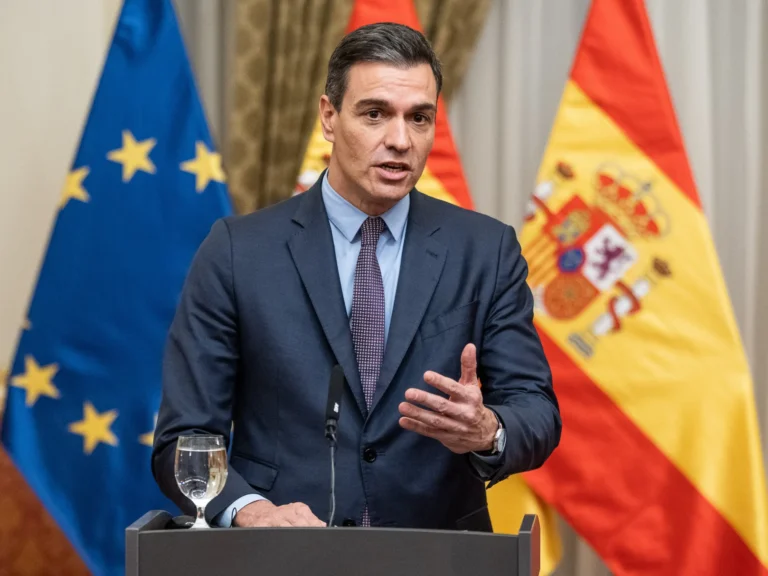
    Spain has accused several European Union governments of a selfish and unlawful reaction after nearly 60,000 migrants crossed into the Spanish enclave of Ceuta from Morocco, triggering a wave of statements from EU member states calling for tighter border restrictions. Prime Minister Pedro Sanchez, in a letter addressed to European Commission President Ursula von der Leyen, described the response from unnamed member states as selfish, polarizing and unlawful. According to a report by the British broadcaster, Sanchez said Madrid had restored order within 48 hours, returning most of the migrants to Morocco and preventing them from reaching mainland Europe. The diplomatic dispute was triggered largely by Italy’s response, which included a temporary suspension of visa free travel with Spain under the Schengen arrangement, along with pointed criticism accusing Madrid of encouraging human trafficking by granting citizenship to more than 500,000 people who had entered the country irregularly. Italian Foreign Minister Antonio Tajani wrote on social media that he supports closing the Schengen area to Spain and expressed confidence in the actions of Italy’s interior minister, Matteo Piantedosi. He said uncontrolled and irregular immigration represents a threat to national security, and argued that the situation unfolding in Ceuta demonstrates how Spain’s decision to naturalize large numbers of irregular immigrants was fundamentally wrong and only encourages trafficking. Italy was not alone in calling for a tougher stance. Czech Prime Minister Andrej Babis went further, calling for Spain to be suspended immediately from the 29 member Schengen arrangement. Finland and Denmark also voiced support for stricter border controls in response to the crisis. Notably, Ceuta itself lies outside the Schengen zone, meaning the enclave is not directly governed by the same free movement rules at the center of the diplomatic dispute between Madrid and its European partners. The clash highlights long standing tensions within the European Union over how to handle migration pressure at its external borders, an issue that has repeatedly strained relations between member states with differing approaches to asylum policy, border enforcement and integration in recent years.  

  • | |

    Italy and Denmark rally 22 EU states behind push f…

    Italy and Denmark have secured the backing of 22 European Union member states for a joint push toward stronger border security, following a chaotic migrant surge into the Spanish enclave of Ceuta that left at least 19 people dead. Thousands of migrants attempted to reach Ceuta, located on Africa’s northern coast, on Thursday, with many swimming around breakwaters using inflatable devices while others scaled the high border fence separating Morocco from the Spanish territory. Official estimates put the total number of migrants who crossed into Ceuta from Morocco at around 60,000. The scale of the crossing prompted alarm among European leaders, with Italian Prime Minister Giorgia Meloni moving quickly to temporarily suspend Italy’s open border Schengen arrangement with Spain for one month, closing direct air and sea travel from Spain without passport checks. By Saturday, Italy had escalated its response further, joining Denmark in leading a coordinated diplomatic push. The two countries spearheaded a joint letter, signed by 22 EU member states, calling for urgent and coordinated European action on border security, deportations and human trafficking. Meloni wrote on social media that the scenes emerging from Ceuta underscored the urgency of a unified European response to illegal immigration. She said the letter, organized together with Denmark, calls for joint efforts to reinforce external borders, combat irregular immigration, target human traffickers, improve the effectiveness of deportations and remove any incentives that encourage further illegal crossings. She added that protecting the European Union’s external borders is not the concern of a single nation but a shared responsibility across the bloc. Spanish Prime Minister Pedro Sanchez pushed back against the growing pressure, accusing several EU countries of a selfish, polarizing and unlawful response to the crisis. In a letter sent to Brussels, Sanchez said some European states have chosen to target Spain and push for its temporary removal from the Schengen area, driven by what he described as prejudice, misinformation, ignorance or political motives. EU officials were scheduled to hold an emergency meeting Saturday afternoon to determine next steps in addressing the unfolding migration crisis in Ceuta. The dispute highlights a long running fault line within the European Union over migration policy, as border states facing the brunt of new arrivals often clash with governments pushing for stricter continent wide controls, a tension that has resurfaced repeatedly during major migration episodes over the past decade.