देश-विदेश

  • |

    Independent experts confirm pellet-gun injuries among protesters in Delhi

    Independent ballistic and forensic experts have confirmed to the BBC that injuries sustained by protesters during the 20 July demonstrations in Delhi were caused by birdshot from 12-gauge pellet guns. The protests, led by the Cockroach Janta Party over repeated exam paper leaks, faced a heavy police and paramilitary crackdown near parliament. While government ministers and Delhi Police have denied deploying pellet guns, insisting only batons and tear gas were used, hospital records, X-rays, and multiple victims verify dozens of small metal pellets embedded in bodies. Among the injured is 19-year-old student Sahil Lochab, who risks losing an eye, and a journalist who documented 30 pellet wounds. If officially verified, this represents the first instance of Indian security forces using pellet guns for crowd control within the capital.

  • | |

    Singapore bans British band Massive Attack following pro-Palestinian display at concert

    The Singapore Police Force and the Infocomm Media Development Authority (IMDA) have issued a formal entry ban against British trip-hop band Massive Attack after band members unfurled a Palestinian flag and shouted “Free Palestine” on stage during their performance at The Star Performing Arts Centre. Following an investigation into the incident, authorities administered stern warnings to founding members Robert Del Naja and Grant Marshall for violating Section 3 of the Foreign National Emblems (Control of Display) Act 1949 and Section 16 of the Public Order Act. The regulatory body confirmed that the band will be denied future entry and performance permits in the country. IMDA is also evaluating potential licensing breaches against the local concert organiser for failing to enforce rules that strictly prohibit the display of political or foreign symbols. Singapore maintains stringent regulations regarding public demonstrations, political expression, and the display of foreign emblems to preserve racial and religious harmony within its multicultural population. Authorities reiterated that external geopolitical conflicts must not be imported into the country’s public sphere. Massive Attack, known for integrating political activism into their performances, continued their world tour with their next scheduled stop in Seoul.

  • |

    Belgian authorities arrest Canadian intern on suspicion of spying at NATO military headquarters

    Belgian prosecutors have launched an investigation into a Canadian woman of Chinese origin arrested on suspicion of spying while working as an intern at NATO’s Supreme Headquarters Allied Powers Europe (SHAPE) in Mons, Belgium. The suspect’s workplace and residence inside the NATO military base were searched following a tip-off from NATO security services regarding suspicious behaviour, including asking unauthorised questions and loitering near alliance buildings. She has been remanded in pre-trial custody for one month on charges of espionage for a third country and membership of a criminal organisation. The incident has raised significant concerns over international security clearance procedures, which fall under the responsibility of an intern’s home nation, in this instance, Canada. Canadian Minister of Public Safety Gary Anandasangaree confirmed that national authorities will review their security screening protocols to determine how the breach occurred. Meanwhile, NATO officials stated that the alliance remains fully committed to safeguarding classified information and protecting personnel.

  • | |

    Search teams recover body of American climber following fatal avalanche on Broad Peak

    Search and rescue teams in northern Pakistan have recovered the body of 39-year-old American mountaineer Mallory Geis following a massive avalanche on Broad Peak, the world’s 12th-highest mountain. The disaster struck a 10-member international expedition led by renowned British-Nepali climber Nirmal “Nims Dai” Purja at an altitude of approximately 7,000 metres in the Karakoram range. Pakistani military helicopters and ground units deployed to the site have secured the remains of three victims so far, including Geis, Omani climber Nadhira Ahmed Abdullah Al Harthy, and Nepali guide Pur Bahadur Gurung. The Alpine Club of Pakistan confirmed that bad weather and hazardous high-altitude conditions have severely complicated ongoing search efforts for the remaining missing team members. Aerial drone footage spotted several other expedition members swept nearly 1,000 metres downhill by the slide, though ground teams have yet to reach them due to the extreme terrain. Local authorities in Gilgit-Baltistan stated that recovered victims were transported to regional medical facilities for official identification procedures, while military helicopters remain on standby for further retrieval operations as weather permits.

  • |

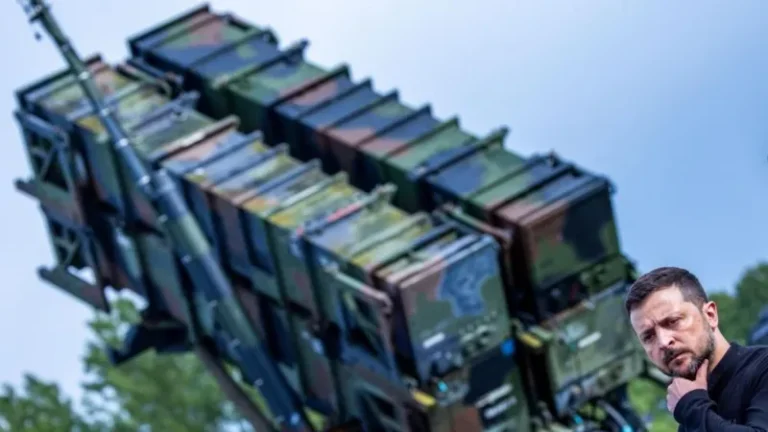
    US President Donald Trump backtracks on promise allowing Ukraine to produce Patriot missiles

    US President Donald Trump has walked back his previous offer to grant Ukraine a license to domestically produce Patriot interceptor missiles, stating during a Cabinet meeting at Camp David that the United States has “not agreed” to share the technology. Trump expressed caution over transferring sensitive defense hardware, warning that “they can someday turn on you” and emphasising the need to safeguard advanced military systems. The reversal comes just three weeks after Trump publicly promised Ukrainian President Volodymyr Zelensky at a NATO summit in Ankara that Washington would grant Kyiv the manufacturing rights to build the air defense interceptors. Although Zelensky recently stated after a White House visit that the production licensing had been approved, Trump clarified that no final commitment has been made. The decision arrives as Kyiv faces intensified Russian drone and ballistic missile strikes, with Ukrainian military officials warning that critical shortages of Patriot interceptors are severely compromising their air defense capabilities.

  • |

    Arizona police release ransom notes in ongoing search for abducted mother of US TV presenter Savannah Guthrie

    Police in Arizona have released the text of two ransom notes six months after the abduction of 84-year-old Nancy Guthrie, mother of prominent US television presenter Savannah Guthrie. The Pima County Sheriff’s Office made the decision to publish the communications in the hope that members of the public might recognise distinct linguistic patterns or writing habits attributable to the perpetrator. Nancy Guthrie was taken from her home near Tucson, Arizona, on 31 January. The first note, received by a local news station on 2 February, demanded $4 million in Bitcoin within five days, threatening that she would be killed if a total of $6 million was not paid by 9 February. The note included specific details regarding the crime scene, referencing a damaged backyard floodlight and a white smartwatch left on her bedroom floor. A second note arrived four days later, claiming that Nancy Guthrie had died from a heart-related condition shortly after her abduction and had been “buried in nature”. However, law enforcement officials stated they cannot confirm her death and continue to treat the investigation as an active missing persons and kidnapping case. Savannah Guthrie, who hosts NBC’s Today show, has released multiple public appeals urging the abductors to reveal the location of her mother’s remains so the family can bring her home.

  • | | | |

    Iran warns of Strait of Hormuz closure as regional tensions escalate

    TEHRAN: Iran has warned that continued US pressure in regional waters could force the closure of the Strait of Hormuz and other strategic maritime routes, as military and diplomatic tensions across the Middle East continue to intensify. Mohammad Bagher Zolghadr, Secretary of Iran’s Supreme National Security Council, said continued US actions in the region could have serious consequences for global shipping and energy supplies. According to Iranian state media, he warned that any further escalation could affect not only the Strait of Hormuz but also other key maritime chokepoints. He said such developments would have a significant impact on the global economy, international energy markets and trade, while also increasing political pressure within the United States. Meanwhile, Kuwait announced that its air defence systems intercepted drones launched from Iran early Saturday. The Kuwaiti military said the drones were successfully engaged before causing damage and confirmed that no casualties or destruction had been reported. Residents were advised to follow official safety instructions as authorities monitored the situation. In Yemen, the Houthi movement denied reports that it planned to charge commercial vessels for passing through the Bab al-Mandab Strait. The group’s Humanitarian Operations Coordination Center said no decision had been taken to impose transit fees and stressed that safe passage through the waterway remained free. The Houthis also urged shipping companies not to make payments to unauthorised individuals claiming to represent Yemeni authorities. The clarification came after reports suggested the group was considering introducing charges following its declaration of a maritime blockade targeting Saudi Arabia. Separately, the Houthis claimed that eight Saudi oil tankers had been forced to reroute around the Cape of Good Hope instead of using the Bab al-Mandab Strait. The group said the diversions were a result of its maritime blockade, although the claim has not been independently verified. Maritime security concerns also increased after a commercial tanker was struck by an unidentified projectile near the coast of Oman. The UK Maritime Trade Operations (UKMTO) said the projectile damaged the vessel’s engine room, leaving it unable to manoeuvre. No casualties or environmental damage were reported, while an investigation into the incident is underway. Iranian Foreign Minister Abbas Araghchi said Tehran is working with Oman to establish practical mechanisms for managing navigation through the Strait of Hormuz. During a telephone conversation with British Foreign Secretary Ed Miliband, Araghchi said outside interference would only worsen the regional situation and complicate efforts to maintain maritime stability. The British foreign secretary reiterated London’s support for diplomacy and said the United Kingdom was not involved in any war with Iran. He stressed that dialogue remained the best path to reducing tensions in the region. Meanwhile, reports from US media suggested that Washington and Israel are considering possible strikes on Iran’s energy infrastructure. According to the reports, discussions have focused on targeting energy facilities if diplomatic efforts fail. However, no final decision has been officially announced. Iranian officials responded by warning that the country has prepared plans to retaliate against any future military action targeting its territory. They said any attack would receive a strong response against strategic interests in the region.

  • |

    Rubio warns of catastrophic US-China conflict

    US Secretary of State Marco Rubio has warned that any military or economic conflict between the United States and China would have devastating consequences for both countries and the wider world, stressing the importance of carefully managing relations between the two global powers. Speaking during a televised interview, Rubio said the relationship between Washington and Beijing remains one of the most significant challenges in international diplomacy. He cautioned that a direct confrontation between the world’s two largest economies would create severe political, economic and security consequences far beyond their borders. Rubio said the United States must continue protecting its national interests while avoiding actions that could trigger a major conflict. He described balancing competition with stability as one of the most difficult responsibilities of foreign policy. His remarks come as strategic rivalry between the United States and China continues to deepen across multiple sectors, including trade, technology, security and global influence. Economic tensions have remained high in recent years, with both countries imposing restrictions on each other’s industries. The United States has expanded trade measures and tightened controls on several Chinese products and technologies, citing national security concerns. Washington has also introduced new restrictions on advanced technologies, including artificial intelligence and robotics, as part of broader efforts to protect sensitive industries and limit the transfer of critical technologies. China has strongly criticised these measures, calling them unfair and unilateral. Beijing has repeatedly opposed US trade restrictions and warned that it could respond with countermeasures to protect its economic interests. Competition between the two countries has also intensified in the field of artificial intelligence, where both sides have exchanged allegations over technology development and intellectual property. Beyond economic and technological issues, both nations continue to strengthen their global influence through different diplomatic strategies. While the United States has focused on reinforcing partnerships with regional allies, China has expanded its engagement with developing countries and strengthened ties with nations across the Global South. Analysts believe that despite growing competition, both Washington and Beijing recognise the importance of maintaining communication to prevent tensions from escalating into open conflict.

  • | |

    Kabaddi player’s wife dies in suspected suicide

    HARYANA: Muskan, the 23-year-old wife of international Indian kabaddi player Shailu Ballhara, was found dead at her residence in the Indian state of Haryana in what police believe to be a suspected suicide, according to Indian media reports. The incident reportedly took place on Friday afternoon. Family members informed the police after discovering her unconscious at the house. Law enforcement officials, along with a forensic team, reached the scene soon afterward and began collecting evidence. Police have launched an investigation to determine the circumstances surrounding the death. Officials said the exact cause behind the suspected suicide has not yet been established, and investigators are examining all possible aspects of the case. According to Muskan’s family, she married Shailu Ballhara in December 2023. The couple welcomed their son, Hardik, in November 2025. Relatives said the family had been living together following the birth of their child. Investigators are also reviewing Muskan’s recent social media activity. Indian media reported that a day before her death, she shared a video featuring a sad Punjabi song, which has become part of the ongoing investigation. However, police have not confirmed whether the post was linked to the incident. Officials said statements from family members and other individuals are being recorded, while forensic evidence collected from the residence is being examined. Authorities added that no conclusions will be drawn until the investigation is complete.

  • | |

    Australia defends social media ban for under-16s

    The Australian government has defended its ban on social media use by children under the age of 16, despite new data showing that most teenagers continue to access restricted platforms months after the law came into effect. The legislation, introduced in December, was designed to protect children from the harmful effects of social media on their mental and physical health. The policy attracted international attention, with Australia becoming the first country to implement such a nationwide restriction on underage social media users. A recent report by Australia’s online safety regulator found that more than eight in ten teenagers under the age of 16 were still using social media platforms three months after the restrictions became operational. The findings have highlighted the challenges governments face in enforcing digital regulations. Despite the report, Australian authorities insisted that the policy remains an important step toward creating a safer online environment for children. Officials said the law has already influenced public discussion about online safety and encouraged greater awareness among parents, educators and technology companies. Assistant Minister for Productivity, Competition, Charities and Treasury Andrew Leigh said the government never expected complete compliance immediately after the law came into force. He explained that many public safety laws require time before they achieve widespread compliance. Leigh said the government considers the legislation successful because it has changed the national conversation about children’s use of social media and encouraged stronger action to protect young users from harmful online content. He noted that millions of social media accounts had already been closed or restricted since the implementation of the law. According to the minister, this demonstrates that the legislation is already having an impact, even if some teenagers continue to access online platforms. The government also stressed that technology companies have a major responsibility to ensure compliance with the new rules. Officials said digital platforms must strengthen age verification systems and take effective measures to prevent underage users from creating or maintaining accounts. Regulatory authorities are continuing to assess how well social media companies are implementing the restrictions. They are also examining additional measures that could improve enforcement and ensure technology firms meet their legal obligations. Experts say the latest findings illustrate the complexity of regulating online platforms, particularly as social media has become deeply integrated into the daily lives of young people. They note that effective enforcement will require cooperation between governments, parents, schools and technology companies.