china leans forecasting
| |

China leans on AI forecasting tools as Typhoon Dol…

China has ramped up investment in artificial intelligence powered weather forecasting as the country works to track a rising number of natural disasters and predict extreme weather events such as powerful typhoons, intense rainfall and prolonged heatwaves tied to climate change.

The country has positioned itself as a leading force in data driven meteorology, increasingly running AI systems alongside traditional forecasting methods rather than replacing them outright.

As meteorologists monitored Typhoon Dolphin’s approach toward China in recent days, a newer generation of AI weather models operated in parallel with conventional forecasting systems, underscoring China’s expanding role in the broader push to improve storm prediction. Unlike standard numerical weather models, which depend on powerful supercomputers to simulate the physics of the atmosphere, AI based systems instead learn from decades of historical weather data. That approach lets them generate forecasts within seconds or minutes while using only a small fraction of the computing power traditional methods require.

According to a state affiliated newspaper, some of China’s most prominent AI forecasting tools include Fengwu, built by the Shanghai AI Laboratory, Huawei’s Pangu Weather system, and Fuxi, developed at Fudan University. These models are increasingly being put through real world testing during East Asia’s intense typhoon season, a period when even modest improvements in tracking a storm’s path can help authorities plan flood responses, coordinate evacuations and manage disruptions to transportation networks.

Fengwu in particular has shown strong results in predicting storm trajectories, with researchers noting that AI based systems can produce forecasts far faster than conventional models while matching or, in some cases, surpassing them on certain accuracy measures.

The rapid progress in AI driven weather forecasting has sparked growing competition among technology firms, research institutions and national meteorological agencies worldwide, with China establishing itself as one of the sector’s most active players.

Even so, meteorologists caution that AI tools currently serve as a complement to physics based forecasting rather than a full replacement. These systems still struggle to accurately capture sudden shifts in storm intensity, and they remain largely untested when it comes to long term climate modeling. As a result, traditional forecasting methods are expected to remain a core part of weather prediction for the foreseeable future, even as AI tools continue to mature and take on a larger role alongside them.

The push toward AI assisted forecasting fits into a broader global trend, as governments and research institutions increasingly explore machine learning as a tool for anticipating the growing frequency and intensity of extreme weather linked to a changing climate.

Similar Posts

  • | |

    President Asif Ali Zardari meets interior minister…

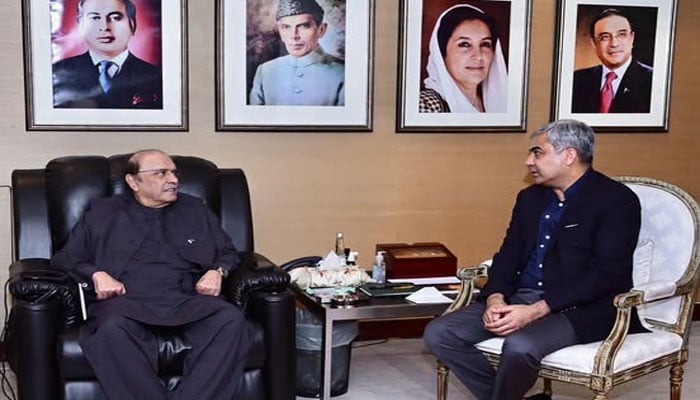
    President of Pakistan Asif Ali Zardari held a meeting with Federal Interior Minister Syed Mohsin Naqvi, during which the two discussed the prevailing political situation in the country as well as a range of important national issues. According to sources familiar with the meeting, the discussion focused on matters of national importance and developments taking place on the political front. The two leaders exchanged views on the current situation and considered issues that require attention at the federal level. The meeting between President Zardari and Interior Minister Mohsin Naqvi comes at a time when the country is facing a number of political, administrative, and security-related challenges. The Interior Ministry plays a key role in dealing with internal security, law and order, border management, immigration, and other matters directly linked to national stability. Sources said that the president and the interior minister also reviewed issues falling within the ministry’s domain. Although details of the discussion were not officially disclosed, the meeting provided an opportunity to exchange views on the government’s priorities and the broader national situation. Political developments were also discussed during the meeting. President Zardari and Minister Naqvi reportedly considered the evolving political environment and its potential impact on governance and national affairs. Both sides emphasized the importance of maintaining stability and addressing important issues through institutional and political channels. The meeting also highlighted the coordination required among key state institutions and government departments to effectively deal with challenges facing the country. In his capacity as federal interior minister, Mohsin Naqvi is responsible for a number of sensitive matters related to internal security and public order, making his discussions with the president significant in the context of national governance. President Asif Ali Zardari, who serves as the head of state, has also been engaged in consultations with senior government officials and political leaders on matters concerning the country. Such meetings provide a platform for reviewing national developments and exchanging views on issues of public and governmental importance. While no major decisions from the meeting were immediately announced, the discussions are understood to have covered several important matters. The meeting reflects the continued engagement between the presidency and the federal government on political and national issues. The exact details of the matters discussed have not been made public. However, sources described the meeting as an important consultation concerning the country’s political situation and other key national affairs. The meeting concluded with both sides exchanging views on the issues discussed. Further developments or decisions related to the matters raised during the meeting may become clearer through official statements or announcements from the government. The meeting between President Zardari and Interior Minister Mohsin Naqvi is therefore being viewed as part of ongoing consultations among senior government officials aimed at assessing the country’s political environment and addressing issues of national significance.

  • |

    Zelenskyy warns Egypt of Black Sea food security threats as Russia rejects maritime ceasefire

    Ukrainian President Volodymyr Zelenskyy has cautioned Egyptian President Abdel Fattah al-Sisi that ongoing Russian strikes on commercial shipping in the Black Sea pose a direct threat to regional food security and grain exports across Africa and the Middle East. Speaking via X, Zelenskyy noted that significant supply reductions are already driving up global grain prices and warned of severe consequences if attacks on cargo vessels persist. In response to proposals for a maritime truce, Russian Foreign Ministry spokesperson Maria Zakharova rejected a third-party proposal from Kyiv to halt strikes on civilian shipping. Moscow dismissed the initiative as a “half-measure” that would merely grant Ukrainian forces operational breathing space, accusing Kyiv of attempting to destabilise Black Sea shipping routes. The diplomatic standoff coincides with several broader geopolitical developments across the region. Russian authorities acknowledged domestic petrol shortages after a Ukrainian strike forced the six-month closure of the Orsk oil refinery, located 1,300 km from the front line. Meanwhile, Polish officials warned that Russian cyber actors are exploiting historical grievances over World War II massacres to strain relations between Warsaw and Kyiv. Further escalating regional concerns, Romanian defence officials confirmed that a second unidentified drone crashed inside NATO territory near the border village of Plauru, whilst Russian President Vladimir Putin reaffirmed deep security cooperation with North Korean leader Kim Jong-un during commemorations marking the end of Japanese colonial rule.

  • | |

    CDF Asim reinforces Pakistan’s defence partn…

    A high-level delegation from Somalia, led by Defence Minister Ahmed Moallim Fiqi, met Field Marshal Syed Asim Munir, Chief of Army Staff and Chief of Defence Forces, at the General Headquarters (GHQ) in Rawalpindi to discuss bilateral defence cooperation and regional security. According to the Inter-Services Public Relations (ISPR), the meeting focused on matters of mutual interest, the evolving regional security environment and ways to strengthen defence and military cooperation between Pakistan and Somalia. Both sides emphasised the importance of expanding military-to-military relations and enhancing cooperation in training and capacity-building initiatives to address shared security challenges. They also discussed the need for closer collaboration to promote peace and stability in the region. During the meeting, the Somali defence minister acknowledged Pakistan’s continued support for Somalia and praised the professionalism of the Pakistan Armed Forces in contributing to regional peace and security. Field Marshal Asim Munir reaffirmed Pakistan’s commitment to supporting Somalia in strengthening its security institutions and enhancing defence capabilities. He said Pakistan values its longstanding relationship with Somalia and remains committed to deepening bilateral cooperation in the defence sector. The meeting reflects the growing defence ties between the two countries and their shared commitment to enhancing security cooperation and addressing common regional challenges.

  • | | |

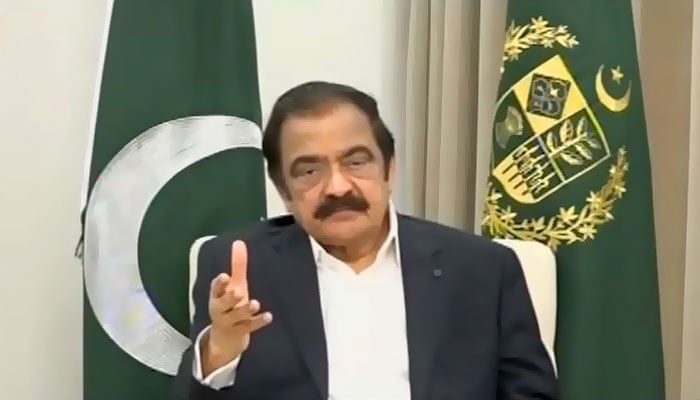
    Rana slams Naqvi’s ‘confusing’ provinces rem…

    Prime Minister Shehbaz Sharif’s Adviser on Political Affairs, Rana Sanaullah, said it was true that former prime minister Nawaz Sharif had instructed party leaders not to respond to Interior Minister Mohsin Naqvi’s recent statements. He added that the Pakistan Muslim League-Nawaz (PML-N) strongly disagreed with both the content and tone of Naqvi’s remarks. Speaking on a television programme, Rana Sanaullah described Mohsin Naqvi’s comments as “meaningless” and lacking context. He said he had listened to Naqvi’s speech but could not understand what message he was trying to convey. “It appeared that he wanted to make a significant point but failed to explain it properly. Once he made the statement, his subsequent remarks contradicted one another. I simply could not understand what he was saying or why he was saying it,” Rana Sanaullah said. He stressed that whenever a person makes a public statement, it reflects their personal opinion, adding that it was up to Mohsin Naqvi to clarify the intent behind his remarks and take responsibility for their interpretation. Responding to Naqvi’s proposal regarding the creation of new administrative units or provinces, Rana Sanaullah said such matters could not be decided merely through public statements. “You cannot simply talk about new provinces and expect them to come into existence. The Constitution clearly defines the procedure for creating new provinces or administrative units,” he said. He maintained that the issue should first be debated in Parliament, while the final decision would rest with the leadership of the political parties. Rana Sanaullah recalled that during the PML-N government in Punjab from 2013 to 2018, the party had formally proposed the creation of new provinces. He said he had personally presented both the resolution and the proposal for establishing a commission to examine the matter. He explained that a national commission would have to be formed to review all aspects of creating new provinces, including financial resources, administrative arrangements and constitutional requirements. “The commission would also need to consult on representation in the National Assembly, provincial assemblies and the Senate. This is a highly complex issue that requires serious deliberation by experienced policymakers,” he said. Rana Sanaullah added that Pakistan could adopt smaller provinces, a stronger local government system, or even both, but such decisions should be made collectively by political parties after thorough consultation

  • | |

    Sargodha student dies after allegedly being forced…

    A young woman lost her life in an alleged poisoning incident in Kot Momin, a town in Punjab’s Sargodha district, after reportedly consuming a toxic drink. Police have launched an investigation following allegations by the victim’s family that she was deliberately poisoned by a classmate after refusing his marriage proposal. According to police officials, a case has been registered against two suspects on the complaint of the deceased’s father. Authorities said the investigation is underway, and efforts are being made to arrest the accused. The victim’s father alleged that his daughter had been invited to a local pizza shop by the suspects, where she was allegedly served a poisonous juice. He claimed that the accused resorted to the act after she refused a marriage proposal made by one of them. According to the complaint, the young woman consumed the beverage during the meeting and shortly afterward began experiencing severe health complications. Her condition rapidly deteriorated, prompting those present to rush her to a nearby hospital for emergency treatment. Despite the efforts of doctors and medical staff, the young woman could not be saved and later succumbed to her condition. Her death has shocked the local community and sparked concern over violence linked to rejected marriage proposals. Police officials confirmed that a First Information Report (FIR) has been registered against the two nominated suspects based on the allegations made by the victim’s father. Investigators are collecting evidence and recording statements from witnesses to determine the exact circumstances surrounding the incident. The victim’s body was shifted to a hospital for a post-mortem examination to determine the precise cause of death. Following the completion of the medico-legal formalities, the body was handed over to her family for burial. Law enforcement authorities said raids are being carried out at multiple locations to arrest the suspects, who are currently at large. Police expressed confidence that the accused would be taken into custody soon and assured the family that the investigation would be conducted in accordance with the law. Officials also stated that forensic evidence, including the alleged beverage and other material collected from the scene, will be examined as part of the investigation. The findings of the post-mortem report and laboratory analysis are expected to play an important role in determining whether poisoning was the cause of death. The case has drawn attention due to the serious nature of the allegations. However, police emphasized that the investigation is still in its early stages, and the claims made in the FIR will be examined through available evidence before any conclusions are reached. Authorities have urged anyone with information related to the incident to cooperate with investigators to help establish the facts. They reiterated that all aspects of the case, including the motive behind the alleged crime, are being thoroughly investigated. The tragic incident has once again highlighted concerns about crimes allegedly linked to rejected marriage proposals and personal disputes. Police have assured the victim’s family that every effort will be made to bring those responsible to justice, while the investigation continues to establish the full circumstances surrounding the young woman’s death.

  • | |

    AJK police accuse banned JAAC of armed violence, b…

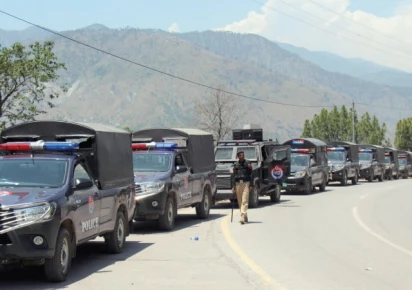
    MUZAFFARABAD: Azad Jammu and Kashmir (AJK) Police have alleged that the banned Joint Awami Action Committee (JAAC) is pursuing a coordinated agenda to disrupt peace and destabilise the region, claiming recent clashes with security forces demonstrate that the group has transformed into an armed organisation. Addressing a press conference in Rawalakot, AJK Police spokesperson Senior Superintendent of Police (SSP) Khawar Ali Shaukat said the violence of the past two days contradicted claims circulating on social media that the movement was peaceful. He alleged that armed individuals occupied buildings, established fortified positions and opened fire on police and security personnel using automatic and sophisticated weapons. According to the police, law enforcement personnel had been deployed across various parts of Rawalakot to maintain public order when they came under attack. Shaukat said authorities had exercised restraint throughout the situation but were compelled to respond in accordance with the law after security forces were targeted. The police spokesperson maintained that the nature of the weapons used and the organised tactics adopted during the clashes suggested the involvement of more than an ordinary protest movement. He further claimed that the group’s activities were intended to damage social harmony, weaken the atmosphere of brotherhood in AJK and create instability in the region. Officials said the confrontation claimed the life of a Rangers official, while around 15 police officers and other law enforcement personnel were injured during the exchanges. Police have reiterated that operations are being carried out under the law to restore order, while investigations into the incidents and the alleged network behind the violence remain ongoing.

Leave a Reply

Your email address will not be published. Required fields are marked *