china stocks slip
| |

China stocks slip as tech weakness overshadows Fed rate decision

SHANGHAI, China – China stocks slipped on Thursday, October 29, as a deepening selloff in tech shares overshadowed the Federal Reserve’s decision to keep interest rates unchanged.

At the midday break, the benchmark Shanghai Composite index lost 0.9%, while the blue-chip CSI300 index .CSI300 fell 1.2%.

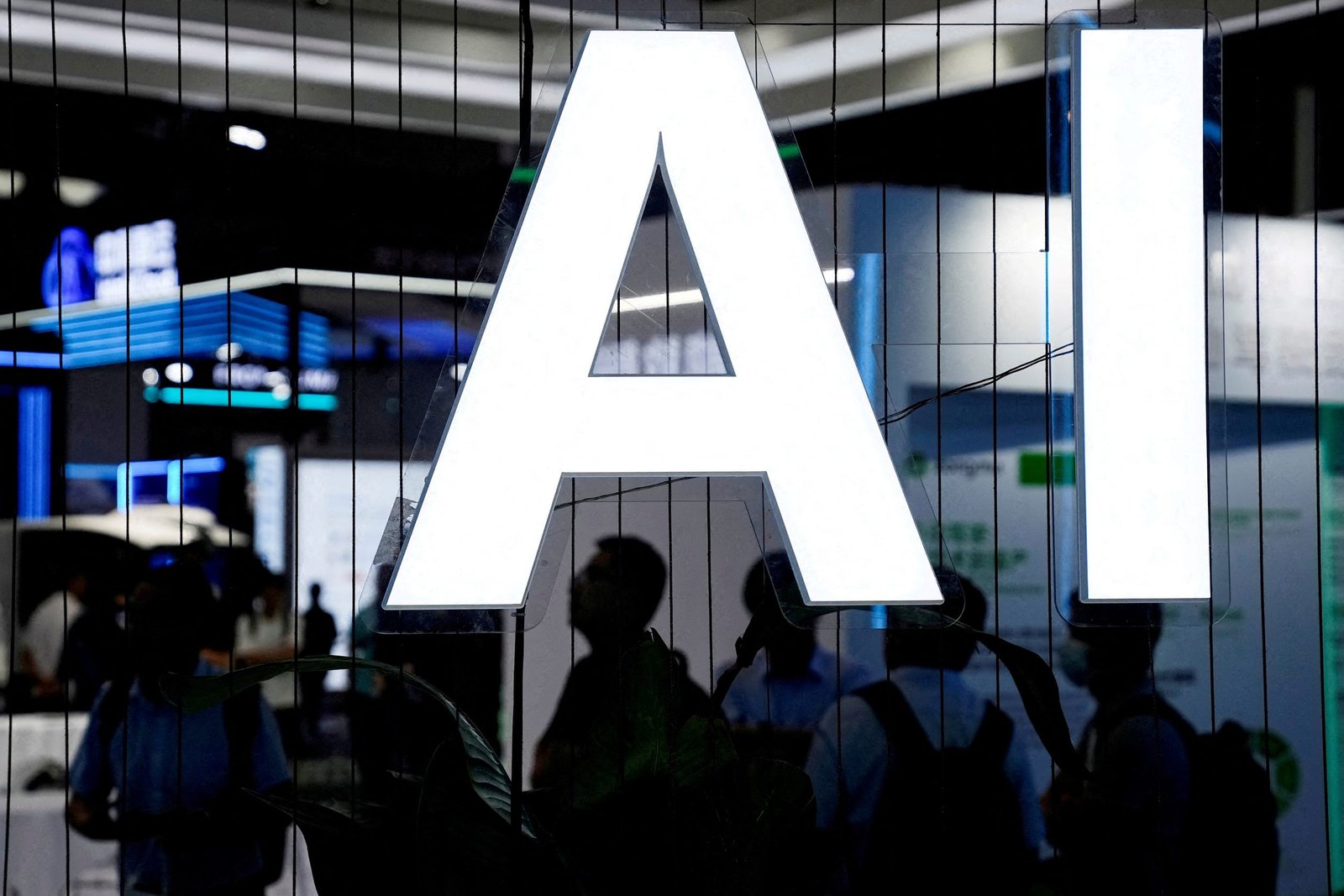
Tech shares were among the main drags, with the start-up board ChiNext Composite index falling 3.6% and Shanghai’s tech-focused STAR50 index tumbling 4.2%.

CSI 5G communications, a gauge that measures the industry, plunged 6.1% in morning deals.

Robot maker Yushu Technology, also known as Unitree, slumped 4.3% after its third-quarter net profit fell despite revenue rising 70% from a year earlier in its first earnings report since listing.

“Valuations for the tech AI hardware names are now close to the historical trough and imply a major deceleration in EPS growth ahead,” said James Wang, head of China strategy at UBS Investment Bank Research.

“We are wary that investor sentiment on AI is fragile; however, we believe the risk-reward is looking more attractive again, and interest may come back towards the end of the year as investors rebuild their portfolios for the new year.”

Across the region, Asian shares gave up earlier gains as AI-related earnings announcements prompted wildly mixed responses, raising the stakes for Amazon and Intel results due later in the day.

The Fed held interest rates steady, as expected, on Wednesday, opting to delay any changes to borrowing costs until after next week’s US midterm elections while it awaits further data on inflation, which the central bank said “remains elevated.”

In Hong Kong, the benchmark Hang Seng index inched up 0.1%, while the city’s tech shares fell 2%.


Similar Posts

  • | | |

    Pakistan unveils major construction reforms to boo…

    ISLAMABAD: The federal government is preparing a wide-ranging reform package aimed at revitalising Pakistan’s construction industry, improving regulatory oversight and attracting greater investment in modern infrastructure. The proposed measures include the establishment of a Construction Industry Development Board (CIDB), consideration of a specialised Construction Development Bank (CDB), targeted tax reforms and changes to import and export policies. The proposals were discussed during a high-level meeting chaired by Federal Minister for Economic Affairs and Establishment Division Senator Ahad Khan Cheema. The meeting brought together senior government officials, representatives of the Construction Association of Pakistan and other stakeholders to examine the sector’s financial, regulatory and operational challenges. Under the proposed framework, the CIDB would promote the development of the construction industry while also regulating contractors, consultants and industry standards. The body would include representatives from both the public and private sectors and would seek to establish more consistent construction standards across the country. Senator Cheema said the government and the Construction Association of Pakistan were in agreement over the need for a dedicated regulatory and development body. The proposed framework will be presented to Prime Minister Shehbaz Sharif for approval. The government also plans to introduce targeted tax incentives and rationalise import and export policies to encourage the use of modern construction technologies and strengthen local production capacity. In a significant move to improve the quality and durability of public infrastructure, the standard Defect Liability Period for public development projects is expected to increase from one year to three years, with a longer-term plan to extend it to five years. The proposed reforms would also increase accountability for consultants. Unlike contractors, who can face penalties for poor performance, consultants currently have limited direct legal accountability. Under the new framework, consultants could be subjected to regulatory oversight and held financially and legally responsible for design defects and technical errors. The government is also examining the construction industry’s difficulties in obtaining financial and performance guarantees. Senator Cheema directed Minister of State for Finance Bilal Azhar Kayani to consult the State Bank of Pakistan and Pakistan Banks Association on these issues and assess the feasibility of establishing a dedicated Construction Development Bank. The government says the reforms are intended to ensure that public infrastructure projects deliver better value for money, remain durable and meet higher technical standards. Officials believe stronger regulation and accountability could reduce disputes, improve construction quality and bring Pakistan’s industry closer to international standards.

  • |

    FBR demonstrates digital tax return features to Karachi tax bar

    ISLAMABAD: The Federal Board of Revenue (FBR) has demonstrated several features of its digital income tax return system to the Karachi Tax Bar Association (KTBA), including mechanisms for reporting investments in immovable property, declaring multiple business capital accounts, recording inheritance assets and calculating tax under relevant provisions of the law. The demonstration was held during an online consultation between the FBR Domain Team and representatives of the KTBA as part of the tax authority’s efforts to obtain feedback from taxpayers and tax practitioners on the design and functionality of the income tax return system. The meeting focused on improving the digital filing experience and identifying areas where the online return could be made simpler, more efficient and easier for taxpayers and professionals to use. KTBA President Mehmood Bikiya welcomed the FBR’s prompt response in arranging the session and appreciated the efforts made by the Domain Team to develop a responsive and user-friendly return system. According to the participants, the existing system is operating satisfactorily, with no major technical problems or significant glitches reported during the discussion. Instead, the meeting primarily focused on clarifications, suggestions for improvement and practical issues faced by tax practitioners while completing returns. The FBR officials addressed a number of queries through live demonstrations, allowing participants to better understand the available options and procedures within the digital system. During the session, the Domain Team demonstrated how taxpayers can report investments in immovable property, enter details of more than one business capital, declare tax under applicable sections and include inherited property in their tax records. Officials also clarified that certain information fields are optional. In particular, the chassis number required in the vehicle-related section does not have to be entered where it is not applicable or available. The consultation also covered several policy-related matters raised by the KTBA. These included the timing of refund applications, deemed assessment orders and procedures for revising income tax returns. The FBR Domain Team explained that such matters are governed by existing policy provisions, including the 15-day rule relating to deemed assessments. The concerns and proposals raised by the tax bar were also forwarded to the FBR’s Policy Wing for examination. Both sides agreed that continued consultations between tax officials and tax practitioners could help address implementation-related concerns and improve taxpayers’ understanding of the digital filing process. The KTBA also submitted several proposals for future versions of the income tax return system. One of the key suggestions was to introduce an option for uploading data through Excel files, which could reduce the time required to manually enter large volumes of information. Other proposals included reconsidering the requirement to enter certain financial information in subsequent years and introducing a system-generated PDF explaining the relevant legal provisions concerning residence status. The FBR Domain Team recorded the suggestions and indicated that they would be considered for possible incorporation into future versions of the return system. Most of the technical and operational questions raised during the meeting were resolved through on-screen demonstrations and explanations by the FBR team. The exercise also provided practitioners with a clearer understanding of the functions already available on the digital platform. KTBA Vice President Saud ul Hasan appreciated the FBR’s willingness to engage directly with representatives of the tax community. He said continued interaction between tax practitioners and the revenue authorities could promote greater understanding of taxpayers’ concerns and strengthen confidence in the digital filing mechanism. The FBR, meanwhile, reiterated its commitment to maintaining regular consultations with the business community, tax practitioners and their representative organisations. The tax authority said feedback received through such engagements would remain important in improving the income tax return system and making the filing process more transparent, straightforward and taxpayer-friendly.

  • |

    SpaceX revenue nearly doubles in first earnings report

    SpaceX has released its first earnings report since becoming a publicly traded company. Revenue nearly doubled over the past year, even as artificial intelligence spending surged sharply. Despite beating analyst forecasts on both revenue and earnings, the company’s stock slipped in after-hours trading. Investors appeared more focused on rising costs than on the strong topline numbers. The company reported $7.8 billion in revenue for the second quarter. That marked a 92% jump compared to the same period last year. Net losses narrowed significantly to $541 million, down from $1 billion a year earlier. SpaceX began trading on the US stock market back in June. Starlink, the company’s satellite internet division, remained the only profitable business unit. It generated $1.6 billion in revenue during the quarter. Elon Musk told analysts on the earnings call that people were underestimating the company. He pointed directly to Starlink’s rapid growth as proof. Musk suggested Starlink could eventually power a large share of global internet access. Meanwhile, the company’s AI computing division posted a $1.2 billion loss on $2.5 billion in sales. The core space business also posted a loss, at $542 million on $962 million in sales. Musk said SpaceX currently runs 1.4 gigawatts of AI computing capacity. He added that this figure is expected to hit 10 gigawatts within the next year. Chief Financial Officer Bret Johnson said capital spending would stay steady for the rest of the year. Industry voices offered mixed reactions to the results. Carré Partners CEO Wendy Souvannarath noted that heavy AI investment has become the norm across tech firms. Analyst Brady Wang praised Starlink’s strong subscriber growth as a genuine bright spot. However, IG analyst Fabien Yip pushed back on Musk’s framing. He said it was a stretch to call the company underestimated while its AI division kept losing money.

  • | |

    Russia extends fuel export ban until January 2027

    Russia has extended its ban on diesel and petrol exports until January 31, 2027, as the government seeks to stabilise domestic fuel supplies and curb rising prices. In a statement, the Russian government said the export restrictions will remain in force until the end of January next year. The move is aimed at ensuring adequate fuel availability in the domestic market amid continued pressure on the country’s energy sector. The latest decision follows an earlier temporary ban on diesel exports that was imposed from July 8 to July 31. Russia has also previously restricted exports of petrol and jet fuel in an effort to address supply shortages at home. According to reports, the export curbs come after repeated Ukrainian drone attacks on Russian oil refineries, which have disrupted refining operations and reduced fuel production in several regions. The attacks have contributed to fuel shortages and rising domestic prices, prompting authorities to prioritise local demand over exports. The government believes extending the restrictions will help ease pressure on consumers and maintain stability in the country’s fuel market. Russia is one of the world’s leading exporters of refined petroleum products, and any changes to its export policy are closely monitored by global energy markets. Analysts say prolonged export restrictions could influence regional fuel supplies and international energy prices if they remain in place for an extended period. The government has not indicated whether the ban will be lifted before the January deadline, saying it will continue to monitor domestic fuel availability and market conditions.

Leave a Reply

Your email address will not be published. Required fields are marked *