chonburi governor orders
| | | |

Chonburi Governor Orders Strict Safety Crackdown on Pattaya Entertainment Venues, Threatens License Non-Renewal for Violators

PATTAYA– Chonburi Governor Narit Niramaiwong on Friday chaired a high-level meeting in Pattaya to tighten fire safety and security measures at entertainment venues across Banglamung district, with a clear warning that operators who fail to comply face administrative sanctions, including denial of license renewals.

The meeting was held at 4:00 p.m. on July 24th, 2026, in the Thapphraya Meeting Room at Pattaya City Hall. Attendees included Police Major General Phongphan Wongmaneethet, Commander of the Chonburi Provincial Police; Deputy Governor Isra Charoenchasri; Banglamung District Chief Anusak Phiriyamorn; Pattaya Mayor Poramese Ngampichet; Nongprue Mayor Winai Inphithak; police superintendents from Pattaya, Nongprue, Banglamung and Huai Yai stations; other officials; and representatives of local entertainment operators.
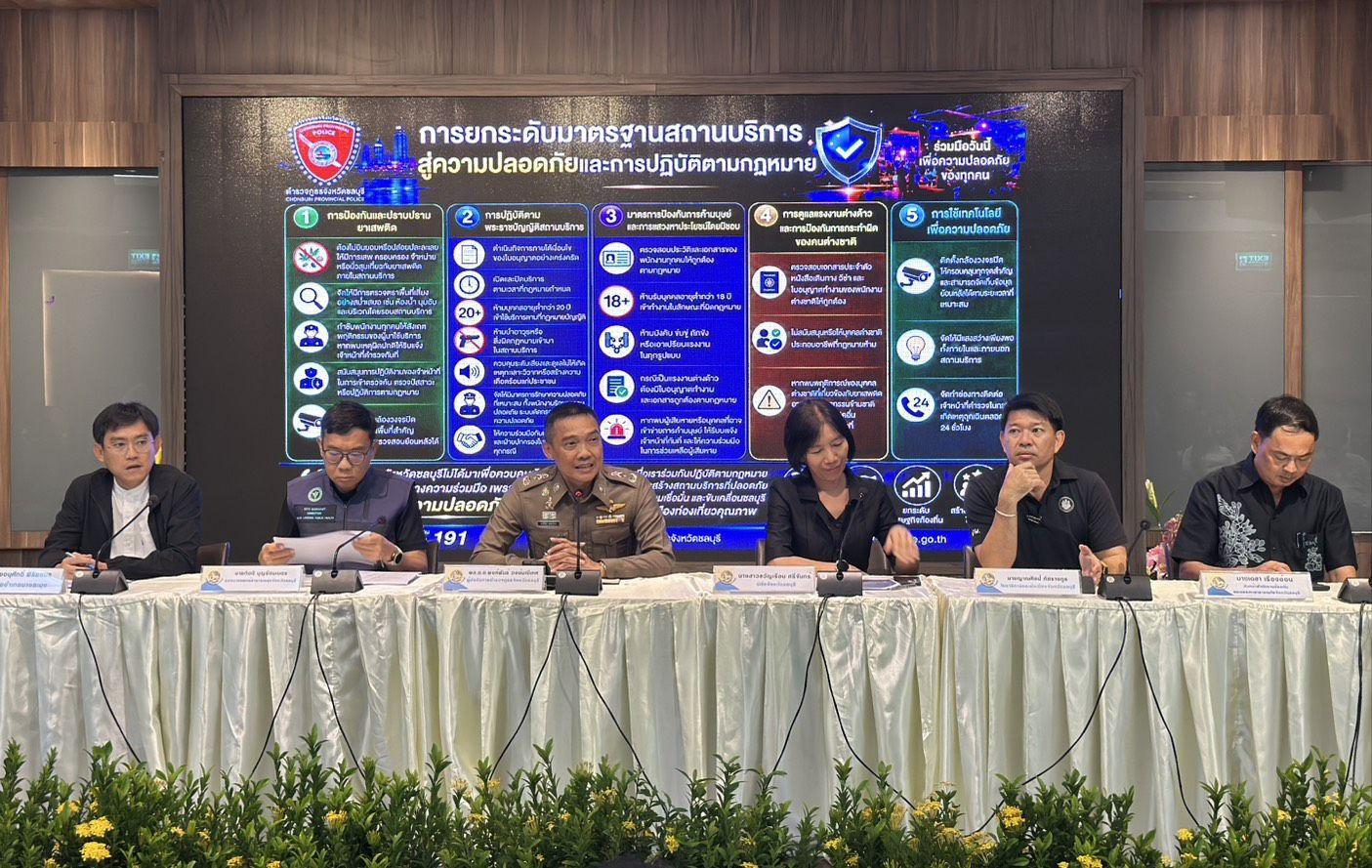
The gathering followed a deadly fire at an entertainment venue in Bangkok’s Lat Phrao area that left 35 people dead and dozens injured, as well as a similar past incident in Sattahip in 2022 at Mountain B. Officials stressed the need to elevate safety standards in Pattaya and Banglamung, major tourist destinations drawing large numbers of Thai and foreign visitors.

Governor Narit said public and tourist safety is the province’s top priority. He instructed all operators to immediately inspect and upgrade fire prevention systems. Any deficiencies must be corrected without delay. Continued violations or negligence will trigger strict administrative action, particularly non-renewal of operating licenses.

He also urged operators to avoid setting off fireworks inside venues, promote customer insurance coverage, prevent fights on the premises, safeguard tourists, and better regulate public spaces, especially rental vehicles obstructing roads. Plans include conducting nighttime fire evacuation drills at entertainment venues to test systems and staff readiness for real emergencies.

Police Major General Phongphan noted that many victims in previous entertainment venue fires did not die from flames but from smoke inhalation and lack of oxygen. He pointed out the critical importance of fire prevention systems, escape routes and evacuation procedures.

Operators must regularly check fire extinguishers, electrical systems, fire alarm systems and safety equipment to ensure they remain operational. Staff should be trained in the proper use of firefighting equipment and in assisting patrons during emergencies. Regular emergency response drills are also required.

Mandatory measures for all venues include:
– Standard-compliant fire prevention and suppression systems
– Regular inspections of electrical systems and firefighting equipment
– Functional emergency exits and escape routes that must not be obstructed or locked
– Clear exit signage and emergency lighting
– Strict limits on occupancy to building capacity
– Security personnel and CCTV coverage at key points
– Documented emergency plans with regular evacuation drills

Authorities also ordered strict enforcement against weapons and drugs inside venues and an absolute ban on entry by anyone under 20 years of age. Violations will face full legal action.

The measures are to raise safety standards and sustain confidence among tourists and residents.

After the meeting, the atmosphere was cordial. Governor Narit, Police Major General Phongphan and police officers presented a floral arrangement to Pattaya Mayor Poramese Ngampichet, congratulating him on his re-election and return to office. Officials pledged continued cooperation to develop Pattaya while strengthening safety measures to maintain public and tourist confidence.

Similar Posts

  • | | |

    Pakistan-origin Saadia Zahidi makes jistory as fir…

      Pakistan-origin business leader Saadia Zahidi has been appointed as the next Director General and Chief Executive Officer (CEO) of the International Air Transport Association (IATA), becoming the first woman in the organization’s history to hold the top position. Her appointment marks a significant milestone for the global aviation industry and highlights the growing role of women in leadership positions within international organizations. Zahidi is set to officially assume her new role on January 1, 2027, succeeding the current leadership after an extensive international selection process. She brings decades of experience in global economic policy, leadership development, and strategic planning, making her one of the most respected figures in international business and public policy. Before joining IATA, Zahidi served as Managing Director at the World Economic Forum (WEF), where she played a key role in shaping discussions on the future of work, economic competitiveness, gender equality, innovation, and sustainable development. During her tenure, she worked closely with governments, multinational corporations, academic institutions, and civil society organizations to develop policies aimed at promoting inclusive economic growth and preparing societies for emerging global challenges. Her appointment is being viewed as a landmark achievement, not only because she is the first woman to lead IATA but also because she is of Pakistani origin. Many have described the decision as an important step toward greater diversity and inclusion in global leadership. Zahidi’s professional journey has inspired many young professionals, particularly women from developing countries, demonstrating that talent, expertise, and dedication can open doors to leadership at the highest international level. The International Air Transport Association represents hundreds of airlines worldwide and plays a central role in shaping the global aviation industry. The organization is responsible for promoting safe, efficient, secure, and sustainable air transport while working closely with airlines, governments, regulators, and other stakeholders to address industry challenges. As Director General, Zahidi will oversee efforts to support airline operations, strengthen international cooperation, advance environmental sustainability, and guide the aviation sector through future technological and economic changes. Industry observers believe Zahidi’s extensive experience in global policy and economic strategy will bring a fresh perspective to IATA as the aviation sector continues to recover from recent global disruptions and adapts to evolving passenger expectations, digital transformation, and climate commitments. Her leadership is expected to focus on collaboration, innovation, and long-term resilience for the industry. Her appointment has been widely welcomed by professionals across the aviation and business communities. Many have congratulated her on achieving a historic milestone, describing her selection as recognition of her exceptional leadership and international experience. For Pakistanis around the world, Zahidi’s achievement is a source of pride and inspiration. Her rise to the highest position in one of the world’s most influential aviation organizations reflects the growing global impact of professionals of Pakistani origin and reinforces the importance of diversity in shaping the future of international industries.

  • | | |

    Uganda backs sending troops to planned Gaza peace …

    Uganda’s Parliament has approved a government proposal to deploy troops to a planned international peace and stabilisation force for Gaza, marking the country’s first commitment to the proposed multinational mission. The resolution was introduced by Uganda’s Minister of Defence and received parliamentary approval following debate among lawmakers. With the decision, Uganda joins Morocco, which has also announced its willingness to contribute troops to the proposed force. The Ugandan government has not publicly disclosed the diplomatic discussions or political considerations behind its decision. However, the move sparked debate in Parliament, with opposition members expressing concerns about the potential implications for Uganda’s foreign policy and regional relationships. Opposition lawmaker Hassan Kiromera questioned the mission’s objectives, asking which parties Ugandan troops would ultimately be expected to confront if deployed. He argued that the government should provide greater clarity regarding the mandate of the proposed force before committing military personnel. Defence Minister Jacob Oboth-Oboth defended the proposal, stating that the Uganda People’s Defence Forces (UPDF) possess extensive experience in international peacekeeping operations, including missions in Somalia and other conflict zones. He said that this experience would enable Ugandan troops to contribute effectively to efforts aimed at restoring peace and stability in Gaza. According to the report, the proposed Gaza International Stabilisation Force is expected to consist of approximately 20,000 personnel from multiple countries. The force is reportedly planned under a proposal associated with US President Donald Trump’s Board of Peace and would be commanded by US Major General Jasper Jeffers. The mission is intended to help maintain law and order in Gaza following the end of hostilities between Israel and Hamas. Reports indicate that the proposal was first introduced earlier this year as part of broader discussions on post-conflict governance and security arrangements in the territory. The development follows recent announcements regarding a reported agreement under which Hamas would disarm and Israel would gradually withdraw its military forces from Gaza. Under the reported framework, the international stabilisation force would be deployed after the phased Israeli withdrawal. However, uncertainty remains over the implementation of the proposed arrangement. Israeli officials have reportedly expressed serious security concerns after reviewing the reported agreement, arguing that certain provisions could pose risks to national security. As a result, questions remain about the timeline and conditions for the deployment of the multinational peace force despite Uganda’s parliamentary approval.

  • | | |

    Iran and Oman discuss temporary shipping corridor …

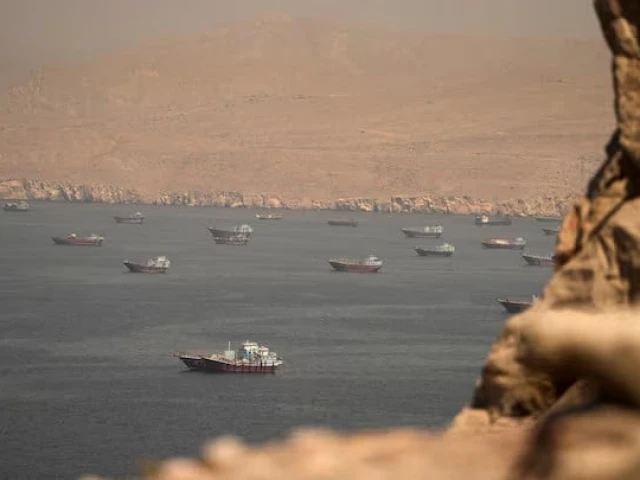
    Iran and Oman are discussing a proposal to establish a temporary joint shipping corridor through the Strait of Hormuz one of the world’s most important routes for oil and gas shipments. The proposal was discussed during a meeting in Tehran between Omani Foreign Minister Badr Al-Busaidi and Iranian Foreign Minister Abbas Araghchi. A joint statement described their talks as constructive and said both sides discussed developments surrounding the strategic waterway. The discussions come as tensions remain high between Iran and the United States. US President Donald Trump said Tuesday that mines had been removed or destroyed in international waters around the Strait of Hormuz. He warned that any vessel found placing new mines would face immediate military action. Trump also said the United States was closely monitoring the waterway and maintained a zero-tolerance policy toward further mine placement. The Strait of Hormuz is a crucial global energy route with roughly one-fifth of the world’s crude oil and liquefied natural gas flows passing through it before the conflict. Shipping activity has fallen sharply during the current crisis, with only two commodity vessels reportedly using the waterway on Monday. Iran has also communicated its position on the strait through Pakistan. Iranian officials reportedly want provisions of an earlier Islamabad memorandum to be implemented including arrangements requiring safe passage for commercial shipping and consultation with Oman over the waterway’s future management. Meanwhile, Washington has expanded economic pressure on Tehran. US Treasury Secretary Scott Bessent announced additional sanctions targeting Iranian individuals entities and vessels warning that countries continuing to support Iran’s economy could face consequences. China has criticized the new US measures saying unilateral sanctions could disrupt global economic and financial stability. Beijing is a major buyer of Iranian oil and has urged Washington and Tehran to return to negotiations. The United States has also warned that military action against Iran remains possible. Defence Secretary Pete Hegseth said Washington would use military force if necessary and did not rule out further strikes around Iran or the Strait of Hormuz. Iran, meanwhile, has promised to respond to the expanded sanctions and warned that threats to its infrastructure could trigger attacks against US interests and regional energy routes. The diplomatic discussions involving Iran, Oman and Pakistan could therefore become important for restoring commercial shipping through the Strait of Hormuz. However, continued military threats, sanctions and tensions between Tehran and Washington remain major obstacles to a lasting agreement.

  • | |

    Iran issues fresh warnings as regional tensions es…

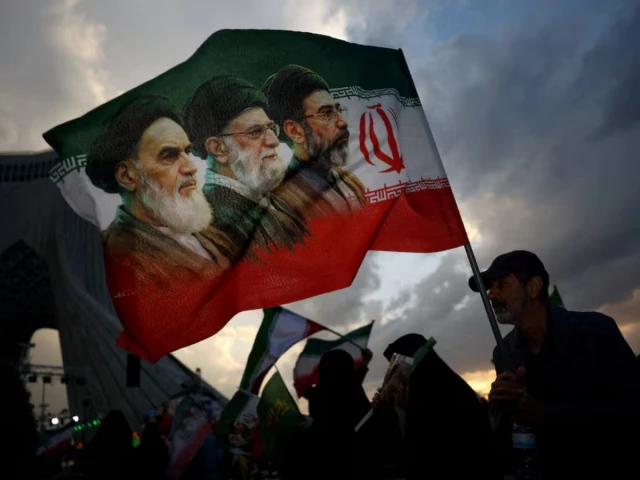
    Tensions across the Middle East intensified on Saturday as senior Iranian military and political officials issued strong warnings to the United States and its regional partners, while Kuwait reported intercepting drones it said were launched from Iran. Major General Abdollahi, commander of Iran’s Khatam al-Anbiya Central Headquarters, accused Washington of deliberately widening the regional conflict. In a statement shared on X and reported by Iranian state media, he alleged that the United States was pursuing a strategy aimed at expanding the war and increasing its influence across the Middle East. According to Abdollahi, the recent confrontation with Iran demonstrated that Washington was prepared to target the interests and resources of Muslim nations to achieve its objectives. He further claimed that the US was relying on the wealth, infrastructure, and strategic assets of regional countries to protect its military presence while reinforcing Israel’s security. The Iranian commander argued that the balance of power in the region had shifted in Iran’s favor, asserting that the United States and Israel failed to achieve their goals during the latest conflict. He also claimed they were now attempting to continue the confrontation through the territory of neighboring Muslim countries. Abdollahi urged regional governments to reconsider their cooperation with Washington, warning that nations acting as a “defensive shield” for the United States could eventually face the consequences of war. Separately, Iranian lawmaker Ebrahim Rezaei, a member of the parliament’s National Security Commission, warned that any future attack on Iran would have devastating consequences for the region. He claimed that such a conflict could reduce regional infrastructure to the “Stone Age” and cautioned against further military action. Meanwhile, Kuwait strongly condemned what it described as Iranian aggression after reporting drone attacks on key facilities. Kuwaiti authorities said their air defense systems detected and destroyed multiple hostile drones that entered the country’s airspace early Saturday. Officials stated that a government installation in northern Kuwait and civilian vehicles on Bubiyan Island sustained material damage from falling debris, although no casualties were reported. Kuwait’s Foreign Ministry described the attacks as a serious violation of the country’s sovereignty and said it reserved the right to take all necessary measures to protect its national security, interests, and critical infrastructure. Iran also warned that continued US maritime pressure could trigger broader consequences. Mohammad Bagher Zolghadr, secretary of Iran’s Supreme National Security Council, said ongoing American actions could ultimately lead to restrictions on the Strait of Hormuz and other strategic waterways, warning that such developments would have significant consequences for global energy markets and the wider economy. At the same time, Iranian Parliament Speaker Mohammad Bagher Ghalibaf declared that Iran had emerged victorious from the recent conflict but stressed that the country must strengthen its long-term stability and national resilience. He emphasized expanding the authority of Iran’s supreme leadership as a key step toward securing the country’s future. Elsewhere, maritime security concerns remained high. The UK Maritime Trade Operations (UKMTO) reported that a commercial tanker was struck by an unidentified projectile off the coast of Oman, damaging its engine room and leaving it temporarily unable to maneuver. Authorities are investigating the incident. In Yemen, the Houthi movement denied reports that it planned to charge commercial vessels for passage through the Bab al-Mandab Strait, insisting that its maritime transit services remain free. However, the group claimed that its blockade had already forced several Saudi oil tankers to reroute around Africa via the Cape of Good Hope, underscoring the continuing disruption to regional shipping routes.

  • | |

    Islamabad Court rules in favor of Ahsan Iqbal in d…

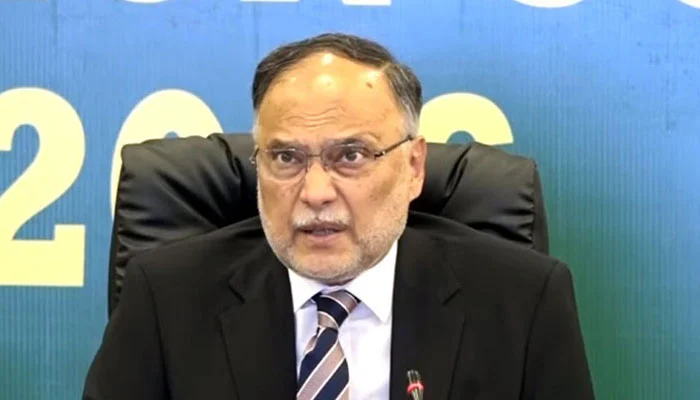
    A district and sessions court in Islamabad has ruled in favor of Federal Minister Ahsan Iqbal in a long-running defamation lawsuit, ordering former federal minister Murad Saeed to pay Rs2.5 million in damages for making corruption allegations that the court found to be unsubstantiated. The judgment was delivered by Additional Sessions Judge Hakim Khan, who concluded that the statements made by Murad Saeed had harmed Ahsan Iqbal’s reputation and amounted to defamation under the law. According to the court’s ruling, Murad Saeed failed to prove his public allegations that Ahsan Iqbal had been involved in corruption worth Rs70 billion. The court held that the accusations, which included claims of corruption, misuse of authority, and receiving illegal commissions, were not supported by evidence and therefore constituted defamatory statements. The case originated from remarks made by Murad Saeed in 2019, when he accused Ahsan Iqbal of financial irregularities in connection with the Multan–Sukkur Motorway Project, one of Pakistan’s major infrastructure developments. Ahsan Iqbal strongly denied the allegations and subsequently filed a defamation suit seeking Rs10 billion in damages. In its written judgment, the court acknowledged that Ahsan Iqbal had claimed Rs10 billion as compensation but determined that the amount sought was excessive in light of the evidence presented during the proceedings. Instead, the court awarded Rs2.5 million in damages, describing the sum as appropriate compensation for the reputational harm caused by the false allegations. The judgment stated that Murad Saeed’s controversial statements had damaged Ahsan Iqbal’s public image, honor, and dignity. It further observed that the allegations created a negative perception of the federal minister among members of the public, affecting his credibility and standing. According to the court, the accusations amounted to a direct attack on Ahsan Iqbal’s integrity, character, and professional reputation. Since the allegations involved serious claims of corruption and abuse of public office, the court found that they had the potential to undermine public confidence in him without any factual basis. The ruling also noted that Murad Saeed neither appeared before the court to defend his statements nor presented any evidence to substantiate the corruption allegations. His failure to support the claims played a significant role in the court’s decision to rule in favor of Ahsan Iqbal. The verdict reinforces the legal principle that individuals making public allegations of corruption must be prepared to provide credible evidence to support their claims. In the absence of such proof, the court held that the statements amounted to defamation and entitled the affected party to compensation. The decision marks the conclusion of a legal dispute that has remained pending since 2019 and highlights the growing use of defamation proceedings in Pakistan to address reputational damage arising from political statements. While the court reduced the amount of compensation sought by Ahsan Iqbal, it nevertheless concluded that Murad Saeed’s allegations were unfounded and had caused measurable harm to the minister’s reputation. As a result, the former federal minister has been directed to pay Rs2.5 million in damages in accordance with the court’s judgment.

  • | |

    Pakistan, US discuss bilateral cooperation and reg…

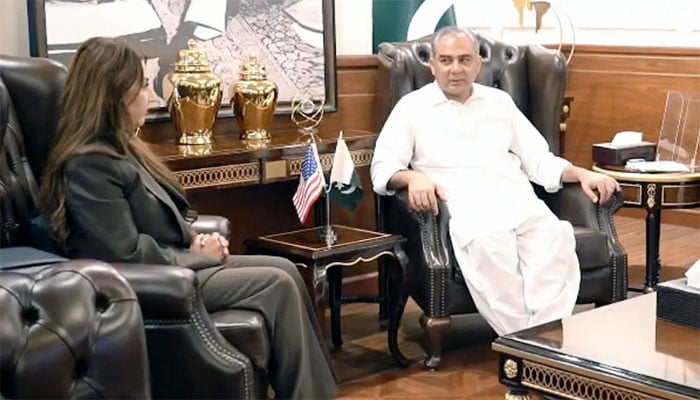
      Federal Interior Minister Syed Mohsin Naqvi held a meeting with US Chargé d’Affaires to Pakistan Natalie Baker in Islamabad, where the two sides discussed regional developments, security matters and ways to strengthen cooperation between Pakistan and the United States. The meeting focused on the overall situation in the region, with particular attention given to peace and stability. Both sides exchanged views on ongoing regional developments and discussed the importance of maintaining cooperation to address emerging security challenges. According to the details of the meeting, Pakistan and the United States also discussed their bilateral relationship and explored opportunities to expand cooperation across different areas. The two sides expressed interest in strengthening existing mechanisms of collaboration and developing further partnerships in areas of mutual interest. Law-enforcement cooperation was also an important part of the discussion. Naqvi and Baker exchanged views on joint programmes and training opportunities involving police officers from both countries. Such initiatives were discussed as a means of improving professional capabilities, sharing expertise and strengthening coordination between law-enforcement institutions. The officials also discussed the need for greater cooperation against organised crime, drug trafficking and human smuggling. Both sides agreed to enhance collaboration in these areas, recognising that such crimes often operate across national borders and require coordinated efforts between countries. The discussion highlighted the importance of information sharing, professional training and institutional cooperation in tackling transnational criminal networks. Strengthening law-enforcement coordination could help both countries improve their ability to respond to security threats and combat criminal activities that affect communities in Pakistan and beyond. During the meeting, US Chargé d’Affaires Natalie Baker also praised Field Marshal Syed Asim Munir for what she described as his positive diplomatic role in promoting peace and stability in the region. Her remarks came amid broader discussions on regional security and the importance of diplomatic engagement in addressing tensions and maintaining stability. The appreciation reflected the US side’s recognition of Pakistan’s role in contributing to regional peace efforts. The meeting between Naqvi and Baker comes as Pakistan and the United States continue to engage on a range of security and bilateral matters. Cooperation between the two countries has traditionally included areas such as counterterrorism, law enforcement, border security and efforts to combat transnational crime. The latest discussions indicate an effort to further strengthen practical cooperation, particularly in areas directly linked to public security and law enforcement. The proposed police training and exchange programmes could provide opportunities for officers from both countries to learn from each other’s experiences and improve their professional skills. Meanwhile, increased coordination against organised crime, drugs and human trafficking could contribute to more effective efforts against criminal networks. The meeting also underscored the broader importance of the Pakistan-US relationship at a time when regional developments continue to influence security and diplomatic priorities. Both countries have an interest in maintaining communication and cooperation on issues that affect regional peace and stability. Overall, the talks reflected a focus on strengthening bilateral ties through practical cooperation, particularly in law enforcement and security. The agreement to enhance joint efforts against organised crime, drug trafficking and human smuggling, along with discussions on police training programmes, demonstrates the two sides’ shared interest in addressing common challenges. The meeting also provided an opportunity for both officials to reaffirm the importance of continued engagement between Pakistan and the United States on regional peace, stability and security.

Leave a Reply

Your email address will not be published. Required fields are marked *