dameisha beach worlds
|

Dameisha Beach: The World’s most crowded Beach


Dameisha Beach, located in Shenzhen, China, is often described as one of the most crowded beaches in the world. The reason behind its reputation is its extraordinary visitor numbers. Despite being only 1.8 kilometres (1.1 miles) long, the beach can attract nearly 200,000 people at a time during particularly busy periods, turning the popular seaside destination into a sea of people.

Located in southeastern China, Dameisha Beach is one of Shenzhen’s most famous recreational destinations. Its relatively short stretch of sandy coastline becomes extremely crowded during weekends and public holidays, especially during the summer months. The sheer number of visitors has become such a major concern that local authorities have introduced measures to control the number of people entering the beach.

The extent of the crowds can easily be understood by looking at reviews posted by visitors on travel platforms such as TripAdvisor. Some tourists have complained that the beach becomes so overcrowded that it is difficult even to reach the water. Instead of enjoying a peaceful day by the sea, visitors often find themselves surrounded by thousands of other people competing for space on the sand.

Since Dameisha is a public beach, it is theoretically open to everyone. However, in recent years, authorities in Shenzhen have introduced restrictions during the peak season, generally from May to October. The number of visitors allowed to enter the beach can be limited to around 80,000 per day in an effort to prevent excessive overcrowding and maintain public safety.


A mandatory reservation system has also been introduced during busy periods. Visitors are required to make a reservation before travelling to the beach on their chosen date. The system allows authorities to monitor the number of people entering the area and prevent the beach from becoming dangerously overcrowded.

Although a daily limit of 80,000 visitors may already sound enormous, reports indicate that the beach has witnessed even larger crowds on certain occasions. At times, as many as 200,000 people have reportedly gathered at the same time. With such a massive crowd occupying a relatively small area, simple activities such as walking, swimming or relaxing under the sun can become extremely difficult.

One of the major factors contributing to Dameisha Beach’s popularity is its accessibility. The beach is well connected through public transportation, with several bus routes providing convenient access to the area. Even more importantly, a metro station is located directly opposite the beach, making it easy for large numbers of local residents and tourists to reach the destination without relying on private vehicles.

Another major attraction is that entry to the beach is free. This makes Dameisha an affordable recreational option for both residents of Shenzhen and visitors from other areas. Its convenient location, free admission and easy access through public transportation have all contributed to its enormous popularity.

Despite the negative reviews posted by some visitors about the extreme crowds, Dameisha Beach continues to attract huge numbers of people during the summer season. Images and videos showing thousands of visitors packed tightly along the shoreline frequently circulate on social media, further contributing to the beach’s unusual reputation.

For many visitors, the sheer scale of the crowds is itself an extraordinary sight. Dameisha Beach demonstrates how a relatively small public space can become one of the busiest recreational destinations when accessibility, affordability and popularity come together.

Similar Posts

  • Sarah Ferguson, the former Duchess of York, is said to be pushing back against feelings of isolation from the royal family. Insiders  claim that she is now seeking a direct audience with King Charles and Queen Camilla. The details were shared with Heat World by a source close to the situation. According to the confidant, Ferguson has no intention of quietly fading from public life. She is reportedly determined to make her case directly to the King and Queen, hoping to secure some form of leniency regarding her standing within the family. The source quoted Ferguson as saying she refuses to be discarded simply because it would make things easier for Charles and Camilla. She reportedly believes she deserves far better treatment than that, and is prepared to keep pressing until she gets it. Despite her resolve, the insider noted that Ferguson is not approaching this without apprehension. Returning to England reportedly fills her with nerves, but that anxiety is not enough to make her back down from pursuing the meeting. What seems to be driving her most, according to the source, is the pain of feeling disconnected from her daughters and grandchildren. That separation is reportedly the hardest part of her current situation, more so than any concerns about her public image. The renewed push comes after months of Ferguson keeping an unusually low profile, a shift that followed fresh revelations in January regarding her past association with Jeffrey Epstein. It is worth noting that being named in related documents does not, on its own, suggest any wrongdoing on her part. Ferguson has largely stayed out of the public eye since then. Reports from The Sun suggest she’s been staying with her former partner, Formula 1 businessman Paddy McNally, at his Swiss chalet in Verbier, a property reportedly worth around £15 million known as “Les Gais Lutins.” Her stay there followed her reported eviction from Royal Lodge, the residence she once shared with Prince Andrew. The situation marks a notable shift for Ferguson, who has spent recent months largely removed from royal circles and public appearances. Whether her reported appeal to Charles and Camilla will result in an actual meeting remains unclear, but insiders suggest she has no plans to retreat quietly, even as she navigates both personal anxiety and the complicated dynamics of her relationship with the royal family.

  • |

    Iran denies holding talks with US

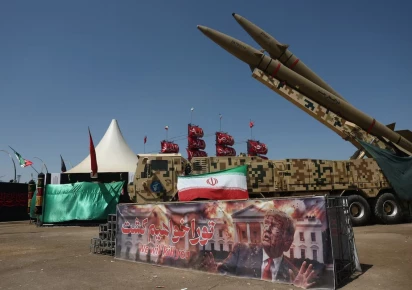
    Iran has dismissed reports of ongoing negotiations with the United States, saying there are currently no direct talks between the two countries, while confirming that discussions with Oman are focused solely on establishing a temporary maritime route through the Strait of Hormuz. Iranian Foreign Ministry spokesperson Esmaeil Baghaei said the consultations with Oman are aimed at ensuring safe navigation in the strategic waterway and should not be interpreted as an agreement to fully reopen the strait. He maintained that the security situation in the region remains unchanged and insisted that any broader decision regarding the Strait of Hormuz would depend on regional developments. Baghaei also said there are no plans for Iranian or American delegations to meet in the coming days, rejecting speculation that formal negotiations are currently underway. His remarks came after US President Donald Trump announced that Washington expected to begin talks with Iran and suggested that diplomatic efforts had prompted him to cancel a planned military operation. Trump said discussions involving Saudi Arabia, the United Arab Emirates, Qatar and Iran had encouraged the United States to pursue diplomacy instead of military action. The US president said he preferred reaching a negotiated settlement but warned that military options remained available if diplomacy failed. He expressed hope that an agreement could eventually address both navigation through the Strait of Hormuz and concerns over Iran’s nuclear programme. Meanwhile, regional tensions remain high despite renewed diplomatic efforts. Reports emerged that an explosion occurred near a commercial tanker off the coast of Oman. Maritime authorities said the vessel and its crew were safe, while an investigation into the incident is underway. In another development, Iraq’s state oil marketing company reportedly offered significant discounts on Basrah crude exports to encourage buyers to lift cargoes from facilities inside the Strait of Hormuz, reflecting continuing uncertainty in regional energy markets. Iran also announced the execution of two men convicted of spying for Israel’s intelligence agency, saying they had provided sensitive military information to foreign operatives. The uncertainty surrounding the Strait of Hormuz continues to affect global energy markets. The waterway handles a significant share of the world’s oil and liquefied natural gas shipments, making any disruption a major concern for international trade and energy security.

  • | | |

    Iran says US military weaker as Hormuz crisis deep…

    TEHRAN: Iran has intensified its rhetoric against the United States as attacks on commercial shipping and stalled peace efforts deepen uncertainty over the future of the war, with Tehran warning that the strategically vital Strait of Hormuz will remain closed unless Washington accepts its conditions. Mohammad Reza Naqdi, an adviser to the commander of Iran’s Islamic Revolutionary Guard Corps, said in an interview with PBS that the US military had proved “weaker than what we perceived” during the five-month conflict. Naqdi said Iran had gained valuable battlefield experience during the war and claimed Tehran would continue to emerge victorious. “The longer this war lasts, the more experience we gain,” he said, arguing that Iranian forces had learned how to confront the US military through direct experience. His comments came as maritime traffic through the Strait of Hormuz dropped sharply. Shipping data showed only eight vessels were tracked through the waterway on Tuesday, below a 10-day average of about 12 and the lowest daily figure since August 5. Before the conflict, the strait typically handled around 130 to 140 vessels a day. The slowdown has heightened fears over global energy supplies because Hormuz is a crucial route for oil and liquefied natural gas shipments. The International Maritime Organization has previously warned of serious risks to vessels and seafarers operating in the area. Shipping attacks raise fresh alarm Tensions also spread to other maritime chokepoints. Four crew members were reportedly killed in a suspected Houthi attack on a cargo vessel in the Bab el-Mandeb Strait, while two Yemeni rescuers were also killed, according to reports cited in the source material. The US military separately said an MH-60 helicopter fired two Hellfire missiles at a Panama-flagged cargo ship after the vessel allegedly ignored warnings linked to a blockade of Iranian ports. Maritime sources said the incident occurred off Pakistan in the Gulf of Oman. The attacks have added to concerns that the conflict could disrupt shipping routes connecting the Gulf with the Red Sea and beyond. Iran sets conditions for reopening Hormuz Iranian security official Mohsen Rezaei said the Strait of Hormuz would not reopen unless Washington agreed to Tehran’s demands, including the release of frozen Iranian assets and an end to conflicts across the region. Iran’s parliament is also preparing legislation that would restrict military and commercial vessels from countries Tehran considers hostile from entering the Gulf without Iranian authorisation. The proposed law is intended to strengthen Iran’s control over the strategically important waterway. US President Donald Trump, meanwhile, has continued to combine threats with suggestions that negotiations could eventually produce a settlement. He has claimed the United States has control over the Strait and warned Iran against further escalation. Oil markets have already reacted to the uncertainty. Brent crude rose 1.4 per cent to $88.91 a barrel, while US crude gained 1.3pc to $83.20. Pakistan seeks diplomatic space Amid the worsening security situation, Pakistan has continued diplomatic engagement with Tehran. Interior Minister Mohsin Naqvi visited Iran and met President Masoud Pezeshkian, with both sides stressing the importance of strengthening bilateral political, economic, trade, cultural and security ties. Pezeshkian praised Pakistan’s commitment to closer relations and said Tehran was ready to expand cooperation with Islamabad. Naqvi said his visit was aimed at following up on understandings reached between the two countries and accelerating implementation of existing agreements. With military rhetoric rising, shipping routes under pressure and negotiations at an apparent impasse, the Strait of Hormuz remains at the centre of a crisis whose consequences could extend far beyond the Middle East.

  • | | | |

    Hormuz uncertainty pushes global oil prices higher

    KARACHI: Global oil prices edged higher on Monday as uncertainty over the reopening of the Strait of Hormuz continued to unsettle energy markets. Brent crude climbed by more than 1% in Asian trading, moving above $84 a barrel, while US crude prices also posted gains of over 1%. The market remains focused on the situation surrounding the Strait of Hormuz, a critical maritime route through which a significant share of the world’s oil supplies passes. Any prolonged disruption or uncertainty over shipping through the waterway could put further pressure on global energy prices. Iran has indicated that discussions with Oman on establishing alternative shipping routes are nearing completion. However, Tehran says the United States still needs to fulfil additional conditions before arrangements concerning the waterway can move forward. With the situation still unresolved, traders are closely watching developments around the Strait, with concerns over supply disruptions continuing to influence crude prices.

  • |

    Experts reveal how ancient Egyptians built pyramids?

    The centuries-old Egyptian pyramids have long remained a major focus of interest for people and scientists. For years, scientists have been trying to solve the mystery of how such massive pyramids were constructed in ancient Egypt thousands of years ago. Now, a possible answer has emerged. Earlier, it was believed that ropes and sledging systems were used to transport stones to the upper sections of the pyramids. However, evidence discovered near the Nile River suggests that experts of that era had already mastered advanced construction techniques centuries before the construction of the Great Pyramid of Giza in the desert. Archaeologists have excavated a 5,000-year-old cemetery-like site near the eastern bank of the Nile River. Two tombs discovered there have construction styles remarkably similar to those of the Egyptian pyramids built centuries later. The walls of these tombs were thicker at the bottom and gradually became narrower toward the top. This design provided greater stability to the structures. Similar techniques were later used in the construction of step pyramids and other large pyramids. Researchers also discovered evidence of ancient methods used to cut stones and wood which were employed in the construction of the tombs. The tombs were discovered in Egypt’s Jabal al-Tayr region where people have been buried for thousands of years. The style of these tombs resembles the tombs of kings in Abydos, one of Egypt’s oldest cities. This suggests that advanced construction techniques may have been widely known across Egypt even before the construction of the pyramids. Researchers said the tombs provide a glimpse into experimental construction methods that may have eventually led to the construction of the Egyptian pyramids. Experts said preliminary analysis indicates that the construction style of these tombs was quite similar to that of the pyramids associated with Egypt’s First Dynasty. Egypt’s First Dynasty ruled the country around 3100 BC. According to Egypt’s Tourism Minister, Sherif Fathy, the new discovery will help researchers understand how these construction techniques evolved throughout ancient Egyptian history. Earlier, in May 2024, researchers discovered a buried branch of the Nile River beneath the desert that once flowed around more than 30 pyramids thousands of years ago. This discovery helped solve the mystery of how ancient Egyptians transported extremely heavy stones to the pyramid construction sites. The 40-mile-long branch of the river once flowed around the Great Pyramid of Giza and other pyramids. Thousands of years ago, it gradually became buried beneath desert sand and agricultural land. According to the research, the presence of this ancient river explains how 31 pyramids were constructed between approximately 4,700 and 3,700 years ago in a valley that has now become a deserted strip of desert. The valley is located near Memphis, the ancient capital of Egypt and is home to the Great Pyramid of Giza, the only surviving wonder of the ancient Seven Wonders of the World. A study published in the journal Nature Communications reported the discovery of this ancient branch of the river. The research team used radar satellite technology to identify the hidden river channel. Surveys of the area and analysis of samples confirmed the presence of the ancient river. According to researchers, the river was once very powerful but may have gradually become buried under sand because of drought around 4,200 years ago. The Great Pyramid of Giza is located just one kilometer from the bank of this buried river. Around 2.3 million stone blocks were used to build the pyramid with each block weighing between 2.5 and 15 tons. Researchers said the ancient river also provides clues about why pyramids were built at different locations. They explained that the river’s course and flow changed over time which may have led Egyptian rulers to construct pyramids at different locations.

  • |

    30 children geared to have been conceived using wrong IVF donors

    At least 30 children, most of them believed to be British, may have been conceived through IVF treatment in northern Cyprus using sperm or egg donors different from those selected by their parents. The allegations have emerged from an investigation into fertility clinics in the region, raising serious concerns about the treatment of international patients and the regulation of fertility services. The parents involved say they carefully chose anonymous donors before undergoing treatment. Their decisions were based on detailed information provided by clinics, including the donors’ medical backgrounds, physical appearance, education, personalities, interests and hobbies. However, after their children were born, some parents began to question whether the donors they had selected were actually used during their IVF procedures. The latest investigation has identified at least 30 cases in which parents believe the wrong sperm or egg donors may have been used. This is a significant increase from the seven cases . Around half of the children were reportedly conceived following treatment at Dogus IVF Centre, a fertility clinic in northern Cyprus. Several individuals involved in the treatment of these patients have come under scrutiny, including doctors Firdevs Uguz Tip and Sevket Alpturk, as well as patient coordinator Julie Hodson. One mother, identified as Rachel, said she recently discovered that the sperm donor used during her treatment may not have been the donor she had chosen. She described the situation as extremely shocking and unacceptable. The parents have raised concerns that staff members at the clinic may have provided misleading information about the donors. Dr Firdevs Uguz Tip has denied any wrongdoing. The investigation has also uncovered information about the relationship between Dogus IVF Centre and Cryos International, one of the world’s largest sperm banks. Cryos placed Dogus on its blacklist in 2016, adding another concern surrounding the clinic’s practices. Northern Cyprus has become a popular destination for British and other international patients seeking fertility treatment. The region offers relatively low treatment costs, reportedly high success rates and access to a wide selection of sperm and egg donors. However, its regulatory system is significantly different from that of European Union countries. Northern Cyprus is internationally recognised only by Turkey, and EU laws do not apply there. Fertility clinics in the territory have been described as operating under relatively loose regulation, raising questions about oversight and accountability. According to previous reports on the emerging allegations in March, when seven parents came forward with concerns that they may have been misled about the donors used in their treatments. Following those reports, the Ministry of Health in northern Cyprus said it had opened an official investigation. However, the ministry has reportedly failed to provide further information. Many parents said clinics had promised them donors who had undergone health screening and were from Western European backgrounds. Their suspicions reportedly grew after their children were born. DNA testing has provided further evidence that has intensified these concerns. Eleven of the 30 children have undergone commercial DNA tests, with results indicating genetic ancestry connected to Turkey or nearby regions. According to the investigation, these results may suggest that the donors selected by the parents were not the individuals whose genetic material was ultimately used. The allegations have caused distress among affected families, many of whom travelled abroad believing they were receiving carefully selected fertility treatment. The growing number of cases is now raising serious questions about donor identification, patient information, clinic accountability and the regulation of fertility services in northern Cyprus.

Leave a Reply

Your email address will not be published. Required fields are marked *